World Book and Copyright Day 2026: The Case for Reading in a Visual Age

World Book and Copyright Day happens every year on April 23. And each year brings new reminders about why books matter and why copyright law exists. UNESCO started the event in 1995, picking the date because it marks the death anniversaries of three huge literary figures: William Shakespeare, Miguel de Cervantes, and Inca Garcilaso de la Vega. The day isn’t just about buying a book or reading. It’s about remembering how stories and ideas travel across generations. And it’s about protecting the rights of writers, publishers, and anyone who works with words and ideas.

Why is this day important? Simple. Books are more than objects. They store culture, preserve facts, spark arguments, and help us figure out who we are. Without them, ideas might fade, and knowledge could get lost. Copyright keeps creators safe. If authors and illustrators couldn’t own their work, would we have the stories we cherish? On this day, the world is supposed to pause and remember that every book is the result of hard work, imagination, and someone’s hope that their words will matter.

Rabat, Morocco, is the 2026 World Book Capital. That means Rabat will host special events, talks, readings, and programs throughout the year to promote reading and creativity. The city will get global attention for putting books first and linking culture, education, and diversity.

Are books losing ground to screens? That’s the real question. We live in a world ruled by images. Social media, video streaming, short clips—everywhere we look, we’re bombarded by visual content. TikTok, Instagram, YouTube, and endless memes shape what we see, what we know, and even how we think. The average person’s daily diet is snapshots, sound bites, and fleeting info hits. Attention spans keep shrinking. A single tweet can cause outrage or joy in seconds. This isn’t just about technology. It’s a change in how brains work and how society measures value. So, where does reading fit in?

There’s no pretending that reading a book is easy. It demands time, focus, and patience. But the same things that make reading hard are what make it valuable. Books force us to pause. They ask us to do the work of imagining, questioning, and connecting dots. Screens give quick thrills; books demand slow engagement. That gap matters. Reading develops the mind in ways that short videos and quick posts can’t. And even though social media challenges old habits, book communities online (like #BookTok or virtual book clubs) have sparked a fresh wave of interest, especially among teens. People still crave stories, depth, and connection; only now it’s happening in new ways.

But what gets lost when images replace text? Words build complex thoughts. Books let us see inside someone else’s mind in detail. Reading isn’t just about gathering facts; it’s about empathy, perspective, and learning how other people view the world. When we trade books for visuals, we lose context and subtlety. Attention flickers instead of settling. If a story’s too slow, too complicated, or too challenging, it gets skipped. There’s risk in letting quick images become the only way people engage with knowledge. Easy answers and “hot takes” can replace understanding.

Books also push back against bias. They make us question, argue, and even change our own minds. Social media often puts people in echo chambers. Algorithms repeat what you already believe. But literature, if you let it, breaks cycles and reveals contradictions. Reading gets us uncomfortable and forces us to grow. If the world forgets how to do this, what kind of culture will we have? Will people still build new ideas or just repeat old slogans?

It’s tempting to blame technology for stealing attention. But the truth is more complicated. People still love stories. They just want them in formats that fit their lives. Audiobooks, podcasts, and short-form essays reach millions. Libraries lend digital books. Smartphones let people read anywhere. In fact, the digital transformation can expand access. It can help people in places without bookstores get fresh ideas—and that’s huge for closing knowledge gaps. We shouldn’t view technology as the enemy of books. Instead, every new platform is a chance to connect reading with lives.

World Book and Copyright Day asks us to protect the right to read and create. Copyright isn’t just about money or ownership; it’s about dignity. If ideas belong to everyone, then creators get cheated. Society loses innovation. But copyright must strike a balance. Information should be free enough to spread, but not so open that writers, artists, and researchers go broke. Rabat’s year as Book Capital is a reminder that stories need support, but so do the people who imagine them.

Does any of this matter in a world hooked on images? Yes. Because conversation, real conversation, needs nuance. Social media speeds up talk but weakens arguments. Books slow us down but sharpen our thinking. As attention spans shrink, society faces risks. People forget how to focus, analyse, or remember. World Book and Copyright Day is needed to remind everyone: deep reading builds minds, helps solve problems, and keeps ideas alive.

So, question the value of books if you want, but look at history. Every major movement, revolution, or cultural leap started with words. Images are powerful, but words build meaning. They explain, persuade, and push people to act. The world’s biggest changes, political, scientific, or artistic, began with a sentence somewhere. Maybe on a page that a reader stubbornly finished, even when distracted.

World Book and Copyright Day won’t fix short attention spans overnight. And it won’t make everyone ditch their phones for libraries. That’s not realistic or even necessary. Instead, the day stands for balance. It’s about making sure stories don’t get lost in the flood of images. And it’s about making sure those who create stories get respect, protection, and a place at the table. In 2026, as screens speed up society, Rabat will push reading as a way to slow down, dig deep, and build culture.

World Book and Copyright Day

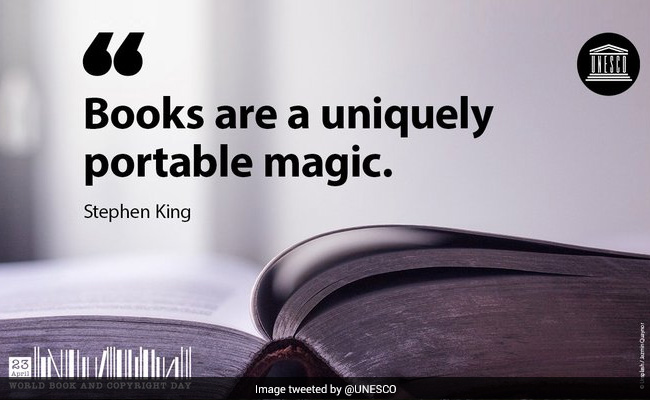
Tomorrow is World Book and Copyright Day. Celebrated annually on April 23rd, the day celebrates the joy of books and reading. It serves as a bridge between the past and the future, connecting generations and cultures. On this day, people across the globe come together to appreciate the role of books in shaping our lives and understanding the world around us.

World Book and Copyright Day was first established by UNESCO in 1995 to be celebrated on April 23rd each year. The date was chosen to honour the passing of prominent authors such as William Shakespeare, Miguel de Cervantes, and Inca Garcilaso de la Vega. This day highlights the importance of books as a source of knowledge, creativity, and cultural enrichment, as well as to promote the publishing industry and protect intellectual property through copyright. It is seen as a link between the past and the future, a bridge between generations and across cultures. While UNESCO coordinates the global celebration, some countries observe World Book Day on different dates, such as the UK and Ireland, which celebrate it on March 2nd.

In the 2024 edition, amidst global challenges and technological advancements, the celebration takes on a renewed significance, emphasising the resilience of literature, the promotion of reading, and the preservation of cultural diversity.

The theme for World Book and Copyright Day 2024 is “Read Your Way.”. This theme emphasises the importance of choice and enjoyment in fostering a love of reading. It encourages both children and adults to find ways to engage with books that resonate with them, regardless of format or genre.

Last year marked the start of the International Decade of Indigenous Languages (2022-2032), where UNESCO prioritises the upholding and promoting linguistic diversity and multilingualism. For the 2024 edition, UNESCO will spotlight indigenous languages. Of the nearly 7,000 existing languages, many are spoken by indigenous peoples who represent the world’s cultural diversity. Recognising oral traditions and various forms of literature, UNESCO aims to celebrate and preserve these languages through books. Literary sessions amplify the Sustainable Development Goals. SDG 5, or gender equality, happens when literature amplifies the voices of countless women, and SDG 10, or reduced inequality, can be fought when books serve as tools to fight against inequalities.

The 2024 edition places a special emphasis on the role of digital innovation in democratizing access to literature. With the proliferation of e-books, audiobooks, and online libraries, readers can now engage with literary content in more accessible and interactive ways. This year’s celebration highlights the opportunities presented by digital platforms to reach broader audiences and promote literacy worldwide. Amidst the digital age, protecting copyright remains crucial for sustaining creativity and ensuring fair compensation for authors and creators. World Book and Copyright Day 2024 reaffirms the importance of copyright laws in safeguarding intellectual property rights and fostering a conducive environment for literary production. It encourages dialogue on copyright issues, piracy prevention, and the equitable distribution of royalties in the digital era. Recognizing the enduring value of reading in fostering imagination, critical thinking, and lifelong learning, World Book and Copyright Day 2024 advocates for initiatives that promote reading culture at all levels of society. From literacy programs in schools to community libraries and book clubs, efforts are underway to cultivate a passion for reading and empower individuals with the skills necessary to navigate the complexities of the modern world.

UNESCO, along with international organizations representing publishers, booksellers, and libraries, selects a World Book Capital each year. The chosen city which holds the title for a year, hosts initiatives and events to promote books, literary culture and reading throughout the year. Strasbourg, in France, has been designated as the World Book Capital for 2024. Strasbourg impressed UNESCO and the World Book Capital Advisory Committee with its strong focus on books to address social tensions and climate change. The city’s program “Reading for the Planet” emphasises books’ role in encouraging discussions about environmental concerns and scientific knowledge, particularly among young people. Strasbourg’s literary heritage and its diverse artistic activities, spanning music, theatre, and illustration, were also commendable. As the twenty-fourth city to bear this title since 2001, Strasbourg follows a distinguished lineage of previous World Book Capitals, including Madrid, Alexandria, Buenos Aires, Kuala Lumpur, and Accra.

Many countries and organisations around the world will organise events and activities to promote reading, publishing, and the protection of intellectual property through copyright. These may include book fairs, author talks, reading challenges, and book donation drives. In Spain, the traditional celebration of Diada de Sant Jordi or Saint Jordi’s Day on April 23rd will coincide with World Book and Copyright Day. This involves the gifting of books and roses. The National Literacy Trust in the UK will provide a range of teaching resources, booklists, and activity ideas to help schools and communities celebrate a love of books and reading. World Book Day is working with 20 libraries in high-deprivation areas to create a legacy around reading, including events to inspire local families.

As we commemorate World Book and Copyright Day 2024, let us reaffirm our commitment to literature as a catalyst for positive change. By embracing diversity, promoting equity, and safeguarding intellectual property rights, we can harness the full potential of literature to build a more inclusive and enlightened society. Through reading, writing, and sharing stories, we contribute to a global culture of creativity, empathy, and mutual understanding.

World Book and Copyright Day

Tomorrow is World Book and Copyright Day, a day I enjoy and celebrate because well, books!

Celebrated on 23 April each year, the day is a celebration to promote the enjoyment of books and reading. The idea for celebrating this day originated in Catalonia where on 23 April, St George’s Day, a rose is traditionally given as a gift for each book sold. The date of 23 April is also symbolic for world literature, for on this date and in the same year, 1616, Cervantes, Shakespeare and Inca Garcilaso de la Vega all died. In the UK and Ireland, World Book Day is celebrated earlier in the year, usually on the first Thursday in March, to ensure it falls outside of school holidays.

The pandemic and isolation we faced showed us how important books are to maintain mental balance. Books are an individual’s best friend and to those who do not like reading, I always say they haven’t found a book or genre they love yet. Books are amazingly powerful tools to combat isolation, reinforce ties between people, expand horizons and all this while stimulating our minds and creativity.

When one reads, they exercise their comprehension abilities and analytical abilities. Reading fires up the imagination and stimulates the memory centres of the mind, helps recall information as well as stabilise emotions. The importance of a reading habit is that it strengthens mental muscles. Reading is one of the best mental workouts there is and it has been found that regular mental stimulation can slow down and possibly even prevent diseases like Alzheimer’s and Dementia because reading keeps the mind agile and young.

Each year a city is designated as the World Book Capital that undertakes activities to encourage a culture of reading and diffusing its values in all ages and population groups in and out of their country’s borders and spend the year between one World Book and Copyright Day and the next to promote books and fostering a reading culture. The World Book Capital for 2022 is Guadalajara in Mexico. The city, already a UNESCO Creative City since 2017, was selected for its comprehensive plan for policies around the book to trigger social change, combat violence and build a culture of peace. Guadalajara’s proposed programme focuses on three strategic axes: regaining public spaces through reading activities in parks and other accessible places; social bonding and cohesion especially through reading and writing workshops for children; and strengthening of neighbourhood identity using intergenerational connections, story-telling and street poetry.

Source

Tomorrow, make sure you take some time to do some reading, be it a physical book or an e-book. Reading fiction can help one be more open-minded and creative, live longer and be successful in life. So grab a book, make time for yourself and discover new worlds.

World Book and Copyright Day

Today is the World Book and Copyright Day also known as World Book Day. I have written previously about this day, so hop there to know more about the history of why this day has been celebrated.

The World Book and Copyright Day is a celebration to promote the enjoyment of books and reading. Each year, on 23 April, celebrations take place all over the world to recognise the scope of books, a link between the past and the future, a bridge between generations and across cultures. On this occasion, UNESCO and the international organizations representing the three major sectors of the book industry – publishers, booksellers and libraries, select the World Book Capital for a year to maintain, through its own initiatives, the impetus of the Day’s celebrations.

The original idea of this day was from the Spanish writer Vicente Clavel Andrés as a way to honour the author Miguel de Cervantes, first on 7 October, his birth anniversary, then on 23 April, his death anniversary. In 1995 at UNESCO’s General Conference held in Paris, it was decided that the World Book and Copyright Day would be celebrated on 23 April, as the date is symbolic in world literature as it is also the anniversary of the death of Miguel de Cervantes, William Shakespeare and Inca Garcilaso de la Vega, as well as that of the birth or death of several other prominent authors.

This year, when many schools and institutes of learning have been shut because of the pandemic caused by COVID-19, reading has become an essential habit, more than ever. As more people spend time at home and limit social gatherings, the power of books should and can be leveraged to combat isolation, reinforce ties between people, expand our horizons, while stimulating our minds and creativity. Books have the unique ability both to entertain and to teach. They are at once a means of exploring realms beyond our personal experience through exposure to different authors, universes and cultures, and a means of accessing the deepest recesses of our inner selves.

Not just during the month of April, but all year round, it is critical to take the time to read on your own or with your children, if they are too young to read on their own. It is a time to celebrate the importance of reading, foster children’s growth as readers and promote a lifelong love of literature and integration into the world of work. Through reading and the celebration of World Book and Copyright Day, we can open ourselves to others despite distances, and we can travel thanks to our imagination, even though leisure travel has stopped more or less across the world.

The 2021 World Book Capital is Tbilisi, Georgia. Cities designated as UNESCO World Book Capital undertake to carry out activities with the aim of encouraging a culture of reading and diffusing its values in all ages and population groups in and out of the national borders. The cities commit to promoting books and fostering reading during a 12 months period between one World Book and Copyright Day and the next.

So please read today if you don’t otherwise read often. If you are a parent with a child too young to read, sit down with them with a favourite book and spend time reading and inculcating the love and joy that comes when you read a good book. For parents with older children, be a good role model and lead by example and show to your children how important reading is. I am going to spend most of today and the weekend with a good book, some nice hot tea or coffee and just read. What about you?

World Book and Copyright Day

Also known as World Book Day and or International Day of the Book, the World Book and Copyright Day is an annual event organized by the United Nations Educational, Scientific and Cultural Organization or UNESCO to promote reading, publishing, and copyright. World Book Day was first celebrated on 23 April 1995, and continues to be recognized on that day. A related event in the United Kingdom and Ireland is observed in March.

I have written in detail about the event previously here, here and here, so just pop by there for more information on the history of this day.

World Book and Copyright Day is a celebration to promote the enjoyment of books and reading. Each year, on 23 April, celebrations take place all over the world to recognize the scope of books – a link between the past and the future, a bridge between generations and across cultures. On this occasion, UNESCO and the international organizations representing the three major sectors of the book industry – publishers, booksellers and libraries, select the World Book Capital for a year to maintain, through its own initiatives, the impetus of the Day’s celebrations.

The 2020 World Book Capital or WBC is Kuala Lumpur, Malaysia. Kuala Lumpur or KL as it is known in the region, was selected on the recommendation by the World Book capital Advisory Committee, comprising representatives of the International Publishers Association (IPA), the International Federation of Library Associations (IFLA) and UNESCO based on applications received from cities all over the world. To know more, here’s the link to the website of the Kuala Lumpur World Book Capital. Previous World Book Capitals have been Sharjah in 2019, Athens in 2018, Conakry in 2017 and Wroclaw in 2016. UNESCO is also accepting applications for the World Book Capital for 2022 and the deadline for the same is Thursday 25 June 2020 in case anyone is interested for their city to become the WBC. The application form and more information is available on the UNESCO website.

Why April 23? It is because 23 April is a symbolic date in world literature. It is the date on which several prominent authors, William Shakespeare, Miguel Cervantes and Inca Garcilaso de la Vega all died. Therefore this date was a natural choice for UNESCO at its 1995 General Conference, held in Paris, to pay a world-wide tribute to books and authors on this date, encouraging everyone to access books.

Today with schools and other institues of learning closed because of the panademic caused by Covid-19, and people having to limit their time spent outside their homes, it is all the more important that all of us continue to read, to leverage the immense power that books wield and expand their horizons. Books are the best medium to stimulate our minds and creativity, while ensuring we stay inside.

For parents, please take time to read on your own or with your children not just in April, but throughout the year. With your children, celebrate the importance of reading, foster your children’s growth as readers and promote a lifelong love of literature.

Books allow you to travel distances, go to worlds not available on this earth and have zany adventures, all from the comfort of your chair, sofa or bed. Books are the best ways to allow your imagination to soar and combat the lonliness that most of us are feeling right now.

As someone who loves reading, I can’t emphasise books enough. Today when electronic gadgets affect our minds to the extent that we get bored in a matter of minutes, a good book, which can capture and sustain our interest for a few hours is invaluable. We read and then we grow our minds, our thinking not only becomes critical, we also become open to other view points.

From a parents perspective, reading is essential for a child’s mental well-being. I remember dragging myself down to our community library about 15 days post partum, armed with BB & GG’s birth certificates to get them their own library cards. I also used to borrow books for them on a weekly basis until they were old enough to borrow their own books.

A 2019 study published in the US found that parents who regularly read with their toddlers were less likely to be overly harsh with them and the children more likely to be better behaved. Of course, we all know that a child who reads performs better academically. A European study published earlier this year in February suggested that children and teens who read a good quality book daily may benefit from improved academic performance at school. Reading naturally improves your language and it doesn’t just have to be English, but yes, that’s the language that has the biggest benefit because we generally tend to read more in this language. But if you want to improve any langague, read more in that language and see how your spoken and written skills bloom. Reading can also improve children’s receptive language skills. A British study which reviewed 40 years of reading intervention studies from the US, South Africa, Canada, Israel and China, found that children who were read to at a young age showed improved receptive language skills, which is the ability to understand information. The children who were read to also showed smaller but still positive improvements in their expressive language, which is how a child puts their thoughts into words such as vocabulary and grammar, and pre-reading skills, such as how words are structured.

So there you have it, the benefits of reading and what a good book does to you. So spend this time where we are quarantined, locked down or just advised not to venture out with a good book and read together as a family! Sit in a comfortable position, grab a good book, have some hot coffee or tea next to you with some snacks and read away! Aah, bliss!!!