Mumbai Memories: Our Music Journey

In Tamil Brahmin families, it is almost a rite of passage for children to begin learning music, dance, or both from a very young age. This practice, deeply woven into the cultural fabric, is not merely a hobby or extracurricular activity but a tradition that carries historical, spiritual, and social significance.

Carnatic music and Bharatanatyam are two of the most celebrated classical art forms in South India. Both have ancient origins and have been closely associated with temple rituals, devotional practices, and the cultural identity of the Tamil Brahmin community. Historically, Brahmin families became custodians and prominent patrons of these arts, especially as royal patronage declined and the arts transitioned from temples and courts to urban centres.

The Bhakti movement, which swept South India from the 7th century onwards, emphasised personal devotion to deities through poetry, music, and dance. Brahmins, with their access to education and Sanskritic traditions, played a leading role in this movement, using music and dance as vehicles for spiritual expression and community identity.

As Carnatic music and Bharatanatyam gained prestige, mastery of these arts became a symbol of social status among Tamil Brahmins. The ability to sing or play an instrument or to perform classical dance was seen as a marker of refinement, education, and cultural capital. Families took pride in their children’s artistic accomplishments, which were showcased during family gatherings, religious festivals, and community events.

The rise of music “sabhas” (cultural organisations) in urban centres provided platforms for performances and further cemented the association of these arts with Tamil Brahmin identity. Participation in these sabhas, both as performers and as audience members, became a way for families to assert their place in the social hierarchy and maintain connections within the community.

For many Tamil Brahmin families, enrolling children in music or dance classes is a way to honour their heritage and ensure the continuity of tradition. Parents, often themselves trained in these arts, see it as their responsibility to pass on this legacy to the next generation. In Tamil Brahmin culture, music and dance are not just artistic pursuits but acts of devotion. Many compositions in Carnatic music are devotional hymns, and Bharatanatyam originated as a form of temple worship. Learning these arts is seen as a way to connect with the divine, cultivate discipline, and develop a sense of humility and reverence.

Research and anecdotal evidence suggest that children who begin learning music or dance at a young age develop better memory, concentration, and coordination. The structured practice of swaras (notes), talas (rhythms), and choreography enhances cognitive abilities and fosters discipline. Stage performances, which are an integral part of music and dance training, help children overcome stage fright, build confidence, and learn to express themselves creatively. These skills are valued not just in the arts but in academic and professional spheres as well.

Growing up in the Bombay of the seventies and eighties, it was very common for most young girls and boys in our area to learn music or dance, or sometimes, even both. In my family, I leaned toward music while my sister chose to learn dance. I learned music in two stages. The first time I was probably 5-6 years old, and as all young girls were wont to do, my mother put me in a music class next to my home. This was a centre of Carnatic music, but after about 1.5 years, I wanted out. So I quit. But the seeds were sown, and slowly over the years, I started getting interested in music, and at about the age of 12-13, I restarted my music journey. This time, I learned from an independent teacher close to home. This time, I lasted about three years, and when I reached class 10, I dropped out again because of the demands of school.

My sister was interested in dance, and so she was enrolled on a Bharatanatyam class conducted by an independent teacher who taught many girls in our area. She learned this art for about 4-5 years, from the age of about 6-7 until she too dropped out because of the demands of school, extracurricular activities, and tuition.

I have always loved music, and I am someone who is constantly singing, irrespective of the genre. So when GG and BB were young, I also enrolled them in a local Carnatic music class. GG also chose to learn dance, but in her case, she learned classical ballet. GG has been consistent with going to music class since she started around the age of 7. Even during her PSLE and O-level years, she didn’t stop, as, according to her, this was her stress relief. BB, on the other hand, stopped learning music when he hit puberty and his voice broke. But he has a very good voice and is a great singer. In secondary school, when he was about 13-14, they had a music show in school, and he was the lead singer for the band that he and his friends came up with. He was so good that the day after, his school principal stopped him in the corridor to compliment him on his singing.

So that’s our music journey! It was nice walking down memory lane, remembering all the memories.

Sacred Stones, Spaces, and Stories: Shakthipeeta Part 8

Nainadevi Temple, Nainadevi, Himachal Pradesh
Nestled atop a triangular hill in the Bilaspur district, the Naina Devi Temple is an ancient shrine, dedicated to Goddess Naina Devi. The origins of the temple stretch back in time, with its spiritual significance predating recorded history. While the exact date of its establishment remains uncertain, legends trace its roots to ancient times. One account attributes the temple’s construction to Raja Bir Chand in the 8th century, adding layers of historical depth to this sacred site.

The temple’s location, perched at an altitude of approximately 1,177 m above sea level, offers breathtaking views of the surrounding landscape, including the Holy Anandpur Sahib Gurudwara on one side and the Gobind Sagar Lake on the other.

This site is said to mark the spot where the eyes of Goddess Sati fell. The name Naina means eyes in Sanskrit, connecting to the legend of Sati’s eyes falling at this location. The temple is also known as Mahishapeeth because of the defeat of the demon Mahishasur by the Goddess. According to legend, Mahishasur was a powerful demon who was blessed with the boon of immortality by Lord Brahma, but the condition was that he could be defeated only by an unmarried woman. Due to this boon, Mahishasur started spreading terror on earth and the heaven. To cope with the demon, all Gods combined their powers and created a Devi to defeat him. The Devi was gifted different types of weapons by all Gods. When Mahishasur got mesmerised by the immense beauty of Devi and proposed her to marry him. Devi told him that she would marry him if he would overpower her. During the battle, Devi defeated the demon and took out both his eyes. This urged Gods to happily applaud Jai Naina and hence the name. The Shakti at Naina Devi Temple is called Mahishamardini Devi and the bhairav is known as Krodhishwar.

The main shrine reveals images of three deities. Goddess Kali can be traced on the extreme left, the image of Naina Devi is visible in the centre, while Lord Ganesha is on the right side. After crossing the main gate of the shrine, two striking statues of lions are visible, symbolising the goddess’s power and protection. The temple complex houses a huge Peepal tree that is said to have been present for many centuries, adding to the site’s historical and spiritual ambience. On the right side of the entrance to the main shrine, idols of Lord Hanuman and Lord Ganesha are placed, welcoming devotees. Close to the main shrine, there is a small cave known as Shri Naina Devi Cave, adding an element of mystery and spiritual intrigue to the site. In recent times, a cable car facility has been launched to make the journey to the hilltop temple easier and more enjoyable for pilgrims.

The temple comes alive during its numerous festivals and special occasions. Navaratri is celebrated with great fervour at the temple. It attracts devotees from all over the country, with special pujas performed each day to honour the nine forms of the goddess. The Chaitra Purnima Fair is held each year on the full moon of Chaitra, usually in April, drawing large crowds of devotees and tourists alike. Shravan Ashtami is celebrated in July-August and sees a significant influx of pilgrims seeking the goddess’s blessings. On Bhadrapad Shukla Ashtami, a statue immersion ceremony has been celebrated since 1918-19, similar to practices in Maharashtra and West Bengal.

According to local lore, a Gujjar boy named Naina once observed a white cow showering milk on a particular stone while grazing his cattle. This phenomenon repeated for several days. One night, the boy had a dream where the Goddess claimed that the stone was her Pindi or symbolic representation. Upon hearing this story, Raja Bir Chand, convinced by the divine sign, decided to construct the temple atop the hill. A variation of the above legend speaks of Raja Bir Chand himself witnessing the miracle of the white cow showering milk on the stone, leading to his decision to build the temple.

Another intriguing tale suggests that when Raja Bir Chand decided to build a temple for the goddess in the plains, she agreed on the condition that he should not look back while leading her down the hill. Unable to resist his curiosity, the king peeped back, causing the goddess to stop at the current temple site. It is believed that the goddess has the divine power to grant the boon of offspring to those who passionately seek her favor, making the temple a popular pilgrimage site for couples hoping to conceive.

As one stands in the temple courtyard, surrounded by centuries of devotion and the echoes of ancient rituals, one can’t help but feel a connection to the spiritual heritage that has shaped this land for millennia. The Naina Devi Temple, with its blend of myth, history, and living faith, invites all who visit to partake in its timeless spiritual journey.

Chhinnamastika Temple, Chintpurni, Himachal Pradesh
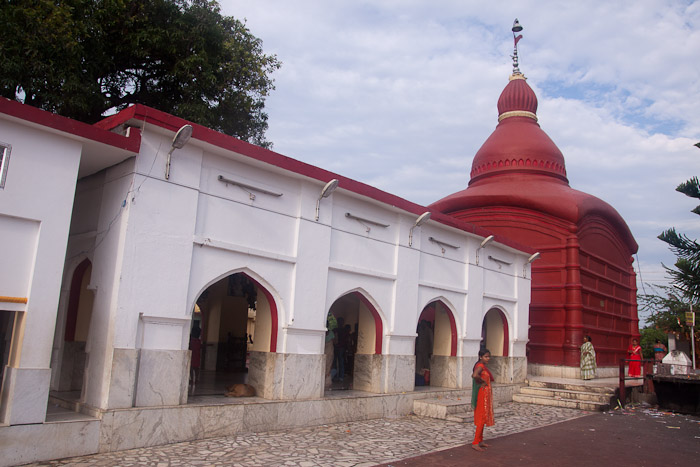
Located in the beautiful hills of Una, the Chhinnamastika Temple in Chintpurni is dedicated to Goddess Chhinnamastika. The temple’s origins predate recorded history and while the exact date of its establishment remains uncertain, local tradition attributes the temple’s founding to Pandit Mai Das, a Saraswat Brahmin, about 12 generations ago, approximately 300 years back. Over time, the village of Chhaproh where the temple was established came to be known as Chintpurni, after the eponymous deity. The temple’s location atop a hill not only provides a serene atmosphere for worship but also offers panoramic views of the surrounding landscape, enhancing the spiritual experience for devotees.

The temple is where the foot of Sati is said to have fallen. The Shakti at the Chhinnamastika Temple is known as Chhinnamastika Devi while the bhairava is known as Rudra Mahadeva. According to Markandeya Purana, goddess Chandi defeated the demons after a fierce battle but two of her yogini emanations, Jaya and Vijaya, were still thirsty for more blood. Goddess Chandi cut off her own head to quench Jaya and Vijaya’s thirst for more blood. Chhinnamasta, the headless goddess, is the great cosmic power who helps the sincere and devoted yogi to dissolve his or her mind, including all the preconceived ideas, attachments and habits into the pure divine consciousness. Cutting off the head suggests the separation of the mind from the body, that is the freedom of the consciousness from the material confines of the physical body.

According to Puranic traditions, Chhinnamastika Mata will be protected by Shiva – Rudra Mahadev in the four directions. There are four Shiva temples – Kaleshwar Mahadev in the east, Narayhana Mahadev in the west, Muchkund Mahadev in the north and Shiva Bari in the south – which are nearly equidistant from Chintpurni. In the garbha griha, the sanctum sanctorum of the temple, the image of Mata Chintpurni is installed in the form of a pindi – a round-shaped stone. The main shrine reveals images of three deities, the goddess flanked by her attendants, Jaya and Vijaya. Unlike many Hindu temples with elaborate idols, the main deity here is represented by the pindi, emphasising the formless aspect of the divine.

The temple comes alive during its numerous festivals and special occasions, including Navratri and Makar Sankranti. Observed on the Chaturdashi during the Shukla Paksha of the Vaishakha month, Chhinnamasta Jayanti commemorates the day when Goddess Shakti took the form of Mata Chhinnamasta. A fair is arranged during this auspicious celebration. Maha Shivaratri is also observed at the temple, highlighting the connection between Shiva and Shakti.

Another legend tells of Goddess Parvati bathing in the Mandakini river with her attendants. Losing track of time, she failed to notice her companions’ growing hunger. When she finally realized their plight, she beheaded herself to feed them with her blood. A variation of the bathing story tells that after slaying demons and drinking their blood, Goddess Chandi’s companions Jaya and Vijaya were still thirsty. The goddess then cut off her own head to satisfy their thirst. An oral tradition connects Chhinnamasta to the Samudra Manthan or the churning of the ocean episode. It’s said that she drank the demons’ share of the elixir of immortality and then beheaded herself to prevent them from acquiring it.

The Chhinnamastika Temple, with its blend of myth, history, and living faith, invites all who visit to partake in its timeless spiritual journey. The temple’s significance extends beyond its religious importance. It serves as a cultural centre, preserving ancient traditions and fostering community bonds.

Mahamaya Temple, Amarnath, Jammu & Kashmir
Located within the holy Amarnath Caves, the Mahamaya Temple lies at an altitude of 3,888 m and is believed to be over 5,000 years old. While the exact date of its establishment is unknown, the site’s sacred status stretches back millennia. The Amarnath cave itself is renowned for its naturally formed ice lingam, representing Lord Shiva, which forms each year. According to legend, it was in this cave that Lord Shiva imparted the secret of immortality to his consort Parvati.

A fascinating story from the 15th century adds another layer to the shrine’s history. It is said that a shepherd named Buta Mallik encountered a saint who gave him a bag of coal. Miraculously, upon reaching home, Buta found the coal had transformed into gold. When he returned to thank the saint, he instead discovered the holy cave containing the Shiva Linga. This tale spread, leading to increased worship at the site.

It is believed that Sati’s throat fell at this location, making devotees worship her as Mahamaya or the great illusion. The Bhairava is called Trisandhyeshwar.

Unlike many elaborate temple structures, the shrine is housed within a natural cave. The primary objects of worship – the ice lingam and the Shakti Peetha – are naturally formed. The journey to Amarnath is considered one of the most arduous pilgrimages in Hinduism. The difficult trek through snow-covered terrain is seen as a test of devotion and adds to the spiritual merit of visiting the shrine. Due to its high-altitude location, the shrine is only accessible for a short period during the summer months when the snow melts enough to allow pilgrims to make the journey. The site uniquely combines worship of both Shiva, in the form of the ice lingam, and Shakti, as the Mahamaya Peetha, making it significant for devotees of both deities.

The primary ritual for pilgrims is to have darshan or the sacred viewing of the naturally formed ice lingam, which represents Lord Shiva. Devotees offer prayers and perform rituals dedicated to Goddess Mahamaya, seeking her blessings and divine protection. A unique aspect of worship at this shrine is the offering of Vibhuti or sacred ash as prasad or offering to devotees. This ash is believed to carry the blessings of both Shiva and Shakti. The cave’s serene and spiritually charged atmosphere makes it an ideal place for meditation and the chanting of sacred mantras. The entire pilgrimage to Amarnath is filled with various rituals, from preparatory prayers before beginning the journey to specific observances along the trek.

The most significant period for the Mahamaya Shakti Peeth is during the annual Amarnath Yatra, which typically occurs in July and August. This pilgrimage attracts thousands of devotees who brave the challenging conditions to seek blessings at this sacred site. The month of Shravan in the Hindu calendar usually falls in July-August and is considered especially auspicious for the worship of Lord Shiva and visits to the shrine. While the shrine is not accessible during Maha Shivaratri, it is still an important day of worship and remembrance for devotees of the Amarnath shrine.

It is said that Lord Shiva chose this secluded cave to reveal the secret of immortality to Goddess Parvati, highlighting the site’s connection to profound spiritual wisdom. The tale of Buta Mallik’s miraculous encounter leading to the rediscovery of the holy cave in the 15th century adds a touch of wonder to the shrine’s history. Local legends speak of the goddess Mahamaya’s protective presence over the entire Amarnath region, safeguarding pilgrims on their arduous journey. Some interpretations suggest that the melting and reforming of the ice lingam each year symbolises the cycle of creation and dissolution in the universe, reflecting deep philosophical concepts.

The Mahamaya Shakti Peeth in Amarnath’s unique position high in the Himalayas, its naturally formed objects of worship, and its rich tapestry of legends and spiritual significance make it a truly special place in the landscape of Hindu pilgrimage sites. The story of the Mahamaya Shakti Peeth is ultimately a story of the meeting of earth and sky, of human devotion and divine grace. It teaches us about the power of faith to overcome obstacles, the importance of preserving our natural and spiritual heritage, and the eternal presence of the divine feminine in the cosmic dance of creation.

Sustainable Consumerism: Balancing Choice and Environmental Impact

Sustainable consumerism has gained significant traction in an era of increasing environmental awareness. This approach to consumption seeks to balance personal choices with environmental responsibility, aiming to meet human needs while minimising negative impacts on the planet.

Sustainable consumerism uses products and services that fulfil human needs while reducing negative environmental impacts. It involves making conscious choices about what we buy, how we use products, and how we dispose of them. This approach recognises that our consumption habits have far-reaching consequences for the planet and future generations. At its core, sustainable consumerism is about doing more and better with less. It challenges the traditional model of consumerism, which often prioritises short-term gratification over long-term environmental sustainability. Instead, it encourages consumers to consider the entire lifecycle of products, from production to disposal, and make choices that minimise resource depletion, pollution, and waste.

The Impact of Consumerism on the Environment
Before we explore sustainable practices, it’s crucial to understand the environmental impact of traditional consumerism:

  • Resource depletion: The continuous cycle of production and consumption puts immense pressure on natural resources, leading to their rapid depletion.
  • Greenhouse gas emissions: A 2015 study found that the production and use of household goods and services were responsible for 60% of global greenhouse gas emissions. The average product results in carbon emissions 6.3 times its weight across its lifecycle.
  • Waste generation: The culture of disposability associated with consumerism has exacerbated the problem of waste, filling landfills with products that were once coveted but are now deemed obsolete.
  • Pollution: The production, transportation, and disposal of consumer goods contribute significantly to air, water, and soil pollution.
  • Ecosystem Disruption: The extraction of raw materials and disposal of waste can lead to habitat destruction and biodiversity loss.

Becoming a Sustainable Consumer
Transitioning to sustainable consumerism involves adopting a range of practices and mindsets.

Mindful Consumption: The first step towards sustainable consumerism is to become more mindful of our purchasing habits. This involves assessing needs vs. wants. Before making a purchase, consider whether the item is necessary or if it is driven by momentary desire. It also is about quality over quantity where one needs to invest in high-quality, durable products that will last longer, reducing the need for frequent replacements. A sustainable consumer also researches products and looks for products with eco-friendly certifications or those made by companies with strong sustainability commitments.

Reducing Single-use Items: Single-use products, especially plastics, are a significant source of waste and pollution. Sustainable consumers can use reusable containers for food storage and shopping, carry a reusable water bottle instead of buying bottled drinks, and choose products with minimal or recyclable packaging.

Embracing the Circular Economy: The circular economy model focuses on reusing, repairing, and recycling products to extend their lifecycle and reduce waste. Sustainable consumers can repair items when possible instead of replacing them, donate or sell usable items instead of discarding them, and recycle responsibly, following local guidelines for proper waste sorting.

Supporting Sustainable Brands: By supporting companies with strong sustainability practices, consumers can drive market demand for eco-friendly products. One should look for brands that use sustainable materials and production methods, have transparent supply chains, and implement take-back programs for their products.

Adopting a Minimalist Approach: Minimalism aligns well with sustainable consumerism by encouraging people to live with less. This can involve decluttering and only keeping items that add value to one’s life, borrowing or renting items used infrequently, and participating in the sharing economy for services and products.

Eating Sustainably: Food choices have a significant environmental impact. Sustainable consumers can reduce meat consumption, especially beef, which has a high carbon footprint, choose locally produced and seasonal foods to reduce transportation emissions and minimise food waste by planning meals and composting organic waste.

Considering Energy Efficiency: Energy use is a major contributor to greenhouse gas emissions. Sustainable consumers can choose energy-efficient appliances and electronics, opt for renewable energy sources when possible and implement energy-saving habits in daily life.

The Environmental Impact of Sustainable Consumerism
Adopting sustainable consumer practices can have significant positive impacts on the environment. By choosing products with lower carbon footprints and supporting companies with sustainable practices, consumers can help reduce overall greenhouse gas emissions. Sustainable consumption practices help conserve natural resources by reducing demand for new raw materials and promoting the use of recycled or renewable resources. By opting for durable, repairable products and minimising single-use items, sustainable consumers contribute to a significant reduction in waste generation. Reduced demand for resource-intensive products can help protect ecosystems from destruction due to resource extraction and pollution. Many sustainable products and practices also focus on water conservation, helping to preserve this vital resource. As demand shifts towards more sustainably produced goods, there can be a reduction in pollutants released into the air and water during manufacturing processes.

Balancing Choice and Environmental Impact
While sustainable consumerism offers numerous benefits, it also presents challenges, particularly in balancing personal choice with environmental responsibility. Here are some strategies for striking this balance:

Informed Decision-Making: Education is key to making sustainable choices without feeling overly restricted. By understanding the environmental impact of different products and services, consumers can make informed decisions that align with their values and needs.

Gradual Transitions: Shifting to sustainable consumerism doesn’t have to happen overnight. Start with small changes and gradually incorporate more sustainable practices into one’s lifestyle. This approach can make the transition feel less overwhelming and more achievable.

Finding Alternatives: For every conventional product, there’s often a more sustainable alternative. Explore these options to maintain variety in one’s choices while reducing environmental impact. For instance, if one enjoys fashion, look into sustainable clothing brands or second-hand shopping.

Quality of Life Focus: Remember that sustainable consumerism isn’t about deprivation, but about enhancing quality of life. Many sustainable practices, such as buying durable goods or eating locally sourced food, can improve one’s overall well-being while benefiting the environment.

Leveraging Technology: Use technology to one’s advantage in making sustainable choices. Apps and websites can help one find eco-friendly products, calculate their carbon footprint, or connect with local sharing economy initiatives.

Balancing Priorities: Recognise that it may not always be possible to make the most sustainable choice in every situation. Prioritise efforts where one will have the most impact, and don’t be too hard on oneself when compromises are necessary.

Collective Action: Remember that individual choices, when multiplied across many consumers, can drive significant change. Engage with the community, share sustainable practices, and advocate for policies that support sustainable consumption.

The Role of Business and Government
While individual actions are crucial, sustainable consumerism also requires support from businesses and governments. Business initiatives like implementing circular economy principles in product design and manufacturing, offering repair services and take-back programmes for their products and providing transparent information about the environmental impact of their products help in cultivating sustainability.

Government policies like implementing regulations that promote sustainable production and consumption, offering incentives for businesses and consumers who adopt sustainable practices, and investing in infrastructure that supports sustainable lifestyles, such as public transportation and recycling facilities will drive the sustainability playbook.

Sustainable consumerism represents a powerful approach to addressing environmental challenges while maintaining quality of life. By making mindful choices about what we buy, how we use products, and how we dispose of them, we can significantly reduce our environmental impact. The journey towards sustainable consumerism is ongoing and evolving. It requires a shift in mindset, a willingness to learn and adapt, and a recognition of the power of individual choices. While it may seem challenging at times, the benefits – both for individuals and the planet – are substantial.

As we move forward, it’s crucial to remember that sustainable consumerism is not about perfection, but about progress. Every small step towards more sustainable choices contributes to a larger movement for environmental protection and responsible resource use. By balancing our choices with environmental considerations, we can create a more sustainable future for ourselves and generations to come.

Sustainable consumerism is not just about what we buy, but about how we live. It’s about creating a lifestyle that values experiences over possessions, quality over quantity, and long-term well-being over short-term gratification. As we embrace these principles, we not only reduce our environmental impact but also often find greater satisfaction and fulfllment in our lives. The path to sustainable consumerism is a collective journey. It involves consumers, businesses, and governments working together to create systems and practices that support environmental sustainability. By making conscious choices in our daily lives and advocating for broader systemic changes, we can all play a part in building a more sustainable and resilient world.

Sacred Stones, Spaces, and Stories: Shakthipeeta Part 7

Chandrabhaga Temple, Somnath, Gujarat
Located within the sacred complex of the Somnath Temple, the Chandrabhaga Temple stands as a unique and enigmatic Shakti Peetha. Unlike many other elaborate temples, this sacred site presents itself in a surprisingly modest form, challenging our conventional notions of what constitutes a temple.

The origins of the Chandrabhaga Temple are shrouded in antiquity, intertwined with the rich tapestry of myths and legends that surround the Somnath complex. While the exact date of its establishment remains elusive, its spiritual significance stretches back millennia, predating many of the structures in the area.
The temple’s name, Chandrabhaga, carries deep meaning. Chandra refers to the moon, while bhaga can be interpreted as a part or portion. This name is intimately connected to the legend of Chandra Dev, the Moon God and his interactions with Lord Shiva at Somnath.

According to tradition, the temple marks the spot where Sati’s Udara or stomach fell. What sets this Shakti Peetha apart is its unique form. Unlike most temples that house elaborate structures and idols, the Chandrabhaga Shakti Peetha is essentially the confluence of three rivers – Hiran, Kapila, and Saraswati. This Triveni Sangam or meeting point of three rivers, is considered the actual Shakti Peetha. At Chandrabhaga, the Bhairava is known as Vakratunda. The name Vakratunda, meaning one with a curved trunk, is intriguing, as it’s more commonly associated with Lord Ganesha. The goddess here is worshipped as Chandrabhaga, embodying the divine feminine energy in its cosmic form. However, it’s important to note that there is no specific idol or structure dedicated to the goddess at this site.

Unlike most Shakti Peethas, there is no dedicated temple structure for Goddess Chandrabhaga. The confluence of rivers itself is considered the sacred site. While the main shrine is absent, there are remnants of old temples in the vicinity. These include the Sitaleshwar Temple, Shiva Temple, Vishnu Temple, Kalika Devi Temple, also known as Navadurga Temple, and a Ganesha Mandapa. A banyan tree at the site is considered highly auspicious. It’s believed to symbolise the Trimurti of Lord Vishnu, Lord Shiva, and Lord Brahma, and is associated with life, fertility, and wish-fulfillment. The focus of devotion here is the river itself, with devotees considering the act of bathing in the Chandrabhaga as a sacred ritual. During the reconstruction of the Somnath Jyotirlinga, the trustees reportedly overlooked or chose not to rebuild the Devi shrine, leaving it in its current state. The month of Kartik sees a surge in devotees who come to bathe in the river and light lamps, following an ancient tradition.

The most prominent legend associated with this site is that of Chandra Dev or the Moon God. Cursed by his father-in-law Daksha Prajapati to lose his luster, Chandra came to Somnath and prayed to Lord Shiva. Pleased with his devotion, Shiva partially lifted the curse, allowing Chandra to wax and wane rather than remain permanently dimmed. In gratitude, Chandra built the first temple to Shiva at Somnath. The name Chandrabhaga is believed to have originated from this legend, representing the portion or bhaga of the moon or Chandra that was saved by Lord Shiva’s grace. One intriguing tale speaks of a Nataraja idol in the temple complex that supposedly floated in a hall with the help of magnetic walls. This was said to be part of the temple’s reconstruction in 1169 by King Kumarapala. The confluence of the three rivers – Hiran, Kapila, and Saraswati – at this spot is considered highly sacred. Each river is associated with different aspects of spirituality and purification.

The absence of a grand temple at the Chandrabhaga Shakti Peetha might initially seem perplexing, but it is this very absence that invites a deeper contemplation of the nature of divinity and worship. The sacred rivers flowing into each other, the ancient banyan tree standing sentinel, and the echoes of centuries of devotion create an atmosphere that transcends the need for man-made structures.

Bhadrakali Temple, Kurukshetra, Haryana
Located in the historic city of Kurukshetra, the Bhadrakali Temple, also known as Shri Devi Koop Temple, is dedicated to Goddess Bhadrakali, one of the eight forms of the Goddess Kali. The origins of the temple and its spiritual significance stretch back into unrecorded times. Archaeological evidence and ancient texts suggest that this location has been a place of worship since the times of the Mahabharata, making it one of India’s ancient temples.

The temple’s history is deeply intertwined with the epic Mahabharata. It is said that the Pandavas, the heroes of the epic, sought the blessings of Goddess Bhadrakali here before the great battle of Kurukshetra. According to tradition, it is believed that the right heel or ankle of Goddess Sati fell here.

The temple is also known by several other names, each highlighting its significance in the pantheon of Shakti worship. It is referred to as Savitri Peeth, Devi Peeth, Kalika Peeth, or Aadi Peeth. These various appellations underscore the temple’s importance in different traditions of goddess worship.

The temple is built around a well, known as Devi Koop, which is believed to be the exact spot where Sati’s ankle fell. A marble representation of the goddess’s ankle is installed in the temple, serving as a tangible reminder of the site’s Shakti Peetha status. One of the most unique aspects of this temple is the tradition of offering miniature horses. Devotees who have their wishes fulfilled offer terracotta or metal horses to the deity. The temple houses terracotta and metal horses offered by the Pandavas after their victory in the Mahabharata battle, adding to its historical significance.

The temple is open daily from 5 am to 1 pm and then again between 4 and 9 pm. One of the most significant daily rituals is the aarti, which is performed twice a day, the morning aarti between 6 and 6:40 am and the evening aarti between 7 and 7:40 pm.

The temple comes alive during its numerous festivals and special occasions. The Navratri festival sees a surge in devotees, and special pujas are performed, especially on the day of Durga Puja. The temple hosts special celebrations during Raksha Bandhan and it is believed that visiting the temple on Saturdays and worshipping the Goddess is particularly auspicious and fulfils the wishes of devotees. The temple is popular for the hair-removing ceremony of young children, believed to be connected to a similar ceremony performed for Lord Krishna and Balram at this site.

According to local lore, the Pandavas sought the blessings of Goddess Bhadrakali before the Kurukshetra War. After their victory, they returned to offer thanks and presented terracotta and metal horses to the deity. This story is the origin of the unique tradition of offering miniature horses at the temple. It is believed that the mundan or hair removal ceremony of Lord Krishna and his brother Balram was performed at this temple. This legend has made the temple a popular site for similar ceremonies for young children. A tale from the Dvapara Yuga speaks of King Mayurdhwaj, who ruled this area. Lord Krishna and Arjuna visited the king to test his charity. Krishna asked for the meat from the right side of the king’s son to feed his lion. As the king and queen prepared to fulfil this request, the Goddess appeared, blessing them with their devotion.

The temple’s significance extends beyond its religious importance. It serves as a cultural centre, preserving ancient traditions and fostering community bonds. The Bhadrakali Temple of Kurukshetra stands not just as a place of worship, but as a living link to India’s rich mythological past and a vibrant centre of contemporary devotion.

Jwaliji Temple, Kangra, Himachal Pradesh
Nestled in the picturesque Kangra valley of Himachal Pradesh, the Jwalaji Temple, dedicated to the Goddess of Light, is not just a place of worship but a powerful symbol of divine feminine energy.

Also known as the Jwala Devi Temple or Jwalamukhi Temple, the Jwalaji Temple is located on Kalidhar hill in the Kangra district. The temple’s exact date of establishment remains unknown, with legends tracing its origins to various eras of Hindu mythology. The temple’s construction is attributed to Raja Bhumi Chand, the Katoch ruler of Kangra, who was a great devotee of Goddess Durga. However, the present structure of the temple was completed in 1835 by Maharaja Ranjit Singh and Raja Sansar Chand. According to tradition, it is believed that the tongue of Goddess Sati fell here, making it a powerful centre of Shakti worship.

The most unique aspect of this temple is the presence of nine natural flames that have been burning continuously for centuries. These flames emerge from the earth through fissures in the rock and are considered manifestations of the goddess. Unlike most Hindu temples, no deity or idol is worshipped here. The eternal flames themselves are considered the embodiment of the goddess. The nine flames are known by different names: Annapurna, Chandi, Hinglaj, Vindhyavasani, Mahalakshmi, Saraswati, Ambika, Anjidevi, and Mahakali. The temple features a series of domes covered with gold, creating a striking visual against the backdrop of green hills.

Navaratri is celebrated with great fervour at the temple. It attracts thousands of devotees from across India. During Navaratri, Ashtami and Navami are considered particularly auspicious for worship at the temple. Ceremonial fire sacrifices known as havans are performed in the Chachar Chowk, an open square surrounding the temple.

According to local lore, a cowherd noticed that one of his cows always returned without milk. Upon following the cow, he saw a girl emerging from the forest to drink its milk before disappearing in a flash of light. This led to the discovery of the sacred site. The Mughal Emperor Akbar, skeptical of the temple’s miraculous flames, attempted to extinguish them. He tried covering them with an iron disk and even channeling water towards them, but all attempts failed. Impressed by this divine display, Akbar presented a golden parasol or chattar to the shrine, which is said to have transformed into an unknown metal due to his initial skepticism. The mystery of the eternal flames has attracted scientific attention. Despite digging nine kilometers deep, researchers have been unable to locate the source of the natural gas fueling these flames.

Some legends associate the temple with the Pandavas, heroes of the Mahabharata epic. It is said that they renovated the temple, as evidenced by the folk song Panjan Panjan Pandavan Tera Bhawan Banaya. The temple has been mentioned in various historical accounts. Firoz Shah Tughlaq is said to have translated a book from the temple’s library of 1300 volumes. Emperor Jahangir, after capturing Kangra fort in 1620 AD, also visited and mentioned this temple.

As one stands in the temple courtyard, surrounded by centuries of devotion and the mesmerising sight of the eternal flames, one can’t help but feel a connection to the spiritual heritage.

Vajreshwari Temple, Nagarkot, Himachal Pradesh
Located in the picturesque town of Nagarkot in Kangra district, the Vajreshwari Temple, dedicated to Goddess Vajreshwari is also known as Kangra Devi Mandir or Nagarkot Devi Temple. While the exact date of the temple’s establishment remains unknown, legends trace its roots to the epic era of the Mahabharata.

According to tradition, the original temple was built by the Pandavas. As the legend goes, the Goddess appeared to the Pandavas in a dream, revealing her presence in Nagarkot and instructing them to construct a temple for her protection. The Pandavas promptly built a magnificent shrine on the site, establishing what would become one of the most revered temples in the region.

However, the temple’s history is not one of uninterrupted peace. Over the centuries, it faced numerous challenges and destructions. Most notably, the infamous ruler Mohammed Ghazni is said to have looted the temple at least five times, drawn by its immense wealth of gold and silver. Despite these setbacks, the temple’s spiritual significance never waned, and it was always rebuilt and restored.

The present structure of the temple dates back to 1920. In 1905, a powerful earthquake had reduced the previous temple to ruins. However, it was reconstructed and restored to its former glory. According to tradition, this site marks the spot where the right breast of Goddess Sati fell. The name Vajreshwari is significant, literally meaning the lady of the thunderbolt, hinting at the goddess’s fierce and protective nature. The bhairava associated with the temple is Abhirunatheshwar, while the Shakti is Jayadurga Devi.

The temple is surrounded by a stone wall, reminiscent of a fort. This unique architectural feature not only adds to the temple’s grandeur but also speaks to its historical importance and the need for protection in turbulent times. Unlike many Hindu temples with elaborate idols, the main deity in the Vajreshwari Temple is present in the form of a Pindi. This abstract representation of the goddess adds to the mystical atmosphere of the shrine. Within the temple complex, there is a small shrine dedicated to Bhairav. This presence of Bhairav, a fierce manifestation of Lord Shiva, is typical of Shakti Peethas and symbolises the union of Shiva and Shakti energies.

In front of the main temple, an idol of Dhayanu Bhagat stands. According to local lore, Dhayanu Bhagat offered his head to the Goddess during the time of Akbar. Uniquely, the temple compound houses three tombs. While the significance of these tombs is not explicitly mentioned in the available sources, their presence adds an intriguing historical element to the temple complex.

One unique ritual associated with this temple occurs during Makar Sankranti, which falls in the second week of January. According to legend, after slaying the demon Mahishasura in battle, the Goddess sustained some injuries. To heal these wounds, she applied butter to her body in Nagarkot. To commemorate this event, the Pindi of the Goddess is covered with butter during Makar Sankranti, and the festival is celebrated for a week in the temple.

As mentioned earlier, the temple’s origin is linked to a divine dream of the Pandavas. This connection to the heroes of the Mahabharata adds a layer of epic significance to the shrine. Another legend speaks of a demon named Kalikala or Kalikut who terrorised humans, saints, and even gods in the region. The gods and sages, led by sage Vashista, performed a Chandi yajna to please Goddess Parvati. During this yajna, an offering was not given to Indra, enraging him. Indra hurled his Vajra or thunderbolt at the yajna, terrifying everyone. The Goddess then appeared, swallowed Indra’s weapon, and killed the demon. From this event, she came to be known as Vajreshwari Devi.

In a variation of the above legend, it’s said that when Indra hurled his Vajra at the demon Kalikala, the demon broke it into pieces. From these pieces, Vajra Devi appeared and slew the demon, hence earning the name Vajreshwari. The temple’s history of being looted multiple times by Mohammed Ghazni speaks to its immense wealth and importance. Despite these setbacks, the temple’s spiritual significance never diminished, and it was always restored. The presence of Dhayanu Bhagat’s idol in the temple complex hints at another intriguing story. It’s said that Dhayanu Bhagat offered his head to the Goddess during the time of Mughal Emperor Akbar.

As one stands in the temple courtyard, surrounded by centuries of devotion and the echoes of ancient rituals, one can’t help but feel a connection to the spiritual heritage that has shaped this land for millennia. The temple’s resilience in the face of natural disasters and human invasions is a testament to the enduring power of faith.

Sustainable Gastronomy Day

Sustainable Gastronomy Day, celebrated annually on June 18, is an initiative established by the United Nations to raise awareness about the importance of sustainable food practices. This day emphasises the role of gastronomy in promoting food security, preserving biodiversity, and fostering agricultural development. It serves as a platform to highlight how sustainable gastronomy can contribute to achieving sustainable development goals (SDGs) globally.

Sustainable gastronomy is a concept that intertwines culinary practices with environmental consciousness. It refers to food systems that prioritise local sourcing, seasonal ingredients, and traditional cooking methods. This approach not only minimises waste but also supports local economies and preserves cultural heritage.

Key elements of sustainable gastronomy include local sourcing and emphasising the use of ingredients that are grown or produced in the local area; seasonal eating by the encouragement of the consumption of foods that are in season, which reduces the carbon footprint associated with transportation, waste reduction by implementing practices that minimise food waste throughout the supply chain, and conserving biodiversity by supporting agricultural practices that protect diverse ecosystems and promote the conservation of local species.

The significance of sustainable gastronomy has become increasingly apparent in light of global challenges such as climate change, food insecurity, and biodiversity loss. By adopting sustainable culinary practices, individuals and communities can contribute to a healthier planet and a more equitable food system.

The relevance of sustainable gastronomy is underscored by several pressing global issues:

  • Food Security: An estimated one-third of all food produced globally is wasted, so sustainable gastronomy plays a vital role in addressing food security challenges. Reducing waste can help ensure that more food reaches those in need, thereby alleviating hunger.
  • Environmental Impact: The food production system is a significant contributor to greenhouse gas emissions, deforestation, and water pollution. Sustainable gastronomy encourages practices that mitigate these impacts, such as organic farming and responsible sourcing.
  • Cultural Heritage: Gastronomy is not just about food; it is a reflection of cultural identity and heritage. Sustainable gastronomy promotes the preservation of traditional cooking methods and local cuisines, fostering cultural diversity.
  • Health Benefits: Eating locally sourced and seasonal foods often leads to healthier diets rich in nutrients while reducing reliance on processed foods laden with preservatives.

Sustainable Gastronomy Day was officially established by the United Nations General Assembly on December 21, 2016. The first observance took place on June 18, 2017. This initiative was launched to recognise gastronomy as a form of cultural expression linked to the natural and cultural diversity of the planet. The day aims to promote awareness about how sustainable gastronomy can contribute to achieving various SDGs, including poverty reduction, health and well-being, responsible consumption, and climate action. The collaboration between organizations such as UNESCO and the Food and Agriculture Organization (FAO) ensures that Sustainable Gastronomy Day is observed globally with educational initiatives and events.

Looking ahead to 2025, the theme for Sustainable Gastronomy Day is “More Taste, Less Waste.” This theme emphasises the importance of flavour while promoting innovative approaches to reduce food waste within culinary practices. The initiative will encourage chefs, restaurants, and consumers to explore creative ways to utilise all parts of ingredients and minimise waste through thoughtful meal planning and preparation techniques. The theme aligns with ongoing efforts to highlight the economic and environmental benefits of reducing food waste while celebrating culinary creativity. Events such as Sustainable Gastronomy Restaurant Week will be part of this initiative, showcasing how chefs can offer delicious meals without compromising sustainability principles.

Sustainable Gastronomy Day reminds us of the interconnectedness between our food systems, cultural heritage, and environmental sustainability. By embracing sustainable gastronomic practices, we can contribute to a healthier planet while enjoying diverse culinary experiences.