World Liveability Index 2024

The Global Liveability Index, published annually by the Economist Intelligence Unit (EIU), is a comprehensive ranking of the world’s most liveable cities. The index measures the liveability of 173 cities across five key categories: stability, healthcare, culture and environment, education, and infrastructure. The 2024 edition marks the third consecutive year Vienna has been named the world’s most liveable city.

The EIU assigns each city a rating for relative comfort for 30 qualitative and quantitative factors across the five broad categories. Researchers then compile and weigh the scores to provide an overall score from 1 to 100, where 1 is considered intolerable and 100 is considered ideaL. The livability rating is provided both as an overall score and as a score for each category.

The index aims to provide a standardised comparison of the challenges cities face in offering an acceptable living environment for their residents. It is used by city authorities, corporate HR departments, and other organisations to assess the quality of life in different cities and help inform decisions on where to locate staff.

The average score across the 173 cities in EIU’s survey increased to 76.1 out of 100 in 2024, up marginally from the previous year. This rise was driven by improvements in healthcare and education in several developing market cities, which offset declines in infrastructure and stability across several cities in advanced economies. However, risks to stability remain, with the stability category recording the biggest decline out of all five categories. Geopolitical conflicts, civil unrest, and a housing crisis across many surveyed cities have contributed to this decline.

Western Europe has retained its position as the most liveable region in the world, with an average score of 92 out of 100. The region’s 30 cities in this year’s ranking reported top scores for stability, healthcare, culture and environment, and infrastructure. However, the region has seen a slight decline in overall scores due to some deterioration in the stability category. Increasing examplesof disruptive protests and crime in countries like Germany, Ireland, and Belgium have contributed to this decline.

North America is the second-best-performing region for liveability, with the top score for education. The 25 cities on the list score an average of 90.5, a small decline from the previous year. This decline is attributed to infrastructure scores falling in Canada due to an ongoing housing crisis.

Cities from sub-Saharan Africa, the Middle East and North Africa dominated the bottom of the livability rankings. Damascus, Syria, is still rated by far the least comfortable city to live in, with an index score of 30.7 out of 100.

The four cities at the bottom of the list – Lagos, Nigeria; Algiers, Algeria; Tripoli, Libya; and Damascus, Syria – have shown no improvement in their overall scores since the previous year. This highlights the persistent challenges faced by these cities in providing a liveable environment for their residents.

The top 10 liveable cities of 2024 are:

Vienna, Austria: Vienna has been named the world’s most liveable city for the third consecutive year. The Austrian capital scored “perfect” in all but one of the five categories, failing to achieve maximum points only for culture due to a lack of major sporting events. Vienna’s two million residents enjoy stunning architecture, a rich musical legacy, and a high quality of life.

Copenhagen, Denmark: Copenhagen retains its position as the second most liveable city in the world. The Danish capital is known for its commitment to sustainability, with a focus on green spaces, active transportation, and renewable energy. Copenhagen also boasts a strong education system and a vibrant cultural scene.

Zurich, Switzerland: Zurich is the third most liveable city in the 2024 index. The Swiss city is renowned for its high standard of living, excellent healthcare, and efficient public transportation. Zurich also offers a wealth of cultural attractions and easy access to nature, with the Swiss Alps just a short distance away.

Calgary, Canada: Calgary is the fourth most liveable city in the world and the highest-ranked city in North America. The Canadian city is known for its strong economy, low crime rates, and excellent healthcare and education systems. Calgary also offers a high quality of life, with a range of outdoor activities and a vibrant cultural scene.

Vancouver, Canada: Vancouver is the fifth most liveable city in the 2024 index and the second highest-ranked city in North America. The Canadian city is known for its stunning natural setting, with the ocean and mountains providing a backdrop to the city. Vancouver also offers a high standard of living, with a strong economy, excellent healthcare, and a commitment to sustainability.

Geneva, Switzerland: Geneva is the sixth most liveable city in the world and the third highest-ranked city in Switzerland. The Swiss city is known for its high standard of living, excellent healthcare, and strong economy. Geneva also offers a wealth of cultural attractions and easy access to nature, with the Swiss Alps and Lake Geneva providing a stunning setting.

Frankfurt, Germany: Frankfurt is the seventh most liveable city in the 2024 index and the highest-ranked city in Germany. The German city is known for its strong economy, low crime rates, and excellent healthcare and education systems. Frankfurt also offers a high quality of life, with a range of cultural attractions and a vibrant urban environment.

Toronto, Canada: Toronto is the eighth most liveable city in the world and the third highest-ranked city in North America. The Canadian city is known for its diversity, strong economy, and excellent healthcare and education systems. Toronto also offers a high quality of life, with a range of cultural attractions and a vibrant urban environment.

Amsterdam, Netherlands: Amsterdam is the ninth most liveable city in the 2024 index and the highest-ranked city in the Netherlands. The Dutch city is known for its commitment to sustainability, with a focus on active transportation and renewable energy. Amsterdam also offers a wealth of cultural attractions, a strong economy, and a high standard of living.

Osaka, Japan: Osaka is the tenth most liveable city in the world and the highest-ranked city in Asia. The Japanese city is known for its strong economy, low crime rates, and excellent healthcare and education systems. Osaka also offers a high quality of life, with a range of cultural attractions and a vibrant urban environment.

So where are the other Asian cities? Osaka is the only Asian city in the top 10, achieving a score of 96.0. Other than Osaka, here are the top 10 Asian cities that are known to be liveable.

Tokyo, Japan: Tokyo has a global rank of 14, making it the second-most liveable city in Asia. With a score of 93.7, Tokyo remains a major global city known for its robust public services, safety, and healthcare. Despite its high livability, Tokyo has seen a slight decline in its ranking due to challenges such as housing costs and urban congestion. The city’s cultural offerings and efficient infrastructure continue to attract residents and visitors alike.

Singapore: With a global rank of 18 and an Asian rank of 3, Singapore scores 92.9, making it one of the most livable cities in Asia. The city-state excels in healthcare, education, and infrastructure, contributing to its high quality of life. Its multicultural environment, low crime rates, and efficient public transport system make it an attractive destination for expatriates and locals.

Hong Kong: The city of Hong Kong ranks 50 in the global index and number 4 in Asia with a score of 82.6. The city is known for its vibrant economy and cultural diversity. However, it faces challenges related to political stability and housing affordability, which have impacted its livability in recent years. Despite these issues, Hong Kong remains a significant financial hub with a unique blend of East and West.

Seoul, South Korea: With a score of 80.8, Seoul has a global rank of 54 and is the fifth-best city to live in Asia. Seoul’s score reflects its strengths in healthcare and education. The city is known for its rich history, modern infrastructure, and vibrant culture. However, challenges such as air quality and high living costs have affected its overall ranking, despite its appeal as a global city.

Taipei, Taiwan: Known for its friendly atmosphere and efficient public services, Taipei with a score of 80.1 has a global rank of 57 and an Asian rank of 6. The city offers a high standard of living with excellent healthcare and education systems. Its cultural vibrancy and culinary scene are significant draws for residents and tourists alike.

Kuala Lumpur, Malaysia: A global rank of 61 and Asia’s seventh-best city to live in, Kuala Lumpur scores 78.9. The city is recognised for its diverse culture and relatively low cost of living. The city has made strides in improving infrastructure and public services, contributing to its livability. However, challenges such as traffic congestion and air quality remain.

Beijing, China: The Chinese capital is ranked number 8 in Asia with a global rank of 77. Beijing scores 76.2, and is recognised for its historical and cultural significance. The city offers a high standard of living with good healthcare and education. However, challenges such as air pollution and traffic congestion impact its overall livability, despite its status as a major global city.

Ho Chi Minh City, Vietnam: With a global rank of 126, Ho Chi Minh City scores 66.7 and is ranked 9 within Asia. Known for its vibrant economy and cultural diversity, the city is undergoing rapid development, which presents both opportunities and challenges in terms of infrastructure and livability. Despite these issues, it remains a popular destination for expatriates.

Hanoi, Vietnam: Hanoi scores 66.5, reflecting its historical significance and rapid urban development. With a global rank of 129, Asia’s tenth-best city offers a unique blend of culture and modernity, though it faces challenges related to infrastructure and pollution. Its affordable living costs attract many expatriates and locals.

No Indian cities are listed in the 2024 Global Liveability Index. While cities like Bengaluru, Mumbai, Chennai, and New Delhi are recognised in various national assessments, such as the Ease of Living Index, they do not appear in the EIU’s global ranking. The top-ranked Indian city in the Ease of Living Index for 2024 is Bengaluru, which scored 66.70, making it the most livable city in India but still not making the global list. The absence of Indian cities in the Global Liveability Index highlights ongoing challenges in urban living conditions, despite improvements in some areas.

The 2024 Global Liveability Index highlights the ongoing challenges and opportunities facing cities around the world. While the average score has risen slightly, risks to stability remain, with geopolitical conflicts, civil unrest, and housing crises contributing to declines in some cities.

Western Europe and North America continue to dominate the top of the rankings, with cities in these regions offering a high standard of living and a range of amenities. However, cities in the Middle East and North Africa continue to struggle, with Damascus, Syria, rated as the least liveable city in the world.

As cities face new challenges such as climate change and rapid urbanisation, the Global Liveability Index will continue to be an important tool for assessing the quality of life in different cities and informing decisions on where to live and work. By understanding the factors that contribute to a city’s liveability, policymakers and urban planners can work to create more liveable and sustainable cities for the future.


Poem: Pillow Thoughts

When my head hits the pillow at night,
And darkness surrounds me, a blanket of night.
My mind starts to wander, thoughts swirling around,
Echoing loudly, without any sound.

The day’s events replay in my head,
The things I should’ve done, the words I should’ve said.
Regrets and worries, they creep in with ease,
Robbing me of sleep, denying me peace.

But amidst the chaos, a glimmer of light,
Memories surface, bringing comfort and might.
Moments of laughter, of love and of cheer,
Reminding me that joy is always near.

I think of my loved ones, their faces so dear,
And know that their presence will always be here.
Their support and their kindness, a strength I can’t deny,
Helping me face each day, helping me try.

So when my head hits the pillow at night,
And the world seems to fade, a canvas of white.
I’ll embrace the stillness, the quiet so sweet,
And let my heart and mind finally meet.

For in this moment, when all else is still,
I find the answers, the peace, and the will.
To face the next day, with courage and grace,
Knowing that tomorrow is a brand new place.

World Food Day

World Food Day is observed annually on October 16th to commemorate the founding of the Food and Agriculture Organisation (FAO) of the United Nations in 1945. This day serves as a platform to raise awareness about global hunger, food security, and the importance of sustainable agriculture. 

World Food Day was established by the FAO’s Member Countries during the Organisation’s 20th General Conference in November 1979. The Hungarian delegation, led by Dr. Pál Romány, proposed the idea of celebrating World Food Day to raise awareness about hunger and food security issues globally. The day was officially recognised and celebrated for the first time on October 16, 1981.

The establishment of World Food Day came at a time when the world was facing significant challenges related to hunger and malnutrition. The post-World War II era saw a growing recognition of the need for coordinated efforts to address food insecurity and improve agricultural practices. The FAO was created to lead these efforts, focusing on eradicating hunger and promoting sustainable agriculture.

The significance of food security is also intertwined with the Universal Declaration of Human Rights, adopted by the United Nations in 1948. Article 25 states that everyone has the right to a standard of living adequate for health and well-being, including food, clothing, housing, and medical care. This declaration underscores the importance of ensuring all individuals have access to sufficient and nutritious food.

World Food Day serves several important purposes. The day helps educate the public about the global hunger crisis and the importance of food security and highlights the challenges faced by millions of people who don’t have access to sufficient food. World Food Day encourages individuals, communities, and governments to take action to combat hunger and malnutrition. It serves as a call to mobilise resources and support initiatives at improve food security. The day recognises the progress in addressing hunger and promoting sustainable agricultural practices. It celebrates the efforts of organisations, governments, and individuals working to improve food security. World Food Day fosters collaboration among various stakeholders, including governments, NGOs, businesses, and communities, to address the complex challenges of food security. The day provides a platform for advocating for policies that support sustainable agriculture, food security, and the rights of marginalised communities.

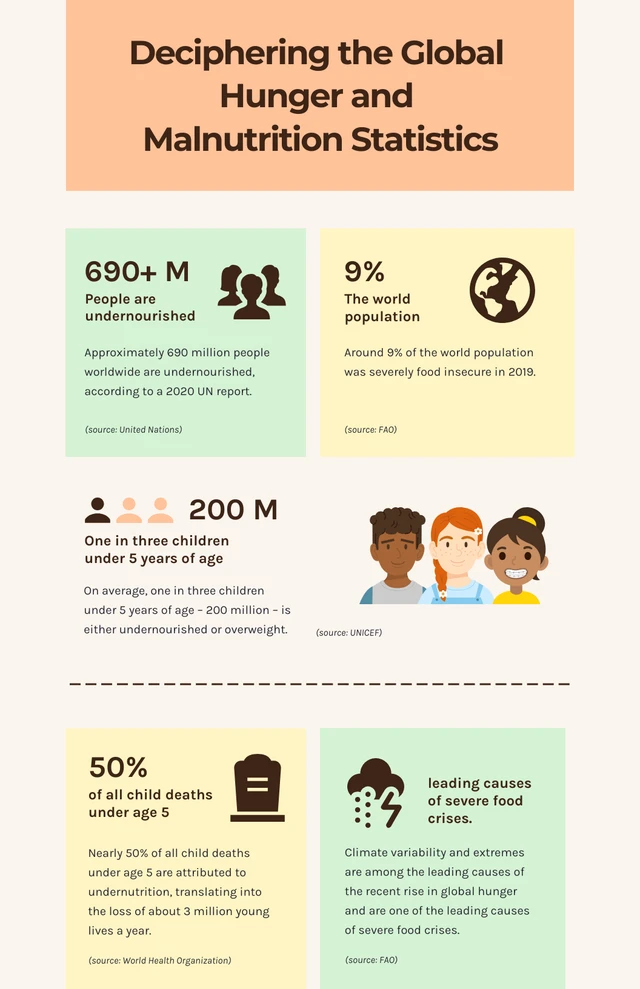
The theme for World Food Day 2024 is “Right to foods for a better life and a better future.” The world’s farmers produce enough food to feed more than the global population yet, hunger persists. Up to 783 million people face hunger due to conflict, repeated weather shocks and economic downturns. This impacts the poor and vulnerable most severely, many of whom are agricultural households, reflecting widening inequalities across and within countries.

Food is the third most basic human need after air and water – everyone should have the right to adequate food. Human rights such as the right to food, life and liberty, work and education are recognised by the Universal Declaration of Human Rights and two legally binding international covenants. emphasises the critical role of agriculture and food systems in addressing global hunger and ensuring that everyone has access to sufficient and nutritious food.

‘Foods’ stands for diversity, nutrition, affordability, accessibility and safety. A greater diversity of nutritious foods should be available in our fields, fishing nets, markets, and on our tables, for the benefit of all. Over 2.8 billion people in the world are unable to afford a healthy diet. Unhealthy diets are the leading cause of all forms of malnutrition – undernutrition, micronutrient deficiencies and obesity, which now exist in most countries, cutting across socio-economic classes. Yet today, too many people suffer from hunger and are unable to afford healthy diets. More vulnerable people are often forced to rely on staple foods or less expensive foods that can be unhealthy, while others suffer from the unavailability of fresh or varied foods, lack the information they need to choose a healthy diet, or simply opt for convenience.

Hunger and malnutrition are further exacerbated by protracted or prolonged crises that are driven by a combination of conflict, extreme weather events and economic shocks. Agrifood systems, as a whole, are vulnerable to disasters and crises, particularly the impacts of climate change, but at the same time, they are generating pollution, degrading soil, water and air, contributing to greenhouse gas emissions, and causing biodiversity loss. By transforming agrifood systems, there is great potential to mitigate climate change and support peaceful, resilient and causing inclusive livelihoods for all.

Despite progress in addressing hunger, significant challenges remain. According to the FAO, nearly 690 million people were undernourished in 2020, and millions suffer from micronutrient deficiencies. The COVID-19 pandemic has exacerbated food insecurity, pushing more people into hunger. Climate change poses a significant threat to food security, impacting agricultural productivity and increasing the frequency of extreme weather events. Farmers are facing challenges such as droughts, floods, and changing growing seasons.

Armed conflicts and political instability disrupt food production and distribution, leading to increased hunger. Displaced populations often lack access to food and essential services. Economic disparities and poverty limit access to food for many individuals and families. Addressing the root causes of poverty is essential for improving food security. Approximately one-third of all food produced globally is wasted, contributing to hunger and environmental degradation. Reducing food waste is crucial for improving food security.

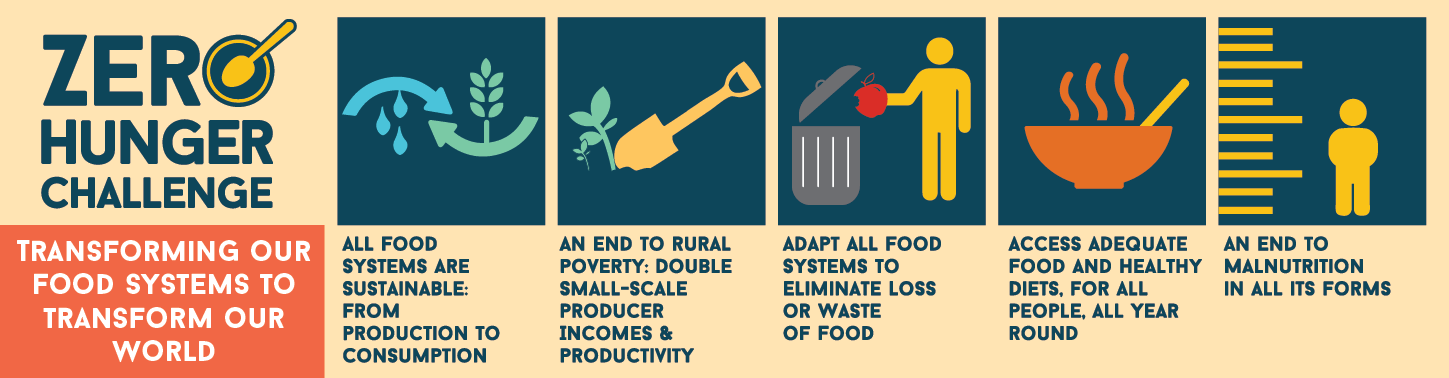
World Food Day is celebrated in over 150 countries, with various events and activities aimed at raising awareness and promoting action. The FAO plays a crucial role in addressing global food security challenges. Established in 1945, the organization works to eliminate hunger, improve nutrition, and promote sustainable agriculture. Launched by the UN Secretary-General, the Zero Hunger Challenge calls for a world where no one suffers from hunger. It aims to promote sustainable food systems and eliminate food waste. The Scaling Up Nutrition or SUN movement brings together governments, civil society, and the private sector to improve nutrition and address malnutrition in all its forms. The Global Agriculture and Food Security Program or GAFSP initiative provides funding to support agricultural investments in developing countries, aiming to improve food security and reduce poverty. The International Fund for Agricultural Development, IFAD focuses on rural development and poverty reduction by supporting smallholder farmers and promoting sustainable agricultural practices.

Innovations in agriculture and food systems are essential for addressing the challenges of food security. Key areas of innovation include agroecology, which promotes sustainable farming practices that enhance biodiversity, improve soil health, and increase resilience to climate change. Precision agriculture uses technology, such as drones and sensors, that allows farmers to optimise resource use, reduce waste, and improve crop yields. Vertical farming is an innovative farming method that involves growing crops in stacked layers, often in urban environments, maximising space and minimising resource use. The development of plant-based and lab-grown proteins provides sustainable alternatives to traditional livestock farming, reducing environmental impact. Innovations in food preservation, packaging, and distribution can help reduce food waste and improve food security.

Education and awareness are critical for promoting food security and sustainable agriculture. Integrating food education and nutrition programs into school curricula can help children develop healthy eating habits and understand the importance of sustainable food systems. Organising workshops and training sessions for farmers and community members can promote sustainable agricultural practices and improve food production. Launching campaigns to raise awareness about food security issues, healthy eating, and sustainable practices can engage the public and promote action. Partnering with media outlets to share stories and information about food security challenges can help raise awareness and inspire action. Involving young people in food security initiatives and encouraging their participation in advocacy efforts can help create a new generation of advocates for sustainable agriculture.

World Food Day serves as a vital reminder of the ongoing challenges related to hunger and food security. It is essential to recognise the critical role that sustainable agriculture plays in addressing these challenges. Through collective action, innovative practices, and a commitment to promoting food security for all, one can work towards a world where everyone has access to sufficient, nutritious food. World Food Day provides an opportunity for individuals, communities, and organisations to come together, raise awareness, and take meaningful action to combat hunger and promote sustainable agriculture. Food is not just a basic human right; it is also a vital component of health, well-being, and social stability. By prioritising food security and sustainable agricultural practices, a more equitable and sustainable future for all can be created.

Festivals of India: Madhvacharya Jayanti

Commemorating the birth anniversary of Sri Madhvacharya, one of India’s most influential philosophers and theologians, Madhvacharya Jayanti typically falls in September or October according to the Gregorian calendar, marks the birth of a man who profoundly impacted Hindu philosophy and continues to inspire millions of followers worldwide.

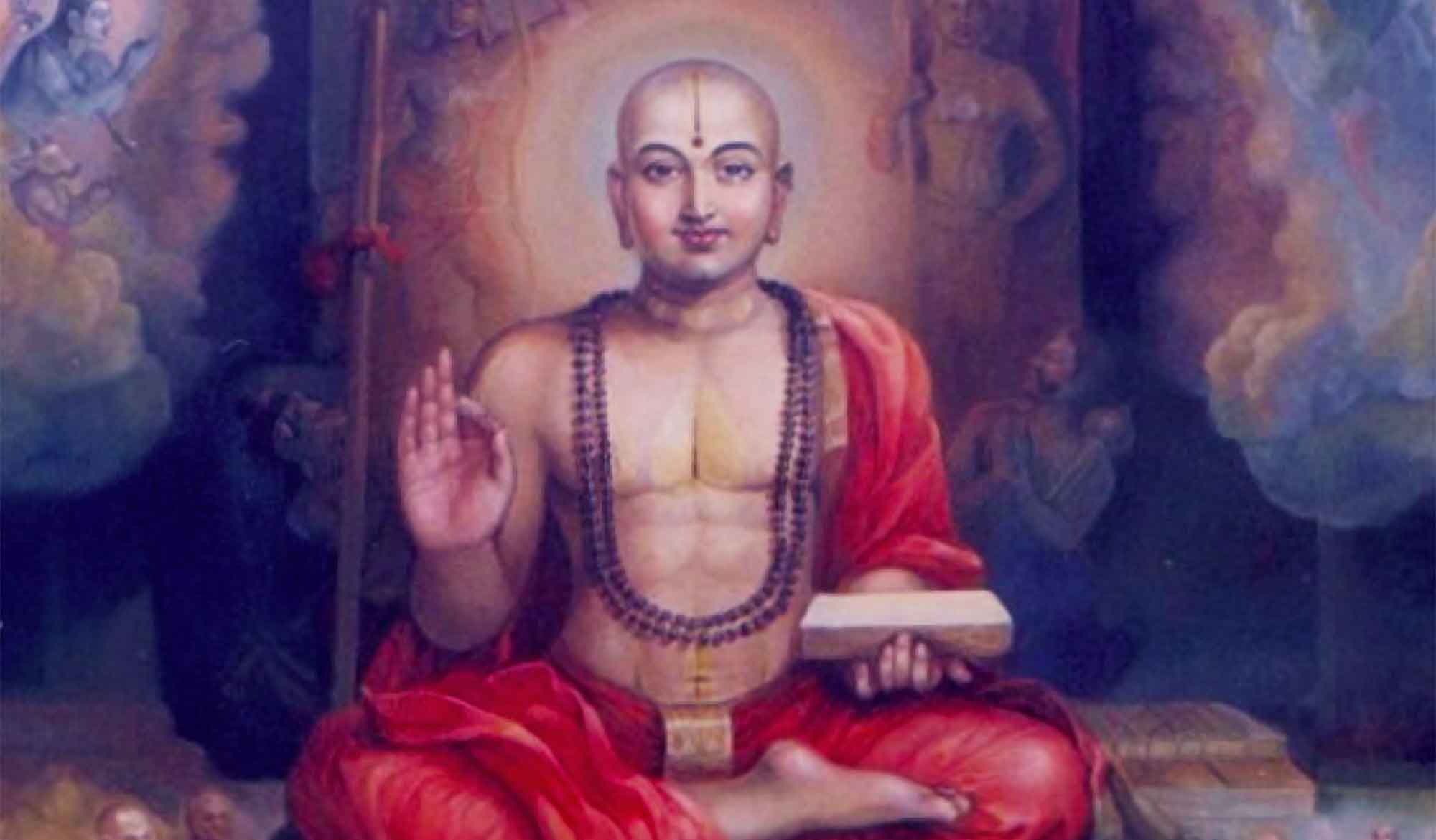
Sri Madhvacharya, also known simply as Madhva, was born in 1238 in Pajaka, a small village near Udupi in the present-day state of Karnataka. He is renowned as the founder of the Dvaita or dualism school of Vedanta philosophy, which he called Tattvavada, meaning “arguments from a realist viewpoint”. 

Madhvacharya’s life was marked by extraordinary events from the very beginning. According to hagiographies, his birth was accompanied by divine signs and miracles. His parents, Madhyageha Bhatta and Vedavati had long yearned for a child and considered his birth a blessing from Lord Vishnu. Even as a young boy, Madhvacharya displayed remarkable intelligence and spiritual inclination. At the tender age of five, he received spiritual initiation, and by twelve, he had already accepted sannyasa, the most renounced order of spiritual life. This early renunciation set the stage for his lifelong dedication to spiritual pursuits and philosophical inquiry.

Madhvacharya’s contributions to Indian philosophy and theology are vast and enduring. His accomplishments can be broadly categorized into philosophical, literary, and social reforms.

Madhvacharya’s most significant contribution was the formulation and propagation of the Dvaita or dualism school of Vedanta. This philosophy stands in contrast to the Advaita or non-dualism philosophy of Adi Shankara and the Vishishtadvaita or qualified non-dualism of Ramanuja. The Dvaita philosophy asserts that there are fundamental differences between the individual soul or jiva, matter or prakriti, and God or Ishvara.

Madhvacharya propounded the concept of five-fold differences or pancha bheda. The pancha bheda is was the difference between God and the individual soul; the difference between God and matter; the difference between individual souls; the difference between soul and matter; and the difference between various forms of matter.

Madhvacharya identified Vishnu as the Supreme Being, equating Him with Brahman as described in the Upanishads. Unlike some other Indian philosophical schools that viewed the world as an illusion, Madhvacharya asserted that the world is real and not merely an illusion or maya. Controversially, Madhvacharya proposed that some souls are eternally destined for hell, a concept not commonly found in Hindu philosophy.

Madhvacharya was a prolific writer, authoring numerous works that expounded his philosophy and interpreted sacred texts. His literary output is impressive, with thirty-seven works attributed to him. Some of his most important works include commentaries on the thirteen principal Upanishads, offering his unique interpretations of these ancient texts. His commentary on the Brahma Sutras, the foundational text of Vedanta philosophy, is considered one of his most important works. Madhvacharya’s commentary on the Bhagavad Gita provides insights into his understanding of karma yoga and bhakti yoga and the Mahabharata Tatparya Nirnaya presents his interpretation of the Mahabharata, emphasising its spiritual and philosophical aspects. The Bhagavata Tatparya Nirnaya is a commentary on the Bhagavata Purana, this work elucidates Madhvacharya’s views on devotion to Vishnu while the Anu-Vyakhyana, considered his masterpiece, is a supplement to his commentary on the Brahma Sutras.

Madhvacharya was not just a philosopher but also a social reformer. He challenged prevailing social norms and worked towards making spiritual knowledge accessible to all. Madhvacharya declared that the path to salvation was open to all, regardless of caste or birth. This was a revolutionary idea in medieval India, where spiritual knowledge was often restricted to upper castes. He established the Ashta Mathas or Eight Monasteries in Udupi, which became centres of learning and spiritual practice. Madhvacharya emphasized bhakti or devotion as a means of spiritual realisation, making spirituality more accessible to the common people.

The life of Madhvacharya is replete with stories of miraculous events and divine interventions. While these stories may be viewed as hagiographical embellishments, they form an integral part of the tradition and reflect the reverence in which Madhvacharya is held by his followers.

According to tradition, Madhvacharya’s birth was not ordinary. It is said that his parents had been childless for many years and prayed fervently to Lord Ananteshwara, a form of Lord Vishnu for a son. Their prayers were answered, and Madhvacharya was born as an incarnation of Vayu, the wind god.

Several miraculous events are associated with Madhvacharya’s childhood. It is said that Madhvacharya’s father had accumulated many debts. To help repay these, young Madhva miraculously converted tamarind seeds into gold coins. Near Madhvacharya’s house lived a demon named Maniman in the form of a snake. The young Madhva is said to have killed this demon with the big toe of his left foot. Stories tell of Madhvacharya’s ability to appear instantly before his mother whenever she felt anxious, jumping from wherever he was playing. As a child, Madhvacharya is said to have consumed 4,000 bananas and thirty large pots of milk in one sitting, demonstrating his divine nature.

Madhvacharya is believed by his followers to be the third incarnation of Vayu, the wind god. According to this belief, the first incarnation was Lord Hanuman, the devoted servant of Lord Rama, the second was Bhima, one of the Pandava brothers in the Mahabharata while Madhvacharya was the third and final incarnation. This belief in Madhvacharya’s divine origin adds to his authority as a spiritual leader and philosopher in the eyes of his followers.

One of the most significant mythological stories associated with Madhvacharya is his supposed encounter with Vyasa, the legendary author of the Vedas and Puranas. According to tradition, Madhvacharya travelled to Badrikashrama in the Himalayas, where he met Vyasa in person. This meeting is said to have lasted for several days, during which Vyasa imparted advanced spiritual knowledge to Madhvacharya and confirmed the correctness of his philosophy.

Madhvacharya Jayanti is celebrated with great devotion and enthusiasm, particularly in South India where his influence is strongest. The festival typically falls on the Vijaya Dashami day in the month of Ashwin, typically between September and October according to the Gregorian calendar.

Madhvacharya Jayanti serves multiple purposes. It’s a day to remember and honour the life and teachings of Madhvacharya. For followers of the Dvaita philosophy, it’s a time for spiritual introspection and renewal of their commitment to Madhvacharya’s teachings. The festival provides an occasion to educate people, especially the younger generation, about Madhvacharya’s philosophy and contributions to Indian thought. It brings together the community of Madhvacharya’s followers, strengthening their bonds and shared spiritual heritage.

The celebration of Madhvacharya Jayanti involves various rituals and activities. Temples dedicated to Madhvacharya or those belonging to the Dvaita tradition conduct special pujas or worship ceremonies on this day. Devotees often engage in the recitation of Madhvacharya’s works or texts that he commented upon, such as the Bhagavad Gita. Scholars and spiritual leaders give discourses on Madhvacharya’s philosophy and its relevance in contemporary times. Many communities organise cultural programs featuring devotional music and dance performances. Following Madhvacharya’s teachings on social reform, many followers engage in charitable activities on this day. Some devotees observe a fast on this day as a form of spiritual discipline and many try to visit Udupi, the centre of Madhvacharya’s activities, or other places associated with his life.

Madhvacharya’s influence extends far beyond his immediate followers. His ideas have had a lasting impact on Indian philosophy and spirituality. Madhvacharya’s philosophy significantly influenced later Vaishnava thinkers. The founder of Gaudiya Vaishnavism, Chaitanya Mahaprabhu, and his followers thoroughly studied Madhvacharya’s works before developing their philosophy. The prominent Gaudiya Vaishnava theologian, Jiva Goswami, drew heavily from Madhvacharya’s writings in composing his works. 

Madhvacharya’s emphasis on devotion or bhakti as a means of spiritual realisation contributed to the broader Bhakti movement in India. His teachings helped make devotional practices more accessible to common people, regardless of their caste or social status. Madhvacharya established a strong tradition of disciplic succession. Notable scholars in this lineage include Jayatirtha, Vyasatirtha, and Raghavendra Tirtha, who further developed and propagated Dvaita philosophy.

The eight mathas or monasteries established by Madhvacharya in Udupi continue to be important centres of learning and spiritual practice. The most famous among these is the Udupi Krishna Matha, known for its unique tradition of Krishna worship. 

Madhvacharya identified Vishnu as the Supreme Being, possessing infinite auspicious qualities. He taught that God is independent and self-existent; the world is dependent on God for its existence and functioning; God is the efficient and material cause of the universe; and divine grace is essential for salvation.

Regarding the individual soul or jiva, Madhvacharya taught that souls are eternal and innumerable, each soul is unique and maintains its individuality even after liberation, the soul is inherently dependent on God, and knowledge of one’s true nature as a servant of God is crucial for spiritual progress.

Unlike some Indian philosophical schools that view the world as an illusion, Madhvacharya asserted that the world is real, not illusory, the diversity we see in the world is real and not merely an appearance, and the world is subject to God’s control and exists for His pleasure.

Madhvacharya outlined a clear path to spiritual liberation. These are Knowledge or Jnana which is understanding the nature of God, soul, and the world; devotion or Bhakti which means cultivating loving devotion to Lord Vishnu; detachment or Vairagya by which one develops dispassion towards worldly pleasures, and divine grace because ultimately, liberation depends on God’s grace.

A unique aspect of Madhvacharya’s philosophy is the concept of gradation among souls. He proposed that souls are categorised based on their inherent qualities and potential for liberation and some souls are destined for eternal liberation, some for eternal bondage, and others which will oscillate between the two states. This concept of gradation and eternal damnation for some souls has been one of the more controversial aspects of Madhvacharya’s philosophy.

While Madhvacharya lived and taught in the 13th century, his ideas continue to be relevant in the modern world. His emphasis on the reality of difference resonates with modern ideas of pluralism and diversity. The concept of each soul being unique underscores the importance of individual worth and potential. Madhvacharya’s emphasis on righteous living and devotion provides a framework for ethical behavior in daily life. His approach to critically examining existing philosophies encourages intellectual inquiry and debate. The view of the world as real and valuable can foster a sense of responsibility towards the environment. 

Like any philosophical system, Madhvacharya’s Dvaita has faced challenges and criticisms. The idea that some souls are eternally condemned has been difficult for many to accept. Critics argue that Madhvacharya’s conception of God is too anthropomorphic. Some scholars have questioned Madhvacharya’s interpretations of Vedic texts, arguing that they are sometimes forced to fit his philosophical framework. Critics have pointed out perceived logical inconsistencies in some aspects of Dvaita philosophy. Despite these challenges, Madhvacharya’s philosophy continues to thrive and evolve, with modern scholars offering new interpretations and defences of his ideas.

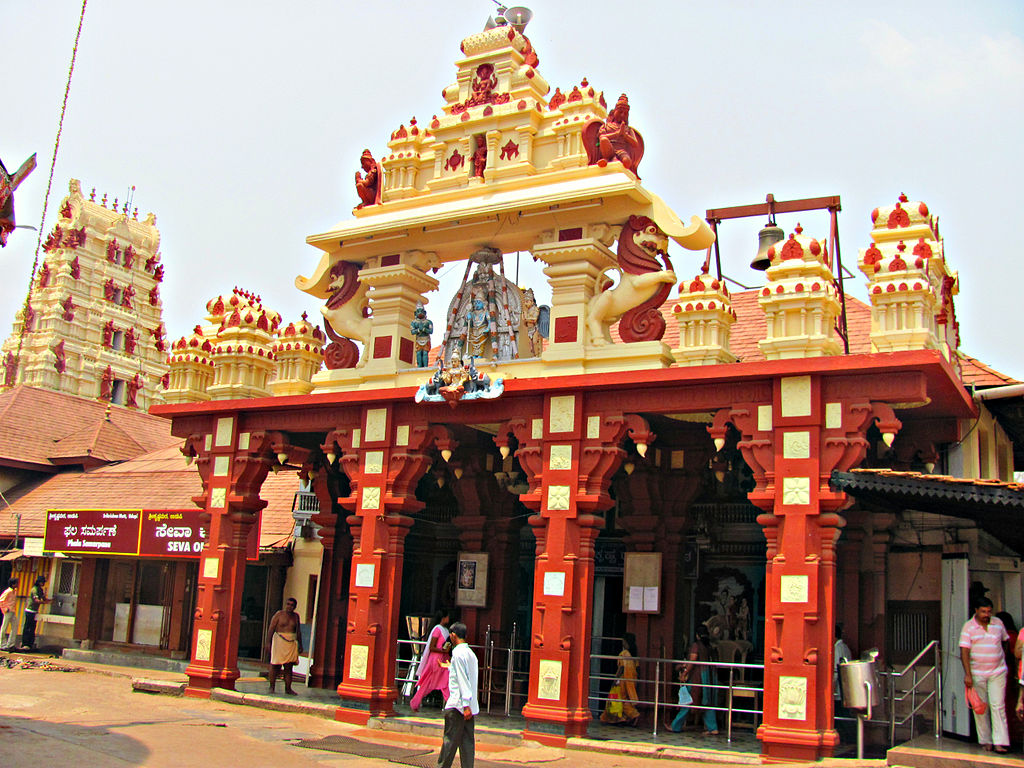
While Madhvacharya Jayanti is primarily celebrated in India, particularly in the southern states, it has gained recognition globally due to the spread of Hinduism and the growing interest in Indian philosophy. The epicentre of Madhvacharya Jayanti celebrations is Udupi, Karnataka, where Madhvacharya established his primary matha. The Krishna Temple here becomes a focal point of festivities. Throughout Karnataka, especially in coastal regions, temples and mathas organise special pujas, discourses, and cultural programs. Tamil Nadu, Andhra Pradesh, and Kerala also see significant celebrations, particularly in areas with a strong Madhva following. While celebrations are less prominent in North India, some Vaishnava communities do observe the day with devotional activities.

Madhvacharya Jayanti is more than just a birthday celebration; it’s a testament to the enduring impact of a philosopher who lived over 700 years ago. Madhvacharya’s life, teachings, and legacy continue to inspire millions, offering a unique perspective on the nature of reality, the divine, and the human condition. His emphasis on the reality of difference, the supremacy of Vishnu, and the path of devotion has left an indelible mark on Hindu philosophy and practice. The annual celebration of Madhvacharya Jayanti serves as a reminder of his contributions and an opportunity for spiritual renewal for his followers.

We’re reminded of the rich philosophical traditions of India and their continued relevance in our modern world. Whether one agrees with all aspects of his philosophy or not, there’s no denying the profound impact Madhvacharya has had on Indian thought and spirituality. 

Festivals of India: Sindoor Khela

Source

Sindoor Khela, also known as Sindur Khela or Vermilion Play, is a vibrant and joyous Bengali Hindu tradition that takes place on the final day of Durga Puja, known as Vijayadashami. This colourful ritual is primarily celebrated by married women and is a beautiful expression of feminine energy, marital bliss, and sisterhood. As the grand festivities of Durga Puja come to a close, Sindoor Khela serves as a fitting finale, filled with laughter, camaraderie, and the vibrant red hue of sindoor or vermilion powder.

The exact origins of Sindoor Khela are not precisely documented, but the tradition is believed to have evolved over centuries as part of the broader Durga Puja celebrations in Bengal. Durga Puja itself has a rich history dating back to the late 16th and early 17th centuries, gaining prominence during the Bengal Renaissance of the 18th and 19th centuries.

Sindoor Khela likely emerged as a way for women to come together and celebrate their marital status, fertility, and the divine feminine energy embodied by Goddess Durga. The use of sindoor in Hindu traditions has ancient roots, with references in texts dating back to the Vedic period, around 1500–500 BCE.

In Bengali culture, sindoor holds great significance for married women. It is applied along the parting of their hair, known as sindoor daan, as a visible symbol of their married status. The red color of sindoor is associated with the strength and power of Shakti, the primordial cosmic energy represented by the divine feminine.

The tradition of Sindoor Khela may have originated as a way for women to reaffirm their marital bonds and seek the blessings of Goddess Durga for a long and prosperous married life. Over time, it evolved into a more inclusive celebration, embracing the spirit of sisterhood and female empowerment.

While there isn’t a specific mythological story directly tied to the origin of Sindoor Khela, several legends and beliefs associated with sindoor and Goddess Durga provide context for the ritual’s significance. According to Hindu mythology, Durga Puja celebrates the annual visit of Goddess Durga to her maternal home on Earth. On Vijayadashami, she prepares to return to her abode in Mount Kailash, where her husband Lord Shiva resides. Sindoor Khela is seen as a way for mortal women to bid farewell to the Goddess and seek her blessings before she departs.

In one version of the Sati legend, when Lord Shiva carried the lifeless body of his wife Sati after she immolated herself, parts of her body fell at different locations, creating Shakti Peethas. It is said that at the Kalighat temple in Kolkata, Sati’s right toe fell, and the sindoor from her forehead touched the ground. This story connects the use of sindoor to the divine feminine energy of Shakti. Some folklore suggests that Lord Krishna applied sindoor on Radha’s forehead as a symbol of their eternal love. This tale emphasises the romantic and devotional aspects associated with sindoor. In Hindu tradition, sindoor is considered a symbol of saubhagya or marital bliss and good fortune. It is believed that applying sindoor invokes the blessings of the divine for a long and happy married life.

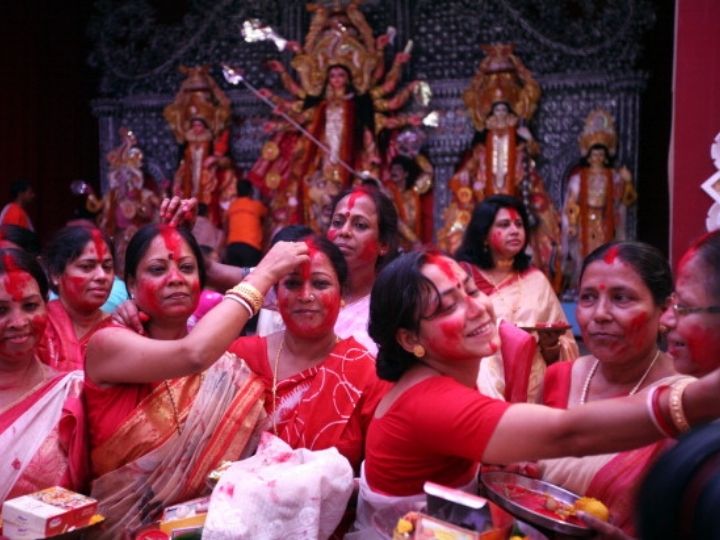
Sindoor Khela typically takes place on the afternoon of Vijayadashami, after the formal rituals of Durga Puja have concluded. The celebration unfolds in several stages – married women gather at the Durga Puja pandal, a temporary structure housing the Durga idol dressed in traditional Bengali attire, usually white sarees with red borders. The women first offer prayers to Goddess Durga, seeking her blessings and expressing gratitude for the festivities. As part of the ritual, women apply sindoor to the feet and forehead of the Durga idol, symbolically preparing her for her journey back to Mount Kailash. The main event begins as women start applying sindoor to each other’s foreheads and along the parting of their hair. This is done with great enthusiasm, often resulting in faces, necks, and parts of the saree being covered in the red powder. Women exchange sweets and bless each other, wishing for happiness, prosperity, and longevity in their married lives. The ritual often culminates in dancing and singing, with women forming circles and enjoying the festive atmosphere. While traditionally limited to married women, in many communities, Sindoor Khela has become more inclusive, allowing widows, divorced women, and even unmarried women to participate in the spirit of sisterhood and celebration.

Sindoor Khela holds deep significance in Bengali culture and Hindu traditions. The ritual celebrates the power and beauty of womanhood, emphasising the strength and grace embodied by Goddess Durga. For married women, it’s a way to reaffirm their marital status and seek blessings for a happy married life. The communal nature of the celebration fosters a sense of sisterhood and unity among women. The red colour of sindoor is associated with fertility and prosperity, symbolizing the life-giving power of women. During Sindoor Khela, social barriers often dissolve as women from different backgrounds come together in celebration. The ritual is an important marker of Bengali cultural identity, preserving traditions and passing them on to future generations. For many women, Sindoor Khela provides a rare opportunity for uninhibited joy and expression, offering emotional release and bonding.

While Sindoor Khela is primarily associated with Bengali Hindu culture, similar traditions can be found in other parts of India, albeit with regional variations. In Odisha, a similar ritual called “Aparajita” is performed during Kumar Purnima, where women play with powdered rice and flowers. During Gudi Padwa celebrations, Maharashtrian women participate in “Haldi Kumkum,” exchanging turmeric and vermilion as symbols of auspiciousness. In some North Indian communities, women exchange sindoor during Karva Chauth festivities.

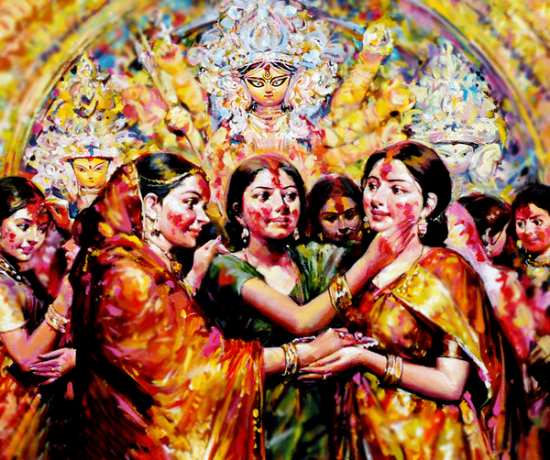
As society evolves, so does the celebration of Sindoor Khela. Many communities now welcome women of all marital statuses to participate, promoting a more inclusive celebration of womanhood. With growing environmental awareness, some groups are opting for eco-friendly, organic sindoor or even using flower petals as a colorful alternative. Bengali communities worldwide now celebrate Sindoor Khela, adapting the tradition to local contexts while preserving its essence. The vibrant visuals of Sindoor Khela have made it popular on social media platforms, increasing awareness and appreciation of the tradition globally. Contemporary artists and photographers often capture the essence of Sindoor Khela, creating powerful imagery that celebrates feminine energy and cultural heritage.

While Sindoor Khela is largely celebrated as a joyous tradition, it has faced some criticism and controversy in recent years. The traditional focus on married women has been criticized for excluding other women, though many communities are now becoming more inclusive. Some argue that the emphasis on marital status perpetuates patriarchal norms and reduces women’s identity to their marital roles. The use of synthetic sindoor, which may contain harmful chemicals, has raised health and environmental concerns, prompting a shift towards natural alternatives. Like many traditional festivals, Sindoor Khela has seen increased commercialisation, which some feel dilutes its spiritual and cultural significance. As the tradition gains global attention, there are concerns about potential cultural appropriation and misrepresentation. Despite these critiques, many participants and cultural experts argue that the essence of Sindoor Khela lies in its celebration of feminine energy, community bonding, and cultural heritage, which transcends its association with marital status.

Sindoor Khela stands as a vibrant testament to the enduring power of cultural traditions and their ability to adapt to changing times. This colorful celebration encapsulates the joy, strength, and unity of women, while also serving as a bridge between ancient customs and modern sensibilities. Rooted in the rich tapestry of Bengali Hindu culture, Sindoor Khela has grown from a ritual celebrating marital status to a more inclusive festival of womanhood and sisterhood. Its evolution reflects broader societal changes, demonstrating how traditions can remain relevant by embracing new interpretations while preserving their core essence. 

The festival’s growing popularity and adaptations across different communities highlight its universal appeal. The images of women laughing, dancing, and covered in vibrant red sindoor have become powerful symbols of joy, freedom, and female bonding, transcending cultural and geographical boundaries. As we look to the future, Sindoor Khela has the potential to play an important role in cultural preservation, women’s empowerment, and community building. Ultimately, Sindoor Khela reminds us of the importance of celebrating life, honoring traditions, and coming together in joyous harmony. As it continues to evolve, this beautiful tradition will undoubtedly remain a cherished part of cultural heritage, spreading its message of love, unity, and feminine power for generations to come.