In My Hands Today…

How to get Filthy Rich in Rising Asia – Mohsin Hamid

The astonishing and riveting tale of a man’s journey from impoverished rural boy to corporate tycoon, it steals its shape from the business self-help books devoured by ambitious youths all over “rising Asia.” It follows its nameless hero to the sprawling metropolis where he begins to amass an empire built on that most fluid, and increasingly scarce, of goods: water. Yet his heart remains set on something else: on the pretty girl whose star rises along with his, their paths crossing and recrossing, a lifelong affair sparked and snuffed and sparked again by the forces that careen their fates along.

How to Get Filthy Rich in Rising Asia is a striking slice of contemporary life at a time of crushing upheaval. Romantic without being sentimental, political without being didactic, and spiritual without being religious, it brings an unflinching gaze to the violence and hope it depicts. And it creates two unforgettable characters who find moments of transcendent intimacy in the midst of shattering change.h

Raja Ravi Varma: India’s First Modern Artist

I want to preface this post with a disclaimer: I am not an artist or even someone with any knowledge of art. What I have written here is based on my research and knowledge. If there is any error in my post, please reach out to me and I will correct it and at the same time, learn something new.

In the past few weeks of posting, whenever I did a post on Indian culture, somehow, most of the pictures I got from Google (the ones I liked that is) turned out to be from Raja Ravi Varma’s collection. His paintings are super familiar to most Indians – his images of the different Gods and Goddesses are the ones we are used to seeing in our Pooja Rooms (family prayer rooms or altars) and so this inspired me to do find out more about the man whose work, about 2-3 generations of Indians have gazed at every single day and then do a post on him today, which is his 167th birth anniversary.

Raja Ravi Varma is considered among one of the finest painters in the history of Indian art and his paintings among the best examples of the fusion of Indian traditions with the techniques of European academic art. Raja Ravi Varma achieved recognition for his paintings from Indian literature and mythology including the epics of Ramayana and the Mahabharata.

Raja Ravi Varma was born in the erstwhile princely state of Travancore in today’s Kerala state today in the year 1948 in a royal family which was very accomplished in the arts. He was patronized by the Maharajah of Travancore and then began formal training with the learning of the basics of painting in Madurai, Tamil Nadu and then trained in water painting by Rama Swami Naidu and then in oil paintings by the Dutch portraitist Theodor Jenson.

His exposure in the west came when he won the first prize in the Vienna Art Exhibition in 1873. In the World Columbian Exposition in Chicago in 1893, he received three gold medals and then teavelled all over India in search of subjects for his paintings.

He also started a lithographic printing press, initially in Mumbai and then near Lonavala (near Mumbai) and the oleographs printed were very popular and continue to be printed even today.

Among the various honours he received, the Kaiser-i-Hind, bestowed by the then Vicerory, Lord Curzon in 1904 on behalf of the British King was the highest. Considering his vast contribution to Indian art, the Government of Kerala has instituted an award called “Raja Ravi Varma Puraskaram”, which is awarded every year to people who show excellence in the field of art and culture.

Raja Ravi Varma died on 02 October 1906 at the age of 58, but his art still lives and delights peoples even today.

Below are some of the prints we generally see in Indian homes – mostly the Gods and Goddesses of the Indian pantheon….

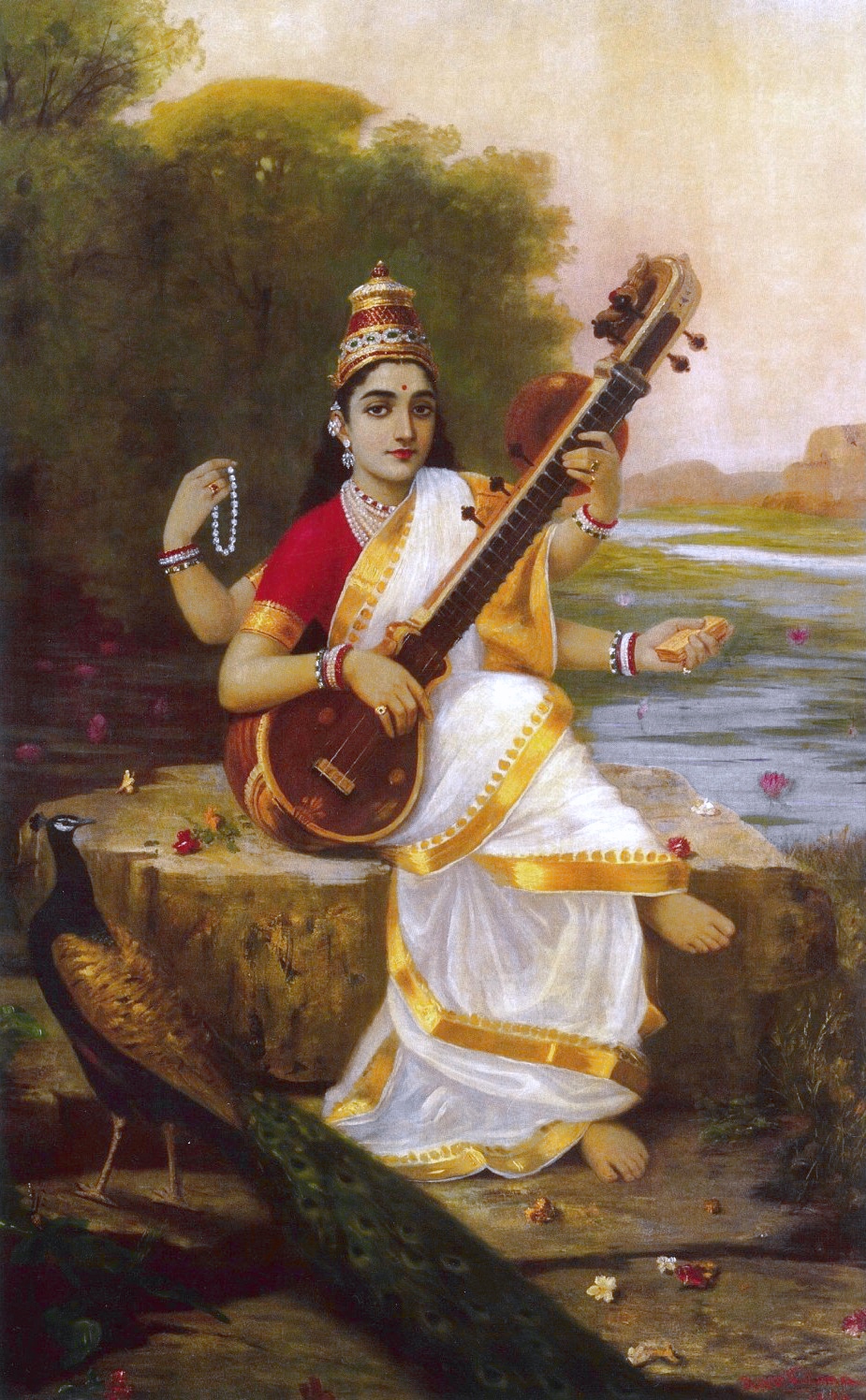
Goddess Saraswati

Goddess Lakshmi

Some other famous paintings:

Lady with Fruit

Lady in the Moonlight

In My Hands Today…

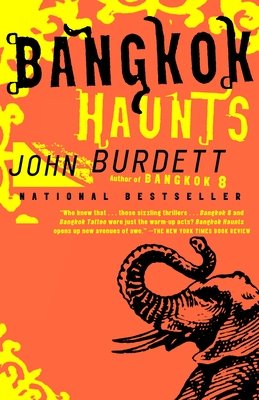
Bangkok Haunts – John Burdett

Sonchai Jitpleecheep — the devout Buddhist Royal Thai Police detective who led us through the best sellers Bangkok 8 and Bangkok Tattoo — returns in this blistering new novel.

Sonchai has seen virtually everything on his beat in Bangkok ‘ s District 8, but nothing like the video he ‘ s just been sent anonymously: Few crimes make us fear for the evolution of our species. I am watching one right now. He ‘ s watching a snuff film. And the person dying before his disbelieving eyes is Damrong — a woman he once loved obsessively and, now it becomes clear, endlessly. And there is something more: something at the end of the film that leaves Sonchai both figuratively and literally haunted.

While his investigation will lead him through the office of the ever-scheming police captain, Vikorn ( Don’t spoil a great case with too much perfectionism, he advises Sonchai); in and out of the influence of a perhaps psychotic wandering monk; and eventually into the gilded rooms of the most exclusive men’s club in Bangkok (whose members will do anything to protect their identities, and to explore their most secret fantasies), it also leads him to his own simple bedroom where he sleeps next to his pregnant wife while his dreams deliver him up to Damrong . . .

Ferociously smart and funny, furiously fast-paced, and laced through with an erotic ghost story that gives a new dark twist to the life of our hero, Bangkok Haunts does exactly that from the first page to the last.

Book 3 of the series featuring the half Asian, half Caucasian Bangkok inspector Sonchai Jitpleecheep

The books in the series:

  1. Book 1: Bangkok 8
  2. Book 2: Bangkok Tattoo
  3. Book 3: Bangkok Haunts
  4. Book 4: The Godfather of Kathmandu
  5. Book 5: Vulture Peak

2015 Week 16 Update

One of the better weeks in recent times! Like I said last week, my new boss finally came in last Tuesday and he seems to be a nice guy – similar in temperament to my previous boss with whom I got along well.

We had a staff meeting this week and things I am working on seem to be taken up well. So far (touch wood) things are going well and hopefully this will lead to better opportunities within this organization. This is the biggest reason I am not taking very concrete steps to leave – I really like what I am doing here, if only people’s perceptions of what I do change – and this will happen when I get a formal title to what I am doing – then I can see myself having a fruitful career here. Ah well, let’s see how things pan out in the next six months or so and I will make a decision. PSLE will also be over by then, allowing me to take decisions I would otherwise not take.

We attended S’s cousin’s daughter’s first birthday yesterday and boy was it different! A mash-up between a corporate D&D (dinner & dance) and a wedding reception! All this in an HDB void deckThe loud music which made talking and thinking impossible, the MC who behaved as if he was in a D&D, the hosts who were most un-host-like and I could go on and on…They even had the baby change clothes three times in the hour she was around just like in a wedding!

Anyway, this was something we had to do as noone is S’s family was there. I would have loved to spend some time with the baby, but could not as the mom was busy with her relatives and so did not come near our table at all!!!

I can go on and on about this, but don’t want to inflict you with negativity….


Have a great Monday folks!

PSLE Week 16 Update

The lull before the storm week – this is the last week BB & GG have before they start their SA1 (Semesteral Assessment 1) exams. Monday onwards they start the non-paper components – listening comprehension, composition for English and Mother Tongue (which they will sit out) and then the next week will be the oral exams after which the written exams start. This year is moving way too fast for me!

Earlier in the week, BB & GG sat for the ICAS test. I was pretty unconcerned about this test until I read some posts on parenting groups I frequent and then realized it’s more important than I thought it was! The children sat for the science test first with the Maths and English ones to come.

The International Competitions and Assessments for Schools (ICAS) are independent skills-based assessments with a competition element. Commonly referred to as the UNSW tests, ICAS is unique, being the most comprehensive generally available suite of academic assessments and school tests for primary and secondary school students. Each test is sat at the student’s school and is invigilated by teachers under normal examination conditions. Over one million student entries are accepted from over 6,300 schools in Australia and New Zealand annually. In addition, students from over 20 countries including Hong Kong, India, Malaysia, Singapore, South Africa and the USA participate in ICAS each year.

For the Science test, the children are tested in skills in the key scientific areas of:

  • Interpreting data, including observing, measuring and interpreting diagrams, tables and graphs
  • Applying data, including inferring, predicting and concluding
  • Higher order skills, including investigating, reasoning and problem solving

The papers cover content on:

  • Earth and Beyond (incorporating the Earth Sciences and Astronomy).
  • Energy and Change (incorporating Physics).
  • Life and Living (incorporating Biology and Ecology).
  • Natural and Processed Materials (incorporating Chemistry).

BB found the paper quite easy while GG found it hard (typical right?). BB also told me there were Chemistry type questions which he could answer (go figure!) I really don’t know if he actually did the questions after thinking it through or he just picked an answer he thought was correct!

I heard and hope this is correct that we can use these scores as part of our DSA application – let’s see if the result comes through before our applications go in J