Never Split the Difference – Chris Voss and Tahl Raz
After a stint policing the rough streets of Kansas City, Missouri, Chris Voss joined the FBI, where his career as a hostage negotiator brought him face-to-face with a range of criminals, including bank robbers and terrorists. Reaching the pinnacle of his profession, he became the FBI’s lead international kidnapping negotiator.
Never Split the Difference takes you inside the world of high-stakes negotiations and into Voss’s head, revealing the skills that helped him and his colleagues to succeed where it mattered most: saving lives. In this practical guide, he shares the nine effective principles—counter-intuitive tactics and strategies—you too can use to become more persuasive in both your professional and personal life.
Life is a series of negotiations you should be prepared for: buying a car; negotiating a salary; buying a home; renegotiating rent; deliberating with your partner. Taking emotional intelligence and intuition to the next level, Never Split the Difference gives you the competitive edge in any discussion.
Rishyap Also known as Rishop, Rishyap has many myths and legends associated with its name with Ri standing for a mountain peak and shop meaning age-old trees in Tibetan. A quaint village, Rishyap is located in the Neora Valley just 4 km uphill of Lava and is well known for its majestic views of the Kanchenjunga range and the Nathu la Pass. Tiffindara, a sunrise-view spot, is about 1 km from here from where one can get an amazing 300-degree view of some of the most famous peaks of the Himalayas such as Kanchenjunga, Mt. Kharg and Rakhtang among others.
Lava and Lolegaon Located about 120 kms from Siliguri, Lava and Lolegaon are 25 kms apart which offer beautiful snow capped mountains and ancient Buddhist monasteries as a backdrop to a relaxing holiday. The most beautiful forest in Lolegaon, the Canopy walk comprises of hanging bridges, suspended from one tree to another made from planks of wood and are located high enough to afford one the luxury of viewing the surroundings. The Canopy walk is best viewed in the daytime. Located about 10 km from Lava, Changey falls is a small waterfall in between Tiffin Dhara and Ghanti Dhara with crystal clear waters. Another equally beautiful viewpoint is the Jhandidhara Viewpoint which is located at the Lolegaon hilltop with magnificent views of the Kanchenjunga. Tifindara is a famous sunrise point with pine forests and provides views of the Himalayas. Located about 3 km by trek and 10 km by jeep, it has the most stunning view of the Kanchenjunga. The Lava Monastery has a four acre piece of land where hundreds of monks live and preach their beliefs. The architecture of the monastery is exactly like those in Tibet with various prayer halls, lawns, sitting areas and a huge Buddha statue. Built back in 1980s the monastery is extremely well maintained. There is an Eco Park at Lolegaon which is located in the main village, very close to the bus stand and is quite well maintained. The Nature Interpretation Centre is a small but important building at the entrance of the Neora National Park offering comprehensive information about the National Park along with information about tour guides and maps. There is also a gift shop where one can buy souvenirs and a small garden with a beautiful flowers.
Buxa Tiger Reserve Bodering Bhutan and Assam, the Buxa Tiger Reserve was set up in 1983 and was then, the 15th tiger reserve of the country. The forest constituting the reserve is the largest in the Dooars and spans 759 sq km and is irrigated by several rivers and their tributaries. It boasts of a diverse and breathtaking landscape, and because of the rocky terrain, many parts of the forest in the Buxa hills that lie in the Sinchula Range are inaccessible even by the authorities, and hence remain unexplored even after so many years. This tiger reserve serves as an international corridor for the migration of elephants between India and Bhutan because the Phipsu Wildlife Sanctuary in Bhutan is adjacent to the northern part of the Buxa Tiger Reserve. The reserve is home to 67 species of mammals, 36 species of reptiles and 230 species of unidentified avifauna and encompasses more than eight types of forests. The great diversity of mammals in this reserve makes it the second highest among all tiger reserves in India. The reserve has over 300 species of trees, 250 species of shrubs, 130 species of aquatic flora, 100 species of grass and 400 species of herbs with a rich collection of various medicinal herbs and different species of orchids. The majestic Bengal Tiger, an endangered species, has made the Buxa Tiger Reserve its home and apart from the Bengal Tiger, there are other members of the cat family here too, including leopards, fishing cats, jungle cats and leopard cats. One of the most beautiful and extremely rare mammals that is endemic to this reserve is the Clouded Leopard which are very shy members of the cat family and can rarely ever be spotted. The Chinese Pangolin and the Regal Python are also endemic to the region. The avifauna here is both endemic and migratory. The reserve constitutes a total of 38 forest villages, 49 fringe villages and four fixed demand holdings with the majority of the population in the interiors of the forests consisting of tribes such as Garo, Mechia, Madesia, Rava, Rajbanshi and Bhutia. Visitors can opt for either morning or evening safaris that last 3-4 hours each. The morning safaris start from 6 am and the evening safaris start from 3 pm with a jeep safari costing about INR 800. The Buxa Tiger Reserve remains closed to visitors from 15th June to 15th September every year because the region experiences heavy rains. A 5 km trek through the forest leads to the Buxaduar Forest Bungalow which has accomdations available. Another 4 km into the forest will bring one to Rover’s Point, a point that is 4500 ft high and known as the land of unknown birds. Rupam Valley in Bhutan, is another 12 km from Rover’s Point.
Rajabhatkawa A small town situated just outside the Buxa Tiger Reserve Rajabhatkawa is known for its natural beauty and is surrounded by forests. All the permits for the entry to the Buxa Tiger reserve can be taken from here.The name literally means (the place) where the king had a meal and folklore says that the kings of the princely state of Koch Bihar used to come here to picnic in the forests. Jayanti is a small forested village near Rajabhatkawa about 15 km near Buxa Reserve and has the magnificent Mahakal caves and the Jayanti Riverside. The Mahakal Caves are hundreds of years old and its origins are obscure. After navigating many tunnels and ladders, one will land in the middle of the cave which has a small Shiv temple which has a fantastic view of the nearby hills. The Buxa Fort has was built centuries ago and came the British India after the 2nd Dooars War of 1865 which was fought between Bhutan and the British. It is believed that during the China- Tibet disturbances in the 19th century, many Tibetan monks hid at the fort and later, during the freedom struggle of the 1900s, the fort served as refugee to many freedom fighters. Today, the fort is in ruins. The Nature Interpretation Centre is at a short distance from the Buxa reserve and provides information of numerous birds and animals in the reserve, along with information of various plants and their medicinal properties. To cover Buxa in a safari, one can easily hire a jeep or car at the forest office at Rajabhatkawa who will also provide a tour guide. There is an ancient Shiva temple located at the edge of the main town, approximately 8 km from the town which is beautiful and isolated. A lot of people walk down to the temple. Very close to the Shiva temple is another temple devoted to the Goddess Kali. The small ancient temple is surrounded with trees on all sides and is highly revered.
Jaldapara National Park The Jaldapara National Park, situated on the banks of the Torsa river was earlier known as the Jaldapara Wildlife Sanctuary and is spread over an area of around 215 km. It comprises of riverine forests as well as grasslands and is famous for its impressive population of Royal Bengal tigers, elephants, one-horned rhinoceros, and various other species of deer. To get the best out of the park, one can go for an elephant ride, which will give a chance to catch a glimpse of the animals up close. Another wildlife park that nature lovers should consider visiting is the North Bengal Wild Animals Park. This park is an integral part of the Mahanadi Wildlife Sanctuary and spread out over an area of 300 hectares and contains a wide variety of flora and fauna. However, unlike other wildlife parks and sanctuaries, the Mahanadi Wildlife Sanctuary strictly forbids visitors from feeding the animals at the park. The Bengal Safari sprawls over 297 hectares and is mainly a natural habitat for Sal and associated species. The Mixed Herbivore Safari, one can spot herbivores like the spotted deer, barking deer, sambar, hog deer, swamp deer,one horned rhinoceros, black ibis, kingfisher, peacock, red jungle fowl, emerald dove, drongo and hornbill. The Tiger Safari is a 15 min safari where one might spot tigers. There are three tigers in the park with one male and one female brought from the Nadankanan Zoological Park in Orissa and another male brought from the Tata Steel Zoological Park in Jharkhand. The Asiatic Black Bear Safari have two black bears that have been brought from the Padmaja Naidu Zoological Park in Darjeeling and also has a 15 min ride. The 15-minute Leopard Safari around a 20-hectare area has four leopards who live in the park. There is a foot trail at the park known as the Aviary trail where one can spot domestic and exotic birds like the red jungle fowl, peafowl, white peafowl, and peacocks. The Gharial & Crocodile Pond has gharials and crocodiles in natural free flowing water. There are entry fees single as well as multiple safaris and one can choose as per convienece. The park is open from 9 am to 5 pm and is closed on Mondays.
Jaldhaka A valley town in the hills of Darjeeling, Jaldhaka is close to the India – Bhutan border and will take you back to a time when life was full of simple pleasures. The Jaldhaka riverside is a must visit when visiting this valley and the clear blue flowing water set amidst trees and rocks with birds chirping in the background is one of the most serene and soothing sites in Jaldhaka. The Coronation Bridge offers a breathtaking view of the lush greenery and was constructed mainly to connect Darjeeling and Jalpaiguri. Inspired by Roman architecture the bridge spans the river Teesta and is also known as National Highway 31 and is also considered to be the lifeline between Kalimpong, Nathula and Gangtok. The bridge was constructed during the British colonial rule to commemorate the coronation of King George VI in 1937.
Chapramari Wildlife Sanctuary Located at a distance of about 20 km from the Gorumara National Park, this wildlife sanctuary has the Kanchanjungha and other Himalayan peaks as its backdrop. The name of the region comes from Chapra, a variety of small fishes found in northern Bengal, and Mari, meaning abundance and receives waters from the Teesta, the Neora, and the Murti. Known for its elephant population, the sanctuary has a a wide diversity of animals including gaur, leopards in their natural habitat. However, unlike Gorumara, the Royal Bengal Tiger is not found here. The sanctuary is closed to visitors during the monsoon season from June to September.
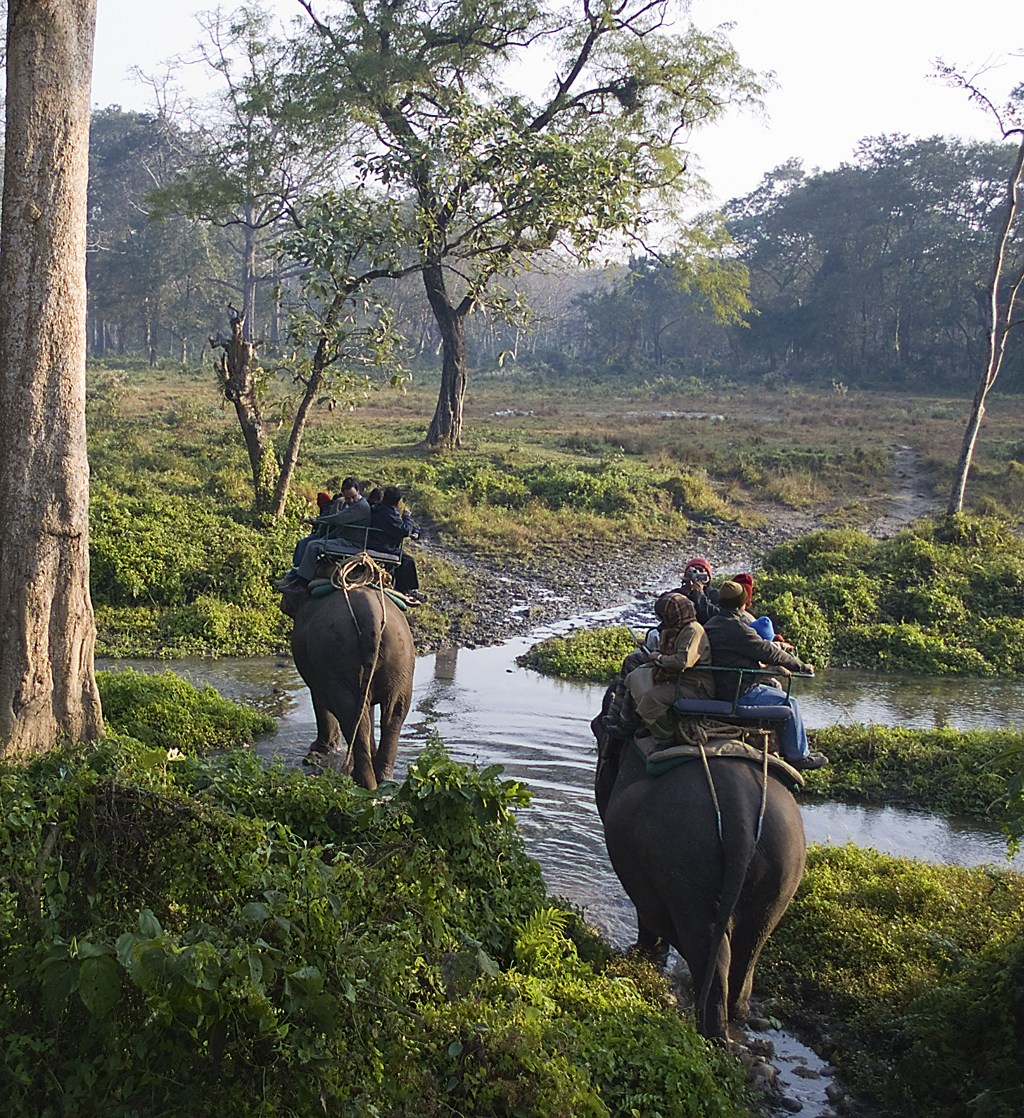
Gorumara National Park Situated on the banks of rivers Murti and Raidak, the Gorumara National Park is spread over 80 sq km and sits at the foothills of the Himalayan mountains. With a large variety of flora and fauna and full of riverine grasslands and moist deciduous forests, it is famous for its Asiatic one-horned rhino. The national park also houses other mammals, reptiles, insects and birds, including the majestic Asian elephants, the royal Bengal tiger and the Great Indian Hornbill. Other commonly found animals here include leopards, elephants, the Indian bison, rock pythons, deer and the Malayan Giant Squirrel and there are approximately 48 species of carnivores and herbivores animals, birds and insects in the sanctuary. During the winters, migratory birds such as teal, stork and ibis can also be seen here. There are two types of wildlife safari here that one can choose from, the Elephant Safari and the Jeep Safari which can be booked from the forest department and must have an authorised guide along while visiting the watchtowers. The jungle safari leads visitors to different watchtowers, which include the Jatraprasad watch tower, the most famous lookout, and is named after a female elephant that was legendary for her caring nature. The entry point for this watchtower is through the National Highway at the northern part of the national park and the salt lakes just below the watchtower make it an attractive place to spot wildlife, especially during early morning or late afternoon safaris. The Methla Watchtower is located at the Kalipur eco village towards the eastern fringe of the national park and a unique bullock cart driven safari is available here. The Chandrachur Watchtower is located in the midst of a vast and open grassland and has a small pond and salt lake here. Other watchtowers include the Rhino Point, Chukchuki watchtower and Chapramari watchtower. The national park is open all year round, except between 16 June and 15 September and every Thursday of the year. The best time to visit the national park is from October to May and the weather is delightful during this period.
Neora Valley National Park Established in 1986, Neora Valley National Park is spread over an area of 88 sq km and is one of the richest biological zones in eastern India. It gets its name from the river Neora that flows through it and due to the luxurious growth of forest cover, many areas in the park are still inaccessible. The Neora Valley is also known as the land of the elegant red panda and has mixed species of flora that include bamboo, oak, ferns and sal along with a wide variety of fauna such as Hodgson’s Hawk Cuckoo, Jerdon’s Baza, Bay Woodpecker, Golden-throated Barbet, and many more. The park is situated at the tri-junction of Sikkim, Bhutan, and West Bengal and is contiguous with forests of these three boundaries and reach up to an elevation of 10,600 ft at Rachel Danda, the highest point of Neora valley. One can’t enter the park without an entry permit which can be obtained from the Forest Range Office located at both Lava and Samsing and needs two to three hours and so it is advisable to start early. The forest office starts issuing permits to the national park from 6 am during summer and spring. The park is closed between June and September and day visits are open from 16 September and 15 June. When open, the park is closed on Thursdays and open between 8 am to 12 noon and then again from 1 to 4 pm and has an entry fee of INR 100 per person.
Lataguri Located outside the Gorumara National Park on National Highway No. 31, Lataguri is the perfect place to take in both the Gorumara and Champramari National Parks as well as the Buxa Tiger Reserve which is a 2 hour drive away. Permits for entering Gorumara and Chapramari Wildlife Sanctuary are given from Lataguri and the village also contains a Nature Interpretation Centre, which gives information about the flora and fauna of the area.
Purulia Located north of the Kangsabati river and West Bengal’s western most district, Purulia is blessed with natural beauty. The Baranti Reservoir or Murardi Lake is a calm lake surrounded by mountains and covered with thick greenery. It is less crowded and more peaceful and intimate and is ideal for spending some time just contemplating life. The lake lies in the beautiful Rahr countryside and offers a stunning view of the reservoir. The Maharaja of Keshargarh is known to have fought the British rule and looted the Purulia treasury. The Rakab forest used to be the hunting place of Kashipur and is popular known as the forest of 16 crosses. The Maharaja was hung to death here and the fort here is in ruins today. 42 km from Purulia via Sirkabad, Ajodhya is a woody mountain with a table land on the top with many small streams making their way through the slopes of the hill to meet the Subarnarekha river on the west and the Kangsabati and Kumari rivers from the northern slope. About 700 m above sea level, there are sparkling freshwater streams and springs here and the best activities to indulge in here are rock climbing and mountaineering and the summit has fantastic views. Gajaburu Hills are paradise for rock climbers. The slopes are hard, rough and tough which provides thrill and adventure. There is also a nature camp here which can be visited to view the beauty of the hills. On the bank of the Kangsabati in the Manbazar Panchayat Samiti, Doldanga is a popular picnic spot with a beautiful water body where one can ride boats, a deer park and an island . Another popular picnic spot, Surulia has been developed by the forest department and is popular amongst eco tourists. About 6 kms from the main town, the eco park is located on the bank on the river Kangsabati and has a deer park and tourism cottage inside. Located in the foothills of the Panchet Hills, Garpanchkot is ruined fort. There is also temple at the top of the hill. In 1740, the Nawab of Bengal challenged Alivardi Khan to a battle, but started losing the battle. To stay in the war, he had to seek help from the Maratha Rulers of Nagpur. Although the Maratha cavalry was set, they further started looting and plundering the small town and this continued on for around 10 years and it was during this time that the fort was attacked by the Maratha army and destroyed and the palace plundered. To escape the attack, the 17 wives of the King jumped in the well nearby and committed suicide and the palace has been left deserted and in ruins ever since.
Sonajhuri Forest Considered one of the cleanest forests in India, the Sonajhuri Forest is a wonderful retreat with lush green trees and blooming flowers. This picturesque place is untouched by industrialisation and is inhabited by tribals and the pristine river flowing alongside the forest makes it look magical. Sonajhuri which translates to droplets of gold in English is named because of the Sonajhuri tree located in huge numbers when in winter they shed their yellow flowers, the whole forest looks as if drops of gold has been scattered on the ground. The forest is replete with a myriad number of flora and fauna and does not include wild animals and hence is safe to wander around. Animals here include the spotted deer, jackal, foxes and elephants. Every Saturday, a market known as the Sonajhuri Sonibarer Haat is set up and a must visit. The market starts around 3 pm and continues till the sun sets. Rabindranath Tagore spent time here and composed some of his greatest works at Tagore’s Ashram. The Ashram comprises of many buildings, namely Udayan, Konarka, Shyamali, Punashcha and Udichi with each special to Tagore. There is a complex which houses splendid sculptures by Ramkinkar Baij and a museum located in the ashram which is full of artefacts, photographs and writings of Tagore. The Kopai river is a pristine river that flows through the forest and is referred to as Amader Choto Nodi. Bonerpukur Gram is the where the tribals live and is adjacent to the forest with beautiful mud huts. The Ballavpur Wildlife Sanctuary is filled with colourful birds including parrots, ducks, kingfisher and woodpeckers. A large herd of deers are the main highlight of this sanctuary. The sanctuary is closed on Wednesdays and on other days is open between 10 am and 5 pm and has an entry fee of INR 20. The Kankalitala temple is is about 10 kms away and is believed to be one of the 51 Shaktipeeths of Sati.
Deulti Situated on the bank of river Roopnarayan, Deulti is an ideal picnic spot. This small village is also close to other tourist attractions like Samtaber, the hometown of the renowned Bengali author Sarat Chandra Chattopadhyay and the temples of Madangopal and Radha, adorned with embellishments of terracotta art. Other popular townships like Kolaghat, Garchumuk and Gadiara are also located close to Deulti which is about 51 km from Howrah by road.
Sundarbans The Sundarbans is a mangrove area in the delta formed by the confluence of the Ganges, Brahmaputra and Meghna Rivers in the Bay of Bengal and spans from the Hooghly River in West Bengal to the Baleswar River in Bangladesh. It comprises closed and open mangrove forests, land used for agricultural purpose, mudflats and barren land, and is intersected by multiple tidal streams and channels. There are four protected areas in the Sundarbans which are UNESCO World Heritage Sites, the Sundarbans National Park, Sundarbans West, Sundarbans South and Sundarbans East Wildlife Sanctuaries. Despite this, the Indian Sundarbans were considered endangered in a 2020 assessment under the IUCN Red List of Ecosystems framework. The Sundarbans mangrove forest covers an area of about 10,000 sq km with the most abundant tree species being the sundri or Heritiera fomes and gewa or Excoecaria agallocha. The forests provide habitat to 453 faunal wildlife, including 290 bird, 120 fish, 42 mammal, 35 reptile and eight amphibian species. The Sundarbans National Park is also a Tiger Reserve and a Biosphere reserve.
The Sundarbans which mean beautiful forest, are the last remaining stands of the mighty jungles which once covered the Gangetic plain. Since 1966, the Sundarbans have been a wildlife sanctuary, and it is estimated that there are over 400 Royal Bengal Tigers and about 30, 000 spotted deer in the area. Other endangered species in the bioreserve include the Batagur baska, King Crabs and the Olive Ridley Turtles. The Nilkamalor Hiron Point and Katka viewpoints offer fantastic views of the animals while the mud-flats called Chargheri Char is where one can enjoy coastal trekking. Marichjhanpi is one of the islands within the Sundarbans and is is known as an island of atrocities. Ghoramara Island is one of the tiny islands of the Sundarban delta and is shrinking at exorbitant rates due to global warming and the rising of water levels in the Bay of Bengal. New Moore or India’s Purbasha or Bangladesh’s South Talapatti is an offshore sandbar island off the coast of the Sundarbans. Two kilometres away from the mouth of the Haribhanga River, the 25,000sq.m. island was completely submerged under the Bay of Bengal waters for years.
Mayapur Previously known as Miyapur, Mayapur is located at the confluence of two rivers, where the waters of the Jalangi River mix with the Hoogly river, a distributary of the Ganges, about 130 km north of Kolkata. Along with Nabadwip, it is considered a spiritual place by the adherents of Gaudiya Vaishnavism. It was founded by the Bhakti saint Vinod Thakur and is believed that Lord Krishna’s incarnate Sri Chaitanya Mahaprabhu was born here in 1486. The word Mayapur derives from Miyapur, the Bengali name of a village, which was settled by Muslim fishermen. The ISKCON Chandrodaya Temple is one of the over 650 temples that the International Society for Krishna Consciousness has established all across the globe. The key areas in the temple complex include the main temple, an idol of the founder of ISKCON, Acharya Srila Prabhupada, the presiding deities Sri Sri Radha Madhava and an idol of Lord Nrisimhadeva that finds its way in the centre of the compound. The highlight of the temple, is Srila Prabhupada’s Pushpa Samadhi Mandir or shrine which is a marble dome. The small idols of the Gods in the altar are taken out in processions during Ratha-Yatras, Jhula-Yatras, or the boat festival and they also come out in a procession every Saturday evening during winters, after the Sandhya Aarti, on a chariot, from the beginning of the Kartika month up to Gaura-Purnima. After the temple was attacked by dacoits in 1986, an idol of Lord Nrisimhadeva was installed in the centre of the premise. This rare form of the Lord, with bent knees and eyes red in anger, ready to spring out of the pillar to attack demons and protect his devotees is known as Sthanu- Nrisimha. The ISKCON Temple at Mayapur is the only place where this form of the Lord is worshipped. An interesting area inside the temple is the Chaitanya exhibition, where all of Lord Chaitanya Mahaprabhu’s pastimes are artistically painted and depicted on the walls through the medium of bas-reliefs. A dramatic narration of the same in Bengali is played through an audio system in the background. The exhibition is open from 10 am to 1 pm and then from 4 to 6 pm. The temple is open from early morning till 1 pm and then again from 4 to 8:30 pm. The Mangala Aarti takes place between 4:30 to 5 am, the Darsana Aarti at 7 am, the Srila Prabhupada Guru Puja at 7:30 am, a class of the Srimad- Bhagavatam which is held in English and Begali seperately at 8 am, the Bhoga Aarti at noon, the Sandhya Aarti at 6:30 pm and finally a class on the Bhagavad Gita in Bengali at 7:45 pm. The Yoga Peeth is the birth place of Chaitanya Mahaprabhu, and is built in white marbled and towers 30 m high. It is a centre of excellence teaching in yoga, the vedas and meditation. It is assumed that Chaitanya was born under a neem tree which is still seen in the premise of the Yoga Peeth. There is a hut which contains the clay models and statues displaying the life and philosophies of the saint and a small shrine devoted to Srila Bhaktivinoda Thakur who raised the fund for building the original temple. Founded by Acharya of the Gaudiya Math named Srila Bhaktisiddhanta Sarasvati Maharaja, the Sri Chaitanya Math is dedicated to Radha Govinda and has four altars dedicated to the Vaishnava acharyas namely Sri Nimbarka, Sri Madhvacarya, Sri Ramanujacarya and Sri Visnuswami. The Sri Devananda Gaudiya Math is an ancient temple situated at Champahatti in one of the islands in Navadvipa known as Koladvipa and was established by Srila Bhaktisiddhanta Maharaja. It is home to Lord Gaura and Gadadhara. Chand Kazi, a muslim, was the magistrate of Navadvipa who opposed the Harinam Sankirtana movement in Mayapur and broke the mridanga of Srivash Pandit, who led the Sankritana. Later Kazi became an ardent disciple of Shree Chaitanya Prabhu and the Chand Kazi Samadhi commemorates his transformation.
Nabadwipa Nabadwip or Navadvipa is an heritage town where Chaitanya Mahaprabhu was born and is famous for the Rass festival where city is li with lights and idols of Gods and Goddesses are made on each corner of the town. Located on the western bank of the Hooghly River, it is considered to have been established in 1063, and served as the old capital of the Sena dynasty and it is still noted for its traditional Sanskrit schools. Many who follow Gaudiya Vaishnavism visit Nabadwip to celebrate the auspicious birthday day of Shri Mahaprabhu, which, as per lunal calculations, occurs on Phalguni Purnima i.e. on the Full moon day in February – March and is known as Gaura-Purnima. The Bhagirathi river originally flowed down the west of Nabadwip in the past, but with time it has shifted its course to where it is at present, cutting the city off from the rest of the district. The name of the town is derived from the conjugation of the Bengali words naba or new and dwipa or island which means new-island. With almost 200 temples concentrated in this small rural setting, Navadwipa is a spiritual setting. The Sri Chaitanya Saraswat Math devoted to Lord Chaitanya, a reincarnation of Lord Krishna, said to have been born here is the main reason that many come to Nabadwipa. The foundation for the temple was laid 1941 with a mere hut but over the years, the temple has grown to become one of the most magnificent sights. The ISKCON Temple at Navadvipa is built by the International Society of Krishna Consciousness (ISKCON) is a beautiful temple that houses many Krishna idols. In addition to the main temple, the complex also has various book shops and a guest house where devotees can stay. One of the most popular temples of Nabadwipa, the Radha Rani Temple is a symbol of Goddess Radha’s love for Lord Krishna. The tale behind the temple is that Radha got angry with Lord Krishna and went into the jungle to avoid him. Lord Krishna spent many days looking for her and finally found her on a full moon night. Hence, devotees have a special belief of visiting this town on full moon nights, to commemorate their eternal love. Another folklore surrounding the place is that it is believed to have appeared on its own and not built by anyone. Dedicated to deities Lord Gaura and Lord Gadadhara, the Shri Devananda Gaudiya Math temple is a few hundred years old, built in Champahatti in one of the islands known as Koladvipa. The temple underwent some much needed renovation a few years ago through which much of its charm has been preserved. One of the most revered temples of Navadwipa, the Sri Mahaprabhu Mandir is located in Srivasa Angan and is subdivided into three shrines. The first is devoted Radha Krishna and Lord Chaitanya, the second to Sri Chaitanya Mahaprabhu, for his maha-prakasa-lila, the time when he became the supreme personality of God and the third is dedicated to Sri Sri Gaura-Nitai. The Pushpa Samadhi Mandir is a memorial to ISKCON’s Founder Srila Prabhupada, with the main shrine surrounded by a museum depicting his life using different exhibits. Located a about 8 km off Navadwipa, the Purbasthali Bird Sanctuary can be made as a day trip from Nadabwipa. With its 3 km long oxbow lake, the sanctuary has hundreds of species of birds and is known to have the clearest waters in all of the wetlands and is a photographers delight.
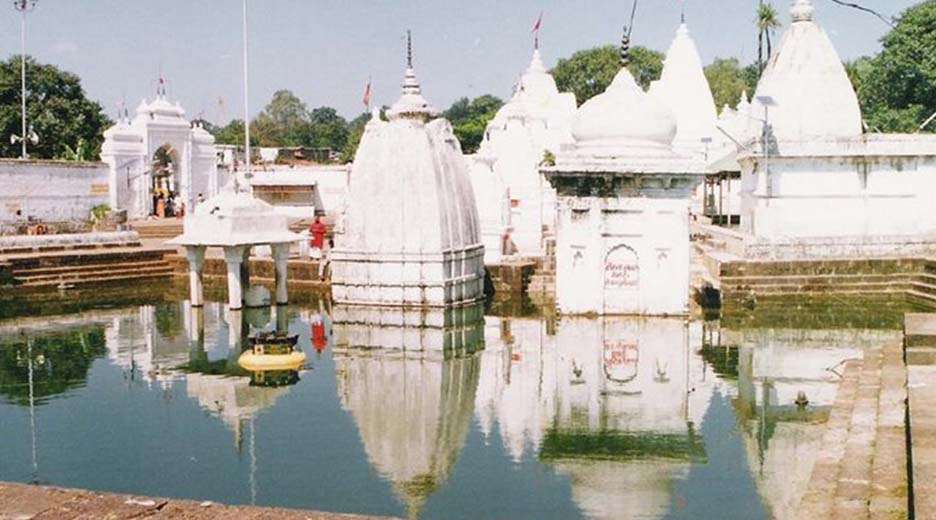
Bakreswar The village of Bakreshwar is a place of geological interest with as many as ten hot springs. The word Bakreshwar comes from the name of Lord Shiva worshipped locally with Bakra or Vakra meaning bent or curved and Ishwar meaning God. Mythologically it is said that in the Satya Yuga during the marriage ceremony of Lakshmi and Narayan, Ashtavakra Muni, then known as Subrata Muni was insulted by Lord Indra. The muni was so enraged that he developed 8 deformities in his body as Ashtavakra Muni means a sage with 8 curved deformities. Ashtavakra Muni was blessed by lord Shiva here after many years of meditation. Bakreswar is also famous as one of the 51 Shakti Peethas where there is a temple dedicated to Adi Shakti and is a major pilgrimage spot for Hindus. The Mahishamardini Temple is at a distance of about 60 km from the main town that belongs to one of the forty-seven Shakti Peetha temples scattered across the Indian subcontinent. This site of worship, dedicated to an incarnation Goddess Durga known as Bakranath, is steeped in mythology. The story goes that the temple is built on the point where the forehead and eyebrows of Sati fell. Additionally, there are more than a hundred subsidiary shrines to Shiva nearby. The Bakreswar Temple is located fairly close to the Mahishamardini Temple, and is dedicated to the worship of Lord Shiva. Deriving influence from architecture from Odisha, this ancient temple contains two different lingas corresponding to its outer and inner sanctum. Bakreswar has ten natural hot water pools with temperatures ranging from a soothing 90 to a steaming 200 degrees. At a temperature of about 200 degrees, Agni Kunda is the hottest spring located right next to the Bakreswar Temple. Agni which means fire is rich in many minerals including sodium, potassium, calcium, silicates, chlorides, bicarbonates and sulphates which are said to have medicinal properties. It might also contain traces of radioactive elements.The other springs are the Paphara Ganga, the Baitarini Ganga, the Khar Kunda which has water at 66 degrees celcius, Bhairav Kunda where the water is 65 degrees Celsius, Dudh Kunda where the water is of a dull white hue during the early mornings, probably due to ozone concentrations and is at 61 degrees celcius and is why it is named as dudh means milk. The Surya kunda which means the sun has water at 61 degrees Celsius and the Shwet Ganga, the Brahma Kunda and the Amrita kunda.
In our next part, the last part of exploring this fascinating state, we explore some more religious places and then the wonderful seaside towns and beaches.
At 22, Leslie Morgan Steiner seemed to have it all: a Harvard diploma, a glamorous job at Seventeen magazine, a downtown New York City apartment. Plus a handsome, funny, street-smart boyfriend who adored her. But behind her façade of success, this golden girl hid a dark secret. She’d made a mistake shared by millions: she fell in love with the wrong person.
At first Leslie and Conor seemed as perfect together as their fairy-tale wedding. Then came the fights she tried to ignore: he pushed her down the stairs of the house they bought together, poured coffee grinds over her hair as she dressed for a critical job interview, choked her during an argument, and threatened her with a gun. Several times, he came close to making good on his threat to kill her. With each attack, Leslie lost another piece of herself.
Gripping and utterly compelling, Crazy Love takes you inside the violent, devastating world of abusive love. Conor said he’d been abused since he was a young boy, and love and rage danced intimately together in his psyche. Why didn’t Leslie leave? She stayed because she loved him. Find out for yourself if she had fallen truly in love – or into a psychological trap. Crazy Love will draw you in — and never let go.
Kurseong Located at an altitude of 1,482.55 metres, Kurseong is about halfway between Darjeeling and Siliguiri. The origin of the name Kurseong is unclear, but stories suggest it comes from the Lepcha language word for small orchid, kurson-rip because of the little white orchids dotting the valleys, or perhaps the term for a stick made out of a local cane. The original inhabitants were the Lepcha people, who named their home Kurseong, because every spring it was alive and bright with the Kurson-Rip orchids. In the past, Kurseong was a part of the Kingdom of Sikkim, and in 1780 the Nepalese conquered and annexed Kurseong and its surrounding areas. After the Gurkha War of 1817 which the Nepalese lost, Jurseong was restored to Sikkim by the Treaty of Titalia.
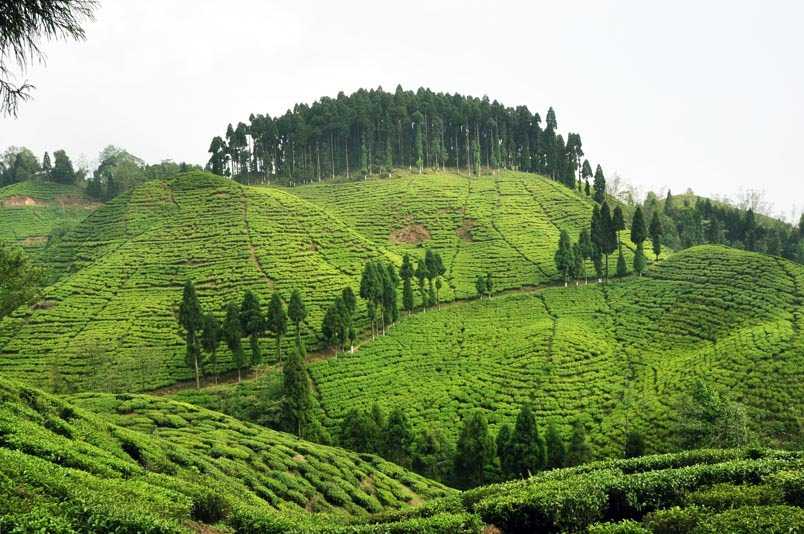
Kurseong is famous for its waterfalls, temples and Buddhist gompas apart from the excellent views. Just like the tea gardens of Darjeeling, the sprawling tea plants in their estates add a certain charm to Kurseong. The two big tea estates are Makaibari or Ambotia and the estates offer guided tours where visitors can meet the workers, get to know the history, art and the science behind tea processing. Patrons can also take part in tea-tasting sessions. A full conducted tour generally costs INR 500. Once a temporary residence of Netaji Subhas Chandra Bose, the Netaji Subash Chandra Bose Museum is located in Netaji’s older brother’s residence and has pictures, documents and articles related to Netaji during his house imprisonment by the British. Today, the museum also acts as an institute for Himalayan Language & Culture Studies and offers excellent views of the valley and is open between 9:30 am and 4:30 pm and has no entry fee. Maintained by the forest department of the state, the Forest Museum stores exhibits of animals skins, bones, hides and photographs of fauna which once thrived in the Dow Hill region. Located close to Deer Park, one can also find on display wooden artefacts. Those intrigued by nature will find themselves at home here. Visitors can also enjoy a stroll through the small park of the museum. The museum does not maintain regular visiting hours and does not have any entry fees. There are a total of three Darjeeling Himalayan Railway Museums, the other two being museums in Darjeeling and Sukna which house rare pictures, sketches, miniature structures of trains and also have regular toy train rides to nearby places which are very scenic. Located inside the Ambotia Tea Estate, the Ambotia Shiv Mandir is one of the holiest places of worship in Kurseong. There is a lovely orange orchard is located adjacent to the temple, and visitors can also enjoy excellent views from the temple premises. The Churches in Kurseong are from the British colonial times and are heritage buildings. St. Paul’s church, St. Andrew’s church and St. Mary’s Hill church are some of the must-visit churches in Kurseong.
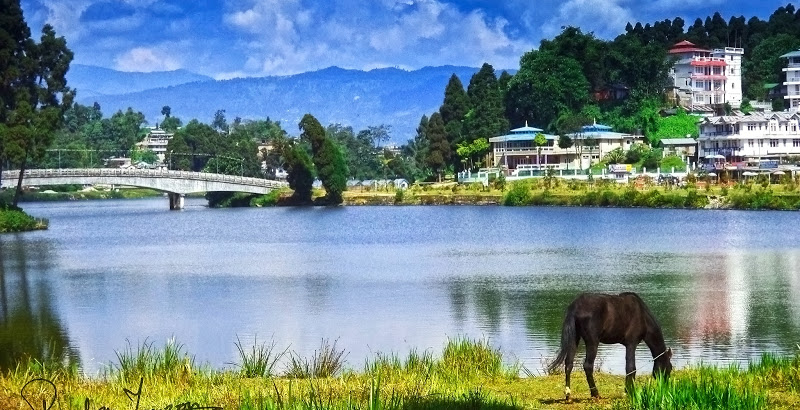
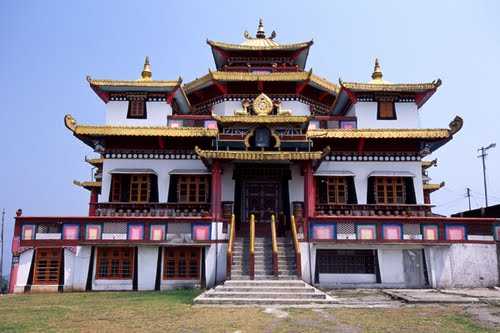
Mirik Located on the banks of a huge lake, the hill town of Mirik began life as Mirik Bazar, a commercial centre in the region where people from the surrounding villages and tea gardens came to trade and buy their necessities. The present lake area was a marshland with thick growth of sweet flag, locally called bojho with a playground stood in the present garden area where the British officers played polo.The name Mirik comes from the Lepcha words Mir-Yok meaning a place burnt by fire. The most prominent place in Mirik is the Sumendu Lake, which is beautiful, calm and yet invigorating. The lake also has an 80 foot bridge running over it for people who don’t wish to walk around it. Boating in the lake and a pony ride on the lakeside are are local and visitor favourites. The lake is strategically located so everything in the town is at a walking distance from the lake. The Mirik valley is full of tea bushes and almost throughout the year, you can see workers picking ripe leaves or watering the bushes. Mirik also has numerous beautiful orange plantations spread across the town. Bunkulung, the agricultural hub of Mirik cannot be accessed on foot. One will need to hire a vehicle which takes a few minutes to get to. Located on the edge of the valley, with hills looming in every direction, the place is full of farm lands, fisheries and lush forests. Rameetay Dhara is a beautiful viewpoint with stunning views of the Kanchenjunga as the backdrop and the valley at the bottom. The Devi Stan temple houses idols of Goddess Singla Devi, Lord Shiva, Hanuman and Goddess Kali and is just a few minutes walk from the Sumendu lake and another few minutes away from Bokar Monastery. The Bokar Monastery is the seat of the venerable Kyabje Bokar Rinpoche and belongs to the Kagyud order. It is one of the few in India that have retained its traditional beliefs and environment from the very beginning. Constructed in the Chinese architectural style with sprawling lawns, the monastery is a few minutes walk from the Mirik Lake.
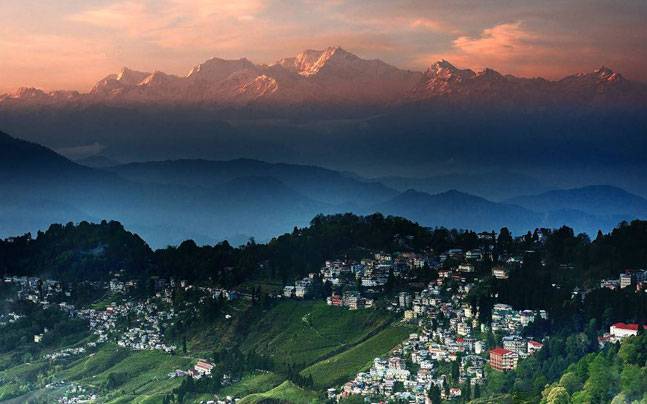
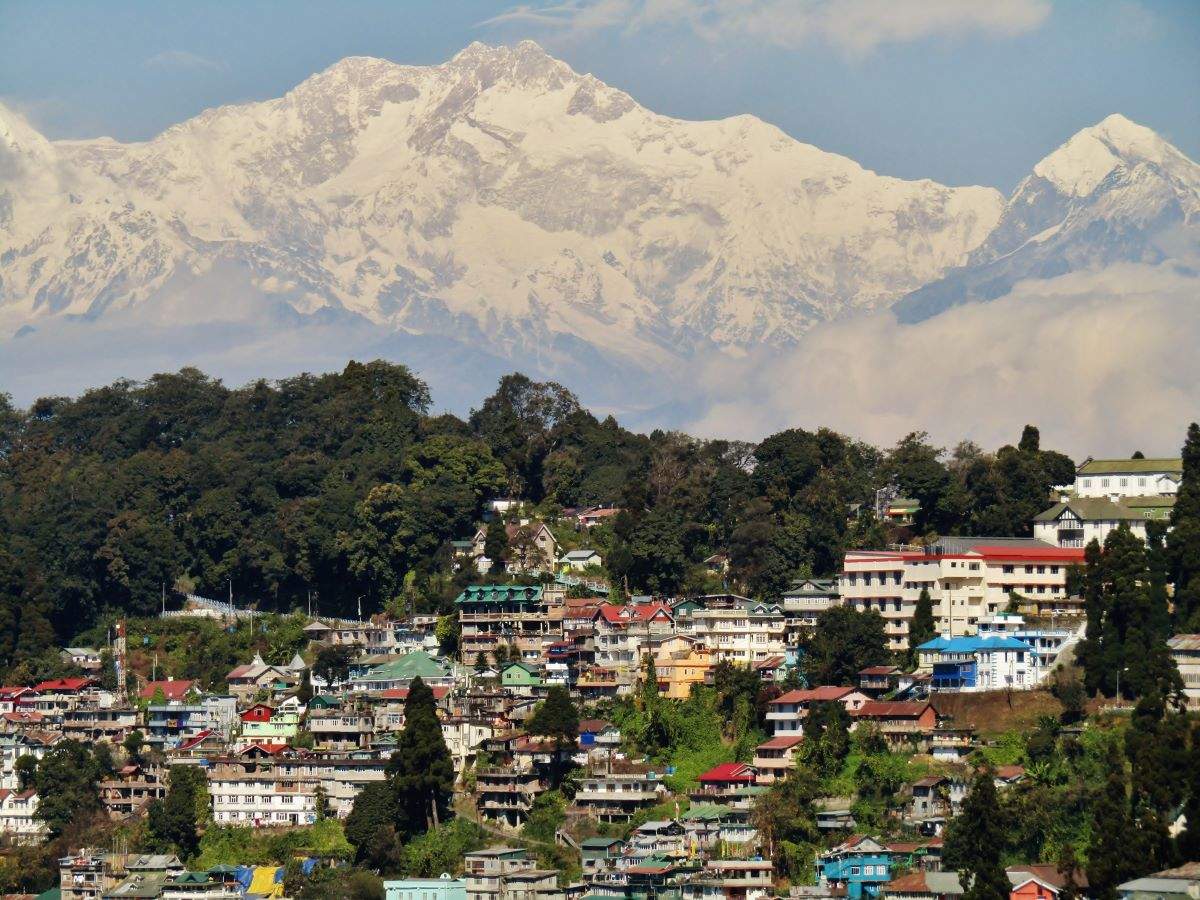
Darjeeling One of India’s most beautiful hillstations, Darjeeling is nestled amidst acres of lush green tea plantations and spread over a steep mountain ridge in the lesser Himalayas at the height of 2,050 meters above sea level. Known as the Queen of the Himalayas, there are over 86 tea estates here responsible for producing the worldwide famous Darjeeling tea. Darjeeling was the summer capital of India during the British colonial rule and the toy train established in 1881 is a UNESCO World Heritage site with the third highest peak in the world and the highest in India, the Kanchenjunga peak clearly visible from the town. The recorded history of the town starts from the early 19th century when the colonial administration under the British Raj set up a sanatorium and a military depot in the region. Subsequently, extensive tea plantations were established in the region and tea growers developed hybrids of black tea and created new fermentation techniques. The resultant distinctive Darjeeling tea is internationally recognised and ranks among the most popular black teas in the world. The varied culture of the town reflects its diverse demographic milieu comprising Lepcha, Khampa, Gorkha, Kirati, Newar, Sherpa, Bhutia, Bengali and other mainland Indian ethno-linguistic groups. The name Darjeeling comes from Tajenglung, a Yakthung Limbu terminology that means the stones that talk to each other and also from the Tibetan words Dorje, which is the thunderbolt sceptre of the Hindu deity Indra, and ling, which means a place or land.
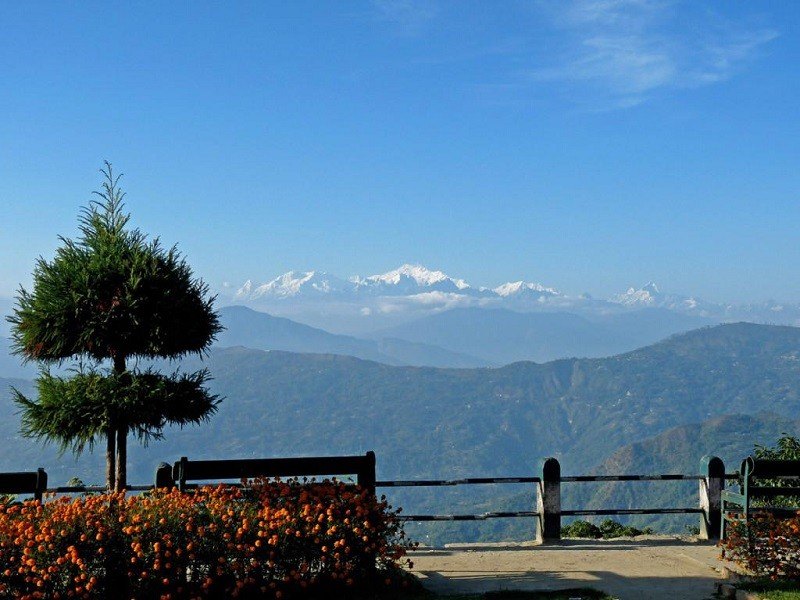
Lying at an altitude of 2590 meters, Tiger Hill is famous for its sunrise where one can see the peaks of Kanchenjunga. Tiger Hill is also the summit of Ghoom, which is the highest railway station in the Darjeeling Himalayan Railway, a UNESCO World Heritage Site. One must leave Darjeeling by 3:30 am to reach Tiger Hill by 4:15 am to reach in time for sunrise, though this is delayed a bit during winters. The roads get blocked by traffic during the peak season. To get up to the sunrise spot, it requires a short climb on foot from the parking spot. During sunrise and sunset, Kanchenjunga is lit up in a mesmerising display of colours and one can also see Mt Everest and several other mountain peaks belonging to the 8000+ m from this hilltop. Tea is synonymous with Darjeeling and with over 80 tea plantations, a visit to at least one tea garden is a must-visit.
The Happy Valley Tea Estate, the second oldest tea estate is the only garden that allows tourists to view the subtler nuances of producing and processing tea with their tea factory guided tour daily from 9:30 am to 4:30 pm during which one can observe how fresh tea leaves are withered, rolled, fermented, dried, sorted and finally graded to produce the different varieties of tea. A tea-tasting session is also held here, where first-timers are privy to experiencing the subtleties involved in distinguishing the various groups of tea and one can also buy the tea products from the shop in the estate. The factory tour is INR 100 per person and the tour is not conducted between November to February as tea plucking does not happen during the winters.
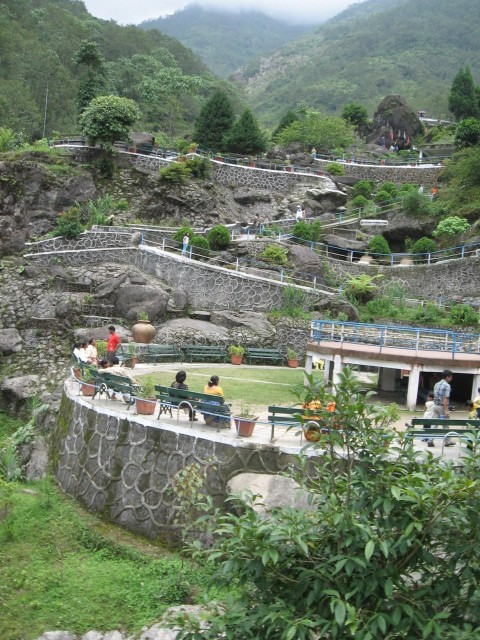
An exquisite spot terraced with natural fall known as the Chunnu Summer Fall, the Rock Garden is located 10 km from Darjeeling and is also known as the Barbotey Rock Garden. The garden is surrounded by beautiful hill stream along with the slope covered with flower gardens and sitting arrangements at various level. The way to the rock garden is filled with rocky hills and greenery shared by sharp hairpins and extremely steep roads. While at the rock garden, one musn’t miss the Ganga Maya Park which 3 km from the garden. There is a a small lake that offers a boating services to visitors and there are performances of Gorkha folk dancers. The rock garden is open from 10 am to 4 pm and entry fee for Indians have an entry fee of INR 10 while foreigners pay INR 50.
The Nightingale Park is a public park area with gorgeous views of the Kanchenjunga ranges. Previously known as The Shrubbery when it was a private courtyard of Sir Thomas Tartan’s Bungalow, during the British colonial rule. Flanked by a covered archway, the entrance leads one to pebbled walkways around the oval-shaped park. Since the Nightingale Park is at a slightly elevated terrain, one needs to climb a few steps to reach the entry. The park was closed for renovation for about four years and has reopened for the public since 2011. There is a giant statue of Lord Shiva and a musical fountain. The park is open all days of the week from 7 am to 8 pm and has an entry fee of INR 10 per person for adults.
The Observatory Hill is situated above Chowrasta square, just above the Mall Road offers a panoramic view of the mountains and various Hindu and Buddhist temples including the Kanchenjunga Temple, the Mahakal temple and the Tibetian Memorial Shrine. It takes around 15 minutes to walk to Observatory Hill from the Mall Road and in the narrow and steep uphill path, one has to go through a small cave. The walk is filled with colourful flag and small yet noticeable shrines. Built in 1765 by Lama Dorje Rinzing of the Bhutia Basti monastery, the oldest monastery in Darjeeling. The monastery was devastated by the Gorkha invasion in 1815 and was rebuilt in 1861 and again demolished by an earthquake in 1934 and currently owes its existence to the Raja of Sikkim. The ancient Mahakal temple located on the top of the hill, dedicated to Lord Shiva. There is also a small Siddhi Sai Baba temple located on the side of the road and right next to it, another temple dedicated to Lord Hanuman. The hill is open from 7 am to 7 pm.
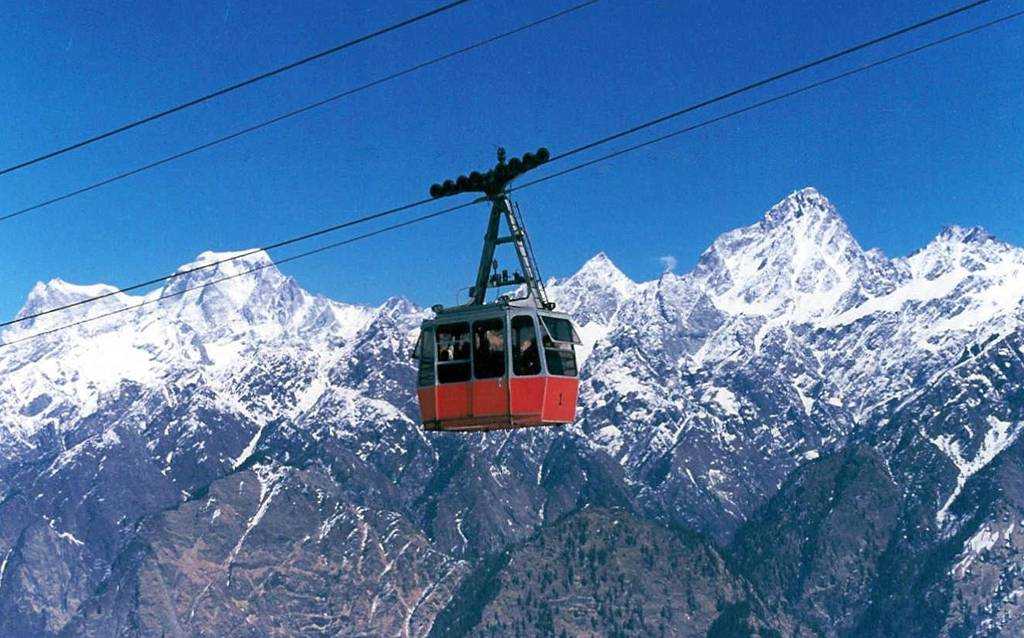
The Darjeeling Ropeway gives passengers superb views as they travel across the valley. Established in 1968, the Darjeeling Ropeway is India’s first cable car system, and serves as a tourist attraction. With 16 cable cars and each car accommodating 6 people, the cable car travels from the North Point in Singamari to the Singla Bazaar, situated by the banks of the Ramman river at an altitude of 7000 feet. The view of the numerous tea estates of Darjeeling, the cascading waterfalls, and the majestic Kanchenjunga makes this experience an essential to every visitor to Darjeeling. At the bottom end of the trip, the cable car halts for a while, where visitors may explore the lovely tea gardens, or relax at the small mountain cafe, before proceeding back to the Singamari base station. The Ropeway is closed on the 19th of every month for maintenance. During the winter and monsoon seasons, the ropeway is open between 10 am to 2 pm while during summer and autumn, it is open from 10 am to 4 pm. There is an entry fee of INR 200 per person for an adult and INR 100 for children between between the ages of 3 and 8.
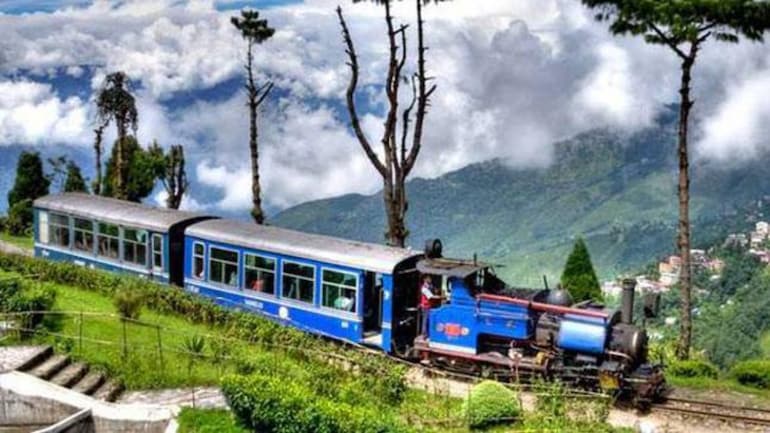
The Darjeeling Himalayan Railway also referred to as the DHR, and the Darjeeling Toy Train is a 2 feet narrow gauge train that runs between New Jalpaiguri and Darjeeling. Construction of this 88-kilometre long railway line took place between 1879 and 1881 and was declared as a UNESCO World Heritage Site in 1999. Later, two more lines were added and came to be known as the Mountain Railways of India. The trip between Darjeeling and Ghum and back is a two-hour round trip that covers a distance of 14 km. Located at the height of 2225.7 metres above the sea level, Ghum is the highest altitude station. The train stops for 10 minutes at the Batasia Loop, where it makes a loop around a beautiful and well-maintained garden from where one can get a bird’s eye view of Darjeeling, and the snow-capped Kanchenjunga peaks. The War Memorial in honour of the Gorkha soldiers is also located here, in the centre of the garden. The train also stops for 30 minutes for a visit to the Darjeeling Himalayan Railway museum which is located on the station premises and boasts of having the oldest toy train engine safely preserved here. A total of 18 rides takes place throughout the day, beginning at 7:40 am. The last ride commences at 4:20 pm. Visitors can choose a steam engine hauled train or one that has a diesel engine. The steam engine train offers an authentic and traditional experience but is costlier than the diesel engine train rides. Both the trains only have first class seats and the disel engine train has a fare of INR 800 for a round trip while the steam engine train has a fare of INR 1,300 for a round trip. All fares include the entry to the DHR museum. Children below five get in free. The Toy Train Jungle Safari operates between Siliguri Junction and Rangtong Station with the three-hour round trip taking one to Rangtong, a small village located at an altitude of 1,404 feet, 16 km away from Siliguri Junction. The ride takes passengers through the Mahananda Wildlife Sanctuary, located around Sukna and Rangtong station. The train leaves Siliguri Junction at 10:30 am and reaches Rangtong at 11:50 am where it halts for 20 minutes and arrives back at Siliguri Junction at 1:35 pm. A round trip in a first class coach costs INR 610 per person.
The Batasia Loop is a lush green toy train pathway that is meant to minimise the elevation of the Darjeeling Himalayan Railway. The unique design of this attraction allows the track to wrap around itself through a hilltop tunnel and one of the most enchanting aspects of the Batasia Loop is its natural beauty from where one can enjoy a panoramic view of the Darjeeling. The Eco Garden features organic farming and plantations with many rare and unheard of species like Rhododendrons, silver firs and Gingko Biloba. There is a war memorial located close to Batasia Loop to honour the sacrifice of Gorkha soldiers of Darjeeling, with a cenotaph and a statue of a Gorkha soldier.
Lamahatta is a scenic village 23km from Darjeeling. Lamhatta which means Monl’s Hermitage has an eco park, the Lamahatta Eco Park that was created in 2012. The eco-park has wooden & bamboo gazebos that overlook Lamahatta. The manicured garden, known as the Roadside Garden has flowers of various seasonal plants including white and yellow orchids.
The Yiga Choeling or old Ghoom Monastery is the oldest Tibetan Buddhist Monastery in Darjeeling. Established in 1850 by Lama Sherab Gyatso, this shrine is part of the Yellow Hat sect known as Gelupka who worship the Coming Buddha or the Maitreyi Buddha. Also known as the Sakhya monastery, there is a 15-foot high statue of the Maitreyi Buddha is seen in the central hall, made entirely of clay brought from Tibet. One can also find many rare Buddhist manuscripts. From the monastery, one can see the majestic Kanchenjunga. In front of the Maitreya Buddha statue hang two huge oil lamps which keep burning throughout the year. The walls of the monastery are elaborately painted with depictions and art of Tibetan Buddhism, with different images of bodhisattvas placed in a symmetrical manner. The hilltop above the monastery holds the Ma Kali temple, where devotees come to offer prayer every full moon day and on the fifteenth of every month of the Tibetan calendar. The monastery is open between 9 am and 6 pm daily and has no entry fee, but visitors need to pay INR 10 for a camera and INR 50 for a video camera.
Located on the slopes of Jalapahar hills, the Peace Pagoda or the Japanese Peace Pagoda is designed to establish unity, harmony and goodwill amongst people belonging to different sects of society. Famous for its tranquillity, it offers stunning views of snow-clad peaks including the Kanchenjunga peak. The Peace Pagoda was built by Nichidatsu Fujii, a Buddhist monk from Japan and designed by M. Ohka. The pagoda houses the four avatars of Buddha including Maitreya Buddha and is the tallest free standing structure in Darjeeling at a height of 28.5 meters. Two concrete lions stand on both sides of the staircase and the avatars of Buddha are carved in the walls and polished in gold colour which show the Buddha sitting, sleeping, standing and meditating. Beautiful artwork depicting the life of Buddha and his relics is etched on sandstones that look like wooden framework. There are mythological depictions like the Gift of Mango Grove by Amrapali at Vaishali and the Great departure of Siddhartha. The pagoda is open between 4 am and 7 pm and the prayer timings are between 4:30 to 6 am and then again from 4:30 to 6 pm daily and does not have any entry fees.
The Himalayan Mountaineering Institute is recognised as one of the best mountaineering institutes in the world and was established in 1954. The primary purpose of the institute was to encourage, enhance and support the interest of the people in the sport of mountaineering and to channel their energy into a productive and self-awarding sport. The magnificent view of the 8586-meter high peak of Kanchenjunga, the third highest peak in the world, from this institute is mesmerising. The institute is open between 9 am to 1 pm and then again between 2 to 5 pm. It’s closed on Tuesdays and during the off-season and has an entry fee of INR 40 and a camera fee of INR 10.
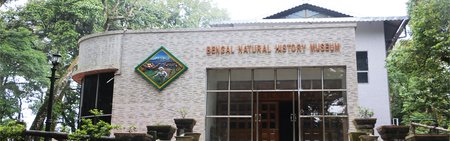
The Bengal Natural History Museum has has more than 4000 specimens and is located in the heart of Darjeeling at the Padmaja Naidu Himalayan Zoological Park. Originally started as a small building in the Botanical Garden meant to showcase the varieties of butterflies and birds of the hills, today, one can find preserved remains of the bird species, reptiles, insects, fishes, and mammals displayed in a replication of their natural habitats. An attractive display of the various minerals of the region is also present here. There are two sections at the museum, one at the ground level and the other in the basement. There is also a large collection of birds’ nests and eggs and a specialised taxidermy unit to oversee the curing, stuffing and preparation of the birds and animals to be displayed as exhibits. There is also a small library where one might find many interesting books, including the 125 volume series titled The fauna of British India. The museum is closed on Thursdays and national holidays and on other days, it is open between 10 am to 4 pm. One needs to purchase a combined ticket for the Bengal Natural History Museum, Darjeeling Zoo and Himalayan Mountaineering Institute for INR 60.
The Padmaja Naidu Zoological Park houses a wide variety of animals and is also known as the Darjeeling Zoo and includes an off-display breeding centre for snow leopards and red pandas. Set up in 1958 and named after the former governor of West Bengal, Padmaja Naidu, it is the largest high altitude zoo in India. The zoo serves as the central hub for Central Zoo Authority of India’s red panda program. There are Siberian Tigers, Yaks and the Himalayan Black Bears among other animals and also maintains Himalayan flora.
The zoo is open from 8:30 am to 4:30 pm during summers and from 8:30 am to 4 pm during winters. It is closed on Thursdays and has an entry fee of INR 20 for Indians and SAARC country residents and INR 50 for foreigners while a camera incurs a INR 10 charge.
Located at an altitude of more than 7000 feet above the sea in the Singalila range, the Singalila National Park is the highest national park in the state. Initially, a wildlife sanctuary, the national park encompasses beautiful, 78.60 sq km of virgin rhododendron forests, alpine valley and rare species of animals and orchids. It provides panoramic views of the Himalayas from Nepal to Sikkim and up to Bhutan. Singalila is home to the very rare and exotic Red panda and the Himalayan black bear. The national park is also part of a trekking route and derives its name from the Singalila spur, which runs through the park, descending from Mount Kanchenjunga in the north and running south to the northern fringe of the Gangetic Plains. Visitors need to get a permit from the forest department before entering the core area of the national park. The permit can be acquired either from the Forest Department office at Manebhanjan or at the entrance to the national park about 1km from Tumling. Within the park, it is necessary for visitors to be accompanied by trained and registered guides of the wildlife department. One of the most popular treks is along the Singalila Ridge to Sandakphu and Phalut which provides a grand vista of the Kangchenjunga and the Everest ranges and one can also see the seasonal wildflower blooms and birds. The jeep safari through the Singalila National Park and the surrounding forest is the best way to get around with the route ringed by stretches of greenery, with lofty pine trees and vibrant rhododendrons. The fare for the safari is around INR 3000 which can be through a Darjeeling based tour operator. The national park is closed from 16 June to 15 September and when open is open from 6 am to 7 pm. The entry fee is INR 100 for Indians, INR 200 for foreigners, INR 100 for a camera and INR 500 for a video camera. A small village around 19km from Darjeeling located at a height of 6,956 ft, Lepchajagat lies amidst dense forests of pines, oaks and rhododendrons and is now part of a reserved forest area.
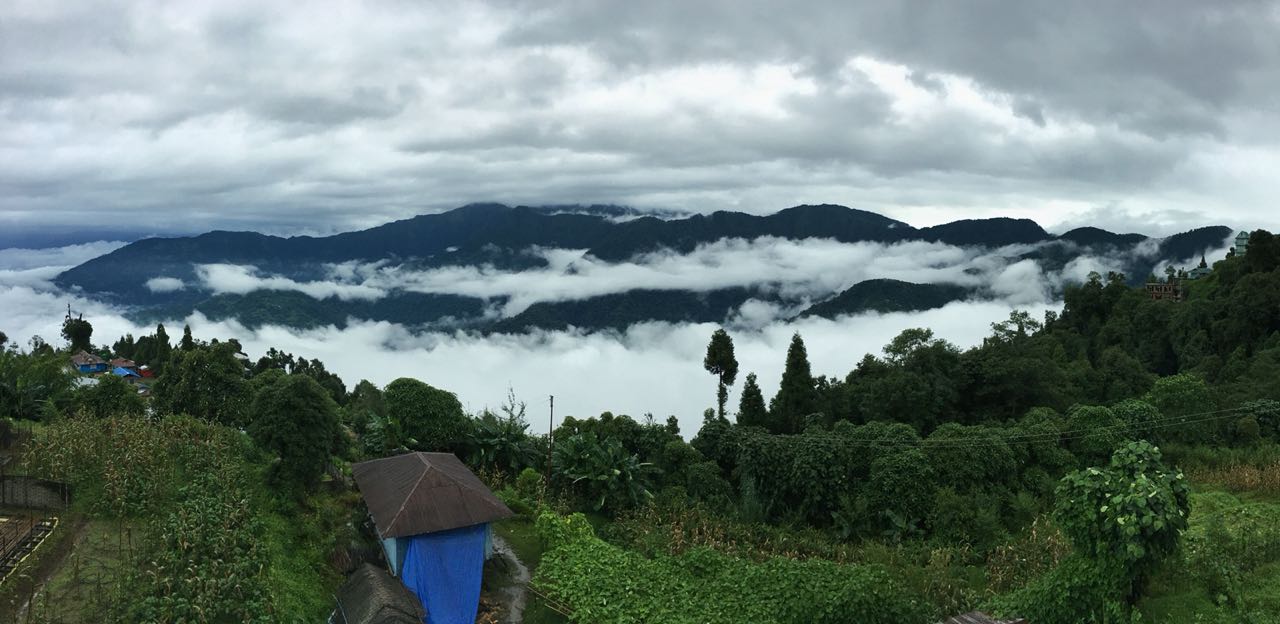
Tinchuley At a distance of about 32 km from Darjeeling, Tinchuley is an offbeat hamlet situated close to the West Bengal-Sikkim border at an altitude of 5550 ft. The name Tinchuley is derived from the words tin and chula, which translates as three ovens because the trio of hills resembling mud ovens. The rivers Teesta and Ranjeet also intersect quite close to it. While famous for its tea plantations and fresh fruit orchards, Tinchuley is quieter and more obscure place than Darjeeling. In Tinchuley, one can engage in rock climbing, trekking, sightseeing, all against a scenic green mountainscape that seems like something out of a film set. The Sunrise View Point is where one can catch the young and majestic peaks of Eastern Himalayas that comprise the Teesta Valley especially during sunrises and sunsets. Starting from Peshoke Road, a quick, half an hour stroll through gorgeous pine forests and ferns will land one in Gumbadara, another vantage point in Tinchuley. Here one can get to explore ancient Himalayan caves whose surrounding rocks offers some fun rock climbing. One can not only see the Teesta river flowing down in the valley below but also the bordering state of Sikkim. Tinchuley cultivates export-quality tea and there are six tea gardens in the village. Tinchuley’s economy is also dependent on the numerous orange orchards in the village including a factory that produces fresh marmalade, orange juices and pickles. Established centuries ago by a monk purportedly in the order of Nalanda, the Tinchuley Monastery is a centre of spirituality. As per legend associated with the monastery, a lama meditated here for 17 years. Every morning, cymbals in the monastery are loudly rung in order venerate the ancestors and appease their spirits. Downhill from Tinchuley, the village of Chotamangwa began become popular recently.
Dooars The Dooars or Duars are the alluvial floodplains in eastern-northeastern India that lie south of the outer foothills of the Himalayas and north of the Brahmaputra River basin. This region is about 30 km wide and stretches over about 350 km from the Teesta river in West Bengal to the Dhansiri River in Assam. The region forms the gateway to Bhutan and is part of the Terai-Duar savanna and grasslands ecoregion. Dooars means doors in Assamese, Bengali, Maithili, Bhojpuri, and Magahi languages. There are 18 passages or gateways between the hills in Bhutan and the plains in India and the region is divided by the Sankosh river into eastern and western Dooars with the western Dooars also known as the Bengal Dooars, and the eastern Dooars also known as the Assam Dooars. The Dooars belonged to the Kamata Kingdom under the Koch dynasty; and taking advantage of the weakness of the Koch kingdom in subsequent times, Bhutan took possession of the Dooars. This region was controlled by the kingdom of Bhutan when the British annexed it in 1865 after the Bhutan War and the area was divided into two parts with the eastern part merged with Goalpara district in Assam and the western part turned into a new district named Western Dooars which was changed to Jalpaiguri district in 1869. After independence, the Dooars acceded into India and merged into India in 1949.The Dooars comprises of several towns and districts and is blessed with the mighty range of Eastern Himalayas as a backdrop, a band of thick forests, rich in species of flora and fauna, tea gardens, and water bodies.
Mahanada Wildlife Sanctuary located at the foothills of Himalayas in the Terai region, is spread across the lower catchment area of the Mahanada river. With a thick forest cover, it is home to rare species of animals like the one horn rhino, bison, elephants, tigers, leopards, sambar and cheetals. The Chapramari Wildlife Sanctuary at Lataguri is located about 20 km from the Gorumara National Park. With the Kanchanjungha and other Himalayan peaks as its backdrop, visitors can see a wide diversity of animals like elephants, gaur, leopards in their natural habitat here. This park is closed during the monsoon season between June and September, but during the other months, overnight accommodations are available in the Rest House. 81 km from Siliguiri, in the middle of a forest are two forest bunglows called Sumsing and Suntalekhola. With the hills in the backdrop and the constant splashing noises of the numerous streams as they flow, visitors can step out of the bungalow and listen to early morning chirping of birds and whispers of the forest for a relaxing holiday from the world. Latpanchore is a small village at the top of a hill top on the Mahanada Wildlife Sanctuary, surrounded by forest and rich in the Cinchona plantation. There is a British bungalow in the middle of this, which now serves as a forest bungalow. Trekkers trek from here up to Namthing Pokhri with the sunrise from the Aahal Pick an absolute delight to watch.
Kalimpong Previously a gateway in the trade between Tibet and India before China’s annexation of Tibet and the Sino-Indian War, Kalimpong is known for its educational institutions, many of which were established during the British colonial era. Kalimpong sits on a ridge on the Shivalik range overlooking the Teesta river and is renowned for its panoramic valley views, Buddhists monasteries and churches and Tibetan handicrafts. Dotted with ancient Buddhist monasteries, centuries old churches and exquisite revered temples Kalimpong marks the Bhutanese history till it was wrested by the British.
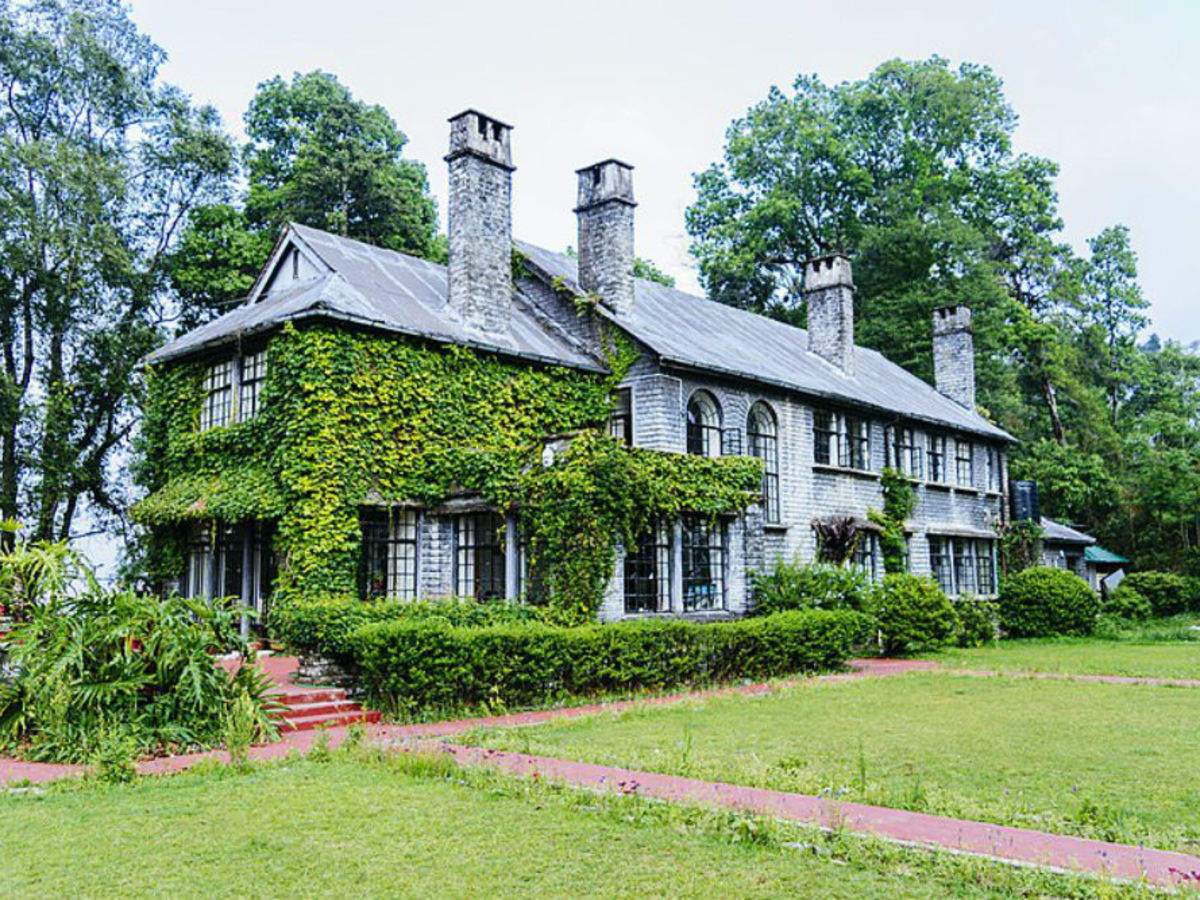
Morgan House, built in the 1930s is an archetypal example of colonial architecture. There are many legends about this house being haunted and today it is a tourist lodge and is near the New Jalpaiguri Railway Station. Located on the sixteenth-acre estate on top of Durpindara Mountain, it lies at a distance of 3 km from the town of Kalimpong and gives a clear view of the Kangchenjunga range. Kalimpong cantonment area surrounds the mansion and provides a view of the Relli, Kapher, Deolo as well as Labha valleys. Locals believe the house to be hanunted with legend saying this house was built by George Morgan in the 1930s, and he lived in the home until the death of Lady Morgan whose spiriti is still is believed to haunt the house with some people reported to hearing sounds of high heels clicking against the wooden passage of the house. Another British bungalow, Galingka offers spectacular views of the Kanchenjunga peak. Built by the British wool traders in the 18th century, Crockety is a bungalow famous for its architectural design and breathtaking surroundings. Nobel Laureate Rabindra Nath Tagore broadcasted his work Janmadin on his birthday on All India Radio from behind Crockety. Offering the panoramic view of Kalimpong, the snow-clad Himalayan ranges of west Sikkim, the Teesta river and its valleys, Durpin Dara Hill also has a golf course and the Zang Dhok Palri Monastery as well as a famous botanical garden. The Deolo Hills are located at an elevation of around 2000 m and provide panoramic views of Kalimpong. There are also proper view points which are located at the ridge edges for the best views of the sunsets and sunrises. As the land of the largest number of commercial flower nurseries, Kalimpong nurseries specialise in the cultivation of exotic beautiful flowers and export these flowers to different parts of the country. There are numerous nurseries across the town so one can enjoy time there, especially for those with a green thumb. The Pine View Nursery is famous for exotic cactus.
Consecrated by Dalai Lama in 1976, the Jang Dong Palriffo Brang Gompa is also known as Durpin Monastery and is built in the Buddhist architectural style with beautiful paintings on the walls and the sacred Kunguyar. The Thongsa Gompa is the oldest Bhutanese Monastery established in 1692 and also known as the Bhutanese Monastery. Founded in 1912, the Tharpa Choeling Monastery is situated at Tirpai Hills and is one of the oldest gompas here. The monastery is famous for housing several ancient scriptures and other literary works. Built by local craftsmen the St.Theresa Catholic Church resembles a Bhutanese Gompa and it is built in Tibetan architectural design. While the walls are enriched with paintings and inscriptions from the Bible the doors of the church have carvings which resemble tashi tagye or the 8 auspicious symbols of Himalayan Buddhism.
Linking humans to nature, the Nature Interpretation Centre was established and is managed by the forest department and conducts research on the impact of human activities on the environment. The museum contains information, pictures, photographs and books on ecology and environment. The Sericulture Research Institute is known for its research in sericulture and breeding of silkworms. It works closely with the farmers in developing self-help groups and in the cultivation and sale of different stages of silk production. As an initiative to preserve the Lepcha tribe’s culture, the Lepcha Museum has relics and objects of everyday use like articles of worship, musical instruments, handicrafts items, manuscripts etc. all used by the Lepcha people. This tribe can be seen Darjeeling, Kalimpong, Sikkim, Nepal and Bhutan.
Ramdhura is a small village around 15km from Kalimpong. A scenic getaway, one can see the Kanchenjunga peaks, the Teesta River, pine foresrs and Cinconha plantations here. There is also a large variety of birds and butterflies in this village which is known for its tranquility and is ideal for short trekking or mountaineering trips. The name Ramdhura means Lord Rama’s village and is made up of Lord Rama’s name and Dhura which means a village.
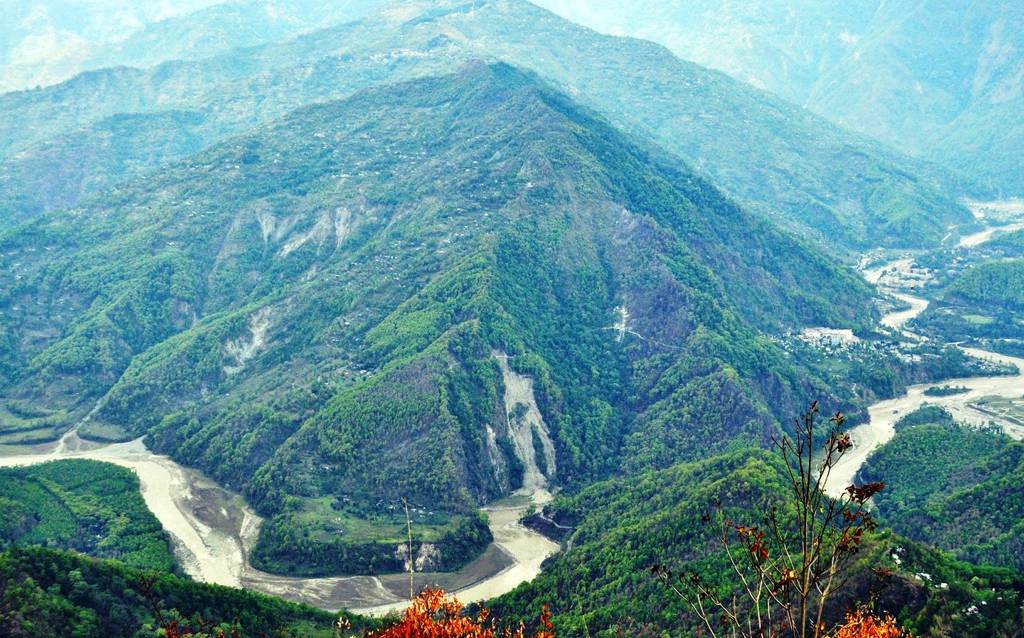
Rishikhola or Reshi Khola is a riverside camp site that lies between Kalimpong and the Sikkim border, about 36 km from Kalimpong. The river Reshi meanders through this picturesque spot where the Himalayan Bulbul and White Capped Water Redstart are often spotted and blooming rhododendrons can be spotted here during the summer months. Rishikhola is also a starting point for many treks.
More mountains and nature reserves coming your way in Part 5
No Way Home: A Memoir of Life on the Run – Tyler Wetherall
Tyler had lived in fifteen houses and five countries by the time she was nine. She didn’t think this was strange until Scotland Yard showed up in her bucolic English village, and she discovered her family had been living a lie. Her father was a fugitive and their family name was an alias.
They had been living in California back in 1983 when the Feds originally caught up with her dad; it was the same year Tyler was born. Her parents decided to go on the run with the three young children, and they spent the next few years traveling across Europe, assuming different identities, living in a series of beautiful places, from Portugal to Tuscany, paid for with drug money. Now her dad had fled once more, except this time he didn’t take her with him.
Despite the danger involved, for the following two years he flew Tyler and her siblings out to see him in secret wherever he was in hiding, until on her 12th birthday Scotland Yard followed Tyler to the Caribbean island of Saint Lucia, where her father was eventually captured. It was over the summers spent visiting her dad in prison in California, as she grew into an increasingly self-destructive teenager, that he told her the truth about his criminal life. He had been a pot smuggler in the seventies, and his organization had bought in marijuana worth nearly a half billion dollars from Thailand.
In this emotionally detailed and carefully wrought memoir about growing up as a fugitive’s daughter, Tyler Wetherall pieces together the story of her parents’ past, which ultimately helps her understand her own.














 Memories and Such