Living Authentically: The Courage to Be Yourself

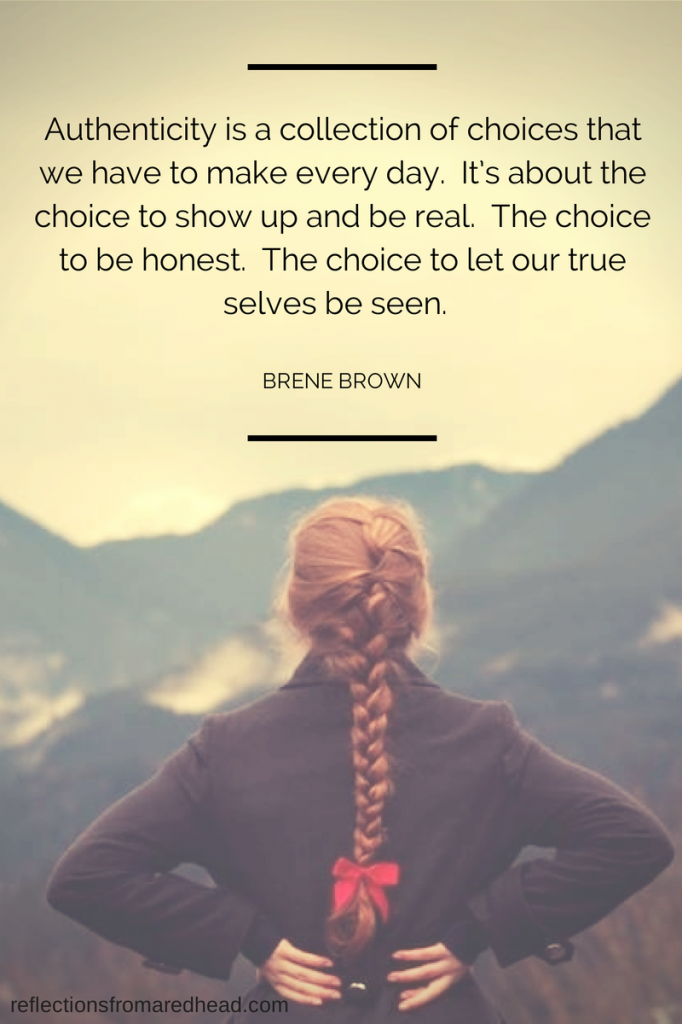
We’ve heard this phase ‘living an authentic life’ quite often now and I was intrigued about what this meant. So I decided to do a bit of research and found out that living authentically essentially means being true to one’s true self and know themselves inside out. Authenticity simply means embracing who you really are, at your very core, and acting in accordance to your own values and beliefs. Being authentic means coming from a real place within, when actions and words are congruent with beliefs and values. An authentic life involves following one’s passion and being intimately connected to our natural abilities, strengths, and talents. Authenticity may come at a cost, yet it typically leads to a richer, more complete life

Living authentically is not stagnant, it is constantly shifting and taking on new forms. We need to be continually learning about ourselves, challenging old beliefs, letting go of baggage we hold, learn to face and overcome fears and doubts. We need to reach deep inside ourselves and find out what makes us tick, what makes us happy, what makes our spirits soar and our heart just grow large, so we can find that part of ourself that is alive, free and unburdened and once we find that, have the courage to live that life. Authentic living requires us to embrace the reality of our freedom and be responsible for how we choose to live.

I personally believe that being authentic and living an authentic life comes about more as one grows older and hopefully wiser, one learns more about their own true self and starts to become more authentic. When one is younger, you tend to become influenced by your parents, family, peers, friends and what you see and read, both online and offline and to a very large extent, this influences your thinking, ideas and even hopes and aspirations with regard to life.

A way to reach our authentic self is to let go from the past and be grounded into the present because it is only then we can be open, curious and accepting of ourselves and others. Also how we perceive our authenticity is a crucial aspect of who we are. Not only does it significantly influence the pleasure we derive from our experiences, but it also affects our judgment and behavior across all aspects of our life. Authenticity and living a complete and fulfilling life are processes rather than outcomes. Living authentically involves moving in a direction that is most authentic to us as individuals.

Modern technology which is so intrusive and intimately connected to all aspects of contemporary existence, can also impact authentic living. As wearable technology continues to revolutionise the health, wellness, and sports sectors, providing previously unknowable biometric information to the general population, they offer, sometimes doubtful promises to enhance users’ lives.

In the long term, putting on an inauthentic front is tiring and ultimately damaging to our mental and physical wellbeing. So how do we go about learning to live an authentic life?

  • We need to become more aware of what is happening within ourselves, both physically and mentally. A stiff neck may be linked to what is going on in the mind, feelings, thoughts, and difficult decisions.
  • Give up the act of living according to what others expect you to act and do. Living a compartmentalised life and presenting a different version of yourself to different people is extremely draining. Live in line with your values and set clear standards for yourself from which you will not deviate from. Then when you stop pleasing everyone, you can achieve true authenticity.
  • We need to start listening to the inner voice rather than losing it in the noise of others’. Learn to listen to your hopes, dreams, and fears and when I say listen, I mean to really listen to what they are and how you will be able to achieve it.
  • Learn to be comfortable with being vulnerable because there is no authenticity where there is no truth, and there is no truth where there is no vulnerability. Honesty and openness are the oxygen for authenticity to thrive and there is no genuineness without a candid dose of reality first.
  • Know yourself inside out, what you are good at, what you are prepared to do, and what you are not. Face up to the truths of who you are. Honesty is not always pleasant, but it has the potential to free you. Be yourself; be honest and transparent in your dealings. People like and are drawn to those they perceive as sincere and genuine and distrust those who are not.
  • In the same vien, own yourself and your truths. Don’t let others push you into their way of thinking, but also don’t stick to views when you are proved wrong or they no longer work for you. Take responsibility for your choices.
  • Focus on the experiences and connections and not on possessions. Relations, especially meaningful relationships add a value to life that the fleeting and ephemeral value of belongings can’t touch. Ultimately, it all boils down to meaning, possessions only have meaning because of the value ascribed to them. When the tastes or standards change, as they are prone to, the meaning associated with the objects shifts. Long story short, there are very few tangible things that add any real value to life, but investing in people pays significant dividends over time.  Life is about experiences and memories, laughter and love, happiness and healing. But none of those things have any meaning without other people. Our legacy will be the lives we touch and the love we leave behind, everything else all fades away with the sands of time. Building a more authentic life means focusing on what matters.
  • Humility and authenticity go hand in hand. As babies, we don’t brag about our achievements, it’s only as we grow up and our egos start to develop, that we start using our achievements to brag about how important we are. To live a more authentic life, approach everything through the lens of humility and curiosity. Become an explorer, feeling your way through the twists and turns of the jungle that is your journey. It all starts with your willingness to take a step back and cultivate modesty.
  • If you want to live a more authentic life, you’ll have to ditch all that made you comfortable living an inauthentic life to begin with. And that means shifting your priorities. Instead of operating based on the expectations of others, learn to trust your own intuition instead. Charting your own course and blazing your own trail can indeed be scary. But at least you’ll know it serves you best because you trust your own instincts. And that’s what genuineness is all about.
  • Act, don’t react, you can’t live an authentic life if you’re constantly riding on the coattails of what other people are doing.  Instead of following along, take the lead. Instead of living according to everyone else’s expectations, embrace your intuition.
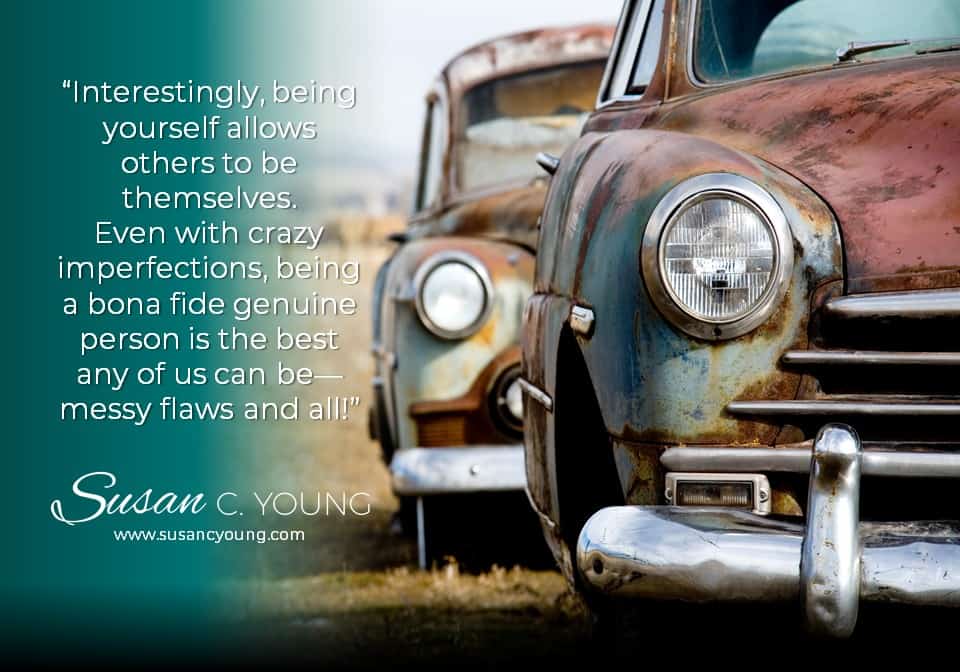
  • Embrace your imperfections. One of the reasons people tend to struggle with authenticity is because they strive for perfection. But perfection is elusive because the bar always gets raised. People tend to drive themselves crazy trying to tweak every little thing about their lives. Accept the messiness and complexity of your reality, that’s what makes for an authentic life.

To check if you are living an authentic life ask yourself the following questions:

  • Do you feel free to make your own choices?
  • Can you express your own views and opinions?
  • Are you able to yourself on a day-to-day basis?

If the answer is No to any of the questions, then reflect on them and also think about this – is this because you are not being true to who you really are?

Also, for those who are parents or will become parents, love your children unconditionally, this means the love is not conditional and does not depend on how the child lives up to a parent’s expectations. Doing this will eventually lead to voices in the head which are constantly critisising and pulling the child down, even when they grow up to become adults.

To live an authentic life, be open to new opportunities and experiences, seek new challenges, and transform the anxiety that forces you to hide into enthusiasm. Engagement can be one of the most positive paths to authenticity. To be real, one must follow their passions while remaining tied intimately to who they are, reflecting their strengths and virtues.

The formula to living authentically is this: Know yourself + Own yourself + Be yourself = The Authentic Life

In My Hands Today…

Singapore: A Biography – Mark R. Frost and Yu-Mei Balasingamchow

The cityscape of modern Singapore is in a constant flux, all in the name of development and progress. A sense of the physical past is consequently imited.

This new work, based on research done in collaboration with curators of the National Museum, seeks to invigorate links to Singapore’s past by weaving a cohesive narrative out of fragments of eyewitness accounts, correspondences and descriptions.

Taking readers through the earliest Ming dynasty Chinese accounts of the island, the founding of modern Singapore, its growth as an emporium and port city, the Japanese occupation, and finally self-determination and independence, this book lets the experiences of historical individuals speak to a modern audience, allowing them to reconnect with and find meaning in the past.

Music Appreciation: The most potent instrument of education

When I was young, most people I knew had a subscription to a local music sabha. A sabha is supposed to be a congregration or an assembly in ancient India and in the south, a music sabha is a conregration for music lovers, especially during the music season. Close to our home and very close to my grand mother’s home was the music sabha we went to. My grand parents were members and when they moved out of Bombay (when it was still Bombay and had not yet been renamed to Mumbai), my parents took over the membership.

I remember a representative from the sabha would come home once every few months and pass us the membership card along with the sabha schedule for the next few months. This was way before social media and mobile phones, so everything was done manually. This sabha was one of the most prestigiuous sabhas in Bombay at that time. It was established a few years after India’s independence with the aim of promoting the fine arts and provide a platform to showcase various artists in the various areas of the fine arts, especially music, dance and drama.

My parents and grand parents from both sides used to look forward to this programme and we would also be taken to the sabha for a dose of culture and music appreciation. Sometimes when a friend was also going there, we would not mind going, but most times we would rebel. When they could not get us to accompany them, my mum would leave us at my grandmother’s house which was just 2-3 minutes away from the sabha and go and enjoy the concert. We would enjoy the next few hours in the company of friends and when the concert ended, they would come to my grand mother’s house, have dinner and go home. Most of the concerts used to involve classical Carnatic music and dancen and when a distinguished artist was scheduled to perform, people would beg and borrow extra passes so family and friends could also listen and see the artist at play. 

When a distinguished artist was performing, we would all troop down to the sabha and any requests to stay at home would not be entertained as this would be a rare opportunity to hear and see such a distinguished performer. Relatives who stayed in other parts of the city would also make their way and I remember an aunt, my mother’s sister who was herself a singer and had learnt Carnatic music when she was younger would come down, especially if the concert was on a Saturday and stay at her mum’s place so she could attend it. I remember either attending or my parents attending performances by M.S Subbulakshmi among other celebrated artists.

When I just finished school, the sabha was unfortunately destroyed in a devastating fire and for a very long time all performances were stopped while it was being rebuilt. By then, we had all grown up and after a few more years of being members, my parents also gave up their membership and the sabha is now just a distant memory or a place for nostalgia when we pass by it.

Though I didn’t really recognise it then, this forced attendance has help me appreciate music. Though I did learn Carnatic music and my sister learnt Bharatanatyam, as did pretty much every tambram girl I knew, we did not take it up far and gave it up when school got too much for us. But those lessons and the concerts and dance performances we attended gave us a appreciation of what good music was all about. We learnt how to carry a tune and recognise when someone is out of tune. Even today, when I hear music which is even slightly out of tune, even though I may not recognise the raga being played, I know it is not correct and I wince, mostly unconsciously.

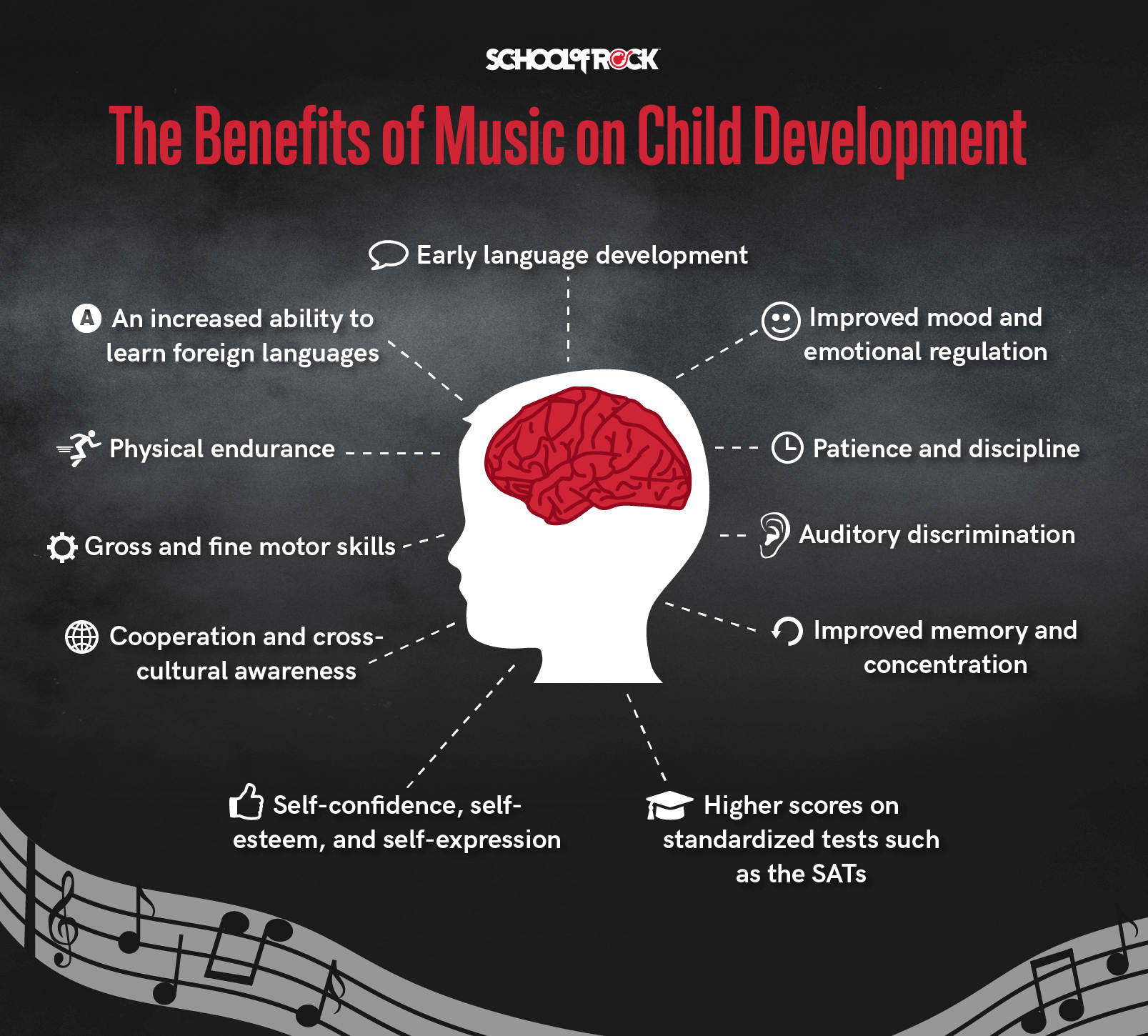
Today, research has confirmed what our parents and grandparents instinctively knew. That when you learn and listen and appreciate good music, it is extremely beneficial, especially to young children. Music is a megavitamin for the brain, the ultimate mood enhancer for emotional balance, a golden key for unlocking creativity, the secret code behind health and longevity, and the connective fiber between human beings of all races, nationalities and generations.

Musical training helps develop language and reasoning as it develops the areas of the brain related to language and reasoning. Children who are exposed to music early are more emotionally developed with empathy towards other cultures and also tend to have a higher self esteem and are better at coping with anxiety. Math and pattern recognition skills are developed with a music education and someone who has learnt music can better detect meaningful, information-bearing elements in sounds. Music also builds the imagination and intellectual curiosity and help foster a positive attitude toward learning and curiosity. An artistic education develops the whole brain and develops a child’s imagination. It is universally known that music helps fight stress and can be incredibly relaxing and also develop spatial intelligence in children.

When I look back in hindsight, I am so thankful to my parents for forcing this on me, even when I could not see it then. At that time, all it meant that going to classical concerts and dance performances meant that my Saturday evenings were being wasted, and I could use that time to play with friends. But today, as I do the same to my children, I realise how much this has benefitted me. GG & BB started learning Carnatic vocal music at about the age of seven. BB dropped it when he was about 12, when puberty hit and his voice started to break, but GG has still continued to learn. When I told her she could drop it if she wanted to, she told me it was very relaxing and wanted to continue. I do believe that these forced lessons have made them appreciate good music, even if their current music taste is not classical. GG also learnt western ballet for almost a decade, but gave it up when school got too much to balance. Today GG continues to sing, both classical and other music while BB, who actually has a good voice and a head for tune, sings very casually, though he will not really admit it.

In My Hands Today…

A Trip to the Beach: Living on Island Time in the Caribbean – Melinda Blanchard and Robert Blanchard

This is the true story of a trip to the beach that never ends. It’s about a husband and wife who escape civilization to build a small restaurant on an island paradise — and discover that even paradise has its pitfalls. It’s a story filled with calamities and comedy, culinary disasters and triumphs, and indelible portraits of people who live and work on a sliver of beauty set in the Caribbean Sea. It’s about the maddening, exhausting, outlandish complications of trying to live the simple life — and the joy that comes when you somehow pull it off.

The story begins when Bob and Melinda Blanchard sell their successful Vermont food business and decide, perhaps impulsively, to get away from it all. Why not open a beach bar and grill on Anguilla, their favorite Caribbean island? One thing leads to another and the little grill turns into an enchanting restaurant that quickly draws four-star reviews and a celebrity-studded clientele eager for Melinda’s delectable cooking. Amid the frenetic pace of the Christmas “high season,” the Blanchards and their kitchen staff — Clinton and Ozzie, the dancing sous-chefs; Shabby, the master lobster-wrangler; Bug, the dish-washing comedian — come together like a crack drill team. And even in the midst of hilarious pandemonium, there are moments of bliss.

As the Blanchards learn to adapt to island time, they become ever more deeply attached to the quirky rhythms and customs of their new home. Until disaster strikes: Hurricane Luis, a category-4 storm with two-hundred-mile-an-hour gusts, devastates Anguilla. Bob and Melinda survey the wreckage of their beloved restaurant and wonder whether leaving Anguilla, with its innumerable challenges, would be any easier than walking out on each other. Affectionate, seductive, and very funny, A Trip to the Beach is a love letter to a place that becomes both home and escape.

The Good and the Bad: Boss Edition

It is often said people don’t leave bad organisations, but leave bad bosses. And this is so true. When coworkers get together, stories are bandied about bosses and rarely are good managers discussed, but the spotlight is mostly on bad bosses. Many bosses fall into the bad boss category because they fail to provide clear direction, regular feedback, recognition for contributions, and a strategic framework of goals that enable their employees to see their progress. These kinds of bad bosses are what are called generic bad bosses because all employees need these types of support and feedback, and they suffer when they don’t receive it.

I’ve had my fair share of bosses, both good and bad. In my first job, we were a very young team, all of us fresh out of school and in our first jobs. The company was also a fairly young one, but the management were not very young, they had about a decade plus experience and you could probably call them middle management. While we didn’t really really report to them, they oversaw our work. My expectations with managers and bosses are most likely influenced by how they interacted with us. They were friendly and fair and had an open office policy. But one thing really stands out for me and is something that has been a sort of guiding principle for me all these years.

The office was a split office, with us in the ground floor and the managers and finance people in level 2. Officially the office would end at 5:30 pm and at 6 pm, one of the bosses, lets call him D would come down to go back home and if he saw us around, we would have to have a good reason why we were still around. 90% of the time, we were around, because we were hanging out with each other. Except for one, none of us were married and had no responsibilities, so there was no pressure to get out of the office and go home.

When D saw us hanging around, not leaving the office, he would ask us why were still there and used to say something like this. I am paraphrasing this, but he would say that if you are staying late because you have too much work, then there could be two reasons for this. One because you have too much on your plate or two because you have not finished your work in the scheduled hours of work. In both cases, we should have a talk, because if you have too much work, then we need to figure out how to reduce your workload and if it’s the second reason, then we also need to talk about why you are not able to finish your work on time. This is something that has always resonated with me and I have always tried to be as productive as possible while at work and leave on time as much as possible.

Another manager who made an impact in my life was someone who was my manager for the longest period of time. I was also in this organisation the longest, for almost a decade and of the multiple managers whom I reported to, this one was the one I reported to the longest. He was fair, but had his faults, the biggest of which was playing favourites. While I was not a favourite, I was also on his dislike list and so I escaped some of the worst things he said to others. From him I learnt how not to play favourites, especially when hiring people for the organisation and to not enable them so much they they believed to be above all others. He used to catch up with us every time he passed through Singapore but died a few years back.  

The third manager was someone whom I reported to for less than a couple of years, but he was a peer in terms of age. A very supportive manager, he gave me more responsibilities when he saw I could handle them and also credit where it is due. I learnt a lot from him, especially on how to manage people as he was someone who was friendly with everyone and even learnt some of the finer points of office politics from him. Unfortunately after about two years of reporting to him, he was transferred to a different country, but we are still in touch.

The last manager I was to talk about was the most toxic one. I have written about this person previously and even today, years after I left the organisation, I still have nightmares about how they used to literally torture me there. I can now think about them without my heart palpitating and getting stressed out, but it took me many years to get there.

Bosses are just like people, there are good ones and bad ones. A good boss or manager will set clear expectations from their subordinates, coach and give feedback, is inclusive and recognises efforts made by those reporting to him, knows his reportees, especially their talents and what they are good at and most importantly is there for them and takes a stand when it is needed.

A bad boss on the other hand, is everthing but what a good boss is. A boss is the umbilical cord that connects employees to an organisation, and if that cord is damaged, the employees will eventually leave. So if you are one of the lucky employees who has a great boss, don’t take that relationship for granted and show your boss how much you appreciate them.