
As another difficult week unfolds in the Middle East, I find myself thinking of all those whose daily lives have been upended by conflict, fear, and loss. There are moments when words feel small, but silence feels incomplete, too. Perhaps all one can really say is this: may peace return, may suffering lessen, and may those living through uncertainty find strength, safety, and hope.
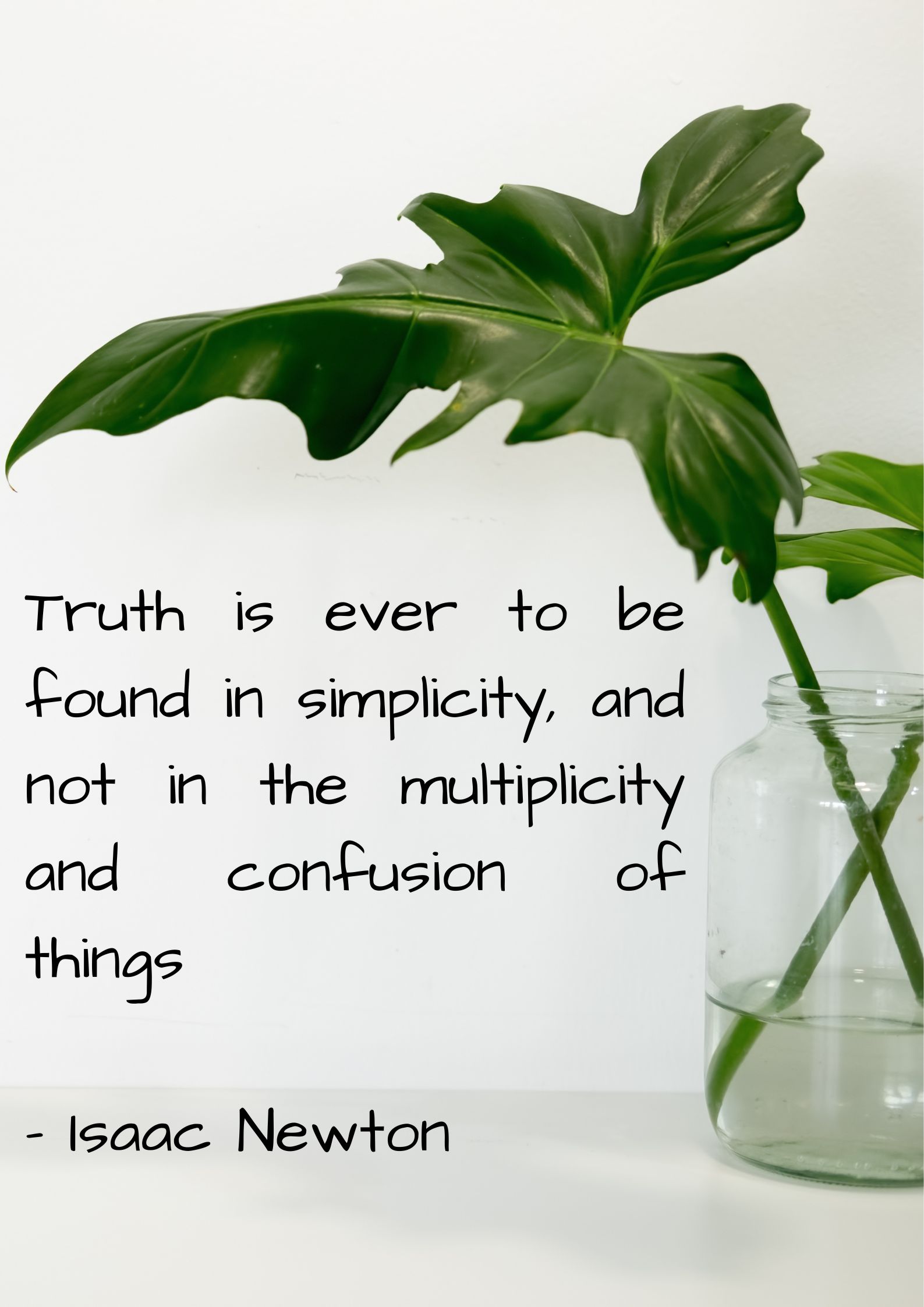
This week’s quote is by Sir Isaac Newton, the English mathematician, physicist, and astronomer, widely regarded as one of the most influential scientists in history. He formulated the laws of motion and universal gravitation, laying the foundation for classical physics. His work in mathematics, optics, and natural philosophy transformed how humanity understood the universe. Despite the complexity of his discoveries, Newton deeply valued order, logic, and elegant simplicity in explaining how the world works.
Newton’s quote speaks to the power of clarity, suggesting that truth is often far more straightforward than we imagine. Human beings have a habit of overcomplicating matters, layering ideas with noise, confusion, and unnecessary detail. But beneath that clutter, truth usually has a cleaner, more elegant form. This idea is especially meaningful because it applies far beyond science. In relationships, work, decision-making, and even self-understanding, confusion often grows when we add too many assumptions, excuses, or distractions. Simplicity cuts through that. It helps us ask: What is really happening here? What is essential? Truth tends to reveal itself when we strip away what is excessive and return to first principles.
Newton’s quote also reflects a deeper intellectual discipline. Simplicity is not the same as shallowness. In fact, arriving at simplicity often requires great insight. It takes real understanding to reduce something complex to its essence without losing its meaning. That is why the clearest explanations are often the strongest ones. There is also a quiet warning in the quote. Multiplicity and confusion can be seductive. They can make something sound more impressive or feel more profound than it really is. But confusion is not depth. Complexity is not always wisdom. Sometimes the truest answer is the plainest one.
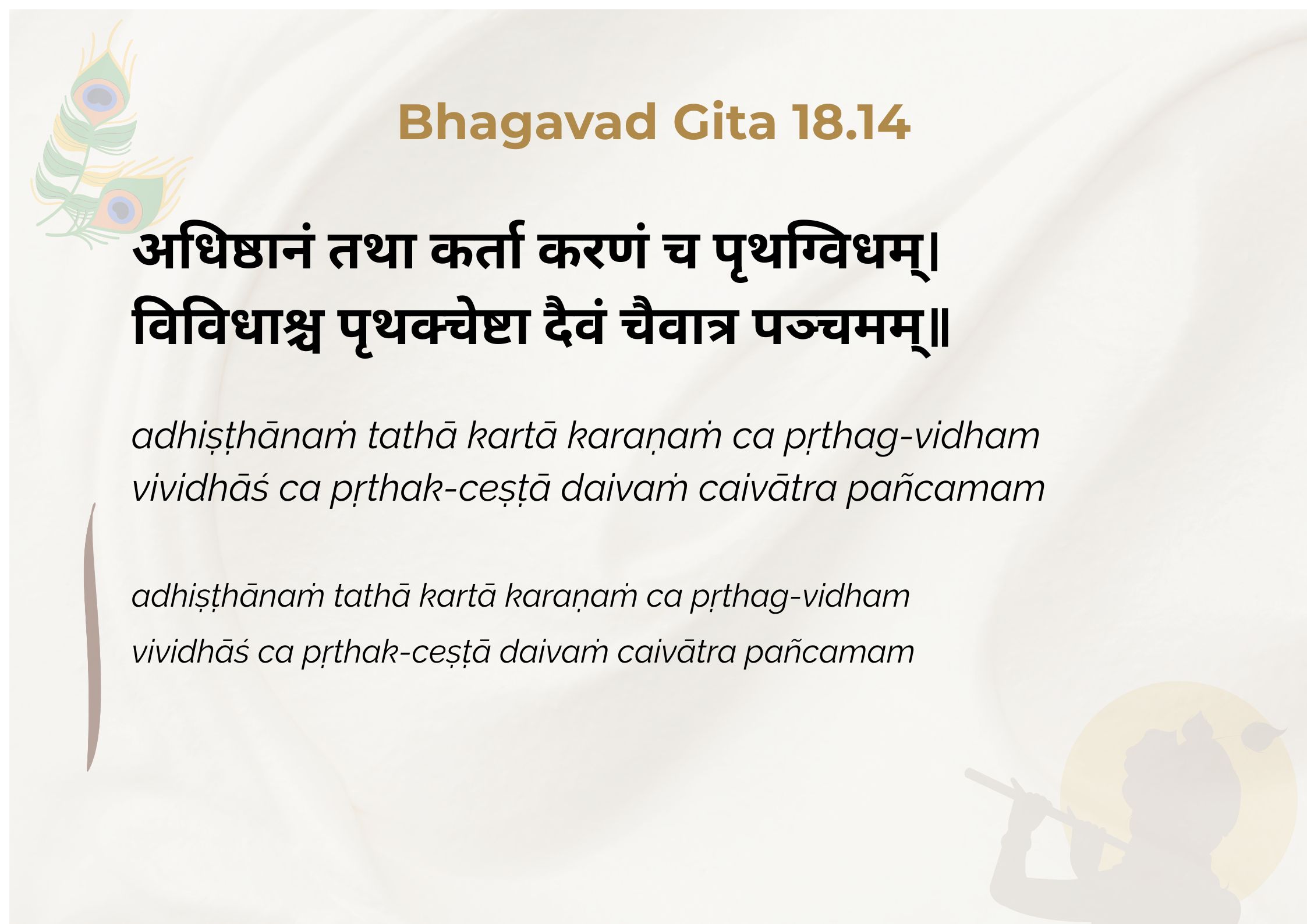
This verse from the Bhagavad Gita softens something important. We like to believe we are entirely responsible for everything that happens. Success becomes personal triumph; failure becomes personal shame. Krishna introduces nuance. Every action, he says, has five contributing factors. You. Your body. The tools available to you. The effort applied. And something beyond your control. This does not remove accountability. It removes excessive burden. You are responsible for effort and intention. But you are not the sole architect of outcomes. Context matters. Timing matters. Support matters. Circumstances matter. Understanding this changes how we move. We still act. We still strive. But we do not collapse under results. Discipline becomes steadier when it is not fuelled by ego. Courage becomes sustainable when it is not driven by fear of failure. You are part of the equation. Not the entire equation. A gentler way to measure effort.
Today’s motivation is about honouring your inner strength. It takes courage to keep your heart open despite everything it has been through. Your intentions are pure. The way you pour love into everything you do, the way you radiate kindness and demonstrate calm confidence, even in the most challenging moments, is a source of inspiration for many. You are brave enough to rebuild yourself with even more compassion and tenderness. Embrace all that you are and all that you are becoming. Do not allow anything to dim your spirit. Greater things are coming your way.
To those who are in the eye of the storm, we’re all rooting and praying for you. To everyone else, here’s wishing a beautiful second half of March!
 Memories and Such