2026 Week 20 Update

Today’s quote by someone anonymous offers a deeply human definition of “wealth.” In a world where success is often measured by money, possessions, or status, the quote shifts the focus toward something far more meaningful: love, trust, and emotional connection. The image is simple but powerful. The man’s hands are empty, meaning he has nothing material to offer in that moment: no gifts, no money, no outward symbols of success. Yet his children still run toward him with joy and affection. Their love is not based on what he can provide financially but on who he is to them. That kind of bond cannot be bought. It is earned through presence, care, patience, and genuine love over time.

The quote also reminds us that relationships are often the truest measure of a life well lived. A person may accumulate great wealth and still feel emotionally poor if they lack a meaningful connection. On the other hand, someone with modest means may be deeply “rich” because they are surrounded by love, trust, and belonging. There’s a quiet lesson here about priorities. Children remember how safe they felt, how seen they were, and whether someone truly showed up for them. Emotional availability, kindness, and time often matter more than material abundance. Ultimately, the quote suggests that the greatest legacy we leave behind is not what we owned but how deeply we loved and were loved in return.

The Middle East continues to be unstable, especially the Iran conflict and its ripple effects across the global economy, with oil prices remaining high, shipping routes staying under pressure, and many countries quietly preparing for wider economic consequences. Even if people are far removed geographically, conflicts like these affect fuel prices, inflation, markets, and everyday costs around the world. Climate concerns also made headlines this week, with scientists warning about record global fire outbreaks and worsening heat extremes linked to climate change and an emerging El Niño pattern. I can attest to this, as it’s been so hot in Singapore that we just want to sit inside air-conditioning the whole day, which in itself is also not the right thing to do.

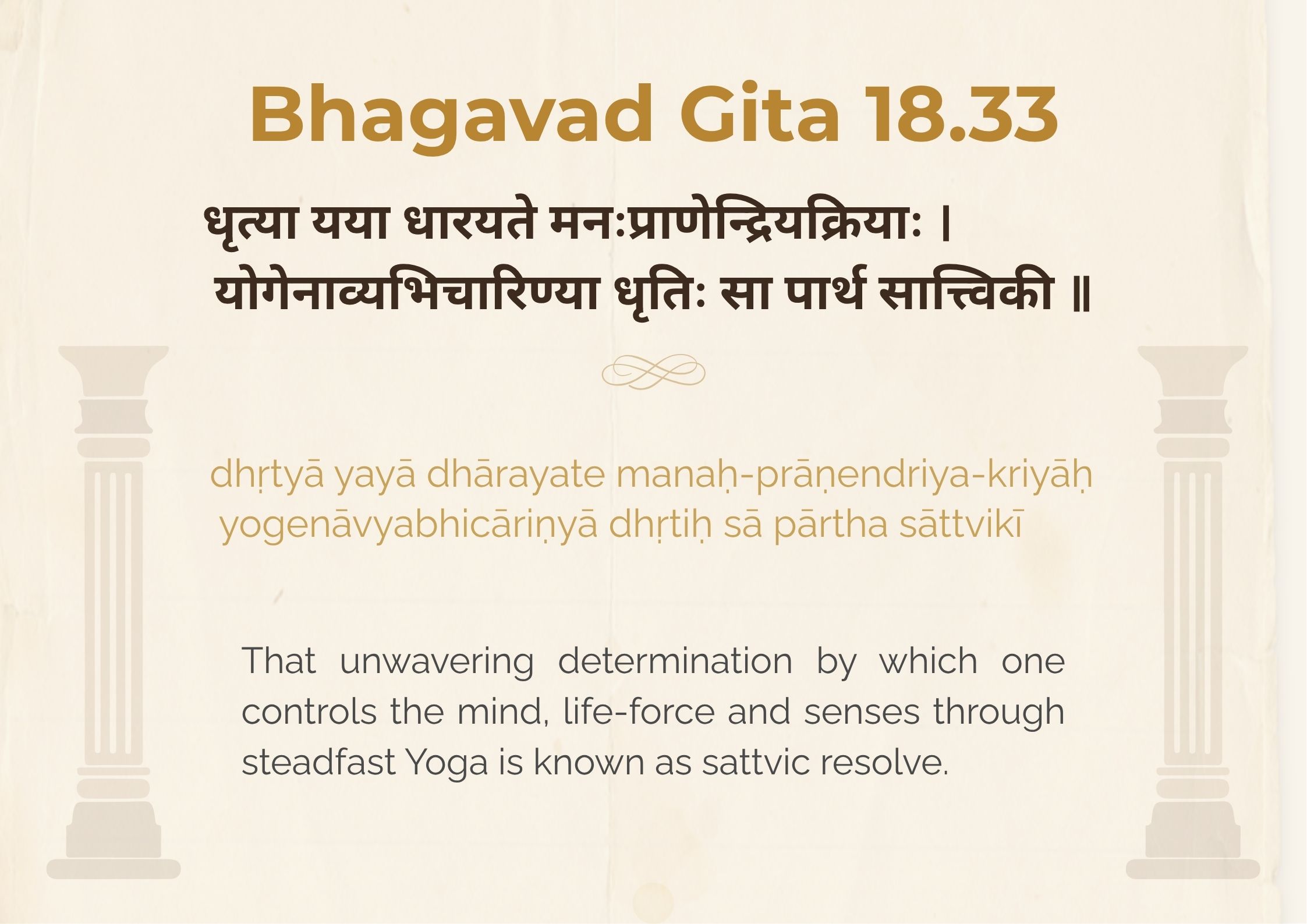
This week’s verse from the Bhagavad Gita, verse 9.22, speaks of assurance. Devotion does not remove responsibility. It removes isolation. There is dignity in effort made without anxiety. There is strength in trusting that not everything must be secured alone. “Yoga-kṣema,” what is gained and what is preserved, is here described as carried by the Divine. The devotee does not become passive. The devotee becomes unburdened. Trust does not weaken discipline. It steadies it.

These lines that I read a few months back made me save them, and I want to share them with you in the hope that they will bring the same assurances to you that they did to me. You’ve endured years of struggle. You’re tired of holding it all together. Helplessness, envy, and anger have started to creep into your heart. You just want to skip the waiting and get to the good part. When your inner world is in turmoil, it’s hard to be patient with yourself and with others. When you’ve been waiting for good news year after year, it’s hard to feel joy for someone else. But impatience makes you forget your true power. Beyond the dark clouds of unpleasant thoughts, assumptions, and fears, there’s a clear sky of trust. Reach for it.

Life is going on, and we’ve reached the middle of another month. Some days are full of promise, while others are a study in wishing for the day to end. And on that note, here’s hoping you have a fabulous week, filled with positivity and joy!

2026 Week 19 Update

Hello mid-May! This week, I worked from home but worked so hard that I barely had any time to work on my personal projects. The main reason to take on a fractional role was to have time for personal projects, mainly my writing, but this week did not leave me any time for that. Let’s hope the next week is better, but I don’t hold any high hopes for this, what with a couple of physical meetings lined up!

Today’s quote by British spiritual teacher, writer, and co-founder of the Findhorn Foundation in Scotland, a community focused on spirituality, sustainable living, and personal growth, Eileen Caddy, speaks about the importance of purpose and direction in life. A rudder guides a ship, helping it stay on course even through changing tides and rough waters. Without it, the ship simply drifts wherever the currents take it. In the same way, Caddy suggests that without a meaningful aim or guiding vision, a person can feel directionless, moving through life without clarity or intention.

A “high aim” does not necessarily mean fame, wealth, or grand achievement. It can be something deeply personal: living with integrity, creating meaningful work, helping others, growing spiritually, or becoming the best version of oneself. What matters is having something that gives your life focus and meaning beyond daily routines and distractions. The quote also highlights how purpose helps us navigate difficult times. When challenges arise, a clear sense of direction can anchor us. It reminds us why we keep going and what truly matters. Without that inner compass, it becomes easier to feel lost, restless, or disconnected.

There is also an invitation here to think beyond survival. Many people move through life reacting to circumstances instead of consciously choosing a path. Caddy encourages us to lift our gaze higher, to live with intention rather than drift passively through time. Ultimately, the quote reminds us that purpose gives shape to our lives. It does not eliminate uncertainty, but it helps us move through it with greater clarity and meaning.

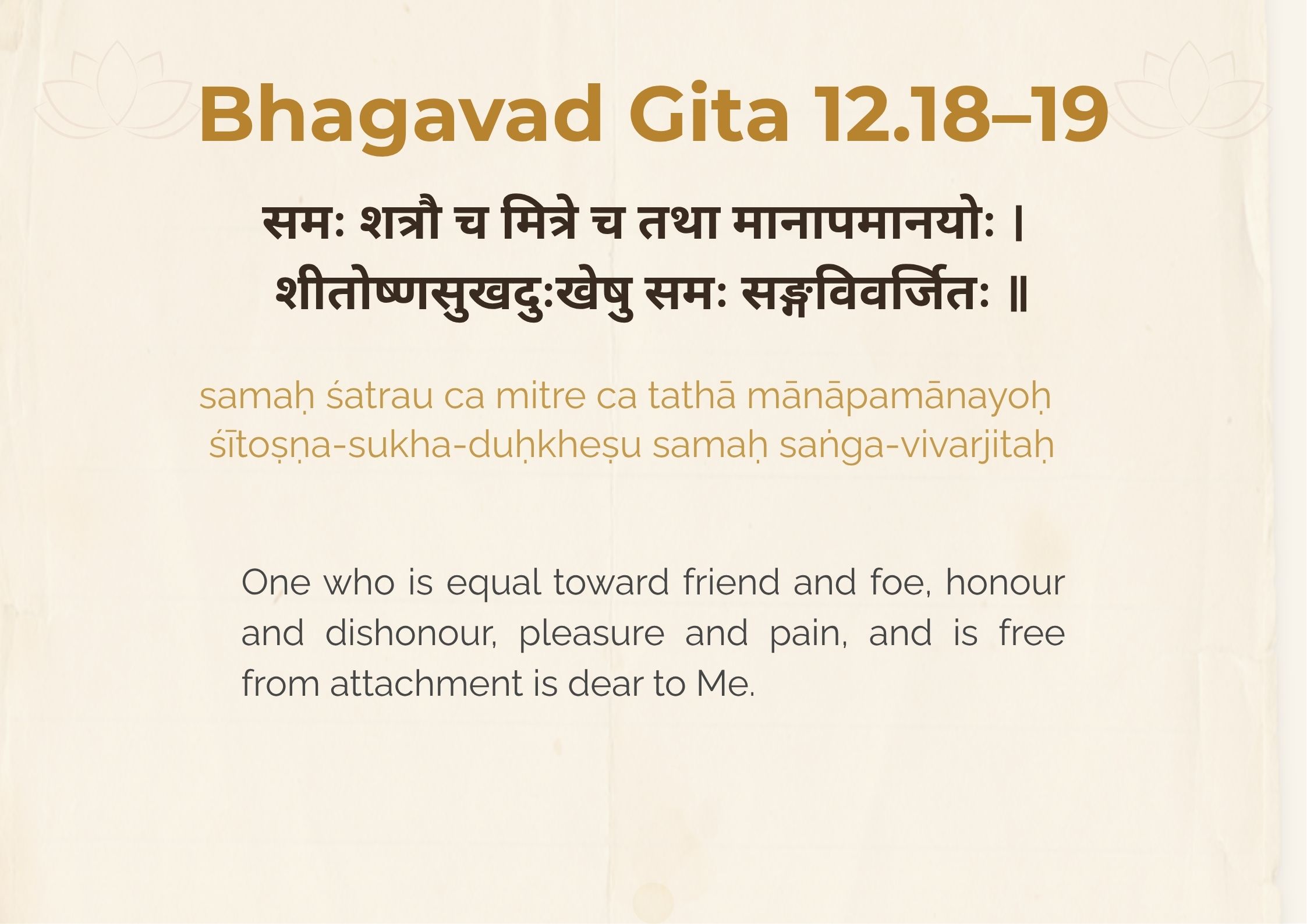
In today’s verse from the Bhagavad Gita, verse 12.13-14, devotion is defined through character. No hatred, no possessiveness, no ego. The Gita makes devotion ethical before it makes it emotional. To be steady in pleasure and pain is not indifference. It is maturity. To forgive is not weakness. It is under control. Devotion is measured by how one lives, not how one appears. The heart aligned with the Divine is visible in conduct.

This weekend also marks Mother’s Day, a quiet reminder to pause and acknowledge the women who have nurtured, guided, protected, and loved us in ways both big and small. Mothers and mother figures often carry entire worlds within their care, giving so much of themselves in ways that can easily go unnoticed in the rush of everyday life.

It is a day to celebrate not just biological mothers, but also grandmothers, aunts, mentors, caregivers, and all those who have stepped into nurturing roles with generosity and love. Sometimes their greatest acts are the quietest ones: showing up consistently, offering comfort, holding families together, and believing in us even when we struggle to believe in ourselves.

If you are fortunate enough to still have these people in your life, perhaps this is the moment to tell them what they mean to you. And for those carrying memories instead of presence, Mother’s Day can also be a gentle space for remembrance, gratitude, and love that continues beyond absence.

Something I learned about myself this week, I thought of sharing in the hope that maybe it may help someone else. A few unpleasant moments don’t have to define your entire day. Practice letting them go and move forward with a clean slate. Pausing is the key to actively recognising your emotions and releasing them consciously. This gives you the power to regain control of your responses and return to a calmer, more rational state. Just a few minutes of mindfulness can make the difference between a healthy and a broken relationship or between a fulfilling and a missed opportunity. Stay grounded in the pure awareness of your true self. When you live in harmony with that awareness, you become unshakable, no matter what happens in your external world.

This week’s state assembly election results in India felt like one of those reminders that, no matter how predictable politics can sometimes seem, it can still surprise people. There were a few major upsets across states, with long-established political strongholds suddenly looking less certain and newer players making unexpected gains. In places like West Bengal and Tamil Nadu, especially, the results seemed to signal shifting moods among voters and a growing willingness to rethink old loyalties.

For many ordinary people watching from the sidelines, it felt less about party politics and more about change itself. Voters appear restless, impatient for results, jobs, stability, and a sense that everyday concerns are being heard. Some of the outcomes also reflected how much personality and perception now shape modern politics, with newer faces and alternative narratives gaining traction in ways that would have seemed unlikely a few years ago.

At the same time, the elections also highlighted how divided and emotionally charged public discourse has become. The reactions across television, social media, and public conversations showed how deeply politics now intersects with identity, economics, and culture.

And on that note, have a wonderful week and see you again in this space next week!

2026 Week 18 Update

In this quote, British statesman, writer, and Prime Minister of the United Kingdom during World War II, Winston Churchill, highlights how perspective shapes experience. The situation itself may be the same, but how we interpret it determines how we respond to it. A pessimist tends to focus on what could go wrong. Even when an opportunity appears, they may see the risks, the effort required, or the possibility of failure, and feel discouraged before they even begin. This mindset can lead to hesitation, missed chances, and a sense of being stuck. On the other hand, an optimist doesn’t ignore difficulty but chooses to look beyond it. They recognise challenges, yet also ask, “What can I learn from this? What might this lead to? This shift in thinking opens the door to action.

The quote is not suggesting blind positivity or denying reality. Rather, it is about orientation. When faced with difficulty, an optimistic mindset looks for possibilities within the problem. This often leads to resilience, creativity, and forward movement. Over time, this approach can create momentum because each challenge becomes part of growth rather than a barrier to it. There is also a deeper implication: we have more control over our outlook than we realise. While we cannot always control circumstances, we can influence how we interpret and respond to them. That choice shapes not only our actions but also our sense of hope and progress.

This week, the Bhagavad Gita tells us that devotion begins with steadiness. The Gita does not describe the devotee as dramatic or outwardly expressive. It describes someone whose presence does not unsettle others and who is not unsettled by circumstances. This is a discipline of temperament; it is emotional restraint, and it is composure in praise and in provocation. To live without agitating the world through ego, volatility, or excess reaction is itself a form of worship. Devotion is not intensity; it is equilibrium.

This week was very hectic with work. GG is busy with her internship and thinking about her next semester at school. As for BB, we are at the brink of accepting that he will not be getting a university offer this year. So our plan is that he will look for a job and start working, and then, hopefully, in the next year or so, apply again and hopefully get in that time. Fingers crossed this plan works out.

Our motivation this week is about imperfect love. Love is not perfect, nor is it always easy. But it is always worth it. If you have people who show up despite the obstacles and respond from a place of genuine care, do everything in your power to keep them in your life. No matter where we come from or what we’ve experienced in life, we all long to be seen and deeply understood. Create space for your loved ones to express their vulnerability. It is in those raw moments that true connection is built. Nurture the genuine connections in your life with gratitude and presence. Letting love in is worth the risk.

That’s all I have for you this week. Take care, stay safe, and keep smiling!

2026 Week 17 Update

Today’s quote from the German-born theoretical physicist best known for developing the theory of relativity and for his equation E = mc², Albert Einstein, reframes how we think about mistakes. Instead of seeing them as failures, Einstein presents them as evidence of effort, curiosity, and growth. If you’re never making mistakes, it likely means you’re staying within what is familiar and safe, repeating what you already know, rather than stretching into something new. Trying anything new comes with uncertainty. Whether it’s learning a skill, changing direction, or taking a risk, mistakes are part of the process. They are not signs that something has gone wrong, but signs that something is being attempted. In that sense, mistakes are not the opposite of success; they are often the pathway to it.

The quote also challenges perfectionism. Many people hold back because they want to get things right the first time. But this desire to avoid mistakes can quietly limit growth. When we accept that errors are inevitable, we become more willing to experiment, explore, and push boundaries. Progress becomes less about avoiding failure and more about learning from it. There’s also a deeper confidence embedded in this idea. When you’re not afraid of making mistakes, you free yourself to engage fully with life. You stop hesitating at every step and start trusting that you can handle whatever comes next, including setbacks.

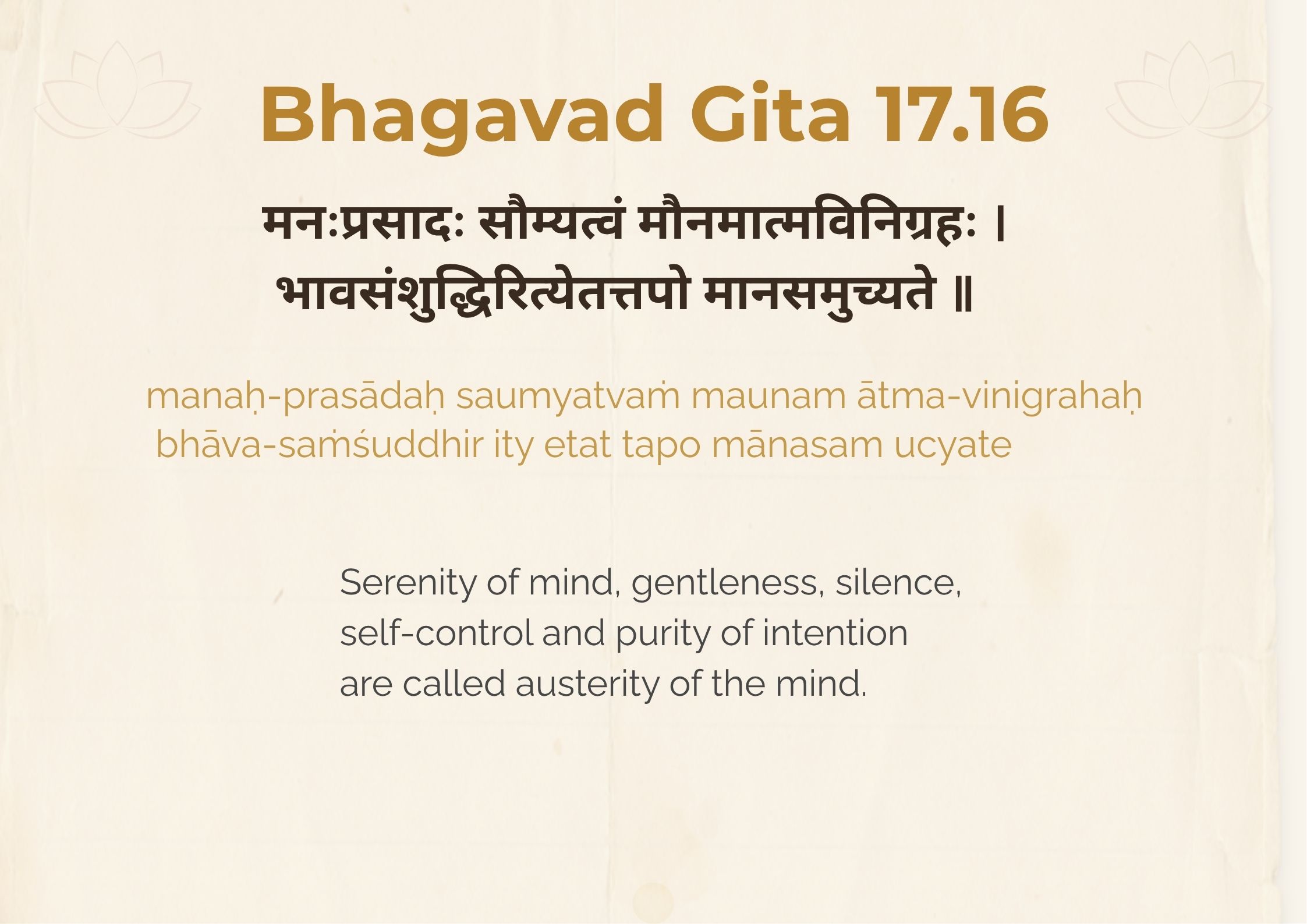
Today’s verse from the Bhagavad Gita acknowledges reality. The mind is restless. That is not a weakness. That is human. But it gives two tools: practice and detachment. Practice is repetition. Showing up again. Returning again. Detachment is loosening the grip. Not clinging to outcomes. Not over-identifying with thoughts. Together, they create steadiness. The month does not end in intensity; it ends in maturity. Not to fix the mind, but to train it patiently.

I recently read this and thought I should share it with you all. This is something I struggle with, and if it helps someone, I would be happy. Don’t hold yourself back when you’re stepping into a new experience. Even if it doesn’t work out, you’ll move forward with valuable lessons. You won’t have any regrets, knowing you showed up wholeheartedly and gave it your all. Life is about choosing growth and stepping beyond what feels comfortable. Every new experience strengthens your spirit. Take that chance, embracing the thought that no matter what happens, you can always rise again.

We’re staring at the end of another month of the year. April has felt like a month lived slightly underwater, not heavily or overwhelmingly, but in that quiet, slowed-down rhythm where everything takes a little more effort than usual. The days have moved, and responsibilities have been met, but there has also been a constant undercurrent of tiredness, a kind of sleepiness that doesn’t quite lift. And yet, life hasn’t paused. BB and GG have slipped back into their own routines: busy, independent, and moving forward in their own worlds, while I’ve continued in mine. There’s a quiet shift here, one that feels both natural and slightly bittersweet, watching our lives run in parallel more than they overlap. At the same time, April has also carried that familiar sense of time speeding up. The first quarter is already behind us, the second is quietly unfolding, and days are folding into weeks before they’ve fully registered. There have been small pockets of progress, moments of clarity, and the steady, unglamorous work of simply keeping things going. Not dramatic, but real.

Beyond our personal spaces, the world has continued in its usual, complex way. There have been moments that call for attention, like the ongoing Middle East conflict, uncertainty, and the human cost that sits behind headlines, alongside quieter signs of resilience and everyday continuity. Life everywhere seems to be holding both at once: difficulty and endurance, disruption and routine.

Perhaps that has been the underlying theme of April: a coexistence of things. Tiredness and movement. Distance and connection. Noise and quiet persistence. It hasn’t been a month of sharp highs or clear turning points but one of gentle transitions and ongoing adjustment. And maybe that’s its own kind of significance, the reminder that not every phase needs to be defined by momentum. Sometimes, simply moving through, even slowly, is enough.

Here’s looking forward to a better May, a chance to step into the month with a little more energy, a little more clarity, and perhaps a steadier rhythm than before. The hope of lighter days, renewed focus, and the space to move forward with a bit more ease. Happy May, everyone!

2026 Week 16 Update

Today’s quote is by American physician, poet, and essayist and a prominent member of the literary circle known as the Fireside Poets, Oliver Wendell Holmes Sr. Holmes Sr. was known for his wit, clarity of thought, and ability to blend science with literature. His reflections often explored human nature, learning, and the evolving nature of understanding, making his work both insightful and enduring.

The quote captures the lasting impact of growth and suggests that once we truly encounter something new, be it an idea, a place, a perspective, or even a difficult experience, it changes how we see the world, often permanently. To stretch the mind is to move beyond what is familiar. It can happen through travel, learning, relationships, challenges, or even moments of deep reflection. At first, this stretching can feel uncomfortable. It may challenge long-held beliefs or force us to confront new realities. But once that shift happens, there is no returning to the earlier, narrower way of thinking. The mind has expanded, and with that expansion comes a broader understanding of life.

This quote also speaks to the inevitability of change. Growth is not always dramatic or obvious, but it is cumulative. Each new experience adds a layer to how we interpret the world. Even if we try to return to old patterns of thinking, something within us knows more now, sees more now. That awareness cannot be undone. There’s also an encouraging message here. It reminds us that discomfort often signals growth. When something feels unfamiliar or stretches us, it is not necessarily a setback; it may be the mind evolving. Over time, this expansion allows for greater empathy, creativity, and resilience.

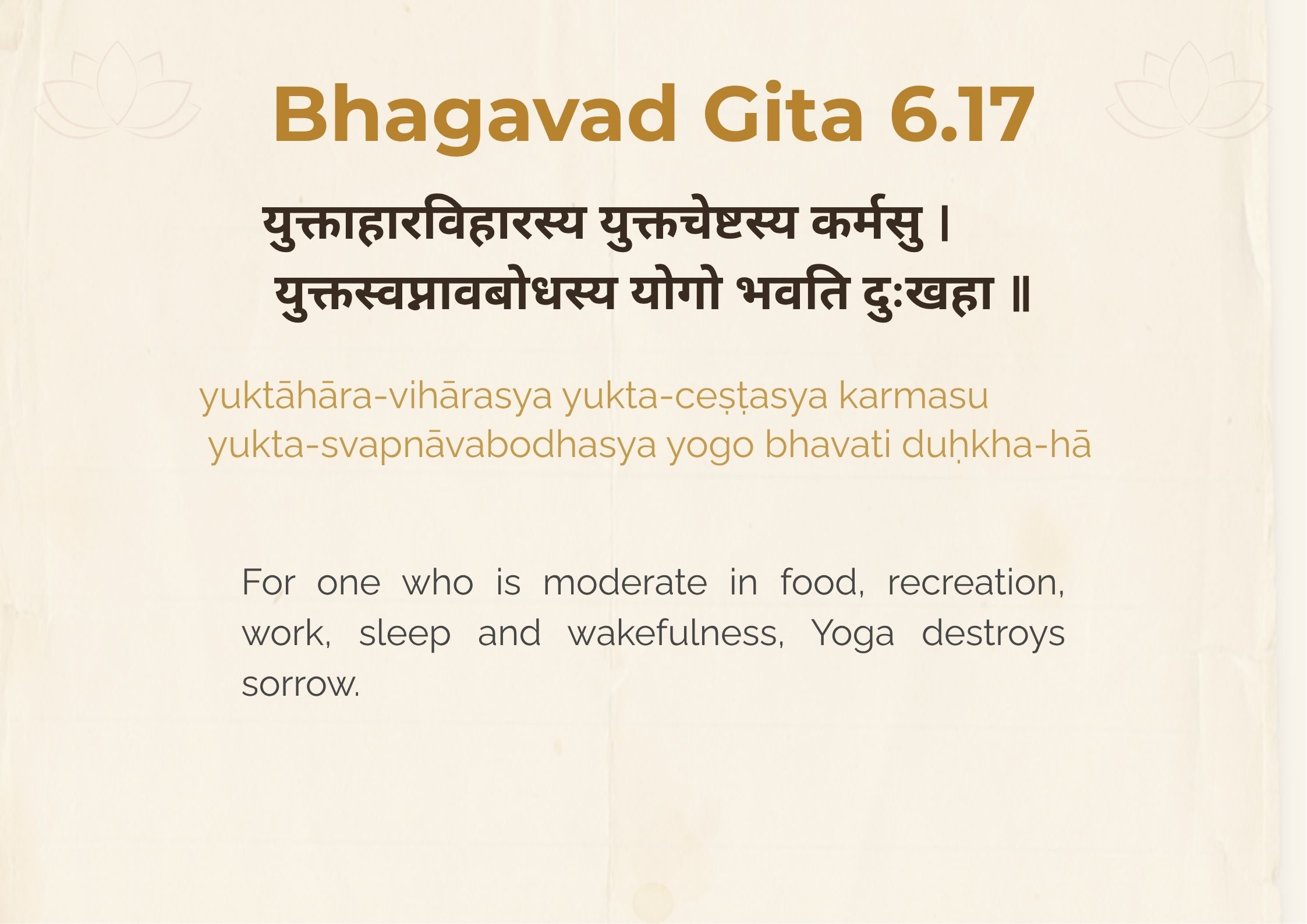
This week, the Bhagavad Gita tells us about the practicality of spirituality. In this verse, spirituality is practical. Not extreme fasting, not sleepless striving, not obsessive discipline, but balance. The Gita refuses both indulgence and denial. It reminds us that imbalance destabilises the mind. And a destabilised mind cannot sustain clarity. Moderation is rarely celebrated. It feels ordinary. But this verse dignifies it. Sleep well. Eat wisely. Work steadily. Rest deliberately. Steadiness is built through routine, through sustainable habits. The sacred is not always dramatic. Often, it is structured living.

I’ve been in a fairly hectic week, and I was so looking forward to the weekend. This week, GG was also busy because she was busy studying for an exam early next week. That’s why she was waking up at 4 am daily to study before she left for work. Why wake up early and not study after work? Because she couldn’t focus after work, she was exhausted and just wanted to chill, do nothing, and sleep! BB has been trying to figure out what he wants to do and the next steps in his life journey.

That’s all I have for you this week, without revealing too much about myself and my children. So, take care, be happy, and keep smiling!