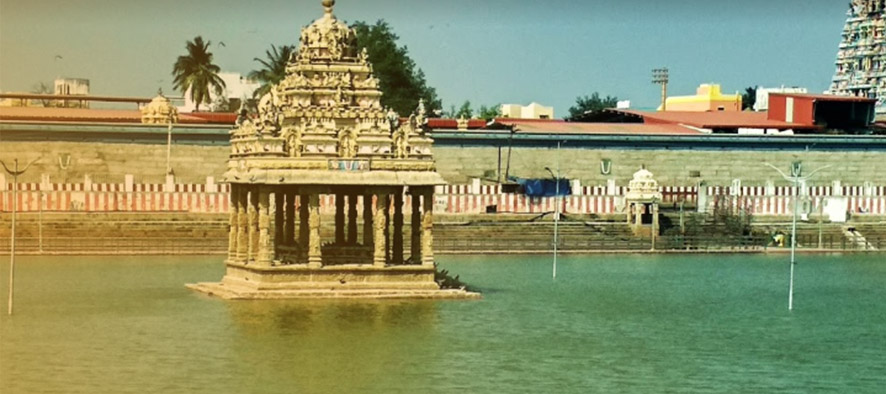
Sacred Stones, Spaces, and Stories: Divya Desams Part 5

Hara Saabha Vimocchana Perumal Temple, Kandiyur, Tamil Nadu
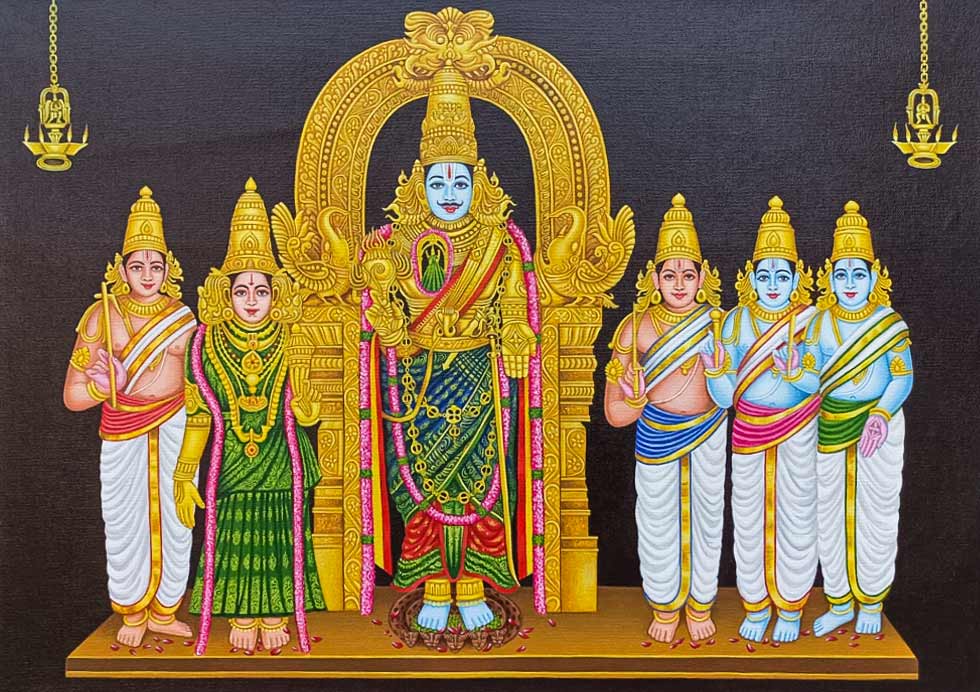
The Hara Saabha Vimocchana Perumal Temple stands at Kandiyur, near Thiruvaiyaru in Tamil Nadu, not far from the banks of the Kaveri. Here, Vishnu is worshipped as Hara Saabha Vimocchana Perumal, “the one who freed Hara (Shiva) from his curse,” and Lakshmi as Kamalavalli Nachiyar. Unusually, this is also one of the rare temples where the Trimurti: Brahma, Vishnu, and Shiva, are all present within the same sacred space.

The main legend starts with a mistake that even a god cannot easily undo. In an earlier time, both Brahma and Shiva had five heads. One day, Parvati came to worship her husband, but seeing two five-headed forms, she confused Brahma for Shiva and performed pada puja to him. Shiva was furious. In anger, he cut off one of Brahma’s heads. Because creation itself had been attacked, the severed head stuck to Shiva’s hand as a curse. He became Kapali, the one bearing the skull.

To shed this sin, Shiva wandered as Bhikshatana, the begging ascetic, going from place to place. At Thirukarambanoor (Uthamarkoil), part of the curse was removed. But it was only at Kandiyur, after worshipping Vishnu and taking a dip in the temple tank, that the skull finally fell from his hand. The water became Kapala Theertham, skull tank, and the lord here took the name Hara Saabha Vimocchana Perumal or Vishnu, who removed the curse of Hara (Shiva). In this story, Shiva actually builds a temple for Vishnu as thanks, and also establishes a Shiva temple nearby.

Other stories pile on the same theme of ego, mistake, and atonement. Sage Bhrigu once wanted to test which of the three: Brahma, Vishnu, or Shiva, was supreme. He insulted each. When he reached Vishnu, he kicked the lord in the chest. Instead of reacting in anger, Vishnu apologised for any pain the sage might have felt in his foot. Later, Bhrigu regretted his act and came here to seek forgiveness. King Mahabali, known from the Vamana avatar story, and Chandra, the moon god who seduced his guru’s wife, are also said to have expiated their sins at Kandiyur.

Historically, the temple is traced to the Medieval Cholas, around the late 8th century CE. Stone inscriptions point to early Chola patronage, with later additions by Vijayanagara rulers and the Madurai Nayaks, who left their mark on many Kaveri-side temples. These records mention land grants, donations for lamps and festivals, and support for temple staff; signs that Kandiyur held a steady role in the religious and economic life of the region.

There is a common local claim that Kandiyur is older than Srirangam and goes back to the Treta Yuga. From a historian’s view, that is more devotional rhetoric than evidence. What can be grounded is the Chola-period base, with continuous use and renovation over more than a thousand years. The site’s identity as a place to clear brahmahatti dosha and similar sins also shows up in texts and oral traditions, which is why it is counted among specific “sin-clearing” kshetras.

An unusual modern footnote is the link to Tipu Sultan. Some accounts say Tipu fought and won a battle near Kandiyur and later became a devotee of this temple. Whether that devotion was deep or diplomatic, the detail again undercuts rigid lines: a Muslim ruler connecting to a Vishnu shrine known for helping even Shiva out of trouble.

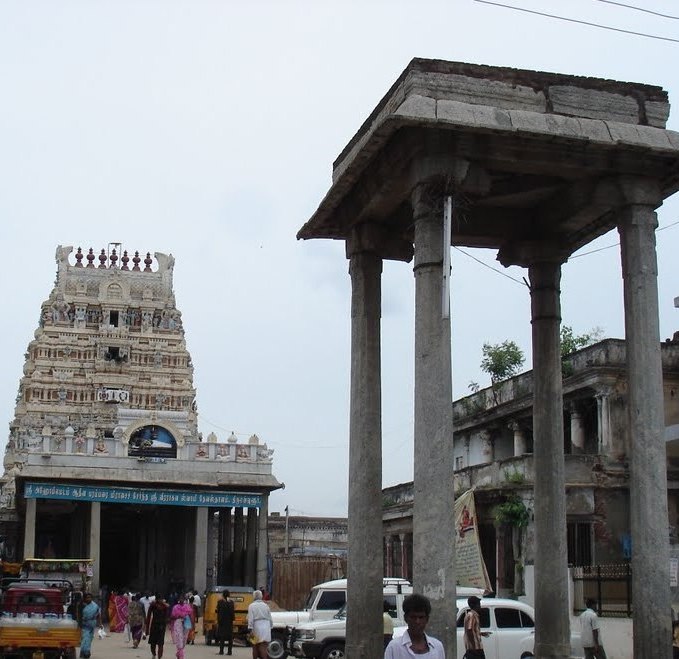
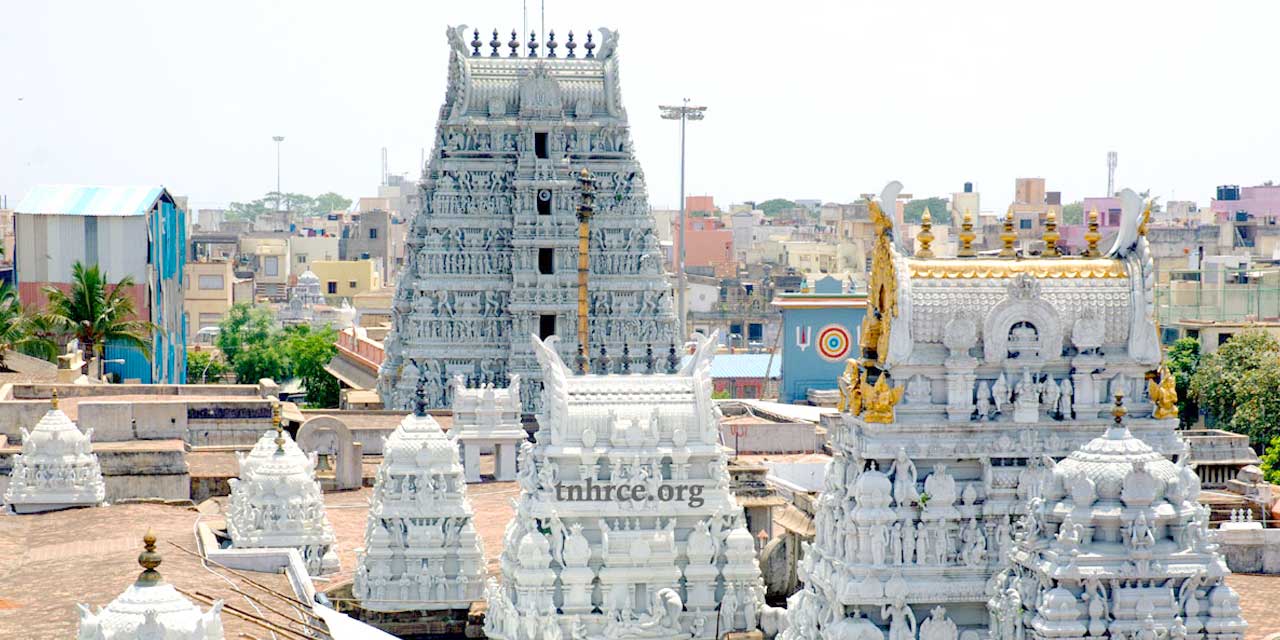
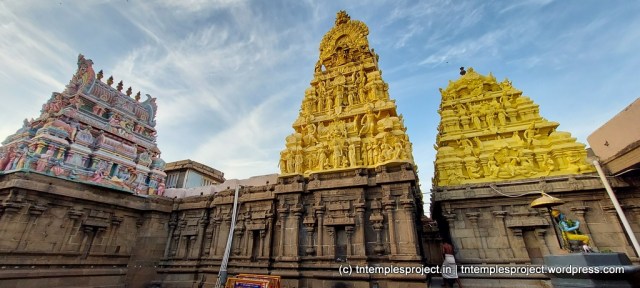
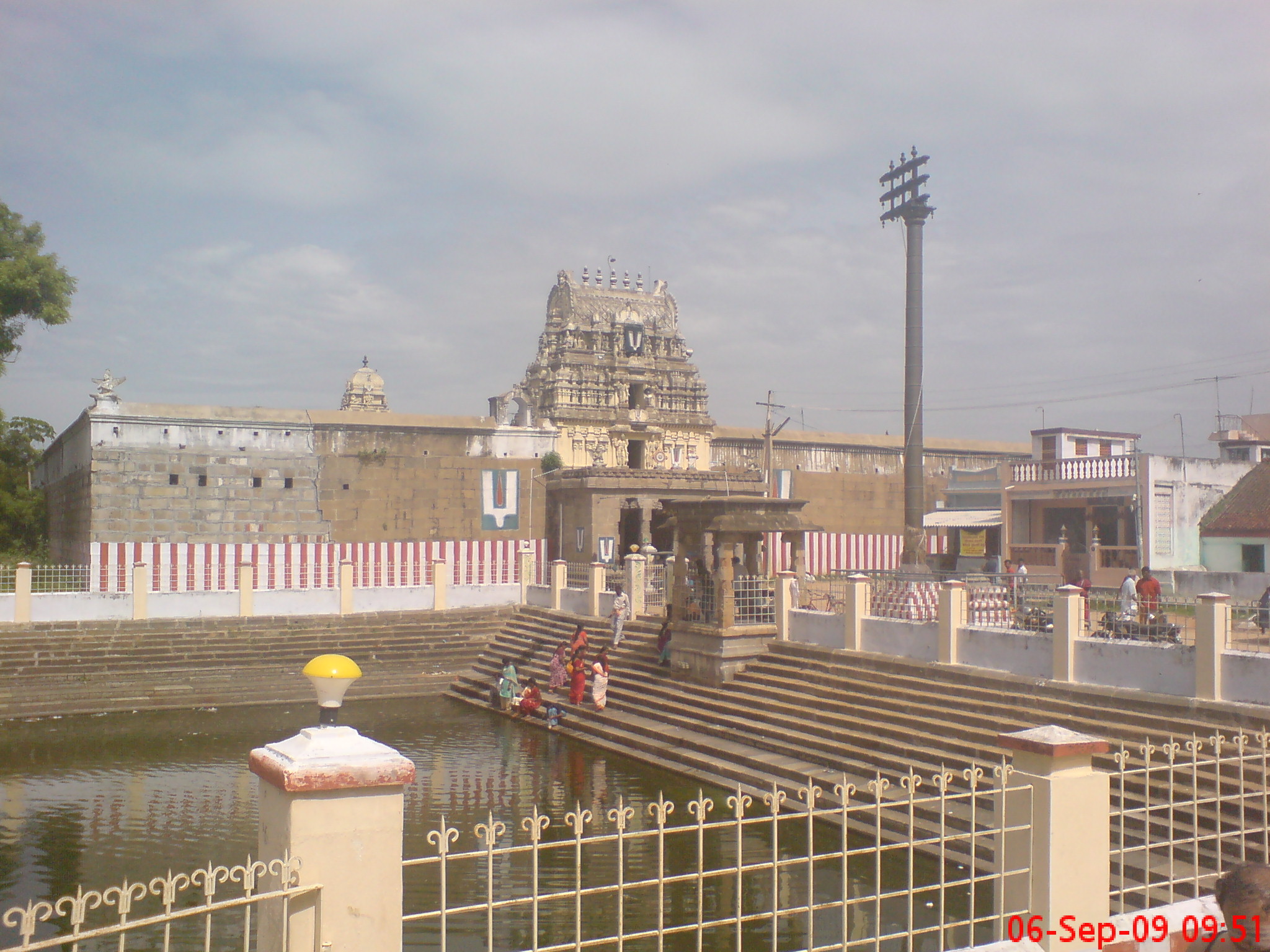
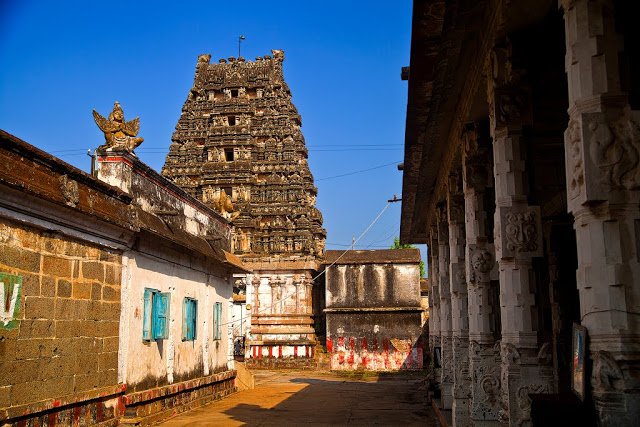
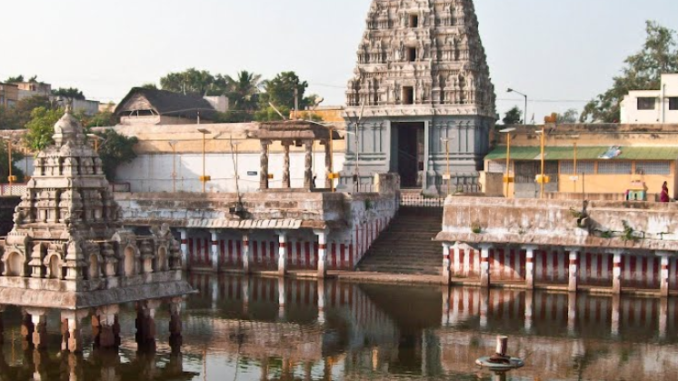
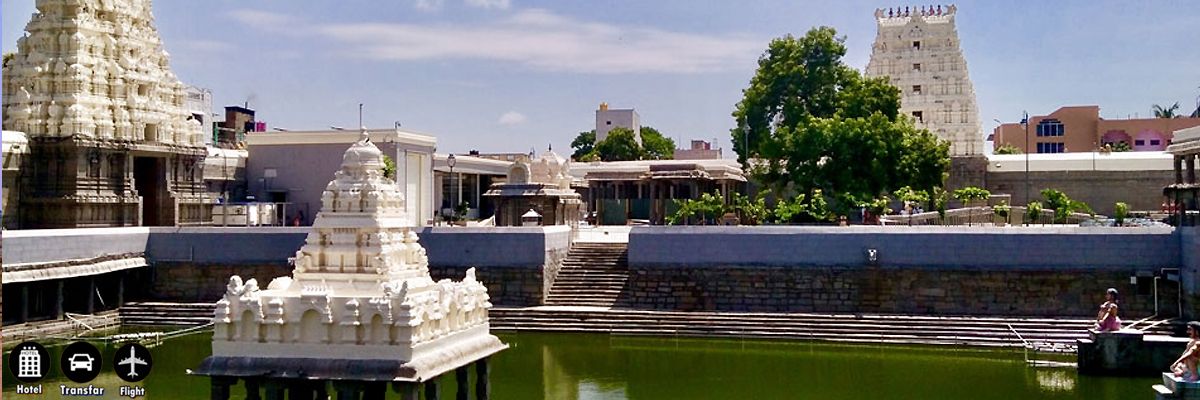
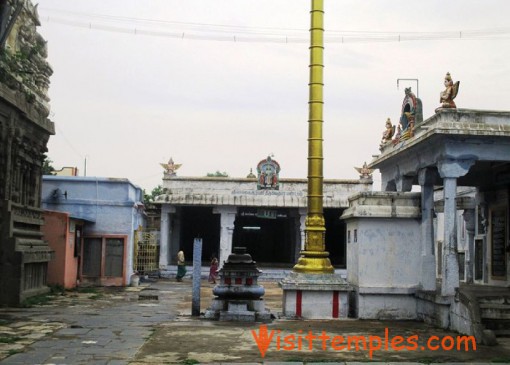
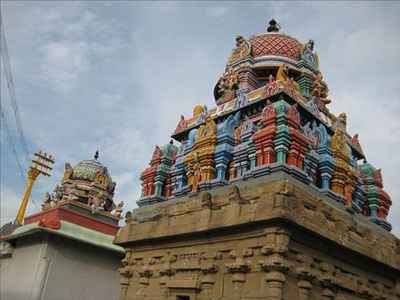
Architecturally, Hara Saabha Vimocchana Perumal Temple is a compact but classical Dravidian complex. A granite wall surrounds the campus, enclosing the shrines and temple tanks. The main Rajagopuram is a five-tiered gateway tower that faces east, leading into the prakaram. The overall layout is proportionate rather than massive, which fits its setting near Thiruvaiyaru rather than in a bustling town centre.

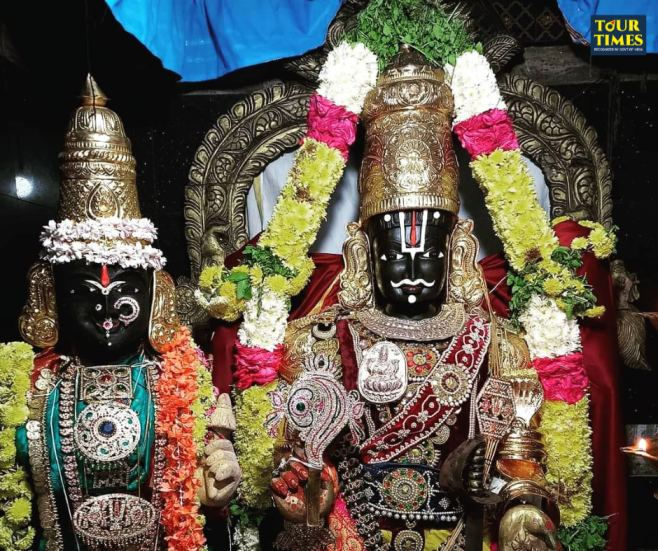
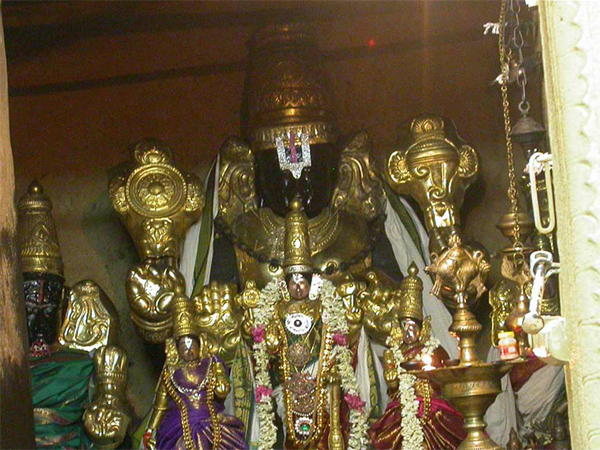
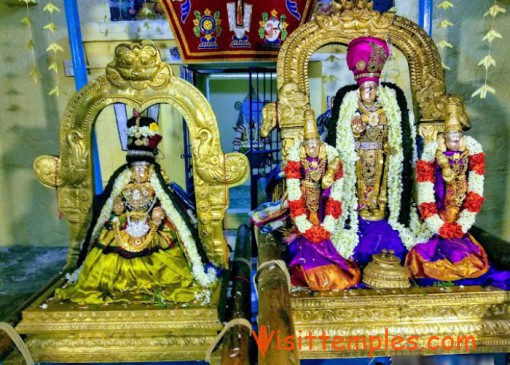
Inside, Vishnu stands as Hara Saabha Vimocchana Perumal, facing east, with his consort Kamalavalli Nachiyar enshrined separately. The moolavar is in a standing posture rather than reclining, which matches the temple’s theme of active intervention and relief. Surrounding shrines include those for Brahma and Saraswati (though these have suffered damage over time), as well as a nearby Shiva temple associated with the same myth cycle.

The usual set of mandapams, pillared halls, and circumambulatory paths is present. Pillars carry carvings of deities, guardians, and small narrative scenes. The tank, known as Kapala Theertham or Kamala Pushkarani, is central to the legend; this is where Shiva’s skull-hand curse finally falls away. The architecture isn’t experimental, but it is consistent with Chola-Vijayanagara-Nayak layering: solid granite, functional courtyards, and a clear axial path from gopuram to sanctum.

Worship here follows the standard Vaishnava agamic pattern, with a local accent. There are six daily pujas, from early morning to night. Each round involves alangaram (decoration and adornment), neivedyam (food offering), and deepa aradanai (waving of lamps), accompanied by nagaswaram, tavil, and chanting of Vedic mantras. The deity is treated not as an abstract idea but as a living presence who must be woken, bathed, fed, and put to rest.

Four main annual festivals mark the temple calendar. The biggest is the Panguni Brahmotsavam in the Tamil month of Panguni (March–April), when the utsava murti is taken in procession across the streets, with vahanams, music, and crowds of devotees. Other festivals include Vaikunta Ekadashi and special days linked to Shiva and Brahma because of the shared myth. The underlying theme in many observances is release from curses and sins, so devotees often perform specific sankalpa pujas here when they feel stuck in life, especially with guilt, family rifts, or long-standing problems.

Local participation is strong. Families sponsor parts of the Brahmotsavam or take responsibility for alankaram on certain days. People come not just to “get something” but to keep alive a bond their parents and grandparents had with the place. That continuity is one of the temple’s hidden strengths.

Reaching Kandiyur is usually done from Thanjavur or Thiruvaiyaru. The temple lies a short drive from Thiruvaiyaru, along roads that run past green fields and close to the Kaveri and its branches. The approach feels more like entering a large village than a town. There are a few shops selling flowers, coconuts, and prasadam, but it is not a noisy bazaar like you see at big pilgrimage hubs. On ordinary days, the temple is calm. After leaving your footwear outside, you pass under the Rajagopuram into a quiet prakaram. There is usually enough time to stand in front of the main sanctum without being hurried. Many people also make a point of visiting the tank, even if they do not bathe in it. They at least touch the water or sit for a while at the edge, remembering the story of Shiva’s curse breaking there.

Pilgrims who care about both Shiva and Vishnu often visit the nearby Shiva temple on the same trip. For them, the whole experience is about healing a split that later polemics created—if Shiva himself came here seeking help from Vishnu, then maybe it is silly for humans to fight over which god is “higher.” In that sense, the geography of the place, the Vishnu shrine, the Shiva shrine, and the tank, gently pushes people to think in terms of connection, not competition.

The temple is mentioned in the Divya Prabandham and sits within the Kumbakonam–Thanjavur belt, an area thick with temples, music, and ritual culture. Its distinctive theme: Vishnu freeing Shiva from a curse, has given it a special place in local storytelling and in the way priests explain doctrine to laypeople. If you grow up hearing that even Shiva had to apologise and seek help, it becomes harder to justify a stubborn ego in your own life. There is also a long-standing belief that worship here helps relieve brahmahatti dosha and other serious karmic burdens. That has shaped how people talk about the temple: not as a place to ask for quick material gain, but as somewhere you go for deeper cleansing when you know you have gone badly wrong. At the same time, it is fair to say that Hara Saabha Vimocchana Perumal Temple has not had the same broad cultural reach as Srirangam or Chidambaram. Its impact is more focused: it speaks strongly to those who move in both Shaiva and Vaishnava worlds, and to those who think seriously about fault, repair, and responsibility.

Today, the temple is administered by the Hindu Religious and Endowment Board of the Tamil Nadu government. Recent renovations, including work on the gateway tower and key shrines, were taken up in the early 2000s under the guidance of traditional acharyas. Efforts continue to maintain the stone structures, clean the tank, and manage festival crowds without turning the place into a tourist circus. Visitor traffic is moderate. Devotees mostly come from Tamil Nadu and neighbouring states, often combining Kandiyur with other Kumbakonam-area Divya Desams or with the Sapta Sthana Shiva temples around Thiruvaiyaru. A smaller number of history and architecture enthusiasts also visit, interested in the Chola-Nayak fabric and the Trimurti aspect of the site.

Within the Divya Desam circuit, Hara Saabha Vimocchana Perumal Temple at Kandiyur stands out for one clear reason: this is where Shiva came to seek help and was forgiven. The temple’s very name encodes that story of curse and release. Its history as a Chola-era Vishnu shrine, later shaped by Vijayanagara and Nayak hands, shows how a theological idea gets anchored in stone and kept alive through ritual and community. Here is a place that quietly undercuts religious one-upmanship. Brahma, Vishnu, and Shiva all appear. All make mistakes, all grant or receive grace. The geography of tank, sanctum, and nearby Shiva shrine pushes a simple point: no one stands alone, and no one is above accountability. For the wider Indian spiritual heritage, Kandiyur adds a necessary note. It says that power without self-correction is dangerous, even for gods. It asks you to see confession, apology, and seeking help not as weakness, but as the turning point. In a time when religious identity often hardens into rivalry, a temple built on the story of one god freeing another from his worst act is worth taking seriously.

Thirukoodalur Temple, Aduthurai, Tamil Nadu
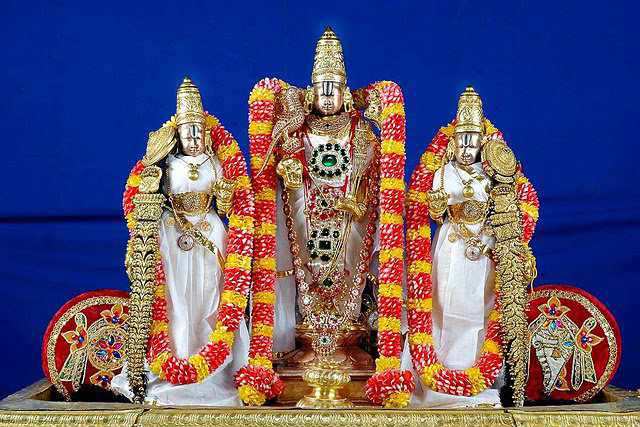
Also known as Aduthurai Perumal Koil or Jagath Rakshaka Perumal Temple, the Thirukoodalur temple stands on the banks of the Kaveri near Aduthurai in Thanjavur district. The presiding deity is Jagath Rakshaka Perumal, “the one who protects the world,” with his consort Pushpavalli Thayar. This temple is closely linked to the Varaha avatar story and to King Ambarisha. The name “Thirukoodalur” itself hints at its character: a place where beings “koodal” come together for help, cleansing, and reunion.

The temple’s core myth connects it to the Varaha avatar. In the well-known story, the asura Hiranyaksha drags Bhudevi, the earth goddess, down into the netherworld. Vishnu takes the form of Varaha, the boar, dives into the depths, slays the demon, and lifts the earth back up on his tusks. Many places claim a piece of this story. Here, the local version says that the devas gathered at this spot on the Kaveri, pleading with Vishnu to rescue the earth. Because they “koodiya” or assembled here before the rescue, the place is called Thirukoodalur, and the lord is Jagath Rakshaka, the protector of the world.

Another strong legend centres on King Ambarisha. He became so absorbed in devotion to Vishnu that he neglected his duties and let his army weaken. He also failed to properly receive Sage Durvasa when the sage passed by. Durvasa, known for his short fuse, cursed him. Ambarisha turned to Vishnu. The lord sent his discus, the Sudarshana Chakra, to chase the sage. When the discus bore down on him, Durvasa panicked, ran to all the other gods, and finally fell at Vishnu’s feet, asking for mercy. The curse was withdrawn, and the grateful king is said to have built this temple. That is why the deity here is also called Ambarisha Varadar.

More stories push the same “gathering” theme. One says all the rivers come regularly to the Kaveri to wash away the sins of those who bathed in them. Kaveri herself then felt burdened and went to Brahma for cleansing. He sent her to worship Vishnu at Thirukoodalur, where she was purified. Another legend tells of a parrot devoted to Vishnu that was shot down in a nearby forest. Vishnu appeared, restored it, and freed it from the karma of a previous birth. Yet another says that sages like Nandaka and many rishis assembled here to worship, and that a human couple, separated by social pressure, were reunited here by the lord’s grace.

Historically, the structural temple dates to the medieval Cholas in the late 8th century, before they rose as a major imperial power. Inscriptions and architectural style point to early Chola work, with later additions from the Vijayanagara kings and the Madurai Nayaks. A brick wall surrounds the complex, which is typical of many Kaveri-side temples from that era. Over the centuries, the temple has seen both growth and damage. Being close to the river has always been a risk. At some point, severe floods damaged large portions of the temple and even washed away some idols. According to tradition, Rani Mangammal, the Nayak queen-regent of Madurai in the 17th century, dreamt of the lord asking her to restore the shrine. She funded major renovations, recovered lost idols from the river, and even commissioned the temple chariot, known as the Ambarisha Ratham. The chariot was used in festivals at least into the mid-20th century. Later, Vijayanagara and Nayak patrons strengthened the temple’s defences, adding a bulwark to protect it from the Kaveri’s floods. Through all this, the spiritual identity of Thirukoodalur remained rooted in the idea of protection; both of the world and of this specific, vulnerable site.

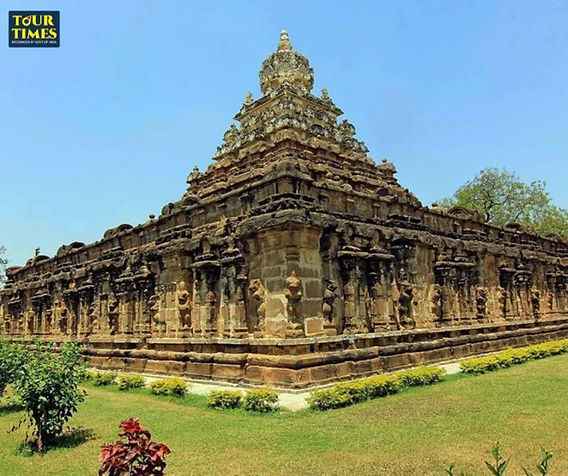
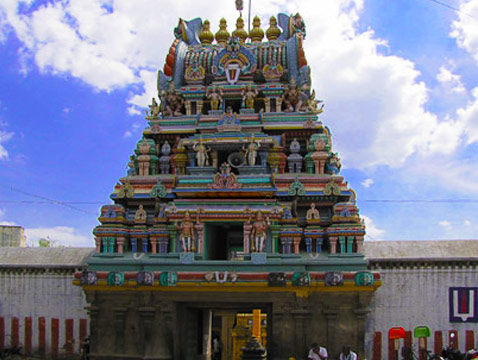
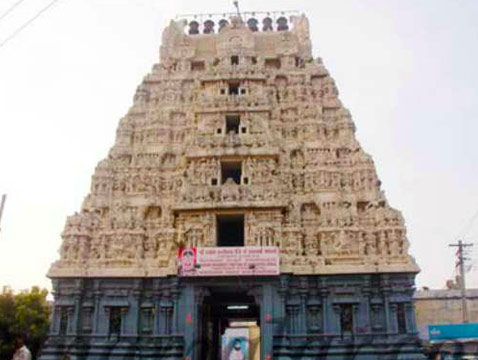
Thirukoodalur is a classic but compact Dravidian temple. A brick wall encloses the shrines and the temple tank, giving a sense of clear boundary between temple space and the surrounding village. The Rajagopuram is a five-tier gateway that leads into the main prakaram, setting a vertical accent without overwhelming the rest of the site. In the central sanctum, the main deity, Jagath Rakshaka Perumal, stands facing east. He holds the usual Vishnu symbols: conch and discus, and his presence is calm but alert, which fits the “protector of the world” title. His consort, Pushpavalli Thayar, also known as Padmasani, has a separate shrine, facing south. The layout respects the standard east–west axis but keeps the overall footprint modest. This is not a sprawling temple-city like Srirangam; it feels like an intimate shrine with depth.

Architectural details include carved pillars, simple mandapams, and a temple tank linked to the Kaveri. The space near the sanctum includes a gap or feature that local belief identifies as a “centre point of the earth,” connecting back to the Varaha story. Some sources also mention a jackfruit tree behind the sanctum where the conch is believed to have manifested, tying into the Durvasa–Ambarisha story and the emphasis on Vishnu’s weapons as protectors. The style is not experimental. It is Chola-Vijayanagara-Nayak layering: granite bases, brick superstructures, and plastered gopurams. But the stories attached to each feature: the tank, the gap, the tree, give the architecture a lot more meaning than a quick glance reveals.

Daily worship follows the usual Vaishnava agamic routine, with six main pujas conducted through the day. Each includes alangaram, neivedyam, and deepa aradanai, accompanied by nagaswaram and tavil, with priests reciting Vedic texts and Divya Prabandham hymns. The emphasis, not surprisingly, is on protection and relief from burdens. The temple’s annual Brahmotsavam is a major event. The festival, held over several days, brings out the processional deity in different vahanams around the streets. The Ambarisha Ratham, though not used as often today, has a strong memory in the community and symbolizes the king’s gratitude for rescue. Vaikunta Ekadasi is also important, as in most Vishnu temples, and special pujas are performed on days connected with the Varaha avatar and with the Navagraha Ketu, since the temple is associated with Ketu in some traditions. People come here with specific hopes: to be freed from stubborn problems, to see family reconciled, to feel cleansed of long-standing guilt or confusion. Local practice includes bathing in the Kaveri and the temple tank before certain rites, echoing the story of the rivers coming to Kaveri and Kaveri then coming here for cleansing. The community participates strongly, funding decorations, cooking prasadam, and organising annadhanam during major festivals.

Reaching Thirukoodalur is relatively easy if you are in the Kumbakonam–Thanjavur belt. The temple lies roughly between Kumbakonam and Thiruvaiyaru, a short detour off the main road, about 25 km from Kumbakonam according to many guides. The drive usually takes you past fertile fields and close to the Kaveri. As with many Kaveri-side temples, the approach shifts your mood even before you arrive; the landscape itself helps you slow down. The village is quiet. There are a few shops near the temple gate selling flowers, lamps, and simple offerings. Once you leave your footwear and step under the gopuram, the space feels calm and contained. On normal days, Darshan is unhurried. You can stand and actually take in the standing figure of Jagath Rakshaka, the separate goddess shrine, and the modest inner mandapam. Pilgrims often walk down to the river or the tank, not just to perform rituals but to sit and reflect. If you are doing the nearby Divya Desam circuit, Thirukoodalur tends to slip in as a surprisingly “sticky” stop, a place that feels more personal than you might expect from a temple that does not have huge crowds or global fame.

In terms of classical literature, Thirukoodalur appears in the Nalayira Divya Prabandham. Thirumangai Alvar is said to have sung of the lord here, calling the place Pugunthaan Oor, the place where Vishnu went “into” the earth, tying back to the Varaha story. This textual mention secures its Divya Desam status and places it firmly in the spiritual geography of Sri Vaishnavism. Locally, the temple’s impact shows up more in practice than in big cultural products. The idea that this is a “Sangama Kshetram,” a confluence and gathering place, shapes how people speak about it. Families come to pray for reunion after conflict. Those carrying heavy regrets see it as a place to start over. Farmers and villagers link it strongly with the Kaveri’s cycles and with the hope that the “protector of the world” will also protect their crops and livelihoods.

Today, Thirukoodalur functions as an active temple under the usual state-managed framework, with daily pujas, regular festivals, and periodic renovation works. The flood risk is still there, but the old bulwark and more recent maintenance have made things more stable. Visitor numbers are moderate. Many are pilgrims doing multiple Kaveri-side temples in one trip, especially those interested in the nine Navagraha-linked temples, the Divya Desams in the Kumbakonam belt, or in Varaha-related sites.

Within the Divya Desam circuit, Thirukoodalur stands for gathering and protection. Devas gather to ask for the earth’s rescue. Rivers gather to cleanse themselves. A king and a sage clash and then reconcile. A separated couple comes back together. A queen centuries later steps in to restore a half-ruined shrine. The pattern repeats: things fall apart, and then, in this place, they are drawn back together. Historically, it is a late-8th-century Chola temple strengthened by later dynasties and by a queen who listened to her dream. Spiritually, it marks a point where Varaha, Ambarisha, Durvasa, Nandaka, Kaveri, and anonymous villagers all meet. In the broader map of Indian spiritual heritage, Thirukoodalur shows that deep ideas don’t only live in the big-name sites. They also live in quieter temples on riverbanks, where a standing Vishnu is remembered less as a judge and more as a protector who gathers scattered pieces: of land, of community, of personal life, and holds them together, at least for a while.

Sacred Stones, Spaces, and Stories: Divya Desams Part 4

Pundarikakshan Perumal Koil, Thiruvellarai, Tamil Nadu
Located in Thiruvellarai, a village 15 km northwest of Tiruchirappalli in Tamil Nadu, the Pundarikakshan Perumal Temple is one of the 108 Divya Desams, sacred Vishnu sites praised by the Alvars. The name means “white rock,” from the pale granite hills around it. Here, the goddess gets first honours in worship, flipping the usual order. Some say it’s older than Srirangam, but archaeology points to 8th-century caves, not millions of years.​​

Legends start with King Sibi Chakravarthy of Ayodhya. Hunting demons, he camped here. A white boar dashed past and hid in an anthill. Sage Markandeya, doing penance nearby, told Sibi to pour milk into the hole. Vishnu emerged as Pundarikakshan, the lotus-eyed lord. The sage said build a temple, but bring 3700 Vaishnavites from the north to do it right. Sibi did. But one worker died en route. Short 3700, the king worried. Vishnu slipped in disguised as Pundarikakshan, the 3700th. That’s why the deity faces west, watching the road the migrants came from. Another tale has Lakshmi doing penance here. Vishnu appeared as Sengamala Kannan. She became Pankajavalli, the lotus lady. Shiva, as Neelivaneswarar, worshipped here to shed Brahma’s severed head sin.​​

Pallavas carved the rock-cut caves in the late 8th century, under Nandivarman II and Dantivarman. Inscriptions prove it. Cholas added later, like Parakesarivarman endowing Krishna’s shrine around 950 CE. The Pandyas, Hoysalas, Vijayanagara kings layered on halls and walls. A 1262 flood wrecked it; a merchant rebuilt it. Ramanuja spent time here, teaching. Uyyakondar, his disciple, was born nearby. Thirukurukai Piran Pillai too. That ties it to Sri Vaishnava roots. Unique spot: 100-pillar hall, rare in smaller Divya Desams. White rocks gave the name, but also shaped early digging, nature forced the builders’ hand.

Dravidian style rules: granite walls, three-tier rajagopuram at the gate. Complex spreads over a low hill, with Pundarikaksha Theertham tank for rituals. Main sanctum holds west-facing Pundarikakshan, seated. Pankajavalli shrine separate but central. 100-pillar mandapam stands out with carvings of avatars, dancers, and lotuses. Rock-cut caves from Pallavas hold old inscriptions. Later gopurams mix Chola bulk with Nayak flair. No wild innovations, but tight layout on rocky ground shows smart adaptation. Pillars tell epics; walls mix gods and beasts.

The temple features six daily pujas: alangaram, naivedyam, and deepa aradanai. Nagaswaram and tavil play, with the priests chanting the Vedas. The goddess goes first: Pankajavalli gets decorated, fed, lit before her lord, a rare switch.

The Brahmotsavam in Panguni (Mar-Apr) takes place over 10 days, with Garuda Sevai and processions. Vaikunta Ekadasi opens the gates of paradise while Panguni Uthiram allows worshippers to witness the divine wedding. Chariot festival key, a community feast, is unique and centuries old. It is believed that a dip in the tank during the month of Karthigai in November enhances fertility.

From Trichy, buses or autos cover 15 km on flat roads past fields and the Kollidam river. The Alvars sang 11 paasurams here, baked into Nalayira Divya Prabandham. Ramanuja’s stay shaped commentaries while hymns fuelled songs, and dances at festivals.

The temple is managed by the Hindu Religious and Endowments Board and is affiliated with the Srirangam administration. The temple gopuram was recently restored using ancient methods with the help of IIT Madras, which they also documented. The festivals mostly draw a local crowd, with not many tourists here. Online bookings help, though demographics show more than 80% visitors are devotees and the rest are history fans.

Thiruvellarai anchors the Divya Desam net as a quiet elder. Myths test kings and gods; history stacks layers from cave to tower. The goddess-first worship questions male-led norms. The temple is small, but packed; it shows heritage thrives in villages, not just cities.

Vadivaḻagiya Nambi Perumal Koil, Anbil, Tamil Nadu
The Vadivazhaga Nambi Perumal Temple stands in Anbil village on the north bank of the Kollidam River, just 12 km from Tiruchirappalli in Tamil Nadu. Known also as Sundararaja Perumal Temple, it ranks among the 108 Divya Desams, sacred Vishnu abodes praised by the Alvars. Vishnu reclines here as the strikingly handsome Sundararajan, flanked by Sundaravalli Thayar. Thirumangai Alvar dedicated one hymn to it. Some claim idols date to Pandava times, but Chola inscriptions from the 8th century provide the firmest evidence.

Legends centre on Brahma’s pride in his creation. Arrogant about his beauty, he earned Vishnu’s curse to live as a mortal. Brahma performed penance at Anbil. Vishnu appeared in irresistible splendour, lifting the curse. Hence the name Sundararajan, the lord of beauty. The site earned “Anbil,” meaning “not agreed,” from a debate where even sage Valmiki disputed Vishnu’s finest form until the deity resolved it here.

Another tale features sage Manduka meditating underwater. Sage Durvasa cursed him into frog form for neglect. The frog worshipped Vishnu and regained human shape. The demon Kalanerai harassed rishis Bhrigu and Markandeya. Vishnu slew it as an arasa maram tree, then reclined on Adisesha. Shiva arrived seeking relief from his curse, the Brahma head stuck to his hand dropped after Vishnu offered rice.

These accounts overlap and contradict. Was Brahma cursed once or twice? Demons shift names. Myths prioritise themes over timelines: beauty humbles the creator, devotion redeems the cursed, and grace crosses sects as Shiva bows to Vishnu. If beauty dissolves pride, it challenges hierarchies in Vaishnava lore. Frog-to-sage underscores form yields to faith.

Medieval Cholas constructed the core structure in the late 8th century. Copper plates record their land grants and endowments. Vijayanagara kings and Madurai Nayaks expanded it later with halls and inscriptions detailing donations and festivals. Floods ravaged it in the 1260s, prompting local rebuilds. Unlike Srirangam’s raids, Anbil faced mainly river threats, yet survived through community effort. Thirumangai Alvar’s paasuram secured its Divya Desam status around the 8th century. Ties to Ramanuja’s Tenkalai tradition strengthened its Vaishnava role. Its unique location near the Grand Anicut, the Cholas’ irrigation feat, links temple life to agriculture. Rulers funded it as a power symbol; floods remind us that nature, not just kings, shapes survival.

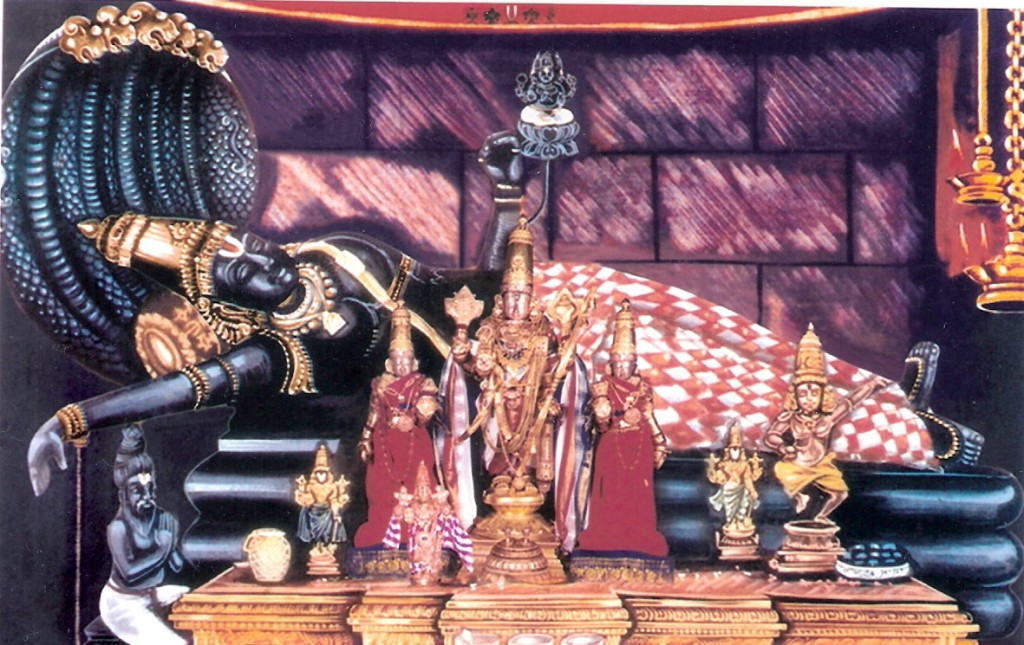
Standard Dravidian granite buildings span 1.5 acres. A three-tier east-facing rajagopuram marks the entrance. In the sanctum, Sundararajan reclines on Adisesha with Sridevi, Bhoodevi, and Brahma at his feet. The Tharaka Vimanam roof echoes the gopuram shape, a subtle innovation. Subsidiary shrines honour the 12 Alvars, Narasimha, Venugopalar, Lakshmi Narasimha, and Hanuman. Carvings depict epics and lotuses on pillars and walls. The Pushkarini tank supports ritual baths.

Six daily pujas follow the Tenkalai style: alangaram for decoration, neivethanam for food offerings, and deepa aradanai for lamps. Nagaswaram pipes and tavil drums accompany Vedic chants. The temple Brahmotsavam spans 10 days in Chittirai (April-May) with processions. The Maasi Tirthavari (February-March) features river baths for the deity, while Vaikunta Ekadashi draws crowds.

One can reach Anbil by bus or auto from Trichy, tracing the Kollidam through fields. Village lanes lined with flower vendors lead to the temple gate. Remove shoes for darshan, often under 30 minutes during off-peak times.

Today, the TNHR&CE Board oversees operations with annadhanam feeding devotees daily. Flood defences continue, including raised walls and drainage fixes. The temple festivals pull locals mainly, with not many tourists drifting off the tourist circuit.

The Vadivazhaga Nambi Perumal Temple at Anbil holds its place in the Divya Desam circuit as a quiet riverside survivor. Its myths show gods humbled by beauty and devotion, while history reveals layers from Chola foundations to Nayak expansions, tested by relentless floods. The compact Dravidian design and village-scale rituals keep it grounded in daily life, far from grand temple-cities. This temple proves the circuit’s strength lies in such modest spots, weaving farm rhythms and river threats into India’s spiritual fabric. Visit to walk the Kollidam banks, ponder pride’s fall, and feel grace etched in reclining stone. In the end, Anbil reminds us that enduring faith thrives not in spectacle, but in steady flow.

Appakkudathaan Perumal Koil, Koviladi, Tamil Nadu
Located on the south bank of the Cauvery River, in Koviladi village, about 16 km from Tiruchirapalli in Tamil Nadu, the Appakkudathaan Perumal Temple is one of the 108 Divya Desams. Lord Vishnu is enshrined here as Appakkudathaan, forever holding a pot of sweet appam in his right hand. This site ranks among the five Pancharanga Kshetrams along the river, with legends claiming it predates even Srirangam upstream. But Chola inscriptions from the 9th century provide the earliest solid evidence, while floods have repeatedly challenged its survival.​

The main legend tells of King Uparisravasu, who accidentally killed a brahmin while hunting. The sin of brahmahatti dosha gripped him, worsened by Sage Durvasa’s curse that sapped his strength. To atone, the king fed thousands daily; accounts vary between 10,000 and 100,000. One day, Vishnu arrived disguised as a starving old man, devoured all the food, and requested a pot of appam. The king obliged. Vishnu revealed his form, lifted the curses, and stayed reclined with the pot as a reminder of grace through simple service.​

Sage Markandeya faced death at 16 from Yama. He prayed here, and Vishnu intervened, also humbling Indra’s arrogance. Another story positions Appala Ranganatha as pacing the steps toward Srirangam, earning the name Koviladi, the “first temple.” Periazhwar sang his final mangalasasanam here before ascending to Vaikunta. These tales overlap in details, like feast numbers or curse sources.

Cholas laid the foundations in the 9th-10th centuries. Aditya Chola’s inscriptions: numbers 283, 300, 301, 303 from 1901, detail donations for halls and Vedic scholars. Later Cholas, Pandyas, Vijayanagara rulers, and Nayaks expanded with prakarams and shrines. Unlike raided giants, Koviladi endured the Anglo-French wars nearby without noted damage, though the Cauvery floods demanded repeated rebuilds.​

Alvars, including Nammalvar, Periazhwar, and Thirumangai, immortalised it in paasurams. It served as a Vedic learning centre, drawing scholars. Periazhwar’s final praise marks it for moksha seekers. Downstream from Srirangam, it forms a river-linked chain, not an isolated outpost. History shows adaptation: rulers endowed, floods rebuilt, saints embedded it in faith networks.​

Granite Dravidian style hugs the riverbank. A three-tier Rajagopuram looms after 21 steps up. Inside, east-facing Appakkudathaan reclines on Adisesha in the sanctum, appam pot gripped tight, accompanied by Sridevi and Bhoodevi. Sowmya Nayaki claims a separate shrine. Prakarams encircle with sub-shrines for Alvars, Venugopala, and others. The vimana stays modest, echoing early Chola restraint.​ Pillars bear epic carvings, lotuses, and dancers. The Cauvery pushkarini enables ritual baths. No radical breaks from style, but systematic subsidies mirror Srirangam, 9th-10th century hallmarks. Compact form suits flood-prone ground, prioritising endurance over scale.​

Daily rhythm follows six pujas: alangaram dresses the deities, neivedyam offers food topped by appam, the only Divya Desam to do so daily, and deepa aradanai waves lamps amid nagaswaram, tavil, and Vedic chants. Brahmotsavam lights up Panguni with processions. Vaikunta Ekadashi opens paradise gates. Periazhwar Utsavam honours his departure. Locals stir appam pots, fund annadhanam, and line streets; threads of community weave the rites.​

Buses from Trichy cross the Cauvery through paddy fields, dropping at village paths lined with flower stalls. Climb to the gate, shed shoes, and find darshan swift on weekdays. Festival river dips cleanse body and spirit. Locals pour tea, recount Periazhwar’s ascent: “Pray here for a straight path to Vaikunta.” Flood scars linger in tales: “The Lord stemmed the waters once.” Quiet banks invite chants, reflection amid flowing river life.​

Nine Alvar paasurams echo in the Nalayira Divya Prabandham, recited in every puja. Periazhwar’s closing praise fuels songs and dances at festivals. Appam lore peppers village stories, Vedic past shapes farm rituals. Weddings and fairs orbit the temple, anchoring identity. Less spotlight than upstream kin, but it pulses through Koviladi’s daily beat, faith as staple, like its namesake sweet.​

Appakkudathaan claims its Divya Desam spot as Cauvery’s quiet link. Myths feed grace through appam pots; history stacks Chola stones atop flood-tested bases to Nayak crowns. Village intimacy endures where giants might falter. Pre-Srirangam boasts falter against inscriptions. Yet it binds the circuit, farms flooded, prayers offered, river flowing. Visit to savor appam prasadam, trace banks, balance legend with granite truth. Heritage endures not in towering claims, but pots of plain devotion.

Sacred Stones, Spaces, and Stories: Divya Desams Part 38

Thiruthangal Temple, Thiruthangal, Tamil Nadu
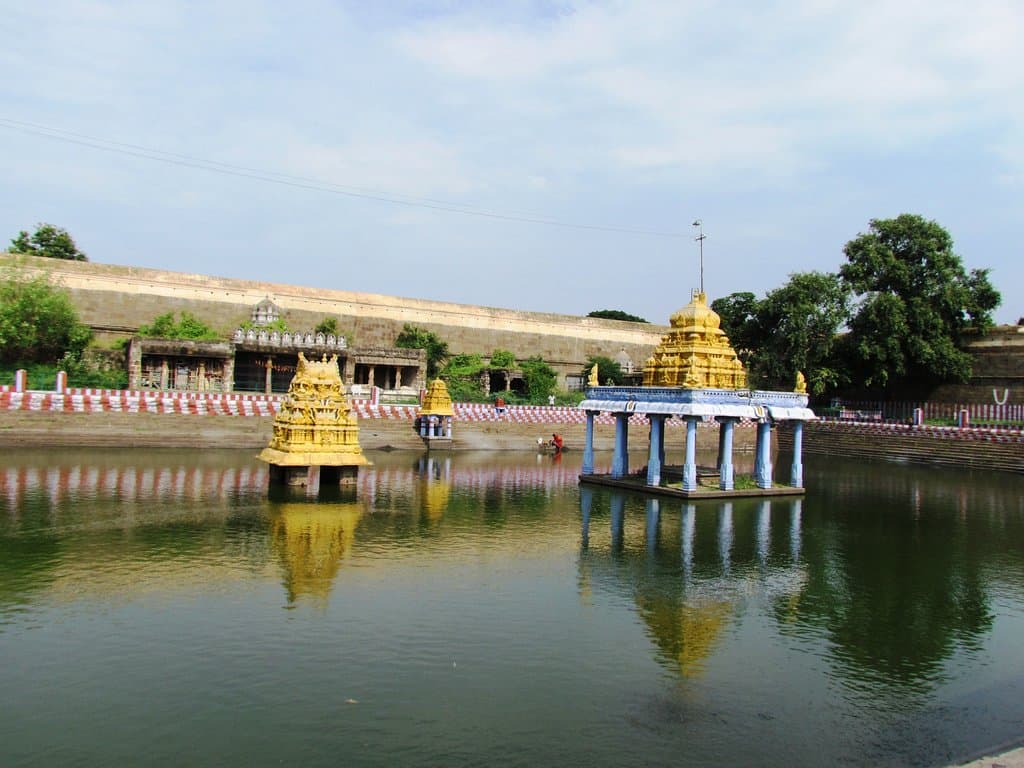
Thiruthangal, located near Sivakasi in Tamil Nadu, is one of those Divya Desams where the story is not about movement but about choosing to remain. The presiding deity here is Ninra Narayana Perumal, and the goddess is Sengamalavalli Thayar. The name itself reflects the central image. Ninra means “standing,” and this is the Lord who stands, not in passing, but with intention. The temple sits on a small hill, and that elevation adds a quiet sense of separation from the everyday world below. Yet the feeling is not of distance. It is of steadiness.
The mythology of Thiruthangal is connected with a gentle but telling story involving the goddess. According to tradition, Lakshmi and Bhudevi once sought to determine who held a more significant place beside Vishnu. What began as a comparison grew into a moment of tension, not out of anger, but out of the desire to be seen. Lakshmi chose this place to perform penance, seeking clarity and affirmation. Vishnu appeared before her here and resolved the tension, not through argument, but through presence. Because the goddess stayed here and the Lord stood with her, the place came to be known as Thiruthangal. The story does not end in conflict. It settles into understanding.

Inside the sanctum, this sense of resolution becomes visible. Ninra Narayana Perumal stands in a composed posture, holding the conch and discus, calm and unhurried. The standing form carries a certain clarity. It does not suggest movement or rest, but readiness that has already found its place. Sengamalavalli Thayar’s shrine adds warmth to the space, grounding the stillness of the Lord with compassion. Together, they create an atmosphere that feels balanced.

The temple’s location on a hill shapes the experience quietly. The climb is not long, but it is enough to slow the body and shift the mind. By the time you reach the top, the rhythm has changed. The surroundings open up, and the space feels less crowded, even when there are other visitors. The hill does not isolate the temple. It gives it a clearer presence.

Historically, Thiruthangal reflects the continuity of temple culture in southern Tamil Nadu, with roots that extend through the Pandya period and later contributions from local patrons. The structure has been maintained across centuries, not through large expansions, but through steady care. This continuity is visible in the layout and in the ongoing practice of worship. The temple has remained active, carrying its story forward without interruption.

Architecturally, the temple follows the Dravidian style, with a gopuram marking the entrance and prakarams guiding the movement inward. The scale is modest compared to some larger temples, but the proportions feel balanced. The sanctum remains the focal point, drawing attention to the standing form of the Lord. The surrounding structures support the experience without distraction. The hill itself becomes part of the architecture, shaping how the temple is approached and understood.

The daily rituals follow the Vaishnavite tradition, with regular pujas conducted throughout the day. Festivals such as Vaikunta Ekadasi and Brahmotsavam bring larger gatherings, but the temple does not lose its steady tone. The standing form of the deity continues to anchor the space, even during moments of activity.

For pilgrims, the experience of Thiruthangal often comes with a sense of quiet clarity. After visiting temples associated with action, movement, or transformation, arriving here introduces a different emphasis. The Lord does not act. He stands. That posture begins to carry meaning. It suggests that some things do not need to be changed or moved. They need to be held in place.

Culturally, the temple holds its place within the Divya Desam tradition through the hymns of the Alvars, who recognised its significance. Over time, it has come to represent themes of balance, resolution, and steadiness. Devotees come here not only with requests but with the need for clarity. The temple does not provide answers in obvious ways. It offers a space where things settle.

In modern times, Thiruthangal continues to function as an active place of worship, maintained through regular rituals and community care. It remains part of a living tradition, drawing pilgrims who seek both devotion and quiet reflection.

Thiruthangal ultimately represents the strength of staying. Ninra Narayana Perumal does not move through the world here. He stands within it. In the larger Divya Desam journey, this temple offers a simple but steady insight. Not every moment calls for action. Some call for presence.

Thirukkoodal Temple, Madurai, Tamil Nadu
Madurai is a city that rarely pauses. It moves through history, ritual, and everyday life all at once, and in the middle of that movement stands Thirukkoodal, the temple of Koodal Azhagar Perumal, with Madhuravalli Thayar as the goddess. The name Koodal itself suggests coming together, a meeting point, a place where things gather. That meaning fits the temple well. It sits within a city known for convergence, where people, traditions, and rhythms overlap, and yet inside the temple, the experience becomes more focused, more contained.

The mythology of Thirukkoodal is not built around a single dramatic episode. Instead, it is shaped by presence across different states. The most striking aspect of the temple is that the Lord is worshipped in three distinct forms within the same space. In the sanctum, Koodal Azhagar stands in a composed posture, holding the conch and discus. Above, in another tier, he is seen seated, and in yet another, he reclines. These are not separate temples. They are layers within one structure. The arrangement itself becomes the message. The divine is not limited to one state. It stands, sits, and rests, all within the same presence.

This idea carries a quiet significance. In many temples, one encounters a single form and builds meaning around it. Here, the experience is expanded. The Lord is not fixed. He moves across states without losing identity. For the devotee, this creates a different kind of engagement. You do not see the divine in one moment. You see it as continuity across different conditions.

Inside the temple, this layered presence shapes the experience. The standing form of Koodal Azhagar holds the immediate attention. It feels grounded and direct. The seated and reclining forms above introduce a shift, inviting the mind to move beyond what is seen first. Madhuravalli Thayar’s shrine adds warmth to the space, grounding the experience in grace. Together, they create an atmosphere that feels complete, not because it is large, but because it holds multiple states at once.

Historically, Thirukkoodal has been an important temple in Madurai, with roots that extend through the Pandya period and later contributions from other dynasties. The temple has stood through centuries of change in the city, maintaining its identity even as the surroundings evolved. It is not as widely known as the Meenakshi Amman Temple nearby, but it holds its own place within the sacred geography of Madurai.

Architecturally, the temple reflects the Dravidian style, with a gopuram marking the entrance and prakarams guiding movement inward. The most distinctive feature is the vertical arrangement of the three forms of the deity. This structure creates a sense of movement within the temple without requiring physical distance. The experience shifts as one looks upward, moving from one state to another.

The daily rituals follow the Vaishnavite tradition, with regular pujas conducted throughout the day. Festivals such as Vaikunta Ekadasi and Brahmotsavam bring larger gatherings, but the temple does not lose its inward focus. Even during these times, the layered presence of the deity remains the central experience.

For pilgrims, Thirukkoodal often feels like a pause within the larger movement of Madurai. After navigating the busy streets and the intensity of the city, stepping into the temple creates a shift. The mind begins to settle, not into stillness alone, but into a recognition of different states coexisting.

Culturally, the temple holds its place within the Divya Desam tradition through the hymns of the Alvars, who recognised its significance. Over time, it has come to represent a broader idea. Life itself does not remain in one state. It moves through action, rest and reflection. Thirukkoodal reflects that movement without separating it into different spaces.

In modern times, the temple continues to function as an active place of worship, drawing devotees from within the city and beyond. It remains part of a living tradition, even as it stands alongside larger and more prominent temples.

Thirukkoodal ultimately represents presence across change. Koodal Azhagar Perumal does not remain in one posture. He stands, sits, and rests, all within the same space. In the larger Divya Desam journey, this temple offers a simple but steady insight. The divine is not limited to one state, and neither are we.

Sacred Stones, Spaces, and Stories: Divya Desams Part 3

Thirukoḻi Temple, Uraiyur, Tamil Nadu
Thirukoḻi Temple, now often referred to as Nachiar Koil, stands in Uraiyur, a suburb of Tiruchirappalli in Tamil Nadu. It’s one of the 108 Divya Desams, the sacred temples dedicated to Vishnu. But this place flips the usual script. Here, the goddess takes centre stage. Kamalavalli Nachiyar leads every procession, while the god follows. That alone makes the temple worth a closer look.

The story behind Thirukoḻi begins with a curse and a childless king. Rishi Brighu cursed Lakshmi to be born as a mortal. Meanwhile, Nanda Chola, a Chola king desperate for an heir, prayed to Mahalakshmi. His prayers worked. While hunting near a lotus pond, he found a baby girl nestled among the petals. He named her Kamalavalli, the child of the lotus. When Kamalavalli grew up, she visited Srirangam and fell in love with Ranganatha, the reclining Vishnu. She vowed to marry him. Ranganatha appeared in the king’s dream, revealing that the girl was Lakshmi herself. The king dressed her in bridal clothes and took her to Srirangam. As she approached the deity, she vanished. Ranganatha had accepted her. To honour the marriage, Nanda Chola built a temple at Uraiyur. Vishnu appears here as Azhagiya Manavala Perumal, the beautiful groom, standing in a wedding pose, facing north. Kamalavalli sits beside him, lotus in hand, as his bride. Another legend adds local flavour. A fowl and an elephant fought at this spot. The fowl won. So the place became known as Kozhiyur, kozhi meaning fowl in Tamil.

The temple likely existed before the seventh century, though exact dates blur into the past. The Medieval Cholas built the core structure around the eighth century CE. Later dynasties: Pandyas, Vijayanagar kings, Madurai Nayaks, added layers, renovations, and inscriptions.

Uraiyur itself holds weight in Tamil history. It was the early capital of the Chola dynasty, one of the great powers of South India. Karikala Chola, a legendary ruler known for building the Grand Anicut on the Kaveri River, made Uraiyur his base before the capital moved to other cities. The town thrived as a centre of trade and cotton production during the Sangam period, from 300 BCE to 300 CE. The temple also marks the birthplace of Thiruppaan Alvar, one of the 12 poet-saints who sang hymns to Vishnu. Thiruppaan’s verses appear in the Nalayira Divya Prabandham, the sacred canon of the Alvars. His presence here connects the temple to a broader spiritual and literary movement that shaped South Indian Vaishnavism.

The temple follows classic Dravidian design. A granite wall surrounds the complex, enclosing shrines, courtyards, and water tanks. The five-tiered Rajagopuram, the gateway tower, rises above, marking the entrance with carvings of gods, mythic creatures, and scenes from epics. Inside, the main shrine houses Azhagiya Manavala Perumal, standing in wedding attire and facing north. North-facing shrines are rare in Divya Desams, making this layout unusual. Kamalavalli Nachiyar sits beside him, no separate sanctum, lotus in hand. The vimana above the shrine is called Kamala Vimanam.

The temple has separate shrines for Ramanuja and Nammalvar, two towering figures in Vaishnavite tradition. Inside the Nammalvar shrine, paintings line the walls, images of Vishnu’s avatars, Vaishnava teachers, and scenes of dharma and justice. These murals date to the early 1800s, bright hues fading but still vivid. The layout isn’t grand by the standards of Srirangam or other large temple-cities. But it’s intimate, with detail packed into every corner. Carvings, inscriptions, and architecture all speak to centuries of devotion and craft.

Worship at Thirukoḻi follows a strict daily rhythm. Priests perform rituals six times a day, from 7 am to 8 pm. Each ritual has three steps: alangaram (decoration), neivethanam (food offering), and deepa aradanai (waving of lamps). During the final step, nagaswaram pipes and tavil drums fill the air, priests chant from the Vedas, and devotees prostrate before the temple mast.

The temple honours the goddess first in every ritual and procession. Kamalavalli Nachiyar moves ahead; Azhagiya Manavala Perumal follows. This reversal of typical temple hierarchy gives Thirukoḻi its nickname: Nachiar Koil, the goddess’s temple.

Festivals bring drama. Serthi Sevai, the homecoming festival, is the biggest. During the Tamil month of Panguni (March–April), the processional idol from Srirangam, Namperumal, arrives at Thirukoḻi. The images of Namperumal and Kamalavalli are adorned together in the Serthi hall, celebrating their eternal union. Special rituals, processions, and thousands of pilgrims fill the temple grounds.

Another festival honours Thiruppaan Alvar’s birthday. His processional idol is brought from Thirukoḻi to Srirangam, where he receives grand honors: a silk turban, garlands, sandal paste, and a shawl. These gestures are meant to bring a smile to the saint’s face. After, the idol visits the shrines of Nammalvar and the goddess, accompanied by chanting from the Nalayira Divya Prabandham. Other festivals: Dolostava, Vasanthothsava, and Navaratri keep the temple active year-round. Community involvement runs deep. Locals prepare offerings, organise annadhanam (free meals), and maintain traditions passed down through generations.

Reaching Thirukoḻi is straightforward. The temple sits about three km from Tiruchirappalli Junction, connected by frequent town buses and auto-rickshaws. The surrounding streets are busy with vendors selling flowers, garlands, and incense. The atmosphere is lived-in, not curated for tourists. Pilgrims remove their shoes at the entrance and step into a different rhythm. The temple is open from 5 am to 12:30 pm. and again from 4:30 pm. to 8:30 pm. Devotees line up for darshan, waiting patiently, sometimes in the heat, sometimes in the rain. After darshan, many sit near the water tanks or under the shade of temple trees. Some walk to the shrine of Thiruppaan Alvar or Nammalvar, pausing to reflect or chant. The temple feeds a hundred devotees daily through its annadhanam scheme, funded by donations. Sharing a meal in the temple hall becomes part of the experience: food as blessing, community as ritual. Local hospitality shows in small gestures: directions offered, prayers shared, stories told. Uraiyur feels quieter than Trichy proper, less rushed. The pilgrimage isn’t about ticking off a site, it’s about slowing down, noticing details, and absorbing the place.

Thirukoḻi shaped Vaishnavite culture in subtle but lasting ways. The temple appears in 24 hymns in the Nalayira Divya Prabandham, composed by Kulasekara Alvar and Thirumangai Alvar. These verses are still chanted during rituals and festivals, keeping the Alvars’ voices alive. The temple’s emphasis on the goddess influenced how communities thought about divine hierarchy. In most Vishnu temples, the god dominates. Here, Kamalavalli’s prominence flipped that script, creating space for female-centred worship within a predominantly male-focused tradition.

Today, the temple is managed by the Hindu Religious and Endowment Board of the Government of Tamil Nadu. Management balances tradition with practical needs: maintaining structures, funding festivals, and supporting daily worship. Restoration efforts are ongoing. Old murals need care, gopurams need repair, and water tanks require cleaning. Government and private donations fund these projects. Technology plays a role, online booking for accommodations, digital archives of inscriptions, and social media updates about festivals. Tourism is modest compared to Srirangam, but steady. Devotees make up most visitors, though historians, architecture enthusiasts, and curious travellers also come. The temple’s annadhanam scheme continues, feeding devotees daily and keeping the tradition of communal meals alive.

Thirukoḻi Temple stands apart in the Divya Desam circuit. Its goddess-centred worship challenges assumptions. Its connection to Uraiyur ties it to Tamil history and kingship. Its architecture, though modest, carries centuries of craft and care. For pilgrims, it offers something rare: a temple where the goddess leads, and the god follows, where legends of love and devotion play out in stone and ritual. For anyone interested in Indian spirituality, it’s a reminder that tradition isn’t static; it shifts, adapts, and sometimes flips the script. Visit if you can. Walk the streets of Uraiyur. Sit by the lotus tank. Watch the rituals. Listen to the stories locals tell. And maybe you’ll leave with a different sense of what sacred space can mean.

Thirukkarambanoor Temple, Uthamarkoil, Tamil Nadu
Thirukkarambanoor, better known today as Uthamarkoil or Sri Purushothaman Perumal Temple, sits on the outskirts of Tiruchirappalli in Tamil Nadu, near the Kollidam (Coleroon) river. It is a Divya Desam, but a very unusual one. Here, Vishnu, Shiva, and Brahma all have shrines inside the same complex, making it the only Divya Desam where the Trimurti share one sacred space.

The core legend begins with Vishnu testing Brahma. Vishnu takes the form of a kadamba tree at this spot, without announcing himself. Brahma recognises the presence of the lord and starts worshipping the tree with thirumanjanam, the ritual bath. The water from this worship collects and becomes Kadamba Theertham, the temple tank. When Vishnu is satisfied with Brahma’s devotion, he grants him a boon: Brahma will have a shrine here and receive worship alongside him. That alone flips the standard storyline where Brahma is usually sidelined.

Another track brings in Shiva. After Shiva cuts off one of Brahma’s five heads in anger, the severed head sticks to his hand as a karmic stain. To get rid of this burden, Shiva wanders as Bhikshatana, the begging ascetic, asking for alms. When he reaches Thirukkarambanoor, Vishnu asks Lakshmi to give alms to Shiva. She fills Shiva’s begging bowl completely, which is why she is called Poornavalli, “the one who filled the bowl.” Shiva’s sin starts to ease here and is finally erased later at Thirukandiyur.

So in this one story, you have Vishnu testing Brahma, Brahma worshipping Vishnu, Shiva depending on Lakshmi’s grace, and all three ending up with shrines in the same compound. The core message is not subtle: no single form of God is enough. They all lean on one another, and the devotee is asked to look beyond faction lines.

Historically, the temple seems to have taken shape in the late eighth century CE under the Medieval Cholas. Later, Vijayanagara rulers and the Madurai Nayaks added to the structures, gopurams, and mandapams, as they did across the Kaveri belt. Inscriptions trace donations, land grants, and festival endowments, tying the place into the political economy of temple Tamil Nadu. The site also appears in the Nalayira Divya Prabandham, the Tamil Vaishnava canon. Thirumangai Alvar sings of the lord here as Uthamar, “the perfect one.” A local tradition says Thirumangai Alvar stayed at Uthamarkoil while working on the fortification walls of Srirangam, using this temple as his base. That connects the place to the much larger project of building up Srirangam as a Vaishnava centre.

In 1751, during the Carnatic conflicts between the British and French, the temple reportedly served as an infantry base for both sides. Unusual detail: the complex came through with minimal structural damage. It’s a small example of how these temples were not just spiritual spaces, but also strategic assets in a war zone. When we romanticise “timeless” temples, we forget they sat right in the path of empires and gunpowder.

Uthamarkoil follows the Dravidian model but with its own logic. A granite wall encloses the complex, with the main tank just outside the gateway. Inside, shrines for Vishnu, Shiva, and Brahma are housed within the same campus, each with its own sanctum and tower, yet visually and ritually linked. Vishnu is worshipped here as Purushothaman Perumal, with Lakshmi as Poornavalli Thayar. Shiva appears as Bhikshadanar, the begging ascetic, and Brahma sits in a separate sanctum, a rare working Brahma shrine in South India. The very act of walking between these shrines makes you physically experience the unity the myths talk about.

Architecturally, you get the standard features: gopurams, pillared halls, subsidiary shrines. But the mood is different from the massive temple-cities. It feels compact and layered rather than overwhelming. Add in the Kadamba Theertham tank, the river nearby, and the relatively low-rise surroundings, and there’s a strong sense of human scale. Not every sacred space has to shout. Some accounts mention that the temple’s strategic role during the eighteenth-century conflicts led to minor defensive modifications without sacrificing the core iconography. That mix of sacred and practical is part of the aesthetic story too.

Ritual life here runs on a tight routine. There are six daily pujas for each of the Trimurti deities, from early morning to night. Each cycle includes alangaram (decoration), naivedyam (offering of food), and deepa aradanai (lamp worship). Priests chant Vedic mantras and Tamil hymns, and the deities receive separate but coordinated attention.

The major festival is the Brahmotsavam in the Tamil month of Karthigai (roughly November–December). Processional images of Purushothamar and Bhikshadanar are taken through the streets around the temple, side by side. Again, the temple refuses to choose one god over another; it stages them together. Another key event is the Kadamba Tiruvizha, when the festival image of Ranganatha from Srirangam is brought to Kadamba Theertham here for the ceremonial bath. That links Uthamarkoil into a larger ritual circuit with Srirangam. Tradition also says King Dasharatha performed a yajna here to ask for sons, long before Rama’s birth. Childless couples still come with that story in mind, seeking fertility blessings.

In practical terms, Uthamarkoil is easily accessible. It lies just off the Trichy–Salem highway, about 10 km northwest of Tiruchirappalli, near the banks of the Kollidam. Buses and shared autos run regularly; the last stretch is walkable through a typical temple-side settlement with tea stalls, small shops, and houses. The first thing that may strike you is that the place is not overrun. Compared to Srirangam, there is breathing room. You can stand in front of each sanctum without being pushed, let your eyes adjust to the dim light, and actually look at the deities. The space invites a quiet pause rather than a rush. Many take time by the Kadamba Theertham tank nearby, believed to have healing powers. The sound of temple bells, birds, and the river nearby creates a blend both calming and alive.

Thirukkarambanoor’s unique tri-deity setup has inspired Tamil literature and art for centuries. The temple entrances and pillars bear carvings not only of the Trimurti but also festive scenes and sacred dances, connecting the place to vibrant local traditions. Poets like Thirumangai Alvar included this temple in their hymns, bringing it spiritual prominence. The temple challenges rigid classification of sects. Here, Shaivism and Vaishnavism coexist visibly, influencing regional identity. Festivals often blend music, dance, and recitation traditions from different streams, making Thirukkarambanoor a cultural meeting point.

Today, Uthamarkoil is managed by the Tamil Nadu Hindu Religious and Endowment Board. The temple hosts six daily rituals for each of the three deities, plus major festivals like Brahmotsavam in the Tamil month Karthigai (November-December). Despite modern pressures, traditions of daily worship continue uninterrupted. Restoration projects focus on preserving the temple’s distinctive stone carvings and murals. Crowds are moderate, mostly pilgrims and devotees from nearby towns, though interest from history and architecture buffs is growing.

Thirukkarambanoor Temple stands as a rare see-through lens into Hinduism’s fluid unity. By housing Brahma, Vishnu, and Shiva side by side, it asks us to rethink boundaries: sectarian, architectural, ritual, and cultural. The temple isn’t just a sacred space for worship but a symbol of harmony and complexity within Indian spirituality. Its layered stories, intimate scale, and lived traditions challenge assumptions about what a Divya Desam can be. This temple offers not just a place to pray, but a place to reflect on how diverse beliefs weave together to form a living, breathing spirituality. If you visit Uthamarkoil, slow down. Notice the quiet dialogues between the gods. Listen to hymns sung for both Shiva and Vishnu. Walk the stone paths shaped by centuries of devotion and conflict. You might leave recognising how faith is less about dividing lines, and more about shared sacred space.

Sacred Stones, Spaces, and Stories: Divya Desams Part 2

Ranganathaswamy Temple, Srirangam, Tamil Nadu
The Ranganathaswamy Temple isn’t just a landmark in Tamil Nadu. It’s considered the foremost Divya Desam, the sacred abode of Vishnu. Located on Srirangam Island in Tiruchirappalli, it stands as both a spiritual heart and a living city. Pilgrims see it as the gateway to heaven. Locals see it as the soul of their community. And for anyone curious about faith, architecture, or Indian culture, it’s a site where every stone tells a story.

Stories shape Srirangam’s sacred identity. Legends say the idol of Ranganatha, the reclining Vishnu, was first worshipped by Brahma in the celestial world. The god then gave it to King Ikshvaku of the solar dynasty. The idol was passed down through generations before Rama, the hero of the Ramayana, gave it to Ravana’s brother Vibhishana as a blessing. Vibhishana set out for Lanka, but as he rested on the banks of the Kaveri, the idol rooted itself at Srirangam, refusing to be moved. Vishnu had chosen where he’d rest eternally.

Another legend tells how the temple became central to spiritual drama. The four child sages, Sanaka and his brothers, wanted to see Vishnu in heaven. Blocked by Jaya and Vijaya, the lord’s guardians, they cursed them, leading the doorkeepers to be born as powerful opponents in three lifetimes. Vishnu took avatars to defeat them each time. In this tale, the temple’s idol facing south is a reminder: Srirangam wasn’t just a holy site but a stage for cosmic justice, love, and spiritual growth.

The temple’s stone walls have witnessed centuries of history: worship, war, and renewal. The first structure was built by the Chola king Dharmavarma. It was destroyed by Kaveri floods and rebuilt by the early Cholas, with major work happening between 100 CE and 300 CE. Later rulers, Chola, Pandya, Hoysala, Maratha, and Vijayanagara, added halls, towers, and shrines, leaving inscriptions from the seventh to seventeenth centuries.

History wasn’t always kind. In 1311, Malik Kafur, a general of the Delhi Sultanate, raided Srirangam, looted its treasures, and took the temple’s golden idol to the north. Tamil legends describe how the priests and devotees risked their lives to bring the idol back. Sometimes, the story pivots to the Sultan’s daughter, who fell in love with the idol and eventually surrendered it after much drama and music. Even when invaders controlled the temple for years, spiritual life somehow endured, and the community kept its identity. Restoration only began after Vijayanagara rulers conquered the region in the 1370s, bringing the temple back to life.

During these centuries, the temple drew great saints and thinkers. Ramanujacharya, the influential philosopher who shaped Vishistadvaita, spent years at Srirangam. His teachings, shaped inside these walls, spread far beyond, defining a major tradition of Hindu thought. Scriptural study, scholarship, and fresh rituals flourished, making the temple not just a place of prayer but a centre of learning.

Srirangam is more than ornate; it’s awe-inspiring in scale and detail. Spread over 156 acres, it’s the largest active Hindu temple complex in the world. There are seven concentric walls or prakarams, creating nested enclosures for shrines, water tanks, residential quarters, and even shops. This design mirrors cosmic ideas: circles within circles, each wall carrying its own history and role.

The Rajagopuram, the grand entrance tower, rises to nearly 240 feet, one of the tallest in Asia. Other gopurams, spaced along the walls, guide crowds like beacons, their vibrant colours seen from miles away. Every inch brims with carvings, mixing mythic tales and celestial beings. The temple’s mandapams, pillared halls for worship, songs, and gathering, are full of stories etched in stone.

Dravidian architecture shines here. No detail is overlooked. Pillars show gods, mortals, animals, and scenes from epics. Ceiling panels glow with paintings from different eras, each restoration adding layers. Sacred water tanks, or pushkarinis, sit at the heart of community and ritual. All of this turns the temple into a living museum, capturing centuries of artistry and devotion.

Ritual is the heartbeat of Srirangam. The daily pujas follow strict tradition, with priests tending the main deity early each morning, chanting ancient hymns, and decorating the idol with fresh garlands. Offerings of food, music, and light keep spiritual life moving. Special agro-based rituals keep in sync with the harvest, a sense that God and nature work together.

Festivals here are unforgettable. Vaikunta Ekadasi stands out: for 21 days in December-January, the temple is packed to the brim. Devotees line up to walk through the Vaikunta Dwaram, a gateway imagined as the door to paradise; hundreds of thousands come in hope. The temple organises annadhanams, free meals for all. Songs, drums, and processions fill the streets. Other festivals cleanse the sacred spaces, celebrate solar movements, and mark calendar milestones. Certain rituals involve purifying the sanctum with herbal oils, changing the sacred thread on idols, or massive ablutions.

Local customs shape the rhythm of the temple’s days. In Srirangam, worship spills out into the lanes: residents keep altars in their homes, offer produce, and gather for prayers in open courtyards. Priests and devotees share ties across generations, linking ritual to community.

For pilgrims, reaching Srirangam is both ordinary and profound. The island sits between two branches of the Kaveri River, so approaching often means crossing a bridge, winding through busy streets, and passing vendors selling flowers and beads. As you move closer, gopurams rise on the skyline. The temple-city feels alive at all hours, full of people and bustling shops. Everything centres on the main deity, Sri Ranganatha, inside.

In the village atmosphere, hospitality runs deep. Lodges and dharmshalas welcome travellers. Local people often share directions, offer advice, and sometimes offer simple food. A pilgrimage here means walking: the temple’s gates require devotees to remove shoes, be patient in crowds, and soak up the energy rather than rush through. Collective memories colour the experience; everyone has a story, whether about a lucky prayer answered, a hardship overcome, or just the generosity of Srirangam folk.

After darshan, seeing the deity, many eat in the temple’s annadhanam hall, a communal ritual of sharing food as a blessing. Some wander side streets visiting shrines; others sit quietly by the water tank or under shade trees. The pilgrimage isn’t a single event; it’s an immersion in something larger than oneself.

Srirangam influences more than ritual; it sinks roots into art, literature, and identity. The temple’s music and dance traditions run deep. Famous poets and musicians have performed here, making it a hub for kirtans and recitals. Ramanujacharya didn’t just meditate; he argued, taught, and wrote here, his works changing the direction of Hindu philosophy.

Manuscripts and palm-leaf books in the temple’s library are treasures for researchers. Over time, local festivals and processions have shaped collective memory. The colours, drums, and chants have made their way into Tamil literature, storytelling, and even film. The temple grounds also functioned as schools, the learning centres where kids from local families studied not just scripture but also poetry, math, and ethics.

The blend of spiritual and worldly culture means Srirangam is more than itself. Its stories, of how gods, kings, and poets met are the frame for a resilient local identity. For artists, it’s a source of inspiration. For writers and singers, it’s a stage.

Today, Srirangam Temple balances tradition and change. Management includes both hereditary priests and modern administrative boards. Government and local organisations fund restoration, clean water tanks, and maintain the gopurams. Technology comes in: electric lights brighten the halls, tourists book rooms online, and social media shares festival livestreams.

Tourism is booming: crowds swell during festivals, with hundreds of thousands of visitors from across India and the world. Restoration efforts are ongoing, with the government and private groups intent on safeguarding what remains. Local initiatives rebuild roads, renovate shrines, and install new signage to ease visitor flow.

Despite crowds, the temple holds its heart. Annadhanam traditions run strong. Outreach to the poor and local schools keeps the temple rooted in daily life. At the same time, debates keep going on: how best to balance modern needs with sacred roots? Not every visitor is a devotee. Many come for history, art, or just the atmosphere. But for those seeking spiritual renewal, Srirangam remains a place where mystery and meaning endure.

The Ranganathaswamy Temple in Srirangam isn’t just another stop on the Divya Desam circuit. It’s the centre, a place where myth, history, art, and life come together. Its legends speak of cosmic drama and divine mercy. Its walls hold centuries of struggle and renewal, from Chola kings to modern engineers.

For pilgrims, the journey here means more than seeing the idol, it means tracing footsteps, learning old stories, and living communal ties. The temple’s architecture and rituals inspire wonder and reverence, driving continued scholarship and creativity. Festivals and daily worship give rhythm to the city, keeping old traditions alive in new ways.

In the broader landscape of Indian spirituality, Srirangam stands out as proof that faith can build more than walls; it can sustain a living culture, weather upheaval, and renew generation after generation. If you visit, don’t just look at the carvings or join the crowds. Slow down. Notice how history, legend, and everyday life all mix. Listen to the stories. Carry the experience back with you, and see how it shapes your view of the divine.