

Pundarikakshan Perumal Koil, Thiruvellarai, Tamil Nadu
Located in Thiruvellarai, a village 15 km northwest of Tiruchirappalli in Tamil Nadu, the Pundarikakshan Perumal Temple is one of the 108 Divya Desams, sacred Vishnu sites praised by the Alvars. The name means “white rock,” from the pale granite hills around it. Here, the goddess gets first honours in worship, flipping the usual order. Some say it’s older than Srirangam, but archaeology points to 8th-century caves, not millions of years.
Legends start with King Sibi Chakravarthy of Ayodhya. Hunting demons, he camped here. A white boar dashed past and hid in an anthill. Sage Markandeya, doing penance nearby, told Sibi to pour milk into the hole. Vishnu emerged as Pundarikakshan, the lotus-eyed lord. The sage said build a temple, but bring 3700 Vaishnavites from the north to do it right. Sibi did. But one worker died en route. Short 3700, the king worried. Vishnu slipped in disguised as Pundarikakshan, the 3700th. That’s why the deity faces west, watching the road the migrants came from. Another tale has Lakshmi doing penance here. Vishnu appeared as Sengamala Kannan. She became Pankajavalli, the lotus lady. Shiva, as Neelivaneswarar, worshipped here to shed Brahma’s severed head sin.
Pallavas carved the rock-cut caves in the late 8th century, under Nandivarman II and Dantivarman. Inscriptions prove it. Cholas added later, like Parakesarivarman endowing Krishna’s shrine around 950 CE. The Pandyas, Hoysalas, Vijayanagara kings layered on halls and walls. A 1262 flood wrecked it; a merchant rebuilt it. Ramanuja spent time here, teaching. Uyyakondar, his disciple, was born nearby. Thirukurukai Piran Pillai too. That ties it to Sri Vaishnava roots. Unique spot: 100-pillar hall, rare in smaller Divya Desams. White rocks gave the name, but also shaped early digging, nature forced the builders’ hand.
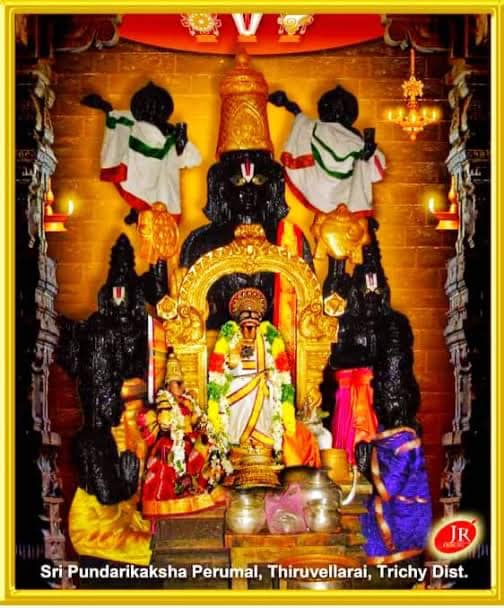
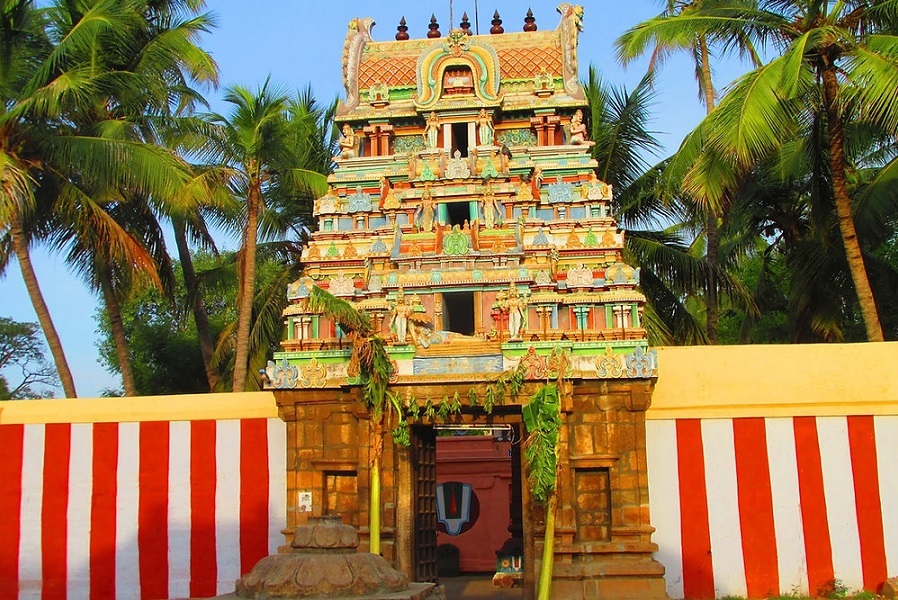
Dravidian style rules: granite walls, three-tier rajagopuram at the gate. Complex spreads over a low hill, with Pundarikaksha Theertham tank for rituals. Main sanctum holds west-facing Pundarikakshan, seated. Pankajavalli shrine separate but central. 100-pillar mandapam stands out with carvings of avatars, dancers, and lotuses. Rock-cut caves from Pallavas hold old inscriptions. Later gopurams mix Chola bulk with Nayak flair. No wild innovations, but tight layout on rocky ground shows smart adaptation. Pillars tell epics; walls mix gods and beasts.
The temple features six daily pujas: alangaram, naivedyam, and deepa aradanai. Nagaswaram and tavil play, with the priests chanting the Vedas. The goddess goes first: Pankajavalli gets decorated, fed, lit before her lord, a rare switch.
The Brahmotsavam in Panguni (Mar-Apr) takes place over 10 days, with Garuda Sevai and processions. Vaikunta Ekadasi opens the gates of paradise while Panguni Uthiram allows worshippers to witness the divine wedding. Chariot festival key, a community feast, is unique and centuries old. It is believed that a dip in the tank during the month of Karthigai in November enhances fertility.
From Trichy, buses or autos cover 15 km on flat roads past fields and the Kollidam river. The Alvars sang 11 paasurams here, baked into Nalayira Divya Prabandham. Ramanuja’s stay shaped commentaries while hymns fuelled songs, and dances at festivals.
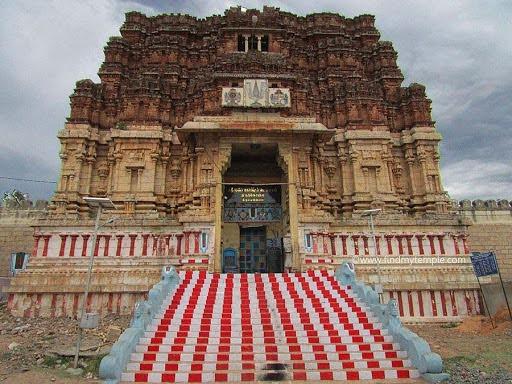
The temple is managed by the Hindu Religious and Endowments Board and is affiliated with the Srirangam administration. The temple gopuram was recently restored using ancient methods with the help of IIT Madras, which they also documented. The festivals mostly draw a local crowd, with not many tourists here. Online bookings help, though demographics show more than 80% visitors are devotees and the rest are history fans.
Thiruvellarai anchors the Divya Desam net as a quiet elder. Myths test kings and gods; history stacks layers from cave to tower. The goddess-first worship questions male-led norms. The temple is small, but packed; it shows heritage thrives in villages, not just cities.
Vadivaḻagiya Nambi Perumal Koil, Anbil, Tamil Nadu
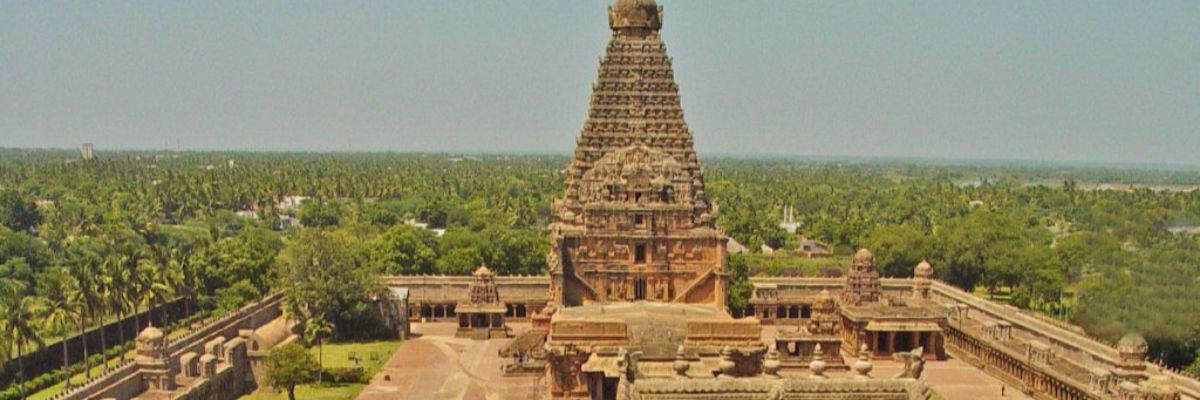
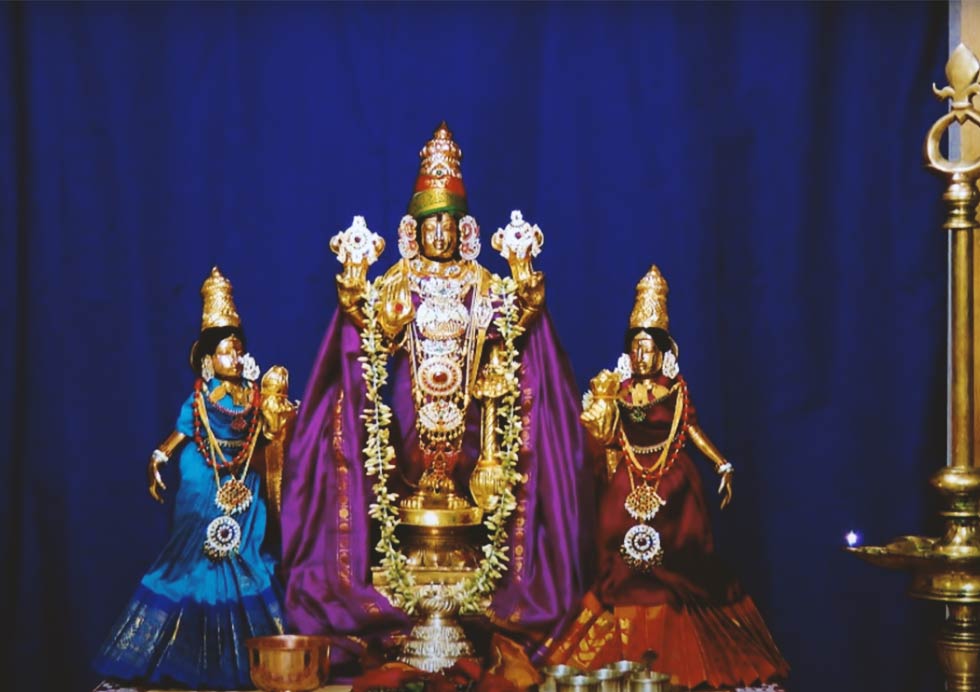
The Vadivazhaga Nambi Perumal Temple stands in Anbil village on the north bank of the Kollidam River, just 12 km from Tiruchirappalli in Tamil Nadu. Known also as Sundararaja Perumal Temple, it ranks among the 108 Divya Desams, sacred Vishnu abodes praised by the Alvars. Vishnu reclines here as the strikingly handsome Sundararajan, flanked by Sundaravalli Thayar. Thirumangai Alvar dedicated one hymn to it. Some claim idols date to Pandava times, but Chola inscriptions from the 8th century provide the firmest evidence.
Legends centre on Brahma’s pride in his creation. Arrogant about his beauty, he earned Vishnu’s curse to live as a mortal. Brahma performed penance at Anbil. Vishnu appeared in irresistible splendour, lifting the curse. Hence the name Sundararajan, the lord of beauty. The site earned “Anbil,” meaning “not agreed,” from a debate where even sage Valmiki disputed Vishnu’s finest form until the deity resolved it here.
Another tale features sage Manduka meditating underwater. Sage Durvasa cursed him into frog form for neglect. The frog worshipped Vishnu and regained human shape. The demon Kalanerai harassed rishis Bhrigu and Markandeya. Vishnu slew it as an arasa maram tree, then reclined on Adisesha. Shiva arrived seeking relief from his curse, the Brahma head stuck to his hand dropped after Vishnu offered rice.
These accounts overlap and contradict. Was Brahma cursed once or twice? Demons shift names. Myths prioritise themes over timelines: beauty humbles the creator, devotion redeems the cursed, and grace crosses sects as Shiva bows to Vishnu. If beauty dissolves pride, it challenges hierarchies in Vaishnava lore. Frog-to-sage underscores form yields to faith.
Medieval Cholas constructed the core structure in the late 8th century. Copper plates record their land grants and endowments. Vijayanagara kings and Madurai Nayaks expanded it later with halls and inscriptions detailing donations and festivals. Floods ravaged it in the 1260s, prompting local rebuilds. Unlike Srirangam’s raids, Anbil faced mainly river threats, yet survived through community effort. Thirumangai Alvar’s paasuram secured its Divya Desam status around the 8th century. Ties to Ramanuja’s Tenkalai tradition strengthened its Vaishnava role. Its unique location near the Grand Anicut, the Cholas’ irrigation feat, links temple life to agriculture. Rulers funded it as a power symbol; floods remind us that nature, not just kings, shapes survival.
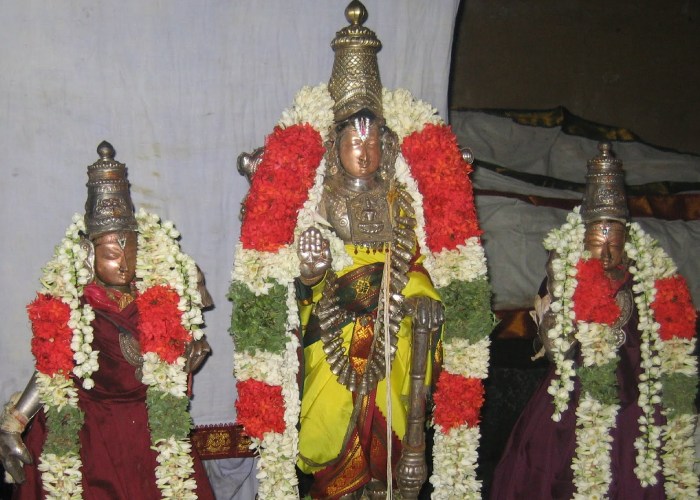
Standard Dravidian granite buildings span 1.5 acres. A three-tier east-facing rajagopuram marks the entrance. In the sanctum, Sundararajan reclines on Adisesha with Sridevi, Bhoodevi, and Brahma at his feet. The Tharaka Vimanam roof echoes the gopuram shape, a subtle innovation. Subsidiary shrines honour the 12 Alvars, Narasimha, Venugopalar, Lakshmi Narasimha, and Hanuman. Carvings depict epics and lotuses on pillars and walls. The Pushkarini tank supports ritual baths.
Six daily pujas follow the Tenkalai style: alangaram for decoration, neivethanam for food offerings, and deepa aradanai for lamps. Nagaswaram pipes and tavil drums accompany Vedic chants. The temple Brahmotsavam spans 10 days in Chittirai (April-May) with processions. The Maasi Tirthavari (February-March) features river baths for the deity, while Vaikunta Ekadashi draws crowds.
One can reach Anbil by bus or auto from Trichy, tracing the Kollidam through fields. Village lanes lined with flower vendors lead to the temple gate. Remove shoes for darshan, often under 30 minutes during off-peak times.
Today, the TNHR&CE Board oversees operations with annadhanam feeding devotees daily. Flood defences continue, including raised walls and drainage fixes. The temple festivals pull locals mainly, with not many tourists drifting off the tourist circuit.
The Vadivazhaga Nambi Perumal Temple at Anbil holds its place in the Divya Desam circuit as a quiet riverside survivor. Its myths show gods humbled by beauty and devotion, while history reveals layers from Chola foundations to Nayak expansions, tested by relentless floods. The compact Dravidian design and village-scale rituals keep it grounded in daily life, far from grand temple-cities. This temple proves the circuit’s strength lies in such modest spots, weaving farm rhythms and river threats into India’s spiritual fabric. Visit to walk the Kollidam banks, ponder pride’s fall, and feel grace etched in reclining stone. In the end, Anbil reminds us that enduring faith thrives not in spectacle, but in steady flow.

Appakkudathaan Perumal Koil, Koviladi, Tamil Nadu
Located on the south bank of the Cauvery River, in Koviladi village, about 16 km from Tiruchirapalli in Tamil Nadu, the Appakkudathaan Perumal Temple is one of the 108 Divya Desams. Lord Vishnu is enshrined here as Appakkudathaan, forever holding a pot of sweet appam in his right hand. This site ranks among the five Pancharanga Kshetrams along the river, with legends claiming it predates even Srirangam upstream. But Chola inscriptions from the 9th century provide the earliest solid evidence, while floods have repeatedly challenged its survival.
The main legend tells of King Uparisravasu, who accidentally killed a brahmin while hunting. The sin of brahmahatti dosha gripped him, worsened by Sage Durvasa’s curse that sapped his strength. To atone, the king fed thousands daily; accounts vary between 10,000 and 100,000. One day, Vishnu arrived disguised as a starving old man, devoured all the food, and requested a pot of appam. The king obliged. Vishnu revealed his form, lifted the curses, and stayed reclined with the pot as a reminder of grace through simple service.
Sage Markandeya faced death at 16 from Yama. He prayed here, and Vishnu intervened, also humbling Indra’s arrogance. Another story positions Appala Ranganatha as pacing the steps toward Srirangam, earning the name Koviladi, the “first temple.” Periazhwar sang his final mangalasasanam here before ascending to Vaikunta. These tales overlap in details, like feast numbers or curse sources.
Cholas laid the foundations in the 9th-10th centuries. Aditya Chola’s inscriptions: numbers 283, 300, 301, 303 from 1901, detail donations for halls and Vedic scholars. Later Cholas, Pandyas, Vijayanagara rulers, and Nayaks expanded with prakarams and shrines. Unlike raided giants, Koviladi endured the Anglo-French wars nearby without noted damage, though the Cauvery floods demanded repeated rebuilds.
Alvars, including Nammalvar, Periazhwar, and Thirumangai, immortalised it in paasurams. It served as a Vedic learning centre, drawing scholars. Periazhwar’s final praise marks it for moksha seekers. Downstream from Srirangam, it forms a river-linked chain, not an isolated outpost. History shows adaptation: rulers endowed, floods rebuilt, saints embedded it in faith networks.
Granite Dravidian style hugs the riverbank. A three-tier Rajagopuram looms after 21 steps up. Inside, east-facing Appakkudathaan reclines on Adisesha in the sanctum, appam pot gripped tight, accompanied by Sridevi and Bhoodevi. Sowmya Nayaki claims a separate shrine. Prakarams encircle with sub-shrines for Alvars, Venugopala, and others. The vimana stays modest, echoing early Chola restraint. Pillars bear epic carvings, lotuses, and dancers. The Cauvery pushkarini enables ritual baths. No radical breaks from style, but systematic subsidies mirror Srirangam, 9th-10th century hallmarks. Compact form suits flood-prone ground, prioritising endurance over scale.
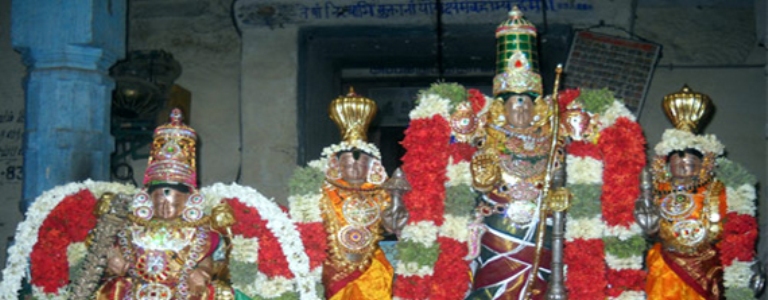
Daily rhythm follows six pujas: alangaram dresses the deities, neivedyam offers food topped by appam, the only Divya Desam to do so daily, and deepa aradanai waves lamps amid nagaswaram, tavil, and Vedic chants. Brahmotsavam lights up Panguni with processions. Vaikunta Ekadashi opens paradise gates. Periazhwar Utsavam honours his departure. Locals stir appam pots, fund annadhanam, and line streets; threads of community weave the rites.
Buses from Trichy cross the Cauvery through paddy fields, dropping at village paths lined with flower stalls. Climb to the gate, shed shoes, and find darshan swift on weekdays. Festival river dips cleanse body and spirit. Locals pour tea, recount Periazhwar’s ascent: “Pray here for a straight path to Vaikunta.” Flood scars linger in tales: “The Lord stemmed the waters once.” Quiet banks invite chants, reflection amid flowing river life.
Nine Alvar paasurams echo in the Nalayira Divya Prabandham, recited in every puja. Periazhwar’s closing praise fuels songs and dances at festivals. Appam lore peppers village stories, Vedic past shapes farm rituals. Weddings and fairs orbit the temple, anchoring identity. Less spotlight than upstream kin, but it pulses through Koviladi’s daily beat, faith as staple, like its namesake sweet.

Appakkudathaan claims its Divya Desam spot as Cauvery’s quiet link. Myths feed grace through appam pots; history stacks Chola stones atop flood-tested bases to Nayak crowns. Village intimacy endures where giants might falter. Pre-Srirangam boasts falter against inscriptions. Yet it binds the circuit, farms flooded, prayers offered, river flowing. Visit to savor appam prasadam, trace banks, balance legend with granite truth. Heritage endures not in towering claims, but pots of plain devotion.

