

Thirunandhipura Vinnagaram, Nathan Kovil, Tamil Nadu
Thirunandhipura Vinnagaram, also known as Nathan Kovil, sits a short distance from Kumbakonam. It is one of the 108 Divya Desams praised by the Alvars, and it holds a quiet but deep place in Vaishnavite worship. The presiding deity is Jagannathan Perumal, and the goddess is Shenbagavalli Thayar. Shiva worship is woven into the story of the place, which is unusual for a Divya Desam.
Many Divya Desams have grand stories. Nathan Kovil’s legend is smaller in scale but has a steady emotional pull. The story circles around Nandi, the sacred bull and mount of Lord Shiva. The tale goes that Nandi once received a curse from Sage Shilada. To find relief, he prayed to Vishnu at this spot. Vishnu appeared and lifted the curse. From that moment, Nandi came to be associated with the temple, and the place took the name Thirunandhipura Vinnagaram. This link between Nandi and Vishnu is rare. Vaishnavite and Shaivite traditions often run parallel, but this temple shows a bridge between them. The message here is simple: devotion is devotion, whatever the form. The temple reminds visitors that divine grace reaches beyond boundaries and that no devotee is turned away. Another story says that Vishnu took the name Jagannathan, meaning Lord of the World, here. Locals believe that worshipping here helps remove obstacles caused by past mistakes or karma. The image of Vishnu protecting Nandi offers comfort and a quiet sense of hope.
The region around Kumbakonam has seen centuries of temple building, renovations, and royal support. Nathan Kovil fits right into that long line of sacred spaces shaped by time. Most historians link its early development to the Chola period, when temple architecture flourished, and many Divya Desams received patronage. Later records point to Nayak and Maratha rulers who continued upkeep and added smaller shrines and decorative work. The inscriptions here are fewer than in some larger temples, but they show gifts of land and offerings given for daily worship. These reveal a steady line of support through the centuries.

Saints like Thirumangai Alvar sang about this temple. His verses placed Nathan Kovil firmly within the spiritual map of Vaishnavism. Once a place is sung by an Alvar, it enters a living chain of devotion. Pilgrims follow, communities gather around it, and the temple gains a life beyond the stone walls. Nathan Kovil may not have the monumental scale of temples like Srirangam or Kanchipuram, but it has survived political changes, shifting kingdoms, and periods of slow decline. Its endurance is its history.
Nathan Kovil follows the classic layout of South Indian Vishnu temples. The entrance is simple, with a small gopuram. The temple feels grounded and human-scaled. The main shrine sits in the inner sanctum, where Jagannathan Perumal stands facing east. His form is calm and steady, with the kind of stillness that tells devotees they can take their time. The goddess, Shenbagavalli Thayar, has her own shrine. Her sanctum is quiet and bright. Many local women offer flowers here and pray for stability at home and peace in daily life.
The temple also houses a rare shrine for Nandi, placed not in a symbolic corner but with intention. This makes the temple unique in the Divya Desam circuit. Seeing Nandi in a Vaishnavite space, without any conflict or complication, brings the story to life visually. The pillars and mandapams show Chola and later influences. The carvings are not heavily ornamental. They carry simple floral and animal motifs typical of the region. A few lion-based yali figures appear in the mandapam, representing protection and power. The stone is cool to the touch, especially in the early morning when the sun has not yet warmed the walls. The temple tank sits close by, used mostly during festivals. Tanks often reflect the health of a temple, and here the water body plays a modest role. Its presence adds to the landscape without overpowering it.
The temple runs on a daily rhythm that has continued for generations. Morning puja starts early, followed by alankaram and the distribution of prasadam. The priests use simple ingredients: flowers, sandal paste, tulsi leaves, and clarified butter lamps. Worship here is not elaborate. It moves at a comfortable pace. Devotees often remark that they feel less rushed compared to larger temples. The main festivals include Vaikunta Ekadasi, when the temple receives its highest footfall, Panguni Brahmotsavam, a time of processions and community gatherings, and Purattasi Saturdays, when many Tamil Vaishnavas naturally visit temples. Nandi’s link brings a small but steady group of Shiva devotees as well. They walk in without hesitation and offer prayers. Local priests welcome everyone, and this openness gives the temple a lived sense of inclusivity. Another local practice is offering ghee lamps for obstacles to be removed. Parents often bring young children here for early blessings, believing that Jagannathan Perumal helps guide the mind and soften hardships.

Reaching Nathan Kovil is easy. Most pilgrims start from Kumbakonam or Thanjavur. The drive winds through quiet stretches, fields, and clusters of small houses. By the time you reach the temple, the world has slowed down enough for the mind to settle. The village around the temple keeps its own pace. Tea shops stand at crossroads, and locals point visitors toward the entrance without fuss. Pilgrims rarely get lost. You can visit the temple without worrying about long queues or heat-struck crowds. Inside, the silence feels like part of the architecture. Sandals click softly on the stone floor. A bell rings now and then, but mostly, visitors whisper or stay quiet. The temple priest may share small stories or answer questions if you ask. Children run around freely in the courtyard. Older devotees sit near the mandapam and talk about the Alvars or recall their past visits. These small moments add to the temple’s emotional landscape. Pilgrimages are as much about the place as the people, and Nathan Kovil offers a rare mix of simplicity and dignity. Food stalls or large dining halls are not common here, so people usually eat before coming or carry something light. Local homes sometimes give buttermilk to travellers on hot days. It feels like a village that still remembers how to host pilgrims.
Nathan Kovil may not dominate Tamil literature like some larger temples, but its presence is steady. Thirumangai Alvar’s verses keep it alive in Vaishnavite memory, and many scholars note the temple as a symbol of unity between the two main Hindu traditions. In local songs and temple lore, Nandi’s devotion is celebrated as a reminder that divine grace cuts across differences. These themes appear in community plays, temple speeches, and even stories parents tell their children. The simple act of placing Nandi in a Vishnu temple has influenced conversations about religious harmony in the region. Some families deliberately visit both Vishnu and Shiva temples on the same day, seeing Nathan Kovil as a link between the two paths. Artists who draw or paint temple scenes often include this temple because its story is visually striking. A bull bowing before Vishnu becomes an image that stays with you even after you leave.
Today, the temple is managed by authorities who oversee daily puja, festival arrangements, and maintenance. Volunteers from nearby villages support the temple during busy times and help with cleaning and crowd management. Tourism is growing, especially with more people following Divya Desam trails. Many visitors now come from outside Tamil Nadu, though the temple still feels calm and uncrowded. Restoration work is done slowly but steadily, often led by small community groups who want to preserve the temple’s identity. The presence of both Vishnu and Nandi continues to attract a wider range of devotees. Some come because of the Alvar connection. Some come because they heard the story of Nandi’s relief from a curse. Others visit as part of a larger pilgrimage through the Kaveri belt. The temple also has a digital footprint now, with travel bloggers and devotees sharing photos and directions. This has helped younger generations discover it, even if they have never heard of it before. Despite the new attention, the temple holds on to its simplicity. Practices have not become elaborate, and the pace of worship remains unhurried. That balance of old and new gives the temple a quiet relevance today.
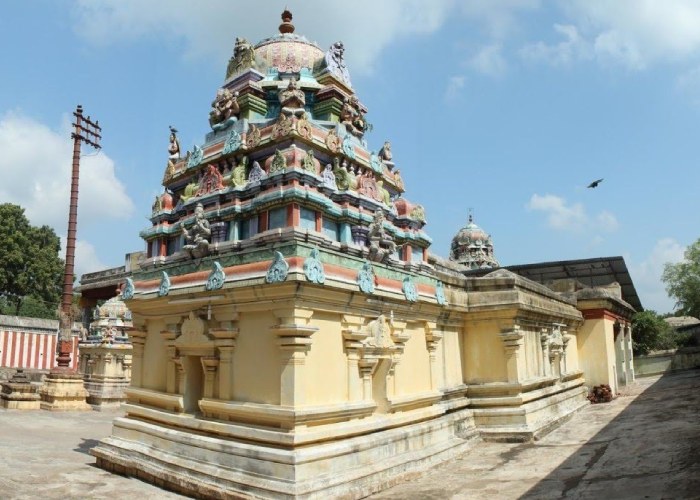
Thirunandhipura Vinnagaram sits gently within the Divya Desam network. It may not attract huge crowds, but it offers something just as valuable: a space where devotion is steady, simple, and sincere. It shows how stories, history, and worship form a living thread from one generation to another. The temple reminds us that divinity is not divided by form. Nandi’s presence tells a story of humility and grace. Vishnu’s name here, Jagannathan, points to care that reaches everyone. When pilgrims walk through this temple, they carry these small but strong messages with them. In the vast tapestry of India’s sacred sites, Nathan Kovil stands as a quiet voice that still speaks clearly.
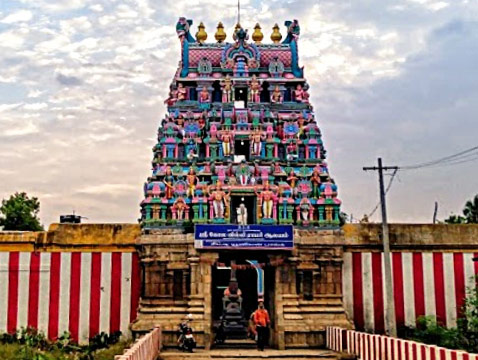
Thiruvelliyangudi Temple, Thiruvelliyangudi, Tamil Nadu
Thiruvelliyangudi is a small village near Kumbakonam, tucked among fields, clusters of old houses and quiet roads. At the heart of this village stands the Thiruvelliyangudi Temple. The main deity is Kolavilli Raman, and his consort is Maragatha Valli Thayar. The temple is known for its gentle atmosphere, its legends of forgiveness, and a story where Vishnu protects love in a direct and compassionate way. It is a place where people come for reassurance, seeking steady ground when life feels uncertain.
Most pilgrims remember Thiruvelliyangudi for its main legend about a Gandharva couple. The story begins with Suseela, a Gandharva woman, who was cursed by her husband, Devasharma, during a moment of misunderstanding. Unable to remove the curse, she suffered until she came to this place and prayed to Vishnu. Moved by her devotion and pain, Vishnu appeared before her as Kolavilli Raman. The deity’s name refers to one “whose bow is beautiful and curved,” a poetic way of describing divine protection. He lifted her curse and restored peace in her life. This is a simple story on the surface, but its emotional centre is strong. It speaks of second chances, compassion, and the idea that divine grace can mend things that seem broken. Many devotees relate to this. People come to this temple to seek healing from strained relationships, misunderstandings, or burdens that they feel unable to shake off.
Another legend ties the temple to Garuda, the eagle mount of Vishnu. It is said that Garuda asked Vishnu to rest here after a long mission. Because of this, the temple became known as a place of rest and pause, both for the divine and for devotees. Some also say that this is where Vishnu gave a blessing to the Sun god, bringing a link between Vishnu and Surya worship in this region. The name Thiruvelliyangudi itself hints at brightness and radiance.
Thiruvelliyangudi’s history runs through the same broad lines as many temples in the Kumbakonam region. The Cholas played a strong role in building and supporting temples here, and this one carries their architectural signature. Stone inscriptions found in and around the temple show donations of land, rice, and oil for lamps. These small details show how closely tied the temple was to the life of the village. Families supported the temple not in grand gestures, but in small, steady contributions. Later, the Nayaks of Thanjavur added mandapams and polished the existing structure. Their style often brought in decorative pillars and practical spaces that could host gatherings. The temple survived the shifts between Chola, Nayak, and Maratha periods, helped by its location in a quiet part of the region and the strong devotion among villagers. Even during periods when larger temples saw major political attention, smaller shrines like this one remained steady centres of worship.

Thirumangai Alvar’s verse about this temple gave it a spiritual anchor. Once an Alvar sings about a place, it becomes part of a living chain that draws pilgrims for centuries. His poetry mentions the grace-filled nature of Vishnu here, highlighting the deity’s softness and readiness to forgive. Today, the temple is recognised as one of the 108 Divya Desams, part of a network that spreads across Tamil Nadu and beyond. Even though it is not as large as some others, it remains important for its message and for its role in local history.
Thiruvelliyangudi Temple follows the traditional South Indian style with a compact layout. The entrance does not overwhelm the visitor. Instead, it invites you in quietly. The gopuram is modest, reflecting the temple’s size and the village’s scale. The sanctum houses Kolavilli Raman, seen in a reclining posture facing east. This form of Vishnu is one of peaceful rest, lying on the serpent Adisesha. It reinforces the temple’s identity as a place of pause and refreshment. His expression is gentle, not commanding, and many devotees say they feel at ease as soon as they see the deity. Maragatha Valli Thayar has her own shrine. Her name refers to the deep green of an emerald, and the idol reflects this cool, calm energy. The shrine often has long lines of women who come to pray for harmony at home and strength during difficult times.
The temple also includes smaller shrines for Garuda, the Alvars, and a few local deities tied to village traditions. The corridor around the sanctum is narrow but clean, and sculptures appear on pillars in the mandapam. These carvings focus more on simple motifs than grand narratives. Small floral patterns, yali figures, and geometric shapes appear here and there. The temple tank sits close by. During festivals, its waters become central to rituals. The tank reflects the surrounding trees and the gopuram, adding a quiet beauty during sunrise and sunset. The temple is built of granite, and newer stone patches have been added during repairs. The mix of old and new is visible, but it feels organic. Nothing seems out of place.

Worship at Thiruvelliyangudi moves at a light pace. There is no rush. The priests perform daily pujas, starting early in the morning and continuing through the day with alankaram, neivedyam, and evening lamps. The fragrance of tulsi, incense, and sandalwood paste lingers in the air. It’s a temple where you can actually hear yourself think. The major festivals include Vaikunta Ekadasi, which is the high point of the year, Panguni Brahmotsavam, which brings villagers together, Purattasi Saturdays, common across Tamil Vaishnavite temples, and Garuda Sevai, tied to the temple’s legend about Garuda’s rest.
A unique ritual here is related to relationship healing. Couples or families who have experienced conflict come here to offer prayers, hoping to clear misunderstandings. The priests share simple words of reassurance. There is no grand ritual for this, only intention and prayer. Women often visit the shrine of Thayar for blessings related to home, health, and clarity. It is common to see people sitting quietly in the mandapam for some time after worship, using the space to reset themselves. The temple’s festivals remain community-driven. Villagers take part in cleaning, decoration, and organising prasadam distribution. Children run around freely during festival days, and the atmosphere feels like a shared household rather than a formal institution.
Reaching Thiruvelliyangudi is simple. People usually come from Kumbakonam, which is the nearest major town. The roads pass through fields and clusters of rural life. As you get closer, the landscape feels familiar even if you have never been there before. South Indian villages have a rhythm that you can sense long before entering them. The temple stands in the middle of the village, reached through narrow lanes. It is a place where you can walk into the temple without any pressure. There are no long queues unless it’s a festival. Most days, you step in, ring the bell, and have space to be with your thoughts. Locals are friendly in a matter-of-fact way. If you ask for directions, they point and move on. There is no drama or ceremony around it. Tea shops nearby sell simple snacks. Some homes sell buttermilk, especially during the summer.
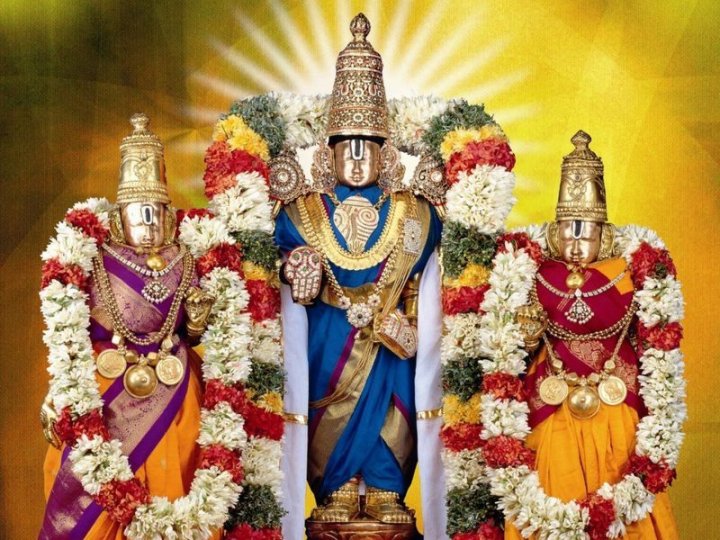
Inside the temple, the silence is part of the experience. You hear the rustle of sarees, the murmur of prayers, and the occasional sound of the priest offering instructions. The granite floor stays cool. The sanctum glows dimly with lamp light. Many devotees say that their visit here feels like a mental break. They come when they feel overwhelmed or uncertain. The temple does not demand anything from you. It gives space instead. Pilgrims often include this temple in the same circuit as nearby Divya Desams like Thirunaraiyur (Nachiyar Kovil), Thiruvellakkulam, and Thiru Indhalur. This part of Tamil Nadu is rich with temples, but each has its own mood. Thiruvelliyangudi is one of the calmest among them.
Though smaller in size, Thiruvelliyangudi has a memorable place in the cultural memory of Vaishnavite communities. Thirumangai Alvar’s verse gave it spiritual recognition. Stories told by village elders and temple priests keep the mythology alive. The theme of forgiveness and healing appears in local songs and folklore. Parents tell their children how Vishnu protected Suseela and how misunderstandings can be resolved with patience. These stories shape local values more than grand political narratives. Artists sometimes draw the reclining Vishnu here, showing him in a restful form. The village and temple landscape also appear in simple artworks, school projects, and local festival posters. Thiruvelliyangudi also plays a small role in the idea of Vishnu as a protector of marital harmony and emotional peace. Many families return here year after year during key moments: weddings, anniversaries, or crises. This repeated presence becomes a tradition, passing from one generation to the next. In the broader Divya Desam network, the temple represents a softer side of spirituality. It is less about grandeur and more about being held gently.
Today the temple is managed by local authorities with support from villagers. Daily pujas continue without interruption, and the temple remains active even on weekdays when larger shrines might see fewer visitors. Restoration work has been happening slowly. Structural repairs, gopuram repainting, and tank cleaning are ongoing. These efforts rely partly on official support and partly on community initiative. Tourists have begun to include this temple in their travel routes, especially those who want to cover all Divya Desams. However, even with growing attention, the temple has kept its pace. It does not feel commercial. Younger devotees are also rediscovering the temple through photographs shared online by travellers, heritage enthusiasts, and spiritual bloggers. This has brought new visitors who arrive out of curiosity and leave with a sense of calm. Despite the new visibility, the core of the temple remains unchanged. Worship practices stay simple. The temple continues to stand as a place where people seek rest from emotional heaviness and confusion.
Thiruvelliyangudi Temple sits quietly in the Divya Desam network, but its impact is steady. It speaks of mercy, rest, and the quiet power of healing. It reminds devotees that divine help is not loud or dramatic; it can come through gentle presence and a simple story. The reclining form of Kolavilli Raman reflects this. His posture shows rest, reassurance, and acceptance. The story of Suseela adds depth, reminding devotees that misunderstandings can be healed. In the long list of temples across Tamil Nadu, Thiruvelliyangudi stands as a soft place where people pause, take a breath, and walk away feeling lighter. Its strength is not in scale but in the quality of peace it offers. And that makes it an important stop in the Divya Desam journey.
 Memories and Such