

Thirukkavalambadi Temple, Thirunangur, Tamil Nadu
Thirukkavalambadi is one of the well-known Thirunangur Divya Desams, located near Sirkazhi in Tamil Nadu. The region holds eleven Vishnu temples clustered within a few kilometres, each tied to deep mythology and to the grief of Shiva after the goddess Sati’s death. In the middle of this sacred landscape stands Thirukkavalambadi, home to Gopalakrishna Perumal and Madavaral Mangai Thayar. The temple is dedicated to Krishna in his youthful but firm form: a protector, a guide and a source of strength. It’s small, calm and tightly connected to the emotional history of the Thirunangur region.
The Thirunangur area is associated with a powerful myth. It begins with Shiva’s immense grief after Sati’s death in the Daksha Yagna. Overwhelmed by sorrow and anger, Shiva is believed to have danced the Rudra Tandava in this region. Each time his matted locks struck the earth, an expansion of his energy took form. Legend says eleven manifestations of Shiva appeared, and to balance this destructive energy, Vishnu appeared in eleven different forms, establishing the eleven Divya Desams in Thirunangur.
Thirukkavalambadi is one of these eleven Vishnu shrines. Because of this shared origin, the temple is linked to the idea of balancing powerful emotions: anger, grief, loss, with compassion and divine calm. The presiding deity here is Gopalakrishna Perumal, associated with Krishna’s protective role. The name Kavalambadi itself comes from the idea of Krishna as the one who guards and watches over the devotee. A second legend states that Krishna once came here to rescue a devotee who was trapped in fear and confusion. The devotee prayed for help, and Krishna appeared with softness but also firmness, the kind of quiet strength that doesn’t announce itself loudly. Tradition says the deity here helps dispel inner conflict and restores confidence. Some local stories also tie the temple to the cowherd years of Krishna, emphasising his role as a guide to the helpless. In these stories, Krishna appears not as a divine king but as a devoted caretaker. This adds to the temple’s emotional tone, a sense of being protected, not judged. The goddess, Madavaral Mangai, represents gentle grace. Devotees often visit her shrine seeking comfort from emotional heaviness or uncertainty.
Like most temples in the Thirunangur group, Thirukkavalambadi carries an ancient history tied to the Chola period. The region around Sirkazhi was a major spiritual corridor, and temples here flourished with both royal support and local devotion. Though the temple is small, inscriptions show that it received land grants and endowments for maintaining lamps, providing food offerings and conducting festivals. These contributions came from local chieftains and families rather than major kings, pointing to the temple’s community-driven roots. The temple’s Divya Desam identity was cemented through the hymns of Thirumangai Alvar, who visited the Thirunangur region and sang extensively about these shrines. The Alvar’s verses describe Krishna here as loving, watchful and deeply committed to his devotees.
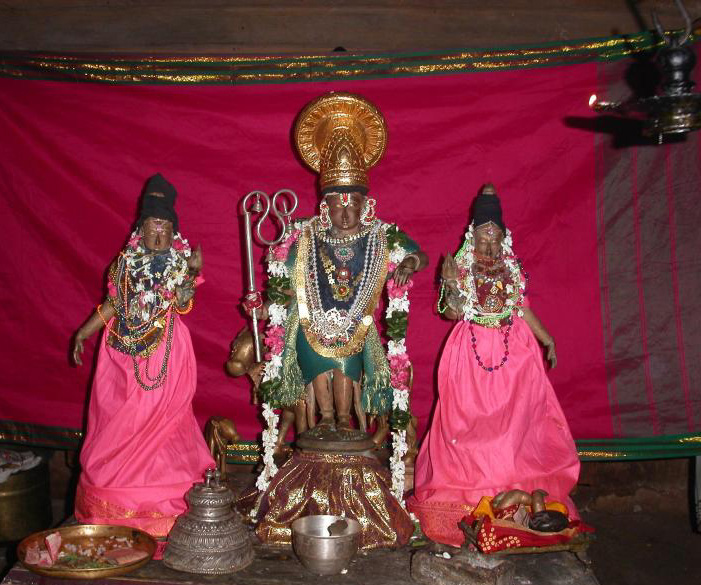
The temple also plays an important role in the Thirunangur Garuda Sevai, one of the most significant Vaishnavite festivals in Tamil Nadu. This event, where all eleven Vishnu deities are brought together on Garuda vahanams, has kept the historical presence of these temples alive for centuries. Thirukkavalambadi has survived through time not through scale, but through emotional significance and the strength of tradition.
Thirukkavalambadi Temple has a simple, compact layout typical of the Thirunangur divya desam cluster. The entrance is modest, with a small gopuram leading into a courtyard that feels close and personal. Inside the sanctum, Gopalakrishna Perumal stands in a graceful posture. His appearance reflects youthful energy but with a grounding presence. Devotees often note the calm expression on the deity, which carries both affection and quiet authority. The goddess Madavaral Mangai has her own shrine. Her space has a softer ambience, and many devotees spend extra time here in quiet reflection.
The temple includes a small mandapam with granite pillars, simple carvings featuring lotus and animal motifs, stone floors that stay cool throughout the day, and a narrow circumambulatory path. The design is not elaborate. It reflects the region’s small-temple aesthetic: functional, devotional and humble. The temple tank, known as Thirukkannapuram Theertham, is located nearby and plays a role in ritual bathing during festivals. The physical space encourages slow movement. Nothing here is designed to intimidate or impress. Instead, it invites the visitor into a calm, steady presence, much like Krishna in this form.
The temple follows the standard Vaishnavite tradition of daily pujas. The routine includes early morning suprabhatam, thirumanjanam or abhishekam, alankaram with flowers and sandal paste, neivedyam offering, and the evening lamp rituals. The worship style is quiet, without elaborate ritual complexity. Major festivals include Thirunangur Garuda Sevai, which is the most important local event, Vaikunta Ekadasi, which draws pilgrims from surrounding towns, the temple Brahmotsavam, which is celebrated with processions, Krishna Jayanthi that marks the birth of Krishna, and Purattasi Saturdays, when many families visit Vishnu temples.
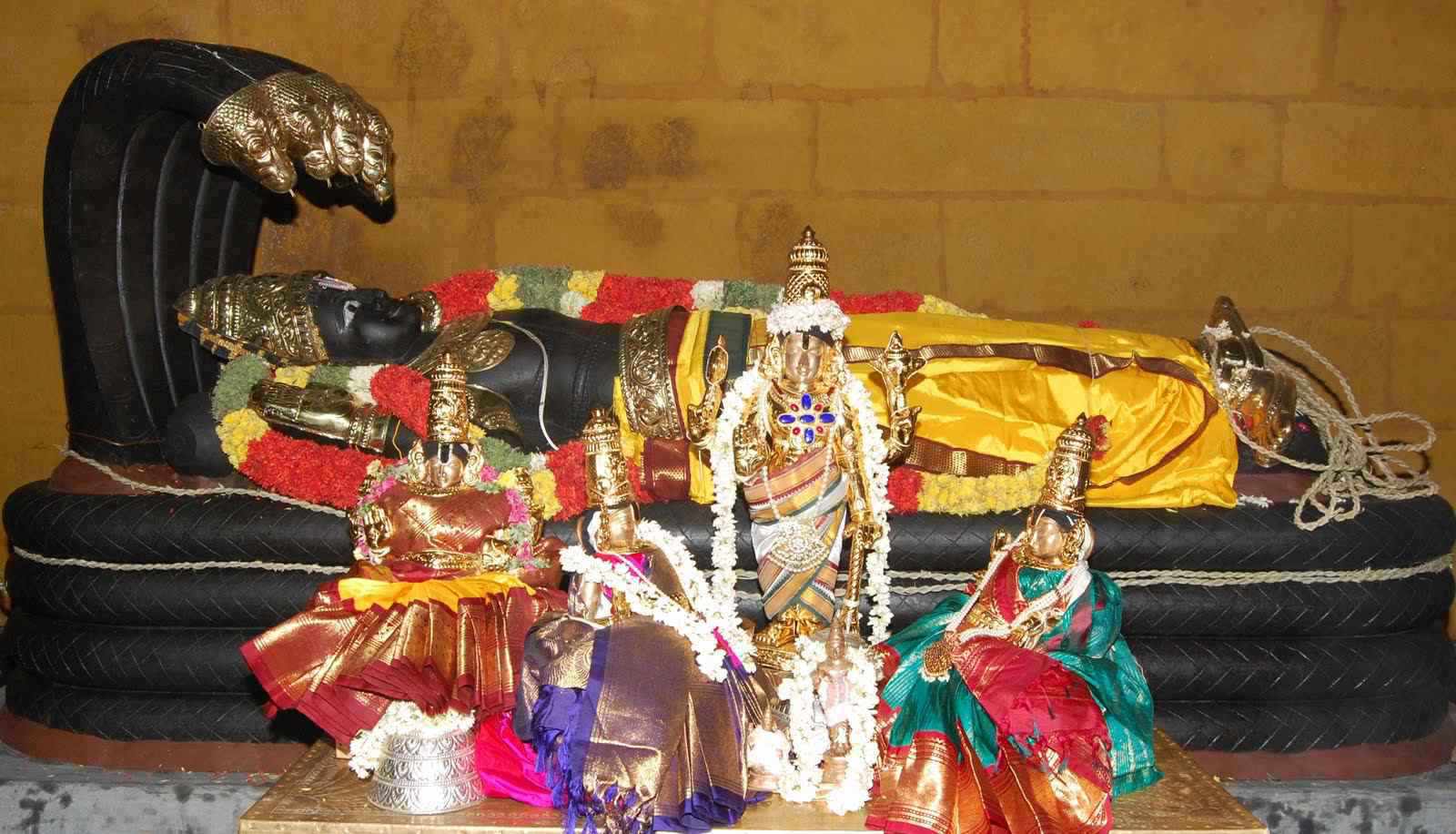
During Garuda Sevai, the deity from Thirukkavalambadi is brought out along with the deities from the other ten temples. This creates a rare and emotional gathering of all eleven forms of Vishnu. Pilgrims walk between the temples, chanting hymns from the Divya Prabandham. This festival is one of the most significant Vaishnavite gatherings in the region, and Thirukkavalambadi’s involvement and the presence of Krishna make the atmosphere joyful and energetic. Daily worship, however, remains low-key and intimate. People come here seeking Krishna’s protective presence, often offering butter, tulsi leaves or small lamps as symbolic gestures.
Reaching Thirukkavalambadi usually begins from Sirkazhi or Thiruvenkadu. The roads are narrow, lined with houses, trees and open fields. The eleven Thirunangur temples lie close to each other, and pilgrims often walk or drive between them as part of a full circuit. The village around the temple carries a quiet rhythm. Children play on the street. Farmers return from the fields. Local women sit outside their homes, stringing flowers. Directions are easy to follow,and locals immediately point you to the temple when asked. Inside, the temple feels intimate. The sanctum is close to the entrance, and the air carries the soft scent of oil lamps and incense. The stone flooring is cool, even on warm afternoons. Pilgrims often say this temple feels like meeting Krishna, not as a king or warrior, but as a friend, someone who stands with you, watches over you, and doesn’t complicate things. Many complete the eleven-temple circuit on the same day, but Thirukkavalambadi tends to stand out because of its emotional warmth. Krishna’s presence gives the temple a youthful softness, balanced by the steadying influence of the surrounding shrines. Because the temple is small, there are no big stalls or commercial spaces. People usually buy tea or snacks from local houses or small shops near the entrance.
In the cultural memory of the region, Krishna at Thirukkavalambadi is known as the protector of the vulnerable and the restless. The stories told by elders often focus on Krishna’s readiness to help, especially when devotees feel cornered or confused. Thirumangai Alvar’s hymn elevates the temple within Vaishnavism. His poetry speaks of Krishna’s black-hued beauty, karumani, the black gem, which gives the temple its identity. Because of this, Krishna here is often called Karunthadankanni Gopalan, the dark-eyed protector. The Thirunangur Garuda Sevai keeps the temple culturally alive. During this festival, musicians sing verses from the Divya Prabandham, villagers offer flowers, and devotees move between temples in a shared spiritual rhythm. This annual event ensures intergenerational continuity. Children learn the stories, elders pass on traditions, and the temples remain part of a living community identity. Local art sometimes shows Krishna standing with a gentle smile, flanked by cows or flute motifs, evoking the protective, pastoral side of the deity.
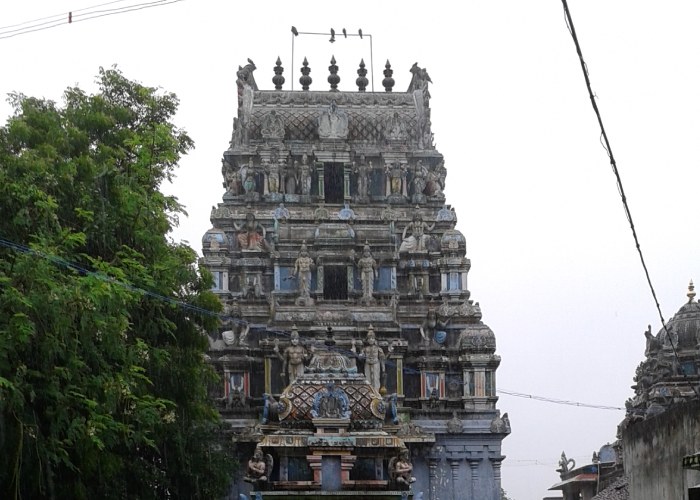
Today, the temple functions with a steady rhythm. The administration performs daily pujas while villagers help with festival preparations and maintenance. Small repairs and repainting happen regularly, though they keep the structure close to its original form. The temple has gained some visibility through photos shared online by travellers completing the Thirunangur circuit. However, it has not experienced the commercialisation seen in larger Divya Desams. The atmosphere remains sincere and simple. Younger devotees are beginning to visit the temple as part of a deeper interest in the 108 Divya Desams. This has increased footfall during weekends and festival seasons. Even with this growing attention, the temple retains its emotional core; Krishna stands as a protector, not as a deity to be feared. The rituals remain accessible, and the mood remains welcoming. Thirukkavalambadi continues to be a safe space for those seeking reassurance, connection or a moment of quiet grounding.
Thirukkavalambadi is a small but significant Divya Desam in the Thirunangur cluster. Its mythology ties it to Shiva’s grief, Vishnu’s balancing presence and Krishna’s protective role. The temple’s calm, intimate setting reinforces this feeling of safety. Gopalakrishna Perumal stands as a stable, steady figure, someone who listens and responds without judgment. The temple’s connection to the annual Garuda Sevai gives it cultural weight, while its daily worship practices keep it grounded in simplicity. Among the eleven shrines of Thirunangur, Thirukkavalambadi offers a soft, reassuring note, a reminder that strength does not need to be loud, and protection can come in silence.
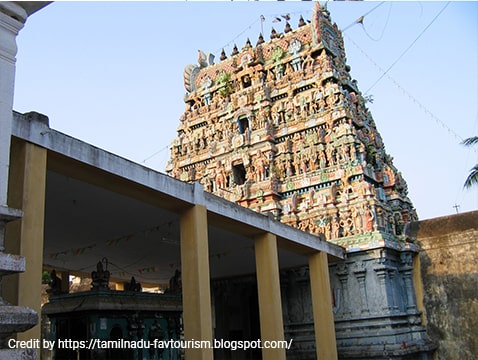
Thirukazhicheerama Vinnagaram Temple, Sirkazhi, Tamil Nadu
Thirukazhicheerama Vinnagaram is one of the important Divya Desams located in Sirkazhi, a temple-rich town in Tamil Nadu. The presiding deity here is Vaikunta Narayana Perumal, and the goddess is Amuruviyappan Thayar. This temple carries a strong sense of protection and presence. The mythology, atmosphere and worship practices all point to one central idea: help arrives quickly here. Devotees often describe the temple as a place where Vishnu stands ready to act for those who seek him with sincerity. Sirkazhi itself is a historic, layered town known for its Shaivite and Vaishnavite shrines. The coexistence of traditions gives the place depth and balance, and this particular temple plays a significant role in that spiritual landscape.
The core legend tied to this temple centres on Brahma, the creator. According to traditional stories, Brahma once faced interference from demons while performing a yagna. These forces tried to stop his ritual, causing fear and instability. Seeking protection, Brahma prayed to Vishnu. Responding immediately, Vishnu appeared in this very place as Vaikunta Narayana, fully armed and ready to defend him. The term Vinnagaram signifies a divine heavenly abode, and Kazhicheerama links the place closely to Brahma’s worship. This direct response: Vishnu appearing without delay, is central to the temple’s identity. It gives devotees the feeling that prayers made here reach the deity quickly and clearly.
Another legend says that the town’s old name, Kazheesiramam, comes from Kazhi” meaning Sirkazhi, a place where Brahma’s worship took root. The connection with creation, order and renewal makes the temple emotionally resonant. A second strand of mythology relates to the protection of sacred knowledge. Tradition holds that Vishnu safeguarded the Vedas from being stolen by demonic forces. In this story, Vishnu becomes the custodian of wisdom, not just the protector of people. This themes fits the mood of the temple: clarity restored, knowledge protected, order maintained. Thirumangai Alvar, who visited and sang about the temple, highlights Vishnu’s swiftness in responding to devotees, another anchor of the temple’s spiritual identity.
Sirkazhi has a long religious history, and this temple sits inside a cultural landscape shaped by both Shaivite and Vaishnavite traditions. While the famous Shiva temple dominates much of the town’s historic memory, Thirukazhicheerama Vinnagaram has existed alongside it for centuries, forming part of a sacred duality. The temple’s structure shows signs of early Chola influence, especially in the sanctum’s base and stonework. The Cholas were strong patrons of Vishnu temples across the Kaveri belt, and inscriptions across this region often mention endowments for lamps, festivals and daily worship. Similar patterns appear here as well. During the Nayak period, additional mandapams and small structural enhancements were added. These later contributions focused more on practical needs: pillars, coverings and outer walls, than on heavy ornamentation. Thirumangai Alvar’s verses fixed the temple’s place in the Divya Desam network. Once a temple is part of the Alvar’s devotional map, it enters a living tradition that continues across centuries. Unlike large temple complexes, this one survived through community engagement rather than royal grandeur. Families in Sirkazhi supported it steadily, allowing it to remain active even when political attention shifted elsewhere.
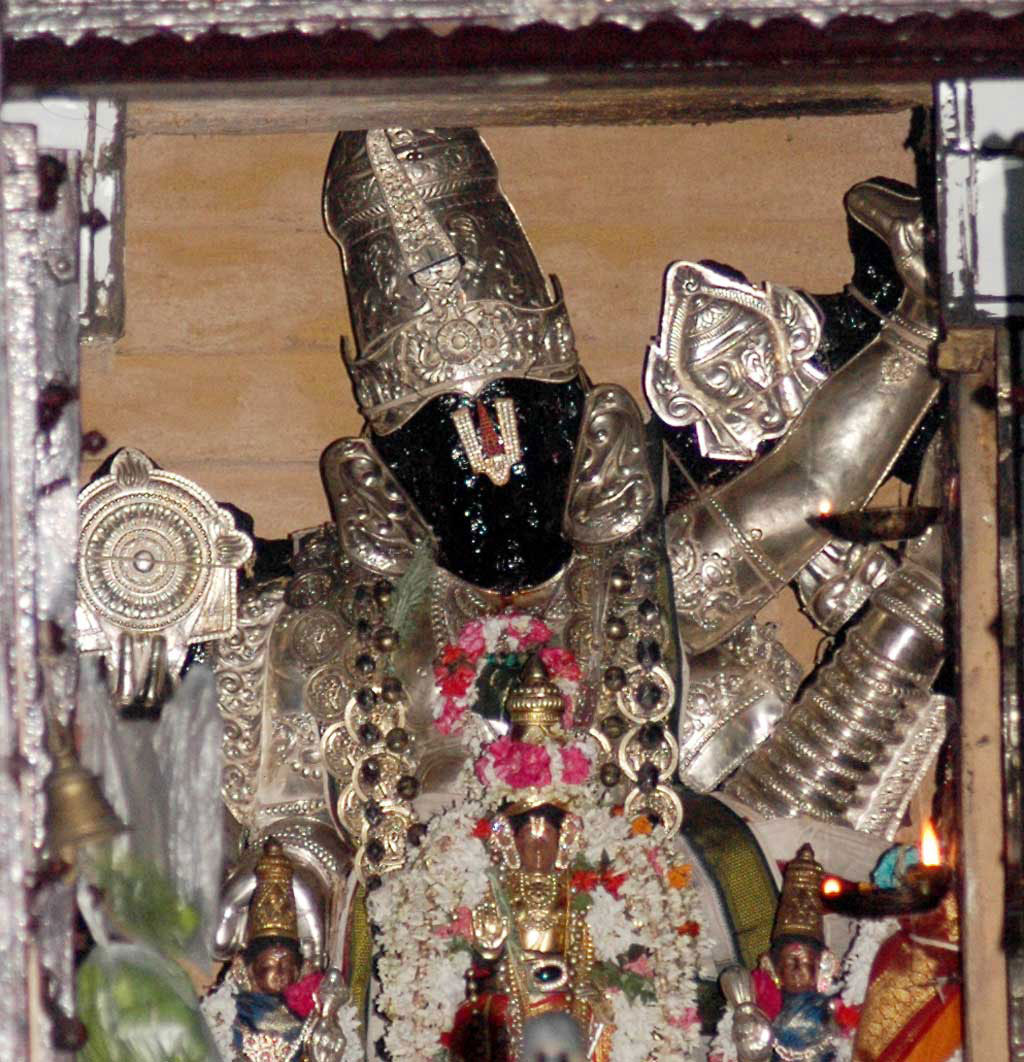
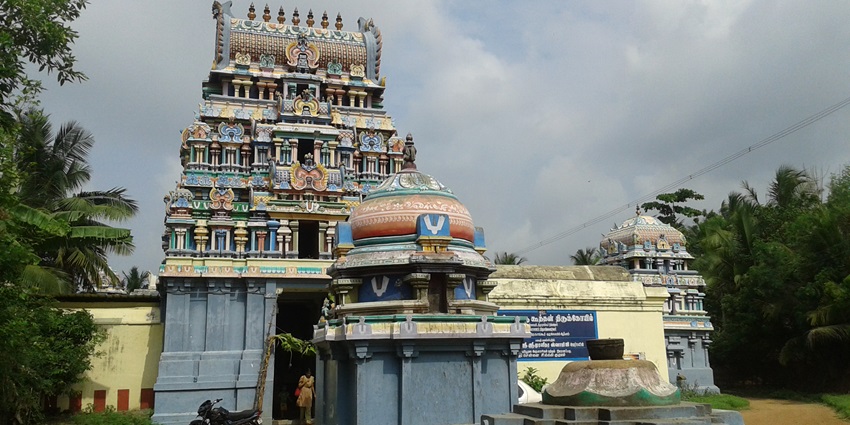
The architecture of Thirukazhicheerama Vinnagaram is simple and grounded. The entrance gopuram is modest, especially compared to the towering Sirkazhi Shiva temple nearby. But this modesty gives the temple its character, quiet, approachable and intimate. Inside, the temple follows a straightforward layout with a small courtyard, a mandapam with granite pillars, the sanctum housing Vaikunta Narayana Perumal, a separate shrine for Amuruviyappan Thayar, and small shrines for Garuda, the Alvars and local guardian deities. The main deity stands in a posture that suggests alertness. Vaikunta Narayana faces east, with the conch and discus, and a steady expression that conveys readiness to protect.
Devotees often comment on the awake quality of the idol, as if the deity is always paying attention.
The Thayar shrine softens the tone of the temple. Amuruviyappan Thayar’s presence adds warmth and grounding. Many women visit her shrine specifically for guidance during transitions or periods of uncertainty. The temple’s stone pillars carry simple lotus patterns, yali carvings and a few decorative flourishes typical of the region’s Nayak period. The flooring is worn smooth from centuries of visitors. The temple tank, Brahma Theertham, sits nearby. It plays an important role during festivals and certain rituals. The tank symbolises purity, Brahma achieving clarity again through Vishnu’s help. The aesthetics here do not overwhelm. They work gently, like the temple’s mythology. Everything is close, accessible and quiet.
Daily worship at this temple follows the traditional Vaishnavite schedule. The rhythm is slow, intentional and consistent. Morning rituals include the Suprabhatam, the Thirumanjanam or abhishekam, the Alankaram with fresh flowers, the Neivedyam, and the first darshan of the day. Evening worship creates a softer atmosphere, with lamps and low chanting filling the sanctum. Major festivals include Vaikunta Ekadasi, the most important day here, Brahmotsavam, celebrated across ten days, Purattasi Saturdays, which draw steady crowds, Thirumangai Alvar Mangalasasanam, when the Alvar’s visit is reenacted, and Sri Jayanthi, honouring Krishna’s birth. A distinctive worship focus here involves prayers for protection. People come here when they feel vulnerable, attacked, undermined or simply overwhelmed. Because Brahma found safety and clarity here, devotees feel the temple holds a similar emotional space for them. Another quiet practice is seeking blessings for the protection of knowledge, students, teachers and those facing career examinations often visit this temple for confidence and focus. The rituals are not elaborate or dramatic. They move at a gentle pace, allowing devotees to feel present rather than rushed.
Reaching the temple is simple since Sirkazhi is well connected by road and rail. Once you arrive, the town’s spiritual atmosphere becomes obvious: temple bells, chants and small shops selling flowers create a layered environment. The Divya Desam sits inside a neighbourhood rather than an isolated compound. Walking up to the entrance feels like entering a familiar local space. Houses line both sides of the street, and the temple blends naturally into the everyday life of the town. Inside, the atmosphere shifts. Everything becomes quieter. The sanctum is close to the entrance, and the deity is visible almost immediately. The stone floors stay cool, even during warm afternoons, grounding the visitor. Pilgrims often visit this temple along with the larger Bhramapureeswarar (Siva) temple in Sirkazhi. The two shrines form a spiritual pairing: Shaivite depth and Vaishnavite protection in the same town. People often say this temple feels emotionally accessible. You can sit quietly in the mandapam, listen to small chants echoing off the stone and feel a sense of safety. Most pilgrims do not rush their visit. The temple invites slow movement. Simple tea stalls outside serve as resting points. Vendors sell flowers, lamps and prasadam items, but there is no heavy commercialisation.
Thirukazhicheerama Vinnagaram plays a consistent role in the cultural identity of Sirkazhi. Its mythology of protection resonates with families across generations. Parents tell children the story of Brahma seeking refuge here, reinforcing the idea that help always exists. Thirumangai Alvar’s verses keep the temple anchored within Tamil Vaishnavite literature. His hymns describe Vishnu here as strong, alert and compassionate. During festivals, the temple becomes part of a wider community rhythm. Music, recitations and procession songs travel through the neighbourhood, creating a shared cultural experience.
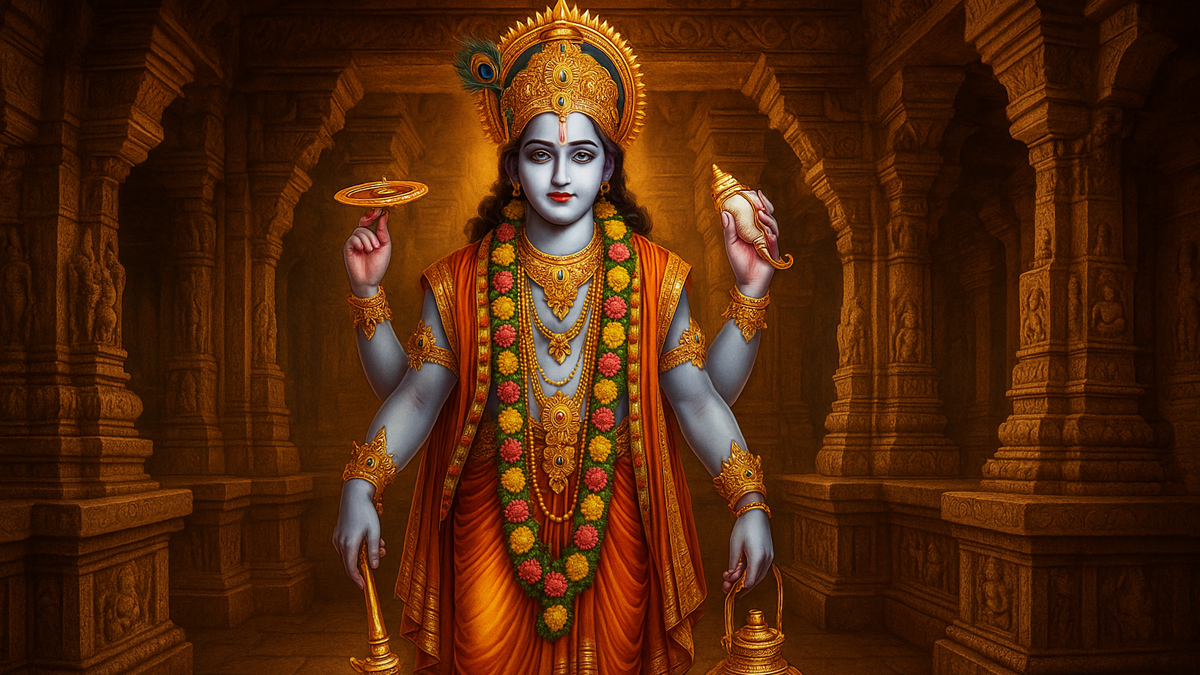
These events turn the temple from a quiet daily haunt into a lively communal space. The temple also influences local art. Pictures of Vaikunta Narayana with a protective stance appear in calendars, framed prints and devotional booklets. The association with knowledge protection means many students keep small images of the deity in their homes. As part of the Divya Desam circuit, the temple also attracts pilgrims from different regions, connecting Sirkazhi to a wider spiritual network. This shared heritage strengthens regional identity and culture.
The temple functions smoothly today, with regular daily pujas, festival schedules and community involvement. The administration manages structural upkeep, while devotees help during festival seasons. Recent renovations include repainting, strengthening corridor walls and maintaining the temple tank. These efforts are modest but effective, keeping the temple’s original atmosphere intact. The temple has also gained visibility online. Photos of Vaikunta Narayana’s shrine, the gopuram and festival processions circulate on travel pages and Divya Desam guides. This has brought younger pilgrims into the fold. Even with this increased attention, the temple has not become commercialised. Worship remains simple. Crowds remain manageable. The emotional tone of the place is still calm and grounded. The temple’s core message: protection and immediate divine presence, still resonates today. At a time when many feel stretched or insecure, the idea of a deity who responds quickly feels comforting and relevant.
Thirukazhicheerama Vinnagaram stands as a Divya Desam rooted in the idea of swift protection and clarity. Brahma found safety and assistance here, and devotees still come for the same reason. The temple’s simple architecture, steady worship and quiet neighbourhood setting give it a distinctive warmth. Vaikunta Narayana Perumal feels close, attentive and present. Its place in the Divya Desam journey balances the larger shrines of Tamil Nadu with a temple that prioritises emotional accessibility and reassurance. In the spiritual map of Tamil Nadu, this temple acts as a quiet anchor—a place where help feels immediate and the divine feels near.
 Memories and Such