Travel Bucket List: Malaysia Part 35 – Penang Part 4

The Street of Harmony is one of the oldest streets in Penang, representing the confluence of different cultures. The street houses four different places of worship: the St. George
S Church, a church, the Goddess of Mercy Temple, a Taoist temple, the Sri Mariamman Temple, a Hindu temple, and the Kapital Keling Mosque, a mosque. The street was named after the Prime Minister of the United Kingdom, William Pitt the Younger in 1786. On the street, one can also find a display of art depicting the lives of the people of the street during the colonial era.

The Street of Harmony begins with St. George Church. This church was built by the British East India Company in 1819 and is one of the oldest buildings in Penang. There is a memorial outside the church in remembrance of Sir Francis Light. The church showcases Greek architecture. The Goddess of Mercy Temple was initially built in honour of the sea goddess and survived two wars. With the growing population of Cantonese and Hokkien clans, Goddess Mazu was replaced by the Goddess of Mercy, Guanyin. A lot of people come to the temple during the Chinese New Year to seek the blessings of Kuan Yin Ma for a prosperous and healthy year ahead. Indian migrants built the Sri Maha Mariamman temple in the traditional South Indian Dravidian style. The oldest Hindu temple in Penang, the temple has been richly built with precious stones and diamonds present on its facade. Built by Indian Muslims, the Kapitan Keling Mosque presents a mixture of traditional Moorish arches and colonial architecture. Inside the mosque is a crystal chandelier and some amazing calligraphy panels.

Source

Also known as Lehuh Chulia, Chulia Street is one of the oldest roads in George Town. The street is famous for its food and offers a lot of variety with hawker stalls and local cuisines. The bustling Chulia Street was initially named Malabar Street after Indians from Malabar moved to Georgetown. It was later renamed Chulia Street in 1798. The term Chulia comes from the word Chulier, which refers to Indians from the coastal areas of Tamil Nadu, India. Since George Town has been inscribed as a UNESCO Heritage Site, Chulia Street has witnessed an increase in tourism. It is a popular destination for budget tourists as there are many restaurants, cafes, and hotels available at affordable rates.

Little India is a small piece of the country spread across four streets in Penang. The neighbourhood captures the essence of India in its streets and is famous for its mouth-watering food, streets filled with pizzazz from Bollywood songs and the shops lined up selling wares from sarees to spices.

Often referred to as Little Madras by the British, the streets of Little India are alive be it day or night. The neighbourhood includes four main streets: Market Street or Jalan Pasar is at the centre of all the action, Queen Street or Lebuh Queen, King Street or Lebuh King and Penang Street. Festivals and joyous occasions are also celebrated with as much zeal as the celebrations that are held in India. The Sri Mariamman Temple is located at Queen Street and was built in 1833. The oldest temple in Penang, it is dedicated to various Hindu deities and their sacred animals. The temple is open daily from 8 am to 12 noon and again from 4:30 to 9 pm. Shopping is considered a highlight of the streets of Little India. The entire neighbourhood is bursting with colours and individuals selling their wares at bargain prices. Another advantage of visiting Little India is its throwaway prices for foreign exchange and gold, some of which are more than 50 years old. During the ten days of Navratri in September, the streets of Little India are filled with decorated chariots, which start and end their journey at the Sri Mariamman Temple. Celebrated for three days in April or May, the annual Chitraparuvam Festival is a Tamil festival that includes chariots drawn from the Sri Mariamman Temple. The chariot contains the panchaloka deity of Lord Subramanya Swamy and stops at all the prominent temples in Penang.

George Town is a hub for the arts and culture scene in Malaysia. In 2012, Lithuanian artist Ernest Zacharevic created a series of six wall paintings depicting local culture, inhabitants and lifestyles as part of the George Town Festival. The city is also adorned with 52 wrought iron caricatures and 18 murals that showcase the city’s history and the daily lives of the local community.

The Clan Jetties of Penang is a traditional overwater settlement that was created by Chinese immigrants who came to Malaysia. The six villages house distinct Chinese clans, with the Chew Jetty being the most tourist-friendly and famous. Also known as floating villages, the clan jetties showcase the harmony of two different lifestyles and cultures. They are characterised by their traditions and are built using a special type of wood, which allows them to stay near seawater. Each clan has its temple, and per this, there are six temples for the six clan jetties. It has a unique style of architecture and the long walkway is made of wood. It also has a temple and is well-known among visitors.

There used to be seven clan jetties. However, due to a fire incident, only six clan jetties remain. The jetties have been through several changes throughout their history and have been made more tourist-friendly in recent times. Initially, most of the inhabitants lived on fishing as a source of income, however, for the past decade; they have started doing other jobs in the city as well. The villages have received several threats of demolition by the government and have been asked to relocate their villages several times. However, the Clan Jetties of Penang have stood firm in times of trouble and are now part of the World Heritage of Georgetown.

Visitors are recommended to visit the Clan Jetties during the Chinese New Year, especially the 8th and 9th nights of the Chinese New Year, as the place buzzes with activities and celebrations. The best time to visit is before 7 am since tourists can see the inhabitants before their early morning rituals and prayers. Moreover, there are fewer tourists at this time of the day, which allows for a more peaceful experience.

The Cheong Fatt Tze Mansion is a majestic UNESCO Heritage Site that was once the private residence of Cheong Ho, but today is a boutique hotel and museum. It is often known as the Blue Mansion because of its distinctive blue-coloured outer walls and external decorations. Each room in the Cheong Fatt Tze Mansion offers a story of its own and has antiques and heirlooms arranged around the space. Built in the Chinese architectural style of the imperial period, the courtyard-style house has 38 bedrooms, 7 staircases, 5 granite-paved courtyards and 220 timbre windows. The mansion also offers guided tours, full of interesting bits of information for the eternally curious traveller.

The Cheong Fatt Tze Mansion is especially striking in terms of its architecture, which is meant to impress upon its visitors the power and stature of its owner. It is interesting to note that Cheong Fatt Tze chose to forgo the Anglo-Indian designs that were so popular at the time of its construction and instead constructed the mansion in the traditional Chinese style, while also featuring noticeable European features. The mansion also closely follows the rules of Feng Shui. The blue colour of the mansion is a result of mixing lime with blue dye from the indigo plant, imported from India. This was a highly prized colour, and hence, despite the easy availability of white paint, indigo blue was chosen for the mansion. To this date, this choice of colour sets it apart from the rest of its surroundings.

Built in 1890, the mansion was the home of Cheong Fatt Tze, who is also known popularly as the Last Mandarin. His was a classic rags-to-riches story; having come from nothing, he made his fortune across East Asia and eventually settled in Penang. The mansion became Cheong Fatt Tze’s main business headquarters. The mansion lost its grandeur and fell into disrepair upon the passing of Cheong Fatt Tze. However, when it came up for auction in 1989, the new owner, Mr Lawrence Loh worked to restore the mansion to its current stature, because of which it is now recognised as a UNESCO Heritage Site. Visitors can opt for a well-guided, interactive tour of the mansion which runs at 11 am, 2 pm and 3:30 pm in English from Monday to Friday and at 11 am and 2 pm in English and 12 noon and 3:30 pm in Chinese on Saturday and Sunday. Each tour takes 45 minutes. Entry fees are RM 18 for adults and RM 9.50 for children.

Located along Jalan Padang Kota Lama, Penang City Hall, also referred to as Dewan Bandaraya Pulau Penang, is a colonial building and the head office of the Municipal Council of Penang Island. Built in the late nineteenth century, the City Hall has at its disposal the view of the historic parade ground at Padang Kota Lama, the World War I memorial Cenotaph and panoramic views of the Esplanade. It is famed for being one of the first buildings in George Town to have electrical fans and lights. Formerly known as the City Hall of George Town, the building has also been listed as part of George Town’s UNESCO World Heritage Sites.

The two-storey City Hall resembles the Town Hall of Penang, which has a balcony as one of the major elements. The building is an amalgamation of Palladian architecture and Edwardian Baroque styles, which were common during that time. During the renovation in 2004, the loggias or arcades, were enclosed with windows. There is a large grass carpet referred to as Kota Lama, which is present in front of City Hall and was used by the British to play field games and for military parades. Kota Lama now serves as a place for ceremonies and concerts.

Located on Jalan Air Terjun or Waterfall Road, the Penang Botanic Gardens are also colloquially known as Waterfall Gardens due to the cascading waterfall nearby. The original gardens were established in 1884 on an old quarry site, under the supervision of Charles Curtis, who was the first superintendent, making it one of the oldest botanic gardens built by the British in a colonial settlement. The gardens are part of the Penang Hill Biosphere Reserve, recognized by UNESCO as the third biosphere reserve in Malaysia and listed in the World Network of Biosphere Reserves, or WNBR.

Before the establishment of the present gardens, there were two previous botanic gardens on Penang Island: the Spice Garden from 1794 to 1806 and the Kitchen Gardens from 1822 to 1834, after which the then Governor Kenneth Murchison, who took no interest in gardens or agriculture, sold them for 1250 rupees because his wife could not get enough vegetables from the gardens to diminish her cook’s bills, although the reason may also have been due to Straits Settlements cost-cutting measures executed by the Governor General, Lord George Bentinck.

In 1884, Nathaniel Cantley, superintendent of the Singapore Botanic Gardens, established the present Botanic Gardens and appointed Charles Curtis as the assistant superintendent. It was engaged mainly in the cultivation of commercial plants, inspecting crops and advising the planting community. Under Curtis, three experimental gardens were established, including the Waterfall Nursery Gardens that were developed into the present Botanic Gardens, the Top Hill Nursery, later renamed the Government Bungalow Garden, and the Plains Nursery, later comprising the Government Residency. Located at 579 m, the site of the Botanic Gardens encompasses over 29 ha, comprising a significant middle portion, of the Waterfall River valley below the waterfall, which cascades from a height of over 120 m. The third Botanic Gardens were eventually sited in the Waterfall River valley on land acquired by the colonial government in 1884–85. In 1910, the Gardens were threatened by a proposal to turn the valley in which they were located into a reservoir. The gardens were handed over to the municipality for this purpose, but the plan was abandoned and the gardens were returned to the government in 1912. Only a small reservoir was eventually built, at the foot of the waterfall.

World War II took its toll on the gardens. Although some of the Malay staff remained with the Gardens during the Japanese occupation, a lack of funds and direction, together with the accumulation of war debris, left the Gardens in a very bad state. The Japanese excavated tunnels near the lily ponds and turned them into ammunition works, storage facilities, and a torpedo assembly station.

The Penang Botanic Gardens Department aims to provide visitors with programmes that focus on the historical and cultural heritage of the gardens, the plant collections, the natural landscape and the rich diversity of flora and fauna. It also aims to provide professional advice related to botany, taxonomy, horticulture and landscaping.

Today, the gardens occupy 29 hectares in a valley described as an amphitheatre of hills covered with lush tropical rain-forests. Its lush greenery and tranquil setting make it a favourite park and a popular tourist destination. It is Penang’s unique natural heritage, being the only garden of its kind in Malaysia. As well as being a repository of flora and fauna, unique to the country and the region, it serves as a green lung for metropolitan Penang.

The beautifully manicured park is divided into twelve sections – the Formal Garden, Perdana Plant House, Tropical Rainforest Jungle Track, Lily Pond, Fern House, Fern Rockery, Cactus House, Aroid Walkaway, Horticulture Centre, Orchidarium, Nursery and Quarry Recreational Park.

One of the main attractions of the Penang Botanic Gardens is the 122-meter-high waterfall which flows through the mini pond areas and also nourishes the uncountable plant species growing in the garden. The pebble paths to each of the 12 sections of the garden are flanked with fresh rainforest vegetation on either side as well as numerous mini ponds filled with water lilies and hyacinths, each of which are fed by the giant waterfall. There are specially monitored areas where the temperature, humidity and other factors are maintained closely so that their natural habitats can be recreated. A stroll around the botanic garden is bound to reveal a variety of birds, giant squirrels, colourful butterflies and lazy monitor lizards. One might even get to meet the friendly dusky leaf monkeys who reside in the nearby hills. The main entrance is connected to a small route which heads towards the Penang Hill. It’s a steep stretch which takes about an hour to cover.

The Botanical Gardens are open daily from 5 am to 8 pm. The Plant Houses are closed on Fridays and are open from 9:30 am to 12:30 pm and again between 2 to 4:30 pm on Tuesdays and Thursdays. On weekends, it is open from 9:30 am to 12: 30 pm and then from 2 to 6 pm. Entry is free.

Located in the Air Itam suburb, Penang Hill is a lovely little hill station comprising a group of peaks in the centre of Penang Island. It is also known as Bukit Bendera, which refers to Flagstaff Hill, the most developed peak. One of the peaks, known as Strawberry Hill, was also the name of a house owned by Francis Light, founder of the colony of Penang. Penang Hill’s highest point is Western Hill at an altitude of 833 m. Penang Hill was used as a retreat during the British colonial period and is now a very popular tourist destination.

The top of Flagstaff Hill, the most developed tourist area, is accessible via the Penang Hill Railway from its base station at Hill Railway Station Road. To date, this funicular railway system is the only one of its kind in Malaysia, transporting millions of visitors to the top of Penang Hill. Penang Hill is part of the Penang Hill Biosphere Reserve, recognized by UNESCO as the third biosphere reserve in Malaysia.

Thronged by lovers who celebrate their faithful love, Love Lock is a point located at the open-air observation deck of Penang Hill Food Centre. One can purchase padlocks priced between RM 10-30 at the counter, scribble messages on them and lock them up at the 80-feet fence. The main view deck at the apex of the hill is an excellent spot to view the stunning landscape. The garden at the viewing deck is indeed a pleasant surprise. Also, the night view from the Skywalk gives some Instagrammy snapshots of the lit-up Georgetown. The Habitat Penang Hill is a nature preserve area that has the Curtis Crest treetop walkway with zip lines, a nature trail and a canopy walkway. It is the highest vantage point of the hill. Also known as Penang Hill Hindu Temple, the Sri Aruloli Thirumurugan Temple is one of the oldest Hindu temples in Penang. Located at a small hillock on Penang Hill, known as Gunhill, the colourful ornate sculptures of Hindu gods and goddesses make the temple a must-visit cultural spot for tourists. Located about 1.5 km from the Penang Hill Police Station, the Monkey Cup Garden features around 100 species of pitcher plants. Other plants that can be sighted here are ferns, orchids and shrubs. There’s also a garden shop that sells pitcher plants and related books. Penang Hill has some premium pre-colonial British architectural bungalows. Built in the 18th century, Bel Retiro, originally built as a retreat bungalow, is the hill’s most prestigious building located on a quiet hilly road near Central Square.

For trekking enthusiasts, Penang Hill offers two main trekking routes to reach its top. The Penang Hill Forest Track is more of a jungle trek and offers spectacular views. This 5-km trail is quite steep, especially in the beginning but will offer you scenic views of the local farms. The trail also follows a dense jungle area which can make it a bit challenging and strenuous. One will have to walk for around 3 hours before they can reach the hilltop. The Botanical Gardens trail begins from the circle-shaped Moongate at the Botanical Gardens. It starts with climbing up a flight of stairs for about 30 minutes after which one will Point 5, a resting point and then continues with the trail which has now opened up to a well-marked flat forest path. After this, one will reach a tarmac road past an abandoned building. This is the Jeep Trek path and after about 3.5 km one arrives at the top of Penang Hill. This 5-kilometre trek is quite easy but does not offer any exciting views and will take about 3 hours to walk up the hill.

The Penang Hill Railway is a funicular railway that takes one to the top of Penang Hill. The ride begins from the Lower Station at Air Itam and takes one to the Upper Station at the hill. There are several stations in between as well but the train does not halt at any of these. The train operates daily from 6:30 am to 11 pm. Along this journey in Swiss-designed funicular cars, one can spot bungalows from pre-colonial areas amidst the lush green vegetation. For foreigners, the train ticket costs RM 30 for adults and RM 15 for children. During peak season and holidays, the queue at the ticket counter gets very long. The last train runs at 11 pm from the upper station down to the hill.

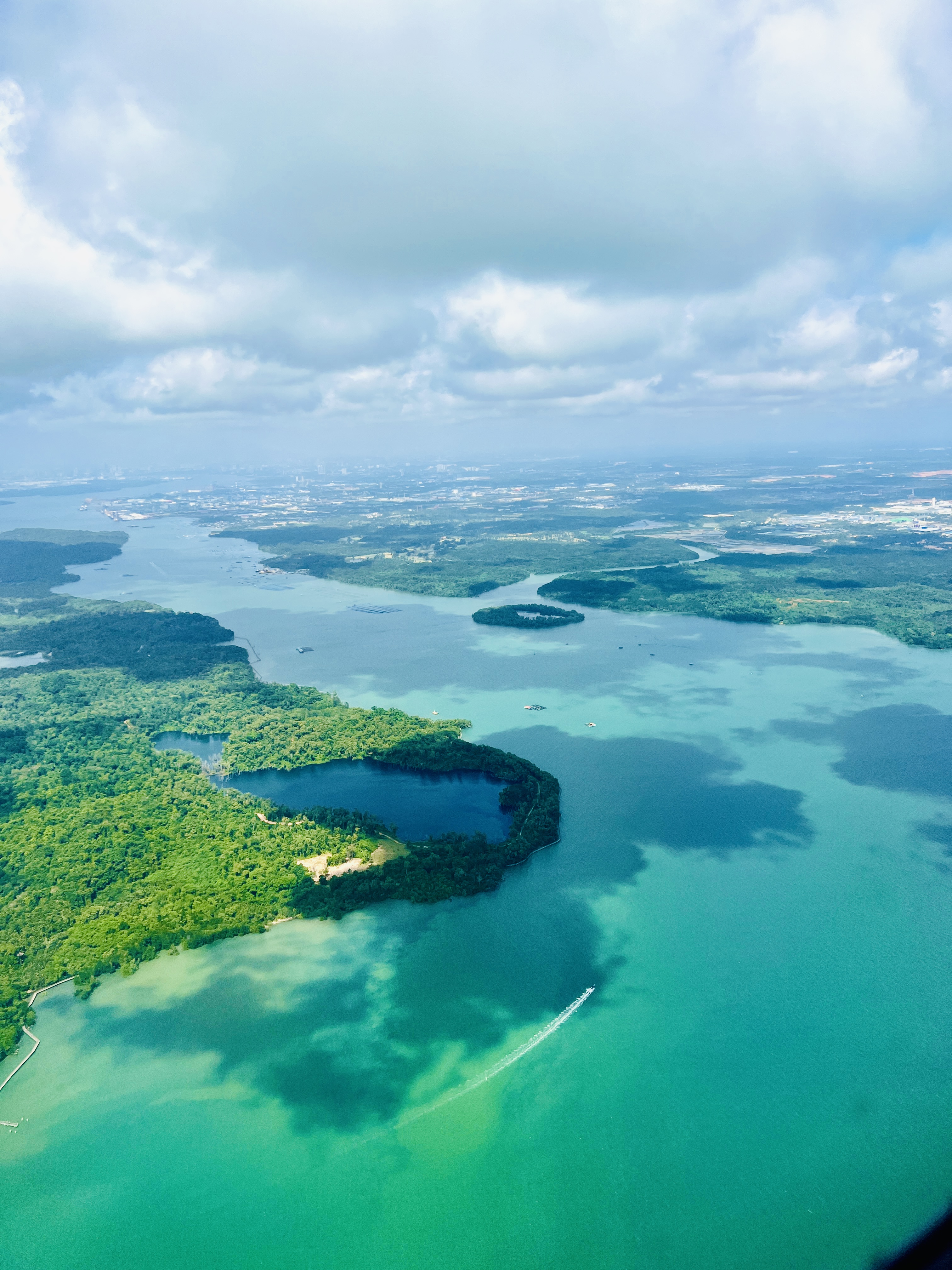
Penang National Park spans 1,213 hectares of land and sea and is used by scientists, researchers, and nature lovers to explore its natural treasures. Previously known as the Pantai Acheh Forest Reserve, this site is known to harbour 417 flora and 143 fauna species. The Pantai Acheh Forest Reserve, located at the northwestern tip of Penang Island, was declared the Penang National Park in April 2003. The national park was established to preserve and protect flora and fauna as well as objects with geological, archaeological, historical, ethnological, scientific, and scenic interests.

Natural attractions of the national park include the hill/lowland dipterocarp forests, mangrove forest areas, sandy beach habitats, a seasonal meromictic lake and the open coastal seas. Though parts of the Pantai Acheh Forest Reserve had been logged before 1955, all logging activities were stopped in 1996.

The unique features here are five habitat types not found in the other major Malaysian nature reserves. The park is a haven for a wealth of 417 flora and 143 fauna species, including turtles, crustaceans, and rare pitcher plants. This allows the park to boast one of the most unusual assemblages of biodiversity in Malaysia.

Because of its remote location, the park’s nine beaches are considered among the best in Penang. The Teluk Bahang Beach is a shady camping ground, and with nearby civilisation, it is used for family outings. It is also where the Bahang Bay is located and is often confused with the Teluk Bahang township. The panoramic fishing jetty engulfing the backdrop is a rare sight which is built of mangrove timber and palm trunks. The Teluk Tukun Beach has the Tukun River flowing into Teluk Tukun. A small island opposite is Pulau Tukun Tengah. The national park headquarters are situated near here and there are several small swimming pools for campers. The Tanjung Ailing Beach is littered with millions of small moon shells of different genetic variations. It also houses the USM research centre and the forest and coastal areas are being used for research on bio-technology. The beach is easily accessible and it is a suitable camping site for campers. Teluk Duyung or Muka Head Beach is a beautiful bay protected by the Muka Head’s cape. On Head’s Peak stands a majestic lighthouse built in 1883. A burial ground of at least 80 years resembles that of Indonesian Acheh and is an interesting historical artefact. The lighthouse peak offers a panoramic view of the surrounding islands. Monkey Beach is situated on the northwestern coast of the island and is one of the few pristine beaches left on the Island because it is not as exposed to the pollution found along the West Coast of the Island. As its name suggests, the beach is inhabited by monkeys of the crab-eating macaque species. A variety of fauna and flora can be found within the park including green turtles, flying squirrels, flying lemurs and over 150 species of birds. On the beach itself, the white-bellied sea eagle can often be spotted.

Pantai Kerachut is one of the most frequented beaches in the park. A suspension bridge connects the trail to the beach itself. The meromictic lake is the most prominent feature on the beach and one of the three of its sort in Asia. Located near the sea, it is fed by five rivers and the sea itself. This is a seasonal lake and is only filled during the interchange of monsoon winds. At the far end of the beach is a turtle sanctuary, where turtle eggs are being incubated. A display area also exhibits specimens of marine life and occasionally turtle hatchlings. Geological formations are also fascinating on this beach. Quartz veins and igneous rocks form most of its geology. Flora includes scarce plants growing on the lake in the drought season and several others striving for survival in the gaps in the rocks. Monitor lizards are often seen on the beach. The lake itself features interesting ecology. Gastropods of a great population dwell in the lake. Crabs and garoupas frequent the rock pools. During the nutrition bloom from November to January, kelp blooms upon the rocks, attracting jellyfish to the shores. Turtles lay their eggs here all year round.

Teluk Kampi has the longest beach in the park. There are many artefacts here with tell-tale signs of trenches found along the northern coast that indicate a defence post for the Japanese Army during World War II. Pantai Mas is a golden beach. Formally a coconut plantation, it is now an overgrown wasteland. Being very close to civilisation, mud and mangroves create a wilderness few people would like to go to. The difficulty in accessing Pantai Mas by sea could be the reason why dwellers abandoned their homes here. Accessing Pantai Mas with fishing boats is only available during high tides. The 250 m long Canopy Walk hovers 15 m from the ground. It allows visitors to view the lush forest from an interesting angle. Built on dipterocarp trees with only ropes for support, without the aid of a single nail, screw or bolt, the canopy walkway hovers above most of the rainforests below. The longest stretch is 45 metres while the shortest walkway is only 5 metres. The walkway is only permissible to visitors who purchased their tickets at the park entrance. Ticket costs are RM 5 for adults and RM 3 for children. The walkway will be closed during rainy seasons and bad weather. The canopy walkway links the two major trails in the park, and this is perhaps the most scenic trail in the park.

There are two major trails in the Park, leading to Muka Head lighthouse and Pantai Kerachut respectively. The trails in the park are completely nature trails, with only little man-made structures such as concrete steps to aid hikers. Ropes are tied to trees to aid climbers on steep ascends and descents. Most steps are naturally formed from tree roots. All trails are marked at their forks and along the way, visitors can mark their progress by reading of the distance markers. Rest huts are also provided along the trail. The entrance to the park is located in the fishing village of Teluk Bahang. It is approximately 30 minutes by road from Georgetown.

In My Hands Today…

A City on Mars: Can We Settle Space, Should We Settle Space, and Have We Really Thought This Through? – Kelly Weinersmith and Zach Weinersmith

Earth is not well. The promise of starting life anew somewhere far, far away—no climate change, no war, no Twitter—beckons, and settling the stars finally seems within our grasp. Or is it?

Critically acclaimed, bestselling authors Kelly and Zach Weinersmith set out to write the essential guide to a glorious future of space settlements, but after years of research, they aren’t so sure it’s a good idea. Space technologies and space business are progressing fast, but we lack the knowledge needed to have space kids, build space farms, and create space nations in a way that doesn’t spark conflict back home. In a world hurtling toward human expansion into space, A City on Mars investigates whether the dream of new worlds won’t create nightmares, both for settlers and the people they leave behind. In the process, the Weinersmiths answer every question about space you’ve ever wondered about, and many you’ve never considered:

Can you make babies in space? Should corporations govern space settlements? What about space war? Are we headed for a housing crisis on the Moon’s Peaks of Eternal Light—and what happens if you’re left in the Craters of Eternal Darkness? Why do astronauts love taco sauce? Speaking of meals, what’s the legal status of space cannibalism?

With deep expertise, a winning sense of humor, and art from the beloved creator of Saturday Morning Breakfast Cereal, the Weinersmiths investigate perhaps the biggest questions humanity will ever ask itself—whether and how to become multiplanetary.

World NGO Day

Non-governmental organisations or NGOs, typically work toward public or social welfare goals. From grassroots initiatives to international advocacy campaigns, NGOs embody the spirit of resilience, compassion, and solidarity that transcends borders and empowers communities. They are critical change agents in promoting economic growth, human rights and social progress, operating outside of governmental influences. To commemorate the pivotal role that NGOs play in shaping our world and driving positive transformations, every year, February 27 is designated as World NGO Day

NGOs fill crucial gaps in societal structures by addressing issues that may be overlooked or neglected by governments and other institutions. From providing humanitarian aid in times of crisis to advocating for human rights and environmental protection, NGOs serve as vital lifelines for marginalized communities around the world. At the heart of NGO work lies a commitment to empowering communities to take charge of their destinies. Through capacity-building initiatives, educational programs, and grassroots organising, NGOs enable individuals and groups to amplify their voices, assert their rights, and drive sustainable change from within.

NGOs are often at the forefront of innovation, pioneering new approaches and solutions to complex social, economic, and environmental challenges. Whether through technology-driven interventions, social entrepreneurship, or cross-sectoral partnerships, NGOs harness the power of innovation to create lasting impact and drive systemic change. Advocacy lies at the core of NGO activism, as organisations work tirelessly to raise awareness, mobilise public support, and influence policy decisions at local, national, and international levels. By amplifying the voices of the marginalised and holding decision-makers accountable, NGOs play a pivotal role in shaping policies and advancing social justice agendas.

World NGO Day, observed annually on February 27, serves as a global platform to celebrate the achievements, contributions, and resilience of NGOs worldwide. It is a day to honour the dedication and passion of individuals and organisations who work tirelessly to create a more just, equitable, and sustainable world for all.

The theme of World NGO Day 2024 is Building a Sustainable Future: The Role of NGOs in Achieving the Sustainable Development Goals (SDGs). This theme emphasises the critical role that NGOs play in addressing global challenges and working towards a more sustainable future. It also highlights how NGOs are contributing to the achievement of the Sustainable Development Goals (SDGs) set by the United Nations.

Embracing change entails embracing innovation, creativity, and agility in the pursuit of social impact. NGOs are encouraged to explore new approaches, technologies, and partnerships that enable them to respond effectively to emerging needs and dynamics while staying true to their core values and missions. Building resilience also requires building bridges of solidarity and collaboration across sectors, disciplines, and borders. NGOs are called upon to forge strategic alliances, share best practices, and mobilise resources in pursuit of common goals and shared aspirations. In a world marked by interconnectedness and interdependence, solidarity emerges as a powerful force for positive change.

As we commemorate World NGO Day, let us reaffirm our commitment to the principles of social justice, equity, and solidarity. Let us celebrate the resilience and courage of NGOs and their tireless efforts to build a better world for present and future generations. As individuals, communities, and institutions, let us pledge to support and empower NGOs in their mission to create a more just, equitable, and sustainable world. Together, we can harness the power of collective action, innovation, and compassion to overcome adversity, foster resilience, and realize our shared vision of a brighter tomorrow. Not just on February 27, but throughout the year, let us stand in solidarity with NGOs worldwide, honouring their invaluable contributions and unwavering commitment to humanity’s collective journey towards dignity, equality, and justice for all.

In My Hands Today…

Veerappan: Chasing the Brigand – K. Vijay Kumar

No other bandit in recent times has captured the public’s imagination as much as Koose Muniswamy Veerappan.

Be it his trademark moustache, stories of his daring escapades, or his ruthless massacre of officers, Veerappan continues to fascinate, even thirteen years after his death.

Chasing the Brigand is a lucid and incisive account of the rise and fall of India’s most dreaded forest brigand. Chronicled by K. Vijay Kumar, IPS, the man who spearheaded the Tamil Nadu Special Task Force (STF) that planned and executed the dreaded bandit’s encounter, the book recounts the various incidents that shaped Veerappan’s life, from his birth in Gopinatham in 1952 to his death in 2004 in a shootout in Padi.

It traces his dramatic rise from a small-time poacher and sandalwood smuggler to a brutal fugitive who held three states to ransom for two decades. The ruthless killings and high-profile kidnappings masterminded by Veerappan, including the 108-day ordeal involving Kannada cinema superstar, Dr Rajkumar, are described in fascinating detail. Chasing the Brigand is the most authentic account of the life and times of the dreaded outlaw.

Lantern Festival: The Fifteenth Day of the Lunar New Year Festivities

The Lunar New Year is the most important festival in the Chinese calendar. Also known as the Chinese New Year, this festival celebrates the beginning of a new year on the traditional lunisolar Chinese calendar. In Chinese, the festival is commonly referred to as the Spring Festival as the spring season in the lunisolar calendar traditionally starts with lichun, the first of the twenty-four solar terms which the festival celebrates around this time. of the Chinese New Year. Marking the end of winter and the beginning of the spring season, observances traditionally take place from Chinese New Year’s Eve, the evening preceding the first day of the year, to the Lantern Festival, held on the 15th day of the year. The first day of the Lunar New Year begins on the new moon that appears between 21 January and 20 February.

The Lunar New Year is one of the most important holidays in Chinese culture and has influenced similar celebrations in other cultures, such as the Losar of Tibet, the Tết of Vietnam, the Korean New Year, and the Ryukyu New Year.

According to legend, the Chinese New Year started with a mythical beast called the Nian, a beast that lives under the sea or in the mountains during the annual Spring Festival. The Nian would eat villagers, especially children, in the middle of the night. One year, all the villagers decided to hide from the beast. An older man appeared before the villagers went into hiding and said that he would stay the night and would get revenge on the Nian. The old man put red papers up and set off firecrackers. The day after, the villagers came back to their town and saw that nothing had been destroyed. They assumed that the old man was a deity who came to save them. The villagers then understood that Yanhuang had discovered that the Nian was afraid of the colour red and loud noises. Then the tradition grew when New Year was approaching, and the villagers would wear red clothes, hang red lanterns, and red spring scrolls on windows and doors and use firecrackers and drums to frighten away the Nian. From then on, Nian never came to the village again. The Nian was eventually captured by Hongjun Laozu, an ancient Taoist monk.

The fifteenth day of the new year is celebrated as the Lantern Festival, also known as the Yuanxiao Festival, the Shangyuan Festival, and Chap Goh Meh. Rice dumplings, or tangyuan, a sweet glutinous rice ball brewed in a soup, are eaten this day. Candles are lit outside houses as a way to guide wayward spirits home. Families may walk the streets carrying lanterns, which sometimes have riddles attached to or written on them as a tradition. This day often marks the end of the Chinese New Year festivities.

In China and Malaysia, this day is celebrated by individuals seeking a romantic partner, akin to Valentine’s Day. Nowadays, single women write their contact numbers on mandarin oranges and throw them in a river or a lake after which single men collect the oranges and eat them. The taste is an indication of their possible love: sweet represents a good fate while sour represents a bad fate. In Singapore, chap goh mei is also a day where single ladies wishing for husbands throw oranges, red dates and longans into the Singapore River.

Another reunion dinner is held with lanterns and oranges being a large part of the celebrations. It is also referred to as dengjie or lantern festival due to a tradition that originated during the Tang Dynasty involving the lighting of lanterns on this day. The Lantern Festival marks the final day of the traditional Chinese New Year celebrations. As early as the Western Han dynasty, between 206 BC and 25 AD, it had become a festival with great significance.

During the Lantern Festival, children go out at night carrying paper lanterns and solve riddles on the lanterns. In ancient times, the lanterns were fairly simple, and only the emperor and noblemen had large ornate ones. In modern times, lanterns have been embellished with many complex designs. The lanterns are almost always red to symbolise good fortune.

There are several beliefs about the origin of the Lantern Festival. However, its roots trace back more than 2,000 years and are popularly linked to the reign of Emperor Wen of the Han dynasty. Emperor Ming, an advocate of Buddhism, noticed that Buddhist monks would light lanterns in temples on the fifteenth day of the first lunar month. As a result, he ordered all households, temples and the imperial palace to light lanterns on that evening. From there it developed into a folk custom. Another likely origin is the celebration of the declining darkness of winter and the community’s ability to move about at night with human-made light, namely, lanterns. During the Han dynasty, the festival was connected to Ti Yin, the deity of the North Star.

There is one legend that states that it was a time to worship Taiyi, the God of Heaven in ancient times. The belief was that Taiyi controlled the destiny of the human world. He had sixteen dragons at his beck and call and he decided when to inflict drought, storms, famine or pestilence upon human beings. Beginning with Qin Shi Huang, the first emperor of China, all the emperors ordered splendid ceremonies each year. The emperor would ask Taiyi to bring favourable weather and good health to him and his people. Another legend associates the Lantern Festival with Taoism. Tianguan is the Taoist deity responsible for good fortune. His birthday falls on the fifteenth day of the first lunar month. It is said that Tianguan likes all types of entertainment, so followers prepare various kinds of activities during which they pray for good fortune. Yet another legend associates the Lantern Festival with the worship of the lunar goddess Chang’e, who is said to reside on the moon with her companion, the jade rabbit. According to folklore, on the 15th day of the first lunar month, Chang’e descends to Earth to bestow blessings upon those who honour her with offerings of lanterns, fruits, and sweet treats.

Another legend associates the Lantern Festival with an ancient warrior named Lan Moon, who led a rebellion against the tyrannical king in ancient China. He was killed in the storming of the city and the successful rebels commemorated the festival in his name. Yet another common legend dealing with the origins of the Lantern Festival speaks of a beautiful crane that flew down to earth from heaven. After it landed on earth it was hunted and killed by some villagers. This angered the Jade Emperor in heaven because the crane was his favourite. So, he planned a storm of fire to destroy the village on the fifteenth lunar day. The Jade Emperor’s daughter warned the inhabitants of her father’s plan to destroy their village. The village was in turmoil because nobody knew how they could escape their imminent destruction. However, a wise man from another village suggested that every family should hang red lanterns around their houses, set up bonfires on the streets, and explode firecrackers on the fourteenth, fifteenth, and sixteenth lunar days. This would give the village the appearance of being on fire to the Jade Emperor. On the fifteenth lunar day, troops sent down from heaven whose mission was to destroy the village saw that the village was already ablaze, and returned to heaven to report to the Jade Emperor. Satisfied, the Jade Emperor decided not to burn down the village. From that day on, people celebrate the anniversary on the fifteenth lunar day every year by carrying lanterns on the streets and exploding firecrackers and fireworks.

Another legend about the origins of the Lantern Festival involves a maid named Yuan-Xiao. In the Han dynasty, Dongfang Shuo was a favourite adviser of the emperor. One winter day, he went to the garden and heard a little girl crying and getting ready to jump into a well to commit suicide. Shuo stopped her and asked why. She said she was Yuan-Xiao, a maid in the emperor’s palace and that she never had a chance to see her family since she started working there. If she could not have the chance to show her filial piety in this life, she would rather die. Shuo promised to find a way to reunite her with her family. Shuo left the palace and set up a fortune-telling stall on the street. Due to his reputation, many people asked for their fortunes to be told but everyone got the same prediction – a calamitous fire on the fifteenth lunar day. The rumour spread quickly. Everyone was worried about the future so they asked Dongfang Shuo for help.

Dongfang Shuo said that on the thirteenth lunar day, the God of Fire would send a fairy in red riding a black horse to burn down the city. When people saw the fairy they should ask for her mercy. On that day, Yuan-Xiao pretended to be the red fairy. When people asked for her help, she said that she had a copy of a decree from the God of Fire that should be taken to the emperor. After she left, people went to the palace to show the emperor the decree which stated that the capital city would burn down on the fifteenth. When the emperor asked Dongfang Shuo for advice, the latter said that the God of Fire liked to eat tangyuan which are sweet dumplings. Yuan-Xiao should cook tangyuan on the fifteenth lunar day and the emperor should order every house to prepare tangyuan to worship the God of Fire at the same time. Also, every house in the city should hang a red lantern and explode firecrackers. Lastly, everyone in the palace and people outside the city should carry their lanterns on the street to watch the lantern decorations and fireworks. The Jade Emperor would be deceived and everyone would avoid the disastrous fire.

The emperor happily followed the plan. Lanterns were everywhere in the capital city on the night of the fifteenth lunar day and people were walking on the street and there were noisy firecrackers. It looked as if the entire city was on fire. Yuan-Xiao’s parents went into the palace to watch the lantern decorations and were reunited with their daughter. The emperor decreed that people should do the same thing every year. Since Yuan-Xiao cooked the best tangyuan, people called the day the Yuan-Xiao Festival.

As the lanterns cast their radiant glow upon the world, the Lantern Festival serves as a beacon of hope, renewal, and cultural pride. Across continents and generations, people come together to celebrate the triumph of light over darkness, unity over division, and joy over adversity.