Travel Bucket List: India – Manipur Part 3

Chandel
64 km south of Imphal lies the tiny, but scenic town of Chandel, also known as Lamka. Not very far from India’s border with Myanmar, it is also known as the Gateway to Myanmar and is famous for being home to more than 20 native tribes with each tribe offering a unique identity to the area. Chandel is also known for its numerous varieties of Orchids, ornamental plants, and some very useful medicinal plants. Some of the must-visit spots here include the Tengnoupal, which is the highest point in the area and can offer some stunning sceneries and views.
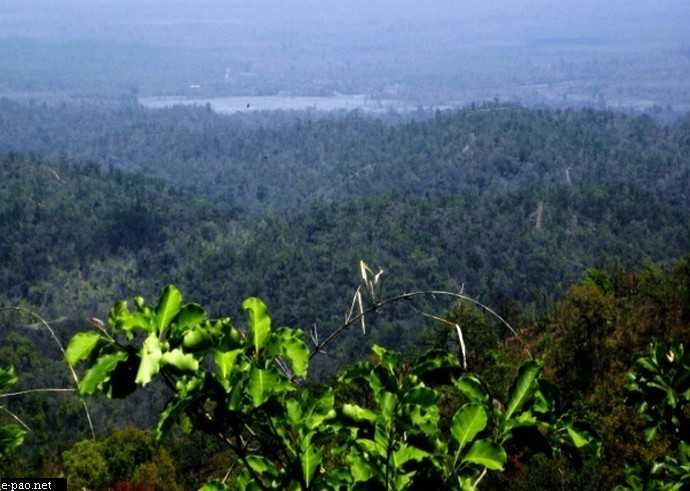
Founded in 1989, the Yangoupokpi – Lokchao Wildlife Sanctuary covers an area of 185 sq km and is home to multiple species of mammals, birds, reptiles, amphibians as well as fish. This sanctuary is one of the nine Identified Important Bird Areas or IBAs in Manipur, where the IBA is of critical importance for environmental conservationists and bird watchers as it is the only place where the endangered Green Peafowl can still be sighted. It is also one of those rare forests where communities of people live in tandem with nature. Seven forest villages are presently housed in the sanctuary and the villagers are dependent on the natural resources of the forest for their livelihood. The sanctuary is located at the India-Myanmar border, housing a mix of riverine and terrestrial ecosystems.

The sanctuary is home to many rare varieties of wild orchids, most of them unknown to the world as yet. Other trees forming the forest cover include the Dipterocarpus Turbinatus or Gurjan, the Tectona Grandis or Teak, the Melanorrhoea Usitata or Burmese Lacquer, the Terminalia Chebula or Black Myrobalan, the Emblica Officinalis or the Indian Gooseberry, the Cedrella Toona or the Indian Cedar, the Quercus Spp or the Oak, the Bauhinea, the Dillenia, and many varieties of bamboo. The wildlife sanctuary is home to 42 mammal species, 74 bird species, 29 reptile species, 6 amphibian species, and 86 fish species. The Hoolock Gibbon, the only variety of the ape found in India as well as the Snow Leopard and Golden Cat, which make rare appearances during the night, are also found here. Around the border area, the extremely rare Malayan Sun Bear can also be found. The best time to visit the Yangoupokpi Lokchao Wildlife Sanctuary is between October to April.

Tengnoupal
Located about 70 km southeast of Imphal and 20 km from Chandel is the hilly town of Tengnoupal which lies at the highest point of the NH-2 between Imphal and Moreh at the end of northwestern Myanmar and the ASEAN Highway passes through the village. The climate is cold all throughout the year and remains foggy during the rainy season and the village was founded by Pu Houlim Loikhom Mate and it is the largest village of the Kuki people settlement in the district. Due to its strategic importance, the village has seen many battles in the course of history including World War II. The main attraction here is the Tengnoupal which provides a bird’s eye view of the entire valley, from an altitude of 2,500 to 10,000 feet and is the highest point in the state. The Barak and Manipur rivers flow through the town, traversing from north to south.

The story of Tengnoupal is fragmented by the rule and control of different clans and countries. Long ruled by the Pakhanga dynasty, starting from the year 33; it was occupied by the Chinese in 1631. In 1942, it was bombed during World War II by the Japanese. The name Tengnoupal is derived from cactus fencing where teng means cactus and pal is a fence. Tengnou means tender cactus in the local language. It was named after the Awa Laan or the Manipur-Burmese War in the 16th century as cacti were planted as a fence in the Tengnoupal Hill range. The villagers of the then Tengnoupal and surrounding villages fought against the Burmese who invaded the Meitei kingdom of the Imphal Valley and many young warriors of Tengnoupal were killed and taken as a hostage to Burma. In the 19th century, Tengnoupal was the epicentre of the Anglo-Kuki war where more than 30 personnel of the British force were annihilated under the command of Pu Chomsho Mate, the younger brother of Pu Loikhom Mate, Chief of Tengnoupal. After that incident, the British Army captured Tengnoupal and then became the Army and Administrative HQ of the then British colonial government.

During World War II the people of Tengnoupal supported the Indian National Army or the INA led by Subhas Chandra Bose. The INA and the Japanese Army even brought in tanks and other heavy war equipment with the help of the local people led by Pu Sholim Mate and they were about to capture the Imphal Valley. Knowing the advancement of the INA and the Japanese Army, after occupying strategic locations at Tengnoupal the British Royal Air Force or RAF bombarded the hill ranges of Tengnoupal where many INA, Japanese and local volunteers were killed.

Moreh
Located about 108 km southeast of Imphal, Moreh is a border town located on the India–Myanmar border and is also known for its natural beauty. A strategically important town, due to its location at the Indo-Myanmar border Moreh is a sizable commercial hub in North-Eastern India, bringing in traders for cross-border trade. Tamu in Myanmar, just across the Menal river from Moreh, is connected to Moreh via 2 road bridges: The Indo-Myanmar Friendship Bridge and a newer Moreh ICP Bridge which connects the Moreh Integrated Check Post. Tamu in Myanmar connects Moreh in India to Kalewa-Yagyi-Mandalay in Myanmar and Mae Sot in Thailand through the India–Myanmar–Thailand Trilateral Highway. Moreh is also popular for its shopping arcade at Namphanglong, which sells Chinese and Thai goods at cheap prices. Being a border trade and transit town, Moreh plays a key role in the development of the economy of the state with border haat as well as international trade. A significant portion of the economy of Moreh depends on smuggling, including illegal teak smuggled from Myanmar.

Kaina
Located 24 km southeast of Imphal, Kaina is a hillock about 921 m above sea level and is a sacred place for Manipuri Vaishnava Hindus. According to legend, Shri Govindajee appeared in the dream of his devotee, Shri Jai Singh Maharaja, the 18th century King of Manipur and asked him to install in a temple with an image of Shri Govindajee. The image was to be carved out of a jack fruit tree, which was then growing at Kaina. Kaina is famous for the grand feasts performed as well as for the scenic beauty of the hillside.

The Sacred Jackfruit Tree is the tree on Kaina hill from which seven images of Lord Krishna were carved and installed in various temples in Manipur and in the neighbouring state of Assam, including the Shree Govindajee Temple at Imphal. In the past, Kaina Hill was known as Lakhai Phandong Ching and was the royal orchard of the palace. The original location of the jackfruit tree has been declared a historical and archaeological site by the Archaeological Department of Manipur.

Ukhrul
A hill station, Ukhrul is almost akin to paradise with mountains, brooks and waterfalls at every turn. Also known as Hunphun, Ukhrul is the home of the Tangkhul Naga and lies 81 km northeast of the state capital, Imphal. The Khangkhui Cave is a natural limestone cave located in the village of Khagkui, about 16 km from Ukhrul. The ancient pre-historic limestone cave locally called Khangkhui Mangsor, when excavated yielded evidence of habitation of Stone Age communities. According to local folklore, the big hall in the cave is the darbar hall of the Devil King living deep inside while the northern hall is the royal bedroom. During World War II, villagers sought shelter here and the cave can be reached after about an hour’s trek from Khangkui village.

The Shirohi National Park located on the top of Shirui hill lies about 19 km from Ukhrul. It is the only habitat of the beautiful terrestrial lily, Shirui lily or Lilium macklineae, found nowhere in the world except in this park. The park was established in 1982 and among the animals that make their home here include the tragopan, the tiger and the leopard. The main peak of Siroy abounds with flowers during the monsoon and it is a veritable paradise. The Shirui Kashong Peak near Ukhrul is a marvellous hilltop viewpoint located at a height of 2,835 meters above sea level. Several rivers originate from the cracks and slopes of this peak. The exotic Shirui lily flower blooms on the hilltop in May/June and attracts hundreds of scientists and tourists every year. In the park natural life is supported by an undisturbed biological system which has a dense tropical forest all over and temperate forest in the hilltops.

Manipur’s Hills
Manipur’s topology means it is abundant in hills and valleys, many of which are considered sacred by the local tribes. Mount Tempu or Mount Iso is the highest peak in Manipur with the Dzuko Valley below it.

Mount Koubru, one of the highest peaks in Northeast India is easily identified by its humped back like a cow. A place of great religious significance by the adherents of the Sanamahi faith, Mount Koubru also known as Mount Koupalu. It is considered to be the abode of God Lainingthou Koubru, the protector deity of the Northern Kanglei world and Goddess Kounu in Manipuri mythology. It is said that God Lainingthou Koubru lives here with his consort Goddess Kounu and their sacred animal Shamu Laishaa Angouba, the White Elephant. The town of Sapormeina lies below the peak and is one of the most visited pilgrimage sites in Manipur. The mythology of ancient Meitei concerns the study of cosmology as well as that of the human body with Mount Koubru considered to be the head of the body. Many letters of the ancient Meetei Mayek exist atop this mountain. Mount Koubru is considered to be one of the primary pilgrimage sites by the Meitei people; the stone-formations at the peak are believed to be parts of a single human face, resembling the 27 alphabets of the Meitei language. The mountain is also noted for mountain hiking as well as mountain climbing.

Baruni Hill, Nongmaiching Hill, Selloi Langmai Hill or the Sunday Mountain is a hill range and the abode of God Lainingthou Nongpok Ningthou and his consort Panthoibi in Manipuri mythology. The hill is one of the most important pilgrimage sites for followers of the Sanamahi faith and is best known for adventure activities including mountain hiking and mountain climbing. The hill is believed to be the abode of Lord Lainingthou Nongpok Ningthou and his beloved consort Goddess Panthoibi. After the advent of Hinduism in the Kanglei world, the attributes of Lord Lainingthou Nongpok Ningthou was identified as Lord Shiva of Hinduism. The Sanamahi Kiyong Temple, which is the abode of Lord Lainingthou Sanamahi and his mother Goddess Leimarel Sidabi is the most visited one. At the peak of the hill, there is the Khalong Temple, the abode of Nongmai Kainou Chingsomba and in the periphery is the Baruni Mahadeva Temple. Manipuri people climb the hill annually after Yaoshang and the temple is a sacred pilgrimage site of the Kabui, Tangkhul, Kom, Hmar, Chothe, Zeliangrong, Meitei and Bishnupriya Manipuri people and the followers of Sanamahi faith.

The Thangjing Hill is a hill range and the abode of God Eputhou Thangjing and other Meitei deities in Meitei mythology. The temple of Lord Eputhou Thangjing at the hilltop is a major pilgrimage site for followers of the Sanamahi faith. In Meitei mythology, the hill is mainly associated with the deity Lord Eputhou Thangjing who is the guardian of the mountain and the protector of the south of the Kanglei world. The hill is also mentioned in the great Meitei epic poetry, Khamba Thoibi.
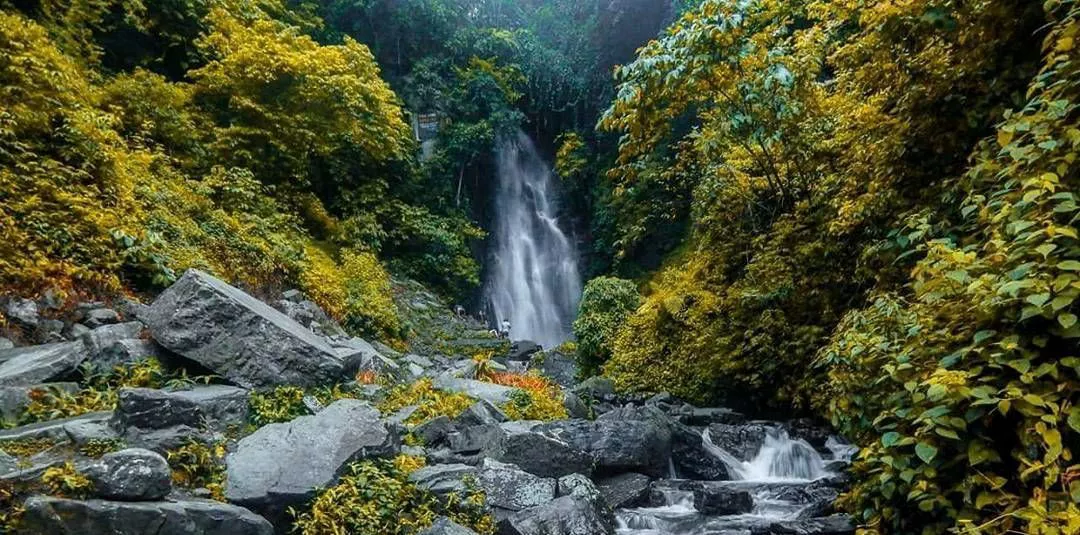
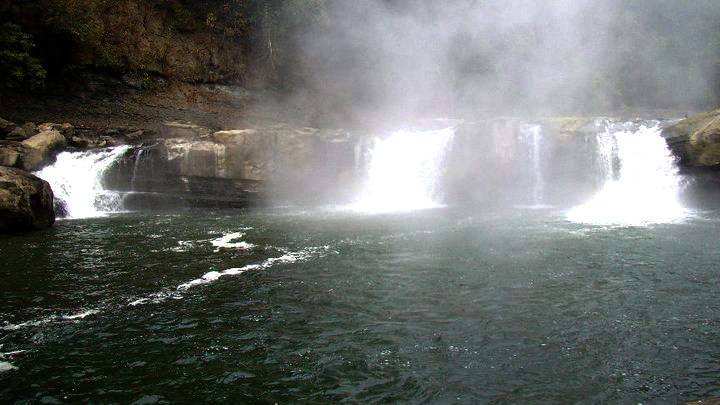
The Sadu Chiru waterfall, near the Ichum Keirap village, about 27 km from Imphal, consists of three falls with the first falling from about 98 feet high and has the Agape Park in the vicinity.

With this, the series on Manipur comes to an end. I do hope this has inspired some of you to make a trip to this lovely state when things are better. I know I will.
2022 Week 05 Update

Bye Bye Bombay/Mumbai

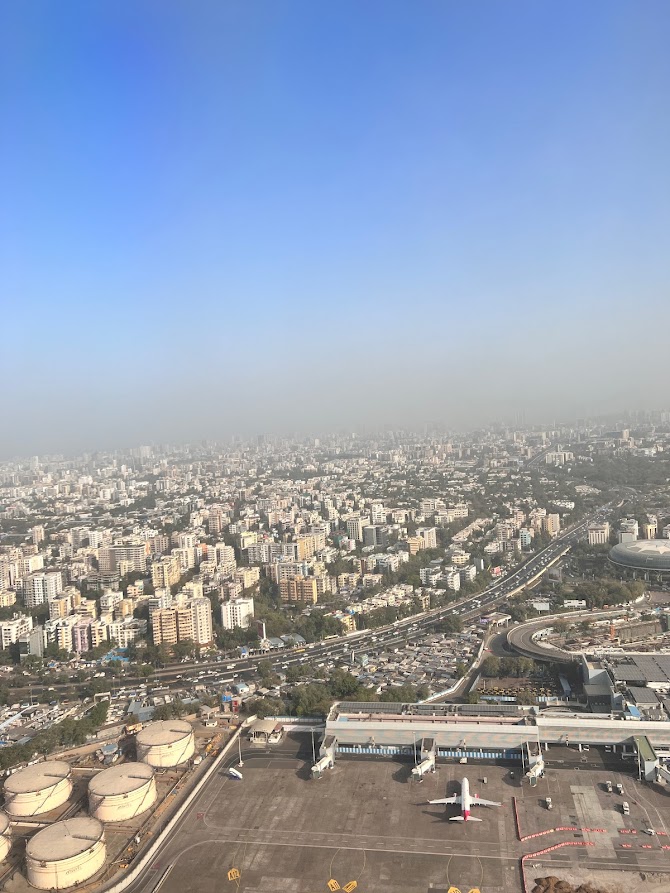
Namaskaras from the Silicon Valley of India aka Bengaluru, the largest city and capital of the southern state of Karnataka. On the outskirts of the city, in a small community about 32 km south of the city is my parent’s new home, at least for the time being.

I’ve been in Mumbai for the past two weeks now and it has been an intense two weeks what with packing things to be sent with the movers, then clearing up the house and finally packing up and moving to a new place. When the flight took off from Mumbai, my heart swelled up and I can imagine how my mum and dad would have felt, having lived their whole lives in the maximum city. But life moves on and we must adjust to it, so this will be their new home for the near future at least.

I’ve not walked much here in Mumbai, so my step count for the month is not as much as it would have been had I been in Singapore. I am now in India and the state of Manipur. At the end of January, I was slightly over 100 km from the state’s border with Nagaland. I am still about 3000 km from Mumbai and 4200 km from Bengaluru, so there’s still a long way to go.

This week’s quote comes to us from Eleanor Roosevelt, the longest serving first lady of the United States from 1933 to 1945 and a noted human rights activist. Roosevelt reminds us only we can make ourselves feel inferior, so do not give yourself or others the permission to let you feel less than the best. We are awesome human beings and we know it!

And so with this, here’s to spending the last week with my parents before I head back home to my family, work and responsibilities.

In My Hands Today…

Big Sister, Little Sister, Red Sister: Three Women at the Heart of Twentieth-Century China – Jung Chang

They were the most famous sisters in China. As the country battled through a hundred years of wars, revolutions and seismic transformations, the three Soong sisters from Shanghai were at the center of power, and each of them left an indelible mark on history.

Red Sister, Ching-ling, married the ‘Father of China’, Sun Yat-sen, and rose to be Mao’s vice-chair.

Little Sister, May-ling, became Madame Chiang Kai-shek, first lady of pre-Communist Nationalist China and a major political figure in her own right.

Big Sister, Ei-ling, became Chiang’s unofficial main adviser – and made herself one of China’s richest women.

All three sisters enjoyed tremendous privilege and glory, but also endured constant mortal danger. They showed great courage and experienced passionate love, as well as despair and heartbreak. They remained close emotionally, even when they embraced opposing political camps and Ching-ling dedicated herself to destroying her two sisters’ worlds.

Big Sister, Little Sister, Red Sister is a gripping story of love, war, intrigue, bravery, glamour and betrayal, which takes us on a sweeping journey from Canton to Hawaii to New York, from exiles’ quarters in Japan and Berlin to secret meeting rooms in Moscow, and from the compounds of the Communist elite in Beijing to the corridors of power in democratic Taiwan. In a group biography that is by turns intimate and epic, Jung Chang reveals the lives of three extraordinary women who helped shape twentieth-century China.

Travel Bucket List: India – Manipur Part 2

Moirang
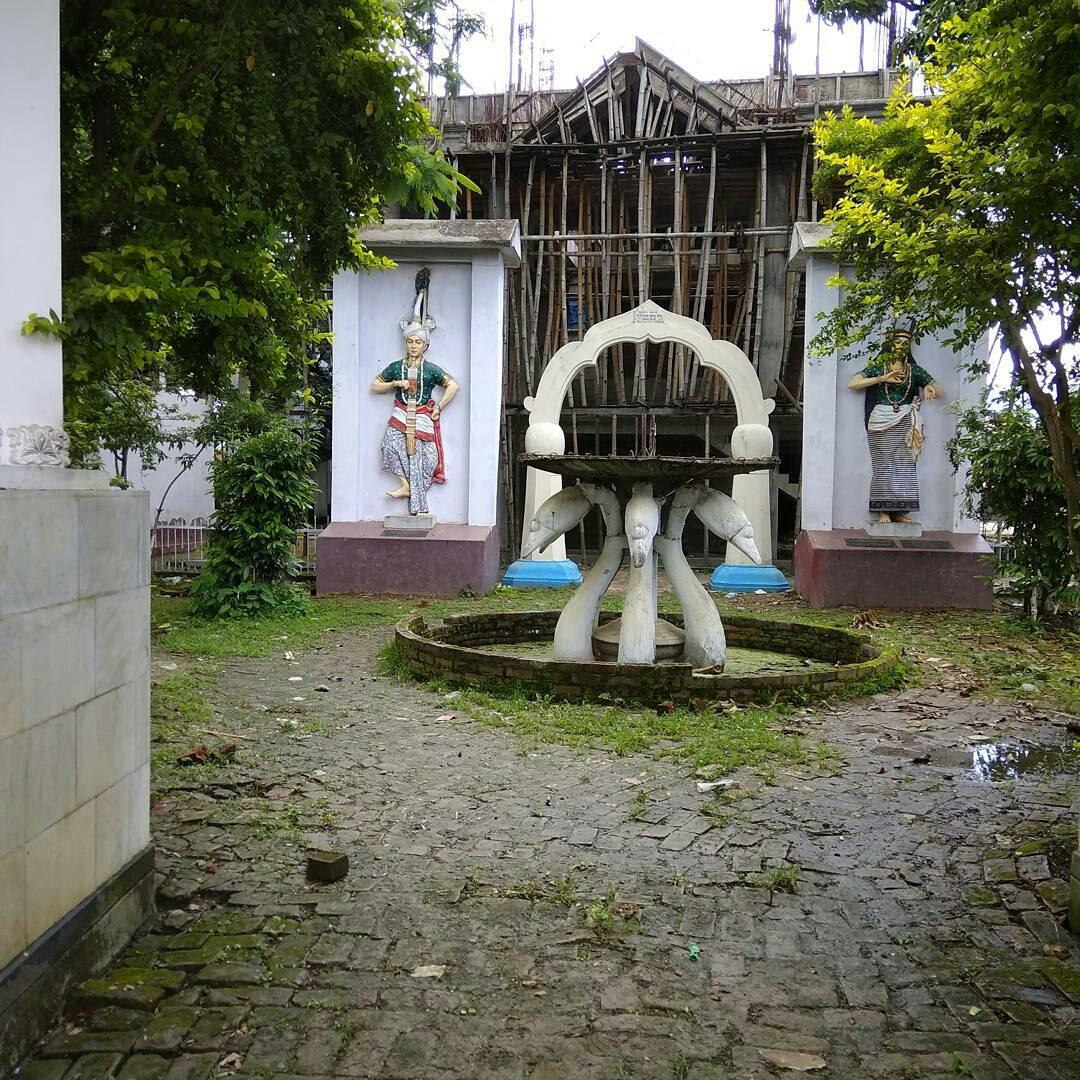
A small town, about 45 km south of Imphal, Moirang is famous for the ancient temple of Lord Thangjing and the legendary love story of Khamba Thoibi with the clothes used by Khamba and Nogban still preserved in the village of Ngangkhaleikai. The epic story is between a beautiful princess Thoibi, daughter of King Wangon Ningthou Chingkhu Naha Telheiba and an orphan boy Khamba, who was raised by his sister when orphaned.

In ancient times, the King of Moirang was considered the most powerful among the seven clan kings of Manipur. Till the end of the Khamba-Thoibi era, the Burmese King paid the annual war reparations money to the Moirang kings. During World War II, Moirang was the headquarters of the Indian National Army (INA). Colonel Shaukat Malik of the Indian National Army hoisted the tricolour for the first time on Indian soil on 14 April 1944, in Moirang. The INA Museum at Moirang displays some wartime relics and photographs.

Since Moirang houses a serene lake and a national park, it is bound to be abundant in flora and fauna. A large number of animals and birds live here and can be spotted easily. Animals including sambar, barking deer, monkeys and Sangai deer as well as birds such as hornbills, ducks, crows and kingfishers and migratory birds can be found here.

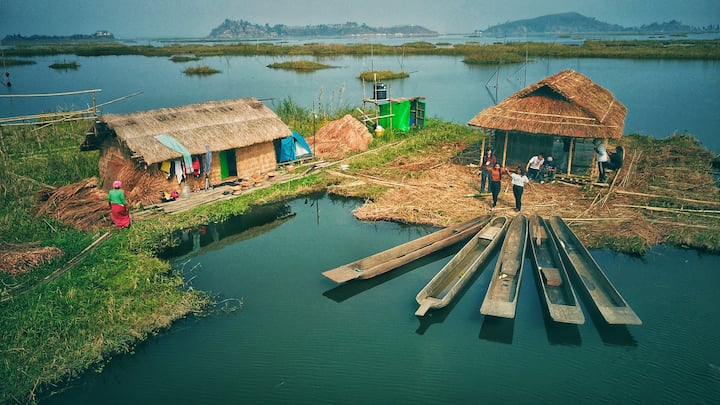
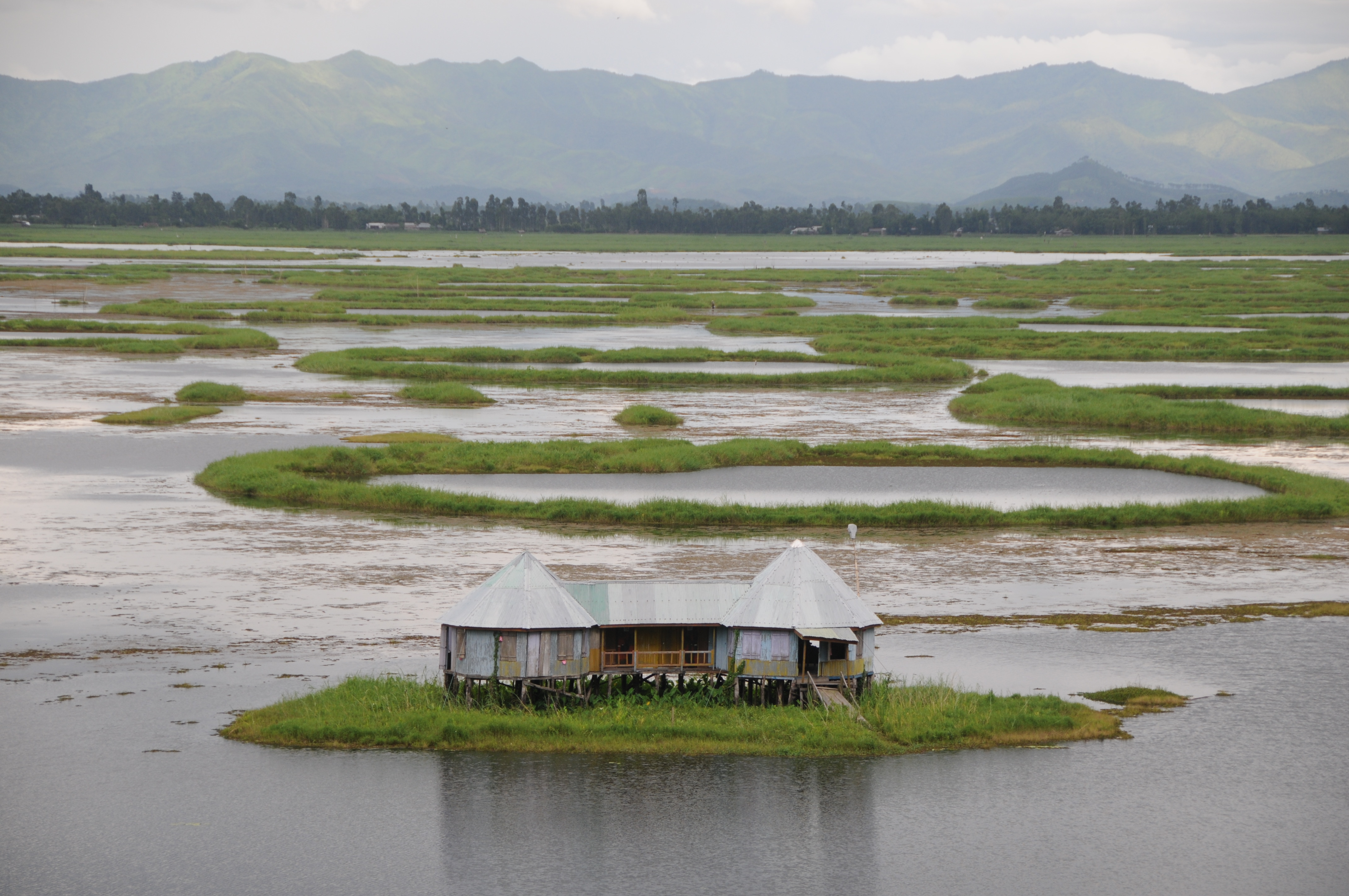
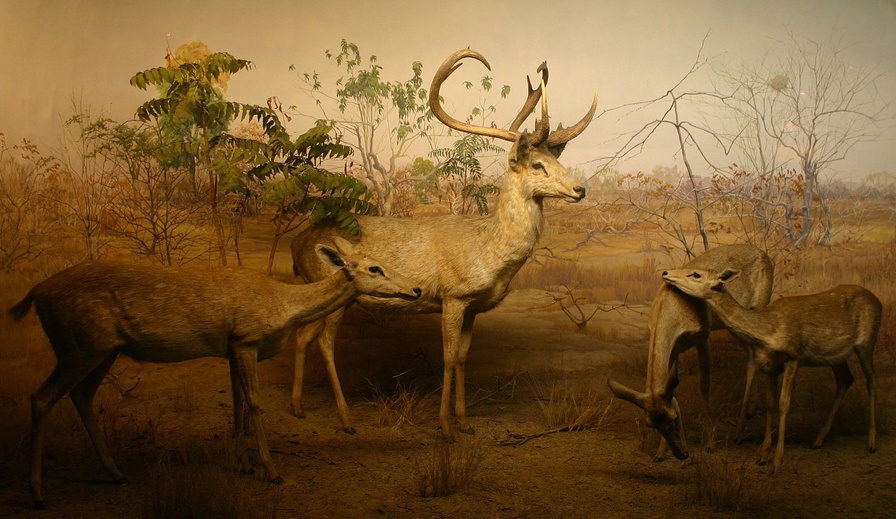
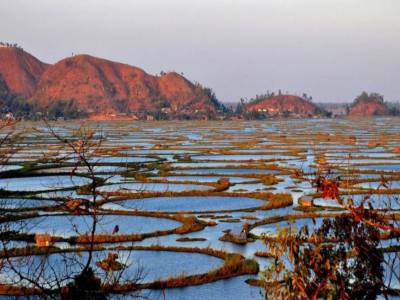
The largest freshwater lake in the country, Loktak Lake and the Sendra Island on it, are located about 50 km from Imphal, in Moirang in the Imphal valley. Loktak which means the end stream is famous for the phumdis or the heterogeneous mass of vegetation, soil and organic matter at various stages of decomposition floating over it. The largest of all the phumdis, Sendra Island covers an area of 40 sq km and is situated on the south-eastern shore of the lake. Located on this phumdi is the Keibul Lamjao National Park, the only floating national park in the world which is the last natural refuge of the endangered Sangai, the state animal, the Manipur brow-antlered deer, one of three subspecies of Eld’s deer.

The ancient lake plays an important role in the economy of Manipur and serves as a source of water for hydropower generation, irrigation and drinking water supply as well is a source of livelihood for the rural fishermen who live in the surrounding areas and on the phumdis, also known as phumshongs. The lake was initially designated as a wetland of international importance under the Ramsar Convention on 23 March 1990 and also listed under the Montreux Record on 16 June 1993.

The Lake is divided into two zones, namely, the Core Zone which is the no-development zone or totally protected zone comprising 70.3 sq km and the balance area is called the Buffer Zone. Within the lake and on its periphery, there are 14 hills of varying size and elevation with the Sendra, Ithing and Thanga islands on the southern part of the lake. Geographically, in terms of biodiversity and pressure of human activities, the lake is broadly divided into northern, central and southern zones.

Thanga Island is the largest island in Loktak Lake as well as a religious destination for both Hindu and Sanamahists due to its numerous temples and sacred sites. Karang Island is the second-largest island in the lake and is famous for the Ebudhou Khuman Apokpa Temple and the Ibudhou Khumanpokpa Temple, temples of the ancestral deities of the Khuman Dynasty of Manipur. Ithing Islet is a human-inhabited islet situated on the way to Thanga Island.

The Northern Zone has five main streams or rivers flowing into the lake and is separated from the central zone by large phumdis that stretch from the northwest to the southeast. The Central Zone encloses prominent islands of Thanga, Karang and Ithing and is the main open water zone of the lake, which was relatively free from phumdis in the past, but over the years athaphums or artificially created phumdis for fishing constructed by villagers for fishing have proliferated choking the entire lake. The Southern Zone encompasses the Keibul Lamjao National Park, Ungamel and Kumbi pats at the southern part of the lake and the zone is linked with Khuga River by the Ungamel channel. Loktak Day is observed every year on the 15th of October at the periphery of the lake. The lake is open daily between 8 am to 6 pm.

The only floating national park in the world, the Keibul Lamjao National Park is a vital part of the Loktak Lake. Created in 1966 as a wildlife sanctuary to preserve the natural habitat of the endangered Eld’s deer or Cervus eldi eldi, locally known as Sangai and gazetted as a national park in 1977, it is characterised by floating decomposed plant material locally called phumdi. The brow-antlered deer, first discovered in Manipur in 1839 was reported an extinct species in 1951. It was re–discovered in the Keibul Lamjao Park area and so this area was declared a national park to protect and conserve the deer now called Eld’s deer’s subspecies brow-antlered deer. From a small herd of 14 in 1975, its population was reportedly 260 in 2016.

Covering an area of over 40 sq km, the Keibul Lamjao National Park is home to various species of plants and animals, including migratory visitors and hosts over 450 varieties of orchids and over 100 species of aquatic flora and numerous species of birds. The floating marshes or the Phumdis consist of vegetation that is about 120 cms thick.

The best time to visit Keibul Lamjao National Park is between October and March as the Lake water levels are suitable to explore the park.

It is best to visit the park from 6 to 10 am and between 3:30 and 6 pm as this is when the Sangai deer come out to feed in herds. A boat trip along the labyrinthine boat routes passing through colourful water plants would also be a good way to see the park. The park itself is open from 7:30 am to 5:30 pm and entry fees for Indians is INR 30 per person while foreigners would need to pay INR 200 per person. Camera Charges for Indians are INR 50 per person while it is INR 250 for foreigners and car park charges are INR 100 per vehicle.

Sendra Island encompasses a small hillock that is surrounded by water. Although a small hillock entangled by the lake water on all sides, it is linked to the mainland through a pathway. There is a tourist lodge on the hilltop. The serene water around the hillock and the verdant trees magnify the beauty of this place making it picturesque.

The Indian National Army Complex was once used as the unofficial headquarters of the Indian National Army. The INA Memorial Complex was built to honour the soldiers who had sacrificed their lives for the country with letters, photographs and other artefacts available here. There is a bronze statue of Netaji Subhas Chandra Bose erected in the complex which is open from 8 am to 6 pm daily.

Moirang is also a land of temples as a lot of beautifully constructed temples with pristine aura are located here. The Pakhangba Temple, the Loktak Maru Temple, the Ibudhou Thangnarel Temple, the Oknarel Temple, the Radha Mandhop Temple and the Gopinath temple are some of the famous ones.

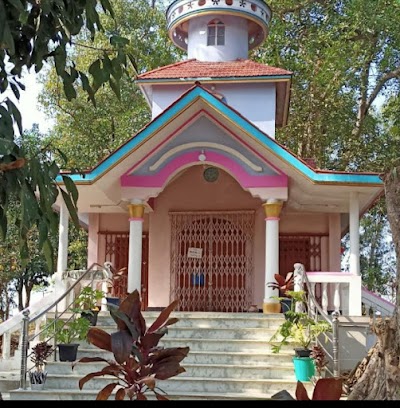
The Ibudhou Thangjing Temple or the Lord Thangjing Temple is an ancient temple dedicated to Lord Eputhou Thangjing, the ancient national deity of the ancient kingdom of Moirang. The best time to visit the temple is between May and July during the onset of the great mega music and dance religious festival of Lai Haraoba which attracts thousands of tourists every year especially historians and archaeologists. The temple is where the great Khamba Thoibi dance was performed for the first time according to a famous legend.

Located near the western borders of Loktak Lake, about 5 km from Moirang, Phubala has many attractions and can be combined with a trip to the lake. The two islands at Phubala has water sports activities and visitors can also enjoy picturesque views of the lake.

Tamenglong
Located about 145 km west of Imphal, Tamenglong is a hilly district covered by valleys and ranges. It lies on the hilltop from which descends the Barak River. The town is described as a biodiversity hub with a variety of exotic and rare species of birds and animals. This town is known for the oranges grown here and is home to some of the most unique plants and animals. The vibrant forest here provides a habitat for hog deers, leopards, wild dogs, hyenas, tigers and many more. The forest covers can be distinguished into three different types namely the bamboo brakes, the tropical evergreen forest and subtropical forests. Attractions include the Barak Waterfall which takes visitors through a series of seven waterfalls, the Zeilad Lake famous for many pythons, fish, water birds, large tortoises and ducks, the Buning Meadows and the Tharon Caves.

The tribal population in Tamenglong, comprises the Zeliangrong Nagas and the Kukis. Festivals celebrated in the town include the Orange Festival, the Gudui-Ngai, the Rih-Ngai or the Chaga Ngai, the Banruhmei and the Tarang. The best time to visit the town is between October and March.

The Tharon Cave is a 655.6 m long cave which can be explored with the help of the map drawn outside the cave. Also spelt as the Thaeuluan Cave, it is located about 27 km from Tamenglong. The cave has five exits and 34 joints. The Tharon Cave was once used as a shelter and excavations inside the cave have items related to the Hoabinhian culture of North Vietnam. The cave is an abode for fruit bats with about 12 caves located underneath.

Also known as N-piulong Valley, Buning Meadow is coloured with beautiful lilies and orchids making the place look stunning. The Meadow is filled with multitudes of birds and animals including Hoolock, gibbons and foxes. The summer months between March and June are the best time to visit the meadow when it is in full glory.

Situated near the Zeliadjung or Atenba village on a high platform up on the hill, the Zeilad Lake is a must-visit tourist attraction. Home to pythons, fish, tortoises and water and migratory birds, this is why the lake is a tourist favourite. Naga tales reveal that Zeilad Lake is where paddy originated. The lake has recently been declared as one of the four wildlife sanctuaries of Manipur and is also known as the Zeilad Wildlife Sanctuary. The best time to visit the lake is between October and April as the weather remains cool and pleasant.

The Barak Waterfalls are a must-visit place where seven other waterfalls are located close to each other. A local favourite to picnic, the aqua green falls and the sight of the cool water gushing from the hills to the plains is something that needs to be seen and experienced.

Thoubal
Located about 23 km south of the capital Imphal, Thoubal town’s name comes from the word Athouba meaning brave people symbolising the courageous people here. It is one of the larger towns of Manipur and has an idyllic feel to it with many lakes and rivers, paddy fields, and gardens. It is also the window to South-East Asia as the Trans-Asian highway (AH1) passes through it.

Thoubal is ideal for trekking, hiking and picnics given the abundance of the green landscape and is famous for the temples and the numerous water bodies with many lakes dotting the landscape. There is a diverse variety of trees and bamboos and plantains can be seen all around.

The main attractions include the Chinga Lairembi temple, the Tomjing Ching, the Panthoibee temple, the Thoubal bazaar, the Tangjeng ching from where one can have a bird’s eye view of the Waithou Lake and the Khangabok Menjor Garden. Thoubal also has the distinction of having the first and only subway in Manipur.

The Ikop Lake, located at an altitude of 772 m above sea level has a saucer-shaped basin and a silted bottom. The Lousi Lake spreads over an area of 18.64 sq km and features a wetland ecosystem. It is a major source of water for the locals. Pumlenpat lake is a freshwater lake and is also known as the Pumlen Pa. It spreads over an area of 19 sq km and is covered by phumdis and floating soil and vegetation, similar to the Loktak Lake. The lake is the second largest lake in Manipur after the Loktak Lake and is located about 68 km south of Imphal and about 45 km from Thoubal and plays an important role in the lives of the people nearby. There are plenty of small islands on this lake and once people started settling on these islands, the lake is now on the verge of extinction due to human encroachment.

The historically important Khongjom marks the site where Major General Paona along with his soldiers fought against the British invasion, ending in complete British control over Manipur. There is an open-air gallery in which a 78 feet long boat called the Hiyang Hiren can be viewed. Science fairs and exhibitions are also organised here.

In My Hands Today…

Our Heritage Revisited : A glimpse into Ancient Indian texts – Anju Saha

Ever wondered what is in the Veds and Upanishads? The terms Shruti, Smriti, Puran, Agam, Nigam, Advait, Vedant philosophy to name a few have been heard – but what exactly are these? This book attempts to bring all of this and more in a quick-read for an overall perspective.

We in India are blessed with a great literary heritage and tremendous cultural, philosophical and traditional wealth. However the contents of ancient Indian scriptures have generally remained an enigma and most of the existing works available to readers, take up for commentary, an individual text for a detailed understanding but an overall picture is not easily available.

This book attempts to present a user-friendly description of these texts and their evolutionary account. It is a simple version, meant for someone keen to get an overview of our amazing ancient scriptures but may have found existing books too exhaustive.