In My Hands Today…

A Knock at Midnight – Brittany K. Barnett

Brittany K. Barnett was only a law student when she came across the case that would change her life forever–that of Sharanda Jones, single mother, business owner and, like Brittany, black daughter of the rural South. A victim of America’s ruthless and devastating war on drugs, Sharanda had been torn from the arms of her young daughter and was serving a life sentence without parole–all for a first-time drug offense. In Sharanda, Brittany saw haunting echoes of own life, both as the daughter of a formerly incarcerated mother and the one-time girlfriend of an abusive drug dealer. As she studied Sharanda’s case, a system slowly came into focus: one where widespread racial injustice forms the core of our country’s addiction to incarceration. Moved by Sharanda’s plight, Brittany began to work towards her freedom.

This had never been the plan. Bright and ambitious, Brittany was already a successful accountant with her sights set on a high-powered future in corporate law. But Sharanda’s case opened the door to a harrowing journey through the criminal justice system, in which people could be locked up for life under misguided appeals for law and order. Driven by the realization that her clients’ fates could have easily been her own, Brittany soon found herself on a quest to unlock the human potential of those our society has forgotten how to see. Living a double life, she moved billion dollar corporate deals by day, and by night worked pro bono to free Sharanda and others in near-impossible legal battles. Ultimately, her journey transformed her understanding of injustice in the courts, of genius languishing behind bars, and the very definition of freedom itself. A Knock at Midnight is Brittany’s riveting, inspirational memoir, at once a coming-of-age story and a powerful evocation of what it takes to bring hope and justice to a system built to resist both at every turn.

Festivals of India: Rishi Panchami

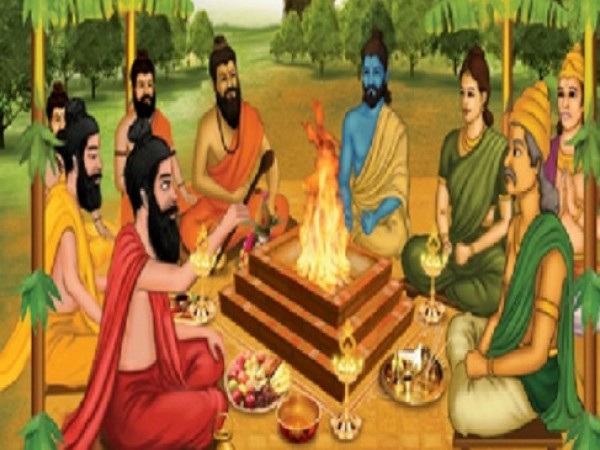
Rishis are learned sages and the Sapta Rishis or the seven great sages are the seven rishis in ancient India, who are extolled at many places in the Vedas and other Hindu literature. The Vedic Samhitas never enumerate these rishis by name, though later Vedic texts such as the Brahmanas and Upanisads do so. They are regarded in the Vedas as the patriarchs of the Vedic religion.

In ancient Indian astronomy, the asterism of the Big Dipper, part of the constellation of Ursa Major, is called Saptarishi, with the seven stars representing seven rishis, namely Vashistha, Marichi, Pulastya, Pulaha, Atri, Angiras and Kratu. There is another star slightly visible within it, known as Arundhati with Arundhati and Vashishtha who are married, and together form the Mizar double.

Source

The Saptarishis included Sage Kashyapa, Sage Atri, Sage Vashishta, Sage Vishvamitra, Sage Gautama, Sage Jamadagni and Sage Bharadwaja. The Saptarishis were created by Lord Brahma to impart education to the human race. They passed down wisdom to the mankind so that it is able to follow the path of knowledge, understand the basic principles of goodness, and become enlightened.

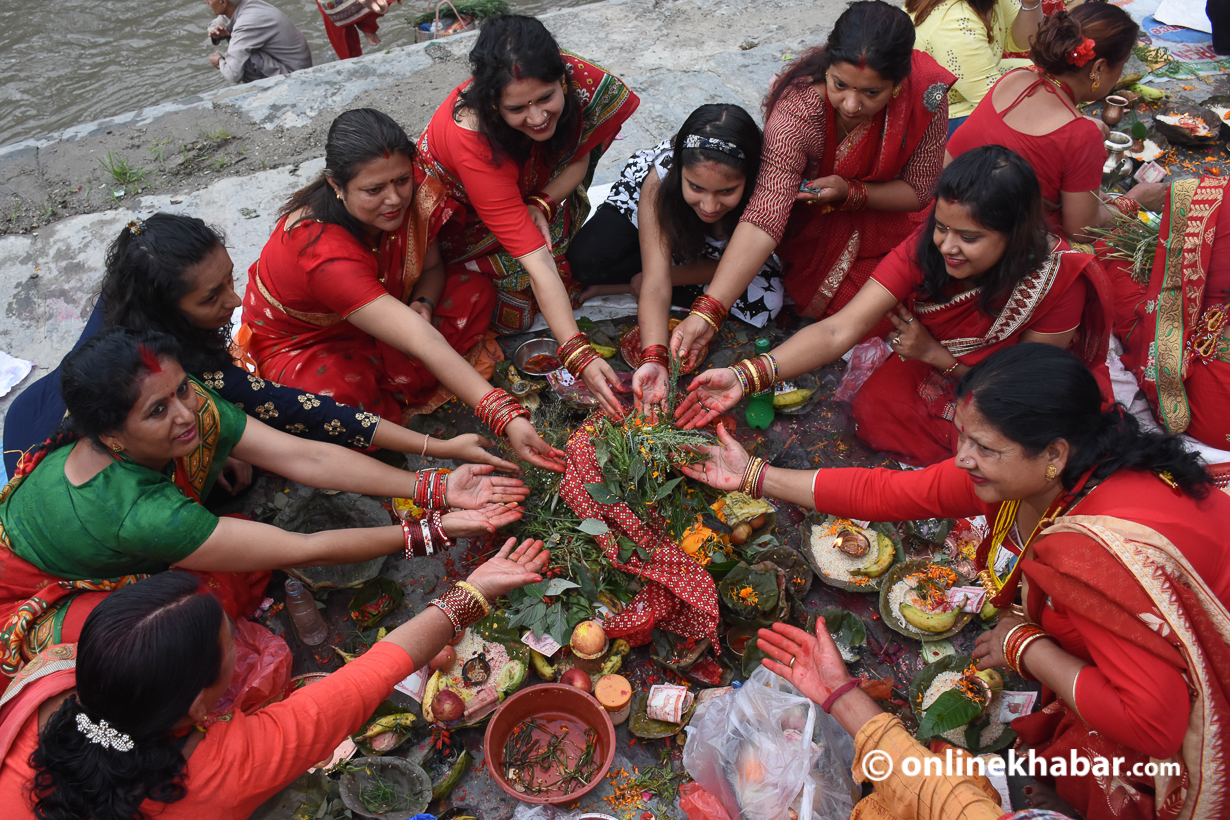
Tomorrow is Rishi Panchami, a very auspicious day for Hindus. Rishi Panchami is celebrated on the fifth day of Shukla Paksha in the month of Bhadrapad, from mid-August to mid-September. It is celebrated two days after Hartalika Teej and the day after the Ganesh Chaturthi festival. It is believed that this day honours the entire gamut of sages of ancient India and is especially dedicated to the Saptarishis, the seven great sages. In some parts of Kerala, the day is also observed as Vishwakarma Puja. The festival is very famous in Nepal among the Hindus where in some regions the three days Hartalika Teej fasting ends on Rishi Panchami.

On Rishi Panchami women fast to pay obeisance to the seven sages and to get purified. Hinduism gives highest priority to purity and there are strict guidelines to maintain the purity of the body and soul. Women are believed to be contaminated during their menstrual cycle and in many families, even today, women are not allowed to enter in the kitchen or to participate in any religious activities and touch anyone during this time. And it is believed that by doing such things, women are inflicted by the Rajaswala Dosha. The fast on Rishi Panchami is believed to get rid of this Rajaswala Dosha.

Rishi Panchami is also celebrated as Raksha Bandhan or Rakhi festival by some Dadheech Brahmins and also the Agrawal and Maheshwari communities of Rajasthan. Sisters tie the Rakhi or a sacred thread and both brothers and sisters pray for the well-being of each other and vow to protect each other.

The day is so auspicious that it is believed that a fast kept on this day and all the rituals followed will relieve a person from all sins in not just the current life, but also from past lives. The story behind Rishi Panchami was narrated by Lord Brahma himself. According to him, there was a simple Brahmin named Uttank who used to live with his wife Sushila and their daughter, a widow. One night, several ants covered the body of the daughter and the parents were astonished to see this. They became extremely worried and immediately called a sage, so that he could explain the situation and give them a solution. The Rishi whom they called was a learned sage and he explained the reason behind the trouble. He made them aware of the sin that their daughter committed in her previous life which was that she had entered the kitchen during her menstruation. The rishi advised the daughter to perform certain rituals on the day of Rishi Panchami to purify her body and soul, so that she would be relieved of the sin that she has committed. Following the instructions given by the sage, the daughter performed all the customs with absolute devotion which set her soul free from the dosha.

On Rishi Panchami, devotees wake up early morning and take a bath immediately and then begin their fast. The only purpose of Rishi Panchami is to sanctify a person completely which is why some people do things like the cleaning of teeth and bathing with herbs, which are very pure and are considered to leave the body extremely clean. A mixture of curd, milk, basil and butter is drunk to purify the soul. Worshipping Gods including Lord Ganesh, the Navagraha or nine planets, the Saptarishis and the star Arundhati form the concluding part of the rituals performed. The prayers are offered in order to invoke the presence of the seven sages, with different offerings like food and flowers being offered.

In My Hands Today…

Range: Why Generalists Triumph in a Specialized World – David Epstein

What’s the most effective path to success in any domain? It’s not what you think.

Plenty of experts argue that anyone who wants to develop a skill, play an instrument, or lead their field should start early, focus intensely, and rack up as many hours of deliberate practice as possible. If you dabble or delay, you’ll never catch up to the people who got a head start. But a closer look at research on the world’s top performers, from professional athletes to Nobel laureates, shows that early specialization is the exception, not the rule.

David Epstein examined the world’s most successful athletes, artists, musicians, inventors, forecasters and scientists. He discovered that in most fields–especially those that are complex and unpredictable–generalists, not specialists, are primed to excel. Generalists often find their path late, and they juggle many interests rather than focusing on one. They’re also more creative, more agile, and able to make connections their more specialized peers can’t see.

Provocative, rigorous, and engrossing, Range makes a compelling case for actively cultivating inefficiency. Failing a test is the best way to learn. Frequent quitters end up with the most fulfilling careers. The most impactful inventors cross domains rather than deepening their knowledge in a single area. As experts silo themselves further while computers master more of the skills once reserved for highly focused humans, people who think broadly and embrace diverse experiences and perspectives will increasingly thrive.

International Literacy Day

Today is the International Literacy Day. Literacy is a very important as without it, an individual cannot engage in our day-to-day life. Most commonly defined as the ability to read and write, Literacy is not as simple as it sounds. Reading and writing abilities vary across different cultures and contexts, and these too are constantly shifting. Today, reading encompasses complex visual and digital media as well as the printed material. We need to be literate to navigate our daily life, including using our phones, signs outside our homes, prices in a store and many more which we use and do without really thinking too much of it. But beyond the functional level, literacy plays a vital role in transforming people into socially engaged citizens. Being able to read and write means being able to keep up with current events, communicate effectively, and understand the issues that are shaping our world.

International Literacy Day celebrated each year on 8 September, was declared by UNESCO on 26 October 1966 and celebrated for the first time in 1967. Its aim is to highlight the importance of literacy to individuals, communities and societies with celebrations taking place in several countries. About 775 million lack minimum literacy skills; one in five adults are still not literate and two-thirds of them are women; 60.7 million children are out-of-school and many more attend irregularly or drop out.

According to UNESCO’s Global Monitoring Report on Education for All of 2006, South Asia has the lowest regional adult literacy rate at 58.6%, followed by sub-Saharan Africa at 59.7%. Countries with the lowest literacy rates in the world are Burkina Faso at 12.8%, Niger at 14.4% and Mali at 19%. The report shows a clear connection between illiteracy and countries in severe poverty, and between illiteracy and prejudice against women.

The 2021 edition of the International Literacy Day or the ILD will be celebrated under the theme of Literacy for a human-centred recovery: Narrowing the digital divide. The COVID-19 crisis has disrupted the learning of children, young people and adults at an unprecedented scale. It has also magnified the pre-existing inequalities in access to meaningful literacy learning opportunities, disproportionally affecting 773 million non-literate young people and adults. Youth and adult literacy were absent in many initial national response plans, while numerous literacy programmes have been forced to halt their usual modes of operation.

Even in the times of global crisis, efforts have been made to find alternative ways to ensure the continuity of learning, including distance learning, often in combination with in-person learning. Access to literacy learning opportunities, however, has not been evenly distributed. The rapid shift to distance learning also highlighted the persistent digital divide in terms of connectivity, infrastructure, and the ability to engage with technology, as well as disparities in other services such as access to electricity, which has limited learning options.

The pandemic, however, was a reminder of the critical importance of literacy. Beyond its intrinsic importance as part of the right to education, literacy empowers individuals and improves their lives by expanding their capabilities to choose a kind of life they can value. It is also a driver for sustainable development. Literacy is an integral part of education and lifelong learning premised on humanism as defined by the Sustainable Development Goal 4. Literacy, therefore, is central to a human-centred recovery from the COVID-19 crisis.

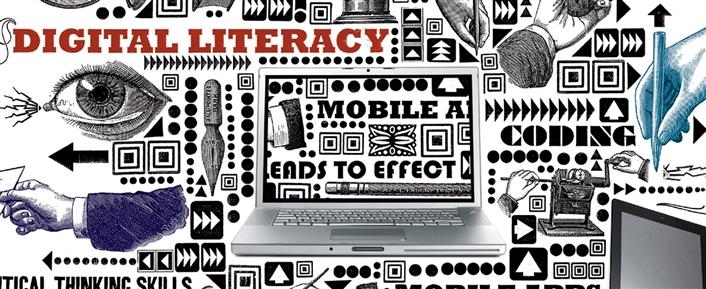
The COVID-19 pandemic has been the worst disturbance to education and training systems in a century, with the longest school closures affecting more than 1.6 billion learners at its peak time. By November 2020, the average child had lost 54 percent of a year’s contact time, which could be interpreted as the loss of over a year’s learning if the time of forgetting what was previously acquired is counted. The pandemic and its repercussions have also magnified the pre-existing inequalities in access to meaningful literacy learning opportunities, disproportionally affecting 773 million non-literate young people and adults. With low or no reading and writing skills, they tend to be more vulnerable in managing their health, work, and life. At the same time, the COVID-19 crisis amplified the centrality of literacy to people’s life, work and lifelong learning. Reading and writing skills are essential, for instance, to access life-saving information and sustain livelihoods. In addition, the need for digital skills, which are part of today’s literacy skills, have been recognized for distance learning, a digitally transformed workplace, and participation in a digitalized society. While there is no single internationally agreed definition, digital skills are broadly understood as a range of abilities to use digital devices, communication applications, and networks to access, manage, understand, integrate, communicate, evaluate and create information safely and appropriately in an increasingly technological and information-rich environment. Various aspects of digital skills are increasingly becoming indispensable to be literate. However, many young people and adults are digitally non-literate, including those who lack basic reading and writing skills. In Europe, 43 percent of adults lack the basic digital skills required to participate in distance digital learning. As acquisition of digital skills involves complex cognitive processes, these emerging skills demand calls for ensuring an adequate level of reading and writing skills, the integration of digital skills into literacy programmes, if appropriate, and the consideration of the inter-relations between these skills, kinds of technology and teaching approaches to be adopted, as well as learners’ motivation, life situations, contexts, and cultures.

ILD 2021 will explore how literacy can contribute to building a solid foundation for a human-centred recovery, with a special focus on the interplay of literacy and digital skills required by non-literate youth and adults. It will also explore what makes technology-enabled literacy learning inclusive and meaningful to leave no one behind. By doing so, ILD2021 will be an opportunity to reimagine future literacy teaching and learning, within and beyond the context of the pandemic.

ILD2021 will be celebrated across the world to uphold the right to literacy and foster the acquisition of literacy and digital skills by youth and adults for a human-centred recovery from the COVID-19 crisis. Some key questions that ILD 2021 will ask will include questions on what are inclusive and good policies, measures and interventions to put literacy, and possibly also digital skills, at the heart of a human-centred recovery from the COVID-19 crisis and to narrow the digital divide and how can the learning of digital skills be integrated into technology-enabled literacy programmes in a meaningful manner as well as how can governments and other agencies mobilise adequate technical and financial support for the promotion of literacy programmes, including the ones that integrate digital skills learning?

Hopefully the efforts that ILD2021 undertakes will increase awareness of the importance of literacy and digital skills for a human-centred recovery and possible ways to make policies, measures and interventions for youth and adult literacy better and more inclusive to counter the digital divide and key issues are identified and new ideas generated for reimagined literacy teaching and learning that integrate literacy and digital skills.

In My Hands Today…

Kind of Hindu – Mindy Kaling

What if only kind of knowing your family’s heritage is actually kind of lame? For Mindy Kaling, the number one bestselling author of Why Not Me?, the search for an answer begins with an Edible Arrangement of chocolate-covered strawberries and a Hindu priest.

Like Kelly Kapoor on The Office, Mindy is engaged with her Indian heritage to the extent that it is fun and convenient. So apart from a tolerance for spicy foods and an appreciation for Ravi Shankar, Mindy isn’t all that Hindu. Her daughter’s Jewish godfather—TV and film’s B.J. Novak—prompts her to reconsider her religious beliefs and ask herself: How Indian do I want my daughter to be?