
For centuries, Ghee has been an integral part of the Indian household. In ancient times, all food was cooked in ghee and no religious ceremony is complete without the addition of ghee to the sacred flames.
In most tambram households, no meal was complete without ghee. After the rice and dal were put on the plate, a dollop of ghee was put, after which you started eating. I also remember children getting extra ghee in their palms just because it is so tasty. However, a few years back, with the saturated fats controversy, a lot of people stopped eating ghee and switched to more healthier (or so they were told) alternatives.
Today, Ghee or clarified butter has gotten the status of a superfood! Shocked right? I was too and so decided to find out more and also check if the ancient Indians were correct in the usage of ghee.
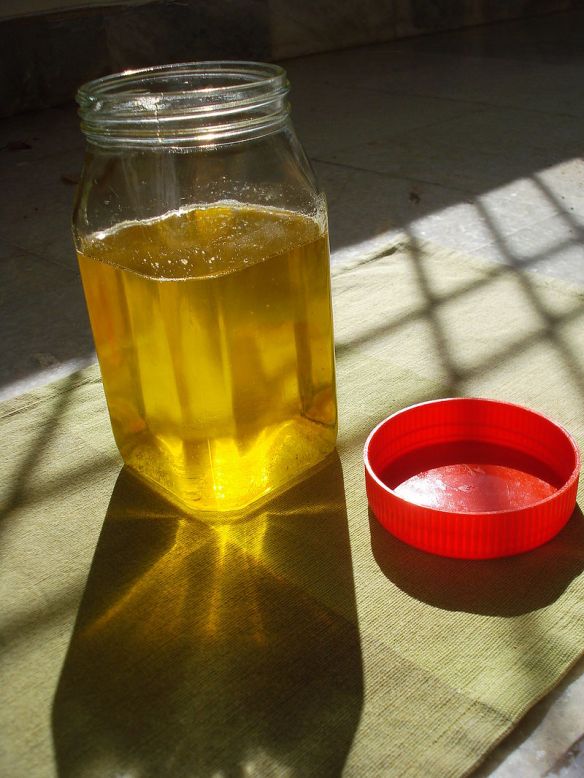
So what exactly is ghee? Ghee is clarified butter where the milk solids in butter or cream which float to the top or sink to the bottom have been skimmed off and what remains is a clear golden product with a high smoking point and a delicate, nutty flavour. Ghee is liquid when you first make it and then solidifies to a whitish opaque creamy consistency. It hardens when you chill it, but regains its creaminess when it stays outside for some time.
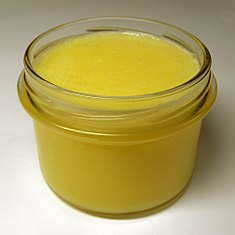 Because it has no milk or water solids, people with lactose intolerance can use this as a very good substitute for butter in cooking. It’s been part of the ancient medical system of Ayurveda for thousands of years, stretching back to at least 800 BC; Ayurvedic medicine claims that ghee is good for everything from sleep quality to semen health, joint suppleness, intelligence, memory and wrinkles.
Ghee is casein and lactose-free and so a great addition for those with dairy sensitivities. In addition, ghee is gluten-free and high in butyric acid, a short-chain fatty acid used in the body as an energy source and anti-inflammatory. Ghee is also rich in essential fatty acids and Vitamins A, D and E.
Ghee contains medium-chain fatty acids which the liver can absorb directly and burn immediately, making it a healthier source of energy than most of the carbs we eat today. Ghee is packed with butyric acid, a short-chain fatty acid that has several benefits, one of which is better digestion. Our bodies actually convert fibre into butyric acid, so eating it makes the body’s job easier. Butyric acid heals the digestive tract and keeps it healthy. The butyric acid in ghee also promotes immunity, by increasing the production of killer T cells in the gut.
Indian food contains several herbs and spices, each of which is loaded with numerous nutrients. Ghee absorbs these nutrients and helps them reach the correct part of the body, where they are most required. Also because of its high smoking point, ghee does not break down into free radicals while cooking, which other oils with a lower smoking point do.
 A 2010 review of ghee science in the International Quarterly Journal of Research In Ayurveda by scientists from Ohio State noted that animal studies of ghee have found a series of possible benefits, including decreases in cholesterol, low-density lipoproteins and triglycerides (which are associated with cardiovascular disease), and a potential link between ghee and lower coronary heart disease risk. One study in 2016 found that ghee was better for cooking than sunflower oil when looking at antioxidants and liver protection, while another in 2013 found that it helped to protect against the development of fatty deposits in arteries. Multiple studies in 2015 found that ghee, particularly low-cholesterol ghee, seemed to improve general cholesterol levels. It’s worth noting that virtually all of these studies were done on rats, not humans. But the qualities of ghee have attracted medical attention for other reasons; it was suggested in early 2017 that ghee might be a good way to administer chemotherapy, as it may help the chemo get into the body more efficiently.
Ghee is super easy to make at home. I started making ghee at home around two years ago and don’t look at store-bought ghee anymore. Buy unsalted butter and heat it in a heavy bottomed pan. Make sure your pan is deep as it will bubble a lot during the process. Boil it in a low to medium heat until the milk solids separate and sink to the bottom of the pan. The ghee will become a lovely golden colour and will have a lovely aroma. When the milk solids start to brown, stop the flame and let it cool. Strain the ghee and let it cool. Once it starts to solidify, you can start using it. It stores very well outside, it need not be refrigerated, but in the fridge, it can keep for years without spoiling.
Are you convinced about the health benefits of ghee yet? Go on and buy a container of it and start cooking with it, you will never look back and wonder why it took you so long to convert.

 Raucous twin sisters Moonie and Mei Ling Wong are known as the “double happiness” Chinese food delivery girls. Each day they load up a “crappy donkey-van” and deliver Americanized (“bad”) Chinese food to homes throughout their southern California neighbourhood.
 Deciding that true romantic heroes are a thing of the past, Eloise Kelly, an intelligent American who always manages to wear her Jimmy Choo suede boots on the day it rains, leaves Harvard’s Widener Library bound for England to finish her dissertation on the dashing pair of spies the Scarlet Pimpernel and the Purple Gentian. What she discovers is something the finest historians have missed: a secret history that begins with a letter dated 1803. Eloise has found the secret history of the Pink Carnation the most elusive spy of all time, the spy who single-handedly saved England from Napoleon’s invasion.
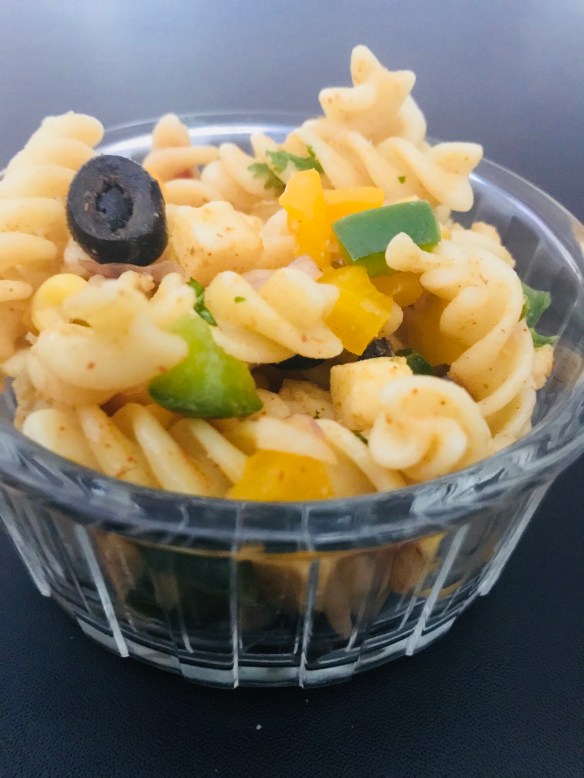 Pasta Salad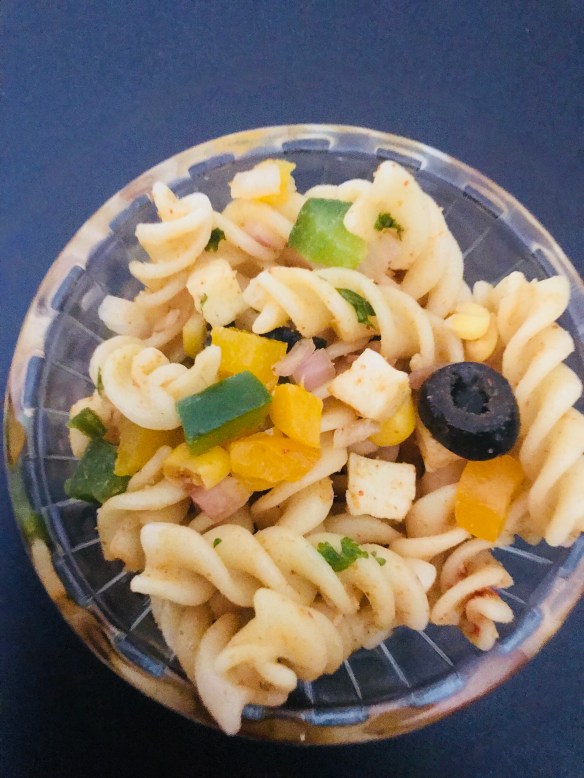


 In her twenties, journalist Sarah Macdonald backpacked around India and came away with a lasting impression of heat, pollution and poverty. So when an airport beggar read her palm and told her she would return to India—and for love—she screamed, “Never!” and gave the country, and him, the finger.
 Memories and Such