Mumbai Memories: The Preservation of the Agraharam Tamil Dialect

Growing up, everyone around me spoke Tamil or a Malayalam-tinged Tamil, and I didn’t think anything was amiss. This was my normal. I did hear a slightly different Tamil in the movies, but I didn’t really think too much about it, assuming it was normal for films to sound that way. However, after I moved to Singapore, I experienced culture shock in terms of the Tamil language spoken. The first one came from S and his family, who spoke Tamil, but it was slightly different from what I spoke and had heard spoken all my life. When I asked them, they said their Tamil is the Tamil of the masses, and when they spoke the Tambram dialect, they were teased and made fun of in school and outside, so over the years, the Tambram community in Singapore slowly stopped speaking that dialect and instead switched to the more locally spoken version.

But I am adamant about preserving my heritage, and so far have refused to succumb to subsuming my dialect into the standard Tamil. I don’t speak a lot of Tamil here in Singapore, but when I do, it’s the Tambram Tamil I spoke while growing up. Even with GG & BB, I always spoke to them in this dialect, but given their mostly English language usage, there’s not much hope that they will continue to speak this dialect, and so, at least in my family, the dialect will end with me.

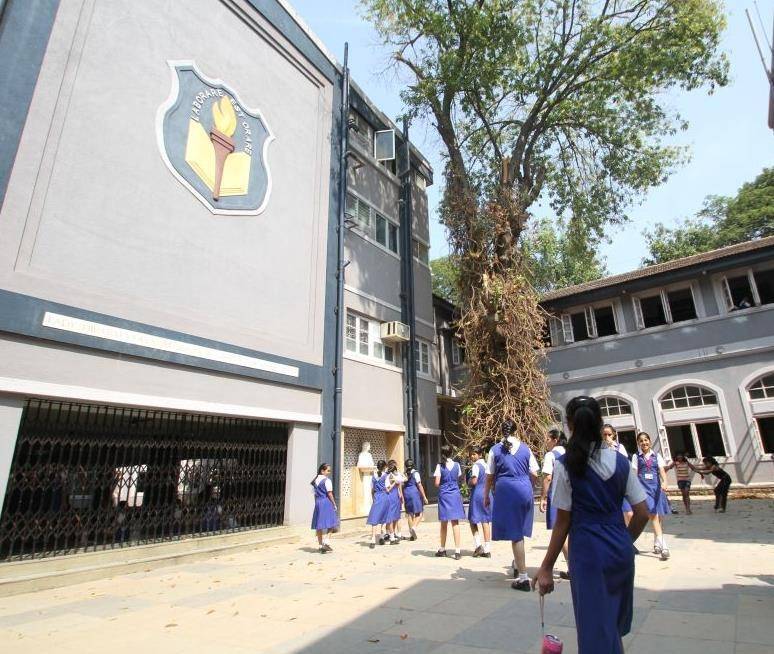
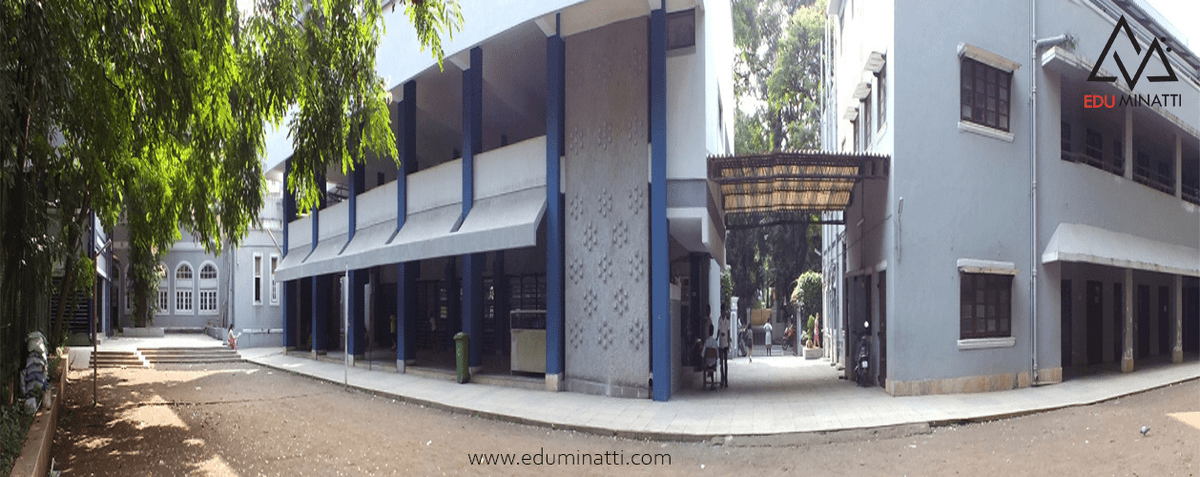
However, the Tamil Brahmins from Tamil Nadu and Kerala who migrated to Mumbai in the 1930s, 1940s, and 1950s have remarkably preserved their Agraharam-style Brahmin Tamil dialects, setting them apart from their counterparts who remained in South India and gradually adapted their speech to local influences. This linguistic retention became a hallmark of communities in areas like Matunga and Chembur, where strong social bonds and cultural traditions reinforced the continuity of dialect and identity across generations.

The migration of Tamil Brahmins to Mumbai was driven by economic opportunities, education, and employment, especially in the early to mid-20th century. Communities from Palakkad in Kerala and Tanjore in Tamil Nadu settled in “urban agraharams” in Mumbai, where they recreated their traditional neighbourhoods with proximity to temples and strong community networks. These settlements fostered a unique microcosm reminiscent of their ancestral villages, creating an environment conducive to linguistic and cultural preservation.

Unlike Brahmins in Tamil Nadu and Kerala, who gradually incorporated elements of regional dialects and accents due to increased interaction with other linguistic communities, those settled in Mumbai retained the Brahmin Tamil dialect, often marked by Sanskritised vocabulary, specific pronunciation patterns, and unique idiomatic expressions. This form of speech, sometimes referred to as “Brāhmik” or “Agraharam Tamil,” remained virtually unchanged for decades because within these tight-knit Mumbai communities, Tamil was spoken largely among themselves, with limited outside influence.

Agraharam Tamil, as spoken by Mumbai’s Tamil Brahmin community, is distinguished by specific lexical, phonetic, and grammatical features that have remained remarkably consistent over decades. Vocabulary features include the extensive use of Sanskrit loanwords or Sanskritised Tamil vocabulary, even for everyday terms (e.g., “upahara” instead of “tiffin” or “snack”); a preference for traditional Brahmin Tamil words such as “aathu” (home) instead of the more common “veetu”; and words and phrases for family, kinship, and rituals that retain old usage (e.g., “aaththu manushaa” for family members).

Pronunciation and phonetic features include the retention of retroflex and “zh” sounds, as in “Tamizh”; here, the older pronunciation is kept alive. Pronunciation is stricter with consonant stress and word-final vowels that are preserved, sometimes more closely adhering to Sanskrit or North Indian phonology (e.g., “Bhāratham” rather than “Bāratham”). The word-final “u” pronounced as a full back vowel in specific contexts.

Grammatical distinctions include specific verb conjugations unique to Brahmin Tamil, such as “varela?” (Are you coming?) versus “vareengla?” in non-Brahmin Tamil. The imperatives use “vaango” (please come) instead of “vaanga”, while the third person plural is often merged with feminine forms, maintaining certain archaic grammatical constructions.

Idiomatic and register features include the frequent use of polite, honorific forms and respectful address stemming from Agraharam culture (words like “mama” and “mami” used for elders or equals), and idioms, greetings, and proverbs rooted in traditional religious or familial contexts.

Social features of the Agraharam Tamil include the use of the dialect within the community for cultural, religious, and domestic discourse, but a code-switch to standard Tamil, English, or Hindi in broader Mumbai society. These features set Mumbai’s Agraharam Tamil apart from both non-Brahmin Tamil and the evolving Tamil of South India, preserving an older, Sanskritised, culturally distinctive dialect in a modern urban setting.

Matunga, Chembur, and similar neighborhoods facilitated daily use of Tamil in religious, social, and family settings. Social gatherings, festivals, and temple activities provided communal reinforcement, allowing younger generations to hear and use the traditional dialect frequently. The cultural insularity of these groups, everyone known as “mama” (uncle) or “mami” (aunt), further insulated their speech patterns from citywide influences, slowing language attrition compared to other urban South Indian populations.

First-generation migrants spoke fluent Palakkad or Tanjore Tamil and often Malayalam, while their children balanced multilingualism, learning Hindi, Marathi, and English for school and work but still using traditional Brahmin Tamil at home. Over time, the third generation adopted more of Mumbai’s urban culture, leading to some language shift, but remnants of the original dialect persist in family conversations, proverbs, and religious contexts.

Brahmins remaining in Tamil Nadu and Kerala were more exposed to local non-Brahmin speech and urban Tamil developments. Political changes and cultural movements led to linguistic adaptation, and many Brahmin families shifted towards regionally dominant accents. In contrast, Mumbai’s Tamil Brahmins maintained a diaspora-style “mini Madras,” echoing older, more formal acculturations of Tamil.

Brahmin Tamil is generally characterised by an elevated use of Sanskrit borrowings, a conservatism in pronunciation and grammar, distinct idiomatic expressions, greetings, and terms, and the retention of certain words, sentences, and intonations associated with temple rituals or traditional family interactions.

These urban agraharams not only preserved language but also traditional food, dress (such as “pavadai” for girls), festivals, and rituals, further reinforcing linguistic distinctiveness. The synergy between physical environment (temple proximity, cohesive housing) and social activities ensured that dialect and culture remained intertwined and resistant to outside change for many decades.

The enduring legacy of the Agraharam-style Tamil dialect among Mumbai’s Tamil Brahmins is a testament to the resilience of cultural identity in the face of migration and urbanization. These communities have preserved not just a way of speaking, but a way of being, deeply rooted in tradition, even as they embraced the cosmopolitan vibrancy of Mumbai.

2026 Week 03 Update

Namaskaras from Bengaluru, and yes, I am back in India. This time, because my mum is having cataract operations on both eyes. She is my father’s caregiver, and so if she is out of commission, we need someone to be at home and look after him. My sister arrived last week, and my mum had her first operation after that. The second operation will take place next week once I am there. Please include her in your prayers and wishes. I’ll be here for a few weeks until the intensity and frequency of medication reduce before I return home.

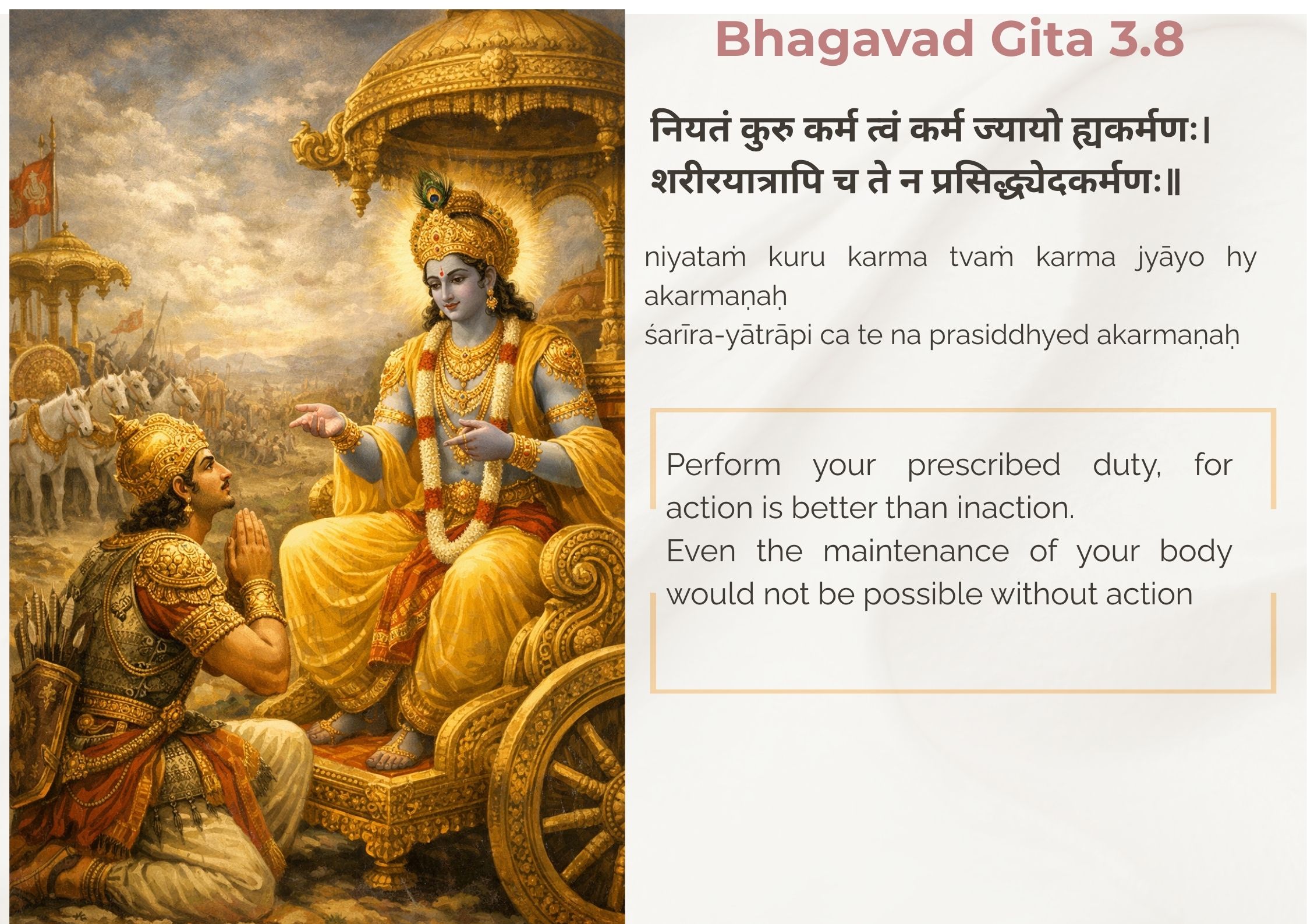
Today’s verse from the Bhagavad Gita shifts the idea of work from “something we do” to “something sacred.” Krishna reframes duty as devotion, showing us that whatever we do—parenting, writing, leading, cooking, caring, building—can become a spiritual practice when done with awareness and intention. Perfection doesn’t mean flawless performance. It means alignment: your actions, values, and inner truth moving in the same direction. When you treat the work in front of you as worthy of full presence, it becomes a way to honour the divine spark inside you. This makes even ordinary actions meaningful. The point isn’t what you do but how you do it. The devotion lies in attention, sincerity, and intention. When your daily work becomes your offering, you automatically stop chasing approval or outcomes. The reward is the growth, clarity, and wholeness that arise from showing up wholeheartedly. The verse is a reminder that a meaningful life isn’t created by extraordinary moments; it’s built by doing ordinary things with extraordinary presence.

Today’s quote is from the contemporary Zen teacher and writer whose reflections draw from Zen Buddhist philosophy and mindfulness traditions, Zen Shin. His quote is a simple but powerful reflection on how we often complicate our lives through comparison. A flower doesn’t pause to measure itself against others. It doesn’t worry about being taller, brighter, or more admired. It grows according to its own nature, responding to sunlight, soil, and season. Its only task is to bloom.

For humans, comparison is almost second nature. We measure success, beauty, productivity, and worth against the people around us. This constant mental comparison drains energy and creates unnecessary anxiety. Zen Shin’s quote gently suggests another way of living: focusing on your own growth rather than competing for validation or status. When you shift attention inward, you free yourself from the exhausting race of trying to be “better than” someone else.

The quote also speaks to authenticity. A flower blooms as itself, not as an imitation. In the same way, when we honour our own pace, talents, and circumstances, growth becomes more natural and sustainable. Blooming doesn’t mean ignoring the world; it means engaging with it without losing yourself in comparison. Progress becomes quieter, steadier, and more deeply satisfying. At its core, the quote is an invitation to trust your own unfolding. When you stop competing, you create space for creativity, joy, and confidence. You grow not out of pressure, but out of alignment with who you truly are.

And in the same vein, today’s motivation is about the now. This moment will never come again. Don’t try to rush past it. Give yourself permission to feel joy and peace, right here, right now. Stop holding on to what’s already gone, and trust that the future will unfold in its own time. Cut through the noise, and fully absorb the essence of the present moment. Look closely; you will find so much to be grateful for at this very moment. Even amidst the chaos, there is hope, light, and miracles. Allow yourself to cherish the irreplaceable gift of now.

I, too plan to live in this moment, especially this week with my parents and sister, and enjoy the time spent together. And on this note, here’s to a beautiful, authentic, and living-in-the-now week for everyone.

In My Hands Today…

Dopamine Detox : A Short Guide to Remove Distractions and Train Your Brain to Do Hard Things – Thibaut Meurisse, edited by Kerry J. Donovan

Do you keep procrastinating? Do you feel restless and unable to focus on your work? Do you have trouble getting excited about major goals?

If so, you might need a dopamine detox.

In today’s world, where distractions are everywhere, the ability to focus has become more and more difficult to achieve. We are constantly being stimulated, feeling restless, often without knowing why.

When the time comes to work, we suddenly find an excess of other things to do. Instead of working toward our goals, we go for a walk, grab a coffee, or check our emails. Everything seems like a great idea—everything except the very things we should be doing.

Do you recognize yourself in the above situation?

If so, don’t worry. You’re simply overstimulated.

Dopamine Detox will help you lower your level of stimulation and regain focus in 48 hours or less, so that you can tackle your key tasks.

More specifically, in Dopamine Detox you’ll discover:

  • what dopamine is and how it works
  • the main benefits of completing a dopamine detox
  • 3 simple steps to implement a successful detox in the next 48 hours
  • practical exercises to eliminate distractions and boost your focus
  • simple tools and techniques to avoid overstimulation and help you stay focused, and much more.

Sacred Stones, Spaces, and Stories: Jyotirlingas Part 2 – Somnath Temple

Somnath Temple, located in Prabhas Patan near Veraval on the western coast of Gujarat, India, is renowned as the first among the twelve sacred Jyotirlinga temples of Lord Shiva. Revered as Somnath, which means “Lord of the Moon,” the temple is intimately tied to ancient Hindu mythology and spiritual tradition. Positioned at the confluence of three rivers: Kapila, Hiran, and Saraswati, Somnath is not only a centre of profound religious significance but also a testimony to India’s enduring faith, resilience, and heritage. The temple serves as a radiant beacon for devotees seeking spiritual upliftment and a connection to the divine cosmic light that Shiva embodies.

The legends surrounding Somnath are as ancient as they are captivating, weaving together cosmic elements and divine intervention. The temple’s origins trace back mythologically to the Moon God, Soma or Chandra, who, according to legend, was cursed by his father-in-law, Daksha, for favouring his wife Rohini over his 27 other wives. This curse gradually dimmed Soma’s luminescence, threatening his celestial brilliance.

Desperate to redeem himself, Soma came to this sacred confluence, bathed in the Saraswati River, and prayed intensely to Lord Shiva for relief. Impressed by his devotion, Shiva lifted the curse, restoring Soma’s radiance, symbolising the waxing and waning moon cycles. In gratitude, the Moon God established the first temple of Lord Shiva here, dedicating it as Somnath, the protector of Soma’s lost lustre.

Another symbolic legend connects Somnath to the mythical Syamantaka jewel, associated with Lord Krishna, intertwining it with epic lore. The temple is also seen as a place where Lord Shiva manifests directly in the form of a Jyotirlinga, a column of radiant, unending light, representing the formless infinite. Devotees visit Somnath believing it to be a gateway to the divine and a powerful purifying force for the soul.

Somnath’s history is a tapestry of spiritual glory, cultural riches, repeated devastations, and resilient restoration. It is one of the earliest known Hindu pilgrimage sites, mentioned in sacred texts like the Skanda Purana and the Rigveda. Its sanctity as a Jyotirlinga dates back thousands of years.

The temple site, originally called Prabhas, was visited by ancient kings, including the Gurjara-Pratihara Nagabhata II in the 9th century. The first major stone temple is believed to have been constructed or renovated by the Solanki ruler Bhima I in the 10th century. However, Somnath is no stranger to destruction. It was famously looted and demolished by Mahmud of Ghazni in 1025 AD, an event deeply etched in Indian history. Though he broke and took rich temple treasures, the temple’s sacred Jyotirlinga was said to have been protected or quickly restored by faithful custodians, and the site continued as a pilgrimage destination. Over the centuries, Somnath experienced multiple waves of destruction by invaders and periodic restorations by devout kings like the Chaulukya ruler Kumarapala in the 12th century.

In the medieval period, the temple was sacked again in 1299 by Alauddin Khalji’s forces. Yet, the resilience of Somnath is legendary, each destruction was met with reconstruction, underscoring the indomitable spirit of Hindu worshippers. The most momentous reconstruction in modern times was completed in 1951, spearheaded by Sardar Vallabhbhai Patel, India’s first Deputy Prime Minister, as a symbol of India’s unity and revival after independence.

Today’s Somnath Temple blends tradition and grandeur in its architecture, reflecting the classic Chalukyan style infused with contemporary architectural revivalism. Positioned majestically on a rocky promontory overlooking the Arabian Sea, the temple’s striking silhouette is a blend of solid stonework and intricate carvings.

The temple complex is built predominantly of sandstone and marble, structured with multiple spires or shikharas that mimic the radiant cosmic pillar of light symbolised by the Jyotirlinga. Its massive walls and gateways bear sculpted depictions of Hindu deities, mythological tales, and floral motifs. The temple’s sanctum sanctorum houses the main Shiva lingam, enshrined beneath a large shikhara that draws the eyes heavenward. The temple layout adheres to traditional Hindu temple design principles, with an imposing mandapa or assembly hall leading to the garbhagriha or sanctum. The outer halls and corridors accommodate multitudes of pilgrims, emphasizing accessibility and communal worship.

The temple’s coastal location is architecturally significant, achieved by careful stone construction resistant to salt air corrosion and sea winds. The sound of the waves around the temple adds a dynamic aesthetic, enriching the spiritual atmosphere.

Beyond its spiritual and historical significance, Somnath Temple also houses a unique monument that reflects the advanced scientific and geographical knowledge of ancient India: the Baan Stambh or Arrow Pillar, which connects the temple’s sacredness with an extraordinary understanding of Earth’s geography. Dating back to approximately the 6th or 7th century CE, the pillar bears an inscription stating that if one were to draw a straight line due south from Somnath, there would be no landmass until reaching the South Pole or Antarctica. This claim: “there is no hindrance or no piece of land till the South Pole on this path”, has been confirmed by modern geographical knowledge and satellite imaging, making it a stunning testament to the advanced understanding of geography, astronomy, and Earth’s spherical nature held by ancient Indian scholars. This knowledge, inscribed centuries before the advent of modern navigation, points to a rich scientific heritage where spiritual sanctity and empirical observation coexisted. The pillar stands not only as a physical monument but as a symbol of India’s profound legacy in merging cosmic insight with earthly wisdom.

Somnath Temple’s ritual calendar is rich and vibrant, overseen by a dedicated group of priests who maintain continuous worship. Daily worship begins at dawn with the abhisheka, ceremonial bathing of the Shiva lingam with holy water, milk, honey, and bilva leaves, the sacred trifoliate leaves associated with Shiva. Devotees witness elaborate chants of the Vedas alongside the ringing of temple bells and burning of incense.

The temple celebrates all major Shiva festivals with grandeur, especially Mahashivaratri, attracting tens of thousands of devotees who vow fasting, night vigils, and special prayers to honor Shiva’s cosmic dance and benevolence. Other notable observances include Somvati Amavasya or New Moon days falling on Monday and Pradosham, days auspicious for Shiva worship.

Distinctive traditions include pilgrim offerings of coconuts, flowers, and silver bells, and the distributing of prasad or blessed food. Local communities participate actively in festival preparations, processions, and maintenance, highlighting the temple’s role as a shared spiritual and social space.

The journey to Somnath is as much a spiritual pilgrimage as a physical voyage. Located some 400 km from Ahmedabad, the temple is accessible by road, rail, and nearby airports at Diu and Rajkot. Pilgrims often combine visits with other nearby sacred sites in the Saurashtra region.

The town of Prabhas Patan around Somnath is known for its warm hospitality, with countless accommodations, eateries, and shops catering to pilgrims. The experience is enriched by the coastal ambience, sea breeze, and views of the Arabian Sea, making the temple visit soothing and contemplative. Many pilgrims recount tales of healing and peace upon arriving at the temple, reflecting its atmosphere of solemnity mingled with jubilant devotion. Local folklore includes stories of miraculous events, divine interventions, and blessings that have drawn believers for centuries.

Somnath Temple’s significance transcends religion; it has inspired literature, music, and art through ages. Praises of Somnath appear in Bhakti poetry, classical Sanskrit texts, and folk songs, celebrating Shiva’s power, the temple’s sanctity, and the heroic resilience of its custodians. The temple is a cultural symbol of Gujarat and India’s Hindu heritage, frequently invoked in nationalist narratives, especially post-independence, as an emblem of cultural integrity against adversity. Artistic depictions of Somnath adorn paintings, sculptures, and modern media, captivating visitors and devotees alike. The temple’s resilient history and spiritual aura continue to inspire performances, lectures, and pilgrim tales, contributing to the living cultural fabric of the region.

In the present day, Somnath Temple operates under the Shri Somnath Trust, which manages its maintenance, festivals, and visitor amenities. The temple is a major tourist and pilgrimage destination attracting millions annually, boosted by government initiatives to improve infrastructure and global awareness campaigns. Modern restoration efforts utilise advanced conservation techniques, blending heritage preservation with accessibility upgrades. The temple’s security and administration reflect contemporary needs while honoring traditional customs. Somnath’s festivals remain vibrant, incorporating large-scale events coupled with spiritual discourse, outreach, and cultural programs. Besides worship, the temple premises host charitable activities and community services.

The Somnath Temple stands as a luminous sentinel of India’s spiritual heritage: the first Jyotirlinga, a symbol of Shiva’s infinite light, lunar cycles, and divine resilience. Its history embodies the oscillation between destruction and spiritual revival, mirroring the eternal cycles Shiva governs. As the southern gateway of the Jyotirlinga pilgrimage circuit and a beacon for seekers of faith and renewal, Somnath not only enriches the religious landscape but also reflects the enduring cultural soul of India. Its sacred stones, rituals, and stories continue to draw pilgrims and culture lovers, ensuring that the eternal flame of Somnath shines brightly for generations to come.

In My Hands Today…

Black Warrant: Confessions of a Tihar Jailer – Sunil Gupta

What is life like inside Asia’s largest prison?

What happens when a man is hanged, but his pulse refuses to give up even after two hours?

Did Nirbhaya’s rapist, Ram Singh, commit suicide or was he murdered?

For the first time we have a riveting account from an insider who has spent close to four decades as an officer at Tihar Jail during some of the most turbulent times in Indian political history.

For the first time he breaks his silence about all he’s seen – from the first man he met in Tihar, Charles Sobhraj, to the controversies surrounding former CBI head, Alok Verma.

Responsible for carrying out ‘Black Warrants’, Gupta witnessed 14 hangings, the most recent and his last, being that of Afzal Guru. Joining him is award-winning journalist Sunetra Choudhury whose recent book Behind Bars is a bestseller and took her deep inside the maze of prisons. Read this book for the most intimate and raw account of India’s judicial and criminal justice system.