In My Hands Today…

The Caesars Palace Coup: How a Billionaire Brawl Over the Famous Casino Exposed the Power and Greed of Wall Street – Sujeet Indap, Max Frumes
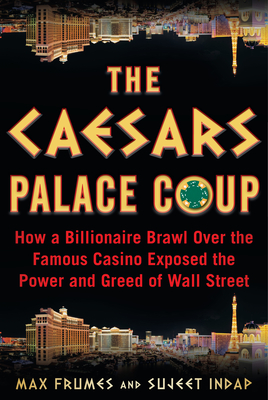
It was the most brutal corporate restructuring in Wall Street history. The 2015 bankruptcy brawl for the storied casino giant, Caesars Entertainment, pitted brilliant and ruthless private equity legends against the world’s most relentless hedge fund wizards.

In the tradition of Barbarians at the Gate and The Big Short comes the riveting, multi-dimensional poker game between private equity firms and distressed debt hedge funds that played out from the Vegas Strip to Manhattan boardrooms to Chicago courthouses and even, for a moment, the halls of the United States Congress. On one side: relentless financial engineers Marc Rowan, David Sambur, and David Bonderman with their teams at Apollo Global Management and TPG Capital. On the other: superstar distressed debt investors Dave Miller and Ryan Mollett with their cohorts at the likes of Elliott Management, Oaktree Capital, and Appaloosa Management.

The Caesars bankruptcy put a twist on the old-fashioned casino heist. Through a $27 billion leveraged buyout and a dizzying string of financial engineering transactions, Apollo and TPG―in the midst of the post-Great Recession slump―had seemingly snatched every prime asset of the company from creditors, with the notable exception of Caesars Palace. But Caesars’ hedge fund lenders and bondholders had scooped up the company’s paper for nickels and dimes. And with their own armies of lawyers and bankers, they were ready to do everything necessary to take back what they believed was theirs―if they could just stop their own infighting.

These modern financiers now dominate the scene in Corporate America as their fight-to-the-death mentality continues to shock workers, politicians, and broader society―and even each other.

In The Caesars Palace Coup, financial journalists Max Frumes and Sujeet Indap illuminate the brutal tactics of distressed debt mavens―vultures, as they are condemned―in the sale and purchase of even the biggest companies in the world with billions of dollars hanging in the balance.

In My Hands Today…

The Song of the Cell: An Exploration of Medicine and the New Human – Siddhartha Mukherjee

Mukherjee begins this magnificent story in the late 1600s, when a distinguished English polymath, Robert Hooke, and an eccentric Dutch cloth-merchant, Antonie van Leeuwenhoek looked down their handmade microscopes. What they saw introduced a radical concept that swept through biology and medicine, touching virtually every aspect of the two sciences, and altering both forever. It was the fact that complex living organisms are assemblages of tiny, self-contained, self-regulating units. Our organs, our physiology, our selves—hearts, blood, brains—are built from these compartments. Hooke christened them “ cells. ”

The discovery of cells—and the reframing of the human body as a cellular ecosystem—announced the birth of a new kind of medicine based on the therapeutic manipulations of cells. A hip fracture, a cardiac arrest, Alzheimer’s dementia, AIDS, pneumonia, lung cancer, kidney failure, arthritis, COVID pneumonia—all could be reconceived as the results of cells, or systems of cells, functioning abnormally. And all could be perceived as loci of cellular therapies.

Filled with writing so vivid, lucid, and suspenseful that complex science becomes thrilling, The Song of the Cell tells the story of how scientists discovered cells, began to understand them, and are now using that knowledge to create new humans. Told in six parts, and laced with Mukherjee’s own experience as a researcher, a doctor, and a prolific reader, The Song of the Cell is both panoramic and intimate—a masterpiece on what it means to be human.

In My Hands Today…

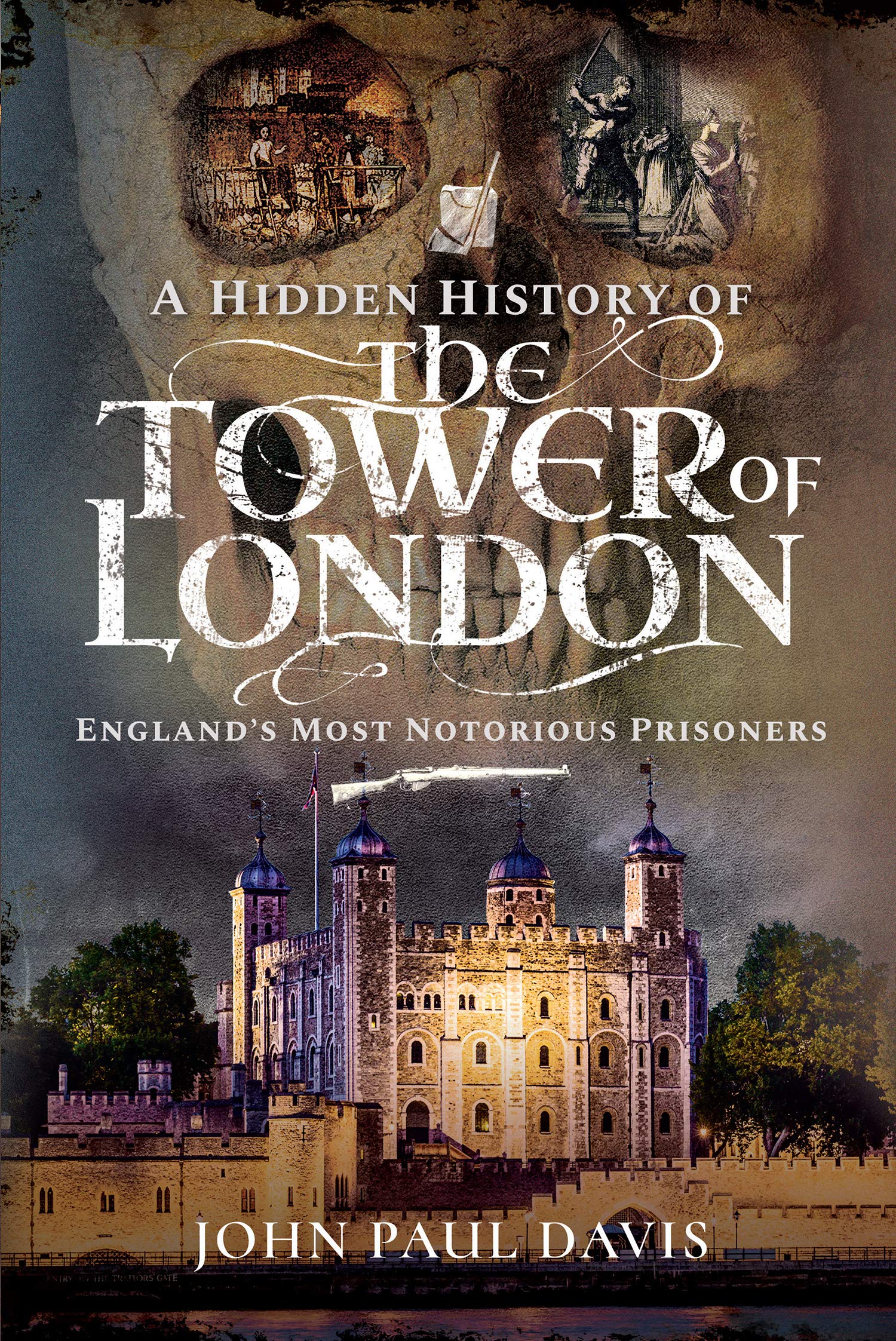
A Hidden History of the Tower of London: England’s Most Notorious Prisoners – John Paul Davis

Famed as the ultimate penalty for traitors, heretics and royalty alike, being sent to the Tower is known to have been experienced by no less than 8,000 unfortunate souls. Many of those who were imprisoned in the Tower never returned to civilization and those who did, often did so without their head!

It is hardly surprising that the Tower has earned itself a reputation among the most infamous buildings on the planet.

Beginning with the early tales surrounding its creation, this book investigates the private life of an English icon. Concentrating on the Tower’s developing role throughout the centuries, not in terms of its physical expansion into a site of unique architectural majesty or many purposes but through the eyes of those who experienced its darker side, it pieces together the, often seldom-told, human story and how the fates of many of those who stayed within its walls contributed to its lasting effect on England’s—and later the UK’s—destiny.

From ruthless traitors to unjustly killed Jesuits, vanished treasures to disappeared princes and jaded wives to star-crossed lovers, this book provides a raw and at times unsettling insight into its unsolved mysteries and the lot of its unfortunate victims, thus explaining how this once typical castle came to be the place we will always remember as THE TOWER.

In My Hands Today…

The Rising Sun: The Decline & Fall of the Japanese Empire, 1936-45 – John Toland

This Pulitzer Prize–winning history of World War II chronicles the dramatic rise and fall of the Japanese empire, from the invasion of Manchuria and China to the atomic bombing of Hiroshima and Nagasaki. Told from the Japanese perspective, The Rising Sun is, in the author’s words, “a factual saga of people caught up in the flood of the most overwhelming war of mankind, told as it happened—muddled, ennobling, disgraceful, frustrating, full of paradox.”

In weaving together the historical facts and human drama leading up to and culminating in the war in the Pacific, Toland crafts a riveting and unbiased narrative history. In his Foreword, Toland says that if we are to draw any conclusion from The Rising Sun, it is “that there are no simple lessons in history, that it is human nature that repeats itself, not history.”

In My Hands Today…

Generations: The Real Differences Between Gen Z, Millennials, Gen X, Boomers, and Silents―and What They Mean for America’s Future – Jean M. Twenge

A groundbreaking, revelatory portrait of the six generations that currently live in the United States and how they connect, conflict, and compete with one another—from the acclaimed author of Generation Me and iGen

The United States is currently home to six generations: the Silents, Baby Boomers, Generation X, Millennials, Generation Z, and Generation Alpha. They have had vastly different life experiences and thus, one assumes, they must have vastly diverging beliefs and behaviors–but what are those differences, what causes them, and how deep do they actually run?

Professor of psychology Jean Twenge does a deep dive into a treasure trove of long-running, government-funded surveys and databases to answer these questions. Are we truly defined by major historical events, such as the Great Depression for the Silents and September 11 for Millennials? Or, as Twenge argues, is it the rapid evolution of technology that differentiates the generations?

With her clear-eyed and insightful voice, Twenge explores what the Silents and Boomers want out of the rest of their lives; how Gen X-ers are facing middle age; the ideals of Millennials as parents and in the workplace; and how Gen Z has been changed by COVID-19, among other fascinating topics. Surprising, engaging, and informative, Generations will forever change the way you view your parents, peers, coworkers, and children, no matter what your generation.