In My Hands Today…

Power, Sex, Suicide: Mitochondria and the Meaning of Life – Nick Lane

If it weren’t for mitochondria, scientists argue, we’d all still be single-celled bacteria. Indeed, these tiny structures inside our cells are important beyond imagining. Without mitochondria, we would have no cell suicide, no sculpting of embryonic shape, no sexes, no menopause, no aging.

In this fascinating and thought-provoking book, Nick Lane brings together the latest research in this exciting field to show how our growing insight into mitochondria has shed light on how complex life evolved, why sex arose (why don’t we just bud?), and why we age and die. These findings are of fundamental importance, both in understanding life on Earth, but also in controlling our own illnesses, and delaying our degeneration and death. Readers learn that two billion years ago, mitochondria were probably bacteria living independent lives and that their capture within larger cells was a turning point in the evolution of life, enabling the development of complex organisms.

Lane describes how mitochondria have their own DNA and that its genes mutate much faster than those in the nucleus. This high mutation rate lies behind our aging and certain congenital diseases. The latest research suggests that mitochondria play a key role in degenerative diseases such as cancer. We also discover that mitochondrial DNA is passed down almost exclusively via the female line. That’s why it has been used by some researchers to trace human ancestry daughter-to-mother, to “Mitochondrial Eve,” giving us vital information about our evolutionary history.

In My Hands Today…

The Beginning of Infinity: Explanations That Transform the World – David Deutsch

In our search for truth, how far have we advanced?

This uniquely human quest for good explanations has driven amazing improvements in everything from scientific understanding and technology to politics, moral values and human welfare.

But will progress end, either in catastrophe or completion – or will it continue infinitely?

In this profound and seminal book, David Deutsch explores the furthest reaches of our current understanding, taking in the Infinity Hotel, supernovae and the nature of optimism, to instill in all of us a wonder at what we have achieved – and the fact that this is only the beginning of humanity’s infinite possibility.

In My Hands Today…

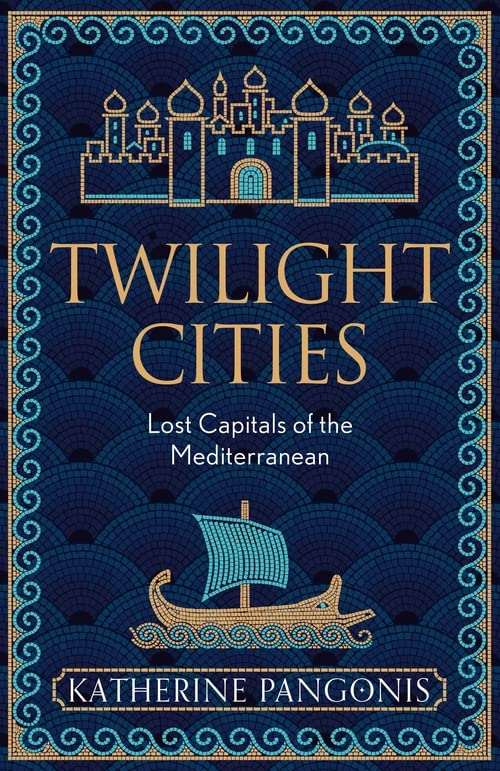
Twilight Cities: Lost Capitals of the Mediterranean – Katherine Pangonis

Its name means ‘centre of the world’, and since the dawn of history the Mediterranean Sea has formed the shared horizon of innumerable cultures. Here, history has blurred with legend. The glittering surface of the sea conceals the remnants of lost civilisations, wrecked treasure ships and the bones of long-drowned sailors, traders and modern refugees.

Of the many cities that dot this ancient coastline, Tyre, Carthage, Syracuse, Ravenna and Antioch are among the oldest and most intriguing. All are beautifully situated, and for layers of history and cultural riches they are rivalled only by their sister cities of Rome, Istanbul and Jerusalem. Yet their fates have been remarkably different. Once major power centres, all five have declined into relative obscurity. Nevertheless, their entwined history takes in Alexander the Great, Nebuchadnezzar, Archimedes and the Roman, Byzantine, Arab and Norman conquests, and their greatness still lingers for those who seek it out.

To bring these mysterious lost capitals to life, historian Katherine Pangonis sets out on a voyage from the dawn of civilisation on the Lebanese coast to a modern-day Turkey wracked by the devastation of the 2023 earthquake. Combining on the ground research with spellbinding storytelling skills, here is a revelatory new story of the Mediterranean, and a powerful reflection on the sometimes fleeting glory of empires.

In My Hands Today…

The Patient Assassin: A True Tale of Massacre, Revenge, and India’s Quest for Independence – Anita Anand

The dramatic true story of a celebrated young survivor of a 1919 British massacre in India, and his ferocious twenty-year campaign of revenge that made him a hero to hundreds of millions—and spawned a classic legend.

When Sir Michael O’Dwyer, the Lieutenant Governor of Punjab, ordered Brigadier General Reginald Dyer to Amritsar, he wanted Dyer to bring the troublesome city to heel. Sir Michael had become increasingly alarmed at the effect Gandhi was having on his province, as well as recent demonstrations, strikes, and shows of Hindu-Muslim unity. All these things, to Sir Michael, were a precursor to a second Indian revolt. What happened next shocked the world. An unauthorized gathering in the Jallianwallah Bagh in Amritsar in April 1919 became the focal point for Sir Michael’s law enforcers. Dyer marched his soldiers into the walled garden, blocking the only exit. Then, without issuing any order to disperse, he instructed his men to open fire, turning their guns on the thickest parts of the crowd, filled with over a thousand unarmed men, women, and children. For ten minutes, the soldiers continued firing, stopping only when they ran out of ammunition.

According to legend, eighteen-year-old Sikh orphan Udham Singh was injured in the attack, and remained surrounded by the dead and dying until he was able to move the next morning. Then, he supposedly picked up a handful of blood-soaked earth, smeared it across his forehead, and vowed to kill the men responsible.

The truth, as the author has discovered, is more complex—but no less dramatic. Award-winning journalist Anita Anand traced Singh’s journey through Africa, the United States, and across Europe until, in March 1940, he finally arrived in front of O’Dwyer himself in a London hall ready to shoot him down. The Patient Assassin shines a devastating light on one of history’s most horrific events, but it reads like a taut thriller and reveals the incredible but true story behind a legend that still endures today.

In My Hands Today…

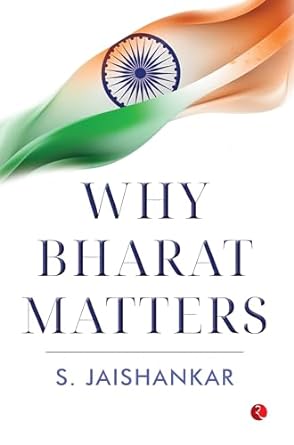
Why Bharat Matters – S. Jaishankar

Whether drawing strength from its heritage and culture or approaching challenges with the optimism of democracy and technology, this is certainly a New India—an India that is more Bharat.

This is not just a tough world but also a turbulent and unpredictable one. It is marked by the impact of Covid, conflicts in Ukraine and West Asia, climate events, radicalization and terrorism. There is complex geopolitics at work, such as the rise of China, the changed posture of the United States, the strategy of Russia, the impact of globalization and the power of new technologies.

India seeks to navigate these stormy seas without diluting its focus on becoming a leading power. As a vishwa mitra, it seeks the well-being of the Global South and to contribute to global good. India is more salient in global calculations and stands ready to embrace coming responsibilities and opportunities. Entering the Amrit Kaal, it visualizes an era of growth and development while staying true to its traditions and heritage.

In Why Bharat Matters, S. Jaishankar argues that while rising powers seek stability most of all, India must plan to rise amidst serious unpredictability. This process is also exceptional as it represents the rejuvenation of a civilizational state. Simultaneously, he also explains why foreign policy in a globalized world matters increasingly to all citizens in their daily lives. This book is a must-read for every Indian to understand and seriously reflect on the reality of our times that is becoming clearer with each passing day—that India matters because it is Bharat.