In My Hands Today…

The Mind Electric: A Neurologist on the Strangeness and Wonder of Our Brains – Pria Anand
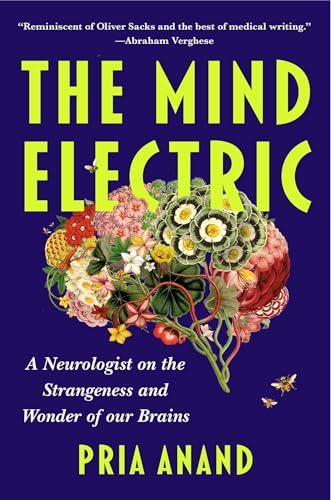
A girl believes she has been struck blind for stealing a kiss. A mother watches helplessly as each of her children is replaced by a changeling. A woman is haunted each month by the same four chords of a single song. In neurology, illness is inextricably linked with narrative, the clues to unraveling these mysteries hidden in both the details of a patient’s story and the tells of their body.

Stories are etched into the very structure of our brains, coded so deeply that the impulse for storytelling survives and even surges after the most devastating injuries. But our brains are also porous—the stories they concoct shaped by cultural narratives about bodies and illness that permeate the minds of doctors and patients alike. In the history of medicine, some stories are heard, while others—the narratives of women, of Black and brown people, of displaced people, of disempowered people—are too often dismissed.

In The Mind Electric, neurologist Pria Anand reveals—through case study, history, fable, and memoir—all that the medical establishment has the complexity and wonder of brains in health and in extremis, and the vast gray area between sanity and insanity, doctor and patient, and illness and wellness, each separated from the next by the thin veneer of a different story.

Moving from the Boston hospital where she treats her patients, to her childhood years in India, to Isla Providencia in the Caribbean and to the Republic of Guinea in West Africa, she demonstrates again and again the compelling paradox at the heart of that even the most peculiar symptoms can show us something universal about ourselves as humans.
In My Hands Today…

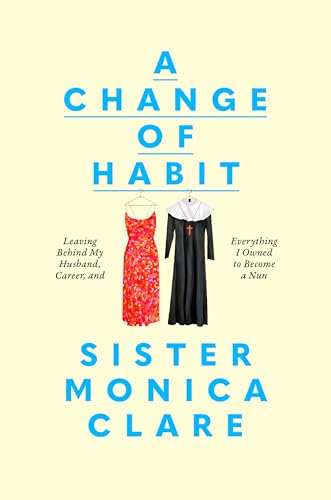
A Change of Habit: Leaving Behind My Husband, Career, and Everything I Owned to Become a Nun – Sister Monica Clare

In her twenties and thirties, Monica Clare was a talented but exhausted photo editor who spent her days getting yelled at by clients who were often strung out on cocaine and megalomania. For years, the voice calling her to a simpler, quieter life had been getting louder.

As a little kid, she’d seen Audrey Hepburn in The Nun’s Story and thought: That’s me. That’s how she found herself straightening her habit nervously as she walked into a convent, preparing to live alongside eleven other sisters who’d taken the same vow of poverty and celibacy . . . indefinitely. Could a chronically fidgety, pop culture–obsessed woman of the world ever fit in? she wondered. And why did the other nuns seem so cold and disapproving?

As the months went on, she realized the other nuns were shy, not unfriendly—much like herself. The culture at the convent discouraged giving compliments or even saying “please” or “thank you,” since acts of generosity were to be freely given and received. But when Monica rose to the role of Sister Superior, she got the policy against compliments changed. Relationships started to blossom, first awkwardly and then more easily. Who would have predicted that Sister Christina, the one she thought had deeply disliked her from the start, would turn out to be a huge hugger? Or that they’d spend entire afternoons trying to keep a wild turkey from running amok in their community garden?

Equal parts tell-all and rallying cry, A Change of Habit reveals how much we can say yes to when we stop laboring to prove our worth to ourselves and others. In her role as a spiritual counselor, Sister Monica guides people from all walks of life toward resisting the false promises of capitalism, finding healing in small acts of nurture and connection, and ultimately, restoring themselves to a place of wholeness, all while living in this gorgeously messy world of ours.
Genres
Memoir
Nonfiction
Religion
Biography Memoir
Audiobook
Spirituality
Book Club

In My Hands Today…

Careless People: A Cautionary Tale of Power, Greed, and Lost Idealism – Sarah Wynn-Williams

From trips on private jets and encounters with world leaders to shocking accounts of misogyny and double standards behind the scenes, this searing memoir exposes both the personal and the political fallout when unfettered power and a rotten company culture take hold. In a gripping and often absurd narrative where a few people carelessly hold the world in their hands, this eye-opening memoir reveals what really goes on among the global elite.

Sarah Wynn-Williams tells the wrenching but fun story of Facebook, mapping its rise from stumbling encounters with juntas to Mark Zuckerberg’s reaction when he learned of Facebook’s role in Trump’s election. She experiences the challenges and humiliations of working motherhood within a pressure cooker of a workplace, all while Sheryl Sandberg urges her and others to “lean in.”

Careless People is a deeply personal account of why and how things have gone so horribly wrong in the past decade—told in a sharp, candid, and utterly disarming voice. A deep, unflinching look at the role that social media has assumed in our lives, Careless People reveals the truth about the leaders of Facebook: how the more power they grasp, the less responsible they become and the consequences this has for all of us.

In My Hands Today…

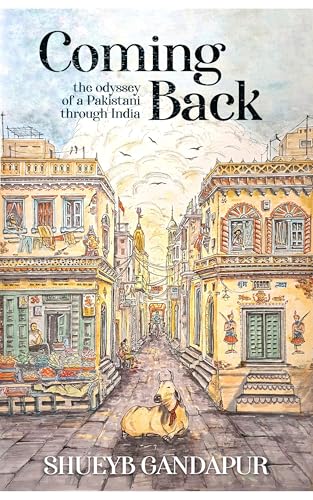
Coming Back: the Odyssey of a Pakistani through India – Shueyb Gandapur

Coming Back is a captivating travelogue exploring the shared heritage of South Asia.

In a world marked by political divisions and religious tensions, this unique travel memoir offers a fresh perspective on the enduring connection between Pakistan and India.

As a Pakistani visitor to India, the author delves into the motivations behind his journey, the shared similarities and intriguing differences between the two nations, and the emotional reunions with long-lost compatriots who migrated across borders.

In My Hands Today…

Trespassers at the Golden Gate: A True Account of Love, Murder, and Madness in Gilded-Age San Francisco – Gary Krist

Shortly before dusk on November 3, 1870, just as the ferryboat El Capitan was pulling away from its slip into San Francisco Bay, a woman clad in black emerged from the shadows and strode across the crowded deck. Reaching under her veil, she drew a small pistol and aimed it directly at a well-dressed man sitting quietly with his wife and children. The woman fired a single bullet into his chest. “I did it and I don’t deny it,” she said when arrested shortly thereafter. “He ruined both myself and my daughter.”

Though little remembered today, the trial of Laura D. Fair for the murder of her lover, A. P. Crittenden, made headlines nationwide. As bestselling author Gary Krist reveals, the operatic facts of the case—a woman strung along for years by a two-timing man, killing him in an alleged fit of madness—challenged an American populace still searching for moral consensus after the Civil War. The trial shone an early and uncomfortable spotlight on social issues like the role of women, the sanctity of the family, and the range of acceptable expressions of gender, while jolting the still-adolescent metropolis of 1870s San Francisco, a city eager to shed its rough-and-tumble Gold Rush-era reputation.

Trespassers at the Golden Gate brings readers inside the untamed frontier town, a place where—for a brief period—otherwise marginalized communities found unique opportunities. Readers meet a secretly wealthy Black housekeeper, an enterprising Chinese brothel madam, and a French rabble-rouser who refused to dress in sufficiently “feminine” clothing—as well as familiar figures like Mark Twain and Susan B. Anthony, who become swept up in the drama of the Laura Fair affair.

Krist, who previously brought New Orleans to vivid life in Empire of Sin and Chicago in City of Scoundrels, recounts this astonishing story and its surprisingly modern echoes in a rollicking narrative that probes what it all meant—both for a nation still scarred by war and for a city eager for the world stage.