In My Hands Today…

The Bookshop: A History of the American Bookstore – Evan Friss

Bookstores have always been unlike any other kind of store, shaping readers and writers, and influencing our tastes, thoughts, and politics. They nurture local communities while creating new ones of their own. Bookshops are powerful spaces, but they are also endangered ones. In The Bookshop, we see those stakes: what has been, and what might be lost.

Evan Friss’s history of the bookshop draws on oral histories, archival collections, municipal records, diaries, letters, and interviews with leading booksellers to offer a fascinating look at this institution beloved by so many. The story begins with Benjamin Franklin’s first bookstore in Philadelphia and takes us to a range of booksellers including The Strand, Chicago’s Marshall Field & Company, Gotham Book Mart, specialty stores like Oscar Wilde and Drum and Spear, sidewalk sellers of used books, Barnes & Noble, Amazon Books, and Parnassus. The Bookshop is also a history of the leading figures in American bookselling, often impassioned eccentrics, and a history of how books have been marketed and sold over more than two centuries—including, for example, a 3,000-pound elephant who appeared to sign books at Marshall Field’s in 1944.

The Bookshop is a love letter to bookstores, a charming chronicle for anyone who cherishes these sanctuaries of literature, and essential reading to understand how these vital institutions have shaped American life—and why we still need them.

In My Hands Today…

How Not to Die: Discover the Foods Scientifically Proven to Prevent and Reverse Disease – Michael Greger, Gene Stone

The vast majority of premature deaths can be prevented through simple changes in diet and lifestyle. In How Not to Die, Dr. Michael Greger, the internationally-renowned nutrition expert, physician, and founder of NutritionFacts.org, examines the fifteen top causes of premature death in America — heart disease, various cancers, diabetes, Parkinson’s, high blood pressure, and more — and explains how nutritional and lifestyle interventions can sometimes trump prescription pills and other pharmaceutical and surgical approaches, freeing us to live healthier lives.

The simple truth is that most doctors are good at treating acute illnesses but bad at preventing chronic disease. The fifteen leading causes of death claim the lives of 1.6 million Americans annually. This doesn’t have to be the case. By following Dr. Greger’s advice, all of it backed up by strong scientific evidence, you will learn which foods to eat and which lifestyle changes to make to live longer.

History of prostate cancer in your family? Put down that glass of milk and add flaxseed to your diet whenever you can. Have high blood pressure? Hibiscus tea can work better than a leading hypertensive drug-and without the side effects. Fighting off liver disease? Drinking coffee can reduce liver inflammation. Battling breast cancer? Consuming soy is associated with prolonged survival. Worried about heart disease (the number 1 killer in the United States)? Switch to a whole-food, plant-based diet, which has been repeatedly shown not just to prevent the disease but often stop it in its tracks.

In addition to showing what to eat to help treat the top fifteen causes of death, How Not to Die includes Dr. Greger’s Daily Dozen — a checklist of the twelve foods we should consume every day. Full of practical, actionable advice and surprising, cutting edge nutritional science, these doctor’s orders are just what we need to live longer, healthier lives.

In My Hands Today…

The PARA Method: Simplify, Organize, and Master Your Digital Life – Tiago Forte

Living a modern life requires juggling a ton of information. But we were never taught how to manage this information effectively so that we can find what we need when we need it. In The PARA Method , Tiago Forte outlines a simple and intuitive four-step system that will help us sort all the information flooding our brains into four major categories—Projects, Areas, Resources, and Archives—allowing us to manage our commitments while achieving our goals and dreams.

  • P rojects are specific, short-term efforts that you are actively working on with a certain goal in mind, such as completing a website or renovating your bathroom.
  • A reas are the larger, ongoing areas of responsibility (health, finances, etc.) that encompass those specific projects.
  • R esources include content on a range of topics you’re interested in or that could be useful for your projects and areas.
  • A rchives include anything from the previous three categories that is now inactive, but you want to save for future reference.

With his easy-to-understand and engaging voice, Forte outlines his best practices and tips on how to successfully implement PARA, along with deep dives on everything from how to adopt habits to stay organized to how to use this system to enhance your focus. The PARA Method can be implemented in just seconds but has the power to transform the trajectory of your work and life using the power of digital organization.

In My Hands Today…

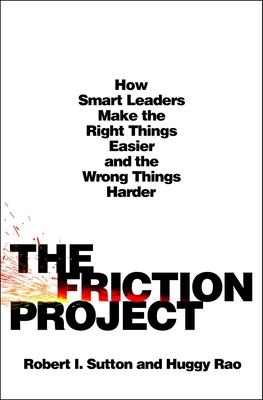
The Friction Project: How Smart Leaders Make the Right Things Easier and the Wrong Things Harder – Robert I. Sutton, Huggy Rao

Every organization is plagued by destructive friction—the forces that make it harder, more complicated, or downright impossible to get anything done. Yet some forms of friction are incredibly useful, and leaders who attempt to improve workplace efficiency often make things even worse. Drawing from seven years of hands-on research, The Friction Project by bestselling authors Robert I. Sutton and Huggy Rao teaches readers how to become “friction fixers,” so that teams and organizations don’t squander the zeal, damage the health, and throttle the creativity and productivity of good people—or burn through cash and other precious resources.

Sutton and Rao kick off the book by unpacking how skilled friction fixers think and act like trustees of others’ time. They provide friction forensics to help readers identify where to avert and repair bad organizational friction and where to maintain and inject good friction. Then their help pyramid shows how friction fixers do their work, which ranges from reframing friction troubles they can’t fix right now so they feel less threatening to designing and repairing organizations. The heart of the book digs into the causes and solutions for five of the most common and damaging friction oblivious leaders, addition sickness, broken connections, jargon monoxide, and fast and frenzied people and teams.

Sound familiar? Sutton and Rao are here to help. They wrap things up with lessons for leading your own friction project, including linking little things to big things; the power of civility, caring, and love for propelling designs and repairs; and embracing the mess that is an inevitable part of the process (while still trying to clean it up).

In My Hands Today…

Your Future Self: How to Make Tomorrow Better Today – Hal Hershfield

We’ve all had the desire to travel through time and see what our lives will be like later in life. But while we want the best possible future for ourselves, we often fail to make decisions that would truly make that version of the future.

Based on over a decade of groundbreaking research, Your Future Self is the “entertaining and powerful book” (Carol Dweck, author of Mindset ) that explains that in our minds, our future selves often look like strangers.

Many of us view the future as incredibly distant, making us more likely to opt for immediate gratification that disregards our health and well-being in the years to come.

People who are able to connect with their future selves, however, are better able to balance living for today and planning for tomorrow. Your Future Self describes the mental mistakes we make in thinking about the future and gives us practical advice for imagining our best future so we can make that vision a reality.