In My Hands Today…

In Search of Berlin: The Story of A Reinvented City – John Kampfner
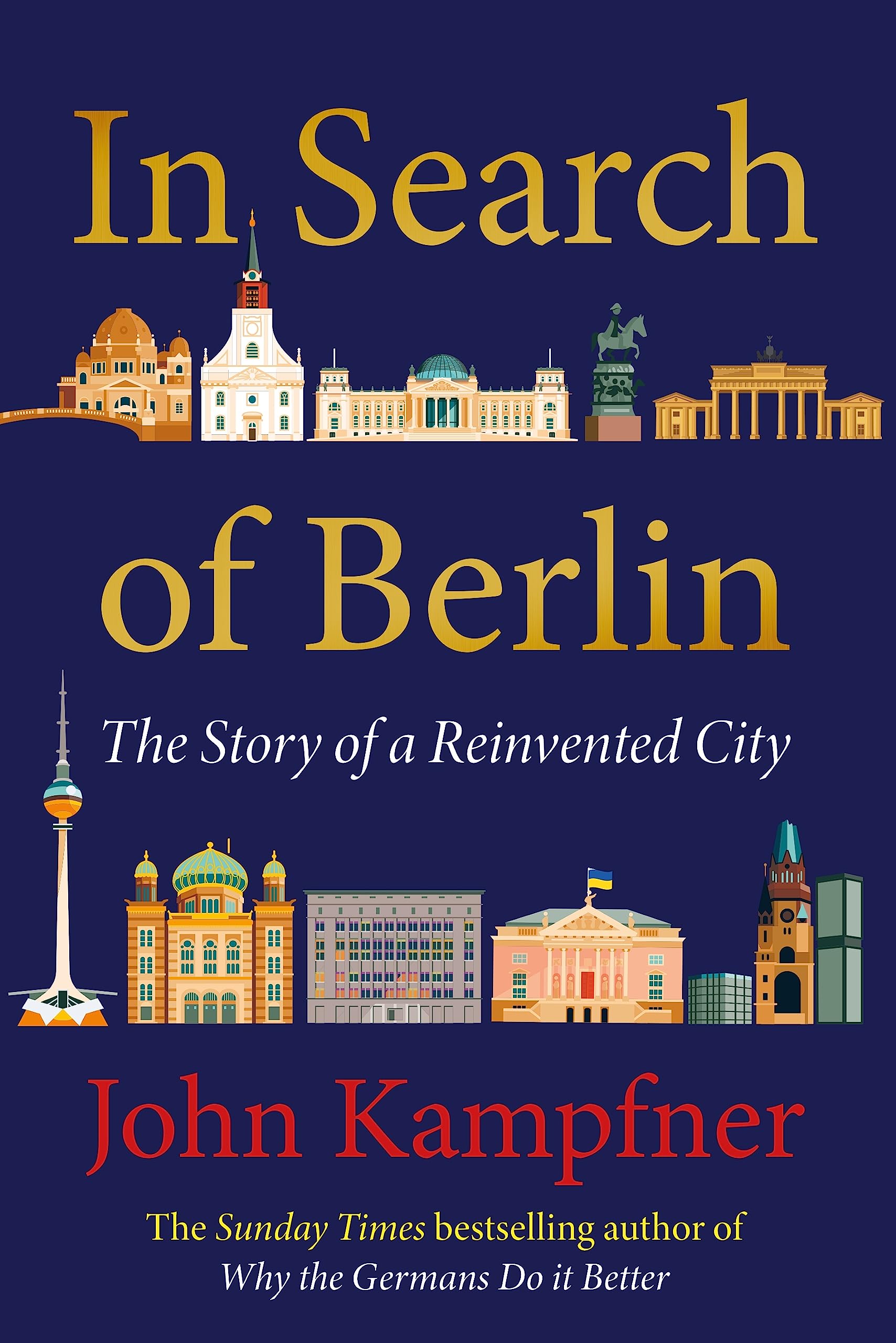
No other city has had so many lives, survived so many disasters and has reinvented itself so many times. No other city is like Berlin.

Ever since John Kampfner was a young journalist in Communist East Berlin, he hasn’t been able to get the city out of his mind. It is a place tortured by its past, obsessed with memories, a place where traumas are unleashed and the traumatised have gathered.

Over the past four years Kampfner has walked the length and breadth of Berlin, delving into the archives, and talking to historians and writers, architects and archaeologists. He clambers onto a fallen statue of Lenin; he rummages in boxes of early Medieval bones; he learns about the cabaret star so outrageous she was thrown out of the city.

Berlin has been a military barracks, industrial powerhouse, centre of learning, hotbed of decadence – and the laboratory for the worst experiment in horror known to man. Now a city of refuge, it is home to 180 nationalities, and more than a quarter of the population has a migrant background. Berlin never stands still. It is never satisfied. It never believes it has the answer. But it is now the irresistible capital to which the world is gravitating.

In Search of Berlin is an 800-year story, a dialogue between past and present; it is a new way of looking at this turbulent and beguiling city on its never-ending journey of reinvention.

In My Hands Today…

The Notebook: A History of Thinking on Paper – Roland Allen

The first history of the notebook, a simple invention that changed the way the world thinks.

We see notebooks everywhere we go. But where did this simple invention come from? How did they revolutionise our lives, and why are they such powerful tools for creativity? And how can using a notebook help you change the way you think?

In this wide-ranging story, Roland Allen reveals all the answers. Ranging from the bustling markets of medieval Florence to the quiet studies of our greatest thinkers, he follows a trail of dazzling ideas, revealing how the notebook became our most dependable and versatile tool for creative thinking. He tells the notebook stories of artists like Leonardo and Frida Kahlo, scientists from Isaac Newton to Marie Curie, and writers from Chaucer to Henry James. We watch Darwin developing his theory of evolution in tiny pocketbooks, see Agatha Christie plotting a hundred murders in scrappy exercise books, and learn how Bruce Chatwin unwittingly inspired the creation of the Moleskine.

On the way we meet a host of cooks, kings, sailors, fishermen, musicians, engineers, politicians, adventurers and mathematicians, who all used their notebooks as a space for thinking and to shape the modern world.

In an age of AI and digital overload, the humble notebook is more relevant than ever.

Allen shows how bullet points can combat ADHD, journals can ease PTSD, and patient diaries soften the trauma of reawakening from coma. The everyday act of moving a pen across paper can have profound consequences, changing the way we think and making us more creative, more productive — and happier.

In My Hands Today…

The Psychology of Stupidity – edited by Jean-François Marmion, translated by Liesl Schillinger

Stupidity is all around us. But in order to vanquish it, we must first understand it. In The Psychology of Stupidity, some of the world’s leading psychologists and thinkers—including a Nobel Prize winner and bestselling authors—discuss in articles, essays and interviews

  • Why smart people sometimes believe in utter nonsense;
  • How our lazy brains cause us to make the wrong decisions;
  • Why trying to debate fools is a trap;
  • How media manipulation and Internet overstimulation make us dumber;
  • Why the stupidest people don’t think they’re stupid.

In My Hands Today…

A Brief History of the World in 47 Borders: Surprising Stories Behind the Lines on Our Maps – Jonn Elledge

A fascinating and surprising history of the world told through the lines people have drawn on maps

People have been drawing lines on maps for as long as there have been maps to draw on. Sometimes rooted in physical geography, sometimes entirely arbitrary, these lines might often have looked very different if a war or treaty or the decisions of a handful of tired Europeans had gone a different way. By telling the stories of these borders, we can learn a lot about how political identities are shaped, why the world looks the way it does—and about human folly.

From the Roman attempts to define the boundaries of civilization, to the secret British-French agreement to carve up the Ottoman Empire during the First World War, to the reason why landlocked Bolivia still maintains a navy, this is a fascinating, witty, and surprising look at the history of the world told through its borders.

In My Hands Today…

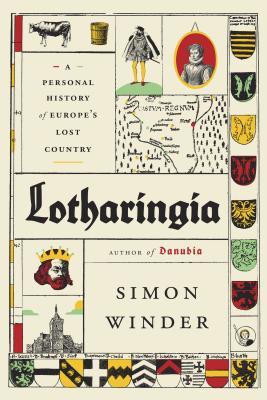
Lotharingia: A Personal History of Europe’s Lost Country – Simon Winder

In 843 AD, the three surviving grandsons of the great emperor Charlemagne met at Verdun. After years of bitter squabbles over who would inherit the family land, they finally decided to divide the territory and go their separate ways.

In a moment of staggering significance, one grandson inherited the area we now know as France, another Germany and the third received the piece in between: Lotharingia.

Lotharingia is a history of in-between Europe. It is the story of a place between places. In this beguiling, hilarious, and compelling book, Simon Winder retraces the various powers that have tried to overtake the land that stretches from the mouth of the Rhine to the Alps and the might of the peoples who have lived there for centuries.