In My Hands Today…

Lords of the Deccan : Southern India from the Chalukyas to the Cholas – Anirudh Kanisetti
The history of the vast Indian subcontinent is usually told as a series of ephemeral moments when a large part of modern-day India was ruled by a single sovereign. There is an obsession with foreign invasions and the polities of the Gangetic plains, while the histories of the rest of the subcontinent have been reduced to little more than dry footnotes. Now, in this brilliant and critically acclaimed debut book, Anirudh Kanisetti shines a light into the darkness, bringing alive for the lay reader the early medieval Deccan, from the sixth century CE to the twelfth century CE, in all its splendour and riotous glory.

Kanisetti takes us back in time to witness the birth of the Chalukyas, a dynasty that shaped southern India for centuries. Beginning at a time when Hinduism was still establishing itself through the Deccan, when the landscape was bereft of temples, he explores the extraordinary transformation of the peninsula over half a millennium. In vivid and colourful detail, Kanisetti describes how the mighty empires of medieval India were made: how temple-building and language manipulation were used as political tools; how royals involved themselves in religious struggles between Jains and Buddhists, Shaivas and Vaishnavas; and how awe-inspiring rituals were used to elevate kings over their rivals and subjects. In doing so, he transforms medieval Indian royals, merchants, and commoners from obscure figures to complex, vibrant people. Kanisetti takes us into the minds of powerful rulers of the Chalukya, Pallava, Rashtrakuta, and Chola dynasties and animates them and their world with humanity and depth.

It is a world of bloody elephant warfare and brutal military stratagems, of alliances and betrayals, where a broken king commits ritual suicide and a shrewd, hunchbacked prince founds his own kingdom under his powerful brother’s nose. This is a world where a king writes a bawdy play that is a parable for religious contestation; where the might of India’s rulers and the wealth of its cities were talked of from Arabia to Southeast Asia; and where south Indian kingdoms serially invaded and defeated those of the north. This painstakingly researched, forgotten history of India will keep you riveted and enthralled. You will never see the history of the subcontinent the same way again.
In My Hands Today…

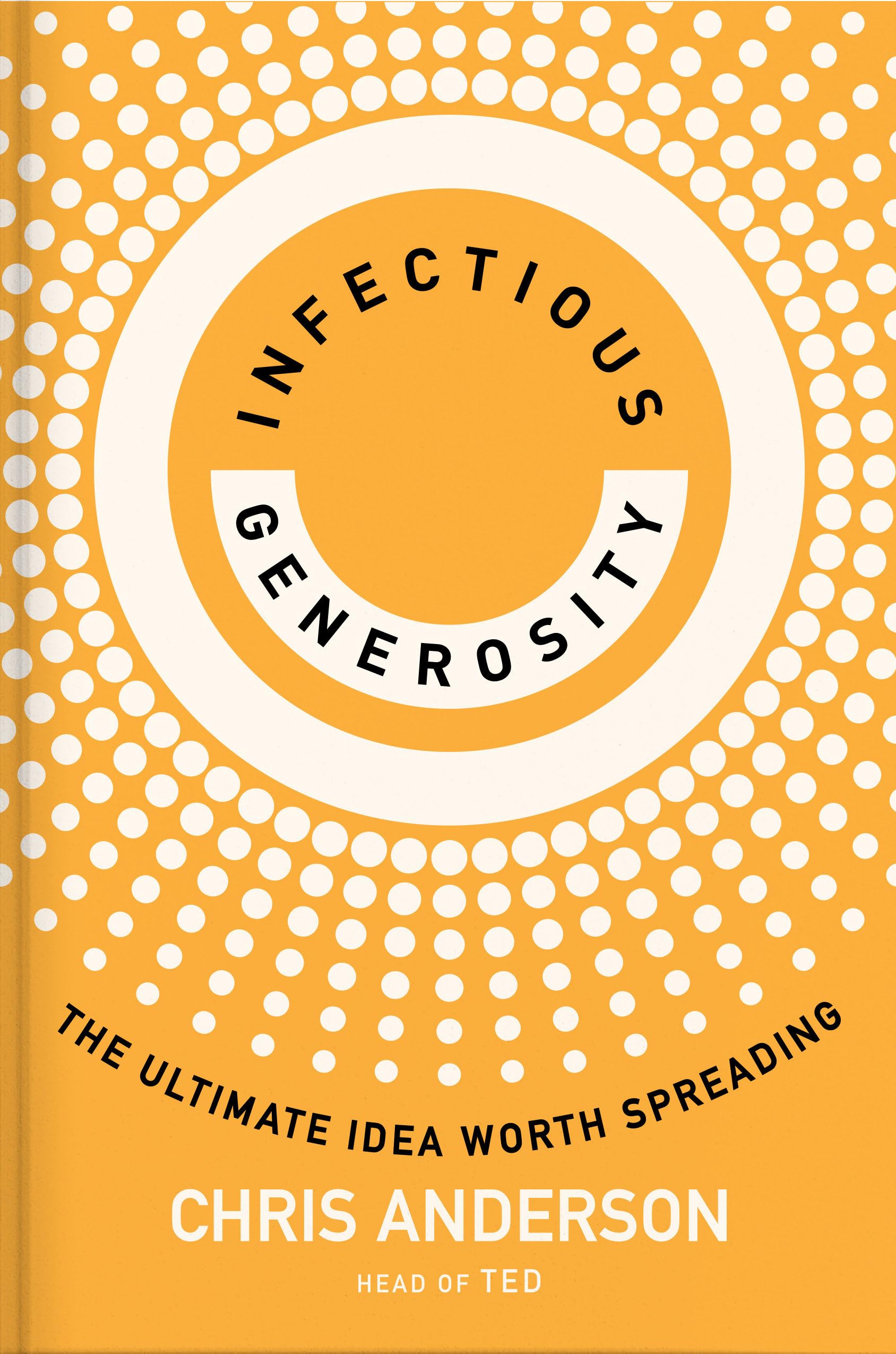
Infectious Generosity: The Ultimate Idea Worth Spreading – Chris J. Anderson

Recent years have been tough on optimists. Hopes that the Internet might bring people together have been crushed by the ills of social media. Is there a way back?

As head of TED, Chris Anderson has had a ringside view of the world’s boldest thinkers sharing their most uplifting ideas. Inspired by them, he believes that it’s within our grasp to turn outrage back into optimism. It all comes down to reimagining one of the most fundamental human generosity. What if generosity could become infectious generosity?

Consider how a London barber began offering haircuts to people experiencing homelessness—and catalyzed a movement

How two anonymous donors gave $10,000 each to two hundred strangers and discovered that most recipients wanted to “pay it forward” with their own generous acts

How TED itself transformed from a niche annual summit into a global beacon of ideas by giving away talks online, allowing millions access to free learning

In telling these inspiring stories, Anderson has given us “the first page-turner ever written about human generosity” (Elizabeth Dunn). More important, he offers a playbook for how to embark on our own generous acts—whether gifts of money, time, talent, connection, or kindness—and to prime them, thanks to the Internet, to have self-replicating, even world-changing, impact.

In My Hands Today…

The Almighty Dollar: Follow the Incredible Journey of a Single Dollar to See How the Global Economy Really Works – Dharshini David

Have you ever wondered why we can afford to buy far more clothes than our grandparents ever could . . . but may be less likely to own a home in which to keep them all? Why your petrol bill can double in a matter of months, but it never falls as fast?

Behind all of this lies economics.

It’s not always easy to grasp the complex forces that are shaping our lives. But by following a dollar on its journey around the globe, we can start to piece it all together.

The dollar is the lifeblood of globalisation. Greenbacks, singles, bucks or dead presidents: call them what you will, they are keeping the global economy going. Half of the notes in circulation are actually outside of the USA – and many of the world’s dollars are owned by China.

But what is really happening as our cash moves around the world every day, and how does it affect our lives? By following $1 from a shopping trip in suburban Texas, via China’s central bank, Nigerian railroads, the oilfields of Iraq and beyond, The Almighty Dollar reveals the economic truths behind what we see on the news every day. Why is China the world’s biggest manufacturer – and the USA its biggest customer? Is free trade really a good thing? Why would a nation build a bridge on the other side of the planet?

In this illuminating read, economist Dharshini David lays bare these complex relationships to get to the heart of how our new globalised world works, showing who really holds the power, and what that means for us all.

In My Hands Today…

Filterworld: How Algorithms Flattened Culture – Kyle Chayka

A history and investigation of a world ruled by algorithms, which determine the shape of culture itself.

From trendy restaurants to city grids, to TikTok and Netflix feeds the world round, algorithmic recommendations dictate our experiences and choices. The algorithm is present in the familiar neon signs and exposed brick of Internet cafes, be it in Nairobi or Portland, and the skeletal, modern furniture of Airbnbs in cities big and small. Over the last decade, this network of mathematically determined decisions has taken over, almost unnoticed—informing the songs we listen to, the friends with whom we stay in touch—as we’ve grown increasingly accustomed to our insipid new normal.

This ever-tightening web woven by algorithms is called “Filterworld.” Kyle Chayka shows us how online and offline spaces alike have been engineered for seamless consumption, becoming a source of pervasive anxiety in the process. Users of technology have been forced to contend with data-driven equations that try to anticipate their desires—and often get them wrong. What results is a state of docility that allows tech companies to curtail human experiences—human lives—for profit. But to have our tastes, behaviors, and emotions governed by computers, while convenient, does nothing short of call the very notion of free will into question.

In Filterworld, Chayka traces this creeping, machine-guided curation as it infiltrates the furthest reaches of our digital, physical, and psychological spaces. With algorithms increasingly influencing not just what culture we consume, but what culture is produced, urgent questions What happens when shareability supersedes messiness, innovation, and creativity—the qualities that make us human? What does it mean to make a choice when the options have been so carefully arranged for us? Is personal freedom possible on the Internet?

To the last question, Filterworld argues yes—but to escape Filterworld, and even transcend it, we must first understand it.

In My Hands Today…

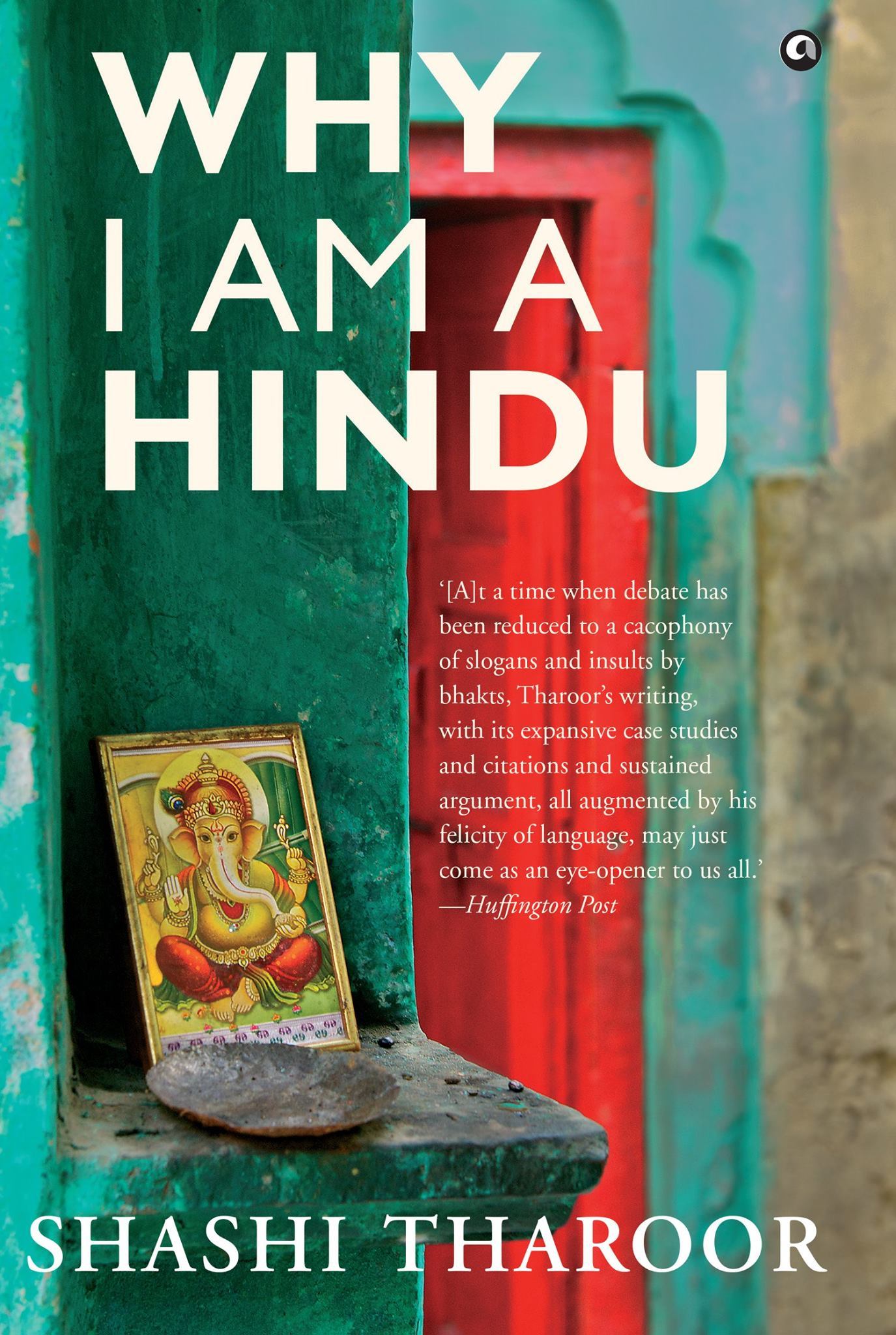
Why I am a Hindu – Shashi Tharoor

In Why I Am a Hindu, one of India’s finest public intellectuals gives us a profound book about one of the world’s oldest and greatest religions.

Starting with a close examination of his own belief in Hinduism, he ranges far and wide in his study of the faith. He talks about the Great Souls of Hinduism, Adi Shankara, Patanjali, Ramanuja, Swami Vivekananda, Ramakrishna Paramahamsa, and many others who made major contributions to the essence of Hinduism. He delves deep into Hinduism’s most important schools of thought (such as the Advaita Vedanta).

He explains, in easily accessible language, important aspects and concepts of Hindu philosophy like the Purusharthas and Bhakti, masterfully summarizes the lessons of the Gita and Vivekananda’s ecumenism, and explores with sympathy the ‘Hinduism of habit’ practised by ordinary believers.

He looks at the myriad manifestations of political Hinduism in the modern era, including violence committed in the name of the faith by right-wing organizations and their adherents. He analyzes Hindutva, explains its rise and dwells at length on the philosophy of Deen Dayal Upadhyaya, its most significant ideologue. He is unsparing in his criticism of extremist ‘bhakts’, and unequivocal in his belief that everything that makes India a great and distinctive culture and country will be imperiled if religious ‘fundamentalists’ are allowed to take the upper hand. However, he also makes the point that it is precisely because Hindus form the majority that India has survived as a plural, secular democracy.

A book that will be read and debated now and in the future, Why I Am a Hindu is a revelatory and original masterwork.