In My Hands Today…

The Mind of a Terrorist: David Headley, the Mumbai Massacre, and His European Revenge – Kaare Sørensen, translated by Cory Klingsporn
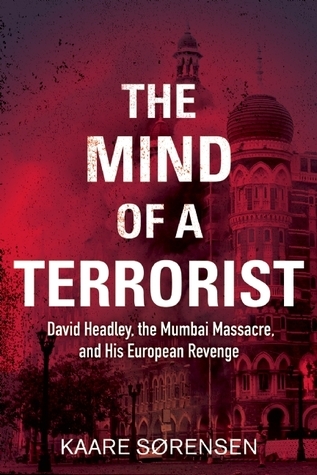
David Headley, the American-Pakistani also known as Daood Gilani, lived a double life. One day he would stroll through Central Park in his tailored Armani suit as a true New Yorker, and the next he would browse in the bazaar in Lahore wearing traditional Pakistani clothes. One day he would drink champagne at the most extravagant clubs; on another, he would prostrate himself in prayer in remote Pakistan and pledge fidelity to Allah.

Born in 1960, the son of an American mother and Pakistani father, with one blue eye and one brown, Headley grew up between East and West. He was attracted to both worlds, even working as an informant for the US government, until one day he found he had to choose between the place of his birth and a radical form of Islam preaching global jihad. This is the disturbing story of the mastermind behind the 2008 attacks in Mumbai that killed 166 people—who two months later flew to Copenhagen to plan another act of terror with the help of al-Qaeda sleeper cells in Europe.

Veteran journalist Kaare Sørensen has reconstructed his movements and planning in a tense feat of reportage. His account, based on extensive reporting, eyewitness interviews, and documentation including wiretaps, court transcripts, and emails by Headley accessed from a chat room cache of nine thousand messages, offers unprecedented insight into the mind of the terrorist. The author has provided updates and a new preface for the English-language edition.
In My Hands Today…

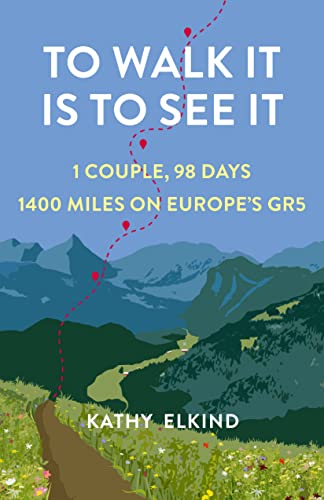
To Walk It Is to See It: 1 Couple, 98 Days, 1400 Miles on Europe’s GR5 – Kathy Elkind

In 2018, Kathy Elkind and her husband decided to take a grown-up “gap year” in Europe and walk the 1,400-mile Grande Randonnée Cinq (GR5) across The Netherlands, Belgium, Luxembourg, and France.

At fifty-seven, Kathy has chosen comfort over hardship: Unlike the Appalachian Trail and the Pacific Coast Trail, the GR5 winds from village to village instead of campsite to campsite. She and Jim get to indulge in warm beds and delicious regional food every night and croissants in the mornings.

The GR5 is not all comfort. Walking day after day for ninety-eight days bring sickness, accommodation struggles, language barriers, and storm-shrouded mountains in the Alps.

Meanwhile, Kathy finds herself reflecting on difficult topics—primarily, her struggles with dyslexia, overeating, and shame. But she also finds that the walking becomes a moving meditation and the beauty of the landscape heals; she begins to discover her own wise strength; and as the days unfold, she comes to the gratifying realization that a long marriage is like a long trail: there are ups and downs and it takes hard work to keep going, but the beauty along the way is staggering.

In My Hands Today…

The Coming Wave: Technology, Power, and the Twenty-first Century’s Greatest Dilemma – Mustafa Suleyman and Primary Contributor Michael Bhaskar

We are approaching a critical threshold in the history of our species. Everything is about to change.

Soon you will live surrounded by AIs. They will organise your life, operate your business, and run core government services. You will live in a world of DNA printers and quantum computers, engineered pathogens and autonomous weapons, robot assistants and abundant energy.

None of us are prepared.

As co-founder of the pioneering AI company DeepMind, part of Google, Mustafa Suleyman has been at the centre of this revolution. The coming decade, he argues, will be defined by this wave of powerful, fast-proliferating new technologies.

In The Coming Wave , Suleyman shows how these forces will create immense prosperity but also threaten the nation-state, the foundation of global order. As our fragile governments sleepwalk into disaster, we face an existential unprecedented harms on one side, the threat of overbearing surveillance on the other.

Can we forge a narrow path between catastrophe and dystopia?

This groundbreaking book from the ultimate AI insider establishes “the containment problem”—the task of maintaining control over powerful technologies—as the essential challenge of our age.

In My Hands Today…

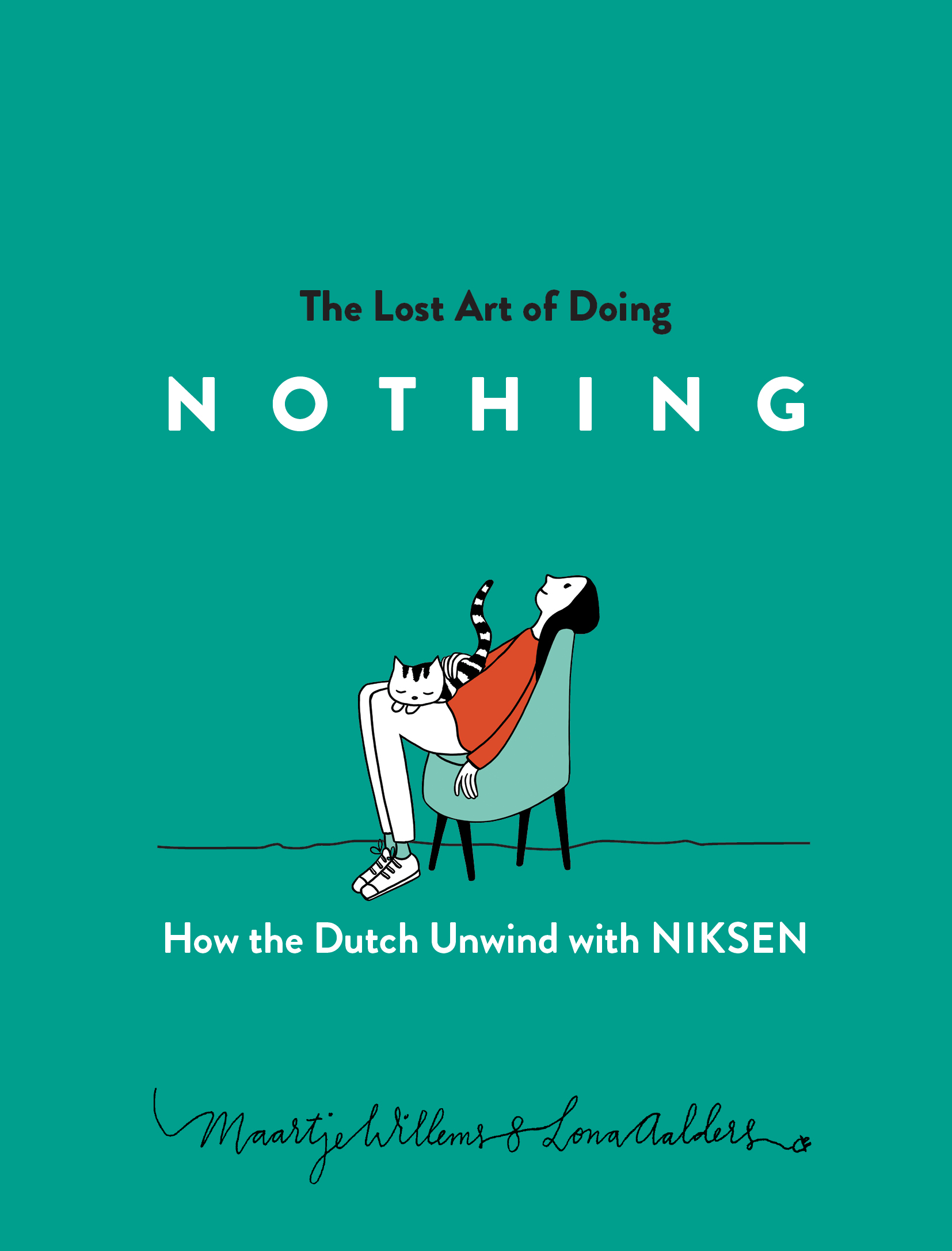
The Lost Art of Doing Nothing: How the Dutch Unwind with Niksen – Maartje Willems, Illustrated by Lona Aalders

“The best thing about niksen is the absence of a goal. It doesn’t serve a purpose, but it’s wonderful.”

Don’t you think it’s time for a break? Plagued—as we are!—by nonstop pings and notifications, we have lost the knack of zoning out. Kicking back. Slacking off . Even when pandemic-induced lockdowns forcibly cleared our calendars, many who thought I’m free! filled their days with Netflix and doomscrolling. How can we reclaim our free time (planned or not) to truly rest and reset?

The Dutch have it figured with niksen. Perhaps their best-kept lifestyle secret, niksen is the art of doing, well, nothing .

It’s the opposite of productivity, and it’s incredibly good for your . . . If you’re waiting for an invitation to go lie down in the sunshine, this book is it.

In My Hands Today…

Magnificent Delusions: Pakistan, the United States, and an Epic History of Misunderstanding – Husain Haqqani

The relationship between America and Pakistan is based on mutual incomprehension and always has been. Pakistan—to American eyes—has gone from being a quirky irrelevance to a stabilizing friend, an essential military ally, and a seedbed of terror. America—to Pakistani eyes—has been a guarantee of security, a coldly distant scold, an enthusiastic military enabler, and is now a threat to national security and a source of humiliation.

The countries are not merely at odds. Each believes it can play the other—with sometimes absurd, sometimes tragic, results. The conventional narrative about the war in Afghanistan, for instance, has revolved around the Soviet invasion in 1979. But President Jimmy Carter signed the first authorization to help the Pakistani-backed mujahedeen covertly on July 3—almost six months before the Soviets invaded. Americans were told, and like to believe, that what followed was Charlie Wilson’s war of Afghani liberation, with which they remain embroiled to this day. It was not. It was General Zia-ul-Haq’s vicious regional power play.

Husain Haqqani has a unique insight into Pakistan, his homeland, and America, where he was ambassador and is now a professor at Boston University. His life has mapped the relationship of the two countries, and he has found himself often close to the heart of it, sometimes in very confrontational circumstances. This has allowed him to write the story of a misbegotten diplomatic love affair, here memorably laid bare.