In My Hands Today…

The Smartest Kids in the World: And How They Got That Way – Amanda Ripley

Through the compelling stories of three American teenagers living abroad and attending the world’s top-notch public high schools, an investigative reporter explains how these systems cultivate the “smartest” kids on the planet.

America has long compared its students to top-performing kids of other nations, but how do the world’s education superpowers look through the eyes of an American high school student? Author Amanda Ripley follows three teenagers who chose to spend one school year living and learning in Finland, South Korea, and Poland. Through their adventures, Ripley discovers startling truths about how attitudes, parenting, and rigorous teaching have revolutionized these countries’ education results.

In The Smartest Kids in the World, Ripley’s astonishing new insights reveal that top-performing countries have achieved greatness only in the past several decades; that the kids who live there are learning to think for themselves, partly through failing early and often; and that persistence, hard work, and resilience matter more to our children’s life chances than self-esteem or sports.

Ripley’s investigative work seamlessly weaves narrative and research, providing in-depth analysis and gripping details that will keep you turning the pages. Written in a clear and engaging style, The Smartest Kids in the World will enliven public as well as dinner table debates over what makes for brighter and better students.

In My Hands Today…

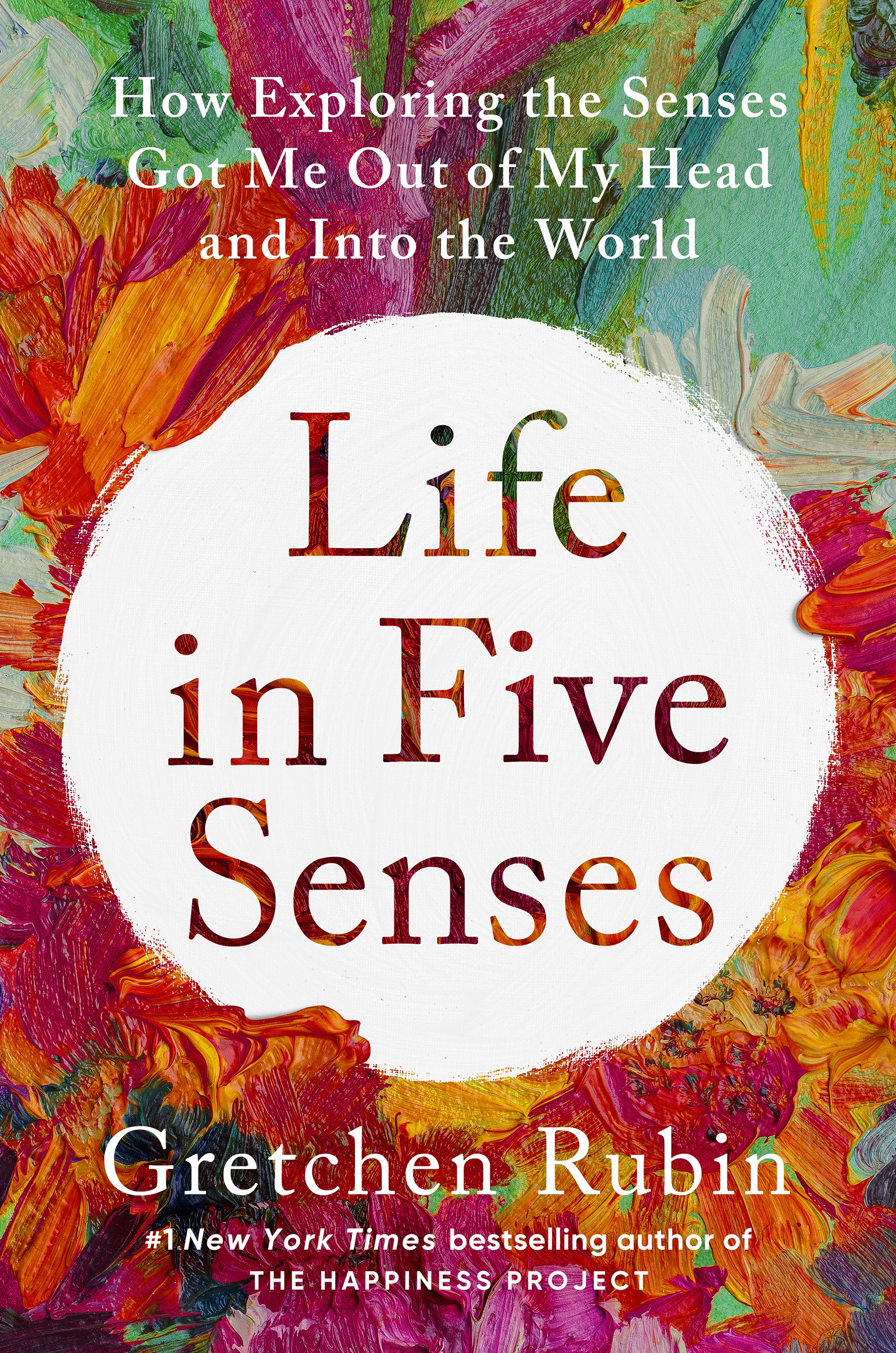
Life in Five Senses: How Exploring the Senses Got Me Out of My Head and Into the World – Gretchen Rubin

For more than a decade, Gretchen Rubin had been studying happiness and human nature. Then, one day, a visit to her eye doctor made her realize that she’d been overlooking a key element of happiness: her five senses. She’d spent so much time stuck in her head that she’d allowed the vital sensations of life to slip away, unnoticed. This epiphany lifted her from a state of foggy preoccupation into a world rediscovered by seeing, hearing, smelling, tasting, and touching.

In this journey of self-experimentation, Rubin explores the mysteries and joys of the five senses as a path to a happier, more mindful life. Drawing on cutting-edge science, philosophy, literature, and her own efforts to practice what she learns, she investigates the profound power of tuning in to the physical world.

From the simple pleasures of appreciating the magic of ketchup and adding favorite songs to a playlist, to more adventurous efforts like creating a daily ritual of visiting the Metropolitan Museum of Art and attending Flavor University, Rubin show us how to experience each day with depth, delight, and connection. In the rush of daily life, she finds, our five senses offer us an immediate, sustainable way to cheer up, calm down, and engage the world around us—as well as a way to glimpse the soul and touch the transcendent.

Life in Five Senses is an absorbing, layered story of discovery filled with profound insights and practical suggestions about how to heighten our senses and use our powers of perception to live fuller, richer lives—and, ultimately, how to move through the world with more vitality and love.

In My Hands Today…

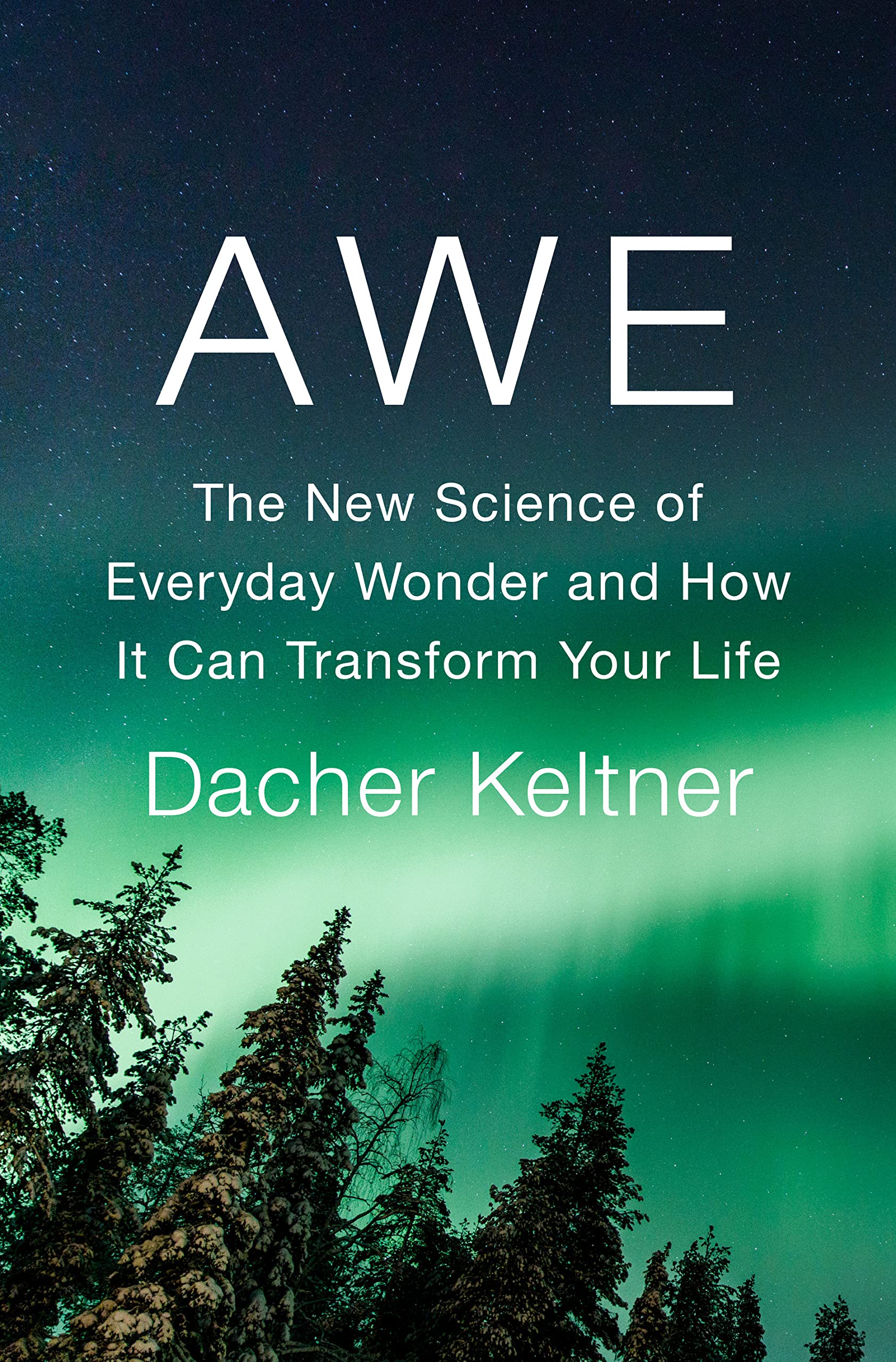
Awe: The New Science of Everyday Wonder and How It Can Transform Your Life – Dacher Keltner

Awe is mysterious. How do we begin to quantify the goose bumps we feel when we see the Grand Canyon, or the utter amazement when we watch a child walk for the first time? How do you put into words the collective effervescence of standing in a crowd and singing in unison, or the wonder you feel while gazing at centuries-old works of art?

Up until fifteen years ago, there was no science of awe, the feeling we experience when we encounter vast mysteries that transcend our understanding of the world. Scientists were studying emotions like fear and disgust, emotions that seemed essential to human survival. Revolutionary thinking, though, has brought into focus how, through the span of evolution, we’ve met our most basic needs socially. We’ve survived thanks to our capacities to cooperate, form communities, and create culture that strengthens our sense of shared identity—actions that are sparked and spurred by awe.

In Awe, Dacher Keltner presents a radical investigation and deeply personal inquiry into this elusive emotion. Revealing new research into how awe transforms our brains and bodies, alongside an examination of awe across history, culture, and within his own life during a period of grief, Keltner shows us how cultivating awe in our everyday life leads us to appreciate what is most humane in our human nature. And during a moment in which our world feels more divided than ever before, and more imperiled by crises of different kinds, we are greatly in need of awe. If we open our minds, it is awe that sharpens our reasoning and orients us toward big ideas and new insights, that cools our immune system’s inflammation response and strengthens our bodies. It is awe that activates our inclination to share and create strong networks, to take actions that are good for the natural and social world around us. It is awe that transforms who we are, that inspires the creation of art, music, and religion. At turns radical and profound, brimming with enlightening and practical insights, Awe is our field guide, from not only one of the leading voices on the subject but a fellow seeker of awe in his own right, for how to place awe as a vital force within our lives.

In My Hands Today…

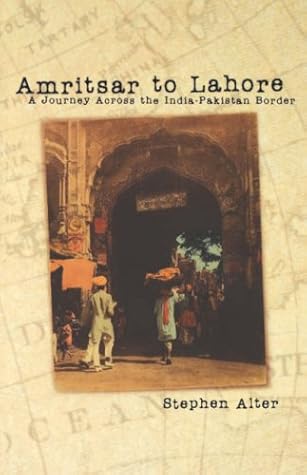
Amritsar to Lahore: A Journey Across the India-Pakistan Border – Stephen Alter

“During the course of my journey, many of the people I met in Pakistan and India expressed a curious combination of affection, indifference, and animosity toward their neighbors across the border. . . . The border divides them but it is also a seam that joins the fabric of their cultures.”

On 15 August 1947, in what some have argued was the final, cynical act of a collapsing empire, the British left India divided. Arbitrary borders that have profoundly affected the recent history of the subcontinent were drawn upon the map of India. In the violence that accompanied Partition, it has been estimated that close to a million people were killed and more than ten million uprooted and displaced. The hatreds created by what was one of the largest mass migrations in history only exacerbated the religious tensions that originally led to Partition. Since then, India and Pakistan have fought three devastating wars, and the danger of armed conflict is constant.

A sensitive and thoughtful look at the lasting effects of Partition on everyday people, Amritsar to Lahore describes a journey across the contested border between India and Pakistan in 1997, the fiftieth anniversary of Partition. Setting out from and then returning to New Delhi, Stephen Alter crossed the border into Pakistan, retraced the legendary route of the Frontier Mail toward the Khyber Pass, and made his return by bus along the Grand Trunk Road, stopping in major cities along the way.

During this journey and another in 1998, Alter interviewed people from all classes and castes: Hindus, Muslims, and Sikhs, men and women. In candid conversation, the older generation who lived through the events of 1947 shared their memories and opinions of that pivotal moment of Partition, while youths who have inherited the fragments of that past reflected upon the meaning of national identity. In an engaging account of peoples and places, Alter documents in evocative detail his meetings with varied individuals. He recalls the Muslim taxi driver who recognizes an air of confidence with which men in Pakistan walk the streets dressed in salwar kameez; the brigadier who saved the brass insignia of the British crown from Lord Mountbatten’s Rolls Royce; gold merchants, customs officers, fellow travelers, musicians, and many others.

Alongside these diverse and vivid interviews, chance conversations, and oral histories, Alter provides informed commentary to raise questions about national and individual identity, the territorial imperatives of history, and the insidious mythology of borders. A third-generation American in India, where he has spent much of his life, Alter reflects intimately upon India’s past and present as a special observer, both insider and outsider. His meaningful encounters with people on his journey illustrate the shared culture and heritage of South Asia, as well as the hateful suspicions and intolerance that permeate throughout the India-Pakistan frontier. Also woven into the narrative are discussions of the works of South Asian novelists, poets, and filmmakers who have struggled with the issue of identity across the borderlands.

Ongoing battles in Kashmir and nuclear testing by both India and Pakistan may prove that peace in this region can be achieved only when border disputes are resolved. Offering both the perspective of hindsight and a troubling vision of the future, Amritsar to Lahore presents a compelling argument against the impenetrability of boundaries and the tragic legacy of lands divided.

In My Hands Today…

Pax Indica: India and the World of the 21st Century – Shashi Tharoor

Indian diplomacy, a veteran told Shashi Tharoor many years ago, is like the love-making of an elephant: it is conducted at a very high level, accompanied by much bellowing, and the results are not known for two years.

In this lively, informative and insightful work, the award-winning author and parliamentarian brilliantly demonstrates how Indian diplomacy has become sprightlier since then and where it needs to focus in the world of the 21st century.

Explaining why foreign policy matters to an India focused on its own domestic transformation, Tharoor surveys Indias major international relationships in detail, evokes the countrys soft power and its global responsibilities, analyses the workings of the Ministry of External Affairs, Parliament and public opinion on the shaping of policy, and offers his thoughts on a contemporary new grand strategy for the nation, arguing that India must move beyond non-alignment to multi-alignment.

His book offers a clear-eyed vision of an India now ready to assume new global responsibility in the contemporary world. Pax Indica is another substantial achievement from one of the finest Indian authors of our times.