Who am I? A question of Identity

I am all of the following – a daughter, grand-daughter, wife, daughter-in-law, mother and the myriad other relationships that we acquire as we move along in life. But at the core of all this is one identity that is uniquely me, which is ME! The ME who is a person in her own right, with an identity of her own.

This is so not Me

There are women who have no issues with going through their entire life as someone’s wife, daughter or mother. I know some women who have known each other for the last 30 plus years and still call each other as the other woman’s daughter’s mother. For me, this is something I can’t imagine. Imagine knowing someone and then not knowing or worse not acknowledging their own names – is that what life is all about? I for one refuse to call any of BB or GG’s friends moms by the names of their children. If I don’t know their names, I’ll make it a point to know it and then use that. Yes, we’re all happy and proud mom’s, but that’s not the end of our identity.

In India, most of the laws of Hindusim is governed by what is called Manusmirti or The Laws of Manu.  According to this, before marriage a woman is a subject of her father, at marriage her father passes her responsibility to her husband and if her husband dies before her, her responsibility then passes on to her son. Yet, the same Hindusim gives a woman equal rights as a man where a married man cannot undertake any religious ceremony without his wife sitting next to him and taking part in the ceremony.

Coming back to the topic, at marriage, a woman is supposed to be reborn and to ‘celebrate’ this, a new name is given to her. Some families force the new bride to taken on, formally a new name. So the name she was born with and grew up with is gone forever, and is will now be known as this new person. Her old name, harking back to carefree days is only a memory, which is taken out when she visits her maternal home. I have many friends on Facebook with multiple identities (that is have two first and two last names – pre and post marriage) who are living examples to this custom even today. This irritates me no end. Thank God I didn’t have to go through this – although knowing me, I wonder if I would have done it and whether I would have made a big fuss there and then?

This is one of the reasons I didn’t change my name when I got married (the other, more convenient reason being that I had to leave Mumbai immediately and so flew here on my maiden name and since then all official documentation has been in that name. This is the story I’m going to stick to!)

Saraswati Puja

Today is the last day of the Navaratri festival with the Saraswati Puja and Dusshera tomorrow. Then it’s the anticipation of Diwali!


Saraswati Puja is celebrated all over India and across the world today with the day being dedicated to Goddess Saraswathi. In Hinduism, Saraswathi is the goddess of knowledge, wisdom, studies, science and technology, music, arts etc. She is also said to be the consort of Lord Brahma, who is said to be the creator of the world in Hindy mythology. Goddess Saraswati is depicted as a beautiful woman wearing a spotless white saree symbolising the purity of knowledge with four hands embodying mind, intellect, ego and alertness. She is usually seated on a white lotus or a white swan which is also her vehicle of transport, with a peacock close to her. She also holds the following in her four hands – a book, which is usually the vedas representing universal, eternal and true knowledge as well as her power over knowledge and the sciences; a rudrashka or rosary representing the power of spirituality, a veena, which is a musical intrument representingin her perfection in all arts and sciences and a pot of gangajal or sacred water which represent creative adn purification powers. Unlike most Goddesses in Hindu mythology, she is usually dressed very simply and not adorned with loads of jewellery showing that she prefers the intellectual and the artistic over the material.

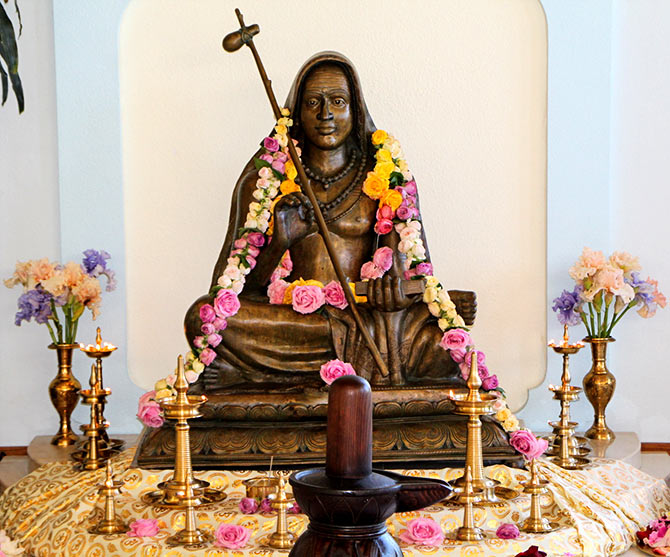
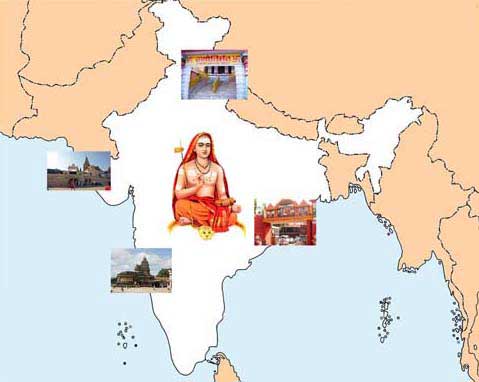
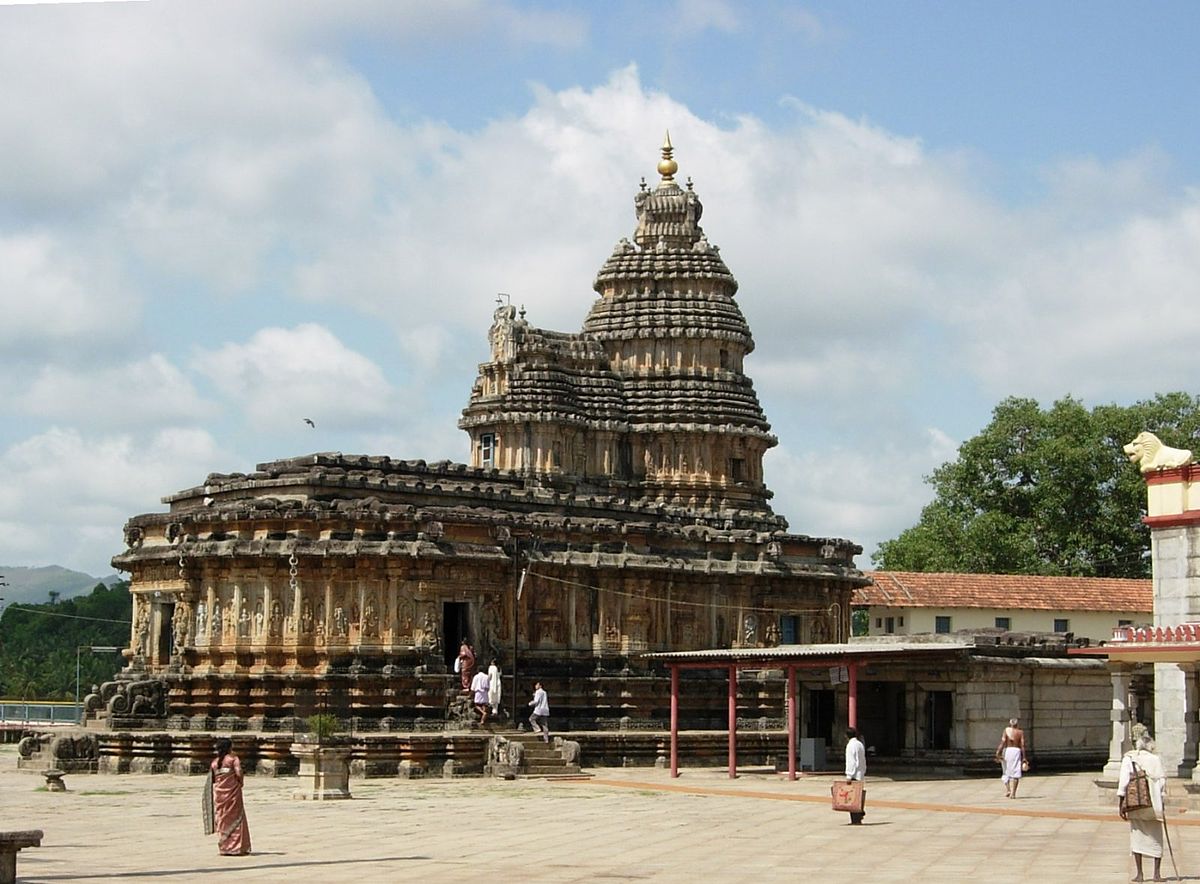
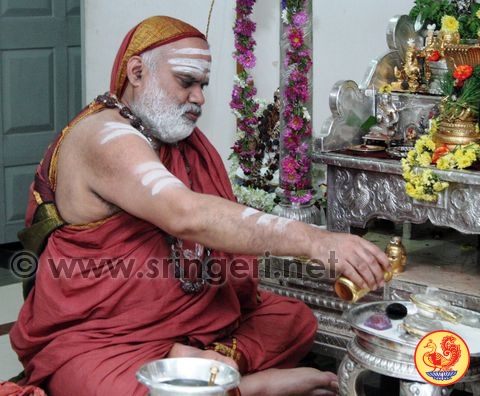
Saraswati is also the main goodess of the Sringeri Sarada Peetham, which is what my family has been following for generations and the Jagadguru Shankaracharya at the Sarada Peetham is whom we consider our guru. I’ll post more about this later, just is just a teaser.

In South India and our brahmin community, we worship the Goddess on the ninth day of Navaratri. On that day, after bath, we keep books and some new clothes at her feet and worship her. I made a payasam today as the prasad. On this day, children also do not look at their books since she is supposed to be sitting on them and to use them is to disrespect her. The next day, we have to read a couple of pages from each book that was kept at the pooja so that she blesses us with good intellect and the most important thing for children – marks!

I’ve kept BB & GG’s books at the altar and asked them to pray to Saraswati Ummachi (God) so that she can bless them. They both prayed “Ummachi, please bless us so that that we can study well and get good marks in our exams“.

One of the first shlokas that I learnt from my ammama and have taught GG & BB is the one about Goddess Saraswati. It goes like this:

Saraswati namasthubiyam, varade kamarupini
Vidyarambham karishyaami, siddhir bhavatume sadaa

O Goddess Saraswati, salutations to you, the giver of boons, the one who fulfills all desires. I begin my studies. May there always be accomplishments for me.

The picture in this post is the picture of Goddess Saraswati in my pooja.

Nine Nights of Prayer, Dancing and Fun

I really miss being in India during the festive season. Today is the start of the Navratri festival in India and everywhere there are Hindus. Navratri literally means nine nights and this festival, in honour of the various manifestations of the Goddess Durga or is celebrated with pomp and pagentry in different ways across the country. Everyday is dedicated to one form or aspect and the festival ends on the tenth day called Dusshera or Vijayadashami. Dusshera epitomises the victory of good over evil.

Goddess Durga and her various forms

Since almost all the festivals that Hindus celebrate go by the lunar calendar, Navratri is celebrated in the Hindu month of Ashwin, which corresponds to end September/early October every year. There is no definite date and the dates are determined every year based on the moon’s aspects.

Ramlila

While the whole country celebrates Navrati, the festival is celebrated in different ways throughout the country. In North India, people fast during the nine days and pray to the the various forms of Shakti by singing bhajans or devotional songs. The Ramayan is also performed during the nine days in Ramlila grounds with the tenth day reserved for the killing of the demon king Ravan. In the north they believe that the nine days of Navratri is the time Lord Ram battled with Ravan and it was on Dusshera that he killed him – hence the name Vijaydashami or the day of victory.

Dandiya Raas

In the state of Gujarat, Navratri is one of the biggest festivals celebrated. Here, a big statue of Durga is kept in communal areas and homes and every nights, everybody comes out to dance the garba and the dandiya raas. Nowadays the garba is rarely performed or if performed, it is done right at the begining and the rest of the time, it’s time for the dandiya. In Mumbai, the nine days is filled with people going to different dandiya grounds everyday and playing to their hearts content.

Image from Wikipedia - Durga Puja Pandal in West Bengal

In West Bengal, the last four days or Saptami, Ashtami, Navami and Dashami is the most important with the Pujos happening. Again like in Gujarat, there are big statues of Durga and communal praying and celebrations take place.

Golu

In South India, steps are created with golus which are dolls collected by the family and kept for the nine days. Married women and young girls are called home for haldi kumkum. It is said it is very auspicious to girl young girls (i.e. girls who have not yet started mensurating) gifts in the form clothes, bangles etc. In the south, the ninth day is also celebrated as Saraswati Puja where books and implements used for your profession are kept in front of the Goddess Saraswati, who is the Goddess of learning. We used to love this day as this was one day sanctioned by the scriptures where you should not study! The whole day the books are kept and on Dusshera, the books are taken out and then studied. In my family, we also wear new clothes on this day.

Image from Wikipedia - Jumbo Savari during celebrations in Mysore

In Mysore, Karnataka, the festival is celebrated with a lot of pomp and show and the Mysore Palace is especially lit up for the occasion.

The Navratri is divided into three parts of three days each. The first three days are devoted to Goddess Durga or Kali (the destroyer) and her different forms, the middle three days to Goddess Lakshmi (the provider) and her manifestations and the last three days to Goddess Saraswati (the giver of wisdom) and her various aspects.

The last day is Dusshera which is considered a very auspicious day to begin something new. Many parents who plan to put their children in school, have a small ceremony in the temple to start their formal learning process called Vidyarambham. We did this for BB & GG when they were around 2 years old. The ceremony had the parent use the index finger of the child to write an auspicious symbol (usually OM) so that that is the first thing they write.

So what will we be doing? Starting today, almost everyday GG & me (with BB tagging along) will visit family and friends for the Haldi Kumkum ritual. GG being a pre-meranche girl is high in demand and so I will take her wherever I go. On Friday BB & GG will be singing at a temple near our place along with their classical music teacher and friends. Then on Dusshera, we will go to the same classical music teacher’s place to pay our respects and start the second year of music studies! And in between all this is studies as this is exam season here!!

Conversations with God!

What is religion? According to Wikipedia:

Religion is a collection of cultural systems, belief systems, and worldviews that establishes symbols that relate humanity to spirituality and moral values.Many religions have narratives, symbols, traditions and sacred histories that are intended to give meaning to life or to explain the origin of life or the universe. They tend to derive morality, ethics, religious laws or a preferred lifestyle from their ideas about the cosmos and human nature.

I was born and raised as a Hindu, particularly a South Indian Iyer Brahmin. While we follow all the tenets of the Hindu religion, there are some which are uniquely ours. I’ll be writing more about these in subsequent posts, but while the overarching theme of this post is religion, it is more specifically about God and my relationship with Him.

Different people view religion is their own ways. For some, this may take form of praying religiously in front of the manifestation of their preferred religion, for others it may be something they view with suspicion and fear and shun it altogether.

Where I am concerned, I believe in the religion I was brought up in and within which I bring up my children. I believe everyone needs an emotional anchor with which to anchor their lives and religion, if handled correctly, can provide that. My relationship with my religion and the God who personifies it for me is very personal and intense. To me, it is not necessary to pray a certian number of times a day, go to the temple so many times a week, but not be a good person internally. I believe that what lies between you and your deity is personal and should remain so. I definitely pray and constantly think of him, but it is very personal.

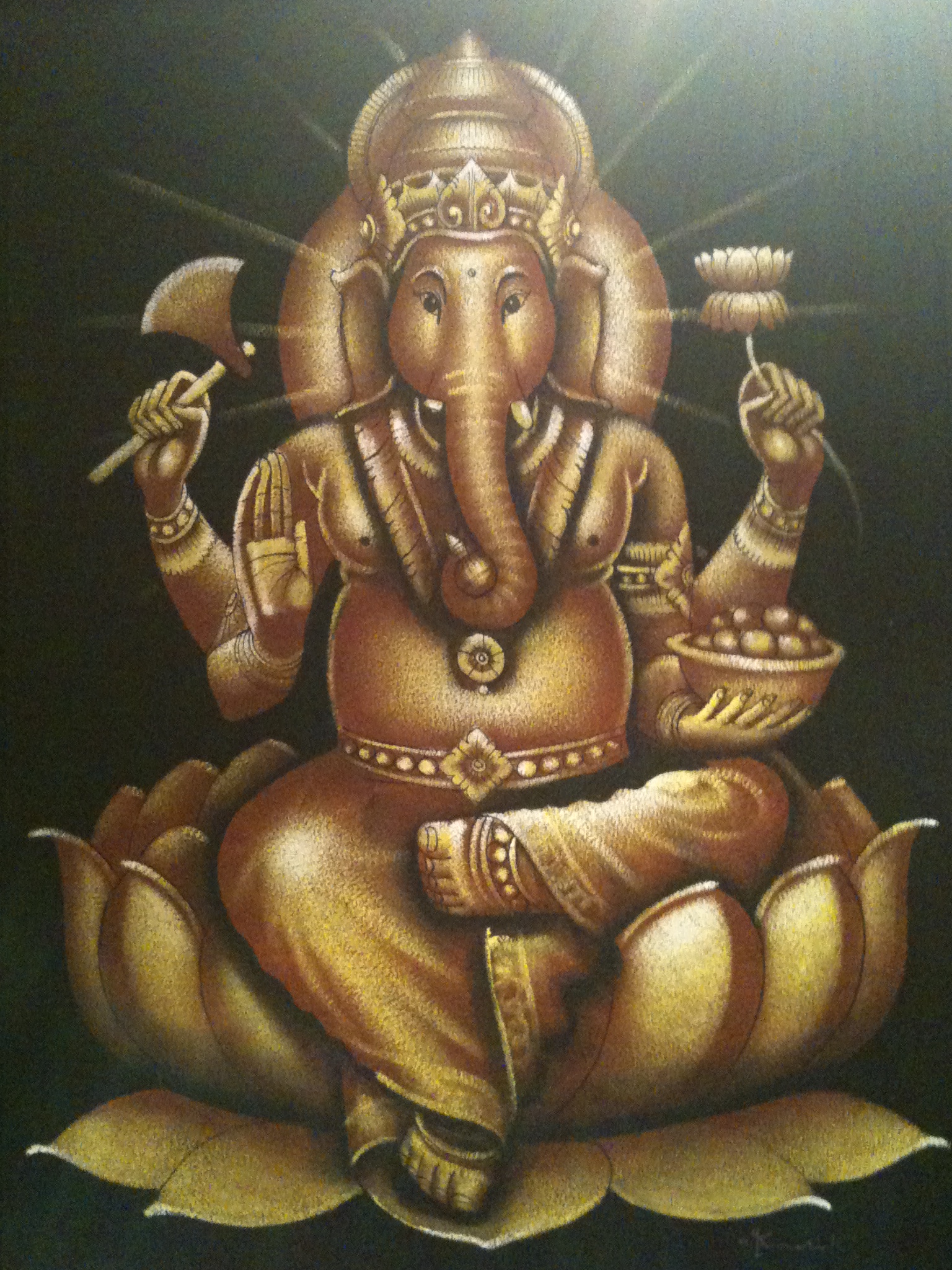
Painting of Lord Ganesh from Bali at home

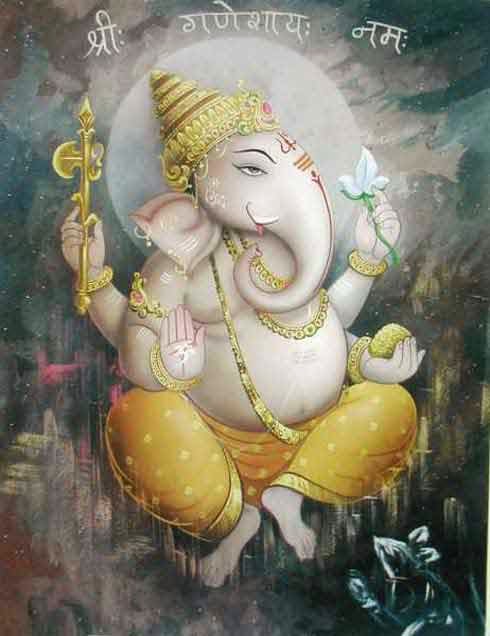
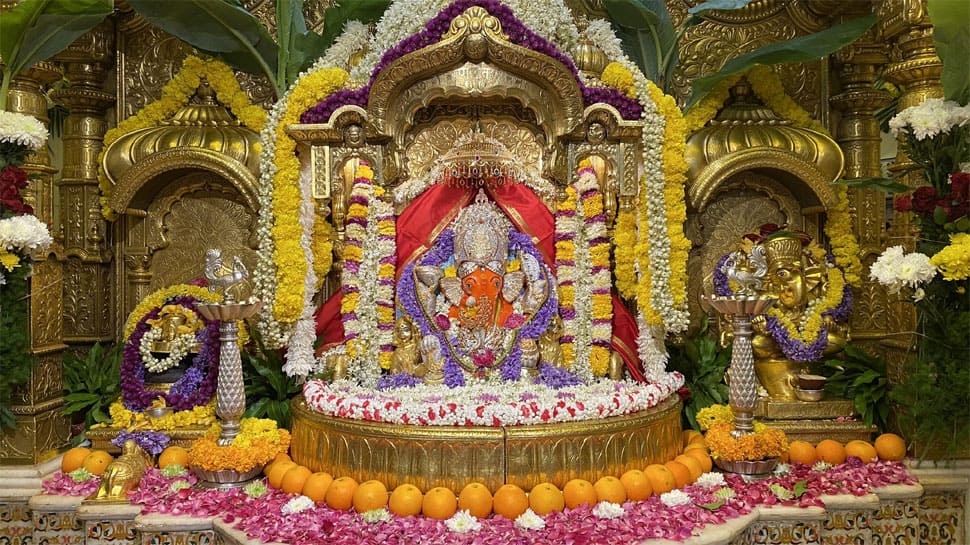
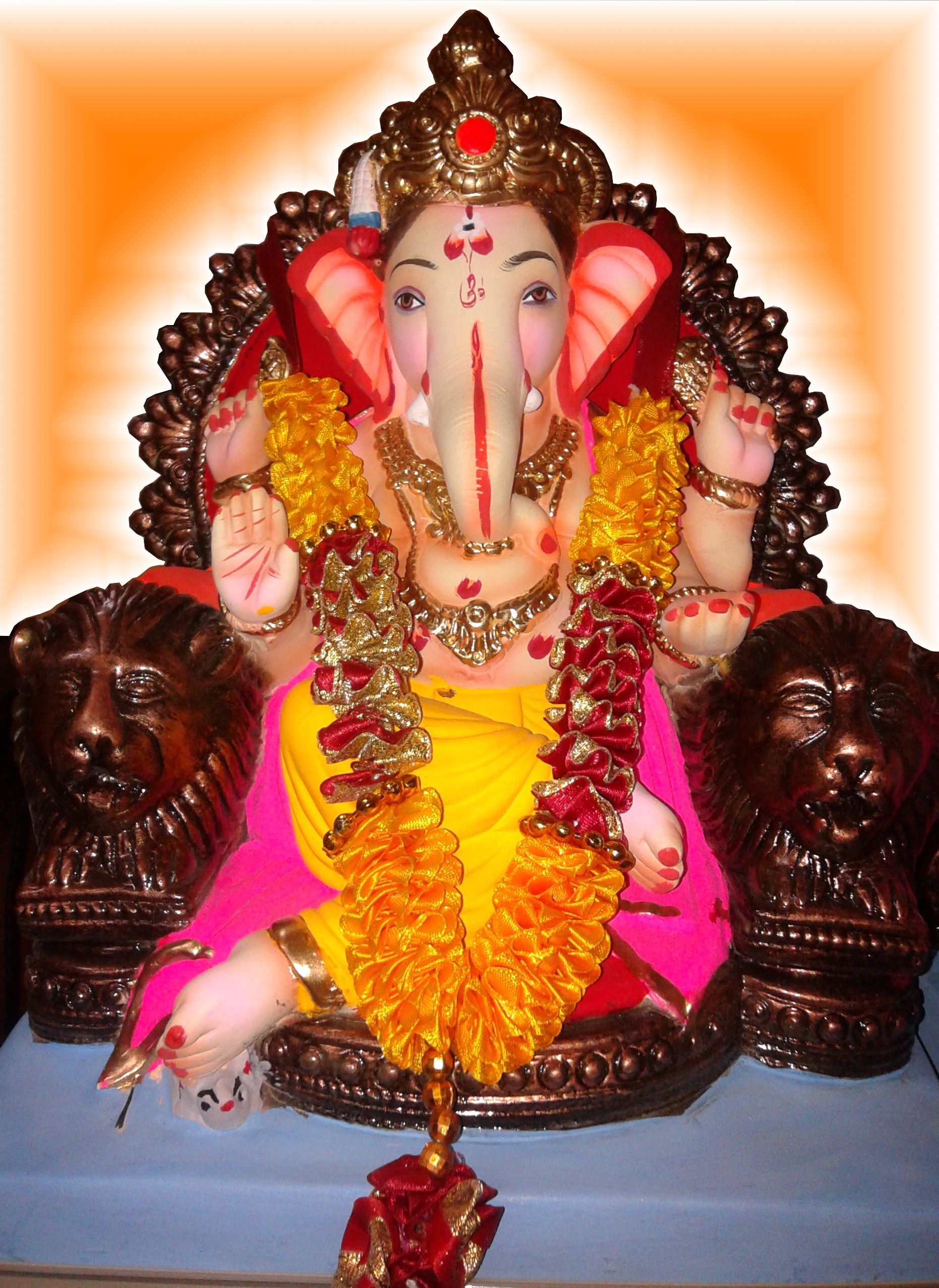
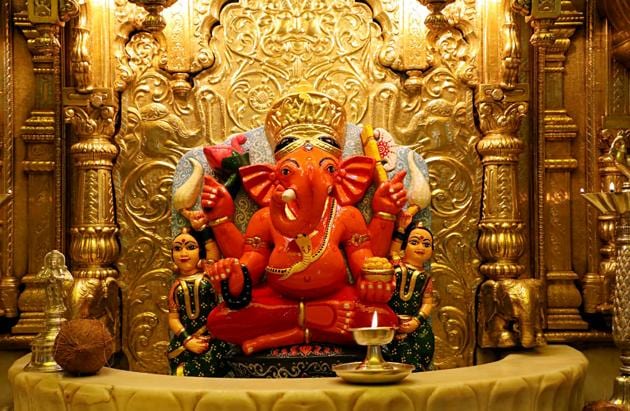
Many Hindus have something called an ishtadev which essentially means a favourite God or Deity. I do too and with my ishtadev, I have a one-on-one relationship. My ishtadev by the way is the Lord Ganesh. I have always been drawn to him since childhood and there is one particular temple in my hometown of Mumbai that I love going to. This is the Siddhivinayak Temple in Prabhadevi and never fail to go there each time I go back.

I look up to Lord Ganesh or Siddhivinayak as a friend. I pray to him many, many times a day and selfishly also ask him loads of things during the course of my day. If something is not going my way, I ask for his intervention and when things are working in my favour, I

Idol of Siddhivinayak at the Siddhivinayak Temple, Mumbai

do thank him. A case in point – last night we got home very late from the temple (details later) and I didn’t have a very good night. Today morning, when I got dropped off at my bus stop, I did mention to S that although I am sleepy, I know I won’t get place to sit in the bus. Then the bus that came my way was not the bus I usually take, it was an abbreviated service that I usually ignore since using that bus means changing to another bus later on. But this bus was fairly empty and I saw if I boarded it, I can get a seat, so I got in and slept till it was time to get off and change buses, which coincidently came within 3 minutes!

This is my relationship with my God, my friend. How about you? Do you believe in God, in a higher power? If yes, then how do you communicate with him/her?