Travel Bucket List: India – Haryana Part 1

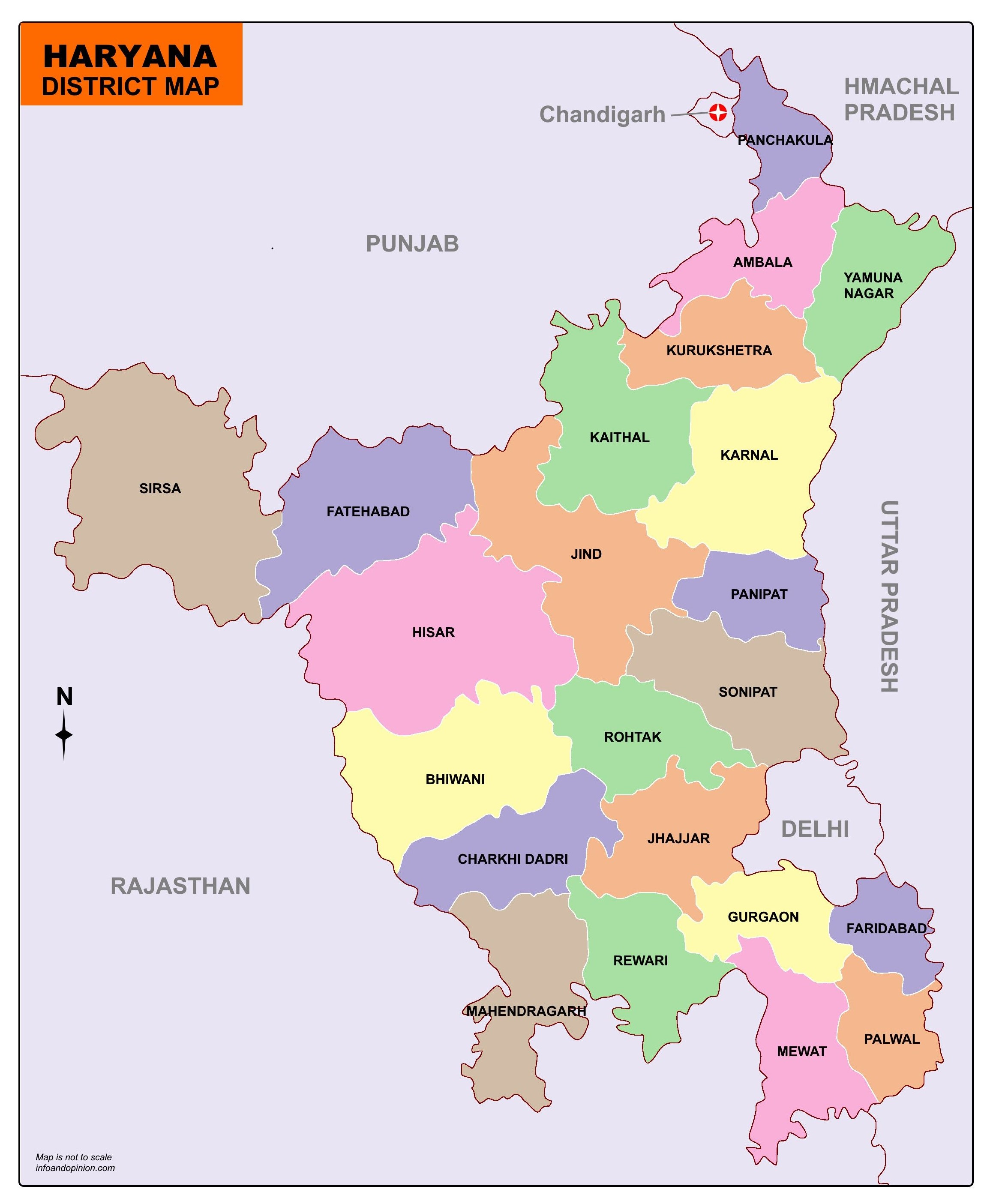
Located in north India, Haryana is a land-locked state which was carved out of the former state of East Punjab on 1 November 1966 on a linguistic basis. It shares its state capital of Chandigarh with Punjab while its most populous city is Faridabad, part of the National Capital Region and the city of Gurgaon among India’s largest financial and technology hubs. The 11th highest among Indian states in the human development index, Haryana’s economy is the 13th largest in India and has the country’s 5th highest GSDP per capita.

The state, which is bordered by Himachal Pradesh to the north-east, by the river Yamuna along its eastern border with Uttar Pradesh, by Rajasthan to the west and south, and the Ghaggar-Hakra River which flows along its northern border with Punjab is rich in history, monuments, heritage, flora and fauna. Since Haryana surrounds the country’s capital Delhi on three sides, north, west and south, large areas of the state are included in the economically important National Capital Region for planning and development.

Experts say that Haryana was known by the name because in the post-Mahabharata period the Abhiras lived here who developed special skills in the art of agriculture and so Haryana came to be derived from Abhirayana. The villages of Rakhigarhi in Hisar and Bhirrana in Fatehabad are home to one of the oldest and largest ancient civilisation sites, the Indus Valley Civilization, dating over 9,000 years old. Evidence of paved roads, a drainage system, a large-scale rainwater collection storage system, terracotta brick and statue production, and skilled metalworking, in both bronze and precious metals have been uncovered. According to archaeologists, Rakhigarhi may be the origin of the Harappan civilisation, which arose in the Ghaggar basin in Haryana and gradually and slowly moved to the Indus valley. During the Vedic era, Haryana was the site of the Kuru Kingdom, one of India’s great Mahajanapadas and the south of the state is the claimed location of the Vedic Brahmavarta region.

Ancient bronze and stone idols of Jain Tirthankara were found in multiple areas of the state. The Pushyabhuti dynasty ruled parts of northern India in the 7th century with its capital at Thanesar, on the outskirts of Kurukshetra and the Tomara dynasty ruled the south Haryana region in the 10th century. The area that is now Haryana has been ruled by some of the major empires of India. Panipat is known for the three seminal battles in the history of India. In the First Battle of Panipat in 1526, Babur defeated the Lodis. In the Second Battle of Panipat in 1556, Akbar defeated the local Haryanvi Hindu Emperor of Delhi, who belonged to Rewari. Hem Chandra Vikramaditya had earlier won 22 battles across India from Punjab to Bengal, defeating Mughals and Afghans. Hemu had defeated Akbar’s forces twice at Agra and the Battle of Delhi in 1556 to become the last Hindu Emperor of India with a formal coronation at Purana Quila in Delhi on 7 October 1556. In the Third Battle of Panipat which took place in 1761, the Afghan king Ahmad Shah Abdali defeated the Marathas.

Compared to a national average of 22%, Haryana has only 4% of the area under forests. The state has four main geographical features. The Yamuna-Ghaggar plain forming the largest part of the state is also called Delhi Doab and consists of the Sutlej-Ghaggar Doab between Sutlej in the north in Punjab and the Ghaggar river flowing through northern Haryana, the Ghaggar-Hakra Doab which lies between the Ghaggar river and the Hakra or Drishadvati river which is the paleochannel of the Saraswati River and the Hakra-Yamuna Doab between the Hakra and the Yamuna Rivers, the Lower Shivalik Hills to the northeast in the foothills of the Himalayas, the Bagar tract semi-desert dry sandy plain to the south-west and the Aravali Range’s northernmost low rise isolated non-continuous outcrops in the south.

Often known as the Land of Milk and Butter, Haryana has witnessed some of the most critical events in the course of Indian history, aptly giving it its title of being the land of lore, myth and ancient history. October to March is the best time to visit the state because starts getting colder and pleasant around this time making it a perfect time for sightseeing. We have spoken in detail about Haryana’s shared capital of Chandigarh when we saw what Punjab had to offer us, so let’s dive into the rest of the state.

Gurgaon
Officially known as Gurugram, Gurgaon is situated near the Delhi–Haryana border, about 30 km southwest of the national capital. It is one of the major satellite cities of Delhi and is part of the National Capital Region of India. Gurgaon is India’s second-largest information technology hub and third-largest financial and banking hub and also home to India’s largest medical tourism industry. Despite being India’s 56th largest city in terms of population, Gurgaon is the 8th largest city in the country in terms of total wealth. The city serves as the headquarters of many of India’s largest companies, is home to thousands of startup companies and has local offices for more than 250 Fortune 500 companies and accounts for almost 70% of the total annual economic investments in the state.

The region of Gurgaon originally fell under the Kuru Kingdom with the early people to inhabit the region Hindus ruled over by the Ahir clan and the Yadu tribes were also a part of this clan. In the late 4th century BC, the city was absorbed by the Mauryan Empire as part of Chandragupta Maurya’s earliest expansions of his kingdom. It is also said that the Gurgaon of today may be the same as the Gudapura town mentioned in the 12th-century text Prithviraja Vijaya, according to which Nagarjuna, a cousin of the Chahamana king Prithviraj Chauhan, rebelled against the king and captured the town, after which King Prithviraj crushed the rebellion and recaptured the town.

During the Mughal and the initial years of the British colonial era, Gurgaon was just a small village. There are mentions of a stone pillar at Gurgaon of a local feudal lord, Durgga Naga dating back to 672 or 871. After coming into direct British rule, the British established a civil line at Jharsa and a cavalry cantonment at Hiyadatpur. In 2016, the name of the city was officially renamed from Gurgaon to Gurugram, though Gurgaon still lingers in colloquial usage.

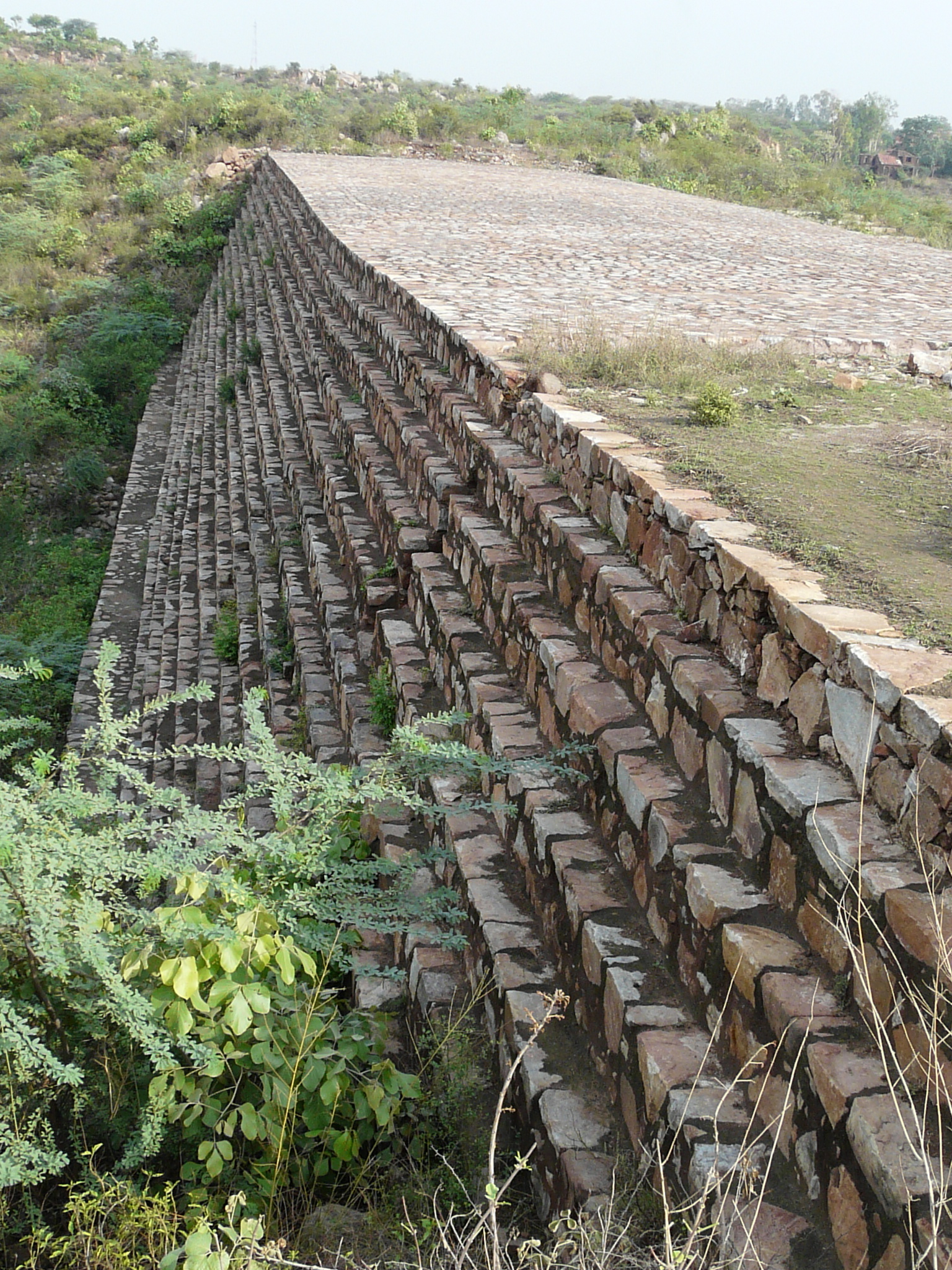
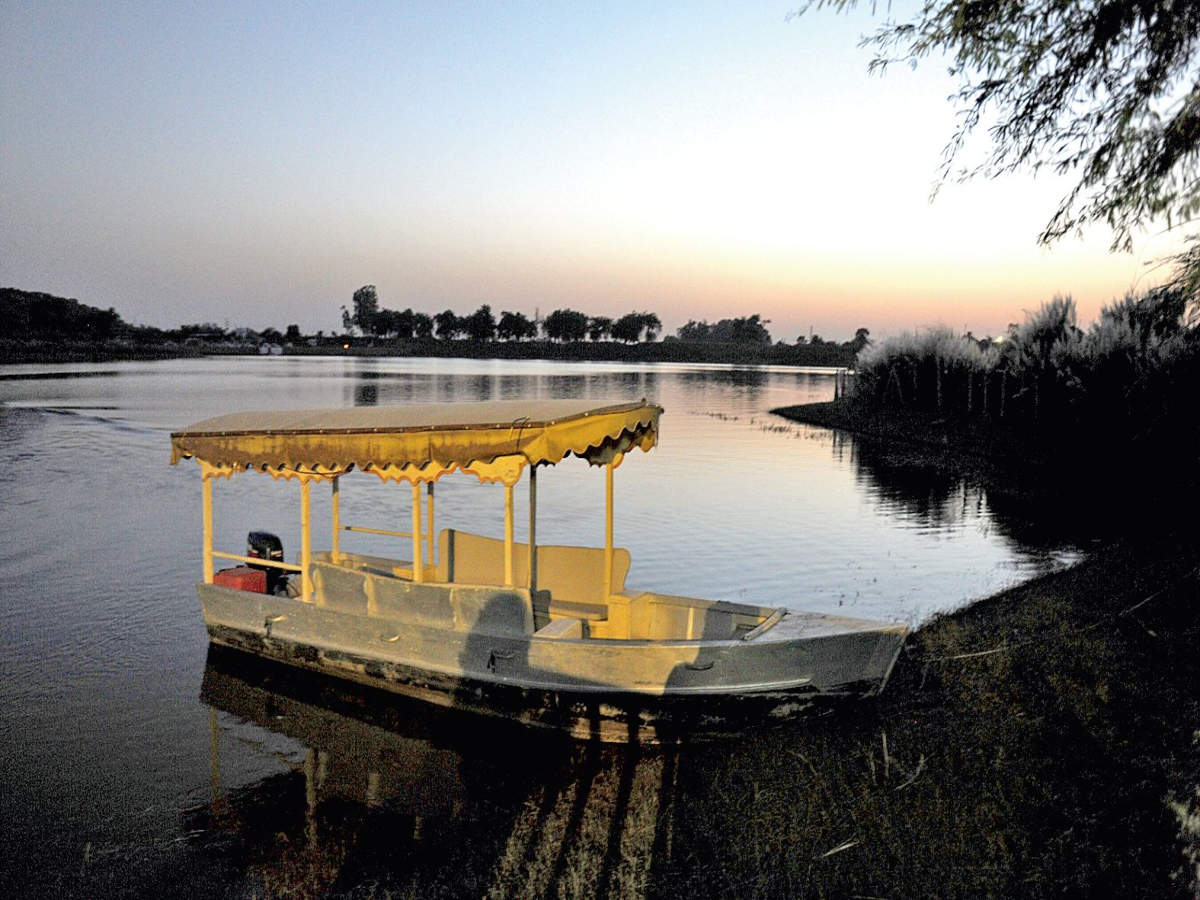
24 km south of Gurgaon lies the beautiful Damdama Lake which was commissioned by the British in 1947 for rainwater harvesting. Today, the lake is home to over 190 species of native and migratory birds and in the monsoons, when water levels reach as high as fifty feet is when most of the migratory birds are spotted. The lake is the biggest in Haryana and stretches to almost three thousand acres and is a popular place for picnics as well as for on-site training for corporate team-building exercises. Surrounded by the rocky Aravalli hills and uneven but exciting topography, this scenic lake is a perfect getaway for people in and around New Delhi, Delhi, and Gurgaon. There are many resorts near the lake that offer adventure sports and paddle boating. Other attractions here include kayaking, parasailing, angling, cycling, fishing, hot air ballooning, rowing and nature walks.
Resorts also offer activities like artificial rock climbing, cricket, volleyball, flying fox and darts in packaged deals. The best months to visit Damdama Lake are between August and February because many endangered bird species can be spotted here then. Summers are not advisable because of the heat and reduced water levels.

A perfect weekend getaway, the Sultanpur Bird Sanctuary is the perfect getaway for nature lovers and birding enthusiasts. Home to several migratory birds, it is a great spot for spotting various species, especially during the winter months. The sanctuary is home to more than 250 species of birds, especially during the peak season. The birds travel long distances from Europe, Siberia and Central Asia. The sanctuary also has four towers at different points of the sanctuary. The Sultanpur sanctuary is named after Rajput Chauhan Sultan Singh, the great-grandson of Harsh Dev Chauhan, the ruler of this area. Sultanpur was the centre of salt production till the 19th century and on April 2, 1971, the Sultanpur Jheel with an area of 1.21 sq km was provided with sanctuary status and the sanctuary was upgraded to a National Park and the simultaneously the area was increased to 1.42 sq km. The National Park comprises the lands of Sadhrana, Chandu, Sultanpur and Saidpur villages. For bird watchers, early morning or late evenings are the best time as the migratory birds fly out of their nests at sunrise and return at sunset.

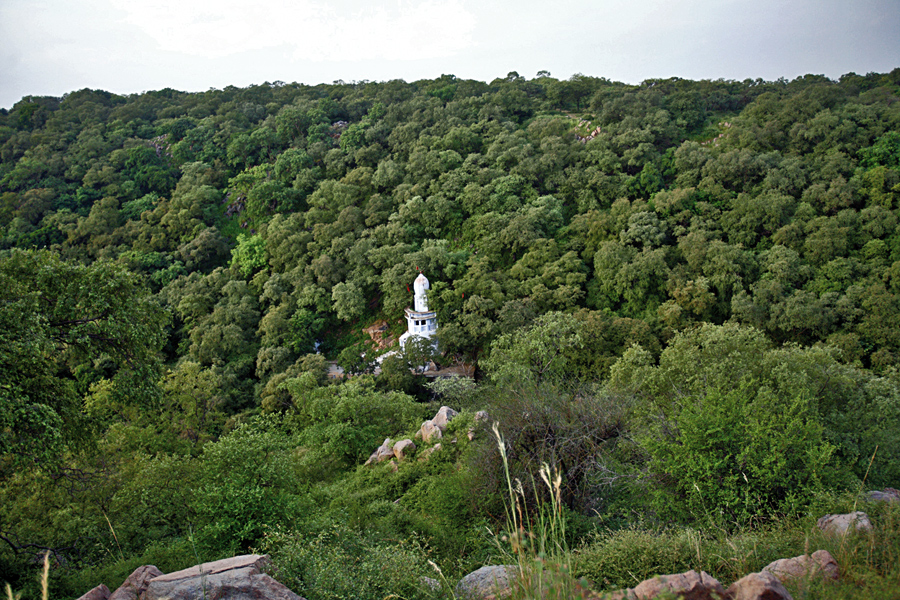
Set over 1.54 sq km, the Aravalli Biodiversity Park was established to ecologically restore and preserve the vegetation on the desert and arid land areas in the region. Inaugurated on the occasion of the World Environment Day in June 2010, after a Supreme Court Ban on stone mining in the region, the biodiversity park has about 160 plant species, over 170 species of birds and animals.

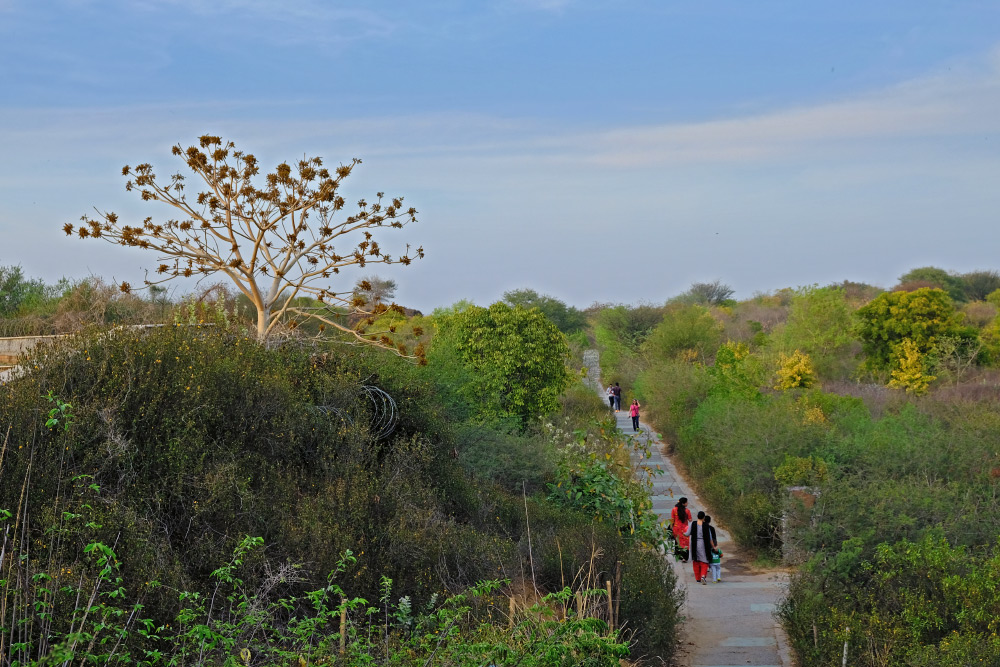
The Tau Devi Lal Biodiversity Park is mostly used for recreational purposes with a walkway used for morning or evening walks. There is also a rose garden with colourful and fragrant roses and the greenery attracts birds and so is preferred by bird watchers as well.

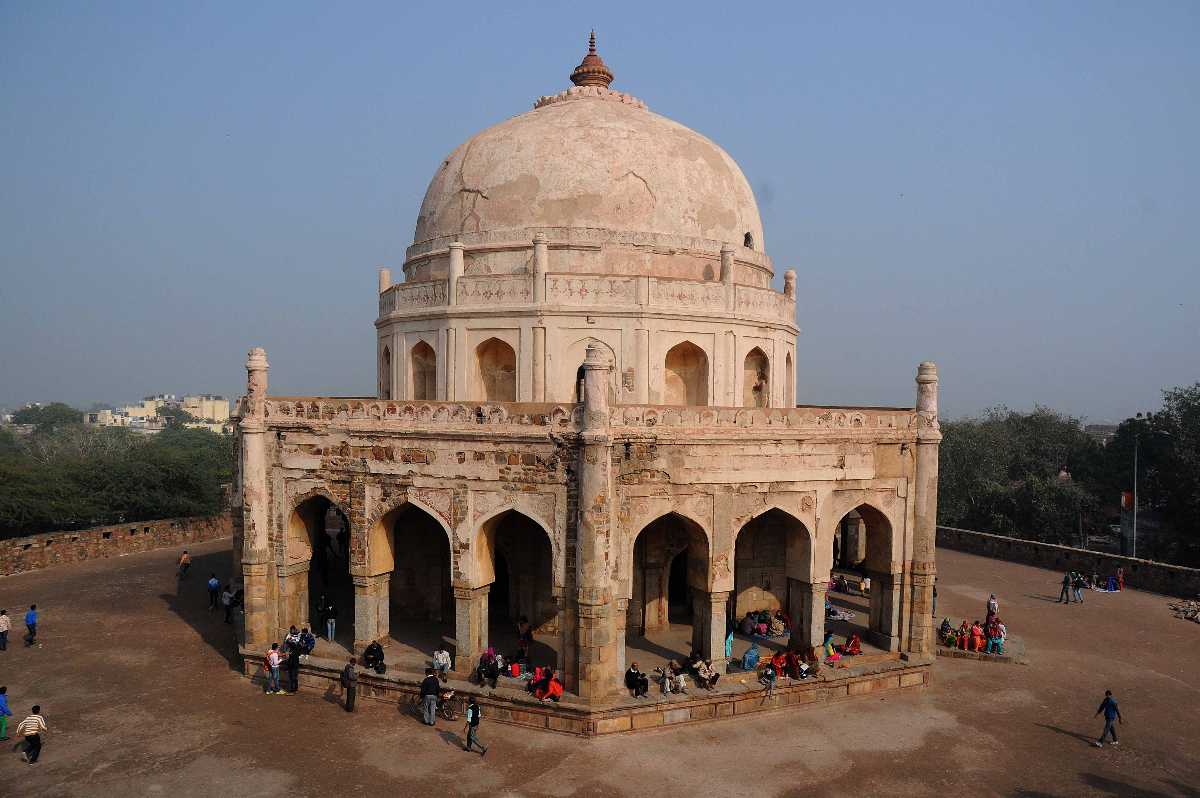
Qutub Khan’s Tomb is an 18th-century structure built in the memory of Adam Khan who served as a general to Emperor Akbar. The tomb has a unique octagonal structure and is an example of Mughal architecture. In 1830, Blake, a British Officer chose to reside at the location and removed all the graves. The tomb was later restored by Lord Curzon after Blake’s death.

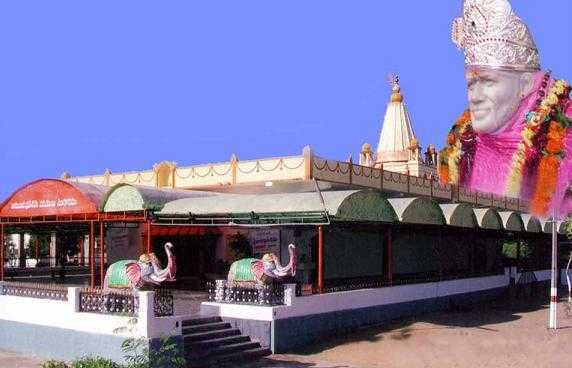
Dedicated to Sai Baba, the Sai Ka Angan Temple sprawls over an area of 3344 sq m and is built in the shape of a cave with important points of Sai Baba’s life in Shirdi replicated. The idol of Sai Baba is installed under a Neem tree and lit with oil lamps.

The Sheetla Mata Mandir is dedicated to Mata Sheetala, a Hindu goddess widely worshipped in North India, West Bengal, Nepal, Bangladesh and Pakistan as the pox-goddess. She is the Goddess of sores, ghouls, pustules and diseases in Hindu mythology. The temple is popular for its festival in the Chaitra month of the Hindu calendar i.e. between March and April.

Source

A palaeolithic archaeological site and sacred grove hill forest next to the Mangar village on the Delhi-Haryana border, Mangar Bani lies in the South Delhi Ridge of the Aravalli mountain range, the oldest plateau mountains in India. It is the Indian subcontinent’s largest neolithic South Asian Stone Age site and tool-making factory dating back to 100,000 years Before Present or BP, the first ever site with cave painting in the Aravalli range dating back to 20,000-40,000 BP, making it the oldest human habitation discovered in Haryana and the Delhi NCR. Mangar Bani is spread across 5000 hectares and it is surrounded by the larger forested Aravali range. Archaeologists discovered cave paintings in the Mangar Bani hill forest in May 2021 with the tools found estimated to be 100,000 years old.

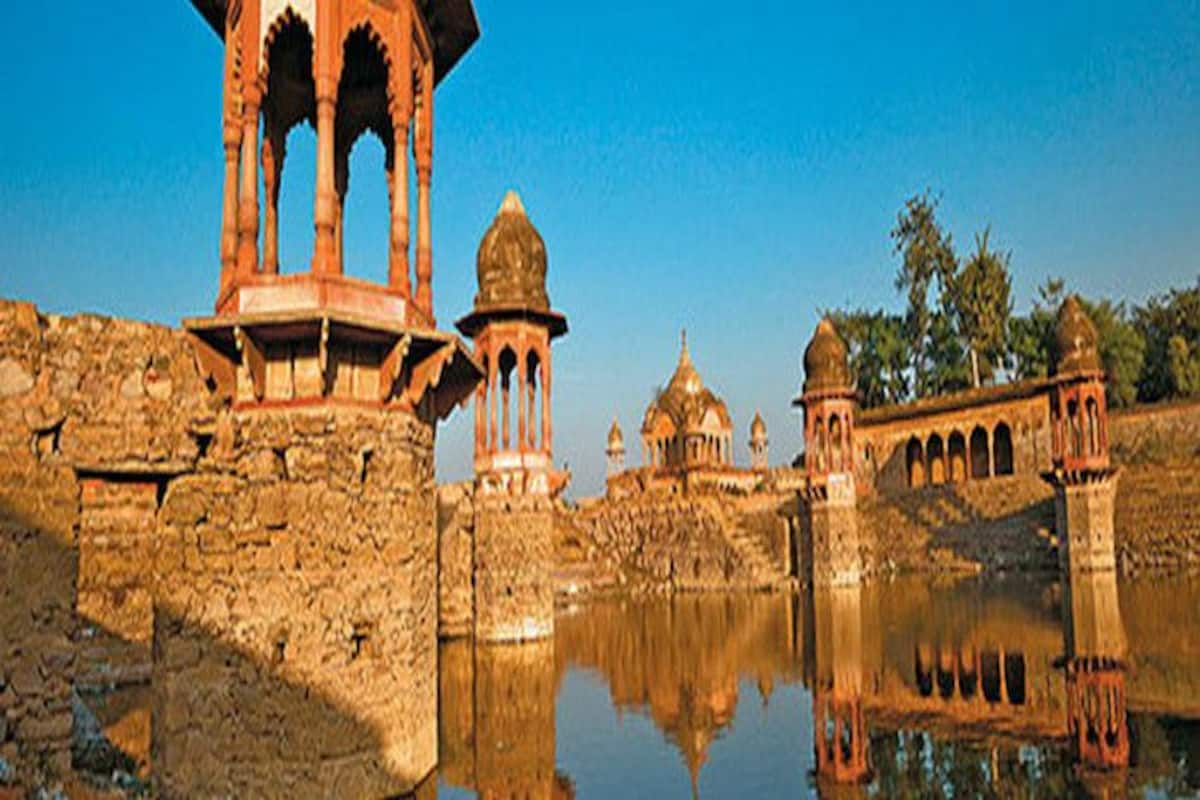
Contiguous to the Asola Bhatti Wildlife Sanctuary, it is an important biodiversity area within the Northern Aravalli leopard wildlife corridor stretching from the Sariska Tiger Reserve to Delhi with several wetlands. Formed in the abandoned open-pit mines in and around the area and significant to migratory birds are the Badkhal Lake, the 10th century ancient Surajkund reservoir and Anangpur Dam, Damdama Lake, Tughlaqabad Fort and Adilabad ruins, both of which lie in Delhi proper. Mangar Bani is one of the last remaining natural tropical forests in the Aravalli range with more than 30 native tree species along with the 100 native shrubs and herbs, which acts as an important source of groundwater recharge.

Mangar Bani, is a Haryanvi dialect term that means the Mangar Vana in Hindi or Sanskrit and the Mangar Forest in English. The Mangar Tribal Jewellery Museum, established by Sterre Sharma, the wife of former union minister Satish Sharma, has jewellery from all over India including the tribes of northeast India with jewellery made from glass, bone, brass, white metal, silver and gold plate, all finding a home here. Mangar Bani is also a sacred grove as it surrounds the Gudariya Das Baba temple, within the forest and lies 2 km to the northwest of Mangar village. This ancient temple provides the status of a sacred grove to Mangar Bani and according to local oral tradition, the baba or saint Gudariya Das protects this bani or forest and punishes anyone who damages this forest. The Lulu Lake wetland is nestled on the hills of Mangar Bani, 6 km to the southwest of Mangar village and 4 km south of Gudariya Das Baba temple, close to Mount Gaga Lulu, a small hill.

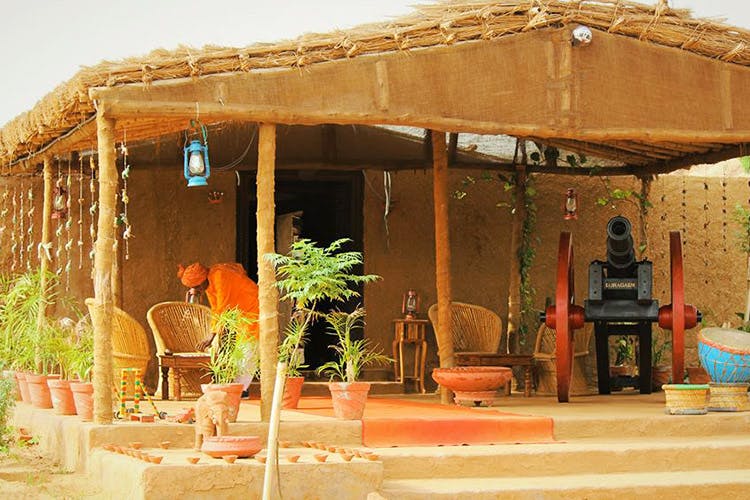
The Lohagarh Farms was established to create self-sustaining rural communities and create employment opportunities. It also serves as a platform for village artists to exhibit and sell their arts and handicrafts and visitors can participate in activities like farming, pottery and trekking to get closer to nature. The farms offer activities and accommodations away from the urban life for one to connect with the basics of human nature.

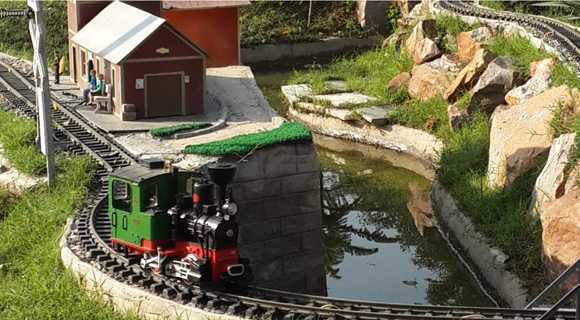
The NeverEnuf Garden Railway is an enchanting infotainment park with miniatures of all sorts of vehicles, including boats, trains, buildings and landscapes. Some of these models are controlled with the help of a remote and add an interactive touch to the display. The park also has lawns and gardens where one can take a long relaxing stroll.

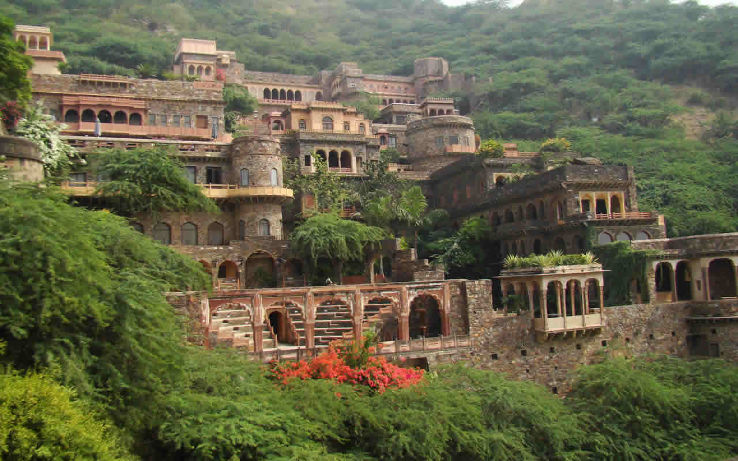
Tikli Bottom is a private guest house that offers a feel of living on a hill station. A haveli or mansion with four bedrooms, a beautifully maintained garden with trees and a swimming pool, one can get magnificent views of the Aravalli Hills from the property.

Founded by the renowned painter, sculptor and historian, K.C Aryan, the Museum of Folk & Tribal Art has a splendid collection of tribal handicrafts made of iron, wood & stone, embroidered fabrics, colourful murals and terracotta objects. Some artefacts with religious importance are also displayed at the museum. The complete collection gives a sneak peek into the culture and art of the tribals who live in and around Gurgaon.

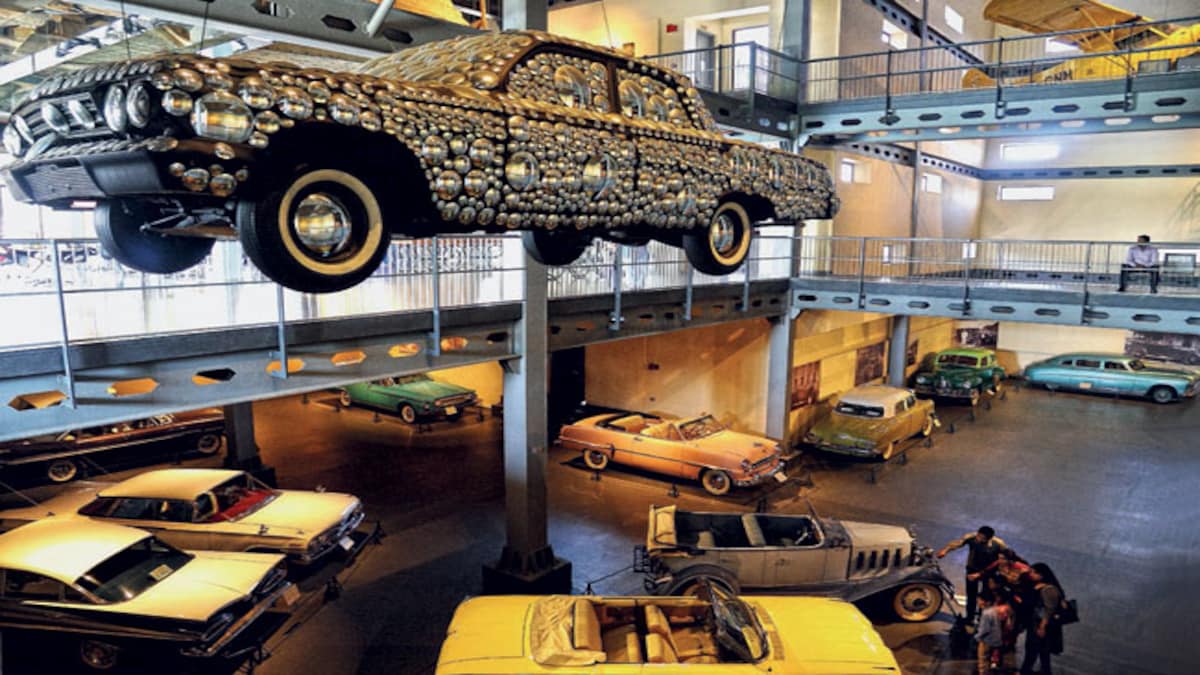
The Vintage Car Museum was established to explore the history of transportation in India and exhibits a stunning collection of actual pre-mechanised and mechanised transportation including automobiles, railways, aircraft, etc. Technology buffs, especially those interested in the history of transportation in India, should visit the museum which partners with schools and research centres to provide material for research and documentation on the subject.

Manesar
Lying just 15 km south of Gurgaon’s city centre, Manesar is a town, an industrial hub and part of the National Capital Region of Delhi. The original village of Manesar was a sleepy village of about 1000 houses on the Delhi-Jaipur highway. The early people to inhabit the region were Hindus ruled over by the Ahir clan and since the late 1990s, it has been transformed into a boomtown with growth helped by the government’s drive to move out factories from Delhi as well as the growth of Gurgaon. Farmers have become millionaires or multi-millionaires. Manesar is famous for its rustic life and the majestic views of the wonderful Aravali Hills. The town is best visited between November and February which is wintertime in the region where the temperature is pleasant and sometimes bracing. Must-visit places in Manesar include the Gujarat Haveli, Sultanpur National Park, the Never Enough Garden Railway, the Rajon Ki Baoli, Damadam Lake, Sanskrit Museum of Everyday Art, Garden of Five Senses and the Heritage Transport Museum which is situated on 3 acres of land. The museum spread over four floors houses the exhibition galleries, library and reference centre, conference rooms, mini auditorium, the museum shop, and a restaurant.

Sohna
The town of Sohna is a popular tourist weekend destination and conference retreat on the highway from Gurgaon to Alwar, about 25 km south of Gurgaon. The town derives its name from the word Sona or gold, which refers to the gold dust that blows in the area, especially after heavy rainfall. Sohna is known for its hot springs and a Shiva temple and is part of the Ahirwal region. According to historical records, Sohna traces its origin from the 11th century and was occupied by three races in succession – the Kambhos, the Khanzadas and the Rajputs. Gazetteers mention that Nawab Qutb Khan Khanzada defeated the Hindu Kambhos and took over the town in 1570 who were then expelled in 1620 by the Sisodia Rajputs who migrated to Sohna, obeying the orders of their patron saint who appeared in their dream indicating Sohna as their place of settlement.

The Sohna Hotsprings, in the foothills of the Aravali Range, also has an ancient Shiva temple built by the Baba Lakhi Shah Banjara Banjara. A Gangasnan Mela or fair is held each November at the temple, and a fair is held each July and August to celebrate the festival of Teej. The hot springs are strongly sulphurous and according to legend, the Pandava prince Arjun dug the wells when he was thirsty. Sohna is believed to have been the abode of hermits and the main tank or kund, the Shiva Kund, is said to have medicinal properties. Devotees consider it sacred, and during eclipses and the Somavati Amavasya they gather here to bathe in the water. The hilltop Barbet Resort, operated by Haryana Tourism, has sauna and steam-bath facilities, a small swimming pool, a park, lodging and a restaurant overlooking the town.

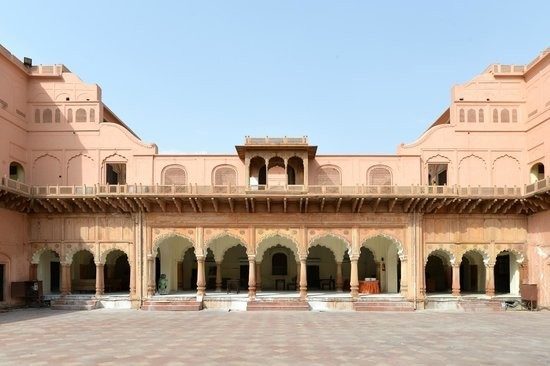
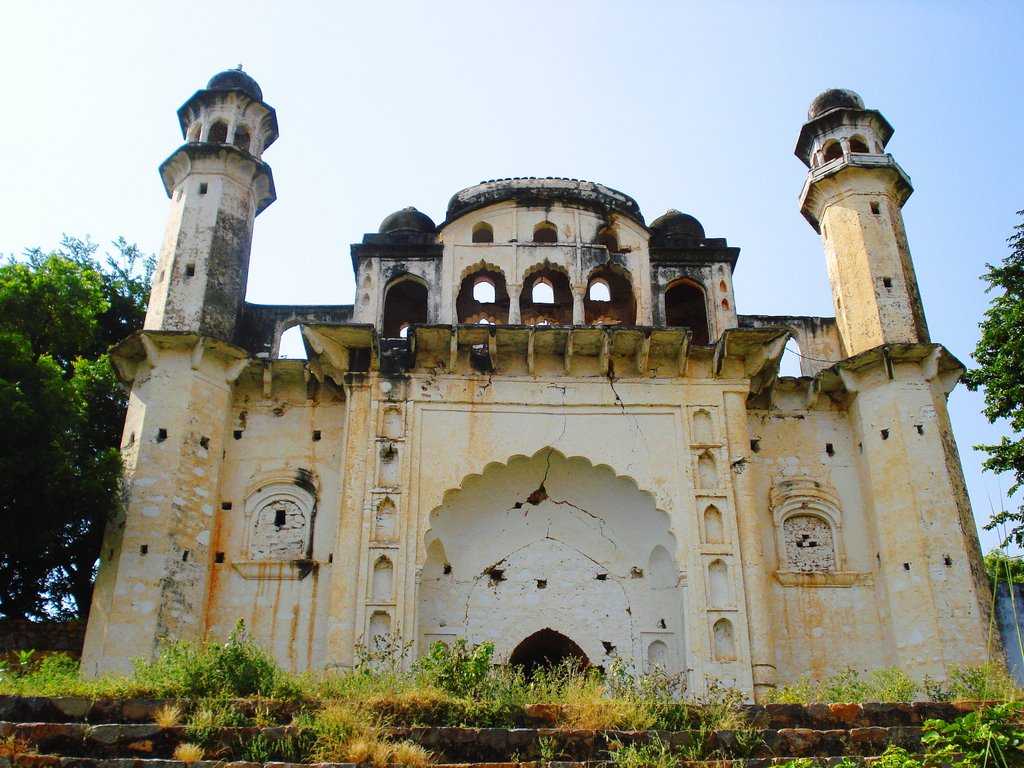
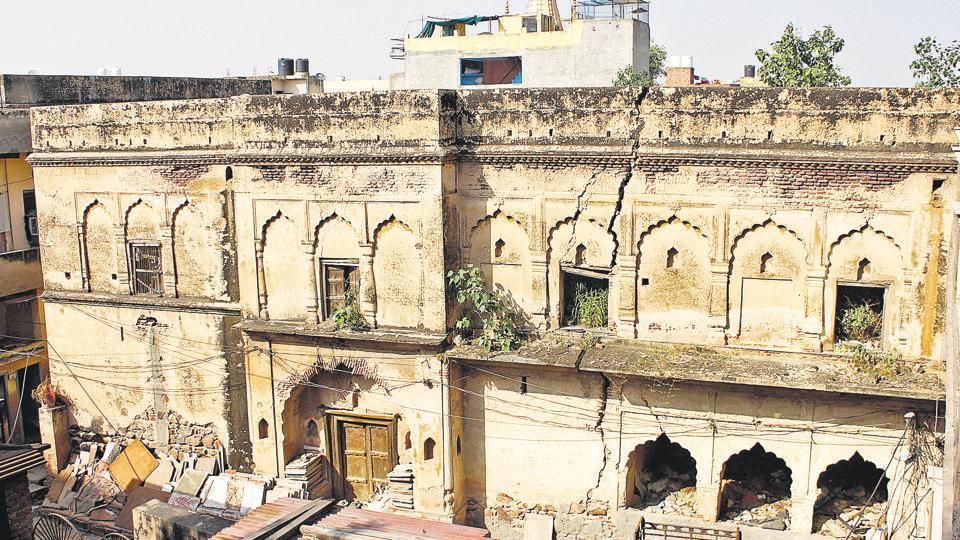
The Gora Barak Mosque has a minaret while the Quto Khan ki Masjid, built from local red sandstone, is in ruins. The Shah Nazam al haq Tomb was built over a Hindu temple with the tomb having an inscription dating it to 1461, during the reign of Bahlul Khan Lodi of the Lodi dynasty of the Delhi Sultanate. The Lal Gumbaz or the Red Dome and Kala Gumbaz or Black Dome of Sohna lie west of the town with the 400-year-old tomb called Lal Gumbad located in the vicinity of the Ansal’s Orchid Estate. Made entirely of stone, the structure has a 12-pillared hall in the entrance arcade that is made of red sandstone crowned with a dome. Attached behind this is the main tomb in stone masonry with a larger dome, exhibiting hybrid architectural styles from Tughlaq and Lodhi periods.

Sohna is also famous for being the site of the annual vintage car rally held annually in February with car collectors from all over India coming to display their collection of vintage beauties including Rolls Royce, Aston Martins, and Austins. The rally also awards trophies to car owners based on their performance, maintenance, and restoration. Every year, the event draws hundreds of tourists who throng to witness these vintage beauties in action.

Tucked away in a distant part of the small town, the Sohna adventure camp offers its visitors an exciting life of camping, trekking and rock climbing. The camp also has a rope course, paintball area and mountain rappelling, making it a popular site for corporate getaways. Living in temporary tents gives the feeling of living at a hill station just a few hours away from the national capital. Foods and snacks available at the nearby eateries are also very delicious.

The Sohna Hill Fort or the Bharatpur Hill Fort is a semi-finished fort on the Aravalli Ranges. It was built by the king of Bharatpur State between 1700 and 1857. Demolished and rebuilt several times, the fort is the best place to spend a quiet and lonely evening.

Travel Bucket List: India – Nagaland Part 3

This part will showcase some of the lesser known towns in Nagaland.

Mokokchung
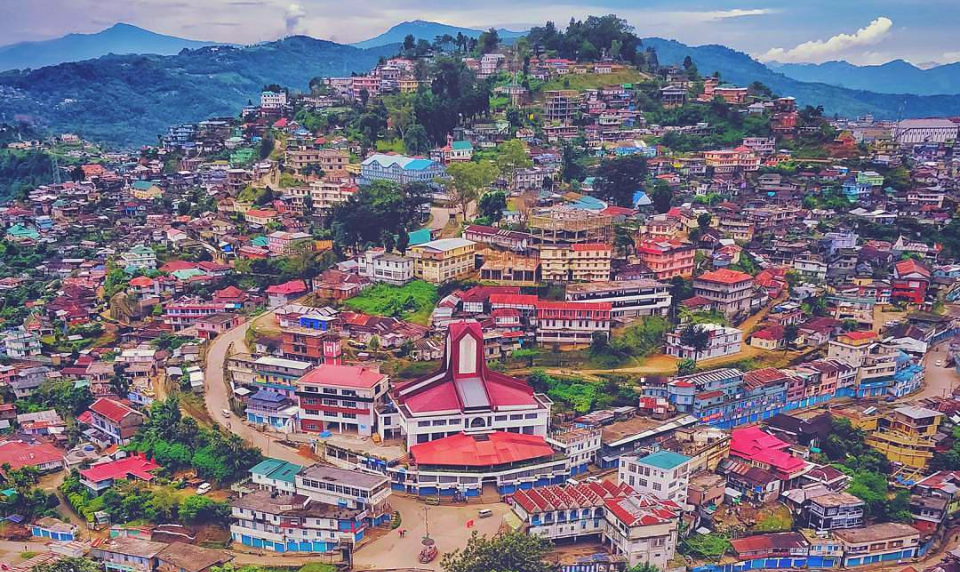
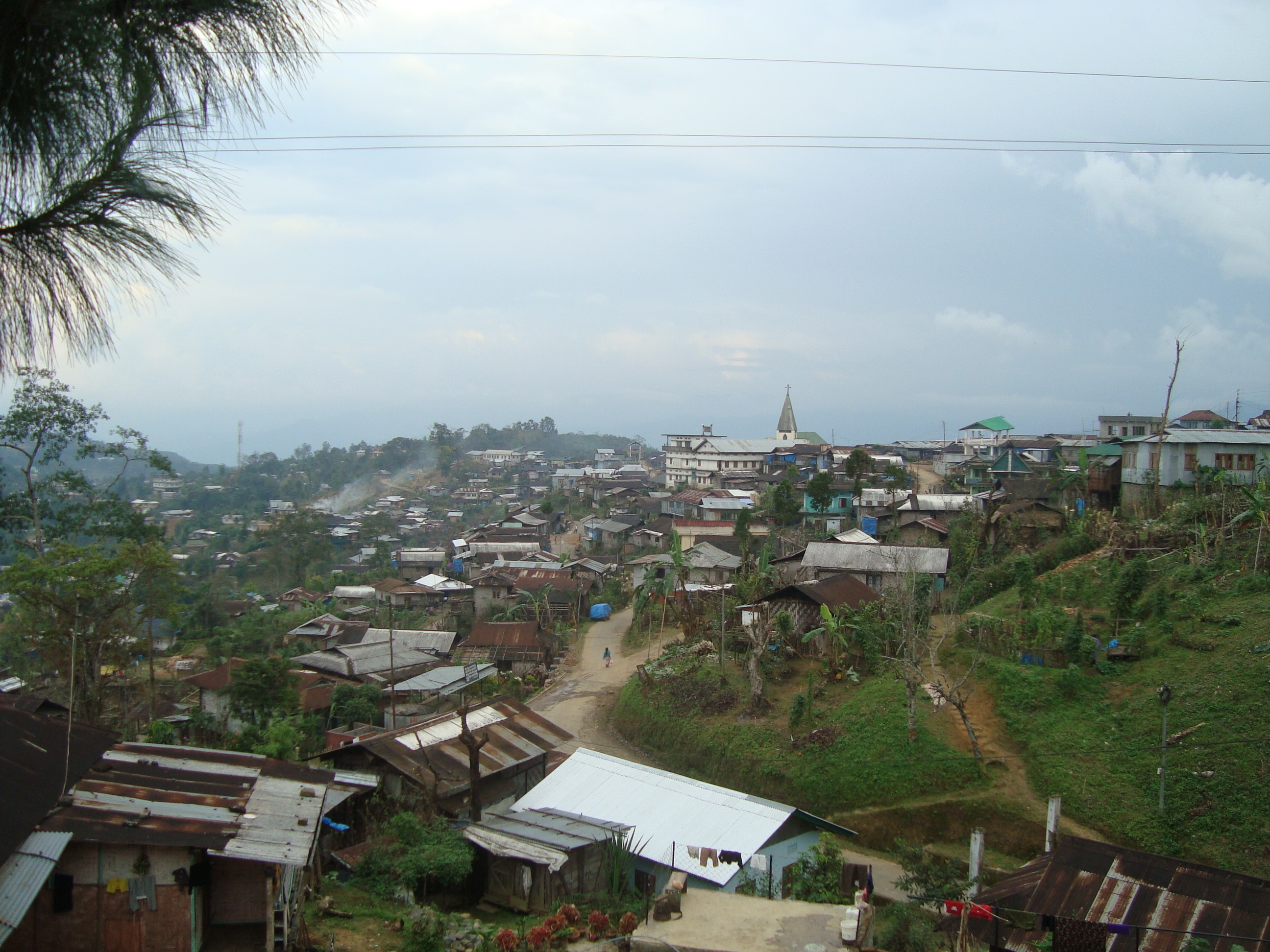
The cultural nerve centre of the Ao people as well as the most important economically and politically urban centre in northern Nagaland, Mokokchung is the third most important city after Dimapur and Kohima. The intellectual and cultural capital of Nagaland, historically, Mokokchung was one of the first Naga Hills sites where the Assam Rifles, led by the British, established their outposts, then called stockades, in the latter part of the 19th century. Much of the town initially grew around this post located in DC Hil which then gradually extended eastwards towards the remoter parts of the Naga Hills. The popular tourist spots in the area include the District Museum, the Town main Park located just above the Town Centre, the Unman village, which is the oldest and largest in the area and the Ao village.

About 18 km southwest of Mokokchung lies the village of Longkhum at an altitude of 1846 m above sea level. An Aos village from the days of the headhunters, the village is strategically located and commands a view of the surrounding hills and valleys with views as far as the eastern Himalayas, Arunachal Pradesh and beyond. The Aos have a belief that Longkhum is the resting place of the spirit of the dead on their onward journey to paradise. Mongzu Ki or the eagle’s eyrie is situated on a high precipice where eagles have nested for centuries and according to Ao mythology, eagles are the manifestations of the spirits of the dead. Mata Yimkong is a beautiful hilltop where once a fortress with the AKM Student Jubilee Tower the highest point at Longkhum. At the Imkongmeren Memorial Site, one can have panoramic views of the Doyang River. The Longlangba Longlangba or the Stone Bridge is a ridge of stones that passes through the Rhododendron woods which has small holes in the rocks that were carved into the stones so that spears could be placed in them and were warning signs to attackers that they would be killed and their heads be taken off. The man-made majang or observatory point is where one can have beautiful views with the backdrop of the Doyang River and the Mongzu-Ki or Eagle’s Cave can also be viewed from here. The legend behind Tangyim Maroksay that the water from this natural spring has the power to heal sickness. During September and early October, Cherry Blossoms bloom along the route to Longkhum. Achen Dang is where wedding ceremonies were conducted.

Ungma Village is the second-largest village in Nagaland and the oldest and largest of the Ao tribe reside here and the village was believed to be the birthplace of the Ao tribe. An old log drum, a Baptist church and an astoundingly pretty park located on the outskirts of Ungma are the famous tourist spots. The Chuchuyinlang Village is renowned for the celebrations of various tribal festivals with the most famous being the Moastu Festival that lasts for 3 days and commences on 1st May.

The Langpangkong Caves are situated between the valleys of Dikhu and Tzula Rivers and near the towns of Tuli and Changtongya. The caves are located in the Langpangkong mountain range and are believed to have given shelter to an Ahom King. The caves of Peren, Fusen kei and Mongzu Ki are the well-known yet unexplored caves of the region.

Tuensang
Tuensang was founded in 1947 to administrate the erstwhile North Eastern Frontier Agency or NEFA and lies about 227 km east of Kohima. In 1957, it was merged with the Naga Hills District to form a new administrative unit under the Ministry of External Affairs and later became a part of Nagaland. Tuensang is the headquarters of the Tuensang district, the easternmost and largest district of Nagaland, and has Myanmar to its east. It is also one of the fastest-growing towns in the state.

Noklak is a village situated on the edge of the district which is becoming popular due to its tribal festivals. It is inhabited by the Khiamniungan and is popular for its cane work, handicrafts and artefacts. Longtrok is an ancient village with remnants of the and Chungliyangti civilizations through its six celebrated stone structures. The most important ones are those of Tsongliyangti, Chungliyangti and Chungliyimti and are the most worshipped by the locals. The locals also believe that the Sangtams are the personifications of the ancient God who gave birth to other stones and moved them to different places. Between the town of Tuensang and the Hakchung village lies the very interesting village of Changsangmongko. Legend has it that this place is referred to as Changsang because of the Chang community settled here. The village is renowned for establishing a raised platform named Mullang, which is a symbol of the prosperity and well-being of mankind. An offbeat destination, Tsadang situated in the village of Longtrok is well known for its two ancient stones that picture two friends who regularly visited the village of Longtrok. They are placed in the vicinity of Tsongliyangti and Chungliyangti and are worshipped by the local people.

Phek
The name Phek is derived from the word Phekrekedze which means a watchtower. The district is inhabited by three major tribes, the Kheza, the Chokhri and the Pochury with at least five linguistics groups, namely the Chokri, the Khezha, the Pochury, the Sapu, and the Semas. Phek has moderately warm summers and cold winters. The people are expert craftsmen, excellent in making pots, baskets, sculptures and furniture. Phek is a hilly area rich in flora and fauna and the Shilloi Lake is an important attraction in the area apart from the amazing hills.

A beautiful foot-shaped lake in the heart of the Patkai range, the Shilloi Lake located in Lütsam Village has verdant valleys surrounding it. The lake is considered very important as it is believed that the spirit of a holy child rests in the bottom of the lake and it is one of the reasons why no one fishes or uses the lake water for drinking and irrigation. The four-meter deep lake spreads over an area of 250 to 300 m. There are many legends associated with the lake with one being a baby was found floating in the middle of the lake and two hands were seen bobbing the baby. It is said that the baby is the reigning queen of the lake and that the spirits of the lake are its protectors and so it is believed that no one can drown in the lake with no reported deaths by drowning in the lake. The area is known for its fishing spots with the best time to fish between June and September. The lake is also a haven for migratory birds like Siberian Cranes.

Atop Mt Zanibu near Thuvopisumi village, the Dzudu Lake is surrounded by lush greenery in the middle of dense jungles. The narrow strip of water is also called Zanibu Lake and is a paradise for bird watchers. The Phek Waterfall lies amid natural beauty in the middle of a jungle. One will have to walk quite a bit to reach the waterfall in the jungle.

About 70 km from Phek and 3 km from Pfutsero town, Glory Peak stands 2600 m above sea level overlooking the valley. From the peak, which is a local favourite picnic spot, one can also catch sight of the highest mountain in the world, Mt. Everest.

The small village of Khezhakeno is set amid picturesque surroundings. It is believed that many Naga tribes originated from Khezhakeno and migration led them to the other parts of the region. According to another popular legend, the village has a stone slab from which helps paddy miraculously multiply when placed on any drying land.

Mon
Home to the Konyaks nagas, Mon provides visitors with a unique and mesmerising view of tattooed faces wearing feathery loincloths. The district, except for the foothills, has a difficult terrain with steep slopes. Even though Mon doesn’t have a lot of sightseeing places, but it still attracts many visitors. There are numerous villages close by which offer one a closer picture of the life of the Nagas. Veda Peak and Naganimora are among the famous tourist spots here and one can see a waterfall near the Veda peak, one of the most pristine places in the region. Veda peak is located around 70 km from Mon. Among the few villages in the region that are worth visiting are Chui, Longwa and Shangynu.

Veda Peak is the highest peak in Mon and is located almost 70 km from district headquarters. The peak gives clear and stunning views of the Brahmaputra river as well as the Chindwin river which runs through Myanmar when the skies are clear. The famous waterfall at the peak is also worth visiting. The Angh’s or Chief’s house at Shangnyu Village is believed to be more than 500 years old. Chenloisho Village is one of the biggest villages in the Chen area. Located near the India-Myanmar border, this village has a small museum that houses all kinds of traditional ornaments of the region. Human skulls which are of the head-hunting days are displayed in Waloo. Longwa Village is one of the largest villages in Mon and this village is very interesting because the village lies in both India and Myanmar. The chief or the Angh’s house lies half in India and half in Myanmar. Villagers hold dual citizenship in both India and Myanmar. Four rivers flow through the river, two in India and two in Myanmar and so the natural beauty of the village is worth making the trip there.

Pfutsero
Pfutsero is the highest-altitude town and the coldest inhabited place in Nagaland with the temperature dropping below zero degrees Celcius during some winter nights and is inhabited mostly by the Kuzhas and Chokris and a commercially important town. The best time to visit is between mid-October which is when harvesting begins and April. The most important festival of the Khezhas is the Tsükhenye festival celebrated in April or May which takes place at the Pfütseromi Village.

This brings us to the end of this wonderful state that I hope I get to visit one day. Let me know in the comments below if you have been here and if I have missed anything that I should put on my bucket list. Check this space for another state soon.

Travel Bucket List: India – Nagaland Part 2

This part is all about Nagaland’s capital city, Kohima.

Kohima
The capital of Nagaland, Kohima is the second-largest city in the state. Originally known as Kewhira, Kohima was founded in 1878 when the British colonial rulers established its headquarters of the then Naga Hills District of Assam Province. It officially became the capital of the state after the state of Nagaland was inaugurated in 1963. Kohima was the site of one of the bloodiest battles of World War II and the battle is often referred to as the Stalingrad of the East. In 2013, the British National Army Museum voted the Battle of Kohima to be Britain’s Greatest Battle. Located in the foothills of the Japfü rang, the city has an average elevation of 1,261 m.

Kohima was originally known as Kewhi–ra which is an Angami name that means the land where the Kewhi flower grows. The name, Kohima, came about as the British could not pronounce the Angami name of Kewhi–ra, but most locals still prefer to use Kewhi–ra when speaking about the capital city.

Kohima was originally a large village named Kewhira, located in the northeastern part of the present-day Kohima urban area and was divided into four large clans or thinuos. The East India Company administration started to expand into Kohima beginning of the 1840s and continued to annex the region after the Indian Rebellion of 1857. Kohima was the first seat of modern administration as the Headquarters of Naga Hills District, then under Assam.

In 1944 during World War II, the Battle of Kohima along with the simultaneous Battle of Imphal was the turning point in the Burma Campaign. For the first time in South-East Asia, the Japanese lost the initiative to the Allies, which the Allies then retained until the end of the war. This hand-to-hand battle and slaughter prevented the Japanese Army from gaining a base from which they might have easily gone into the plains of India.

When Nagaland became a full-fledged state on 1 December 1963, Kohima became the state capital. On 20 March 1986, two students were killed in indiscriminate firing by the Nagaland Police when they participated in a peaceful protest called by the Naga Students’ Federation or NSF to rally against the state government’s decision on the introduction of the Indian Police Service cadres and the extension of the Disturbed Area Belt from 5 to 20 km along the Indo-Myanmar border. The event was so tumultuous that it led three Cabinet ministers and five state ministers of Nagaland to resign.

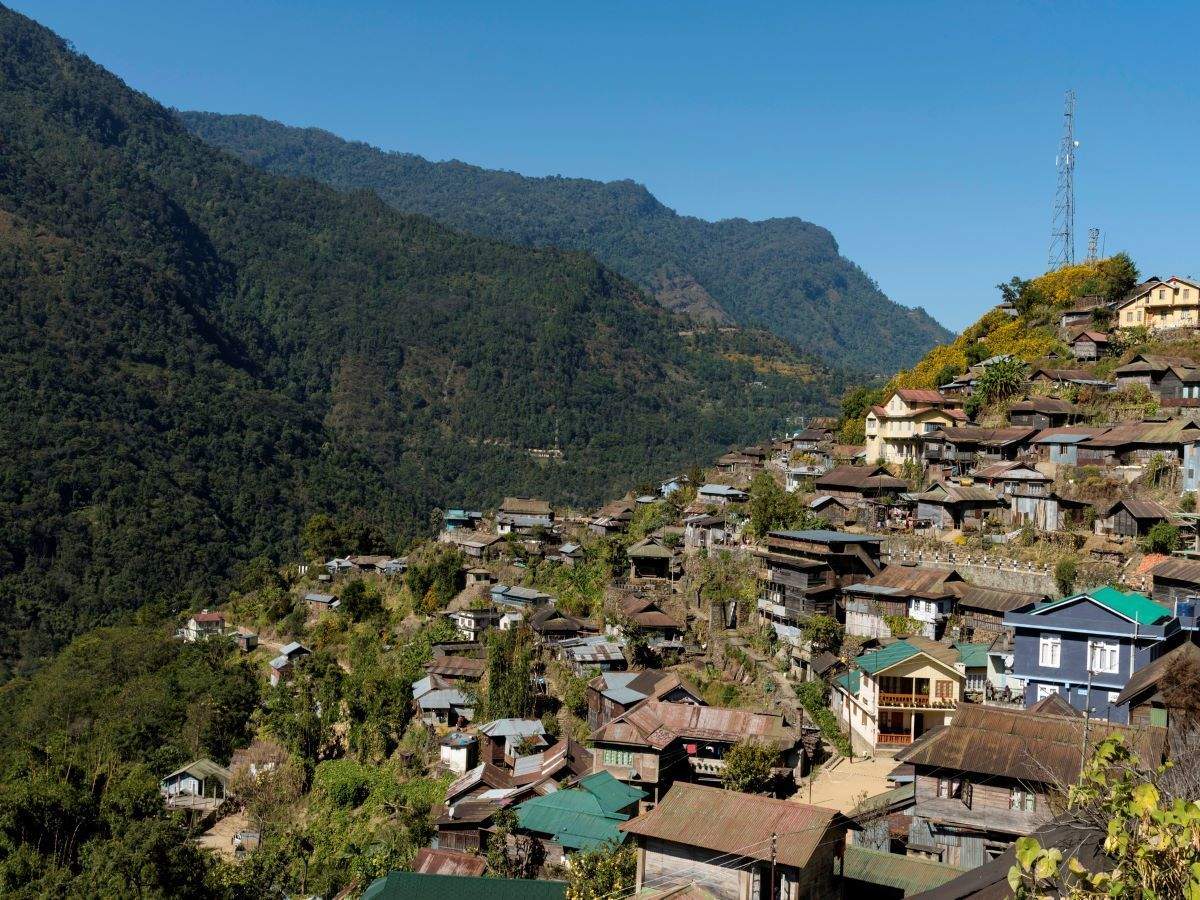
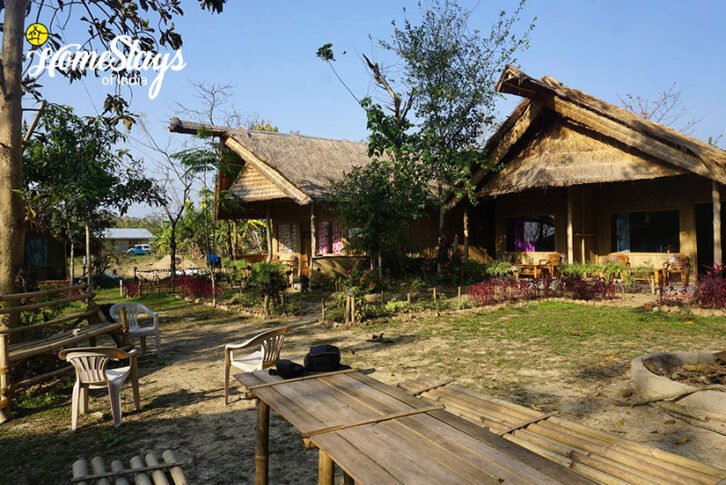
On a green and verdant hillock, lies the township of Touphema. Built by the local community in partnership with the Tourism Department of Nagaland, Touphema Village is a collection of small huts built and decorated in traditional Naga design which gives visitors the feel of living in a Naga tribal house. A very popular tourist attraction, the village is a wonderful recreation of a traditional AngamiNaga village set up with cabins and rooms that have been built to look like traditional huts and cottages. A short walk around the village can transport one way back in time when Naga tribes lived. The AngamiSekrenyi annual festival is celebrated with great fervour in the village in February. Most of the traditional village buildings have roofs made of corrugated iron without chimneys. Located on a gentle hillock with a panoramic view of the surrounding valleys, Touphema offers a chance to stay in quaint little huts, enjoy pleasant evenings around bonfires with cultural dances just adding to the rustic feel of the entire place and offer some of the best photo opportunities. A recently refurbished museum inside the village offers an extensive ethnographic collection including wood carvings, musical instruments, textiles, handicrafts traditional artefacts, jewellery, and archaeological finds.

A town belonging to the Angami Naga tribe, Khonoma Village is a one-of-its-kind project located about 20 km from the state capital. In a Green Village, where all forms of hunting have been abolished for a more sustainable ecosystem, the residents live a more sustainable way of living. Nestled on the base of the mountains, this eco-friendly, conservation-based village also provides fantastic views of misty valleys, gently sloping hillocks, and terraced farms.

The Naga Heritage Village in Kisama on the outskirts of Kohima seeks to preserve and promote the culture and traditions of the Naga people. The name Kisama itself is an amalgamation of the Naga villages, Kigwema (Ki), Phesama (Sa), and the word Ma which means a village. The venue for the famed Hornbill Festival, the village is designed in the form of an ancient Naga village to give an authentic feel of a true Naga village and the experience of travelling back in time. The village is opened to the public for a week in December, during the Hornbill festival which is the best time to visit. The Hornbill Festival is the biggest annual festival in North East India. The festival is held every year from 1 to 10 December with the purpose to promote the richness of the Naga heritage and traditions. It is also called the ‘Festival of Festivals’. The week-long festival unites one and all in Nagaland and people enjoy the colourful performances, crafts, sports, food fairs, games and ceremonies. Traditional arts which include paintings, wood carvings, and sculptures are also on display. The festival highlights include the traditional Naga Morungs exhibition and the sale of arts and crafts, food stalls, herbal medicine stalls, flower shows and sales, cultural medley – songs and dances, fashion shows, the Miss Nagaland beauty contest, traditional archery, Naga wrestling, indigenous games, and a musical concert.

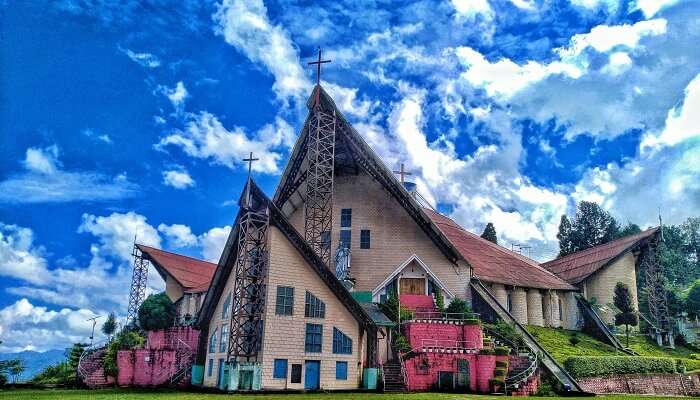
The Kohima Cathedral also known as the Help of Christians Cathedral is a prominent Kohima landmark in Kohima. The church is noted for its architecture which incorporates many elements of traditional Naga houses, including its facade which resembles that of a Naga house and the architecture blends into the hill on which it is situated. The 16 feet high carved wood crucifix is one of Asia’s largest crosses. Conceptualised by Kohima’s first bishop, the cathedral complex also contains his tomb and was constructed in 1998. After the battle of Kohima, the Japanese contributed to the making of this church in memory of their loved ones.

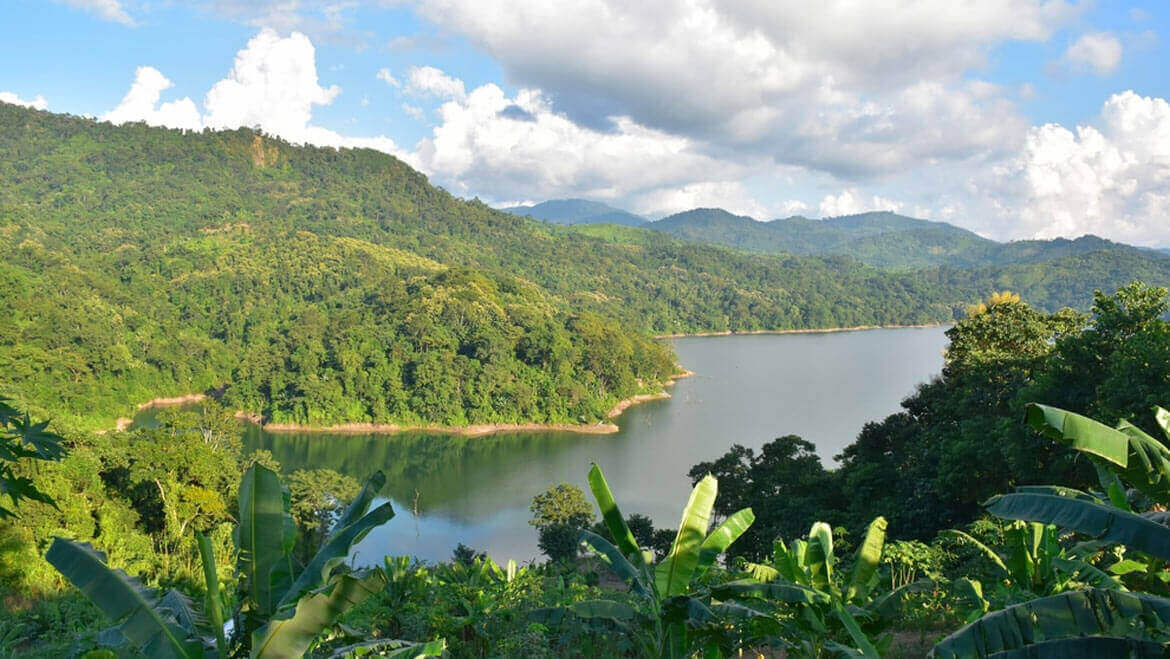
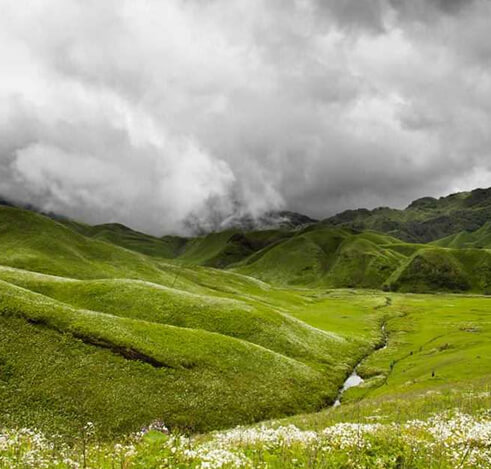
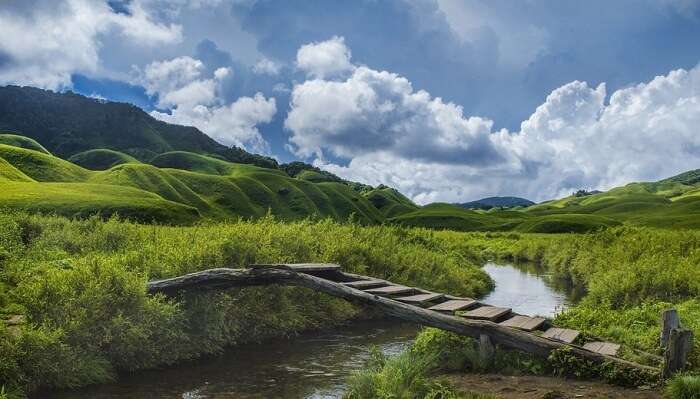
The enchanting Dzükou valley with its emerald green rolling hills, interspersed by a gently flowing stream, is tucked away at an altitude of 2,438.4 m, about 30 km south of Kohima. A trekker’s delight, Dzükou is known for its bio-diversity with the bamboo bush its predominant plant and looks likes a fully mown lawn from afar. The valley is considered to be the base of the crater of an old volcano and is well known for its natural environment, seasonal flowers, flora, and fauna with the North Eastern Valley of Flowers a sight to behold.

The second-highest peak in Nagaland, Japfu Peak stands 3048 m above sea level and is about 15 km south of Kohima. The best seasons for climbing this mountain are between November to March. In the Japfu range, one can find the tallest Rhododendron tree, featured in the Guinness Book of World Records, over 109 ft tall and the girth at its best measures more than 11 ft. The sight of the sunrise from the hump of Japfu peak in November is something that needs to be experienced.

The Kohima Museum takes visitors closer to the lives of the tribals living in Nagaland. Built to introduce visitors to the rich culture and tradition of the 16 tribal groups of Nagaland, the Kohima Museum is located in Upper Bayavu Hills and displays gateposts, endemic regional animals and birds, statues, jewellery items and pillars. The museum also houses life-size models depicting costumes, weapons and jewellery worn by the people.

The Kohima State Museum allows visitors to get a deeper insight into the history and culture of the tribes residing in the state. Established in 1970, the museum houses rare artefacts belonging to the 16 tribes of Nagaland. From tribal attires and weapons to jewellery and sculptures, the exhibits of the museum leave visitors fascinated. There is an art gallery, which displays amazing paintings made by local artists as well as showcases musical instruments used by the Naga tribes. One of the best attractions of the museum is the models of traditional Naga huts known as Naga Morung. The museum also houses a rare collection of precious stones like cornelian and tourmaline along with brass artefacts and silver bells.

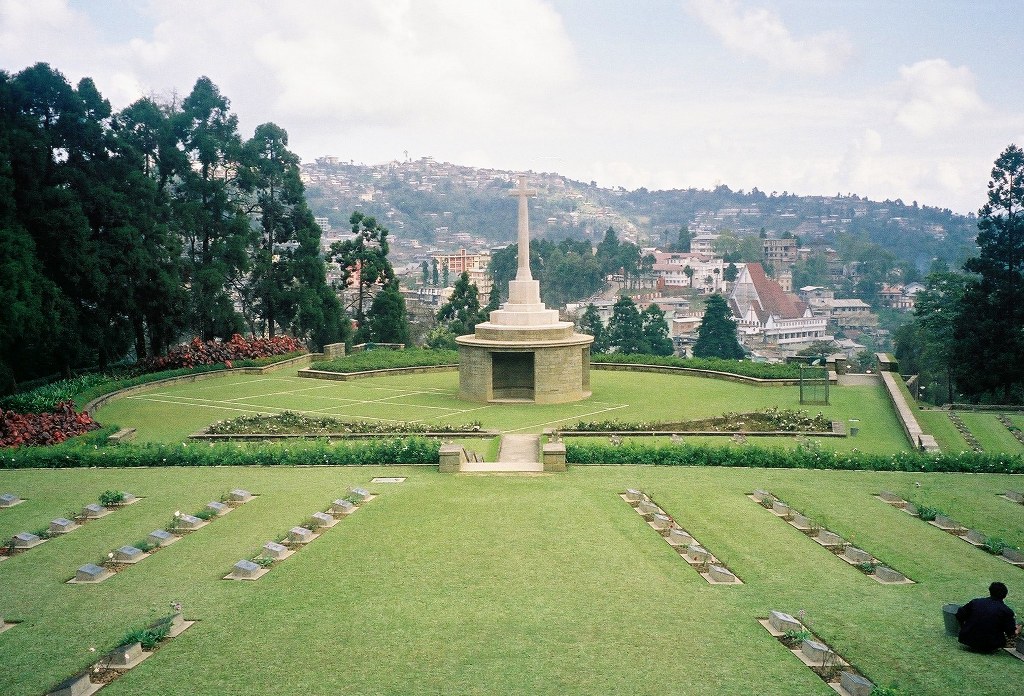
Set amidst picturesque surroundings, the Kohima War Cemetery was built in April 1944 to honour the brave soldiers of the 2nd British Division of the Allied Forces who lost their lives during World War II. The war cemetery houses 1,420 graves and is well-maintained by the Commonwealth War Graves Commission. The cemetery was built in the tennis court of the then deputy commissioner’s residence, the exact place where one of the fiercest battles against the Japanese was fought. Popularly remembered as the Stalingrad of the East, the battle of Kohima was fought from April 4 to June 22, 1944, and offers gorgeous panoramic views of Kohima. The cemetery’s top also houses a dome-like memorial raised to honour the 917 Hindu and Sikh soldiers who lost their lives in the battle and were cremated according to their faith. The cemetery is well kept with lush green, mowed lawns and well-groomed flowers. There is also a War Museum as well as the Kohima Cathedral nearby.

The Kohima Zoo houses the state bird, the rare Tragopan, and the state animal, the wild buffalo. The zoo is created on a hill and the hill has been beautifully used to provide natural landscapes for the animals. The golden langurs and Blythe’s tragopan are the biggest attractions of the zoo with a section of the zoo turned into a special area for kids with a play zone and fun facts about the animals.

Established in 1923, the Ntangki Wildlife Sanctuary was declared a reserved forest in 1975 and converted into a national park in 1993. Located about 29 km from Kohima, the national park is said to be home to several animals including elephants, wild buffalos, the rare Hoolok gibbon, sloth bear, barking deer and black storks. The 200 km national park has a natural and protected habitat.

In the next part, our last part about this wonderful state, we will explore some of the lesser known towns in the state.

Travel Bucket List: India – Nagaland Part 1

After I pass through Manipur, my next destination will be the mist-shrouded state of Nagaland.

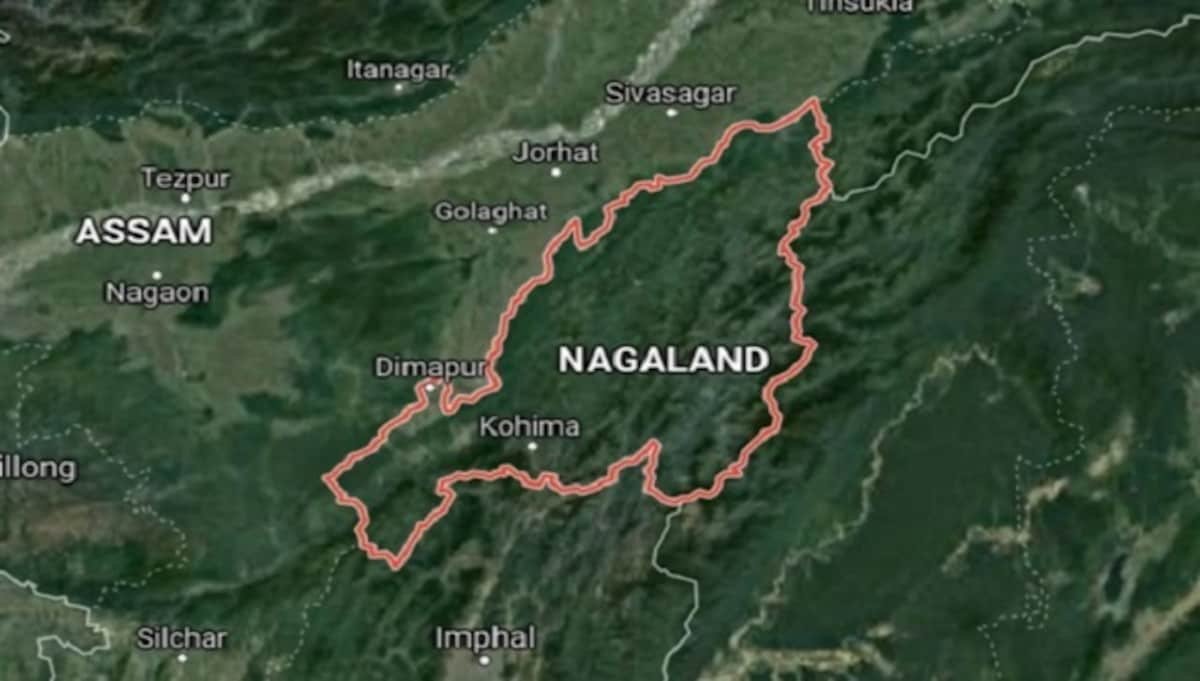
Bordered by Arunachal Pradesh to the north, Assam to the west, Manipur to the south and the Sagaing Region of Myanmar to the east Nagaland’s capital is Kohima and its largest city Dimapur. One of India’s smallest states, Nagaland became the 16th state of India on 1 December 1963 and has experienced insurgency and inter-ethnic conflicts since the 1950s, limiting its economic development. Agriculture is its most important economic activity, accounting for over 70% of its economy and other significant activities include forestry, tourism, insurance, real estate, and miscellaneous cottage industries. Home to a rich variety of flora and fauna, Nagaland lies between the parallels of 98 and 96 degrees east longitude and 26.6 and 27.4 degrees latitude north.

The ancient history of the Nagas is unclear with tribes migrating at different times, each settling in the northeastern part of present-day India and establishing their respective sovereign mountain terrains and village-states. There are no records of whether they came from the northern Mongolian region, southeast Asia or southwest China, except that their origins are from the east of India and that historical records show the present-day Naga people settled before the arrival of the Ahoms in 1228.

The origin of the word Naga is also unclear, with a popularly accepted, but controversial view being that it originated from the Burmese word Na-Ka or naga, meaning the people with earrings while others suggest it means pierced noses. Both Naka and Naga are pronounced the same way in Burmese.

Before the European colonialism of South Asia, there were many incursions from the Burmese on the Nagas, the Meitei, and others in India’s northeast where the invaders head-hunted and the Burmese word Naka was used for them which became Naga and has been in use since then.

British troops recorded 10 military expeditions between 1839 and 1850 and after the bloody battle at Kikrüma in 1851, the British adopted a policy of caution and non-interference with Naga tribes. Between 1851 and 1865, Naga tribes continued to raid the British in Assam. In 1866, the British India administration established a post at Samaguting with the goal of ending intertribal warfare and tribal raids on property and personnel. In 1878, the headquarters were transferred to Kohima which created a city that remains an important center of administration, commerce, and culture for Nagaland. Between 1880 and 1922, the British administration consolidated its position over a large area of the Naga Hills and integrated it into its Assam operations and in 1926, it became a part of Pakokku Hill Tracts Districts of Burma until 4 January 1948. Since the mid-19th century, Christian missionaries from the United States and Europe, reached Nagaland and its neighboring states, converting Nagaland’s Naga tribes from animism to Christianity.

In 1944 during World War II, the Japanese Army, with the help of the Indian National Army led by Netaji Subhash Chandra Bose, invaded Burma and attempted to take India through Kohima. The Allied soldiers defended Kohima and successfully repelled the Japanese troops in a battle that was fought from 4 April to 22 June 1944.

After India’s independence, Nagaland remained a part of Assam, but after the Phizo-led Naga National Council demanded a political union of their ancestral and native groups, it led to a series of violent incidents, that damaged government and civil infrastructure, attacked government officials and civilians and so the army in 1955 to restore order. In 1957, an agreement was reached between Naga leaders and the Indian government, creating a single separate region of the Naga Hills and it became a union territory directly administered by the central government with a large degree of autonomy. This was not satisfactory, however, and agitation with violence increased across the state. In July 1960, Nagaland became a full state with the state formally inaugurated on 1 December 1963, and Kohima was declared as the state capital.

The state has continued to see violence and insurgency. In March 1975, a direct presidential rule was imposed the state has seen President’s Rule imposed four times since its creation, though today the state is not under such directive.

A largely mountainous state, about one-sixth of Nagaland, is covered by tropical and sub-tropical evergreen forests—including palms, bamboo, rattan as well as timber and mahogany forests. The Naga Hills rise from the Brahmaputra Valley in Assam to about 610 m and rise further to the southeast, as high as 1,800 m with Mount Saramati at an elevation of 3,841 m the state’s highest peak where the Naga Hills merge with the Patkai Range forming the boundary with Myanmar. Rivers such as the Doyang and Diphu to the north and the Barak river in the southwest dissect the entire state with 20% of the state’s land area covered with wooded forest. Nagaland has a rich birdlife with more than 490 species. Blyth’s Tragopan or the grey-bellied tragopan, a vulnerable species of galliform, is the state bird and the state is also known as the falcon capital of the world. The Mithun, a semi-domesticated gaur is the state animal and has been adopted as the official seal of the government.

The people of Nagaland live a largely rural life with 71.14% of the population living in rural regions belonging to 16 major and some minor tribes. The state is also home to the bhut jolokia or the ghost pepper, one of the hottest chilis in the world at 855,000 SHU on the Scoville scale.

Let’s start our exploration of the state with the state’s largest city, Dimapur.

Dimapur
Nagaland’s largest city, Dimapur is the state’s main gateway and commercial centre, located in southwest Nagaland. Located near the border with Assam along the banks of the Dhansiri River, Dimapur is the only plains tract of hilly Nagaland and also has the only airport in the state for connectivity and economic activity. Its main railway station is the second busiest station in Northeast India.

The name Dimapur is derived from the Dimasa words Di which means water, ma which means large and pur which is a Sanskritised word which means a city, translating to the big river city, and associated with the word Kachari which means the people of the river valley after the river Dhansiri which flows through it. Others contend that Dimapur is a corruption of Hidimbapur, meaning the city of Hidimbi from the Mahabharata who was the demoness turned woman whose marriage to the Pandava prince Bhima that led to the birth of Ghatotkacha, which was the Hindu lineage created for the rulers of Dimasa by the Brahmin pandits at Khaspur. Hidimbapur is said to have been abbreviated to Dimbapur and subsequently to have lost a consonant to become Dimapur. In the Ahom Chronicles, Dimapur Is referred to sometimes as Che-din-chi-pen or the town earth burn make which means the brick town and its rulers as Timisa which is a distorted word for Dimas.

In the 13th century, the city was the capital of the Dimasa kingdom. During World War II, Dimapur was the centre of action between the Allied and Japanese forces and the staging post for the Allied offensive. The airport at Dimapur was also used for supplies to the allied forces in Burma. In 1918, Dimapur was leased to then Naga Hills district, which is today’s Nagaland by then erstwhile Assam Province of British of India for 30 years for the construction of railways lines. In 1963, it was once again leased to the state of Nagaland for 99 years. There is controversy surrounding this claim, as both state governments have not come forward to comment on the matter. Present-day Dimapur has far outgrown its old town area and is a contiguous urban sprawl from the Assam border at Dilai Gate and the new field check gate up to the foothills of Chümoukedima, the designated district headquarters of Dimapur district.

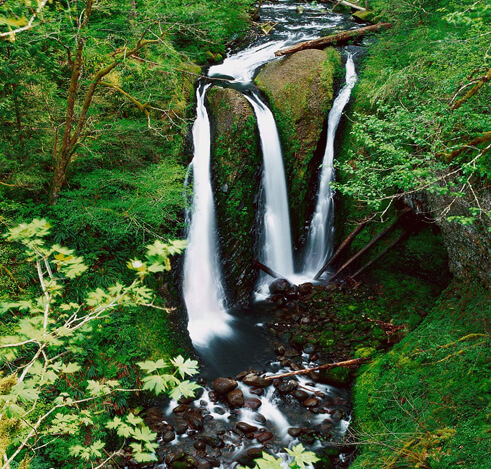
Located in Seithekima village, the Triple Falls are three glistening water streams trickling down from a height of 280 ft to a natural pool. The stunning fall area is maintained by the tourist department of Nagaland and also serves as a lovely trekking spot. Situated on the foothills of the Naga Hills, Chumukedima is an ancient village famous for waterfalls.

The Kachari Rajbari ruins are famous for their monoliths. It is believed that the scattered stones and bricks are the remains of temples and embankments. Although is left in ruins after centuries of abandonment, after facing conflict with the Ahom King in the 18th century, today, it lies in the centre of the town and signifies great historical importance for the northeast region.

The Shiva temple is located in Singrijan and is believed to have been built by the local villagers in 1961. It is said that once, one of the villagers went to the Rangapahar Reserve Forest and found a stone which he sharpened later with his knife. He realised some liquid was released from the stone and later dreamt that the stone was a manifestation of Lord Shiva. Soon, the villagers started worshipping the stone as a Shivalinga.

The Dimapur Jain Temple was built in 1947 and has intricate glasswork. The temple is considered very auspicious with intricate architecture. The main deity of the temple is Lord Mahavira. In the back portion of the temple, built-in 1989, there are statues of Lord Adinath, Lord Bahubali and Lord Bharat Swami. On the first floor are the Samavsaran and the Chaubisi which are the idols of all the twenty-four Tirthankaras.

The Nagaland Science Centre aims to promote creative learning through its three galleries, our sense, fun science and the children’s corner. Besides, there is an inflatable dome, the Tara Mandal which lets one peak deeper into the sky at night. The science centre has some specially designed exhibits that increase learning tendencies.

Diezephe Village, located about 13 km south of Dimapur is well known for its handlooms and handicrafts as well as the many workshops organised here. The craft and development society also houses tools that could be used by craftsmen at the rate of Rs 150 per day. The village also has beautiful artefacts made from wood, bamboo and cane.

The Rangapahar Reserve Forest located just 7 km from the city, on its outskirts is known for its wildlife and is famous for its variety of plants, especially those relevant to medicine. There is a variety of unique birds in this reserve which attracts many bird watchers.

In the next part, we will explore Nagaland’s capital city of Kohima.

Travel Bucket List: India – Manipur Part 3

Chandel
64 km south of Imphal lies the tiny, but scenic town of Chandel, also known as Lamka. Not very far from India’s border with Myanmar, it is also known as the Gateway to Myanmar and is famous for being home to more than 20 native tribes with each tribe offering a unique identity to the area. Chandel is also known for its numerous varieties of Orchids, ornamental plants, and some very useful medicinal plants. Some of the must-visit spots here include the Tengnoupal, which is the highest point in the area and can offer some stunning sceneries and views.

Founded in 1989, the Yangoupokpi – Lokchao Wildlife Sanctuary covers an area of 185 sq km and is home to multiple species of mammals, birds, reptiles, amphibians as well as fish. This sanctuary is one of the nine Identified Important Bird Areas or IBAs in Manipur, where the IBA is of critical importance for environmental conservationists and bird watchers as it is the only place where the endangered Green Peafowl can still be sighted. It is also one of those rare forests where communities of people live in tandem with nature. Seven forest villages are presently housed in the sanctuary and the villagers are dependent on the natural resources of the forest for their livelihood. The sanctuary is located at the India-Myanmar border, housing a mix of riverine and terrestrial ecosystems.

The sanctuary is home to many rare varieties of wild orchids, most of them unknown to the world as yet. Other trees forming the forest cover include the Dipterocarpus Turbinatus or Gurjan, the Tectona Grandis or Teak, the Melanorrhoea Usitata or Burmese Lacquer, the Terminalia Chebula or Black Myrobalan, the Emblica Officinalis or the Indian Gooseberry, the Cedrella Toona or the Indian Cedar, the Quercus Spp or the Oak, the Bauhinea, the Dillenia, and many varieties of bamboo. The wildlife sanctuary is home to 42 mammal species, 74 bird species, 29 reptile species, 6 amphibian species, and 86 fish species. The Hoolock Gibbon, the only variety of the ape found in India as well as the Snow Leopard and Golden Cat, which make rare appearances during the night, are also found here. Around the border area, the extremely rare Malayan Sun Bear can also be found. The best time to visit the Yangoupokpi Lokchao Wildlife Sanctuary is between October to April.

Tengnoupal
Located about 70 km southeast of Imphal and 20 km from Chandel is the hilly town of Tengnoupal which lies at the highest point of the NH-2 between Imphal and Moreh at the end of northwestern Myanmar and the ASEAN Highway passes through the village. The climate is cold all throughout the year and remains foggy during the rainy season and the village was founded by Pu Houlim Loikhom Mate and it is the largest village of the Kuki people settlement in the district. Due to its strategic importance, the village has seen many battles in the course of history including World War II. The main attraction here is the Tengnoupal which provides a bird’s eye view of the entire valley, from an altitude of 2,500 to 10,000 feet and is the highest point in the state. The Barak and Manipur rivers flow through the town, traversing from north to south.

The story of Tengnoupal is fragmented by the rule and control of different clans and countries. Long ruled by the Pakhanga dynasty, starting from the year 33; it was occupied by the Chinese in 1631. In 1942, it was bombed during World War II by the Japanese. The name Tengnoupal is derived from cactus fencing where teng means cactus and pal is a fence. Tengnou means tender cactus in the local language. It was named after the Awa Laan or the Manipur-Burmese War in the 16th century as cacti were planted as a fence in the Tengnoupal Hill range. The villagers of the then Tengnoupal and surrounding villages fought against the Burmese who invaded the Meitei kingdom of the Imphal Valley and many young warriors of Tengnoupal were killed and taken as a hostage to Burma. In the 19th century, Tengnoupal was the epicentre of the Anglo-Kuki war where more than 30 personnel of the British force were annihilated under the command of Pu Chomsho Mate, the younger brother of Pu Loikhom Mate, Chief of Tengnoupal. After that incident, the British Army captured Tengnoupal and then became the Army and Administrative HQ of the then British colonial government.

During World War II the people of Tengnoupal supported the Indian National Army or the INA led by Subhas Chandra Bose. The INA and the Japanese Army even brought in tanks and other heavy war equipment with the help of the local people led by Pu Sholim Mate and they were about to capture the Imphal Valley. Knowing the advancement of the INA and the Japanese Army, after occupying strategic locations at Tengnoupal the British Royal Air Force or RAF bombarded the hill ranges of Tengnoupal where many INA, Japanese and local volunteers were killed.

Moreh
Located about 108 km southeast of Imphal, Moreh is a border town located on the India–Myanmar border and is also known for its natural beauty. A strategically important town, due to its location at the Indo-Myanmar border Moreh is a sizable commercial hub in North-Eastern India, bringing in traders for cross-border trade. Tamu in Myanmar, just across the Menal river from Moreh, is connected to Moreh via 2 road bridges: The Indo-Myanmar Friendship Bridge and a newer Moreh ICP Bridge which connects the Moreh Integrated Check Post. Tamu in Myanmar connects Moreh in India to Kalewa-Yagyi-Mandalay in Myanmar and Mae Sot in Thailand through the India–Myanmar–Thailand Trilateral Highway. Moreh is also popular for its shopping arcade at Namphanglong, which sells Chinese and Thai goods at cheap prices. Being a border trade and transit town, Moreh plays a key role in the development of the economy of the state with border haat as well as international trade. A significant portion of the economy of Moreh depends on smuggling, including illegal teak smuggled from Myanmar.

Kaina
Located 24 km southeast of Imphal, Kaina is a hillock about 921 m above sea level and is a sacred place for Manipuri Vaishnava Hindus. According to legend, Shri Govindajee appeared in the dream of his devotee, Shri Jai Singh Maharaja, the 18th century King of Manipur and asked him to install in a temple with an image of Shri Govindajee. The image was to be carved out of a jack fruit tree, which was then growing at Kaina. Kaina is famous for the grand feasts performed as well as for the scenic beauty of the hillside.

The Sacred Jackfruit Tree is the tree on Kaina hill from which seven images of Lord Krishna were carved and installed in various temples in Manipur and in the neighbouring state of Assam, including the Shree Govindajee Temple at Imphal. In the past, Kaina Hill was known as Lakhai Phandong Ching and was the royal orchard of the palace. The original location of the jackfruit tree has been declared a historical and archaeological site by the Archaeological Department of Manipur.

Ukhrul
A hill station, Ukhrul is almost akin to paradise with mountains, brooks and waterfalls at every turn. Also known as Hunphun, Ukhrul is the home of the Tangkhul Naga and lies 81 km northeast of the state capital, Imphal. The Khangkhui Cave is a natural limestone cave located in the village of Khagkui, about 16 km from Ukhrul. The ancient pre-historic limestone cave locally called Khangkhui Mangsor, when excavated yielded evidence of habitation of Stone Age communities. According to local folklore, the big hall in the cave is the darbar hall of the Devil King living deep inside while the northern hall is the royal bedroom. During World War II, villagers sought shelter here and the cave can be reached after about an hour’s trek from Khangkui village.

The Shirohi National Park located on the top of Shirui hill lies about 19 km from Ukhrul. It is the only habitat of the beautiful terrestrial lily, Shirui lily or Lilium macklineae, found nowhere in the world except in this park. The park was established in 1982 and among the animals that make their home here include the tragopan, the tiger and the leopard. The main peak of Siroy abounds with flowers during the monsoon and it is a veritable paradise. The Shirui Kashong Peak near Ukhrul is a marvellous hilltop viewpoint located at a height of 2,835 meters above sea level. Several rivers originate from the cracks and slopes of this peak. The exotic Shirui lily flower blooms on the hilltop in May/June and attracts hundreds of scientists and tourists every year. In the park natural life is supported by an undisturbed biological system which has a dense tropical forest all over and temperate forest in the hilltops.

Manipur’s Hills
Manipur’s topology means it is abundant in hills and valleys, many of which are considered sacred by the local tribes. Mount Tempu or Mount Iso is the highest peak in Manipur with the Dzuko Valley below it.

Mount Koubru, one of the highest peaks in Northeast India is easily identified by its humped back like a cow. A place of great religious significance by the adherents of the Sanamahi faith, Mount Koubru also known as Mount Koupalu. It is considered to be the abode of God Lainingthou Koubru, the protector deity of the Northern Kanglei world and Goddess Kounu in Manipuri mythology. It is said that God Lainingthou Koubru lives here with his consort Goddess Kounu and their sacred animal Shamu Laishaa Angouba, the White Elephant. The town of Sapormeina lies below the peak and is one of the most visited pilgrimage sites in Manipur. The mythology of ancient Meitei concerns the study of cosmology as well as that of the human body with Mount Koubru considered to be the head of the body. Many letters of the ancient Meetei Mayek exist atop this mountain. Mount Koubru is considered to be one of the primary pilgrimage sites by the Meitei people; the stone-formations at the peak are believed to be parts of a single human face, resembling the 27 alphabets of the Meitei language. The mountain is also noted for mountain hiking as well as mountain climbing.

Baruni Hill, Nongmaiching Hill, Selloi Langmai Hill or the Sunday Mountain is a hill range and the abode of God Lainingthou Nongpok Ningthou and his consort Panthoibi in Manipuri mythology. The hill is one of the most important pilgrimage sites for followers of the Sanamahi faith and is best known for adventure activities including mountain hiking and mountain climbing. The hill is believed to be the abode of Lord Lainingthou Nongpok Ningthou and his beloved consort Goddess Panthoibi. After the advent of Hinduism in the Kanglei world, the attributes of Lord Lainingthou Nongpok Ningthou was identified as Lord Shiva of Hinduism. The Sanamahi Kiyong Temple, which is the abode of Lord Lainingthou Sanamahi and his mother Goddess Leimarel Sidabi is the most visited one. At the peak of the hill, there is the Khalong Temple, the abode of Nongmai Kainou Chingsomba and in the periphery is the Baruni Mahadeva Temple. Manipuri people climb the hill annually after Yaoshang and the temple is a sacred pilgrimage site of the Kabui, Tangkhul, Kom, Hmar, Chothe, Zeliangrong, Meitei and Bishnupriya Manipuri people and the followers of Sanamahi faith.

The Thangjing Hill is a hill range and the abode of God Eputhou Thangjing and other Meitei deities in Meitei mythology. The temple of Lord Eputhou Thangjing at the hilltop is a major pilgrimage site for followers of the Sanamahi faith. In Meitei mythology, the hill is mainly associated with the deity Lord Eputhou Thangjing who is the guardian of the mountain and the protector of the south of the Kanglei world. The hill is also mentioned in the great Meitei epic poetry, Khamba Thoibi.

The Sadu Chiru waterfall, near the Ichum Keirap village, about 27 km from Imphal, consists of three falls with the first falling from about 98 feet high and has the Agape Park in the vicinity.

With this, the series on Manipur comes to an end. I do hope this has inspired some of you to make a trip to this lovely state when things are better. I know I will.