Today, GG & BB turn 21! I can’t believe where the time flew. I remember bringing them back from the hospital as tiny babies who each fit the length of my forearm and today BB towers over me while GG is just a tad shorter than me. Today, they are legal adults in Singapore and can and should make their own decisions. I wonder how long it will take for me to crack and go to being my usual motherly, naggy self.
This blog also owes them a great deal. I started this space when they were about seven and used to document their lives. Readers who have been following me from that time will remember the weekly updates I used to do for every year of their school life – from the stress of PSLE to secondary school admissions to getting their EAE offers to their O levels, everything was documented here. Many of my blog posts are also a reaction to a particular stage in their life journey. My current series, Adulting 101 is because of where they stand today, as was my previous posts based on where they were and what issues faced children of that age. Even the first short story I wrote, way back in 2011, was about them! I should restart that series – for those who joined late, I wrote a few stories about two monkeys, Chiki and Chica and the stories were either inspired by GG & BB or were things, I was sure would have happened to them!
GG, you take your role as an older sister very seriously and even though you are only two minutes older than BB, you are like a second mum to him. I am sure even if BB does not appreciate this now, as he grows older, he will realise how blessed he is to have you in his life, as someone who is there looking out for him and keeping his best interests at the forefront.
GG, I am so appreciative of how far you have come in the last 10 years – from doing badly in your PSLE exams to fighting back and transferring to the express stream in secondary 3, to acing your EAE interview and getting admission to a course you enjoy and doing reasonably well in the course to getting a place in a public university. As I write this blog post, you have just registered to apply for the CA Singapore Foundation exams. I look forward to enjoying this journey and supporting you as a Singapore Chartered Accountant. However, it will take some time before this journey concludes. I am very proud of you, my sweet, smart and hardworking girl, my daughter, and my friend.
BB, you continue to be the sweet boy you always were, though there are times you exasperate me! After school, you joined the course you wanted, but somewhere down the line, lost your focus which resulted in the GPA you graduated with. Now that you are in national service and doing something similar to your diploma, hopefully, you realise the importance of having a university degree and work toward that.
BB, there is so much potential in you that sometimes, I worry about all that you are not achieving because of this. I think back to those times when you would come to me for everything, today the roles have reversed. It is me and Dad coming to you for advice on tech and things that we do not know well. I hope that in the next year or so you get your priorities straightened out and come into your full potential and lead the life you were always meant to. I am looking forward to that and look to planning and journeying alongside you. I am super proud to call you my son, a young man who is loyal, smart and is someone with a big heart. I hope you continue to keep giving me the hugs and kisses like you used to do when you were little.
So Happy 21st Birthday GG & BB! My only advice to you as you begin to live life as a legal adult is to always be mindful of the choices you make in life, whatever you choose, do it responsibly and for the right reasons and make sure you give everything your 110% and have fun doing it!
And when you have your respective partners, remember to never forget each other and be there for your sibling.
One of the most valuable skills a young adult can develop is effective time management. The ability to prioritise tasks, meet deadlines, and maintain a healthy work-life balance is crucial for success in both academic and professional settings. Time management is the process of organising and planning how to divide one’s time between different activities. Get it right, and one can end up working smarter, not harder, to get more done in less time – even when time is tight and pressures are high.
Why is time management so critical for young adults? In school, effective time management helps one balance coursework, exams, and extracurricular activities. In the workplace, strong time management skills can set one apart from peers and lead to more opportunities. When one has a clear plan and prioritises tasks, they’re less likely to feel overwhelmed by their workload.
Good time management skills help one make better decisions by allowing one to focus on what’s truly important. By managing time effectively, one can create more space for personal activities and relationships.
Here are some practical strategies and hacks to help a young adult master this essential skill.
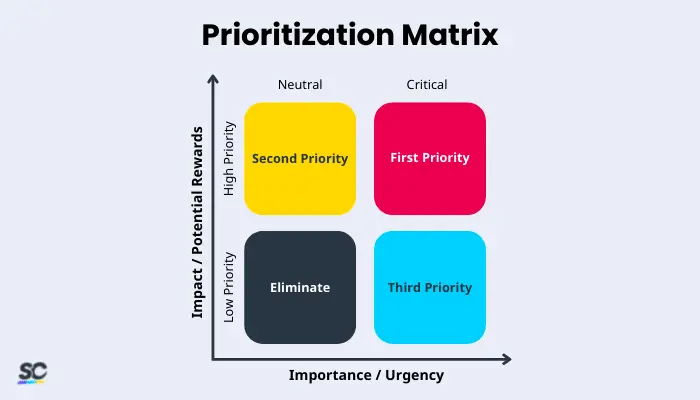
One of the most crucial aspects of time management is learning how to prioritise tasks effectively. Here are some techniques to help one do just that:
The Eisenhower Matrix: Named after President Dwight D. Eisenhower, this method helps categorise tasks based on their urgency and importance. For tasks that are urgent and important, they need to be done immediately. For the tasks that are important but not urgent, one should schedule them for later. For tasks that are urgent but not important, delegate these tasks if possible. And for those which are neither urgent nor important, they should be eliminated or done last. This technique is particularly useful for managing coursework deadlines and project milestones in both university and professional settings.
To implement this method, create a 2×2 grid with “Urgent” and “Not Urgent” on one axis, and “Important” and “Not Important” on the other. List all tasks and place them in the appropriate quadrant. Focus on the “Urgent and Important” tasks first, then move on to the “Important but Not Urgent” tasks.
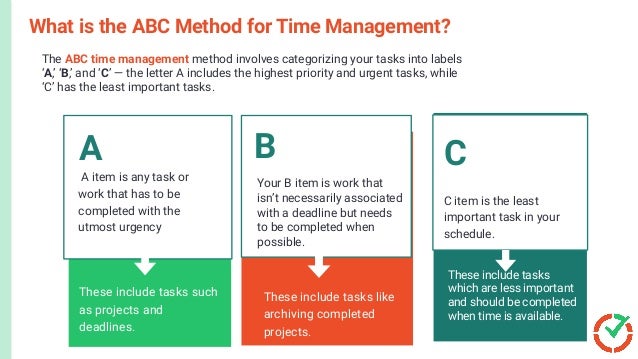
The ABC Method: This technique involves categorising tasks into three groups: A Tasks that are high-priority items that must be done today; B Tasks which are medium-priority items that should be done soon; and C Tasks that are low-priority items that can wait.
To use this method, make a list of all the tasks for the day or week. Assign each task an A, B, or C label. Tackle all A tasks before moving on to B tasks, and so on. This method can be particularly effective for managing daily to-do lists in a fast-paced work environment.
The 1-3-5 Rule: This simple rule helps to structure the daily to-do list. List out 1 big task, 3 medium tasks, and 5 small tasks. By following this rule, one ensures that one is making progress on significant projects while also completing smaller, necessary tasks. This can be especially helpful for balancing major assignments or work projects with smaller daily responsibilities.
Time blocking is a powerful technique that involves scheduling specific periods for different tasks or types of work. Here’s how to implement it effectively:
Review Tasks: Start by listing all the tasks that need to be completed.
Estimate Time Requirements: For each task, estimate how long it will take to complete.
Create Time Blocks: Divide the day into blocks of time, typically 30-90 minutes each.
Assign Tasks to Blocks: Schedule tasks into these time blocks, starting with the most important or challenging tasks during the peak productivity hours.
Include Buffer Time: Leave some space between blocks for unexpected tasks or breaks.
Stick to the Schedule: Try to adhere to the time blocks as much as possible, but be flexible when necessary.
Time blocking helps one focus on one task at a time, reducing the temptation to multitask and increasing overall productivity. This technique can be particularly useful for managing study time at university or structuring the workday in a professional setting.
In today’s digital age, numerous apps and tools can help one manage their time more effectively.
Project Management Tools: Apps like Trello, Asana, or Monday.com can help one organise tasks, collaborate with team members, and track deadlines. These tools are particularly useful for group projects in university or team-based work environments.
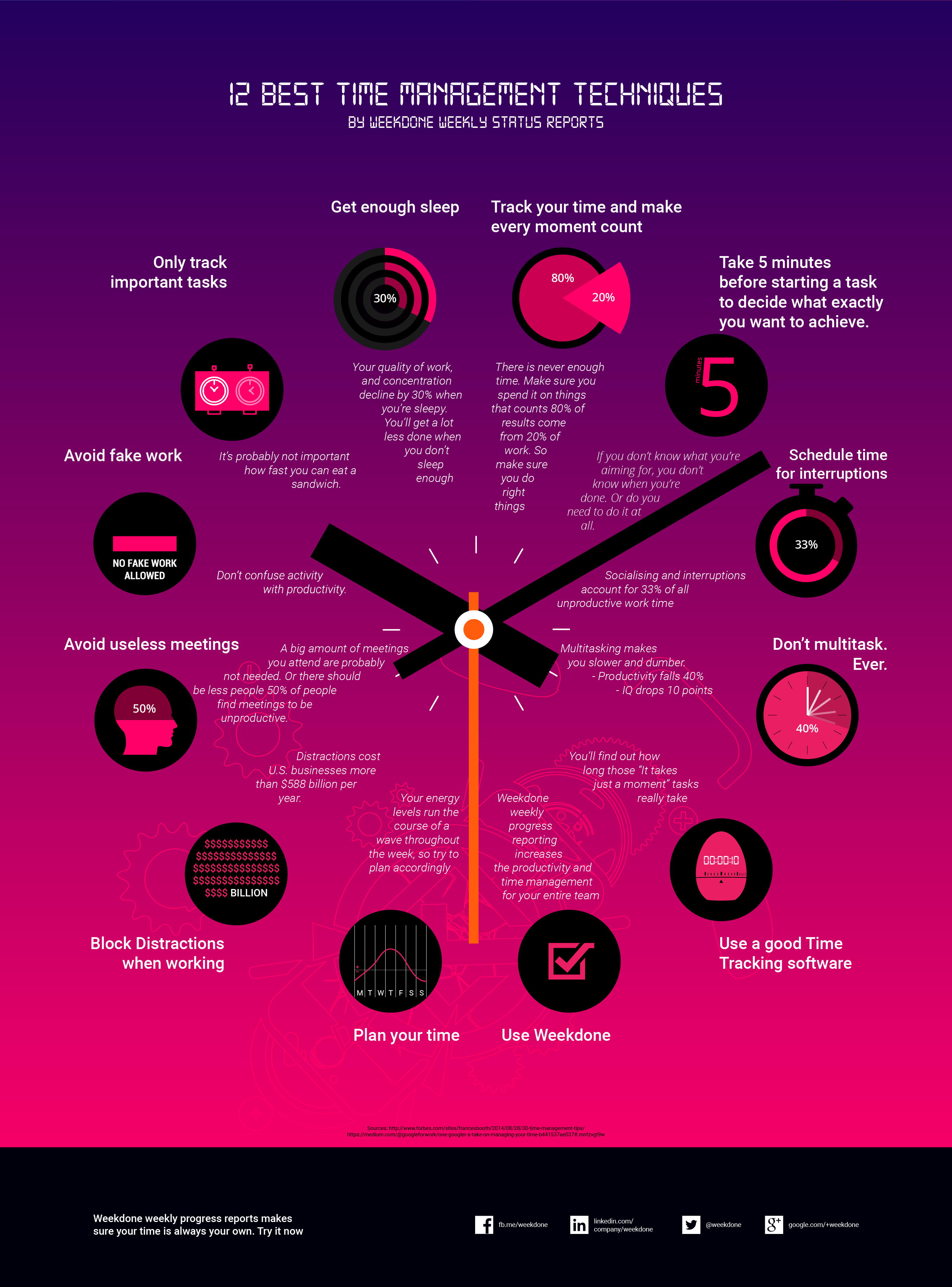
Time Tracking Apps: Tools like RescueTime or Toggl can help one understand how they’re spending their time and identify areas for improvement. This can be eye-opening for students trying to optimise their study habits or young professionals looking to boost their productivity.
Calendar and Reminder Apps: Google Calendar, Microsoft Outlook, or Apple Calendar are essential for scheduling classes, and meetings, as well as setting reminders for deadlines. Integrating these tools into one’s daily routine can help one stay on top of their commitments.
Note-Taking and Task Management Apps: Evernote, Notion, or Todoist can help one keep track of tasks, ideas, and important information. These tools can be invaluable for organising lecture notes or managing work-related tasks.
Focus and Productivity Apps: Apps like Forest or Freedom can help one stay focused by blocking distracting websites or apps during study or work hours. These can be particularly helpful when one needs to concentrate on a challenging assignment or important project.
When choosing productivity tools, one should remember that the best app is the one one will use consistently. Start with one or two that address the biggest pain points and gradually incorporate others as needed.
The Two-Minute Rule, popularized by productivity consultant David Allen, states that if a task will take less than two minutes to complete, one should do it immediately rather than putting it off. This rule helps prevent small tasks from piling up and becoming overwhelming. It also gives one a sense of accomplishment throughout the day as one quickly knocks out these minor tasks.
Examples of two-minute tasks might include responding to a quick email, filing a document, making a brief phone call, updating a to-do list etc. By addressing these small tasks immediately, one frees up mental space and reduces the risk of forgetting important details. This can be particularly helpful for managing the many small responsibilities that come with a new job.
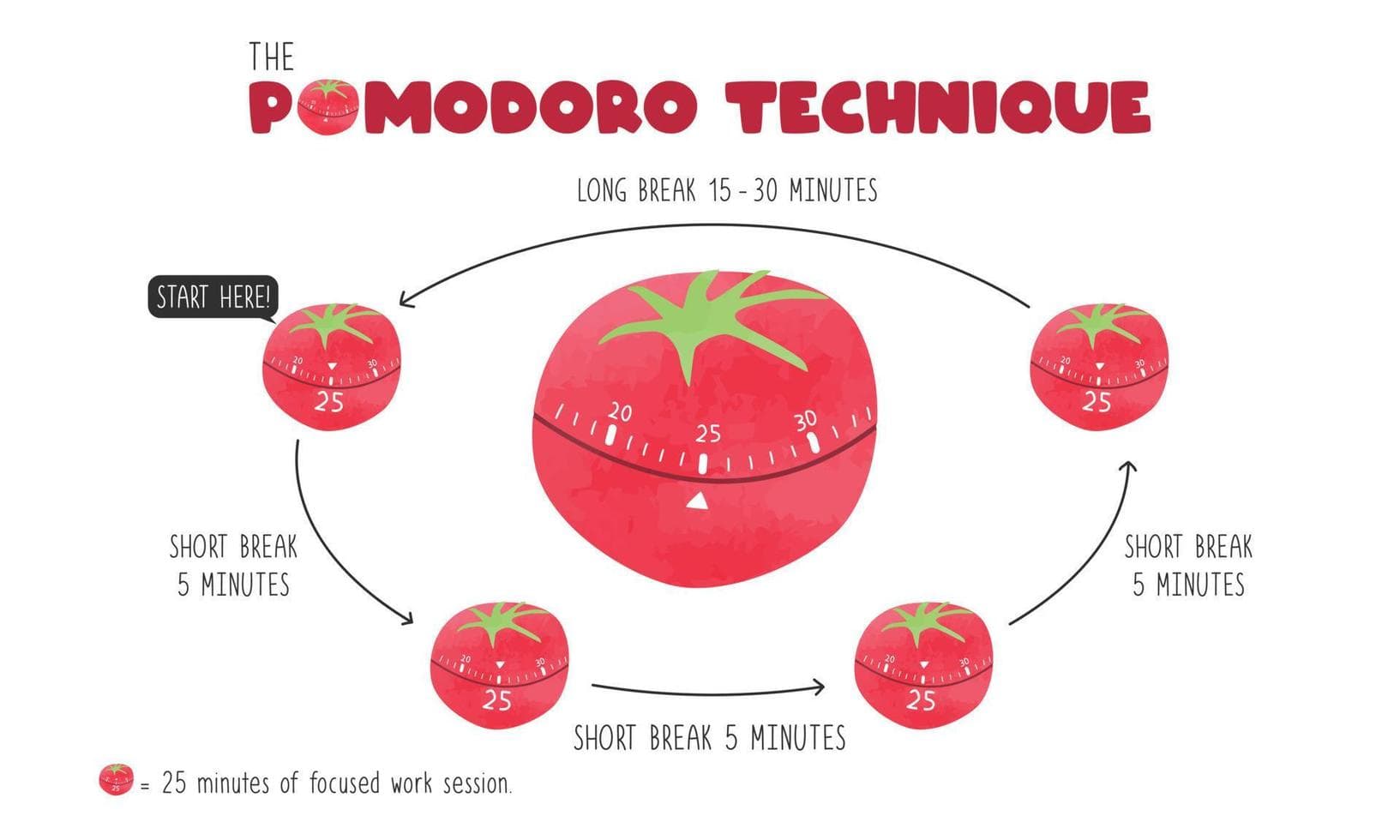
The Pomodoro Technique is a time management method developed by Francesco Cirillo in the late 1980s. It uses a timer to break work into intervals, traditionally 25 minutes in length, separated by short breaks. Here’s how it works – choose a task to work on, set a timer for 25 minutes or one Pomodoro and work on the task until the timer rings. Then take a short break of 5 minutes and after four Pomodoros, take a longer break of 15–30 minutes.
This technique helps one maintain focus and avoid burnout by incorporating regular breaks into their work routine. It’s particularly useful for tasks that require sustained concentration, such as studying for exams or working on complex projects.
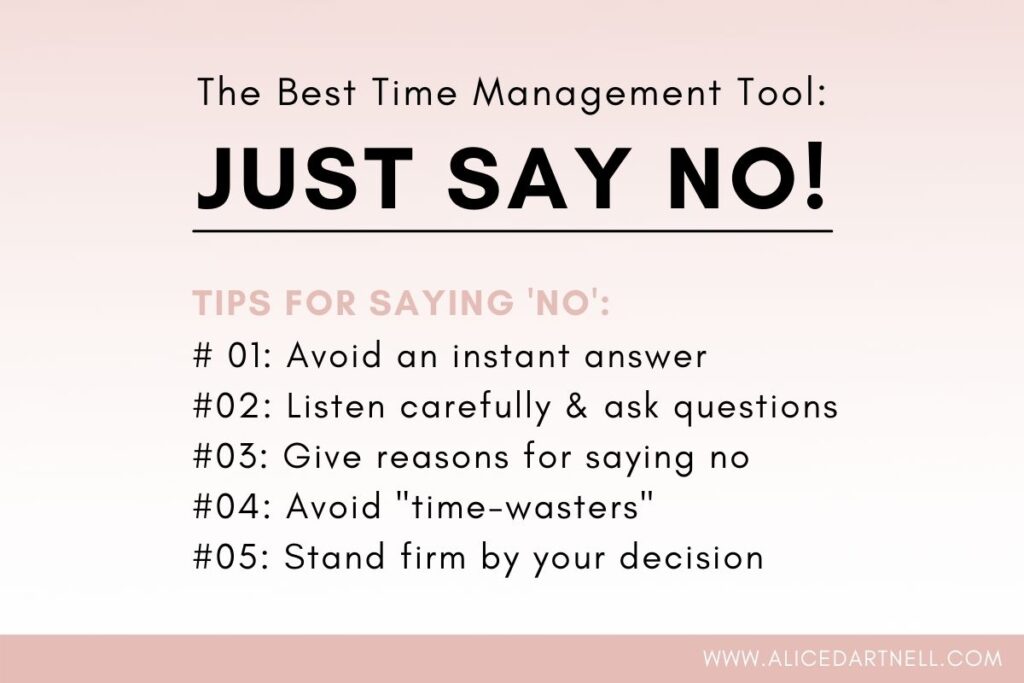
As a young adult, one may feel pressure to say “yes” to every opportunity or request that comes their way. However, learning to say “no” is crucial for effective time management. To do it gracefully, explain that you have a full workload and can’t take on additional tasks at the moment. If possible, suggest a later deadline or propose delegating the task to another team member. Thank the person for thinking of you, even as you decline. Once you’ve made your decision, stick to it. Avoid leaving the door open for negotiation if you truly can’t take on the task.
Remember, saying “no” to less important tasks allows one to say “yes” to opportunities that align with one’s goals and priorities. This skill is particularly important as one navigates the social aspects of university life or manages increasing responsibilities in one’s early career.
How one starts their day can significantly impact their productivity and time management. Developing a consistent morning routine can help one set a positive tone for the day, prioritise one’s most important tasks, and reduce decision fatigue.
As an example of an effective morning routine, wake up at a consistent time each day, engage in light exercise or stretching, practise mindfulness or meditation, review one’s goals and priorities for the day, and tackle one’s most important task first. This is often referred to as “eating the frog”.
One should experiment with different activities and timings to find a routine that works best for them. The key is consistency – stick with the routine for at least 30 days to make it a habit.
In today’s hyper-connected world, distractions are everywhere. Learning to minimise them is crucial for effective time management. Disable non-essential notifications on the phone and computer during study or work hours. Employ tools like StayFocusd or Cold Turkey to block distracting websites during focused work periods. If possible, designate a specific area for studying or working to help the brain associate that space with productivity. When working on a task, keep only the necessary tabs or applications open. Use noise-cancelling headphones as these can help block out ambient noise in busy university libraries or open office environments. Implement “Do Not Disturb” Hours and communicate to roommates or colleagues when one needs uninterrupted focus time.
Remember, it’s not about eliminating all distractions permanently, but rather creating periods of focused work throughout the day.
Hack #9: Utilise the 80/20 Rule aka the Pareto Principle
The Pareto Principle, also known as the 80/20 rule, suggests that roughly 80% of effects come from 20% of causes. In the context of time management, this means that 80% of one’s results likely come from 20% of their efforts.
To apply this principle, identify the tasks that contribute most significantly to the goals or results. Prioritise these high-impact tasks. Delegate or eliminate tasks that fall into the less productive 80% when possible.
By focusing on the most impactful tasks, one can achieve better results with less time and effort. This principle can be particularly useful for prioritising study topics before exams or focusing on key projects at work.
Effective time management is an ongoing process of refinement. One should set aside time regularly, weekly or monthly, to review one’s productivity and time management strategies.
Questions one should ask oneself include: what worked well this week/month? Where did one struggle with time management? Are there any tasks one can eliminate, delegate, or optimise? How can one improve one’s productivity in the coming week/month? This practice of regular reflection allows one to continually improve their time management skills and adapt to changing circumstances.
As one progresses in their studies or career, learning to delegate becomes increasingly important. Effective delegation not only frees up one’s time for higher-priority tasks but also helps develop one’s team members’ skills.
To delegate effectively, delegate tasks that others can do or learn from, not just the tasks one doesn’t want to do. Match tasks with team members’ skills and development goals. Communicate expectations, deadlines, and available resources. Empower the person to make decisions related to the task. Offer support without micromanaging. After the task is complete, offer constructive feedback to help the person improve.
Remember, effective delegation is a skill that takes practice. Start small and gradually increase the complexity of tasks one delegated as one and their team members become more comfortable with the process.
Task batching involves grouping similar tasks and completing them in one focused session. This technique can significantly boost one’s productivity by reducing the mental energy required to switch between different types of tasks. Some examples of batch tasks are responding to emails, making phone calls, writing reports or creating presentations, social media updates, or data entry or administrative tasks.
To implement batching, identify similar tasks. Schedule specific time blocks for these batched tasks. Focus solely on that type of task during the designated time block. Take a short break before moving on to a different type of task.
Batching can help one enter a state of flow more easily, leading to increased productivity and higher-quality work. This technique can be particularly useful for managing multiple course assignments or juggling various responsibilities in one’s early career.
This technique, inspired by a quote often attributed to Mark Twain, suggests tackling the most challenging or important task first thing in the morning. The idea is that if one “eats a live frog” first thing in the morning, they’ll have the satisfaction of knowing that it’s probably the worst thing they will do all day.
In practice, this means the task one is most likely to procrastinate on, but that will have the biggest positive impact on their day or week. One should tackle this task first thing in the morning when their energy and willpower are at their highest. Once one has completed their “frog,” the rest of the day will feel more manageable and productive.
This technique helps build momentum for the rest of the day and ensures that the most important work gets done, even if unexpected issues arise later. It can be particularly effective for tackling challenging coursework or important work projects.
Hack #14: Implement the “Touch It Once” Rule
The “Touch It Once” rule is a simple but effective way to prevent small tasks from piling up and becoming overwhelming. The principle is straightforward: whenever one encounters a task that can be completed in five minutes or less, one should do it immediately rather than putting it off.
This rule can be applied to various situations, including responding to quick emails, filing documents, making short phone calls, or scheduling appointments. By addressing these small tasks immediately, one can prevent them from accumulating and taking up mental space. This approach can help one feel more organised and in control of their workload, whether they’re managing multiple course assignments or juggling various responsibilities in their early career.
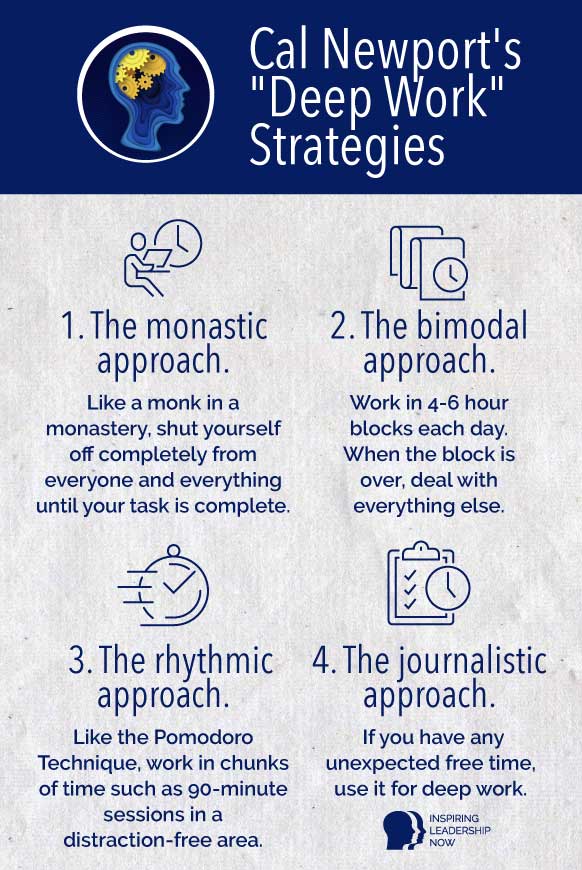
“Deep Work,” a term coined by author Cal Newport, refers to the ability to focus without distraction on a cognitively demanding task. In our increasingly distracted world, the ability to engage in deep work can set one apart and lead to higher-quality outputs.
To cultivate deep work, schedule deep work sessions by blocking out specific times in the calendar for focused, uninterrupted work. Create a distraction-free environment by finding a quiet space, turning off notifications, and communicating unavailability to roommates or colleagues. Start Small and begin with 30-minute deep work sessions and gradually increase the duration as focus improves. Use rituals and develop a routine that signals to the brain it’s time for deep work. This could be putting on noise-cancelling headphones, or brewing a specific type of tea. Practice regularly as like any skill, the ability to engage in deep work improves with consistent practice.
By incorporating deep work into one’s routine, one can tackle complex problems more effectively and produce higher-quality work in less time. This skill is particularly valuable for tackling challenging coursework or making significant progress on important work projects.
Mastering time management is a lifelong journey, not a destination. As a young adult navigating university life or entering the workforce, one has the advantage of developing these crucial skills early, setting a strong foundation for future success. Remember that everyone’s optimal time management strategy is unique – what works for one person may not work for another. The key is to experiment with different techniques, reflect on what works best for an individual, and continually refine the approach.
As one implements these time management hacks, keep in mind that the goal is not to fill every moment of the day with work. Rather, effective time management should create space for both professional productivity and personal fulfilment. By managing time wisely, one will not only excel in academic and professional pursuits but also have the freedom to pursue passions, maintain relationships, and enjoy life outside of work.
One can start small by implementing one or two of these hacks at a time. As they become habits, one can gradually incorporate more strategies into their routine. With patience, persistence, and a willingness to learn, one can develop a personalised time management system that propels one towards one’s goals and helps them thrive.
Remember, time is one’s most valuable resource. By learning to manage it effectively now, one is investing in a future of increased productivity, reduced stress, and greater overall success.
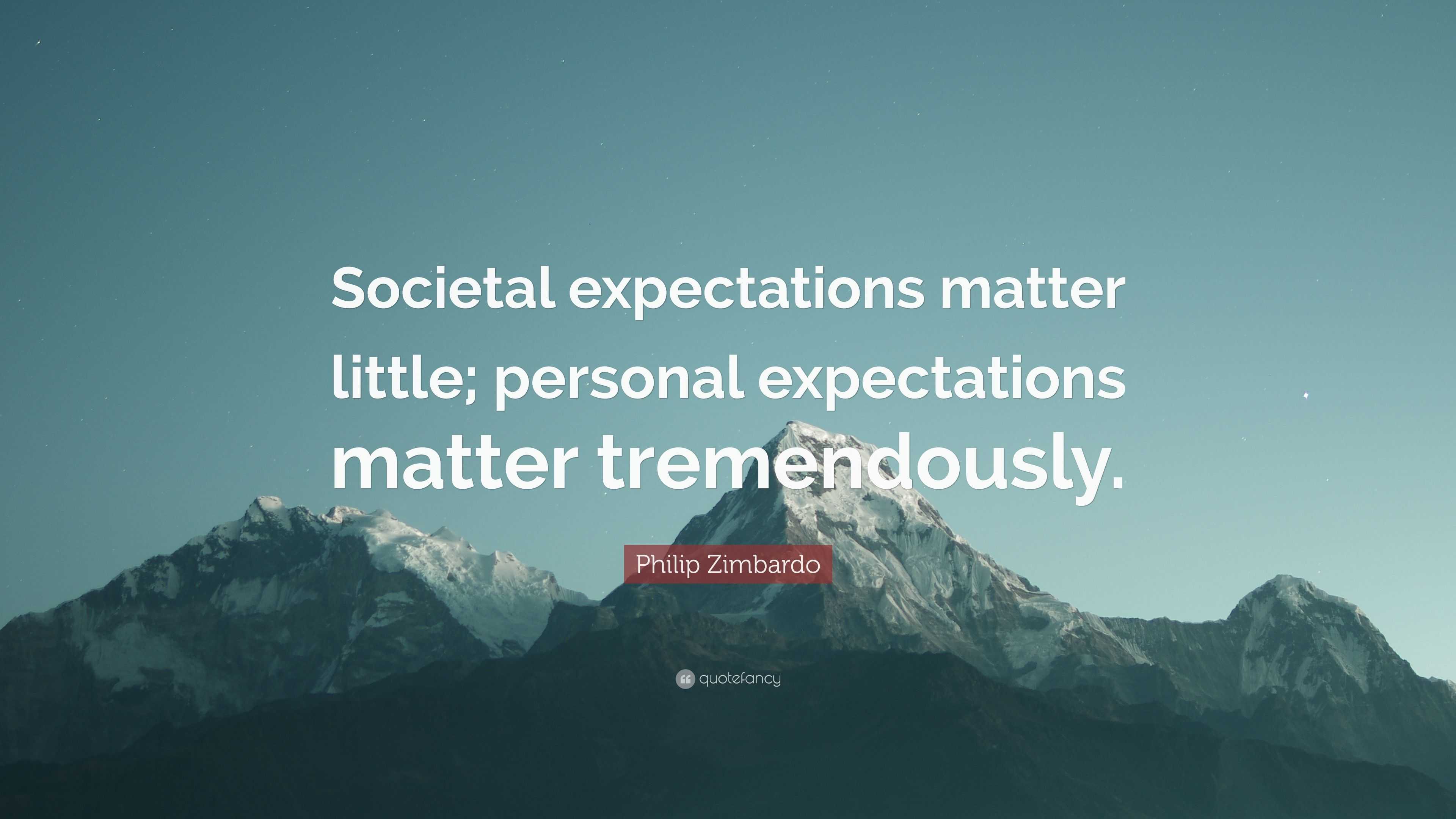
From the moment we take our first breath, we are enveloped in a web of societal expectations. These unwritten rules and norms dictate how we should think, behave, and live our lives, often without us even realising it. They shape our choices, our aspirations, and our very identities. But what if we could break free from these invisible chains? What if we could live in a world where societal expectations didn’t exist? Imagine the possibilities that would unfold, the boundless potential that could be unleashed, and the profound impact it could have on our individual and collective well-being.
In our current reality, societal expectations permeate every aspect of our lives. From the careers we choose to the relationships we pursue, from the way we dress to the hobbies we enjoy, we are constantly bombarded with messages about what is “normal” or “acceptable.” These expectations are often rooted in outdated traditions, cultural biases, and societal norms that may no longer serve us in the modern world.
The pressure to conform can be overwhelming, leading many individuals to suppress their true selves, stifle their passions, and settle for lives that feel inauthentic and unfulfilling. This burden of conformity not only stifles personal growth and self-expression but also perpetuates systemic inequalities and limits the diversity of human experiences.
In a world without societal expectations, the shackles that bind us would be broken, and the human spirit would be free to soar. Imagine the vast array of talents, passions, and perspectives that could flourish when individuals are liberated from the constraints of societal norms.
Artists could create without fear of judgment or censorship, allowing their unique visions to take shape and challenge the boundaries of what is considered “art.” Scientists and researchers could pursue their curiosities without the limitations imposed by funding priorities or societal biases, potentially unlocking groundbreaking discoveries that could benefit humanity. Entrepreneurs and innovators could dream without limits, unencumbered by the expectations of what a “successful” business should look like.
In this world, individuals would be free to explore their identities, embrace their authentic selves, and forge their paths without the weight of societal expectations holding them back. The diversity of human experiences would be celebrated, and the richness of our collective tapestry would be woven with vibrant threads of individuality and self-expression.
One of the most profound impacts of a world without societal expectations would be the redefinition of success and fulfilment. In our current society, these concepts are often narrowly defined by external markers such as wealth, status, and material possessions. However, in a world free from societal expectations, success and fulfilment could take on entirely new meanings.
Success might be measured by the depth of one’s personal growth, the positive impact one has on their community, or the sense of inner peace and contentment one cultivates. Fulfilment could be found in the pursuit of passions, the cultivation of meaningful relationships, or the simple joy of living an authentic life.
Without the pressure to conform to societal norms, individuals would be free to define their paths to happiness and self-actualisation. The traditional markers of success, such as prestigious careers or lavish lifestyles, would hold no more weight than the unconventional choices of those who prioritize simplicity, creativity, or spiritual growth.
In a world without societal expectations, the barriers that divide us based on gender, race, sexuality, or any other aspect of our identities would crumble. The biases and prejudices that stem from societal norms would have no place in this liberated reality.
Imagine a world where individuals are celebrated for their unique perspectives and experiences, rather than being judged or marginalised for their differences. A world where gender roles and stereotypes no longer dictate the opportunities available to individuals, and where everyone is free to pursue their dreams without the constraints of societal expectations.
In this world, diversity would be embraced as a strength, and inclusion would be the norm. Communities would thrive on the richness of different cultures, beliefs, and ways of life, fostering a deeper understanding and appreciation for the tapestry of human experience.
Without the weight of societal expectations, individuals would be free to walk in each other’s shoes, cultivating a deeper sense of empathy and compassion. When we are no longer bound by the need to conform, we can truly see and appreciate the unique journeys and perspectives of those around us.
Imagine a world where we could openly share our struggles, our fears, and our vulnerabilities without fear of judgment or rejection. A world where we could truly listen to one another’s stories and experiences, without the filter of societal expectations clouding our understanding.
In this world, compassion would flourish, as we would be able to connect on a deeper level, recognizing our shared humanity and the universal desire for acceptance and belonging. Empathy would become the foundation upon which we build our relationships, our communities, and our societies, fostering a more inclusive and understanding world.
Perhaps the most profound impact of a world without societal expectations would be the opportunity for true self-discovery and authenticity. Without the pressure to conform, individuals would be free to explore their identities, their passions, and their unique paths in life.
Imagine a world where children are encouraged to follow their curiosities and passions from a young age, without the limitations imposed by societal expectations or predetermined career paths. A world where individuals can embrace their true selves without fear of judgment or rejection, and where self-expression is celebrated as a fundamental aspect of the human experience.
In this world, authenticity would be the norm, and self-discovery would be a lifelong journey of growth and exploration. Individuals would be free to reinvent themselves, to change course, and to embrace new passions and perspectives without the weight of societal expectations holding them back.
While the prospect of a world without societal expectations may seem idyllic, it is important to acknowledge the potential challenges and considerations that would arise in such a reality.
One concern might be the potential for chaos or a lack of structure in society. Without the guiding principles and norms that societal expectations provide, there could be a risk of social fragmentation or a breakdown in the systems and institutions that govern our daily lives.
However, it is important to recognize that societal expectations are not inherently necessary for the functioning of society. In a world without these expectations, new frameworks and systems could emerge, rooted in principles of individual autonomy, mutual respect, and collective well-being.
Another consideration is the potential for individuals to feel adrift or overwhelmed by the sheer breadth of choices and possibilities available to them. Without the familiar boundaries and expectations of society, some may struggle to navigate the vast expanse of self-discovery and self-expression.
However, this challenge could also be seen as an opportunity for personal growth and the development of self-awareness and self-determination. In a world without societal expectations, individuals would have the freedom to explore their identities and passions at their own pace, with the support of communities built on empathy and understanding.
Ultimately, envisioning a world without societal expectations requires us to embrace the unknown and let go of the familiar structures and norms that have shaped our lives for generations. It is a bold and audacious vision, one that challenges us to reimagine the very fabric of our societies and the way we relate to one another.
Yet, in this unknown lies the potential for profound transformation and the unleashing of the human spirit in ways we can scarcely imagine. It is a world where individuality is celebrated, where authenticity is the norm, and where the boundaries that once confined us are shattered, allowing us to soar to new heights of self-expression, creativity, and personal fulfillment.
While the path to such a world may be uncertain and fraught with challenges, the rewards of living in a society free from the shackles of societal expectations are immeasurable. It is a world where we can truly embrace our authentic selves, where our dreams and passions are limited only by the boundaries of our own imagination, and where the richness of human diversity is celebrated and cherished.
So, let us dare to dream of a world without societal expectations, a world where the human spirit is unshackled and free to soar. Let us embrace the unknown and the boundless possibilities that await us, for in doing so, we may just unlock the key to a more authentic, fulfilling, and compassionate existence for all.
In the Bollywood film “Jab We Met,” the female lead, Geet, delivers a line that resonates deeply with many, including yours truly! After I saw this movie, this line became my statement. What was the line? The line was, “I am my own best friend.” This simple yet profound statement encapsulates the essence of self-love and the importance of finding contentment within oneself. For introverts, who often find solace in solitude and introspection, this line serves as a powerful reminder of the value of self-companionship.
Being your own best friend means developing a deep and nurturing relationship with yourself. It involves recognising your worth, embracing your strengths and weaknesses, and treating yourself with the same kindness and compassion that you would offer to a close friend. This concept is particularly relevant for introverts, who often thrive in environments that allow introspection and self-reflection.
When you become your own best friend, you build a strong foundation of emotional resilience. You learn to rely on yourself for comfort and support, which can be especially valuable during challenging times. Embracing self-companionship fosters self-acceptance. You learn to appreciate your unique qualities and quirks, and you become more forgiving of your imperfections. Being your own best friend cultivates a sense of independence. You become less reliant on external validation and more confident in your ability to navigate life’s ups and downs on your terms. Developing a positive relationship with yourself leads to inner peace. You create a safe and nurturing space within your mind, where you can retreat and recharge.
Introverts often find themselves energised by solitude and introspection. They derive strength from within and are more attuned to their inner world. For introverts, being their own best friend is not just a choice but a necessity. It allows them to thrive in a world that often values extroverted qualities.
Introverts recharge their energy through solitude. Being their own best friend means they can fully embrace and enjoy their alone time without feeling lonely or isolated. Solitude provides introverts with the opportunity for self-discovery. They can explore their thoughts, feelings, and passions without external distractions. Many introverts find that their creativity flourishes in solitude. Being their own best friend allows them to tap into their creative potential and express themselves authentically. Introverts are naturally inclined towards mindfulness and introspection. Developing a positive relationship with themselves enhances their ability to stay present and mindful.
Cultivating self-companionship is a journey that requires intentional effort and practice. Self-care is the foundation of self-companionship. It involves taking deliberate actions to nurture your physical, emotional, and mental well-being.
Physical self-care or a regular physical activity that you enjoy, whether it’s yoga, walking, dancing, or any other form of exercise, boosts your mood and energy levels. Nourish your body with healthy and balanced meals. Pay attention to how different foods make you feel and choose those that energize and sustain you. Prioritise rest and sleep. Create a bedtime routine that promotes relaxation and ensures you get enough restorative sleep.
Emotional self-care includes journaling, where you can keep a journal to express your thoughts and emotions. Writing can be a therapeutic way to process your feelings and gain clarity. Practice mindfulness techniques such as meditation, deep breathing, or guided imagery. These practices help you stay present and reduce stress. Set healthy boundaries in your relationships and activities. Learn to say no when necessary and protect your emotional well-being.
To care for yourself mentally, engage in reading books that inspire and uplift you. Reading can be a great way to expand your knowledge and stimulate your mind. Pursue hobbies and activities that bring you joy and fulfilment. Whether it’s painting, gardening, or playing a musical instrument, make time for activities that nourish your soul. Continuously seek opportunities for learning and personal growth. Take up new courses, attend workshops, or explore new interests.
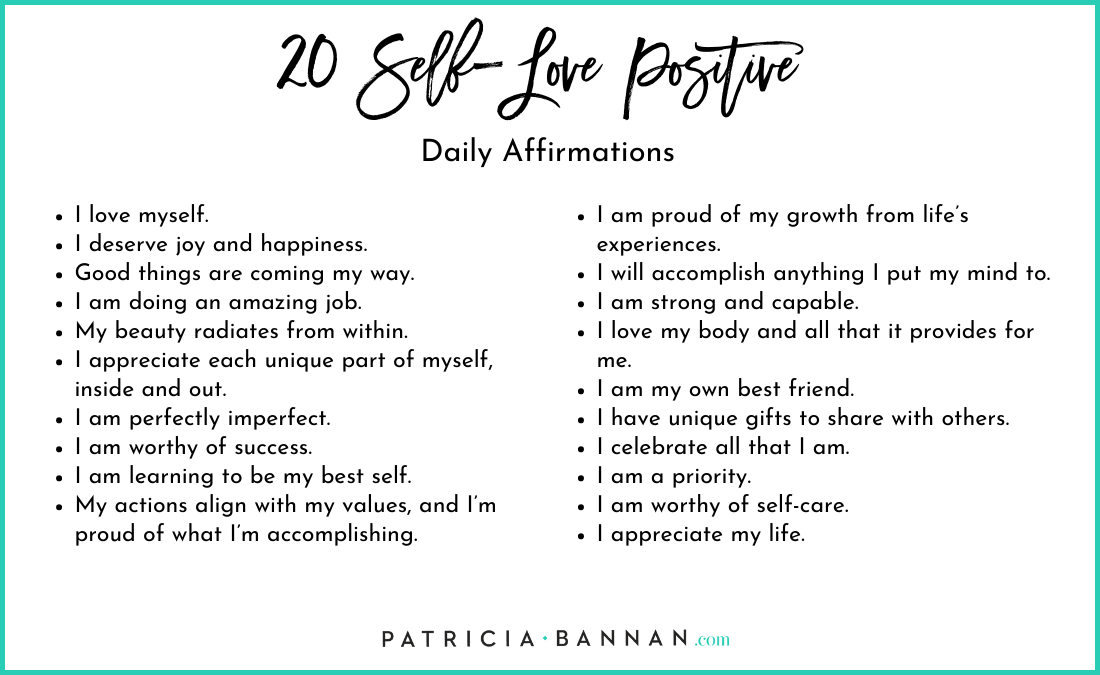
The way you talk to yourself has a profound impact on your self-esteem and overall well-being. Cultivate positive self-talk by being mindful of your inner dialogue and replacing negative thoughts with affirming ones.
Start your day with positive affirmations. Repeat statements that reinforce your self-worth and capabilities, such as “I am enough,” “I am capable,” and “I am deserving of love and happiness.” Practice gratitude by acknowledging the things you appreciate about yourself and your life. Keep a gratitude journal and write down three things you’re grateful for each day.
Treat yourself with the same kindness and compassion that you would offer to a friend. When you make a mistake, remind yourself that it’s okay to be imperfect. Forgive yourself for past mistakes and shortcomings. Let go of self-criticism and embrace self-acceptance.
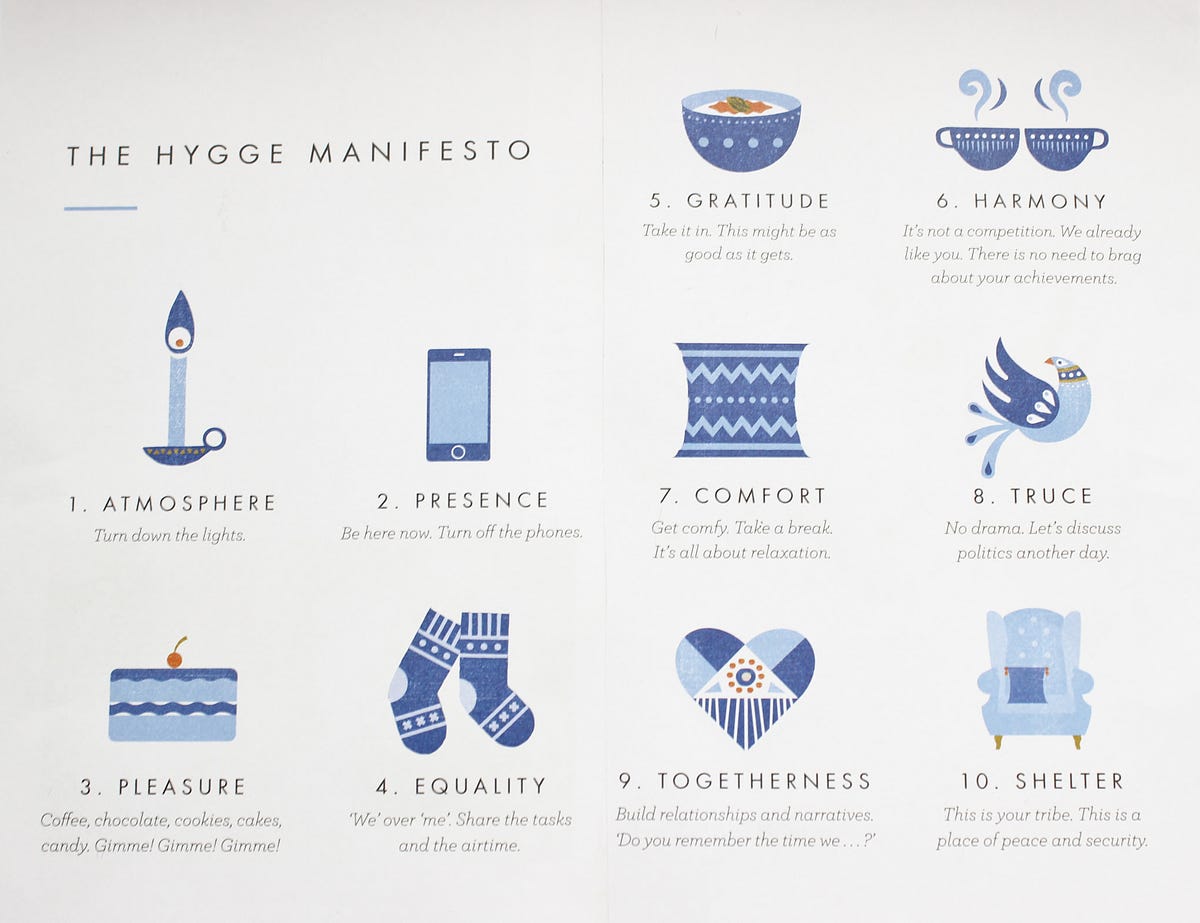
The Danish concept of hygge, pronounced “hoo-gah” is all about creating a cosy and inviting atmosphere that promotes well-being and contentment. Incorporating hygge into your daily life can enhance your sense of self-companionship.
Use soft, warm lighting such as candles, string lights, or lamps with dimmers to create a cosy ambience. Add plush blankets, pillows, and rugs to your living space. These elements create a sense of warmth and comfort. Incorporate natural elements like plants, flowers, and wooden decor to bring a touch of nature indoors.
Indulge in comforting food and drink, such as a cup of hot cocoa, a bowl of soup, or freshly baked bread. Savour these simple pleasures mindfully. Take time to enjoy the present moment. Whether it’s sipping your morning coffee, reading a book, or taking a walk in nature, be fully present and appreciate the experience.
Creative activities provide a therapeutic outlet for self-expression and can be a wonderful way to connect with yourself. Explore painting, drawing, or other forms of visual art. Allow yourself to create without judgment or expectations. Write stories, poems, or personal reflections. Writing can be a powerful way to process your thoughts and emotions. Engage in knitting, crocheting, or other crafting activities. These hobbies can be relaxing and satisfying. Take on DIY projects that interest you, such as home decor, gardening, or upcycling old items.
Mindfulness and meditation are powerful practices that can help you stay grounded and connected to yourself. Set aside time each day for meditation. Focus on your breath, observe your thoughts without judgment, and cultivate a sense of inner peace. Practice deep breathing exercises to calm your mind and body. Inhale deeply through your nose, hold for a few seconds, and exhale slowly through your mouth. Perform a body scan meditation to bring awareness to different parts of your body. This practice can help you release tension and promote relaxation.
While being your own best friend is important, fostering meaningful connections with others can also enhance your sense of well-being. Spend quality time with family and friends engaging in activities you enjoy together, such as cooking, hiking, or playing games. Have meaningful conversations with loved ones. Share your thoughts, feelings, and experiences, and listen actively to theirs. Surround yourself with supportive and positive people who uplift and encourage you. Get involved in your community by joining clubs, groups, or organizations that align with your interests and values.
Embracing solitude and reflection allows you to connect with your inner self and gain clarity. Keep a journal to reflect on your thoughts, experiences, and goals. Journaling can provide insights and help you process your emotions. Take solitary walks in nature to clear your mind and connect with the natural world. Use this time for introspection and self-discovery.
Dedicate time each day to unplug from digital devices and social media. Use this time for self-reflection, relaxation, and meaningful activities. Be mindful of the content you consume online. Choose content that inspires, educates, and uplifts you.
Being your own best friend is a journey of self-discovery, self-acceptance, and self-love. For introverts, this journey is especially meaningful, as it aligns with their natural inclination towards introspection and solitude. By practising self-care, cultivating positive self-talk, creating a hygge-inspired environment, engaging in creative pursuits, prioritizing mindfulness, fostering meaningful connections, and embracing solitude, you can develop a deep and nurturing relationship with yourself.
Remember, the journey to self-companionship is unique for each individual. Embrace the process with patience and compassion, and celebrate the small victories along the way. As you become your own best friend, you’ll find that you are better equipped to navigate life’s challenges, cultivate inner peace, and create a fulfilling and joyful life.
In our fast-paced, technology-driven world, where stress and burnout have become all too common, the Danish concept of hygge offers a refreshing antidote. Pronounced “hoo-gah,” hygge is a way of life that celebrates simple pleasures and fosters a sense of cosiness, contentment, and well-being. While deeply rooted in Scandinavian culture, the principles of hygge transcend geographical boundaries, providing a blueprint for creating a more mindful, joyful, and fulfilling existence, no matter where you live.
At its core, hygge is about cultivating a warm, inviting atmosphere that nurtures the soul and encourages moments of genuine connection and presence. It’s a mindset that embraces the beauty in the ordinary, cherishing the small, everyday rituals that bring comfort and joy. From the gentle flicker of candlelight to the warmth of a cosy blanket, hygge is about surrounding oneself with the things that make one feel at home, both physically and emotionally.
While the concept of hygge may seem simple, its impact on overall well-being is profound. In a world that often prioritizes productivity and material success, hygge reminds us to slow down, savour the present moment, and find contentment in the here and now. It’s a conscious choice to create a sanctuary amidst the chaos, a space where one can truly unwind, recharge, and connect with the people and activities that bring one happiness.
Incorporating hygge into one’s daily routine is easier than one might think, and the benefits are numerous. Here are some practical ways to embrace the hygge lifestyle, regardless of where one lives or the pace of their life.
Create a Cosy Home Environment: One’s home should be a haven, a place where one can truly relax and feel at ease. Start by decluttering and organizing the living spaces, creating a sense of calm and order. Then, focus on adding elements that evoke warmth and comfort, such as soft lighting, plush textiles, and natural materials like wood and wool. Invest in cosy blankets, plush rugs, and comfortable seating arrangements that encourage relaxation and conversation. Consider adding a fireplace or a space heater to create a warm, inviting ambience. Surround oneself with personal touches, such as family photos, artwork, and cherished mementoes that bring joy and a sense of belonging.
Embrace Hygge Rituals: Hygge is all about savouring the simple pleasures in life, and incorporating rituals into one’s daily routine can help one cultivate a more mindful and present state of being. Start the day by enjoying a warm beverage, such as a cup of tea or coffee, in a cosy nook or by a window, allowing oneself to fully appreciate the moment before diving into the day’s tasks. In the evening, consider lighting candles and playing soft music to create a calming atmosphere. Indulge in a warm bath or shower, using aromatic oils or salts to enhance the sensory experience. Curl up with a good book or engage in a favourite hobby, allowing oneself to fully immerse in the activity without distractions.
Prioritise Quality Time with Loved Ones: Hygge is not just about creating a cosy physical environment; it’s also about fostering meaningful connections with the people one cares about. Make it a priority to spend quality time with loved ones, whether it’s sharing a home-cooked meal, playing board games, or simply engaging in heartfelt conversations. Encourage a technology-free environment during these gatherings, allowing one to fully engage with one another without the distractions of screens and devices. Create traditions and rituals that bring family or friends together, such as weekly movie nights, game nights, or outdoor adventures.
Embrace Nature and the Outdoors: While hygge is often associated with indoor cosiness, it’s also about appreciating the beauty and tranquillity of nature. Spend time outdoors, whether it’s taking a leisurely walk in the park, hiking in the mountains, or simply sitting in the backyard or balcony, soaking up the fresh air and natural surroundings. Bring elements of nature into the home by incorporating houseplants, fresh flowers, or natural materials like wood and stone. Consider creating an outdoor living space, such as a cosy patio or garden area, where one can enjoy the beauty of the outdoors while still embracing the principles of hygge.
Indulge in Comfort Foods and Beverages: Food and drink play a significant role in the hygge lifestyle, as they provide nourishment and comfort for both the body and soul. Embrace the art of home cooking, experimenting with hearty, comforting recipes that evoke a sense of warmth and nostalgia. Bake fresh bread or pastries, filling the home with the inviting aroma of baked goods. Prepare warm, nourishing soups and stews, perfect for cosy evenings. Indulge in hot beverages like tea, coffee, or hot chocolate, savouring the warmth and flavours with each sip.
Cultivate a Mindful Approach to Life: At its core, hygge is about being present and appreciating the simple joys in life. Cultivate a mindful approach to daily activities, focusing attention on the task at hand and savouring each moment as it unfolds. Practice mindfulness techniques like meditation, deep breathing exercises, or journaling to help one stay grounded and centred. Embrace a slower pace of life, allowing oneself to fully experience and appreciate the world around one rather than rushing through it.
Surround Oneself with Hygge-Inspired Decor and Accessories: While hygge is primarily a state of mind, surrounding oneself with cosy, inviting decor and accessories can help reinforce the hygge lifestyle. Invest in soft, warm lighting sources like candles, string lights, or lamps with dimmers to create a cosy ambience. Incorporate plush textiles like throw blankets, pillows, and area rugs to add warmth and texture to living spaces. Consider adding hygge-inspired accents like wooden bowls, ceramic mugs, or woven baskets to create a sense of rustic charm and simplicity.
While the principles of hygge may seem at odds with the fast-paced, high-stress lifestyles that many of us lead, it’s precisely this contrast that makes embracing hygge so valuable. In a world that often demands constant productivity and hustle, hygge offers a much-needed respite, a chance to slow down, recharge, and reconnect with the things that truly matter.
Even if one lives in a bustling city or has a demanding career, one can still incorporate hygge into your daily routine. Start small by setting aside dedicated “hygge time” each day, whether it’s a quiet morning ritual or a cosy evening routine. Prioritise self-care activities that nourish the mind, body, and soul, such as taking a warm bath, practising gentle yoga, or simply curling up with a good book.
One should remember, hygge is not about perfection or adhering to strict rules; it’s about embracing a mindset of contentment, gratitude, and simplicity. By making small, intentional changes to one’s environment and daily habits, one can cultivate a sense of hygge that transcends one’s physical surroundings and becomes a way of life.
In a world that often prioritises busyness and material success, the Danish concept of hygge offers a refreshing alternative – a way of life that celebrates simple pleasures and fosters a sense of cosiness, contentment, and well-being. By embracing hygge, one can create a sanctuary amidst the chaos, a space where one can truly unwind, recharge, and connect with the people and activities that bring one joy.
Whether one lives in a fast-paced city or a quiet suburban neighbourhood, the principles of hygge can be woven into one’s daily routine, helping one cultivate a more mindful, present, and fulfilling existence. From creating a cosy home environment to embracing hygge rituals and prioritising quality time with loved ones, the path to hygge is paved with small, intentional choices that add warmth, comfort, and joy to one’s life. So, embrace the art of cosy living, and let hygge be one’s guide to a more mindful, joyful, and fulfilling existence, no matter where one calls home.

























 Memories and Such