Self-Love: You alone are Enough

Source

There is a line in the 2007 Bollywood movie, “Jab We Met” where the female lead, Geet, played by Kareena Kapoor, tells the male lead, Aditya, played by Shahid Kapoor, that “Main to apni favourite hoon”, translated to “I am my favourite”. This iconic line is, to me, the essence of what self-love is.

In the hustle and bustle of our daily lives, it’s all too easy to lose sight of the most important relationship we’ll ever have — the one with ourselves. Self-love, a concept often misunderstood or overlooked, holds the key to personal growth, resilience, and a life of fulfilment.

Self-love, defined as the love of self or regard for one’s happiness or advantage, has been conceptualised both as a basic human necessity and as a moral flaw akin to vanity and selfishness,  synonymous with amour-propre, conceitedness, egotism, narcissism, etc. However, today, self-love has adopted a more positive connotation as well through the increase in mental health awareness that promotes self-love as intrinsic to self-help.

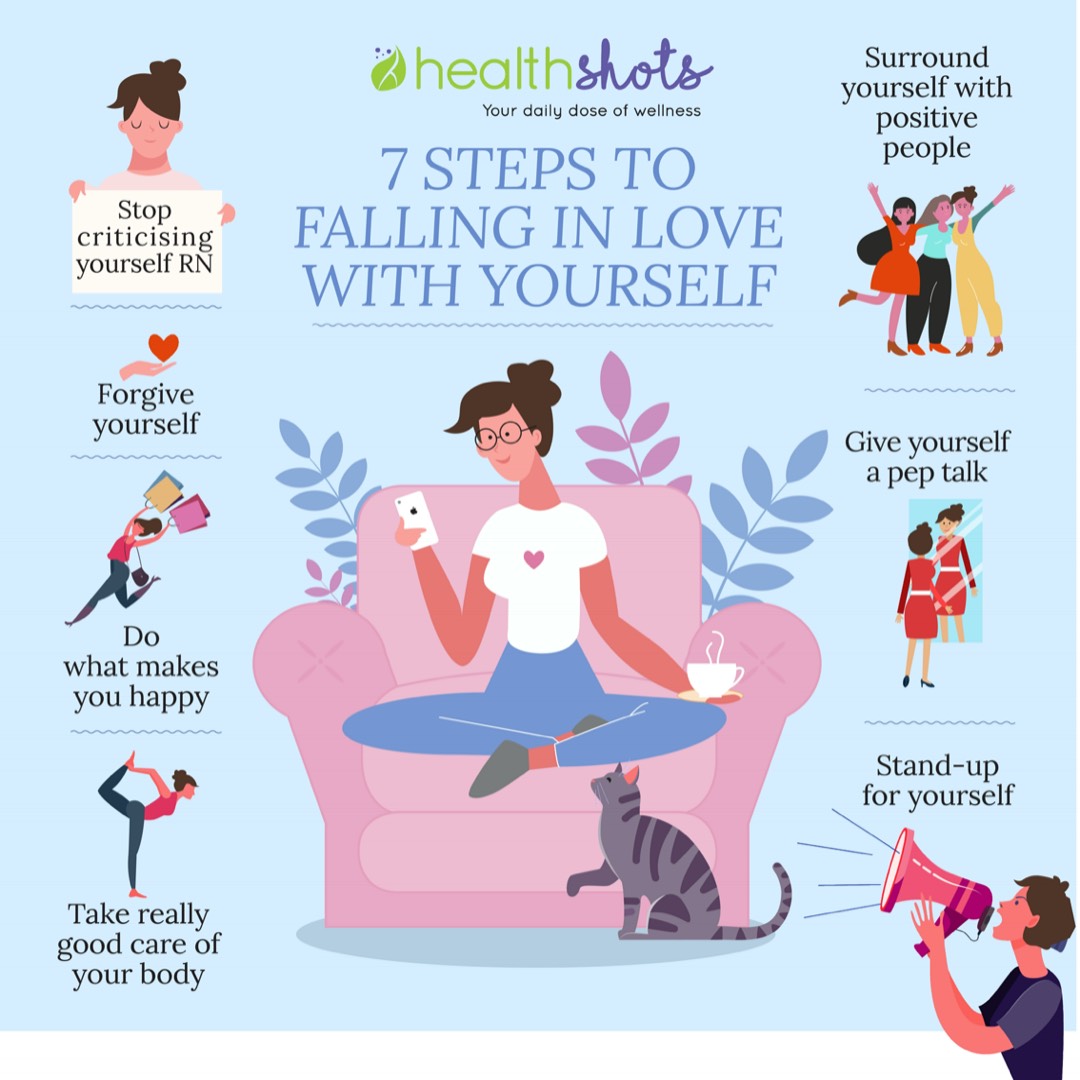
Self-love is a state of appreciation for oneself that grows from actions that support our physical, psychological and spiritual growth. Self-love means having a high regard for your well-being and happiness. It means taking care of your own needs and not sacrificing your well-being to please others, and it means not settling for less than you deserve.

Self-love is not narcissism, arrogance, or self-indulgence. Rather, it is the deep appreciation, acceptance, and compassion we nurture towards ourselves. It’s about recognising our worth, valuing our unique qualities, and embracing our imperfections as part of our journey of growth. Self-love is the foundation upon which we build a life that aligns with our values, passions, and aspirations.

Self-love is important to every one of us. When we cultivate self-love, we develop a strong sense of self-acceptance. This allows us to be authentic, honour our true selves, and live in alignment with our core values. Through this process, we discover inner peace as we release the need for external validation and embrace our innate worthiness. Self-love creates a nurturing environment for mental and emotional well-being. By practising self-compassion, we develop resilience in the face of challenges and setbacks. We learn to manage stress, anxiety, and self-doubt with kindness, empowering ourselves to bounce back stronger and cultivate a positive mindset. The foundation of any healthy relationship begins with self-love. When we love and respect ourselves, we set healthy boundaries, communicate effectively, and attract relationships that uplift and support us. By valuing our own needs and desires, we create space for deeper connections built on mutual respect and understanding.

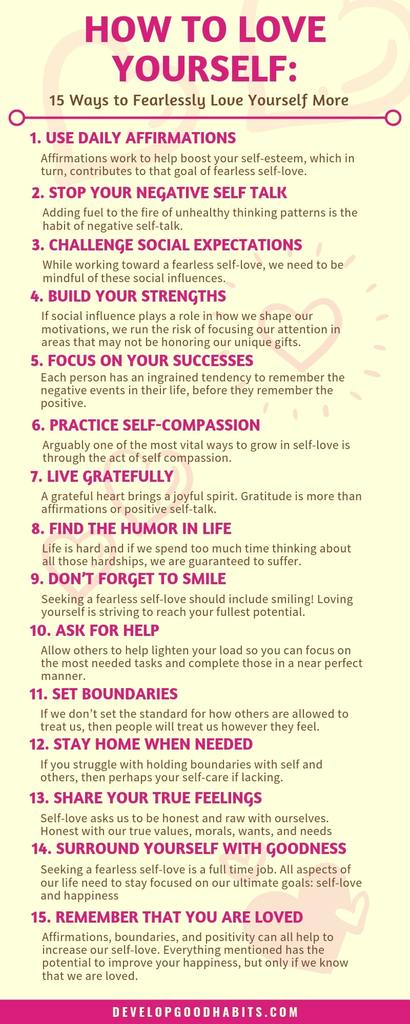
So how do we develop, cultivate and nurture self-love? There are various ways one can become more in love with ourselves. Developing self-love begins with self-awareness. Take time to reflect on your thoughts, emotions, and patterns of behaviour. Notice your inner dialogue and challenge self-critical thoughts. Journaling, meditation, and therapy can be powerful tools for self-discovery and nurturing self-awareness. People who have more self-love tend to know what they think, feel, and want. They take actions based on need rather than want, and by staying focused on what they need, they turn away from automatic behaviour patterns that get them into trouble, keep them stuck in the past, and lessen self-love.

One also needs to practice self-compassion and treat oneself with the same kindness and compassion they would extend to a dear friend. Embrace your flaws, celebrate your successes, and acknowledge your efforts. Embracing self-compassion helps us break free from the grip of perfectionism and fosters a nurturing environment for personal growth.

Self-love requires actively prioritising self-care. You should engage in activities that bring joy, recharge energy, and support your overall well-being. People high in self-love nourish themselves daily through healthy activities, like sound nutrition, exercise, proper sleep, intimacy and healthy social interactions. Start truly caring for yourself by mirroring that in what you eat, how you exercise, and what you spend time doing. Do stuff, not to get it done or because you have to, but because you care about yourself.

Boundaries are essential for self-love. Learn to say no when your well-being is at stake, and establish limits that honour your time, energy, and emotional capacity. Setting boundaries allows you to create space for self-care, pursue your passions, and protect your mental and emotional health. Surrounding yourself with positive influences—whether it be supportive friends, inspiring mentors, or uplifting content—can reinforce self-love. Choose relationships and environments that foster growth, encouragement, and acceptance.

Lastly, to practice self-love, start by being kind, patient, gentle and compassionate to yourself, the way you would with someone else that you care about.

Self-love can mean something different for each person because we all have many different ways to take care of ourselves. Figuring out what self-love looks like for you as an individual is an important part of your mental health. Self-love is a lifelong journey that requires conscious effort, patience, and compassion. By embracing our worth, nurturing self-acceptance, and prioritising self-love, we can unlock our true potential and create a life of authenticity, inner peace, and fulfilment.

Festivals of India: Nag Panchami

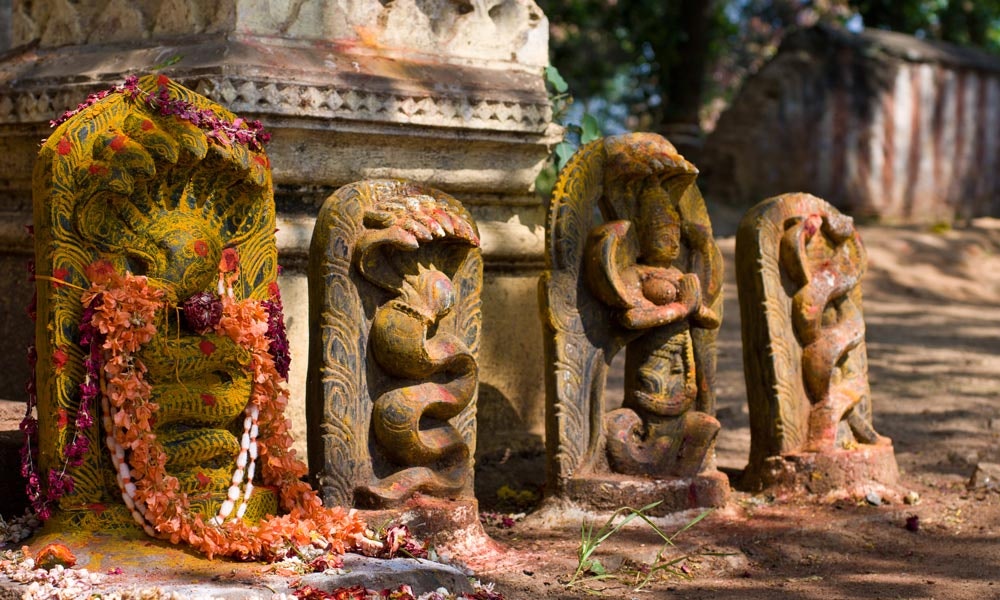
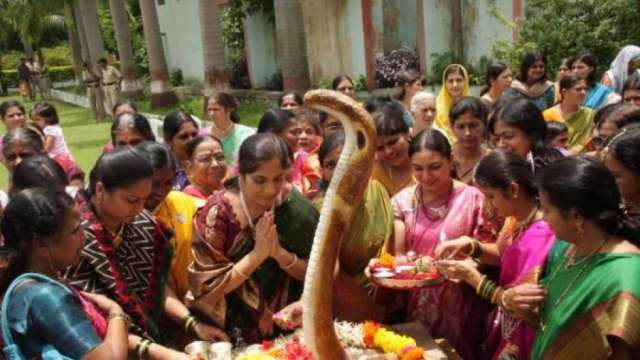
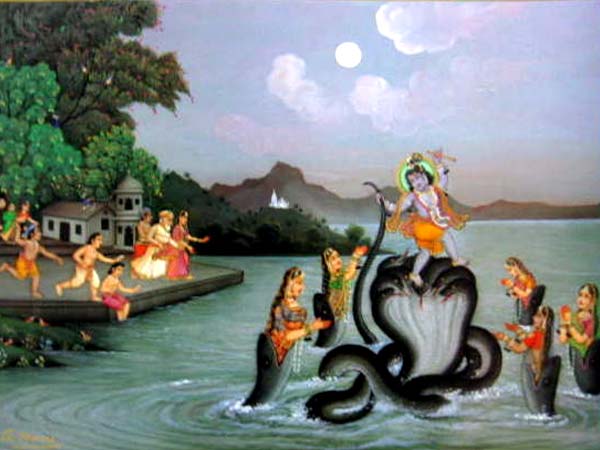
Today is Naga Panchami. One of India’s unique festivals, Nag Panchami is a day of traditional worship of the snake or Nag or Naja or Naga, which are associated with the mythical Naga beings observed by Hindus, Jains, and Buddhists throughout India and Nepal. The worship is offered on the fifth day of the bright half of the lunar month of Shravan which is around mid-July to mid-August. Some Indian states, like Karnataka, Rajasthan and Gujarat, celebrate Naga Panchami in the dark half or Krishna Paksha of the same month. As part of the festivities, a Naga or serpent deity made of silver, stone, wood, or a painting is given a reverential bath with milk and their blessings are sought for the welfare of the family. Live snakes, especially cobras, are also worshipped on this day, especially with offerings of milk and generally with the assistance of a snake charmer.

Naga Panchami is also a day when Akharas or traditional Indian wrestling gyms, hold special celebrations to honour the mystical symbolism of the snake as a symbol of virility and kundalini energy. There are many legends in Hinduism and folklore narrated to the importance of worship of snakes. According to Hindu Puranas and the Mahabharata, Kashyapa, grandson of Lord Brahma, married two daughters of Prajapati Daksha, Kadru and Vinata. Kadru then gave birth to the race of Naga, while Vinata gave birth to Aruna, who became the charioteer of the sun god, Surya, and also gave birth to the great eagle Garuda, who became the vehicle of Lord Vishnu.

In the Mahabharata epic, the sage Astika stops King Janamejaya from sacrificing and eventually decimating the serpent race or the Sarpa Satra. This sacrifice was performed by Janamejaya to avenge the death of his father Parikshita, who was killed by Takshaka, the king of the snakes. A sacrificial fireplace had been specially erected and the fire sacrifice to kill all snakes in the world was started by a galaxy of learned Brahmin sages. The sacrifice performed in the presence of Janamejaya was so powerful that it was causing all snakes to fall into the Yagna kunda or the sacrificial fire pit. When the priests found that only Takshaka who had bitten and killed Parisksihita had escaped to the nether world of Indra seeking his protection, the sages increased the tempo of reciting the mantras to drag Takshaka and also Lord Indra to the sacrificial fire. Takshaka had coiled himself around Indra’s cot but the force of the sacrificial yagna was so powerful that even Indra along with Takshaka was dragged towards the fire. This scared the Gods who then appealed to Manasadevi to intervene and resolve the crisis. She then requested her son Astika to go to the site of the yagna and appeal to Janamejaya to stop the Sarpa Satra yagna. Astika impressed Janamejaya with his knowledge of all the Sastras or scriptures who then granted him to seek a boon. It was then that Astika requested Janamejeya to stop the Sarpa Satra. Since the king was never known to refuse a boon given to a Brahmin, he relented, despite protests by the sages performing the yagna. The yagna was then stopped and thus the life of Indra and Takshaka and the rest of the serpent race was spared. This day, according to the Hindu Calendar, happened to be Nadivardhini Panchami or the fifth day of the bright fortnight of the lunar month of Shravana during the monsoon season and since then the day is a festival day of the Naga as their life was spared on this day. Lord Indra also went to Manasadevi and worshipped her. During this sacrifice, the Mahabharata as a whole was first narrated by the sage, Vaisampayana. According to the Garuda Purana, offering prayers to snakes on this day is auspicious and will usher good tidings in one’s life. This is to be followed by feeding Brahmins.

On Naga Panchami, snakes are worshipped with milk, sweets, flowers, lamps, and even sacrifices. Deities of snakes made of silver, stone, wood, or paintings on the wall are first bathed with water and milk and then worshipped with the reciting of mantras. Fasting is observed on this day and Brahmins are fed. Fasting and praying on this day is considered a sure protection against the fear of snake bites. In many places, real snakes are worshipped and fairs are held. On this day digging the earth is taboo as it could kill or harm snakes which reside inside the earth.

In some regions, milk is offered along with crystallised sugar, and rice pudding. A special feature is the offering of a lotus flower which is placed in a silver bowl. In front of this bowl, a rangoli of a snake is created on the floor with a brush made of wood, clay, silver or gold with sandalwood or turmeric paste as the paint. The design pattern resembles a five-hooded snake. Devotees then offer worship to this image on the floor. In villages, the anthills where the snakes are thought to reside, are searched. Incense is offered to the anthill as prayer along with milk. This is a myth from folklore where snakes are fed milk so that snakes come out of the anthill. After this, milk is poured into the hole in the anthill as a libation to the snake god.

On this occasion, doorways and walls outside the house are painted with pictures of snakes, and auspicious mantras are also written on them. It is believed that such depictions will ward off poisonous snakes. The day is also observed as Bhratru Panchami when women with brothers worship snakes and where they reside, offering prayers to propitiate Naga so that their brothers are protected and do not suffer or die due to snake bites. Naga Panchami is also celebrated as Vishari Puja or Bishari Puja in some parts of the country where Bisha or Visha means poison.

Apart from the scriptural mention of snakes and Naga Panchami, there are also many folktales about the festival. One such tale is of a farmer living in a village. He had two sons and one of whom killed three snakes during ploughing operations. The mother of the snake took revenge on the same night by biting the farmer, his wife and two children and they all died. The following day the farmer’s only surviving daughter, distraught and grieving over the death of her parents and brothers, pleaded before the mother snake with an offering of a bowl of milk and requested forgiveness and asked to restore the life of her parents and brothers. Pleased with this offering the snake pardoned them and restored the farmer and his family to life.

In folklore, snakes also refer to the rainy season, the Varsha ritu in Sanskrit. They are also depicted as deities of ponds and rivers and are said to be the embodiment of water as they spring out of their holes, like a spring of water. It is believed that snakes are more powerful than humans on account of their association with Lord Shiva, the Goddesses, Lord Vishnu and Lord Subramanya or Kartikeya and because of this, a degree of fear is instilled, resulting in the deification of the cobra and its worship throughout the country by Hindus.

Snakes also have a connotation with the Moon’s nodes in Hindu astrology. The head of the snake is represented by Rahu or the Dragon’s Head and its tail by Ketu or the Dragon’s Tail. If in the astrological chart of a person, all the seven major planets are hemmed between Rahu and Ketu in the reverse order or anticlockwise, it is said to denote Kalasarpa dosha or Black Snake Defect, which forebodes ill luck and hardship in an individual’s life and is appeased by offering worship to the snakes on Naga Panchami day.

In the city of Nagpur in Maharashtra snakes have a special identity. Nagpur’s name is derived from the word Naga which means snake as the place was infested with snakes. Nagpur was the homeland of the Naga people who embraced Buddhism, supported it in its early period, and propagated it throughout India. The Nagaoba Temple in Mahal is where worship is offered on Naga Panchami day. The temple was found under the neem tree known as Nagaoba ka Vota, under a platform. Another important event held on this occasion is an arduous trekking pilgrimage known as Nagadwar Yatra to Pachmarhi. Here, food prepared as an offering to the Snake God is cooked in a kadai.

The Naga Chandreshwar in Ujjain is a sub-temple located on the third floor of the Mahakaleshwar Jyotirlinga temple. The speciality of this shrine is that it is open only one day of the year on Naga Panchami day and remains shut for the rest of the year. The idol of Nagachandreshwar is very unique with Shiva and Parvati seated on a ten-hooded snake surrounded by Nandi, Ganesha and other idols. It is believed that the great snake Taksha lives here and praying during Naga Panchami rids the devotee of various afflictions and doshas such as Naga Dosha, Sarpa Dosha and any form of Doshas.

In Kashmir, snakes have been reported to have been worshipped from historical times with places of worship reported from as far back as 700 AD. In cities such as Benares, Naga Panchami is when Akharas or venues of wrestling practice and competitions are bedecked. On this occasion, the akharas are cleaned up thoroughly and the walls are painted with images of snakes. Priests preside over the festivities and the gurus are honoured along with the sponsors. Its significance is that the wrestlers stand for virility and Naga symbolizes this scheme of virility. The Akharas are decorated with snake images showing snakes drinking milk. In Narasinghgarh Akhara in Varanasi, there is a special shrine dedicated to Naga Raja or the King of Snakes where a bowl is suspended above the image of the snake and milk is poured into it so that it trickle over the snake god as a form of an offering.

On Naga Panchami, snake charmers are everywhere in towns and villages displaying snakes in their baskets. Some snake charmers hang limp snakes around their necks with crowds gathering around them and the snakes in the basket are worshipped by devotees. In Punjab, the festival is celebrated in a different month and a different format. It is celebrated in the month of Bhadra which falls between September and October and is called Guga Nauvami or the ninth day of the lunar month during the bright half of the Moon. On this occasion, an image of a snake is made with dough and kept in a winnowing basket and taken around the village. Villagers offer flour and butter as an oblation to the image. At the end of the parade, the snake is formally buried and women worship the snake for nine days and give offerings of yogurt.

In western India, Naga Panchmi is known as the Ketarpal or Kshetrapal, meaning, a protector of his domain. In the Kutch region, the snake is named Bhujang, which is also the Sanskrit name for a snake. The name is attributed to the city of Bhuj which is located below the hill named Bhujiya, after Bhujang, as it was the abode of snakes. On top of this hill, there is a fort known as the Bhujia Fort where a temple has been built for the snake god and a second temple at the foot of the hill is known as the Nani Devi temple. Bhujia Fort was the scene of a major battle between Deshalji I, the ruler of Kutch and Sher Buland Khan, the Mughal Viceroy of Gujarat who invaded Kutch. When the army of Kutch was losing the battle, a group of Naga Bawas opened the gate of Bhujia Fort by a clever ploy of visiting the Naga temple for worship and joined the fray against Sher Buland Khan’s army. Eventually Deshalji I won the battle. Since that day Naga Bawa and their leader have a pride of place in the procession held on Naga Panchami. Within the fort, there is a small square tower dedicated to Bhujang Naga or the snake god, who in folklore is said to have been the brother of Shesh Naga. It is said Bhujang Naga came from Than in Kathiawar and freed Kutch from the oppression of demons known as Daityas and Rakshasas. The Snake Temple was also built at the time of the fortification of the hill during Deshalji I’s reign and was provided with a chhatri. Every year on Naga Panchami, a fair is held at the temple premises. In the Sindhi community, Naga Panchami is celebrated in honour of Gogro.

In the eastern and north-eastern states, the goddess is worshipped as Manasa. According to Hindu mythology, Manasa is a snake goddess who was also called Jaratkaru and the wife of a Brahmin sage also named Jaratkaru. On this occasion, a twig of the Manasa or sale plant symbolizing the goddess Manasa is fixed on the ground and worshipped, not only in the month of Shravan, as in the rest of the country, but also during the month of Bhadrapad with the festival held within the precincts of the devotee’s house.

In South India, the snake is identified with Lord Subramanya who is the commander of the celestial army and also with Lord Shiva and Lord Vishnu. In Karnataka, the preparation for the festival starts on the New Moon day of the Bhimana Amavasya, five days before the festival day of Panchami. Girls offer prayers to the images made out of white clay painted with white dots. They take a vow by tying a thread dipped in turmeric paste on their right wrist and offer prayers. An image of a snake is drawn on the floor in front of the house and milk is offered as oblation. On the previous night of the festival, they keep a complete fast or take a salt-free diet. After the prayers, a feast is held. In South India, both sculpted and live snakes are worshipped. Every village has a serpent deity who is worshipped as a single snake or nine snakes called Nava Naga but the popular form is of two snakes in the form of an Aesculapian Rod. Every worshipper in South India worships the anthill where the snakes are reported to reside. Women decorate the anthill with turmeric paste and vermillion and sugar mixed with wheat flour. They bedeck it with flowers with the help of threads tied to wooden frames. In Maharashtra, they go around the anthill in a worship mode five times singing songs in praise of snake gods.

In another form of worship practised by childless women stone statues of snakes are installed below a peepal tree and worshipped to seek blessings of the snake god to bestow them with children. This is done as it is believed snakes represent virility and have the gift of inducing fecundity curing barrenness. In Coorg in Karnataka, an ancestral platform called a noka is installed with rough stones which are believed to be the ancestral incarnation in the form of snakes but they are not necessarily worshipped on Naga Panchami day.

In Kerala, the Ezhavas and the Nairs are Serpent-worshipers. A shrine is normally established for the snake god in the southwest corner of the ancestral house, along with a temple for the para-devata. Women fast on the day before Naga Panchami. On Naga Panchami, they take a bath at dawn and pray at the Tharavad Sarpa Kavu and take home the thirtham milk. A Chembarathi or Hibiscus flower is dipped in milk and sprinkled on the brother’s back and then an aarti is done, after which a thread dipped in turmeric is tied on the right wrist of the brother. A feast is then served.

Naga Panchami is widely observed in Nepal, particularly the fight between Garuda and a great serpent. In the Changu Narayan Temple in Kathmandu, there is a statue of Garuda which is said to have been established by Garuda himself and on Naga Panchami, the image is said to sweat reminiscing his great fight with a giant snake; people collect the sweat and use it for curing leprosy. In Pakistan, the Sindhis celebrate Naga Panchami by honouring Gogro, a mythical character that protects against snake bites.


Short Story: The Silent Murder

As the plane started its descent into Fuzhou, Mei Li peered excitedly out of the window. “Almost home now”, she muttered to herself. Her seatmate, an older man, smiled at her and asked her if she was back from a holiday in Singapore or if she was working there. “Working”, Mei Li smiled. “I am going back home after two years”. She tried to curb her impatience as she cleared immigration and customs and walked outside to get into a bus for the next part of her journey home. She slipped into the seat, suddenly exhausted as she thought of her life, both past and present, as the bus hurtled through the Chinese countryside, the bus, her home for the next six hours until her village.

Leaning back in her seat, Mei Li tried to sleep but found that sleep eluded her. She smiled and whispered, “I did it. That woman is dead, and no one knows I did it!”. As she said this, a wave of sadness hit her, and tears started streaming down her eyes. Unbidden, her mind went back 20 years when she first saw her husband Ah Fu. They were matchmade, and she saw him the day they were wed. She was a shy girl of 18, and he was a strapping man of 20 when they wed. The first two years were sheer bliss, but soon the reality of life hit them in the form of two miscarriages. When they saw a doctor, they were told Mei Li’s womb was weak and treatment for this required money they did not have. So Ah Fu took the difficult decision to work for a few years in the bustling metropolis of Singapore.

Ah Fu and Mei Li were apart for more than a decade while Ah Fu tried to earn money so that Mei Li could get the treatment she needed. But unfortunately, even with treatment, Ah Fu and Mei Li were unable to have children, and after a few years, Mei Li decided to live with this fact. She spent her days looking after Ah Fu’s parents and lived for the one month every year when he would spend a month with her. She looked forward to the time when Ah Fu would earn the money they needed for the rest of their lives, and they will start living together again.

Life moved, the seasons changed, and Ah Fu’s parents soon passed away. One day, Mei Li suddenly realised something. “It’s been a month since Ah Fu has called or sent money. I wonder why he does not pick up my phone. I hope everything is fine”. Six months soon passed with no contact with her husband, and Mei Li was sick with worry. As time passed, her worry turned into fear and fear into grief. Her worry was confirmed one day when Ah Fu’s friend Li Wei came to her house. She was happy to meet him and wanted to ask him about her husband, but stopped as soon as she saw him. Li Wei’s eyes were red with tears, and he had an urn in his hands. “No, no, Li Wei, please tell me what I am thinking is not true” Mei Li was almost prostrate with grief, but she was not to be comforted. Her worst fears came true. Ah Fu was dead, and Li Wei had brought her husband’s remains with him. But this was not all that was what was giving her grief.

Ah Fu stopped sending her money because he was involved with another woman, Jenny. Jenny was a domestic helper from the Philippines, and both of them were involved in a raging affair. The money that Ah Fu used to send to Mei Li was now used to wine and dine Jenny. He also started dipping into his savings until he had no money and debts of over $100,000. Once Jenny realised that there was nothing more to get from Ah Fu, she dumped him like yesterday’s leftovers.

Distraught, Ah Fu tried everything in his control to win over Jenny but could not. He also lost his job, and the thought that he would have to go back to China, a broken and bankrupt man, made him take his life because he could not face Mei Li. With these words, Li Wei passed Mei Li Ah Fu’s belongings along with a diary and disappeared into the darkness, leaving Mei Li bewildered and desperate for answers. She knew deep within her soul that the truth had been whispered into her ears, but it remained just out of reach. Questions swirled in her mind, each one intertwining with the next. She saw his diary and started to read, hoping the questions in her head would have some answers. As she read the diary, Mei Li’s sorrow turned into anger. The woman who had taken her husband away from her, who had shattered their lives, needed to face the consequences of her actions.

She learnt more about Jenny, along with a photo that Ah Fu had taken sneakily. Shattered, she threw the diary away and tried to move on with her life. But Mei Li could not forget either the photo or Jenny and tried as much as she could; she wanted answers, and she wanted to know what was so special about Jenny that her Ah Fu was unfaithful. A plan began to form in Mei Li’s mind, fueled by a burning desire for revenge. She decided to find out for herself and made plans to move to Singapore. She had one very useful skill – she belonged to a small clan that was famous as masseurs. She knew acupressure and could massage any point in the body to relieve aches and pains. Soon, Mei Li was in Singapore.

She used the knowledge she had gleaned from Ah Fu’s dairy to stalk Jenny and find out about her. She came to know that Jenny went to a church near Chinatown on Sundays, and after service and before she went back to her employer’s home, she frequented a reflexology parlour to get rid of the aches and pains of the week. After a couple of months, Mei Li started working in the same massage parlour that Jenny frequented and tried hard to make sure she was the one who gave Jenny her massages. She would go overboard with her and give her more than she paid for. Slowly, over the next few months, Jenny came more frequently to the parlour to get massaged by Mei Li, who now had become a friend.

Mei Li now started to put her plan into action. With her knowledge of acupressure, she slowly started pressing a point in the sole of her feet as well as another point at the base of her neck, which, if pressed in a certain way, would put pressure on the spleen and slowly, over time, would cause the spleen to rupture. At the same time, while making conversation, Mei Li would recommend certain Chinese herbs to Jenny for strength. She was careful not to recommend overtly poisonous herbs but a combination which, with the massage, would be fatal.

This carried on for about a year, and while massaging Jenny, Mei Li knew her end was near. She soon stepped up her massages and, at the same time, resigned from her job, citing the need to go back home to look after an ailing mother. Jenny was sad that her friend was leaving, but this was the life of a migrant worker, and there was nothing that could be done. On her last weekend, Mei Li was waiting for Jenny to come to the massage parlour for her usual massage but didn’t see her. She tried calling her, but her calls went unanswered. Finally, someone picked up the phone, and when she asked about Jenny, she was told Jenny had passed away two days back from a ruptured spleen, and they were too late in taking her to the hospital. Her wake was being conducted in a nearby funeral parlour, and Mei Li decided to make her way there just to ensure that the woman she hated with every fibre of her being was where she put her beloved Ah Fu.

The bus suddenly jolted, and Mei Li came back to the present. She smiled a small smile of satisfaction and knew somewhere up there, Ah Fu probably approved. She knew she would never have a good night’s sleep because she had knowingly and willingly taken a life, but that was a trade-off she was willing to make. The bus had stopped, and when she looked out of the window, she realised she had reached her destination. As she got down and started walking home, she walked with a newfound sense of peace. The weight of her grief had lessened, and the wounds in her heart had begun to heal. Ah Fu will always remain in her heart, and the memories of the man she loved and married will be enough to live on as a beacon of love and resilience.

Mondays

It’s yet another Monday and many of us are dragging ourselves back to school and work. Mondays often get a bad rap for several reasons.

It’s the end of the weekend: For many people, Monday marks the end of the weekend, which is typically associated with relaxation, leisure activities, and spending time with family and friends. The transition from a leisurely weekend to a work or school week can be challenging, leading to a feeling of reluctance and disappointment.

Going back to work or school: Monday signifies the start of the work or school week for many individuals. After a couple of days off, having to return to responsibilities and obligations can be mentally and emotionally taxing.

Monday Blues: Some people experience a phenomenon known as the Monday Blues, where they may feel lethargic, unmotivated, or moody at the beginning of the week. This could be attributed to factors such as fatigue from the weekend, the pressure of upcoming tasks, or simply a negative perception associated with Mondays.

Traffic and Commute: Mondays are often associated with heavier traffic and longer commutes. The return of people to their workplaces or schools after the weekend can lead to congestion on roads and public transportation, causing additional stress and frustration.

Social and Cultural Influence: Negative depictions of Mondays in popular culture such as the phrase Monday morning blues, movies or TV shows portraying Monday as a particularly difficult day, and jokes or memes that highlight the aversion to Mondays, can reinforce the idea that Mondays are inherently unpleasant.

Not everyone dislikes Mondays, and many may even find them energising as they provide a fresh start and an opportunity to set new goals for the week. The perception of Mondays varies from person to person based on their personal experiences, mindset, and lifestyle.

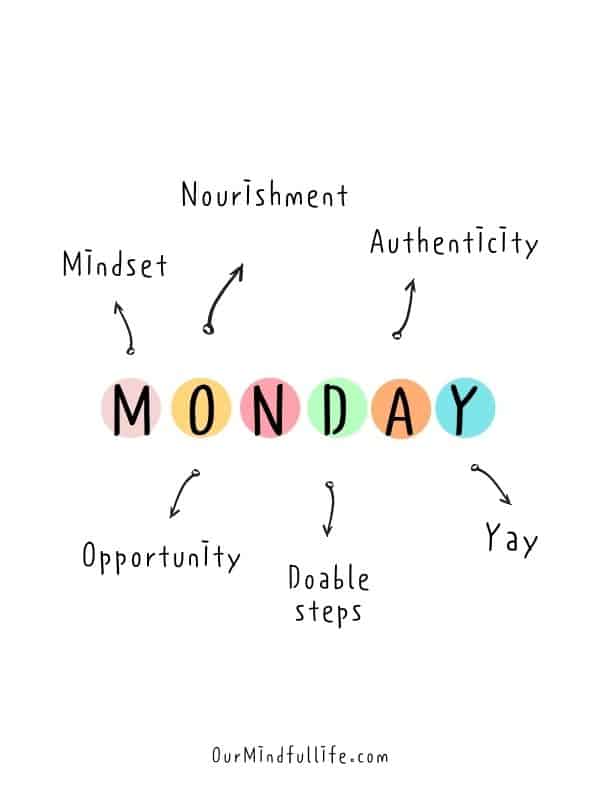
So here are some quotes that can motivate you and make your week better.

Poetry: Expressing Emotions through the Beauty of Words

Growing up, while I loved to read and would find something to read everywhere and anywhere, I didn’t like poetry. I found them boring and unrelatable. Then, about 3-4 years back, while writing a blog post, instead of an essay, I found myself writing a poem. And from that day, I was hooked. I started reading poetry and understanding it and found the beauty in this writing form.

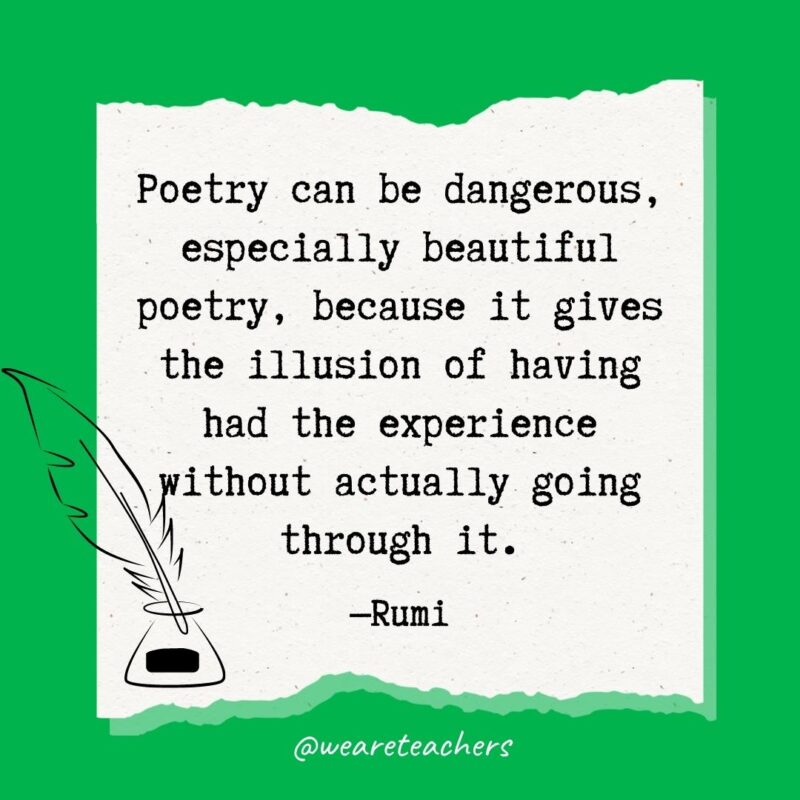
A timeless art of spinning words, poetry has captivated hearts and minds for centuries. It possesses a unique ability to express emotions that often elude ordinary language. The beauty of poetry lies in its capacity to unravel the deepest human sentiments and convey them in ways that prose cannot. Poetry transcends the boundaries of logic and embraces the realm of imagination, allowing one to explore the intricacies of the human experience. The poetic realm is beautiful weaving intricate tapestries of imagery, rhythm, and meaning.

Human emotions are vast and varied, often defying precise definitions. In such cases, poetry becomes a vessel through which the depths of these emotions can be explored and expressed. It has the power to encapsulate the most complex of feelings, such as love, grief, and longing, and present them in a manner that resonates deeply with both the poet and the reader. Through carefully chosen metaphors, vivid imagery, and rhythmic patterns, poetry unveils the intangible, painting emotions in vibrant hues that speak to the heart. It offers solace to those who struggle to articulate their innermost thoughts and provides a sanctuary where emotions can find sanctuary.

Unlike conventional language, which operates within the boundaries of literal meaning, poetry stretches those boundaries, allowing for ambiguity and multiplicity of interpretation. It enables one to tap into the richness of emotions and transcend the limitations of everyday communication. Poetry provides a refuge for the unspoken, the whispers of the soul that cannot be captured by mere words. It offers a sanctuary where paradoxes and contradictions can coexist, where the unsayable can find expression, and where the profound can be glimpsed through the veil of artistry. In this way, poetry acts as a bridge between the tangible and the intangible, the known and the unknowable.

Poetry also showcases the sheer beauty of words, highlighting their rhythmic cadence, melodic qualities, and evocative power. Poets meticulously select words to create a symphony of sounds and sensations, infusing their verses with a musical quality that resonates deep within us. The harmony of a well-crafted poem brings language to life, transforming mere words into instruments of enchantment. Through rhyme, meter, and the delicate interplay of syllables, poetry can transport one to ethereal realms, where words shimmer like stars in the night sky.

Poetry embellishes the essence of words with vivid imagery, painting pictures in the minds of the reader. It employs sensory details to evoke emotions and transport the reader to different times and places. A skilled poet can transform the mundane into the extraordinary, turning everyday objects and experiences into profound metaphors. With a stroke of a pen, a simple rose becomes a symbol of love and beauty, and a rainstorm becomes a metaphor for emotional turmoil. Poetry invites one to see the world through the poet’s eyes, where every word is meticulously chosen to create a vivid tapestry of emotions, colours, and sensations.

Poetry embraces the power of brevity, distilling complex ideas into concise and impactful phrases. A single line or a carefully crafted metaphor can hold within it a world of meaning, encouraging the reader to pause, reflect, and uncover hidden truths. It encourages the reader to embrace the economy of language, stripping away unnecessary words and leaving behind the essence of the message. In this way, poetry showcases the power of words, emphasising that it is not the quantity but the quality of expression that truly matters

An extraordinary art form, poetry enables the reader to express emotions that elude conventional language. It provides a sanctuary for the inexpressible, a canvas upon which the reader can paint the colours of their souls. Through carefully chosen words, poetic devices, and vivid imagery, it captivates the senses and reveals the depth and complexity of the human experience. The beauty of poetry lies in its ability to transcend the ordinary, to evoke emotions that cannot be contained within the confines of prose. It beckons one to explore the vast tapestry of human emotions and invites them to see the world through the eyes of a poet.

So take some time today to immerse yourself in the enchanting world of poetry, where words dance on the page and emotions find their voice.