Poem: Ode to a Saree

The saree is a timeless traditional Indian garment which is more or less worn across the country. Each region and state has their speciality and that’s what makes this garment unique. Multiple people will be wearing the same thing, but none of them will be the same. I love to wear sarees, but living outside India, I don’t have as many opportunities to wear them as much as I like. So here’s an ode to that six yards of grace and elegance.

Ode to the Saree

Six yards of pure joy and elegance
Graceful and flowing, full of brilliance
A symbol of a garment’s unwavering importance
Encapsulating the true Indian woman’s essence

Unstitched and long flowing, in multitudes of colours and fabrics
There is saree accounting for all tastes and pocket economics
The saree has stayed its course over centuries
Even today, every Indian woman has many of these beauties

There is a saree that represents every state and region that is a masterpiece
Craftsmen have spent years perfecting their skills and expertise
With embroidery, sequins, motifs, gold borders and intricate pallus
Many sarees have stories to tell, but only if you are not too obtuse

From the Kashida of Kashmir to the Muga of Assam
From Gujarat’s Patola to Tamil Nadu’s Kanjivaram
The saree is even today essential in every bride’s trousseau
The outfit guaranteed to bring out that very special glow

Modest and sexy, feminine and demure
It’s all in the drape you see, that special allure
Timeless in fashion, ancient, yet contemporary
No wonder the saree is a style statement always in trend

The Future of Work in a post-COVID World

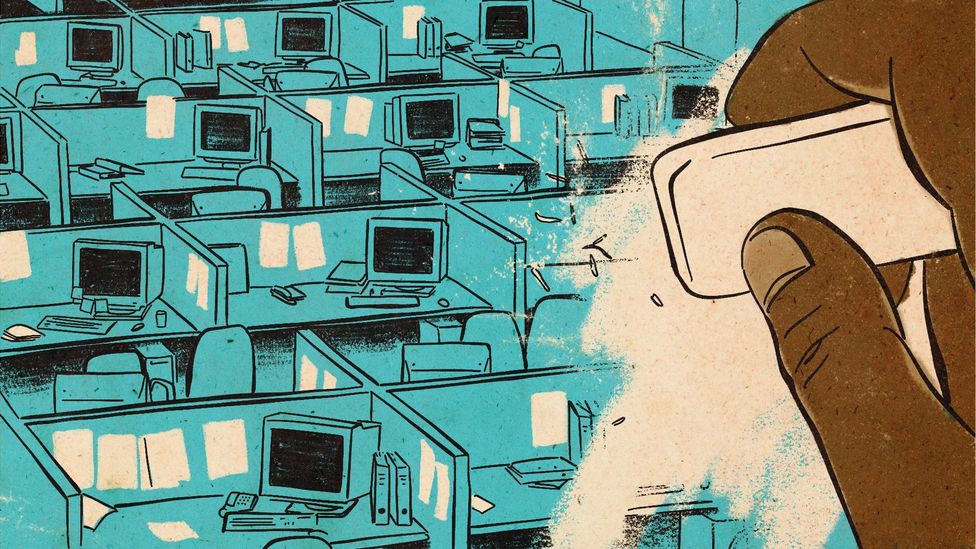
When COVID hit in early 2020, the world was in shock, especially with the lockdowns and cities shut down. Workplaces became empty and many city centres which were dominated by towering skyscrapers filled with office spaces became ghost towns. COVID has dramatically changed the way we live and work and affected virtually every element of life.

COVID has been the most significant, and perhaps the most traumatic, experience of our lives. It will have a huge impact on us as individuals, as a society and as a workforce. And even when this crisis ends, things will never be back to normal. We will live in a completely different world and that will be the new normal.

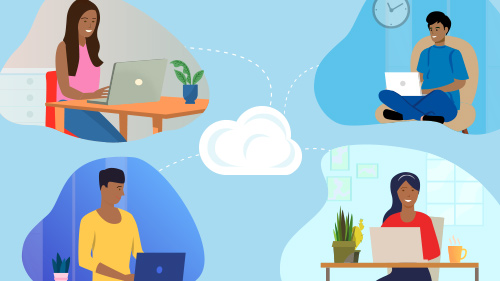
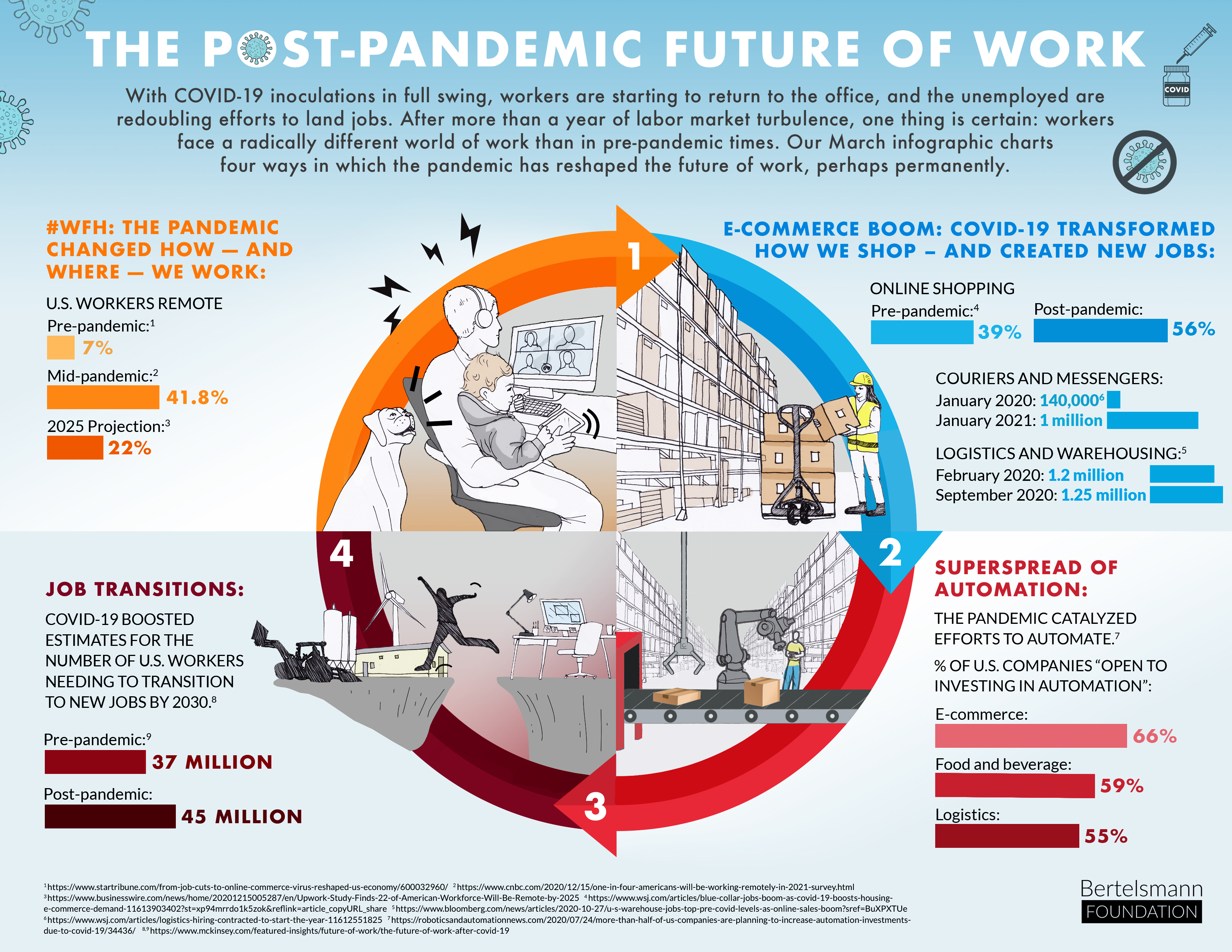
The abrupt closure of many offices and workplaces ushered in a new era of remote work for millions and has shown a significant shift in the way a large segment of the workforce operates in the future. Most of those who say their work responsibilities can mainly be done from home say that, before the pandemic, they rarely or never teleworked. Very few could work from home all or most of the time, but today more than half of such people are doing their job from home all or most of the time. And more than half say, given a choice, they would want to keep working from home even after the pandemic.

While not seamless, the transition to working from home has been relatively easy for many with most of them saying it has been easy to instal the technology and get hold of the equipment to do the job. Most also say it’s been easy for them to meet deadlines and complete projects on time, get their work done without interruptions and feel motivated to do their work.

Many of us, especially those of us who are technologically challenged, had to adjust to new technologies and learn new ways of interacting with colleagues and friends. Zoom and other video conferencing apps became part of our lexicon and we learnt to find those corners at home which would not reveal the mess behind.

The idea of working at home in itself is not a new concept with many, especially those in the IT sector working from home is an old concept. I read somewhere that working from home or telecommuting has grown by as much as 173% since 2005 due to improvements in technology, innovation and communication. As a result, more than half of employees have a job where at least some of what they do can be done from home.  A 2019 Owl Labs report found that as many as 80% of employees wanted to work from home at least some of the time, before the crisis. Flexibility is one of the top-ranked work benefits amongst the millennial workforce and pre-crisis, more than a third of employees would go so far as to change jobs if they had the chance to work from home, whilst over a third would take a pay cut of up to 5% to work at home some of the time. Today, these figures will most likely have gone up.

Remote work and virtual meetings are likely to continue, albeit less intensely than at the pandemic’s peak. Many companies have transitioned to hybrid work culture and many organisations have decided to reduce their office space. As a result of this demand for restaurants and retail in downtown areas and areas with a concentration of office spaces as well as for public transportation may decline as a result. And while working on this post, I decided to check on job sites and saw that now there are many full-time remote opportunities in sectors that traditionally did not offer it like IT. This means that in countries with smaller cities and rural areas, when people can work anywhere, reverse migration can and is taking place. I have heard of people moving out of the big Indian cities like Mumbai and Bengaluru and going back to their hometowns so they can be with family and yet earn the income they were already earning. I remember reading an article about professionals renting large apartments in places like the seaside and the hills and with access to high-speed internet, they were able to have a much better lifestyle and standard of living.

Remote work has also put a dent in business travel as its extensive use of videoconferencing during the pandemic has ushered in a new acceptance of virtual meetings and other aspects of work. While leisure travel and tourism are rebounding, and are likely to rebound after the crisis, McKinsey’s travel practice estimates that about 20% of business travel, the most lucrative segment for airlines, may not return. This would have significant knock-on effects on employment in commercial aerospace, airports, hospitality, and food service. E-commerce and other virtual transactions are booming.

Many consumers discovered the convenience of e-commerce and other online activities during the pandemic. In 2020, the share of e-commerce grew at two to five times the rate before COVID-19. Roughly three-quarters of people using digital channels for the first time during the pandemic say they will continue using them when things return to normal, according to McKinsey Consumer Pulse surveys conducted around the world. Other kinds of virtual transactions such as telemedicine, online banking, and streaming entertainment have also taken off including online doctor consultations. This shift to digital transactions has propelled growth in delivery, transportation, and warehouse jobs. In China, e-commerce, delivery, and social media jobs grew by more than 5.1 million during the first half of 2020.

Many companies deployed automation and AI to reduce workplace density and cope with surges in demand. Research finds the work arenas with high levels of human interaction are likely to see the greatest acceleration in the adoption of automation and AI. Hiring has also changed. Today, the default way of interviewing potential candidates is by video call when only a few months ago the default was face-to-face interviewing.

So what does this mean moving forward? It means that for employees, the chance to balance work and home will be important. Now that the world has shown that regular remote and flexible work can be productive without disrupting or undermining established ways of working, it will be the new normal going forward. A lot of people, especially introverts who do not need to showcase their gregariousness and be extroverts, can showcase their productivity and prove their mettle. There are already reports of the positive impact that more frequent, structured and focused communication is resulting in increased collaboration, teamwork and support. Now that more people have had a taste of it and proven their productivity, it will be hard for companies to take it away from their talent. A Gallup survey revealed that 54% of U.S. workers would leave their current job for one that allowed them to work remotely. And while professionals were celebrating their 30-second commute, it became clear to companies that the huge line item on their spreadsheets for real estate may not be the best way to spend their money. Having people work from home, even if it’s not everyone all the time, is proving to be profitable.

Flexibility will be the new mantra—where people will be given more freedom to choose to work from home. Some people missed the commute and cherished their in-person connections, so the new normal will be increased flexibility. Conference rooms, meeting spaces and video studios will take up a lot of office space with the workplace becoming a far more social environment, not a lock myself in the office scenario. It will be designed to foster and promote interaction and community engagement, taking advantage of the times talent is collocated in one place.

Many professionals found working from home a challenge not because of isolation, but because they didn’t have the ideal space or a dedicated home office. They didn’t have a Zoom-ready spot for video meetings. A study reports that the majority of survey respondents cited a lack of proper technology for remote work that hindered their success and productivity. One of the biggest challenges people experienced while working fom home was internet performance. According to a survery by WhistleOut, a company that provides information about mobile phone and internet services, 35% of adults who transitioned to working from home said that weak Internet has prevented them from doing their work at some point during the coronavirus crisis and 43% said they have had to use their phone as a hotspot during the crisis. Internet in homes will improve, and home offices and even home video studios will become a priority. As new homes are built or existing ones are remodelled, a home office will be the top priority for

Post COVID-19, e-learning will become a bigger part of ongoing learning. In-person learning won’t go away, but it’ll be reserved for certain functions and certain populations within the company. Face-to-face learning will likely be just a small element of a learning curriculum. Ramping up their e-learning platforms, companies moved quickly to ensure that their people were still building important skills and developing professionally.

Video is at the heart of many of the changes above. The developers behind Zoom, WebEx, Hangouts, Skype and other video communications tools made the grand work-from-home experiment possible. The video became fully integrated into the work experience in an astonishing variety of ways. As supervisors and staffers have gotten used to seeing each other in their natural habitats, the line that separates work life and personal life has faded. Ironically, technology has made this transition possible, but it has also led to a decidedly low-tech reality: this new corporate world has made us value our organic, non-robotic humanity more than ever before.

The shift to remote work led to the complete collapse of the work-home boundary, especially for parents juggling child care and homeschooling with job demands. Poorly timed or endless Zoom meetings interfered with people’s ability to get work done and sometimes harmed relationships with colleagues. At the same time, people, especially those with comfortable home offices and few parental responsibilities, found benefits in working remotely. Being on their own gave them greater control with fewer distractions. The absence of commuting gave people more time and energy while saving them money. People who had been working in unpleasant or hostile workplaces were now free from disrespectful encounters.

The Coronavirus pandemic has seen a sharp rise in mental health issues. While this is in no way a positive outcome, it has resulted in businesses focusing more closely on employee’s mental wellbeing. Companies are doing more than ever to protect and promote positive mental wellbeing among teams; a trend that will continue even as the world returns to normal. People burn out because their employers have not successfully managed chronic job stressors.

The pandemic has taught many people that the job does not have to be the way it was. This realisation may be one reason that many are not going back to their old jobs. The workplace must change. So as we transition to a new normal of working, it is with the hope that many of these positive work outcomes such as a greater focus on mental health and wellbeing, more freedom and flexibility for employees and outstanding innovations will keep workforces happy and healthy while businesses will remain creative, responsive and successful.

Climate Change: Happening Here, Happening Now

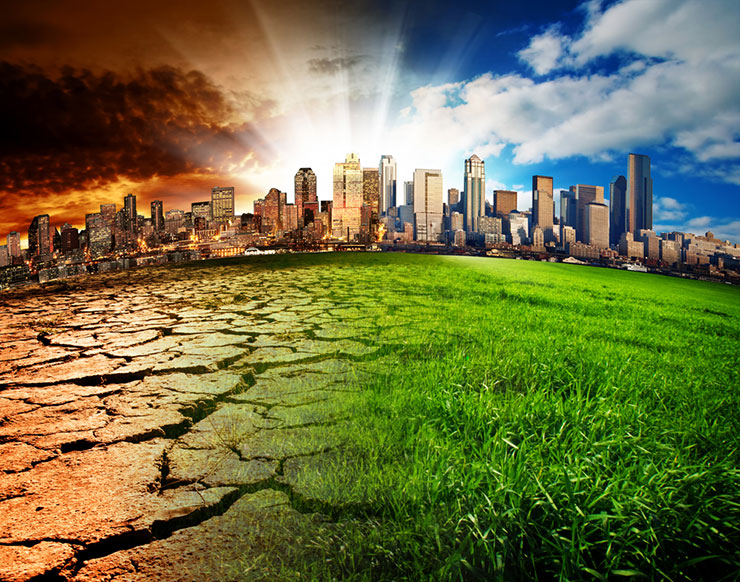
Over the past few months, the heat in Singapore has been crazy. And it’s not just Singapore, I have been hearing about weird climatic conditions from many parts of the world and the newspapers were full of unprecedented weather conditions and climate change and its effects on mankind. So I decided to read up more about what this is all about so I am better prepared to deal with it.

The United Nations defines climate change as the long-term shifts in temperatures and weather patterns. These shifts may be natural, such as through variations in the solar cycle. But since the 1800s, human activities have been the main driver of climate change, primarily due to burning fossil fuels like coal, oil and gas.

Climate change destabilises the Earth’s temperature equilibrium and has far-reaching effects on human beings and the environment. A distinction is made between the direct and indirect effects of climate change. During global warming, the energy balance and thus the temperature of the earth change, due to the increased concentration of greenhouse gases, which has a significant impact on humans and the environment.

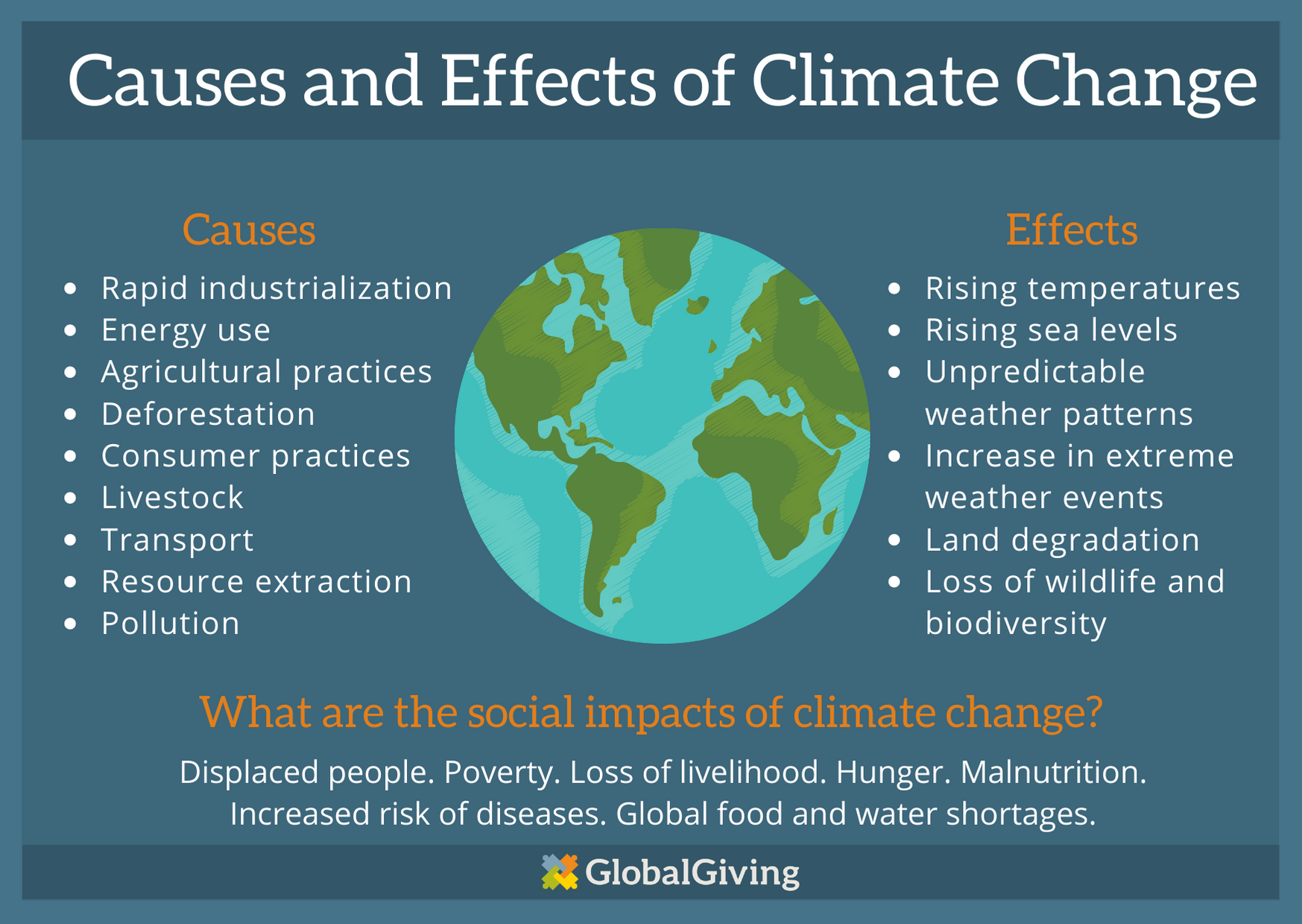
Burning fossil fuels generates greenhouse gas emissions that act like a blanket wrapped around the Earth, trapping the sun’s heat and raising temperatures. Examples of greenhouse gas emissions that are causing climate change include carbon dioxide and methane. These come from using gasoline for driving a car or coal for heating a building, for example. Clearing land and forests can also release carbon dioxide. Landfills for garbage are a major source of methane emissions. Energy, industry, transport, buildings, agriculture and land use are among the main emitters. Greenhouse gas concentrations are at their highest levels in two million years. And emissions continue to rise. As a result, the Earth is now about 1.1°C warmer than it was in the late 1800s. The last decade between 2011 and 2020 was the warmest on record.

Many people think climate change mainly means warmer temperatures. But temperature rise is only the beginning of the story. Because the Earth is a system, where everything is connected, changes in one area can influence changes in all others. The consequences of climate change now include, among others, intense droughts, water scarcity, severe fires, rising sea levels, flooding, melting polar ice, catastrophic storms and declining biodiversity. Climate change can affect our health, ability to grow food, housing, safety and work. Some of us are already more vulnerable to climate impacts, such as people living in small island nations and other developing countries. Conditions like sea-level rise and saltwater intrusion have advanced to the point where whole communities have had to relocate, and protracted droughts are putting people at risk of famine. In the future, the number of climate refugees is expected to rise.

The effects of climate change and global warming which we see today are irreversible for our generation and it will only worsen in the decades to come. The effects are already here and today we can see glaciers shrinking, ice on rivers and lakes breaking up earlier, trees flowering sooner, unseasonal weather and the shifting of plant and animal ranges. Effects that scientists had predicted in the past would result from global climate change are now occurring like the loss of sea ice, accelerated sea-level rising and longer, more intense heat waves.

According to a study published by the Intergovernmental Panel on Climate Change, the range of published evidence indicates that the net damage costs of climate change are likely to be significant and to increase over time.  Scientists have high confidence that global temperatures will continue to rise for decades to come, largely due to greenhouse gases produced by human activities and forecast a temperature rise of 2.5 to 10 degrees Fahrenheit over the next century. The extent of climate change effects on individual regions will vary over time and with the ability of different societal and environmental systems to mitigate or adapt to change.

The direct consequences of man-made climate change include rising maximum temperatures, rising minimum temperatures, rising sea levels, higher ocean temperatures, an increase in heavy precipitation including heavy rain and hail, an increase in the proportion of violent tropical cyclones, an increase in aridity and drought, a decline in Arctic sea ice and snow cover, glacier recession and retreat and thawing permafrost.

The indirect consequences of climate change, which directly affect us humans and our environment, include an increase in hunger and water crises, especially in developing countries, threats to livelihoods from floods and forest fires, health risks due to an increase in frequency and intensity of heat extremes, economic implications of dealing with secondary damage related to climate change, the increasing spread of pests and pathogens, the loss of biodiversity due to limited adaptability and adaptability speed of flora and fauna, ocean acidification due to increased bicarbonate concentrations in the water as a consequence of increased carbon concentrations and the need for adaptation in all areas including agriculture, forestry, energy, infrastructure and tourism. Many changes, especially changes in the ocean, ice sheets and global sea level, due to past and future greenhouse gas emissions over centuries to millennia, are irreversible. Sea levels will continue to rise and are expected to increase by one to eight feet by 2100 and the Arctic Ocean is expected to become essentially ice-free in summer before mid-century.

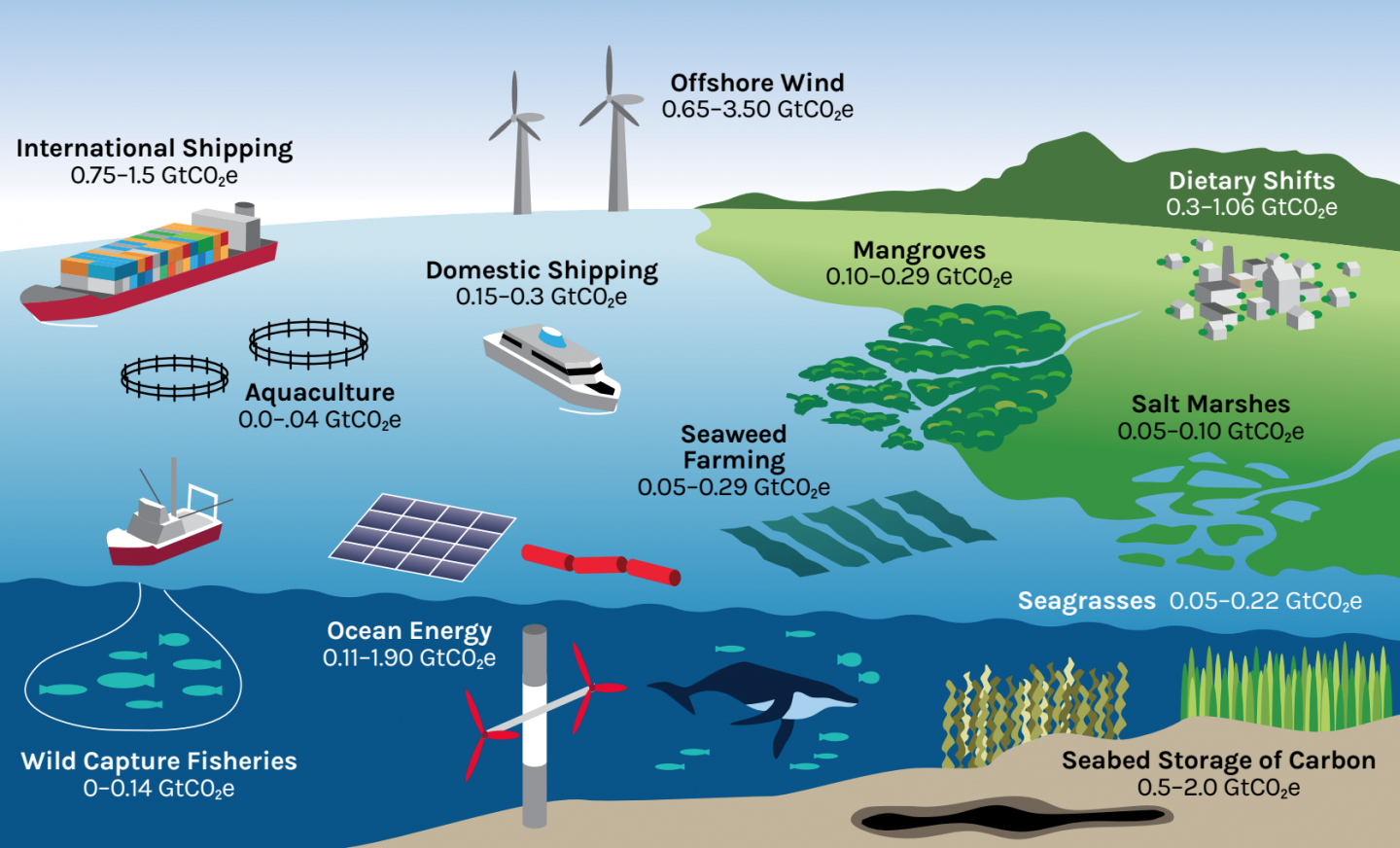
This sounds so dire and leaves a very uncertain world for future generations, but what can be done? Transformation in nearly all facets of our economies is necessary. The longer we wait to implement it, the more radical and impossible it will appear. The good news is that low-carbon energy sources are more affordable than ever. Transitioning the energy sector to clean, renewable systems is often the same price, or cheaper, than sustaining the existing carbon-intensive systems, especially when we consider the damage they are doing to the planet that will also cost billions to recover from or adapt to. Transforming the way we feed the planet is crucial, too. Unsustainable agriculture is a primary driver of deforestation, which in turn destroys wildlife habitats, increases carbon emissions, erodes income sources for local communities, and increases our risk of pandemics. Moving agriculture to sustainable practices can benefit food security and biodiversity, all while slashing emissions. It would be a win-win for people and nature. Restoring and expanding ecosystems like mangroves can not only help absorb and store carbon, but also protect from extreme weather, economically sustain communities, and preserve some of the world’s most biodiverse ecosystems.

Finally, across all sectors one of the biggest lacking pieces is finance. Today’s investments are currently three to six times lower than they need to be by 2030 for climate solutions to be at scale with the magnitude of the crisis. As economies are recovering from COVID-19, governments have a prime opportunity to inject funds into transformative climate action and international cooperation for a brighter future.

Collective power has extraordinary strength. Combining our voices to call for transformational climate action can influence political leaders, industries, and businesses that are the top decision-makers on whom cutting carbon emissions depends. We must cut emissions and enact a just transition to a clean, renewables-powered economy. We must take advantage of existing climate solutions by putting more money behind them. Developed countries must take accountability for their far-outsized contributions to the climate crisis and lead this transformation. Let’s not wait any longer, but act now, there is still time – for people, for the planet, and a brighter future.

Friends in the workplace – Yes or No

Friendships are beautiful and a good friend with whom you can vent and share problems and who listens without judging is invaluable. A workplace on the other hand is one which for many is fraught with pitfalls and because it’s a place where we spend the majority of our time, having a friend there may be good. But is having a work buddy something that one cultivates? Given the time we spend at work, it is inevitable that some sort of friendships at work will be formed.

It’s very natural to look for friends at work, and it’s necessary for professional success. Since we spend most of our time at work, and if we don’t like the people we work with, getting through the day becomes even more difficult. Happier and more productive days will happen if we enjoy the company of our colleagues. Workplace friends improve the good days and make the poor ones bearable. While being social at work will help raise morale and satisfaction, one must also set limits with friendly colleagues.

There’s a lot of evidence that workplace friendships fulfil a basic human need for companionship, and are necessary to some degree. Research has found that it can even fuel greater job satisfaction: In a survey of more than 195,600 employees in the U.S., Gallup found that 20% of them said they had a best friend at work. This was also the group that reported being most engaged and committed to their jobs. But workplace friendships can be tricky, especially between managers and employees, or senior and junior employees. In that scenario, there’s always going to be a power dynamic in play.

While being social can help boost morale and happiness on the job, one needs to set boundaries. Instead of striving for friendships at work, it’s better to be friendly with coworkers, according to some experts who say that ith professional relationships, one can grab coffee or lunch, but not necessarily invite them home for a barbecue or special family events.

Today’s workplace is different from a few years ago with remote work and social distancing making workplace interactions more difficult. Without meeting colleagues and co-working face-to-face, having close friendships will be slim and making work friends will mean an extra effort.

Having a good friend at work one can confide in and commiserate with can be a blessing and while work friendships can be a boon, they can also be a bust. The truth is that many of the work friends we have will end when the job ends. You may keep in touch for a couple of years or so, but over time, you tend to drift apart, because the biggest binder between the two, the company or organisation no longer exists. But there may be a few work friends who transcend the organisation to become true friends, but this is rare and quite far between.

A 2014 Globoforce survey found that people with workplace friendships are nearly three times more likely to say that they love their companies and two times less likely to be poached by another company. But in the throes of a new work friendship, sometimes it’s easier to forget that a work friend is a colleague first and a friend second. So one has to be a bit more careful about what is shared with them as it may come to bite you from behind.

So if you are making work friends or have friends in the workplace, here are some tips on how to deal with them.

Be mindful of oversharing – You may have to share personal information to make friends at work, but you should proceed with more caution than you would for non-work friendships. Remember to always keep it professional and respectful. Share on a need to know basis and be vague. Don’t be dismissive also but keep it professional. Sharing needs to be very nuanced and balanced because on one hand, forging deeper, more intimate relationships requires self-disclosure and vulnerability; on the other hand, if a work friendship spirals downward, the person can use personal or sensitive information against you. Whatever one shares with work friends, make sure you never dislose information that can create animosity, that is stigmatized, or that could get you fired.

Be mindful of the office hierarchy – Be very careful and know that at the end of the day, your boss or your manager is still in charge. Even if your workplace is very laid-back and your manager your age or even younger, they are still the boss and enforce workplace standards. You can be friendly with your manager or someone who manages but be careful about how your friendship affects your professional relationship and how it may be perceived by coworkers. Make sure that others don’t worry that there’s favouritism at play no matter how equitable things are.

Be mindful about confidentiality – You need to be careful about sharing anything with work friends that you’d like to keep secret from your boss. Even if a colleague assures you of their confidentiality, they may and in most cases will reveal your information if someone asks them or if they have a bone to pick with you at a later stage. Before sharing something with a coworker, ask yourself how much would you want others to know and only share what can be freely shared with everyone. And don’t ever write down anything that you don’t want to be saved for posterity. Remember, what happens on the internet, stays in the internet.

Be mindful about resolving disagreements – In every friendship, disagreements happen, but one should not let personal disagreement mess up professional relationships. Having negative relationships with co-workers is a huge predictor of quitting a job and these relationships can be distracting and de-motivating. So if a work friendship is on the rocks, handle it as calmly and professionally as possible, so you can either salvage the friendship or move on calmly, so it doesn’t impact your work life. Identify the source of the conflict and resolve it professionally. Do not spread gossip or rumors, do not try to get coworkers on your side, or cast your friend in a negative light with a supervisor.

Now that we’ve established how to deal with workplace friendships, let’s see what are their benefits. The benefits of work friends go far beyond having someone who is always willing to loan you their stapler. Research shows that employees who get super close with their co-workers are happier at work, more engaged, better with clients, do better work, and are less injury-prone. A Gallup reports that those without a best friend in the workplace have just a 1-in-12 chance of being engaged. When you find the right balance between personal and professional, you reap the rewards of friendships at work.

Finding a colleague you can be close with means having a go-to person to ask for advice and help. It can be less intimidating to ask a colleague for assistance than to run to your boss every time a minor issue crops up. This is an easy way to reduce the learning curve and get up to speed quickly in a new role. It also means having someone to chat with during the day. Companionship makes the work day pass faster. Having a friend you can gab with means you’ll even look forward to coming to the office. A work friend also increases a greater knowledge of the business and opportunities. If either of you leaves your job, you can be a reference to the other. Also, when both of you move on to different roles, your friendship can progress like a natural friendship, and/or you can keep an eye out for opportunities for one another.

Having friends at work can increase job satisfaction, performance, and productivity, research shows. But it should be treated with care and not become too close with colleagues. According to Gallup, getting a job BFF is one of the most significant factors in employee engagement and satisfaction. There is a concrete link between having a best friend at work, and the effort employees expend in their job. Those who have a best friend at work are seven times as likely to be engaged in their jobs, are better at engaging customers, produce higher quality work, have higher well-being, and are less likely to get injured on the job. Women who strongly agree they have a best friend at work are more than twice as likely to be engaged compared with the women who say otherwise.

According to Gallup, women who firmly believe they have a best friend at work are less likely to be actively searching for or monitoring job openings, are more associated with their colleagues, respect what is expected of them, and trust their honesty and ethics and are less likely to record a negative daytime experience, such as workplace stress or feeling tired.

Linkedin said having a friend at work boosts employee satisfaction, employee motivation, and productivity, particularly among your younger employees the ages between 18 and 24 as socialising and friendships are critical for moving up the career ladder, according to 1/3 of Millennials. They also found out that 51% of staff maintain contact with former coworkers, resulting in boomerang employees or increased turnover in poor environments.

When you form friendships with colleagues outside of your immediate teams or department, it pens up to sides of the business you wouldn’t normally be able to access. This can help create a more comprehensive understanding of what the company is working towards, and how other departments operate, reveal some of the organisation’s pain points, and help an organisation’s people grow by learning about and appreciating each other’s experiences.

Unfortunately, not everyone wants to be friends with their coworkers, especially in super-competitive work environments. Some people will use even the slightest tidbit of information to get ahead, so before you begin to share important or personal details with someone, make sure you trust them implicitly. Similarly, social media is not an aspect of your life that you should share with everyone. While in the beginning stages of any work relationship or collaboration, you may not want to give a person access to your Facebook or Twitter pages. You should connect with colleagues on LinkedIn, however. The site was built for professional affiliations, so it would be more than wise to add a colleague, but hold off on giving colleagues access to any site that may house personal or social information. Oversharing details of your personal life and finances can come back to haunt you. Sharing personal details with a colleague who you thought had your back can also damage your career prospects if those details are used against you. Many companies are hierarchical, and when it comes to promotions or project assignments, close friendships can sometimes cause friction.

Friendships at work get even trickier for managers and their subordinates. Managers would not want to make it seem like they are giving one person an advantage or a pass for bad behaviour. Being considered too close with a coworker can reflect negatively on you if your friend isn’t viewed in high regard. You may be tarred by association and hurt assignment and project prospects, or prevent you from being included in confidential news if your peers fear it might be leaked to an untrusted colleague. When a work friend starts venting out too much, you run the risk of getting stuck in a negative cycle. Co-ruminating is the process by which friends repeatedly go over a difficult event or emotion. It brings us together and increases friendship satisfaction, but also decreases well being, kicks up a level of depression and anxiety. You need to watch out for that.”

Employee retention is more critical than ever. Another pandemic side effect has been what analysts call the Great Resignation, which in August 2021 saw 4.3 million workers quit their jobs. Even as the unemployment rate starts to even out, worker attitudes have shifted, and money isn’t enough to keep employees anymore.

Having friends at work can be the bright spot of your workday—as long as you take the proper precautions. Making friends at work is easy, and mostly good for you. Compartmentalising life into work and not-work is stressful and potentially unhealthy in the long term. By managing friendships in a professional setting properly, one can have more fun at work, learn to relax a little, and begin to learn things about themselves and the organisation they’re a part of.

What are your thoughts on having friends at work? Is it a yay or a nay? I’d love to hear from you, so please comment below.

World Chocolate Day

A word that brings a smile to everyone’s face the minute they hear it, chocolate is a food product made from roasted and ground cacao seed kernels, that is available as a liquid, solid or paste, on its own or as a flavouring agent in other foods. Cacao has been consumed in some form since at least the Olmec civilization which existed between the 19th and 11th centuries BCE, and the majority of Mesoamerican people – including the Maya and Aztecs – made chocolate beverages.

Also known as the International Chocolate Day, the World Chocolate Day or just Chocolate Day is an annual celebration of chocolate, occurring globally on July 7, which some suggest was because the day was the anniversary of the introduction of chocolate to Europe in 1550. The observance of World Chocolate Day dates back to 2009.

The seeds of the cacao tree have an intense bitter taste and must be fermented to develop the flavour. After fermentation, the seeds are dried, cleaned, and roasted. The shell is removed to produce cocoa nibs, which are then ground to cocoa mass, unadulterated chocolate in rough form. Once the cocoa mass is liquefied by heating, it is called chocolate liquor. The liquor may also be cooled and processed into two components – cocoa solids and cocoa butter. Baking chocolate, also called bitter chocolate, contains cocoa solids and cocoa butter in varying proportions, without any added sugar. Powdered baking cocoa, which contains more fibre than cocoa butter, can be processed with alkali to produce dutch cocoa. Much of the chocolate consumed today is in the form of sweet chocolate, a combination of cocoa solids, cocoa butter or added vegetable oils, and sugar. Milk chocolate is sweet chocolate that additionally contains milk powder or condensed milk. White chocolate contains cocoa butter, sugar, and milk, but no cocoa solids.

By the 14th century cacao beans were being used as a currency, and in the 1500s Spanish explorers brought chocolate back to Spain where it was sweetened with cane sugar and cinnamon and enjoyed by the elite. When a Spanish princess married French King Louis XIII in 1615, chocolate made an appearance in the French court and quickly spread to other European courts. In 1828 Dutch chemist Coenraad Johannes van Houten invented the cocoa press which revolutionised chocolate making and was the beginning of its popularity spreading from the elite to the masses. The press could squeeze the fatty cocoa butter from roasted cacao beans, leaving a dry cake that could be ground into a powder to mix with other ingredients and poured into moulds to make chocolate. In 1847, the British chocolate company J.S. Fry & Sons created the first solid edible chocolate bar from cocoa butter, cocoa powder and sugar. By 1879 Rodolphe Lindt had invented the machine which produced chocolate with a velvety texture and superior taste. Other advances followed that allowed for the mass production of chocolate and a significant drop in the price that made it more attainable for the middle classes.

Chocolate is one of the most popular food types and flavours in the world, and many foodstuffs involving chocolate exist, particularly desserts, including cakes, pudding, mousse, chocolate brownies, and chocolate chip cookies. Many candies are filled with or coated with sweetened chocolate. Chocolate bars, either made of solid chocolate or other ingredients coated in chocolate, are eaten as snacks. Gifts of chocolate moulded into different shapes like eggs, hearts and coins are traditional on certain Western holidays, including Christmas, Easter, Valentine’s Day, and Hanukkah. Chocolate is also used in cold and hot beverages, such as chocolate milk and hot chocolate, and some alcoholic drinks, such as creme de cacao.

Although cocoa originated in the Americas, West African countries, particularly Côte d’Ivoire and Ghana, are the leading producers of cocoa in the 21st century, accounting for some 60% of the world cocoa supply.

So enjoy the day with some delicious chocolate and share the goodness and sweetness all around.