Aptly nicknamed the Blue Planet, Earth is approximately 71% water of which 96.5% are the Earth’s oceans. The ocean is the principal component of Earth’s hydrosphere, and therefore integral to life on Earth. Acting as a huge heat reservoir, the ocean influences climate and weather patterns, the carbon cycle, and the water cycle. Earth is separated into five oceans, of which the Pacific is the largest, the Atlantic, the Indian, the Southern or the Antarctic and the Arctic Ocean which is the smallest.
Oceans are essential to food security and the health and survival of all life. They power our climate and are a critical part of the biosphere and support humanity’s sustenance. It is the life source of every other organism on earth producing at least 50% of the planet’s oxygen, is home to most of the earth’s biodiversity, and is the main source of protein for more than a billion people around the world. Not to mention, the ocean is key to our economy with an estimated 40 million people being employed by ocean-based industries by 2030.
With 90% of big fish populations depleted, and 50% of coral reefs destroyed, we are taking more from the ocean than can be replenished. To protect and preserve the ocean and all it sustains, we must create a new balance, rooted in the true understanding of the ocean and how humanity relates to it. We must build a connection to the ocean that is inclusive, innovative, and informed by lessons from the past.
Even though all its benefits, the ocean is now in need of support. World Oceans Day is an opportunity to raise global awareness of the current challenges faced by the international community in connection with the oceans. This day reminds everyone of the major role that the oceans have in everyday life.
The purpose of the Day is to inform the public of the impact of human actions on the ocean, develop a worldwide movement of citizens for the ocean, and mobilise and unite the world’s population on a project for the sustainable management of the world’s oceans. The concept for World Oceans Day was originally proposed in 1992 by Canada’s International Centre for Ocean Development (ICOD) and the Ocean Institute of Canada (OIC) at the Earth Summit in Rio de Janeiro, Brazil and in December 2008, the UN General Assembly declared June 08 officially as World Oceans Day.
The 2022 theme is Revitalization: Collective Action for the Ocean. The ocean connects, sustains, and supports us all. Yet its health is at a tipping point and so is the well-being of all that depends on it. As the past years have shown us, we need to work together to create a new balance with the ocean that no longer depletes its bounty but instead restores its vibrancy and brings it new life.
On World Ocean Day, decide to take action for our shared blue planet, with one ocean and one climate, that connects us all to create a better future. By working together, we can — and will — protect and restore our shared ocean and climate.
Also called a pedal cycle, bike or cycle, a bicycle is a human-powered or motor-powered assisted, pedal-driven, single-track vehicle, having two wheels attached to a frame, one behind the other. First introduced in the 19th century in Europe, by the early 21st century, more than 1 billion bicycles were in existence and these numbers far exceed the number of cars, both in total and ranked by the number of individual models produced. Bicycles are the principal means of transportation in many regions and also provide a popular form of recreation and have been adapted for use as children’s toys, general fitness, military and police applications, courier services, bicycle racing, and bicycle stunts. The basic shape and configuration of a typical upright or safety bicycle, has changed little since the first chain-driven model was developed around 1885, but many details have been improved, especially since the advent of modern materials and computer-aided design. These have allowed for a proliferation of specialized designs for many types of cycling.
The bicycle’s invention has had an enormous effect on society, both in terms of culture and of advancing modern industrial methods. Several components that played a key role in the development of the automobile were initially invented for use in the bicycle, including ball bearings, pneumatic tires, chain-driven sprockets and tension-spoked wheels. Although bike and cycle are used interchangeably to refer mostly to two types of two-wheelers, the terms still vary across the world. In India, for example, a cycle refers only to a two-wheeler using pedal power whereas the term bike is used to describe a two-wheeler using an internal combustion engine or electric motors as a source of motive power instead of a motorcycle or motorbike.
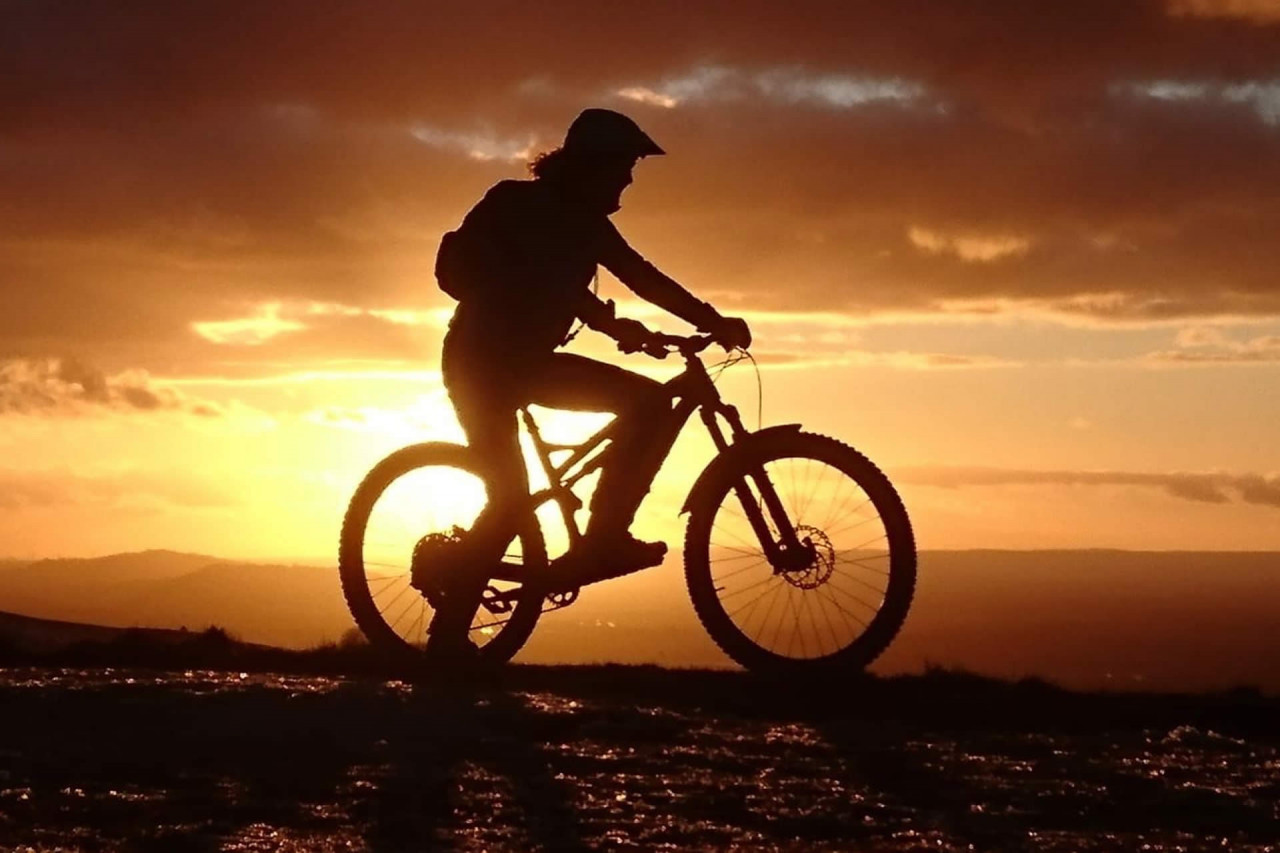
In today’s hustle and bustle, bicycling allows us to exercise our muscles, cut back on fuel consumption as an alternative to driving a car and feel the wind in our hair. Providing a simple and sustainable means of transportation, riding a bicycle rejuvenates our physical and mental health, is good for the economy, and helps the environment. Regular physical activity of moderate intensity – such as walking, cycling, or doing sports – has significant benefits for health. At all ages, the benefits of being physically active outweigh potential harm, for example through accidents. Some physical activity is better than none. By becoming more active throughout the day in relatively simple ways, people can quite easily achieve the recommended activity levels.
According to the World Health Organization or the WHO, safe infrastructures for walking and cycling is also a pathway for achieving greater health equity. For the poorest urban sector, who often cannot afford private vehicles, walking and cycling can provide a form of transport while reducing the risk of heart disease, stroke, certain cancers, diabetes, and even death. Accordingly, improved active transport is not only healthy; it is also equitable and cost-effective. Meeting the needs of people who walk and cycle continues to be a critical part of the mobility solution for helping cities de-couple population growth from increased emissions, and improve air quality and road safety. The COVID-19 pandemic has also led many cities to rethink their transport systems.
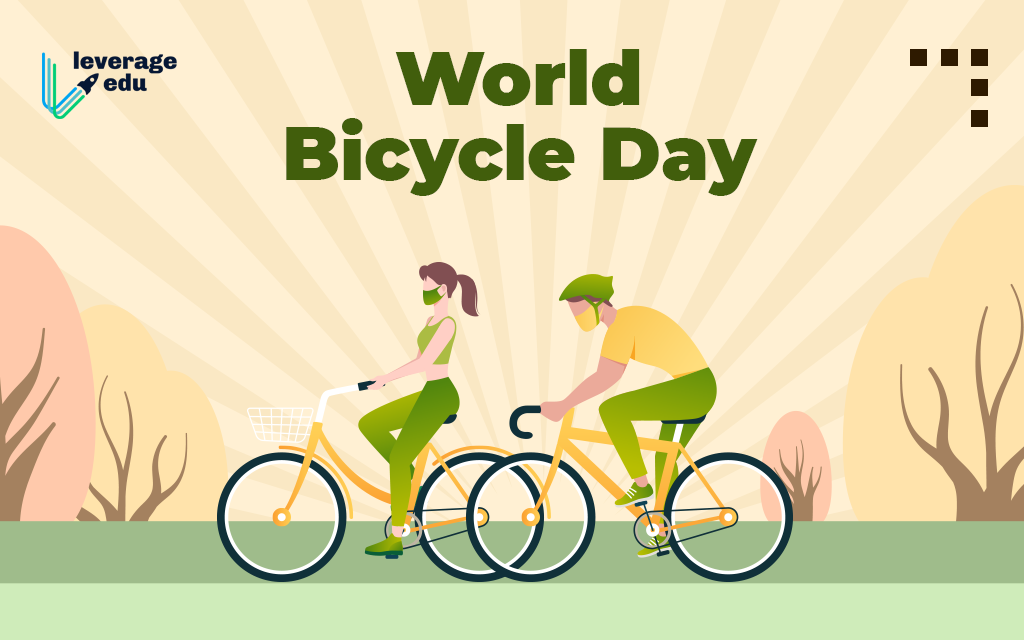
Acknowledging the uniqueness, longevity and versatility of the bicycle, which has been in use for two centuries, and that it is a simple, affordable, reliable, clean and environmentally fit sustainable means of transportation, fostering environmental stewardship and health, the United Nations General Assembly decided to declare 3 June World Bicycle Day. World Bicycle Day draws attention to the benefits of using the bicycle — a simple, affordable, clean and environmentally fit sustainable means of transportation. The bicycle contributes to cleaner air and less congestion and makes education, health care and other social services more accessible to the most vulnerable populations. A sustainable transport system that promotes economic growth and reduces inequalities while bolstering the fight against climate change is critical to achieving the Sustainable Development Goals. Countries are encouraged to emphasise and advance the use of the bicycle as a means of fostering sustainable development, strengthening education, including physical education, for children and young people, promoting health, preventing disease, promoting tolerance, mutual understanding and respect and facilitating social inclusion and a culture of peace.
So ride a bicycle today and celebrate this day in a fun and eco-friendly manner.
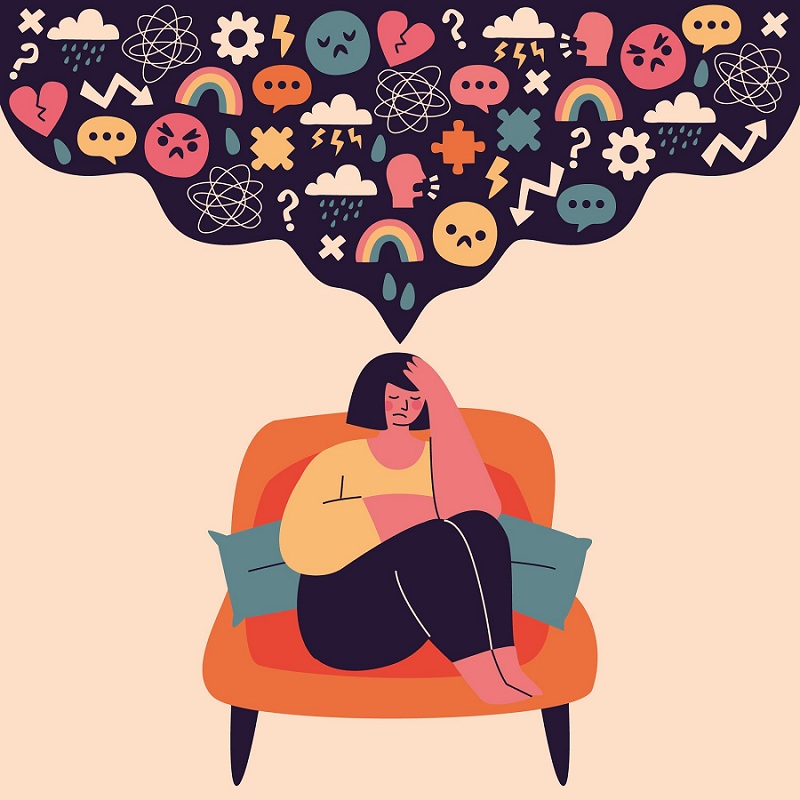
We have been there – we are faced with a decision, it can be a major or a minor one, and start weighing the pros and cons of the choices available. And we think so much, turn every possibility in our heads and weigh on every tiny aspect and the what-ifs so much that we can’t make up our minds. This freezing with inaction is called Overthinking by experts. While it’s human nature to think things through when making a decision or evaluating a situation, it becomes overthinking when you can’t get it out of your head. It happens to all of us at some point in our lives – we all experience events that cause us to worry or stress.
Some people can’t seem to turn their concerns off. They worry about the future, making catastrophic predictions about unlikely events that haven’t happened yet. They also ruminate about the past, beating themselves up about the should haves and could haves. They fret over what others might think of them or let negative self-talk build up in their minds. If I have to summarise overthinking in a couple of sentences, it is that overthinking is when you dwell or worry about the same thought repeatedly and those who overthink can be paralysed by their worries and may struggle to make decisions or take action. Overthinking can be caused by and can contribute to depression, anxiety, and other mental health disorders.
Also referred to as rumination, overthinking is when one repetitively dwells on the same thought or situation over and over to the point it gets in the way of their life. Overthinking usually falls into two categories: ruminating about the past or worrying about the future. Those who struggle with overthinking may feel stuck and unable to do much because it’s hard to get the thoughts out of their heads and concentrate on anything else. According to experts, about 73% of 25 to 35-year-olds chronically overthink, along with about 52% of people aged 45 to 55.
Overthinking is unproductive but not the same as being stressed or worried about a specific circumstance. Having a lot of thoughts about a stressful situation in the short term can prompt one to make a move. When one is nervous or stressed, that can sometimes switch on the adrenaline rush and help with the task. Experts believe that even though people of all ages, genders, or personality types might struggle with rumination, those who are motivated by achievement can be more prone to overthinking.
Although not recognised as a mental disorder, overthinking is often associated with other mental health conditions, including depression, anxiety disorders, obsessive-compulsive disorders and post-traumatic stress disorders. One study found a two-way relationship between overthinking and other mental health issues where high levels of stress, anxiety, and depression can contribute to overthinking and overthinking, in turn, may be associated with increased stress, anxiety, and depression.
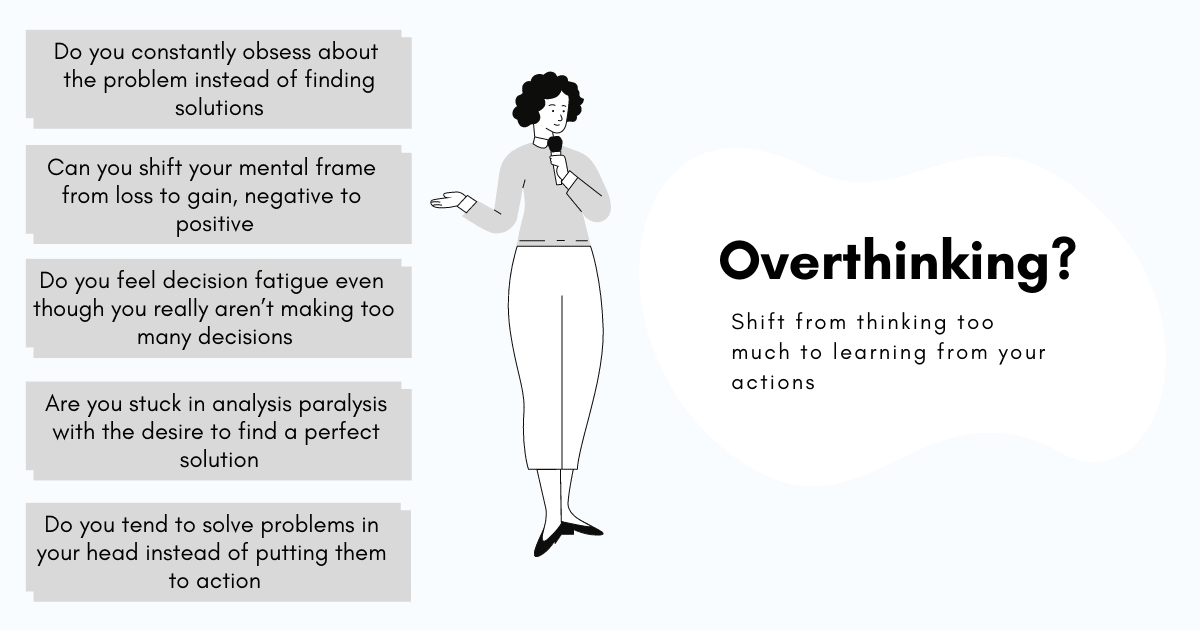
Overthinking a tough decision can also cause problems. Replaying all the options in your head can lead to “paralysis by analysis” – you’re afraid to take the wrong action, so you take no action at all. But even making the wrong decision is better than making no decision. But overthinking is not always bad. Sometimes, overthinking can appear to be a benefit. Running through different scenarios in your head is a good way to make hard decisions, and visualising goals is essential to achieving them. But those are strategies that are employed to reach a specific goal. Overthinking is different, it isn’t rational, and it isn’t part of a larger strategy and in fact, it can interfere with problem-solving abilities.
Overthinking may also cause excessive activity in your brain that can be harmful with one Harvard study finding that this excessive brain activity depletes an essential protein, and that may shorten the human lifespan. There can also be major psychological consequences. Another study found that rumination, a form of overthinking, can lead to anxiety, binge drinking or eating, depression and self-harm.
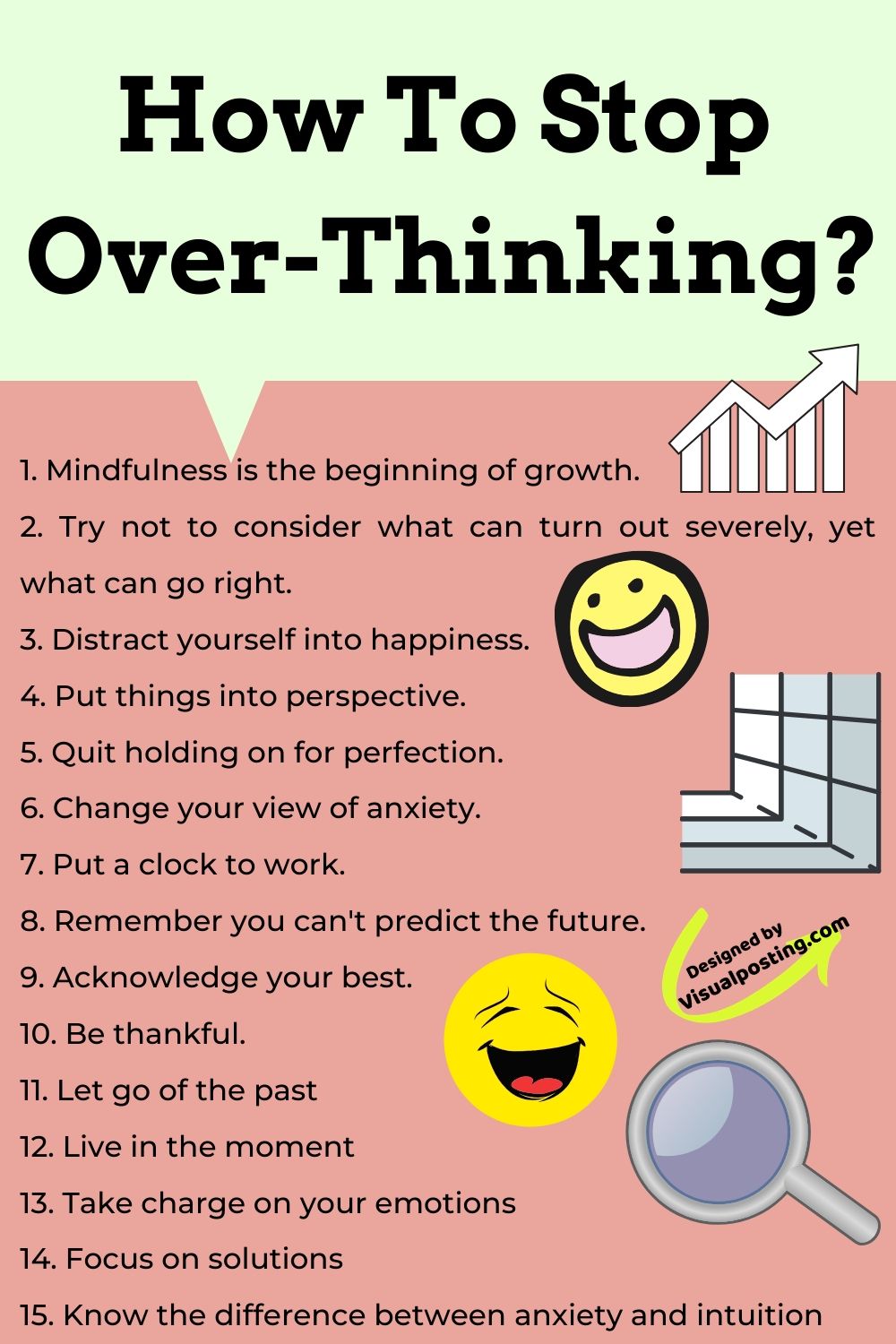
Learning how to not overthink is good for both your body and your mind. Below are some strategies that can help an overthinker stop overthinking.
Keep track of triggers and patterns: A little mindfulness and attention can go a long way toward getting a grip on overthinking. Keep a journal and write down specific moments that cause you to overthink or worry. Soon, you’ll begin to notice patterns and recognise overthinking triggers before they happen which will help in developing a coping strategy for situations that will lead to overthinking.
Challenge your thoughts: The mind does not have to believe everything you think. An effective way to squash overthinking is to challenge worries and ruminations and view them objectively. Calling out overthinking thoughts that are not useful makes them easier to manage.
Get help from family and friends: Asking trusted family and friends for perspectives when you overthink or worry excessively helps to a great extent.
Move your body: Research demonstrates exercise may improve depression, anxiety, and other mental health disorders and also help with chronic overthinking. Even a 5-minute walk can send an influx of good chemicals and hormones, like endorphins, to our brain. Physical movements might also help shift the nervous system out of fight-flight-freeze mode and may help calm any trauma-related rumination.
Seek professional help: If overthinking seems to be taking over your life, it might be good to see a mental health professional. If left unchecked, the stress associated with overthinking may lead to physical health symptoms such as headaches, fatigue, digestive issues like nausea or diarrhoea and difficulty in sleeping.
Retrain the brain: When the brain is at rest, the areas that light up are the problem-solving areas and areas associated with self-referential thinking. So, when left to its own devices, the brain will overthink, and this means, you have to train your brain to do otherwise — particularly if you’re overthinking at certain times, like before bed. It’s possible to reprogram that habit with other mind-clearing activities instead.
Meditate: Attention training is a meditation technique that can benefit people with anxiety and depression and the easiest way to practice it is to focus on something completely mundane and routine, like washing dishes or folding laundry. When one directs the attention to the task in a way that may even feel hyper-focused and zero in on observing themselves and any sensations that arise, that laser focus can help quiet other intrusive thoughts in the head.
Do a brain dump: Journaling is a helpful way to get thoughts out of the head so they’re not overwhelming. Another way that helps is creating to-do lists which can be as detailed as one likes and if on the phone, can be with someone always. This is especially useful when you are awake at night thinking about things. Once you do a brain dump, rest is easier.
Live in the moment: When you live in the now and stop negative emotions and stop overthinking before it spirals out of control and reset it, it can control overthinking. Breathe and focus on the moment and initially, it will take conscious awareness, but gradually it will help to retrain the brain and soon it will come naturally.
Focus on solutions: Identify problems, but give power and energy to solutions. Once you identify the causes of stress and anxiety, take charge and learn to remove or reduce the stressors from your life. It’s not easy and will take time, but if you are consistent, you will gradually get there.
Tomorrow is World Menstrual Hygiene Day. Initiated by the German non-profit WASH United in 2014, the day is a global day of action with more than 830 partner organisations working together to create awareness and action toward a world without period poverty and stigma. The date of 28 May represents the menstrual cycle which has an average duration of 28 days, with an average of five days of bleeding.
For some, menstruation may be an inconvenience they don’t give much thought to. But for millions of others, this most natural of reproductive cycle functions can equate to abuse because the onset of menstruation may lead to child marriage and sexual violence as well as violations of bodily autonomy; stigma which includes banishment to menstruation huts; missed opportunities where many girls skip school because of pain, discomfort and/or the lack of personal hygiene products; and loss of dignity due to the lack of supplies in humanitarian and refugee settings where even the basics like soap and water are in short supply or unavailable. Poor menstrual hygiene caused by a lack of education on the issue, persisting taboos and stigma, limited access to hygienic menstrual products and poor sanitation infrastructure undermines the educational opportunities, health and overall social status of women and girls around the world. As a result, millions of women and girls are kept from reaching their full potential.
World Menstrual Hygiene Day promotes good menstrual health and hygiene for all women and girls. More specifically, the day breaks the silence, raises awareness and changes negative social norms around menstrual health and hygiene and engages decision-makers to increase the political priority and catalyse action for menstrual health and hygiene at global, national and local levels.
Recently, countries have made sanitary supplies free or tax-free to help fight period poverty. New Zealand, France and Namibia are the latest countries to announce such initiatives after Scotland became the first country to provide period products free to anyone who needed them last year.
The theme of this year’s Menstrual Hygiene Day is Action and Investment in Menstrual Hygiene and Health. The Menstruation Bracelet is a global symbol for menstruation which stands for the commitment to create a world, by 2030, where no woman or girl is kept from realising her full potential because she menstruates. A world where menstruation is just a normal fact of life.
Today, millions of women and girls around the world are stigmatised, excluded and discriminated against simply because they menstruate. In 2022, it’s no longer acceptable that a natural bodily function prevents women and girls from getting an education, earning an income and fully and equally participating in everyday life. On this day, we should break the taboos and end the stigma surrounding menstruation and raise awareness about the challenges regarding access to menstrual products, education about menstruation and period-friendly sanitation facilities.
In today’s Grandmother Tales, the spotlight is on my maternal grandmother whom I also called ammama just like my paternal grandmother. And following me, all my maternal cousins also called my grandmother ammama while their paternal grandmothers used to be called pati, the traditional moniker for a Tamil grandmother
We lost my K ammama last December at the age of 91 and this was a huge blow to all of us. Because of COVID restrictions, none of us had met her in over two years and I was stoked to be able to meet her when I planned my India trip in January, but it was not meant to be. My mother had met her in September and she was so thankful to have made that trip because otherwise, she would have lived with the regret of not meeting her mother even though they both lived in the same country.
Ammama lost her mother when she was about 9 or 10 and she and her younger brother were brought up by per uncle and aunt (her father’s older brother and his wife). Her father was a teacher and retired as the principal of a school in the south. She was a very petite lady and barely came up to my shoulders, but had a superb work ethic, one that I can only hope to emulate. Even at the age of 91, she would work tirelessly until late at night, finding something or the other to do, instead of just sitting down and wasting time.
She was married to my tatha or grandfather when she was about 18 or so and moved to what was then Bombay. Initially, they lived in a joint family, but when everyone’s family grew, they moved to a one-room apartment. My tatha worked for Indian Airlines on the operations side and so had to work shifts. They had four daughters, of which my mother was the oldest. After the youngest daughter was born, they gave her to her childless sister-in-law (my tatha’s older sister) who lived nearby to raise her. There was no legal adoption done and my aunt used to call her adoptive parents uncle and aunt and my grandparents as mother and father but lived separately. The sisters used to meet daily and knew of their relationship, it’s just that this aunt was raised in a different building. My grandmother always yearned for a son and so my male cousins quickly became her favourite, but we girls never really minded this.
Growing up, of all the sisters, only my mum lived the closest and so my sister and I spent many holidays at ammama’s house. I remember the times when we were in kindergarten and the early primary school years when my mum would come to school during dismissal time to pick us up and take us to our grandmother’s place. We would spend the whole day there and go back home after dinner when my dad would come to pick us up.
When I was moving from grade 9 to 10, I had tuition in the summer holidays, so after spending a couple of weeks in Bengaluru, I took my first flight alone back to Mumbai where my grandfather picked me up and I stayed with them for the rest of the summer until my mum and sister came back from their holiday. My father came home earlier, but he lived at home while I was at my grandparent’s house and used to travel to my tuition centre daily.
One of my best friends lived next door to my grandparents’ home and my grandmother used to always complain that when we visited, I used to pop in, say hello, leave my shoes and then run to my friend’s house. I have so many memories of playing with her all day and when I stayed overnight there, late into the night. We played so many games and had so many heart-to-heart talks. I am still in touch with her and used to go and visit her parents every time I visited Mumbai until they passed away.
I was in my teens when my grandparents moved to Chennai after my grandfather retired. They were able to sell their small flat for a larger flat so they could finally enjoy the space in their retirement years. When they moved to Chennai, we used to split our holidays between their home and my other grandparents’ home in Bengaluru. I remember taking the train to Chennai, spending a couple of weeks there and then taking the overnight mail train to Bengaluru where my grandparents used to wait at the Cantonment station.
My grandmother had a great work ethic and I remember waking up at almost midnight when we used to stay over and see her either cleaning the kitchen or some other work because she could not sleep. And even just a few days before she fell and had to be hospitalised, she was working daily, cooking and cleaning. She was very particular about cleanliness and would spend hours making sure everything was spotless and in its correct place. She was also very particular about other things in her life and would spend hours making sure her clothes and her children and grandchildren’s clothes were clean, and neat and would immediately stitch anything that needed stitching.
In the last few years of her life, she slowed down considerably. She lived alone in Chennai for a few years after my grandfather passed away and then moved to Bengaluru to live with my mum’s third sister. And then after her second daughter’s husband passed away and my aunt had some issues, both physical and mental, she moved in and started looking after her daughter. She spent almost 10 years with this particular daughter and my aunt has been especially hit hard by her death.
When she died, because of COVID, nobody could go down and see her one last time. But thanks to technology, we were able to see her death ceremony rituals streamed live and even though it was via my phone and laptop screen, we all could see her one last time. When I was in Bengaluru earlier this year, my aunt who also lives in the same community as my parents and I spoke a lot about my grandmother and shared so many memories. This is the same aunt with whom my grandmother lived before she moved in with my second aunt. I was quite heartbroken that I could not see my grandmother one last time, and missed her by just about a month.
Writing this blog post has been quite cathartic and I found myself smiling at memories of my ammama and also shedding a few tears. Thanks for reading and allowing me to share some memories of my maternal grandmother. If you haven’t yet, but want to read my memories about my paternal grandmother, click here, hereand here.







 Memories and Such