Poem: Mountains

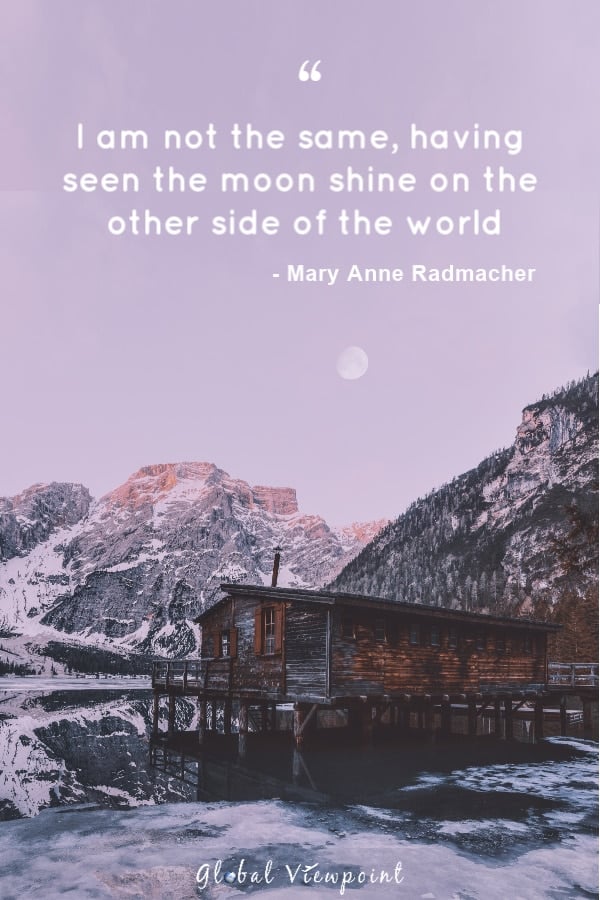
Many of us are drawn to the mountains. One reason could be that they have stood for aeons, and are probably as old as Earth itself. And it’s human nature to be drawn to that which is bigger and grander than us. So here’s a small poem which expresses what I think about mountains.

Poem: Mountains

They stand tall, straight and majestic
Like sentries, brooding and mystic, in a scenic land
The sight of which makes one homesick
Because the heart beats in a rhythm that is quick

The mountains seem alone as they stand
And pierce the sky and the clouds with a tip of ice
They dominate the landscape, farm, and land
In a scene that brings to life an alpine paradise

The mountains have stood like this for millennia and see
Wars, famines, droughts, and floods, they have endured it all
As silent spectators, they are witness to all sufferings and prosperity
They see all the comings and goings, and all of the human footfall

The mountains have stood here and will continue to stand
A watchman for the ages, silent, but alert
A huge and indelible part of our land
The mountains are part of every landscape, be it the plains or the desert.

What makes one a Mumbaikar

After doing a similar post for Singapore, on the occasion of India’s 75th Independence Day, I had to do one for the city of my birth, my beloved Mumbai.

A Mumbai resident is known as a Mumbaikar, though when it used to be Bombay, we called ourselves Bombayites. I guess the change from Bombay to Mumbai meant that the word also changed and became the Marathi Mumbaikar where kar is the Marathi word for a resident.

It is said, Mumbai is a city while Bombay is an emotion. Mumbai is full of dreamers and the place where people’s dreams are realised and extinguished. It is said that if one has lived in Bombay and has travelled in the local trains then one can survive in any other city. Officially Mumbai, Bombay is still used interchangeably by many locals.

Mumbaikars live a very fast-paced life and why not, given that the bulk of the population spends a few hours daily just on their commute, whether for school, college or work. I know of friends and colleagues who would spend a minimum of two hours each way on the trains to get to their destination. And speaking of trains, the Mumbai local is the lifeline of the city and if for some reason, trains shut down, the city comes to a standstill. The life of a Mumbaikar, especially one who needs the train to get to work or school revolves around train timings. So their conversations are peppered with train timings and what time to reach the station. And within the train is something that is uniquely Mumbai – the train friends. So what are these train friends? Train friends are those who invariably take the same train as you do daily. Over time, these people become friends. And this is a category of friends who may move outside the train or remain within the train itself.

A Mumbaikar is a perfect amalgamation of pan India. A blend of the North and South and to this is added the Eastern and the Western parts of India which it is already a part of. If you ask a Mumbaikar for directions, you will not be told of the direction in kilometres, but rather the time it will take you to get there. It’s very common to travel long distances to get from one place to the other because unlike other cities, Mumbai is set up in a north-south alignment so this means that long distances are inevitable and this does not faze a Mumbaikar.

Mumbai has one of the highest literacy rates in India,  94.7% which is significantly higher than the country’s average. Though the official state language is Marathi; 16 other major languages are spoken in the city including English. The city is the commercial and entertainment capital of India as well as its most populous city. With a high number of migrants and diverse religious groups, Mumbai is truly a melting pot of cultures. Mumbai can be called the true and first cosmopolitan city of India because this is a city that brings together people of different communities, religions and customs and the city is known for its diversity which can be hard to find elsewhere in India. In any building society, it’s quite easy to see people from many Indian states who live together and celebrate all festivals. The inhabitants of the city can be called a microcosm of India’s population.

The Bambaiya Hindi which is maligned in Bollywood films is a blend of Hindi, Marathi and English. While this brand of Hindi. While the Hindi may not be as pure as what is spoken in Delhi and the northern parts of India, it’s not too bad. What is shown in television and films is an exaggerated version spoken. Neither I nor my family, friends or acquaintances have spoken like this daily.

But at the end of the day, Mumbai has a heart of gold. I have written previously about how the city comes together to help during a calamity or crisis and that is what is important.

A Mumbaikar loves Mumbai, plain and simple and once they identify themselves as a Mumbaikar, they remain one till the end of their lives. I may not travel to Mumbai now as often as I want to, but you can take Mumbai out of my life, but you can’t take the Mumbaikar out of me.

To end this post, an old song which beautifully captures the spirit of Mumbai, though it was Bombay then. This song is from the old classic C.I.D which was released in 1956 and starred Dev Anand and Waheeda Rehman in the leading roles. And this shows you how Bombay was in the fifties, with trams running and wide, uncrowded roads.

World Elephant Day

I have always loved have been fascinated by elephants and when I heard there is a day dedicated to them, I knew this was a post I had to write since today is World Elephant Day.

The largest existing land animal, three living species of elephants are currently recognised: the African bush elephant, the African forest elephant, and the Asian elephant. African elephants have larger ears and concave backs, whereas Asian elephants have smaller ears and convex or level backs. The distinctive features of all elephants include a long proboscis called a trunk, tusks, large ear flaps, massive legs, and tough but sensitive skin. The trunk is used for breathing, bringing food and water to the mouth, and grasping objects. Tusks, which are derived from the incisor teeth, serve both as weapons and as tools for moving objects and digging. The large ear flaps assist in maintaining a constant body temperature as well as in communication. The pillar-like legs carry their great weight.

Elephants are scattered throughout sub-Saharan Africa, South Asia, and Southeast Asia and are found in different habitats, including savannahs, forests, deserts, and marshes. They are herbivorous, and they stay near water when it is accessible. They are considered to be keystone species, due to their impact on their environments. Elephants have a fission-fusion society, in which multiple family groups come together to socialise. Females or cows tend to live in family groups, which can consist of one female with her calves or several related females with offspring. The groups, which do not include bulls, are usually led by the oldest cow, known as the matriarch. Males or bulls leave their family groups when they reach puberty and may live alone or with other males. Adult bulls mostly interact with family groups when looking for a mate. Calves are the centre of attention in their family groups and rely on their mothers for as long as three years. Elephants can live up to 70 years in the wild and communicate by touch, sight, smell, and sound, using infrasound and seismic communication over long distances. Elephant intelligence has been compared with that of primates and cetaceans and they appear to have self-awareness and appear to show empathy for dying and dead family members.

African bush elephants and Asian elephants are listed as endangered and African forest elephants as critically endangered by the International Union for Conservation of Nature or IUCN. One conservationist has stated that both African and Asian elephants face extinction within twelve years. The current population estimates are about 400,000 for African elephants and 40,000 for Asian elephants, although it has been argued that these numbers are much too high. The WWF reports that Asian elephant numbers have dropped by at least 50% over the past three generations. An estimated 35,000 African elephants are still killed every year for their tusks, according to the African Wildlife Foundation.

World Elephant Day is an annual event on August 12, dedicated to the preservation and protection of the world’s elephants. Conceived in 2011 by Canadian filmmakers Patricia Sims and Michael Clark of Canazwest Pictures, and Sivaporn Dardarananda, Secretary-General of the Elephant Reintroduction Foundation in Thailand, an initiative of HM Queen Siriki. Since then, World Elephant Day is recognised and celebrated by over 100 wildlife organizations and many individuals across the globe. This provides citizens, policy-makers, politicians, and governments a way to create and support conservation solutions that will make the world a safe place for elephants, wildlife, and habitat for future generations to cherish. The foundation uses a neutral approach that allows and facilitates everyone to conduct campaigns that demand cooperation across borders and political lines. The day is a rallying call for people to support organisations working to stop the illegal poaching and trade of elephant ivory and other wildlife products, protect wild elephant habitat, and provide sanctuaries and alternative habitats for domestic elephants to live freely.

The goal of World Elephant Day is to create awareness of the urgent plight of African and Asian elephants and to share knowledge and positive solutions for the better care and management of captive and wild elephants.

The demand for ivory, which is highest in China leads to the illegal poaching of both African and Asian elephants. With the street value for ivory now exceeding that of gold, African elephants face a poaching epidemic. Elephants are also poached for meat, leather, and body parts, with the illegal wildlife trade putting elephants increasingly in danger because it is perceived to be a low-risk and high-profit endeavour. The loss of habitat due to deforestation increases in mining, and agricultural activities has become problematic, especially for Asian elephants. The fragmentation of habitat also creates isolation which makes breeding more difficult and allows poachers to find the elephants and set traps more easily. Asian elephants have lost nearly 30-40% of their habitat, making it incredibly difficult to maintain their offspring and themselves. Human-elephant conflict is a significant concern, as human populations increase and forest cover decreases, forcing elephants into proximity to human settlements. Incidents include crop damage and economic losses, as well as both elephant and human casualties. A lack of legislation regarding the care and treatment of elephants in zoos, circuses, and tourism often leads to their mistreatment and captivity can be a serious threat with Asian elephants often illegally captured in the wild and trafficked into the lucrative tourism industry. A lack of legislation regarding the care and treatment of elephants in zoos, circuses, and tourism often leads to their mistreatment.

Elephants have a vital role to play in shaping ecosystems and are considered a keystone species for the role they play. They trample forests and dense grasslands, supporting the growth of smaller species. They also travel vast distances, dispersing seeds in their dung, and supporting vegetation growth. Some research suggests that elephants could disperse seeds up to 65km, which helps to maintain the genetic diversity of many tree species and prevent local inbreeding. Therefore, elephants are critical to the integrity of the African savanna ecosystems.

So on this day, use your voice to spread the word about these gentle giants and support organisations and solutions to better care for them so they can move away from the critical and endangered lists. And before I go, here are some videos of the cutest baby elepants. Watch and smile!

What makes one a Singaporean

Yesterday was Singapore’s 57th National Day and as I was wondering what to write about the day, I started thinking about what makes one a Singaporean? Birth is one of course, but why do those who consciously become one do it? I know why I did it and you can read my story and journey here and here. While I was undergoing my process, I came across many who didn’t have any connection to the country and probably became a citizen only because of the privileges accorded by the red Singapore passport was far superior to their own birth country. They were not interested in the language of the country and by that I mean not making an effort to integrate and speak English which is the working language and one that brings together all the races, not interested in learning about the history and not even interested in its people.

So what makes one a Singaporean?

The first thing that comes to my mind would probably be words like obedient, hardworking and kiasu. These are words which probably describe a nation in which a competitive citizenry is obsessed with being number one in all that it does. A word that probably describes the Singaporean core perfectly is kiasu. A word that is Hokkien in origin, kaisu means being afraid to lose out and is Singapore in a nutshell. We need to win and be the first in everything, coming second is the equivalent of losing. This also translates to parents being tiger mums and dads who want their children only to get As in school and the only careers worth exploring are as bankers, doctors and lawyers.

The Singapore accent and Singlish are other Singaporean identifiers. When we travel, especially in the region, hearing the accent and Singlish being spoken takes you back home immediately and makes a connection in a foreign land.

Singaporeans are also very dedicated, especially when it comes to getting their favourite meal at the hawker centre or the latest Happy Meal toy, the biggest discount or the latest trend. We can stand in a line for hours just to reach the thing we want.

We are complain kings and queens and that’s probably a national hobby. With smartphone usage at a high, we love taking photos of those who we feel are breaking rules and post them on social media to complain. We blow stuff completely out of proportion just for the sake of our daily dosage of entertainment. Then after we’re done, we move on to the next better topic. But woe toward others, especially foreigners who complain about us or our nation. Then we get together to bash them up.

Singapore is a very safe place. As a woman, I can walk around the country even late at night, something I can’t think of doing in India. When we are out and want to save our seat or chope it as it we call it, we use our belongings to save the seat. So anything from a packet of tissue to an umbrella or even our office name tag or laptop can be left on the table and nobody will dare to dream to pick it up. It may be annoying to get your food and see empty tables, but all filled with tissue packets, but we put up with it and get on with life.

We are also a wonderful blend of old and new as well as traditional and modern. Old heritage buildings lie cheek in jowl with modern glass skyscrapers and it’s not unusual to see people wearing the latest fashions walking alongside those in a traditional kebaya or saree.

And of course, no post about Singapore can end without a note about Singlish and the fact that we can speak an entire sentence incorporating all four of Singapore’s languages. Our need for speed in everything and being first also means we speak so fast that outsiders need a translator when listening to us.

But all said and done, Singapore has its imperfections, but no country is perfect. We have to accept the good and the bad and make it even better together. So let’s get together and be grateful to this little red dot. Happy Birthday, Singapore! May you continue to prosper.

And as I always share, here’s this year’s National Day song. Enjoy…

Festivals of India: Aadi Perukku

Today is Aadi Perukku or Aadi 18, a little-known festival celebrated in the state of Tamil Nadu. Also known as Aadi 18, Aadi Perukku is the monsoon festival celebrated in the month Aadi monsoon festival and celebrated on the 18th day of the Tamil month of Adi, which should be sometime between mid-July to mid-August. The festival pays tribute to water’s life-sustaining properties. Nature worship in the form of Amman deities is organised to shower Nature’s bountiful grace on human beings and to bless mankind with peace, prosperity and happiness.

Aadi is a month of fervour and observances dedicated to the Goddesses related to water and other natural forces where prayers and pujas are offered to propitiate the powerful goddess to seek their protection from the inauspicious aspects that are often associated with the month. No weddings or other similar functions are celebrated during this month. It is during this time that the monsoon peaks on the west coast and the rivers of Tamil Nadu, shrunken in the summer heat, get replenished, often to near full levels. The month of Aadi is the fourth month of the year with the first day of the month, usually falling on 16 July, celebrated as Aadi Pandigai or Aadi Perukku, and an important festival to most Tamils, especially newly-weds.

In India the rivers Ganga and Yamuna, Cauvery, Narmada and Godavari are considered sacred. Just like the earth gives us food, water is considered a sacred necessity to meet the needs of individuals. People began to worship water in the form of wells, tanks and rivers. It is common among people to throw fruits, flowers and saffron cloths when the rivers and lakes are in spate purely based on the belief that these rivers are the species of female deities. Similarly, every temple has sacred wells and tanks, and the water in these resources is considered pure.

Aadi Perukku is a unique South Indian and especially a Tamil festival celebrated on the 18th day of the Tamil month of Adi. The festival coincides with the annual freshness of rivers and pays tribute to water’s life-sustaining properties. It is celebrated near river basins, water tanks, lakes and wells of Tamil Nadu when the water level rises significantly heralding the onset of the monsoon.

Aadi Perukku, also called Padinettam Perukku where Padinettu signifies eighteen, and Perukku denotes rising is a unique occasion dedicated to all the perennial river basins of Tamil Nadu and major lakes water source areas and is intended to celebrate the water rising levels due to the onset of monsoon, which is expected to occur invariably on the 18th day of the solar month, Aadi which corresponds to the 2 or 3 August every year. This festival is observed predominately by women in Tamil Nadu as a water ritual, to honour nature.

The association of this ritual with fertility, sex and reproduction is both natural and human. This water ritual practice is performed on the banks of Rivers, which is described as a rice-cultivation tract. The history of this ritual practice dates back to the ancient period and was patronised by the Kings and royal households. Aadi is the month for sowing, rooting and planting of seeds and vegetation since it is peak monsoon time when rain is showered in abundance.

Apart from people flocking to waterfalls for pre-monsoon and monsoon festivals, people living on the banks of rivers and other water sources offer pujas to the water goddess and river gods so that when nurseries are raised in the fields subsequently and sustained by the northeast monsoon, the crops will be ready for harvest during the Thai Pongal celebration in 5 months in mid-January.

The most visible manifestations of the month of Aadi are the huge kolams or rangolis that are painstakingly patterned early each morning in front of houses. They are usually bordered with red and across the front doorway at the top are strung mango leaves. The first of the month is marked with a special puja, followed by a feast with payasam prepared with coconut milk, boli and vadai.

Aadi Perukku is a day of offerings and prayers to these rivers, which mean so much to the lives and prosperity of the people. The day is an occasion for rejoicing particularly for those living on the banks of all the main rivers, their branches and tributaries. The festival of Aadi Perukku is mainly observed by families living on the banks of the Cauvery River. On this auspicious day, relatives and friends collectively pray for the intermittent supply of water that would ultimately result in a good harvest. The devotees take a dip in the holy water. After the bath, they wear new clothes and perform some rituals at the bathing ghats along the Cauvery River. This is followed by abhishekham or the bathing of the Goddess Kaveri or Kaveri Amman.

A special lamp is prepared using jaggery and rice flour. The lamp is placed on the mango leaves, to which a yellow thread, turmeric and flowers are also added. The lamp is lit by the women and together with its accompaniments is floated in the river. Different forms of rice dishes are prepared and offered to the Goddess. Some of the commonly prepared rice dishes that vary in ingredients, colours or flavours include coconut rice, sweet Pongal, curd rice, lemon rice and tamarind rice. The devotees also worship the sacred river Mother Cauvery with rice offerings, Akshata and flowers. After completing the puja, the devotees eat the feast along the banks of the river with their families. The entire event turns out to be like a picnic on the banks of the Cauvery River.

Young girls observe this auspicious puja together with married women. It is a popular belief that maiden girls who make the offerings of Kaapparisi, a sweet dish made from jaggery and hand-crushed rice, Karugamani which are black coloured beads and Kaadholai which are earrings carved out of palm leaves shall be rewarded with good husbands. Young women play and dance to the tunes of folk songs on the occasion of Aadi Perukku. In some Tamil communities, the sons-in-law are invited on the day of Aadi Perukku and gifted new clothes. There is also a ritual in some districts of Tamil Nadu, wherein the newlyweds spend a month before Aadi Perukku at their parents’ home. Then on the day of Aadi Perukku, a gold coin is added to their Thali or Mangalsutra and they return with their husbands.

Mulaipari or the sprouting or germination of nine grains or navadhanyam in baskets or clay mud pots is a very important ritual which takes place at almost every village Goddess celebration. In its most original form, it is an exclusively women’s ritual and is of great importance to the whole village. The participants of the processions carry earthen pots with grown grains from nine different types of grains inside on their heads and walk towards a river where the contents are dissolved. Before the procession starts, special songs and dances like Kummi Pattu and Kummi are performed. The original meaning of the ritual performance is a request to the village Goddess for rain and the fertility of the land, to secure a rich harvest. The women are involved in large groups significantly implying the fertility of women also ensures the continuity of the human race with peace and harmony through empowered women.

All the year’s major festivals are packed into the six months that follow, culminating with Thai Pongal in mid- January, giving meaning to the Tamil saying, Aadi Azhaikkum, Thai Thudaikkum which means