International Day of Sign Languages

Source

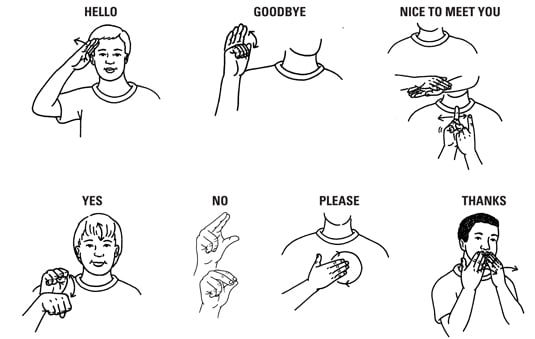
According to the World Federation of the Deaf, there are approximately 72 million deaf people worldwide. More than 80% of them live in developing countries and collectively use more than 300 different sign languages. Each country generally has its own native sign language, and some have more than one. Some sign languages have obtained some form of legal recognition. Wherever communities of deaf people exist, sign languages have developed as useful means of communication, and they form the core of local deaf cultures. Although signing is used primarily by the deaf and hard of hearing, it is also used by hearing individuals, such as those unable to physically speak, those who have trouble with spoken language due to a disability or condition, augmentative and alternative communication, or those with deaf family members, such as children of deaf adults.

Sign languages, also known as signed languages are languages that use the visual-manual modality to convey meaning. Sign languages are expressed through manual articulations in combination with non-manual elements. Sign languages are full-fledged natural languages with their own grammar and lexicon. Sign languages are not universal and they are not mutually intelligible with each other, although there are also striking similarities among sign languages. There is also an international sign language, which is used by deaf people in international meetings and informally when travelling and socializing. It is considered a pidgin form of sign language that is not as complex as natural sign languages and has a limited lexicon.

Linguists consider both spoken and signed communication to be types of natural language, meaning that both emerged through an abstract, protracted aging process and evolved over time without meticulous planning. Sign language should not be confused with body language, a type of nonverbal communication. Linguists distinguish natural sign languages from other systems that are precursors to them or obtained from them, such as invented manual codes for spoken languages, home sign, baby sign, and signs learned by non-human primates.

The Convention on the Rights of Persons with Disabilities recognises and promotes the use of sign languages and makes clear that sign languages are equal in status to spoken languages and obligates states parties to facilitate the learning of sign language and promote the linguistic identity of the deaf community.

The proposal for the International Sign Day came from the World Federation of the Deaf or WFD, a federation of 135 national associations of deaf people, representing approximately 70 million deaf people’s human rights worldwide. So the International Day of Sign Languages or IDSL is celebrated annually across the world on 23 September every year along with International Week of the Deaf to raise awareness of the importance of sign language in the full realisation of the human rights of those who are deaf. September 23 was chosen because it was the day the World Federation of the Deaf was established in 1951 whose main goal is the preservation of sign languages and deaf culture as pre-requisites to the realisation of the human rights of deaf people.

The resolution establishing the day acknowledges that early access to sign language and services in sign language, including quality education available in sign language, is vital to the growth and development of the deaf individual and critical to the achievement of the internationally agreed development goals. It recognizes the importance of preserving sign languages as part of linguistic and cultural diversity. It also emphasizes the principle of “nothing about us without us” in terms of working with deaf communities.

The International Day of Sign Languages was first celebrated in 2018 as part of the International Week of the Deaf while the International Week of the Deaf was first celebrated in September 1958 and has since evolved into a global movement of deaf unity and concerted advocacy to raise awareness of the issues deaf people face in their everyday lives. The day plays an important role in preserving the rights of the deaf community and seeks to maintain the status of sign languages as playing an intrinsic role in the world’s linguistic and cultural diversity, emphasising the importance of good education in sign language, as it is vital to the growth and development of deaf individuals.

The Theme for the International Day of Sign Languages 2021 is We Sign for Human Rights. The other daily themes for the International Week of the Deaf People are Cherishing Deaf History on 20 September, Sustainable Deaf Leadership on 21 September, Sign languages for All Deaf Learners on 22 September, Intersectional Deaf Communities on 24 September, Deaf Culture and Arts on 25 September and Human Rights in Times of Crisis on 26 September.

I’ve been interested in learning the sign language and maybe this day will spur me to learn it. There are many sign languages across the world and I think the American Sign Language or ASL is probably the most commonly used in the world. Singapore uses the Singapore Sign Language or SgSL which was influenced by the Shanghainese Sign Language, American Sign Language, Signing Exact English and locally developed signs. India, on the other hand uses the Indian Sign Language or ISL, said to be influenced by the American Sign Language.

Loving Kindness: Everyone counts and matters

In the last almost one and a half year of meditating, I kept hearing the phrase loving kindness over and over again. I have done the meditation many times, but have been very curious about this and it’s origins, so I decided to find out more.

So what is Loving Kindness? It comes from the word Maitri, a Sanskrit word which in Pali is equivakent to Metta and means benevolence, loving-kindness, friendliness, amity, good will and an active interest in others. The cultivation of benevolence is a popular form of Buddhist meditation and is a part of the four immeasurables in Brahmavihara or the divine abidings meditation. Some small sample studies on the potential of loving-kindness meditation approach on patients suggest potential benefits, however, peer reviews question the quality and sample size of these studies.

Today more than ever, we seem to be living in a world which is characterised by a us versus them mentality. Everywhere, xenophobia and racism seems to be at a peak and we seem to think those who are different than us, or those who disagree with us are not on the same page as us and so should be treated with disdain and be considered as the enemy. This in turn makes us dislike the others, wanting them to not have good lives and all the negative emotions that eventually will turn us into bitter human beings. And then because we dislike and are jelous of people so much, we spiral into lonliness, and this lonliness can happen even if you are surrounded by people. If you can’t engage people authentically, then you are lonely, there is no two ways about it.

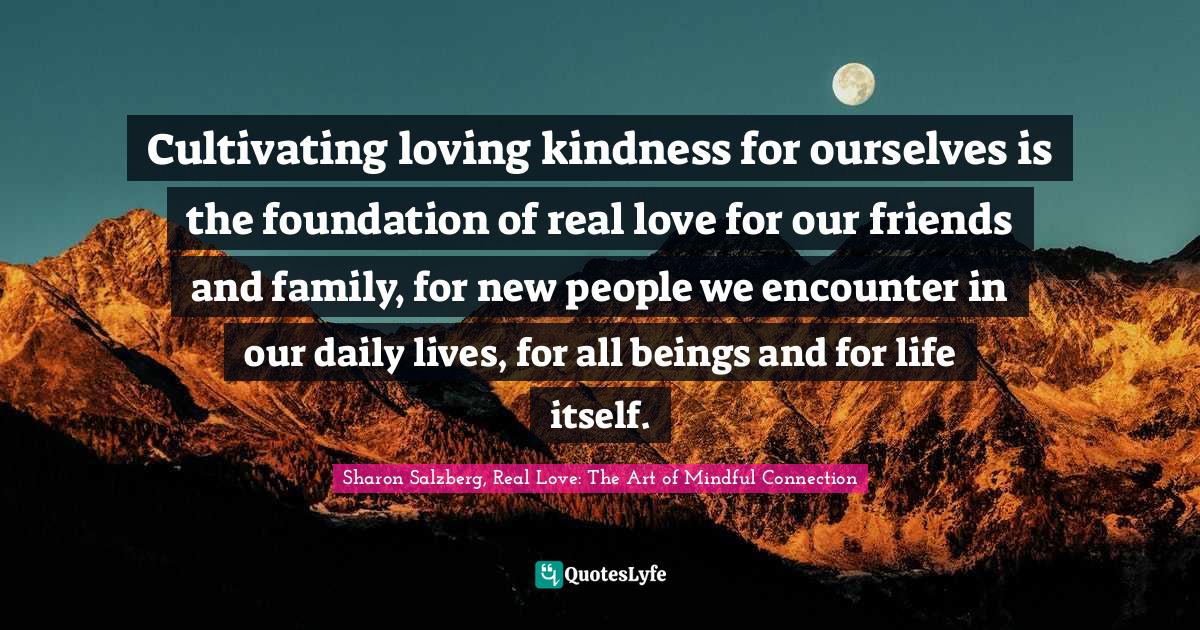
That’s where the practice of Loving Kindness comes in where it about cultivating love as a strength, a muscle, a tool that challenges our tendency to see people, including ourselves as disconnected, statically and rigidly isolated from one another. Loving-kindness is about opening ourselves up to others with compassion and equanimity, which is a challenging exercise, requiring us to push back against assumptions, prejudices, and labels that most of us have internalised.  

According to a study from 2008, mutual trust can catch on and spread between racial groups just as quickly as suspicion can. So just as quickly as we are conditioned to hate someone, we can easily learn to trust someone we perceive as the other.

One does not need to practice Buddhism to practice Loving Kindness and the meditation technique is fairly simple. The meditation can be used to boost well-being and reduce stress with those who regularly practice it able to increase their capacity for forgiveness, connection to others, self-acceptance, and more. Intially the technique feels very weird, but as with everything else we do, as we practice it more, we will get better at sending and receiving love and kindness both to ourselves and to others.

During the loving kindness meditation, you focus benevolent and loving energy toward yourself and others. There are many well-documented benefits of traditional meditation, but as with other techniques, this form of meditation takes practice. It can be difficult and sometimes leads to resistance since the average person is not used to this level of giving and receiving love. Some published studies have noted that this meditation technique may be useful in the management of social anxiety, marital conflict, anger, and coping with the strains of long-term caregiving while other research has suggested that the loving kindness meditation can enhance the activation of brain areas that are involved in emotional processing and empathy to boost a sense of positivity and reduce negativity.

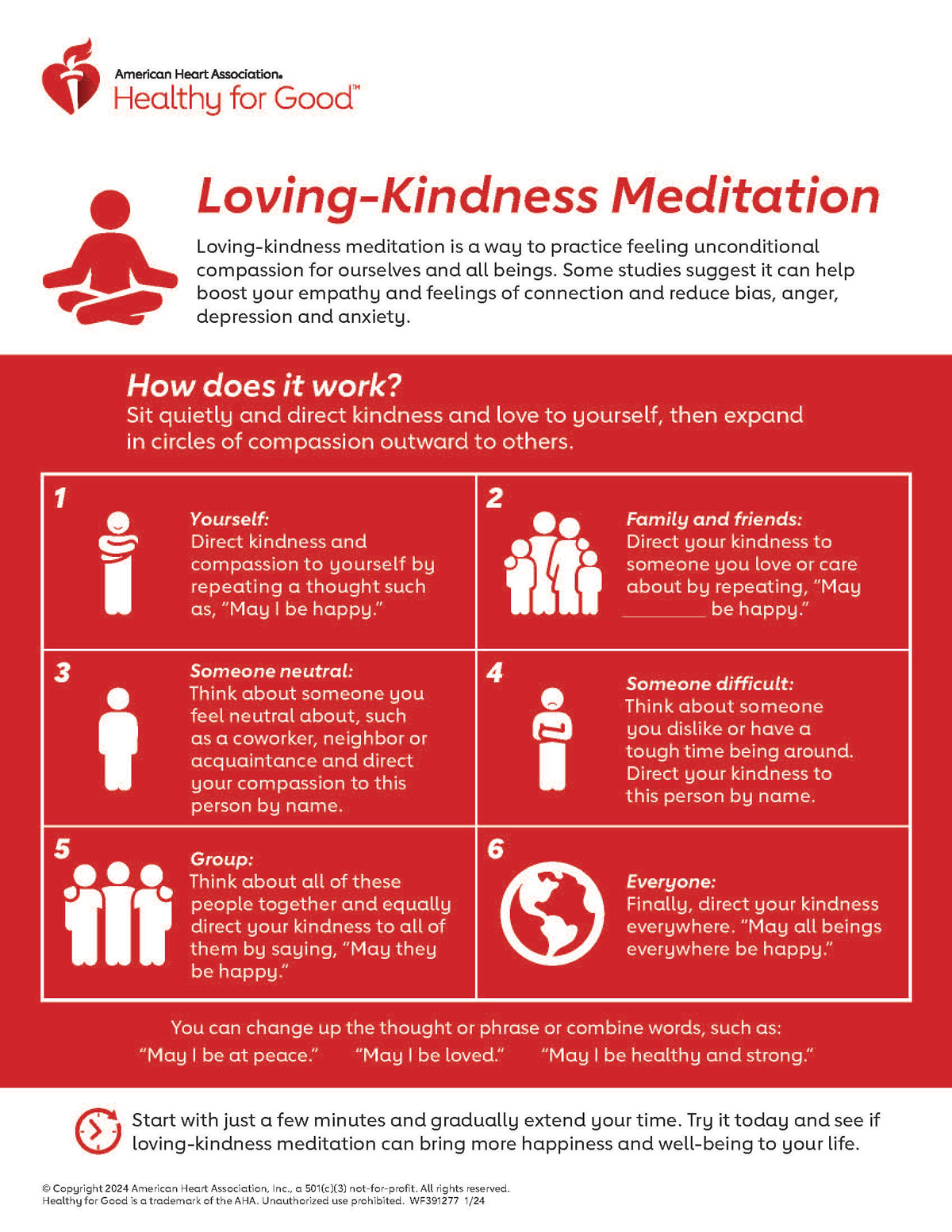
While there are different ways to practice Loving Kindness, here’s what works for me. Sit in a comfortable position at a time when you are likely not to be disturbed. This will take as long as you need, so even a few minutes will do. Sit comfortably, close your eyes, relax your muscles and take a few deep breaths. Imagine yourself experiencing complete physical and emotional wellness and inner peace. Imagine feeling perfect love for yourself, thanking yourself for all that you are, knowing that you are just right, just as you are. Focus on this feeling of inner peace, and imagine that you are breathing out tension and breathing in feelings of love. Repeat three or four positive, reassuring phrases to yourself. Phrases like “May I be happy”, “May I be safe”, “May I be healthy, peaceful, and strong” or “May I give and receive appreciation today”. You can also use phrases that speak to you personally and are unique to yourself.

Once you have repeated your chosen phrases, bask in feelings of warmth and self-compassion for a few moments. If your attention drifts, gently redirect it back to these feelings of loving kindness. Let these feelings envelop you. You can choose to either stay with this focus for the duration of your meditation or begin to shift your focus to loved ones in your life. Begin with someone who you are very close to, such as a spouse, a child, a parent, or a best friend. Feel your gratitude and love for them. Stay with that feeling. You may want to repeat the reassuring phrases. Once you’ve held these feelings toward that person, bring other important people from your life into your awareness, one by one, and envision them with perfect wellness and inner peace. Then branch out to other friends, family members, neighbors, and acquaintances. Extend feelings of loving kindness to people around the globe and focus on a feeling of connection and compassion. You may even want to include those with whom you are in conflict to help reach a place of forgiveness or greater peace.

When you feel that your meditation is complete, open your eyes. Remember that you can revisit the wonderful feelings you generated throughout the day. Internalize how loving kindness meditation feels, and return to those feelings by shifting your focus and taking a few deep breaths.

To get the most out of your Loving Kindness meditation, when you start, use yourself as the sole subject during meditation. As you get more comfortable with the imagery and loving phrases, you can begin to add the visualization of others into your practice. Adding others into the meditation boosts feelings of forgiveness and helps you to let go of rumination for an increased sense of inner peace. And as you develop a regular practice of meditation, you may want to set a timer with a gentle alarm if you’re concerned about spending too much time in focus.

Any meditation will help with feelings of anxiety and make you more zen, but the Loving Kindness meditation, over time will alleviate feelings of resentment, generate forgiveness to yourself and others and allow you to be able to deal with people, specially those you are in conflict with.

Colours and their impact on us every day

For every sighted person on this earth, without colours, life is bleak and sombre. Our world is awash with colour and in a single day, we see thousands of different hues that our brains interpret as scarlet, yellow, purple and fuchsia, to name a few. Nature employs colour with unparalleled artistry, making sunsets more breath-taking, flowers more exquisite, and wildlife more captivating. And we use colour too in myriad ways throughout the day, whether it is choosing a dress, a lip or nail colour or a new shade for our walls, we give a lot of thought and care to the colours we wear, see and use daily. Colour plays a vitally important role in the world in which we live and colours can sway thinking, change actions, and cause reactions. It can irritate or soothe the eyes, raise blood pressure or suppress appetite. When used in the right ways, colours can even save energy consumption.

The appeal of colour is universal and it plays an important role in our lives. Colour is a source of pleasure to everybody which can change moods, reduce or increase tensions, cause excitement and sometimes have a soothing effect on a tired person. Colours influence us on a few different levels. On one hand, we are conditioned socially and culturally to use specific colours for specific occasions, while on the other hand, depending on how the colour influences us, our reaction also varies. It’s also known that women can see more differentiation in colour than men because colour vision depends on three types of cones, two of which are carried on the X-chromosome: L-cones that are more sensitive to the longer wavelengths of light; and S-cones, to shorter wavelengths. The third cones, M-cones, are sensitive to middle wavelengths. So, men’s brains require slightly longer wavelengths of light to experience the same colours and this may be why men prefer colours with short wavelengths, like darker shades of blue and green, or they prefer shades without any wavelengths at all, like white, black, and grey.

Colours are commonly divided into two categories: warm and cool colours. Warm colours provide the illusion of heat and warmth because they remind us of sunlight or heath. Visually, warm colours will appear closer or like they are advancing towards you. Warm colours are those in shades of red, orange, yellow, and combinations of these. Cool colours on the other hand provide a sense of calm and relaxation because they are a visual reminder of elements of nature like water, sky, grass and even ice and snow and unlike warm colours, cool colours appear to recede or are further away from us. Some examples of cool colours would be colours like blue, purple and green. Warm colours are associated with heightened emotions and passion as well as joy and playfulness and can be stimulating. Cool colours make one feel calm, relaxed and refreshed with their receding effect having a meditative effect. Surrounding oneself with the right colour can improve the mood, relieve stress, and help get a good night’s sleep. Black, white and greys are neutral colours and so when a tint is added, it means adding white to colour, while shade means adding black to colour and tone is to add grey to colour.

40% of people worldwide say their favourite colour is blue, by far the most popular with red the first colour a baby sees, at around 2 weeks of age. Pink is the most calming colour and is used in some prisons and mental health institutions to calm worked-up prisoners and patients. White is considered the safest colour for a car as it is visible both during the day and at night. Red and yellow together are the most appetising colours which are why they’re used in a lot of fast food logos and restaurant decor. Some people have a phobia of colour known as Chromophobia which is an ongoing and irrational fear of colours, often stemming from a traumatic event associated with a particular colour. The colour wheel was invented by Isaac Newton who used a prism in 1665 to turn white light into a rainbow and identified seven colours. He felt the last colour, indigo, was a recurrence of the first colour, red and decided to arrange them in a circle. Colour has a big impact on the first impression with between 62 to 90% of a first impression based on how someone is recognising colour in the situation. To make a strong first impression, one should avoid neutrals and add a pop of bright colour to be more memorable. People are more likely to forget something when it’s in black and white with scientists believing that this may be because colour has a stronger appeal to the sense and as a result makes a more lasting impression on the memory. Wearing black makes one appear more powerful.

Everyone has a favourite colour and there is a science or possibly a pseudo-science behind what this means to one’s personality. Here are some colours and what they mean in a personality.

Black

Those whose favourite colour is black strive for power and control in life, but are often artistic and intuitive and do not share things well with others. They are above average, worldly, conventional, proper, polite, and regal. While black may mean depression to the clinical psychologist, to them, it means dignity. They value their inner world keep their private life private with only those close to them who are privy to their thoughts and feelings. They are articulate and at times dramatic, but not unrestrained and know how to share their point of view with conviction and authority. They maintain self-control easily and can control most situations with others perceiving them as serious, sometimes to the point of seeming intimidating. They are very attention driven and focussed and want to get things right and like to project an air of mystery, which sometimes is a mask for moments of insecurity with people finding that juxtaposition of the conventional and unconventional intriguing.

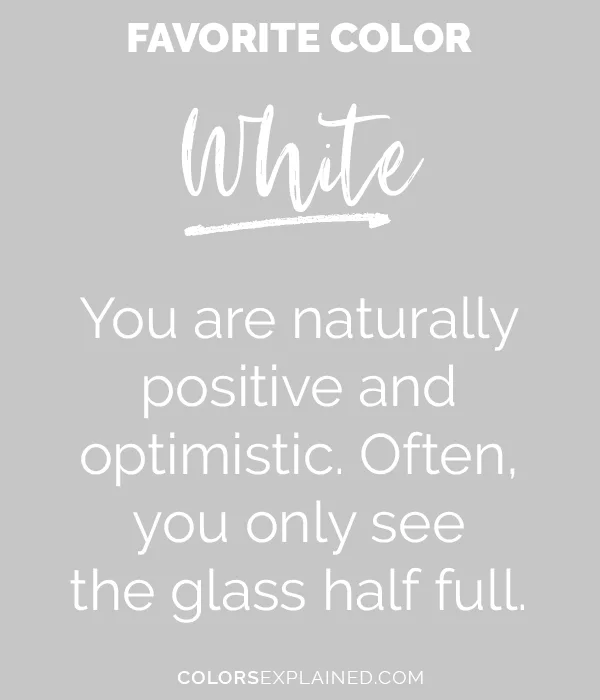
White

Someone whose favourite colour is white is organised and very independent, and relies on logic to solve problems. They appreciate order and simple elegance with a refined taste and enjoy things that are well crafted and beautiful. They can find treasures in the most unexpected places, are

particular and have high expectations for themselves and others, but don’t deal well with disappointment. They can portray a sense of control no matter what and hide their true feelings.

People may read them as being aloof because of their self-confidence and naturally reserved nature, but when people know them better, they appreciate their mindfulness and wisdom and are often described as an old soul.

Grey

Those who choose grey as their preferred colour are cool and composed and very reliable who tend to conform to keep the peace. They are cautious and seek to strive for compromise in most situations. They seek composure and peace and try very hard to fit themselves into a mould of their own. They are sophisticated and well versed in diplomacy to whom manners and etiquette are important as they feel polished social graces demonstrate respect for themselves as well as others. Professionally, others trust them to set the bar for appropriate behaviour and decorum, but they like to mind their own business and keep to themselves and are comfortable playing the role of a peacemaker. They are perceived as balanced, stable and trustworthy and are appreciated for their gift for identifying alternate avenues and facilitating compromises. They are naturally fair and objective and can put aside personal opinions and feelings and see an issue from all angles.

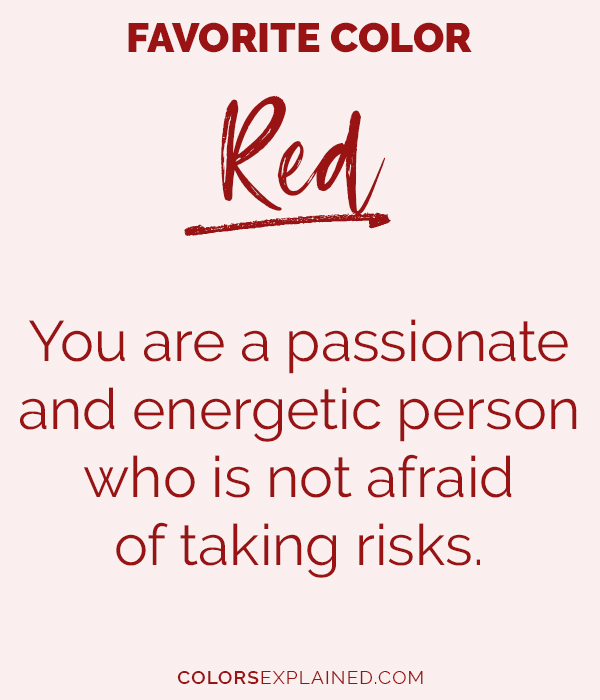
Red

Red lovers have drive and determination and prefer action and risk as well as a need for physical fulfilment and fitness. They are outgoing, assertive, vigorous, and prone to impulsive actions and variable moods, but also feel deep sympathy for their fellow human beings, are an optimist but don’t hesitate to voice out complaints. They have a strong sex drive, are always in the know, present, and always aware of what is going on around them. They exude powerful energy and their presence is always noted. Being outgoing, they are usually the life of the party and the centre of attention. They love big, and at the same time when someone disappoints them or steps on their toes, they don’t hesitate to say exactly how they feel and why and don’t hide their feelings and nip disagreements in the bud, don’t hold grudges and like to move on quickly. Natural leaders who easily gain the respect of their peers and subordinates, they lead with optimism and an animated can-do attitude which is contagious.

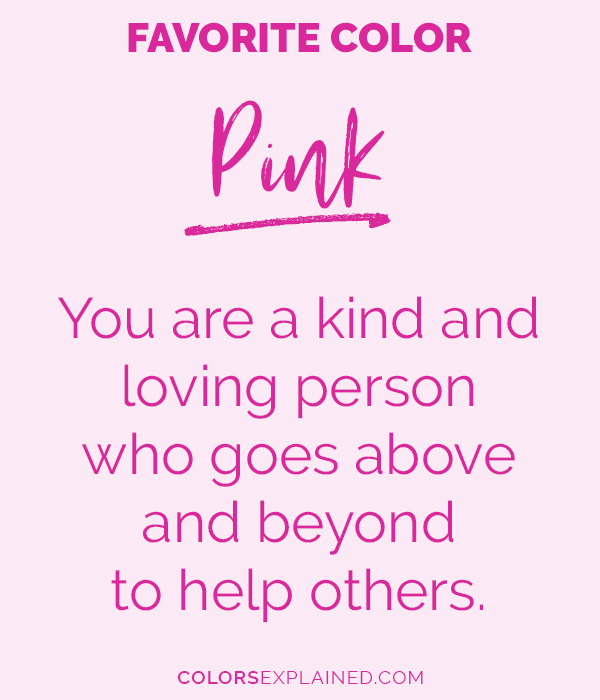
Pink

If pink is your favourite colour, all you want in life is unconditional love and to be accepted for who you are by your peers. You are easy-going and have approachable energy and come from a place of assuming the good outweighs the bad in everyone and every situation. Witty and smart, you sparkle socially, particularly in small groups and your caring and encouraging demeanour nurtures long-time friendships and genuinely revel in the success and happiness of others, especially friends and family.

Compassionate, perhaps to a fault, you are the one those closest to you depend on when they need a shoulder to cry on or a boost of confidence. You look at life through rose-coloured glasses and this pretty much sums up your life perspective. Peace, harmony, and calmness are important to you, though you appreciate letting loose on occasion and enjoy embracing all the fun life has to offer.

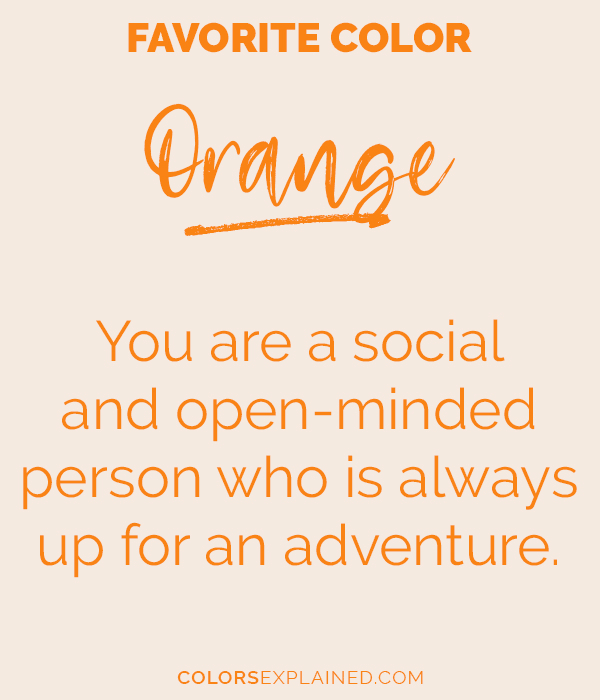
Orange

Those who love orange, are the quintessential people person who loves to be with people and socialise, as they want to be accepted and respected as a part of a group. They are good-natured but get swayed by outside opinions. They do good work, have strong loyalties, feel goodwill towards others, and have a solicitous heart. They are the heart and soul of a party and an eternal optimist who fully expects something wonderful to happen to them. These people have perfected the art of being present and living in the moment, focusing on what and who is in front of them. A problem solver at heart, they channel their high energy to inspire and influence others and excel in team building activities due to their natural zest for life and general positivity. No matter what life throws their way, they don’t fold under pressure or cave to panic and take things in stride because surely something wonderful is about to happen!

Yellow

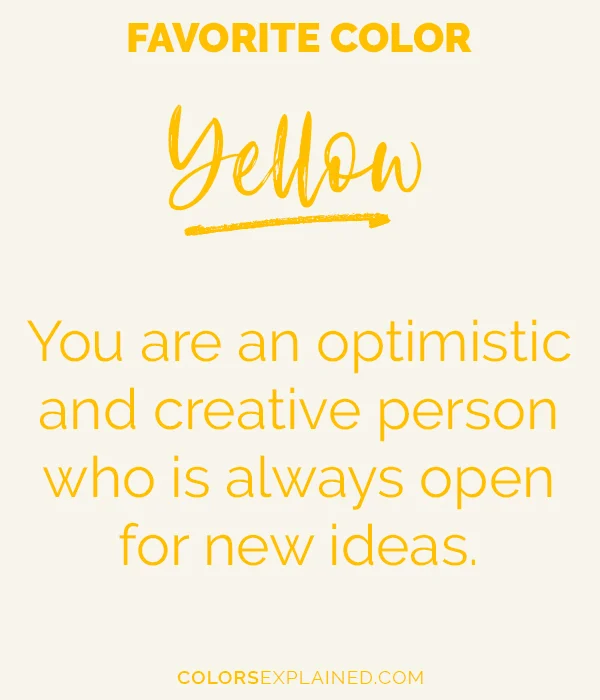
If you love yellow, you enjoy learning and sharing knowledge and you feel a need to always express your individuality. You have a vivid imagination, nervous energy, neatly-formed thoughts and a need to help the world. However, you tend to be aloof and are shy and long to be respected and crave admiration for your wisdom. You’re a safe friend and a reliable confidant and one of your most appealing traits is your consistently sunny and fun disposition with a resolute optimism which is infectious even in the most trying circumstances. An extremely positive person, you refuse to see the glass as half empty and have a reputation of leaping before you look and your impulsiveness sometimes pays off. Your spontaneity and willingness to take action positions you several steps ahead of the competition. You prefer tight-knit social circles to extended networks and those who know you best describe you as happy, imaginative, and highly intellectual.

Brown

Those who say brown is their favourite colour is a great friend who values a stable and simple life over material things. They are shrewd when it comes to money and obstinate in their habits and convictions, parsimonious, dependable and steady. They disdain impulsiveness and are very good bargain hunters. They are simple, genuine and transparent with intentions and get confused by those who have hidden agendas and ulterior motives. They feel the truth is easier to manage and fail to see the value in twisting facts. Dependable and punctual, they have high standards for excellence and experience has taught them that a solid foundation is mandatory for success. They do things slow and steady aka, do it right or not at all, no short-cuts or get rich quick schemes for them and have little patience for the snake oil salesperson type. Family comes first with them and they enjoy the comfort of a stable home where their well-appointed kitchen is the hub of the house.

Purple

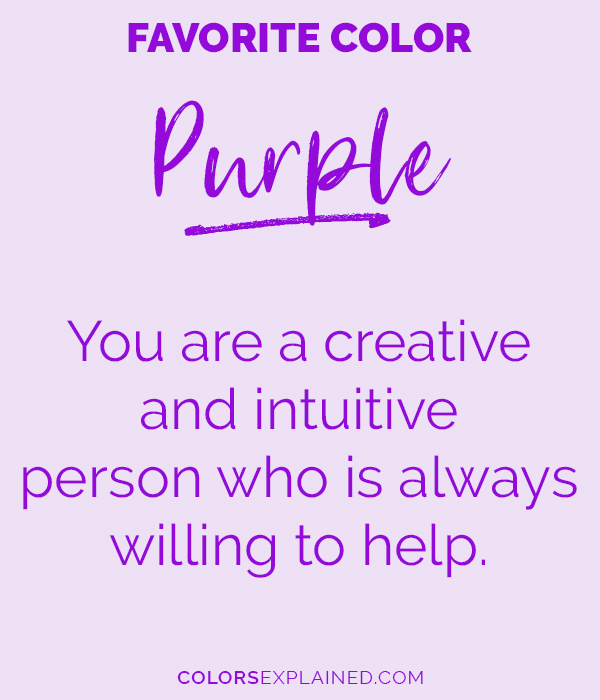
Those who choose purple as their favourite colour are perfectionists who require emotional security in life, and are good humanitarians who help others in need. They have a good mind, a ready wit and an ability to observe things that go unnoticed by others. They have a degree of vanity and display creativity in the fine arts. They relish the subtle but recognise the magnificent with their intuition one of their greatest assets and a chatty and clear little voice inside their heads. A people magnet, their charisma draws everyone to them and others perceive them as visionary and are drawn to their innovative spirit. Their creativity is contagious, making it easy to build teams to execute their grand plans. They take pride in marching to the beat of their drum and being unique and don’t care about fitting in, though they appreciate kindred spirits who choose to zig when everyone else zags.

Green

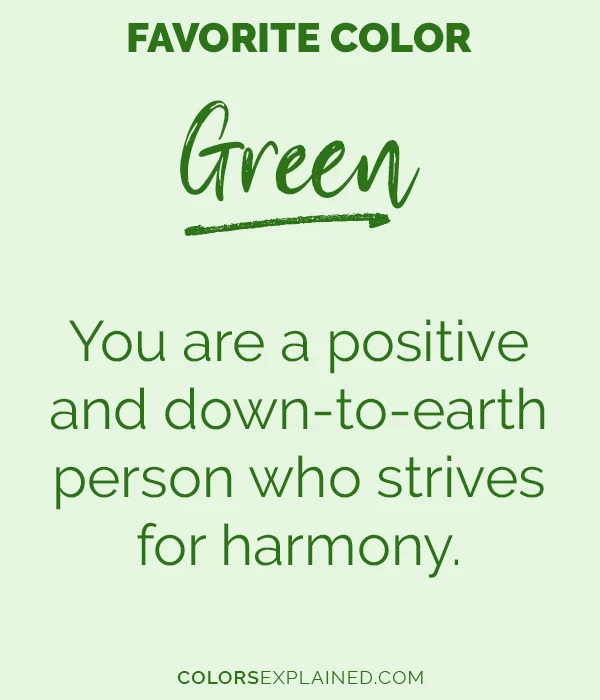
If you have chosen green as the colour you love, you are loyal and consider your reputation as a very important part of your life. You are a good citizen and pillar of the community who is frank, moral, reputable and sensitive to social customs and etiquette. You feel deep affection for your family and have a special connection to nature, it feeds your soul. You dislike chaos and strive for consistency and balance with time management a special strength because you can quickly prioritise. You have business savvy because you target what is most important and delegate what is not and rarely sweat the small stuff as you have a knack for seeing the big picture and understanding multiple points of view. You are admired for your clarity and your objectives and fair outlook of life are respected by those you come in touch with.

Blue

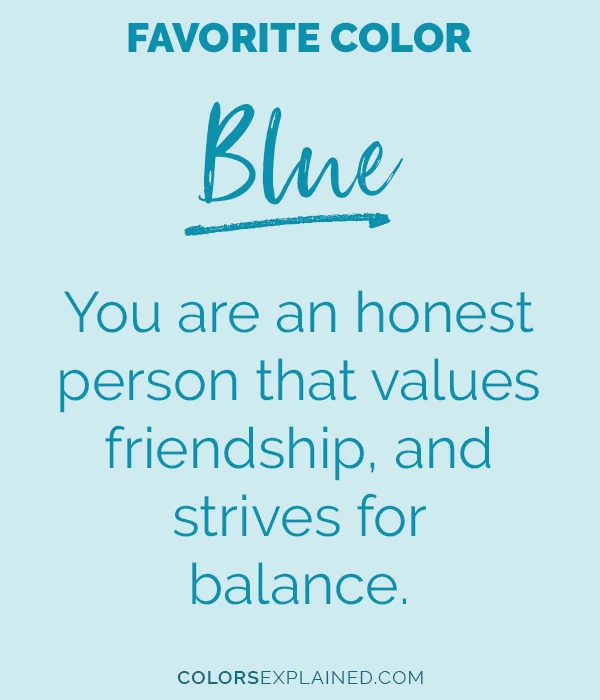
Those who love blue always make an effort to think of others and their needs. They are deliberate and introspective, have conservative convictions, retreat to gentler surroundings in times of stress and are sensitive to the feelings of others. They are a loyal friend and want to lead a quiet life and want to find inner peace and the absolute truth. They value their close-knit group of friends and family and are loyal, perhaps to a fault. They recognise and put the needs of others first, and find being of service fulfilling, yet don’t allow being taken advantage of or for granted. If tested, they will stand their ground with grace and composure and have a keen sense of fair play and like being in charge of keeping order. Because of their reputation for being trustworthy and good with details, they usually end up with the job of scorekeeper. They endear themselves quickly with their uncanny ability to recall names and titbits of info about others and people remember them for being warm, friendly, and engaging.

Did your favourite colour spell out your personality? I’d love to know in the comments.

Poem: Family

A family is defined as the basic unit in society traditionally consisting of two parents rearing their children or a group of individuals living under one roof and usually under one head and having a common ancestry. But a family is so much more than that. They are your biggest supporters, the people who love you unconditionally and under any circumstance. They are there through thick and thin and show up when you need them the most. This poem is a celebration of those ties and the love they have for you.

Family

When you are down, they are there for you
When the stakes are low, they are there to pull you up
When you need to get things done, they are your trusted crew
And they are there to prop you up when you need that pickup

They are your family, your loved ones
Who wouldn’t hesitate to go all out for you with blazing guns
Family, a word that brings automatically brings a smile to the face
The anchor in your life, your secret life’s ace

The foundation on which your values stand strong
The close circle of love to which you and your loved ones belong
The people who know you inside and outside
From whom try as you might, but you can’t hide

So, learn to treasure your family, the memories
The ones who knew you at your worst and your best
With whom you may squabble and quarrel and who may torture and tease,
But you have their love, and with that, you know you are blessed.

International Literacy Day

Today is the International Literacy Day. Literacy is a very important as without it, an individual cannot engage in our day-to-day life. Most commonly defined as the ability to read and write, Literacy is not as simple as it sounds. Reading and writing abilities vary across different cultures and contexts, and these too are constantly shifting. Today, reading encompasses complex visual and digital media as well as the printed material. We need to be literate to navigate our daily life, including using our phones, signs outside our homes, prices in a store and many more which we use and do without really thinking too much of it. But beyond the functional level, literacy plays a vital role in transforming people into socially engaged citizens. Being able to read and write means being able to keep up with current events, communicate effectively, and understand the issues that are shaping our world.

International Literacy Day celebrated each year on 8 September, was declared by UNESCO on 26 October 1966 and celebrated for the first time in 1967. Its aim is to highlight the importance of literacy to individuals, communities and societies with celebrations taking place in several countries. About 775 million lack minimum literacy skills; one in five adults are still not literate and two-thirds of them are women; 60.7 million children are out-of-school and many more attend irregularly or drop out.

According to UNESCO’s Global Monitoring Report on Education for All of 2006, South Asia has the lowest regional adult literacy rate at 58.6%, followed by sub-Saharan Africa at 59.7%. Countries with the lowest literacy rates in the world are Burkina Faso at 12.8%, Niger at 14.4% and Mali at 19%. The report shows a clear connection between illiteracy and countries in severe poverty, and between illiteracy and prejudice against women.

The 2021 edition of the International Literacy Day or the ILD will be celebrated under the theme of Literacy for a human-centred recovery: Narrowing the digital divide. The COVID-19 crisis has disrupted the learning of children, young people and adults at an unprecedented scale. It has also magnified the pre-existing inequalities in access to meaningful literacy learning opportunities, disproportionally affecting 773 million non-literate young people and adults. Youth and adult literacy were absent in many initial national response plans, while numerous literacy programmes have been forced to halt their usual modes of operation.

Even in the times of global crisis, efforts have been made to find alternative ways to ensure the continuity of learning, including distance learning, often in combination with in-person learning. Access to literacy learning opportunities, however, has not been evenly distributed. The rapid shift to distance learning also highlighted the persistent digital divide in terms of connectivity, infrastructure, and the ability to engage with technology, as well as disparities in other services such as access to electricity, which has limited learning options.

The pandemic, however, was a reminder of the critical importance of literacy. Beyond its intrinsic importance as part of the right to education, literacy empowers individuals and improves their lives by expanding their capabilities to choose a kind of life they can value. It is also a driver for sustainable development. Literacy is an integral part of education and lifelong learning premised on humanism as defined by the Sustainable Development Goal 4. Literacy, therefore, is central to a human-centred recovery from the COVID-19 crisis.

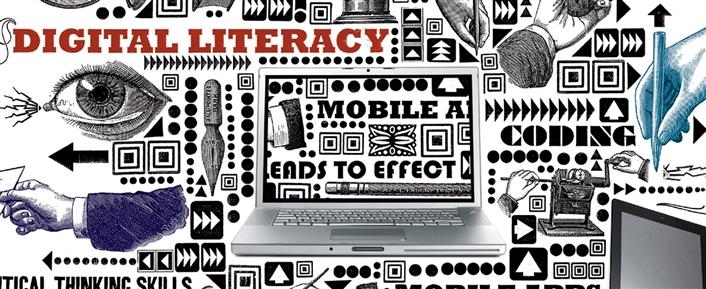
The COVID-19 pandemic has been the worst disturbance to education and training systems in a century, with the longest school closures affecting more than 1.6 billion learners at its peak time. By November 2020, the average child had lost 54 percent of a year’s contact time, which could be interpreted as the loss of over a year’s learning if the time of forgetting what was previously acquired is counted. The pandemic and its repercussions have also magnified the pre-existing inequalities in access to meaningful literacy learning opportunities, disproportionally affecting 773 million non-literate young people and adults. With low or no reading and writing skills, they tend to be more vulnerable in managing their health, work, and life. At the same time, the COVID-19 crisis amplified the centrality of literacy to people’s life, work and lifelong learning. Reading and writing skills are essential, for instance, to access life-saving information and sustain livelihoods. In addition, the need for digital skills, which are part of today’s literacy skills, have been recognized for distance learning, a digitally transformed workplace, and participation in a digitalized society. While there is no single internationally agreed definition, digital skills are broadly understood as a range of abilities to use digital devices, communication applications, and networks to access, manage, understand, integrate, communicate, evaluate and create information safely and appropriately in an increasingly technological and information-rich environment. Various aspects of digital skills are increasingly becoming indispensable to be literate. However, many young people and adults are digitally non-literate, including those who lack basic reading and writing skills. In Europe, 43 percent of adults lack the basic digital skills required to participate in distance digital learning. As acquisition of digital skills involves complex cognitive processes, these emerging skills demand calls for ensuring an adequate level of reading and writing skills, the integration of digital skills into literacy programmes, if appropriate, and the consideration of the inter-relations between these skills, kinds of technology and teaching approaches to be adopted, as well as learners’ motivation, life situations, contexts, and cultures.

ILD 2021 will explore how literacy can contribute to building a solid foundation for a human-centred recovery, with a special focus on the interplay of literacy and digital skills required by non-literate youth and adults. It will also explore what makes technology-enabled literacy learning inclusive and meaningful to leave no one behind. By doing so, ILD2021 will be an opportunity to reimagine future literacy teaching and learning, within and beyond the context of the pandemic.

ILD2021 will be celebrated across the world to uphold the right to literacy and foster the acquisition of literacy and digital skills by youth and adults for a human-centred recovery from the COVID-19 crisis. Some key questions that ILD 2021 will ask will include questions on what are inclusive and good policies, measures and interventions to put literacy, and possibly also digital skills, at the heart of a human-centred recovery from the COVID-19 crisis and to narrow the digital divide and how can the learning of digital skills be integrated into technology-enabled literacy programmes in a meaningful manner as well as how can governments and other agencies mobilise adequate technical and financial support for the promotion of literacy programmes, including the ones that integrate digital skills learning?

Hopefully the efforts that ILD2021 undertakes will increase awareness of the importance of literacy and digital skills for a human-centred recovery and possible ways to make policies, measures and interventions for youth and adult literacy better and more inclusive to counter the digital divide and key issues are identified and new ideas generated for reimagined literacy teaching and learning that integrate literacy and digital skills.