Success, the very word conjures up images of someone who is wealthy or famous or maybe someone who does very well in school or work. Or maybe it is someone who has a wonderful relationship with their spouse, parents or children. Or it could be someone in a combination of the above.
We live in a consumer-driven society and the culture we live in places a big emphasis on making money and defines success by how much we own. Advertising messages communicate that having certain luxury brands is the definition of success. So what makes one successful in this society? Is it hitting a specific income bracket or living in a specific zip code or driving a particular car model? But the question then arises is if success is only an outward manifestation or is it something deeper, something that is intrinsic to what is most important to us?
Every individual has their definition of success and what is important to them. While we need to do some things for the sake of earning an income, it is important to balance responsibilities with activities we enjoy doing. That means having enough free time to spend with people we love as well as time for practising self-care. For this to happen, we need to check if we can balance our lives to do what we enjoy doing and if not, what steps we can take to achieve a more balanced lifestyle.
One thing to be able to achieve that balance is to be secure and stable financially because while one need not be excessively wealthy to be happy, having a healthy bank balance will allow us to design our life in ways we want and a healthy bank balance will give financial stability that can mean success. What this means is that you need to figure out exactly how much you need to live a comfortable lifestyle and use that number to hit your financial goals.
Success is not all about what you do or don’t have. Someone who wants to live a life caring for others without being financially successful and achieves that is successful in their definition of success. Success is also not about big achievements, getting that ultimate promotion which will change all the time. Instead, think of success as small goals which are the ladders to the main big goal. These goals can be small, short-term wins which also give you the impetus to get to the larger goals.
Our definitions of success will change over time because our priorities change and what seemed important back then may become trivial now. Our values and needs evolve and with this, the definition of success will be revised and adjusted.
What is my version of success? It’s pretty simple actually. To me, I will consider myself successful if I am financially stable so that S and I can retire in peace, give my children a good upbringing and education and inculcate in them the values and character that make them excellent human beings and good citizens.
At the end of the day, success is being able to look at yourself in the mirror and feel good about the choices you’ve made. No person is without their mistakes, but you learn and grow through the process. Your version of success doesn’t have to look like anyone else’s, but it must be a definition you feel good about and that is meaningful to you. Ultimately, the way that you define success will lead you toward living a more contented life that is aligned with your values.
They say a photograph is worth a thousand words and a well-crafted photo is stunning and immediately brings the eye to what is being conveyed. The purpose of photography is to communicate and document moments in time. Photographs capture memories and lead one to be present as one explores the world. Photography lets us see something we may never have noticed otherwise and is a way to express our ideas for others to see. Photos showcase stories and document history as it unfolds. Today there is a camera in almost everyone’s hands and we can document the minutiae of our lives as it happens.
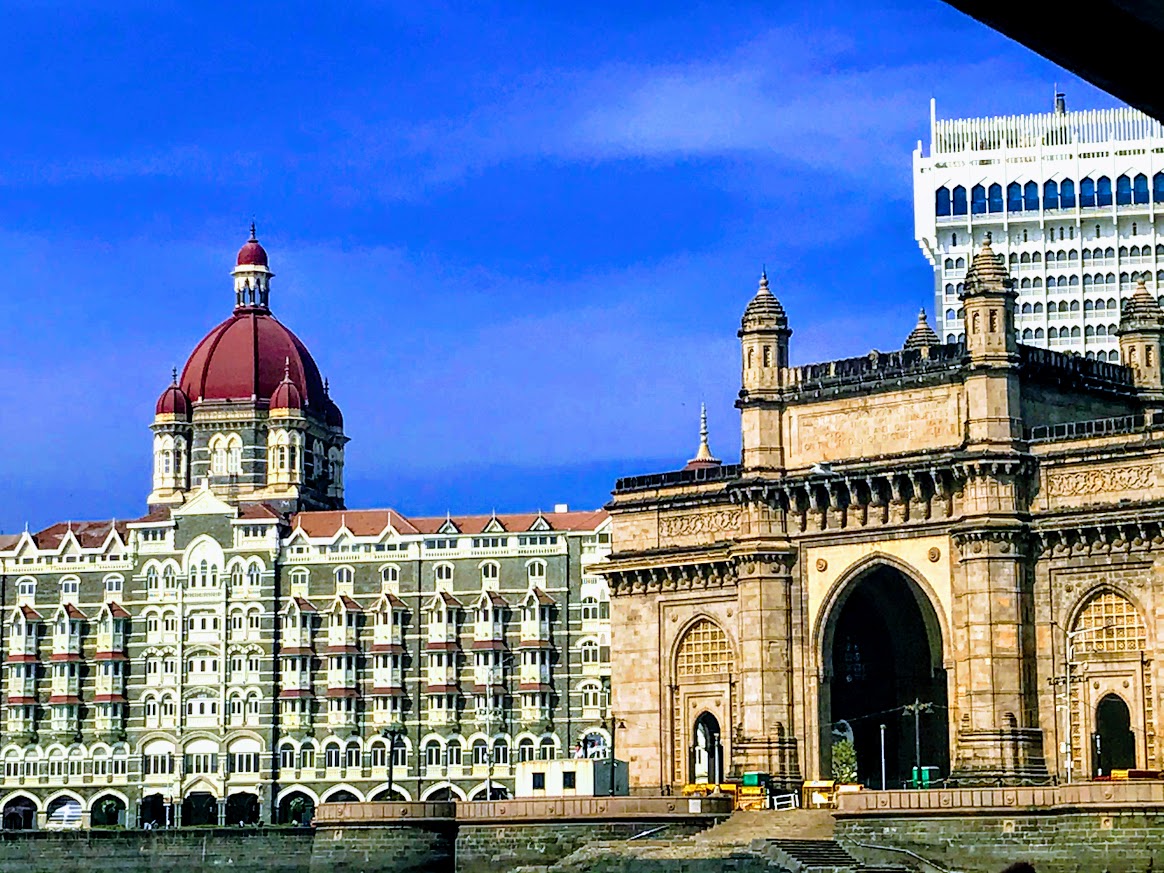
Gateway of India and Taj Mahal Hotel, Mumbai, India
Today is World Photography Day or World Photo Day, an international celebration focused on photography and its history. On August 19, 1839, the French government purchased the patent of the daguerreotype process, the first photography process, and released it to the world for free. In honour of this, World Photography Day is celebrated on August 19.
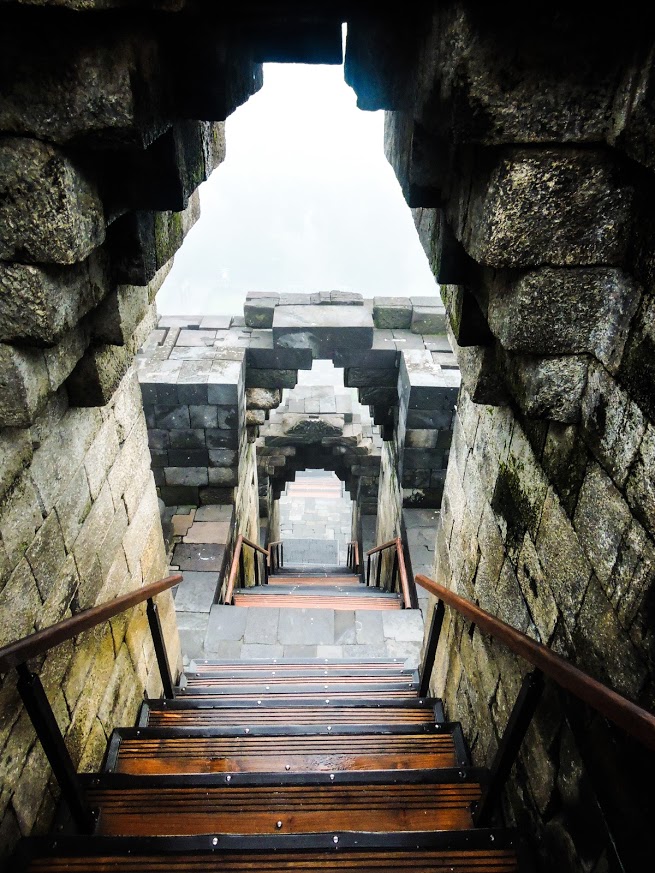
An Indian Temple, Langkawi, Malaysia
The daguerreotype photographic process, the first photographic process was developed in 1837 by the French inventors and photographers Louis Daguerre and Nicéphore Niépce. Announced on January 9, 1839, by the French Academy of Sciences, the patent of the daguerreotype was purchased by the French government who granted the invention free to the world on August 19 of the same year. The idea of World Photography Day was first suggested by Indian photographer O. P. Sharma in 1988 who set up propagating the idea of celebrating the day within the photography community in India and abroad. The first observance of the day was in 1991, by the Indian International Photographic Council, founded by Sharma himself. Subsequently, Sharma was able to persuade the Photographic Society of America and the Royal Photographic Society of Great Britain to join in and the day has been celebrated globally since 1991.
One of the temples in Siam Reap, Cambodia
World Photography Day is celebrated as a day to commemorate the importance of cameras and photography in our lives. This day is celebrated by people who love photography, from amateur to professional photographers. World Photography Day aims to inspire photographers around the world to share their photos with the simple goal of sharing their world with the world. World Photo Day hosted its first global online gallery on August 19, 2010.
Singapore as the flight prepares to land
To commemorate the day, go ahead and showcase some of your best photos. In honour of this day, I too am sharing some of my favourite photos in this post.
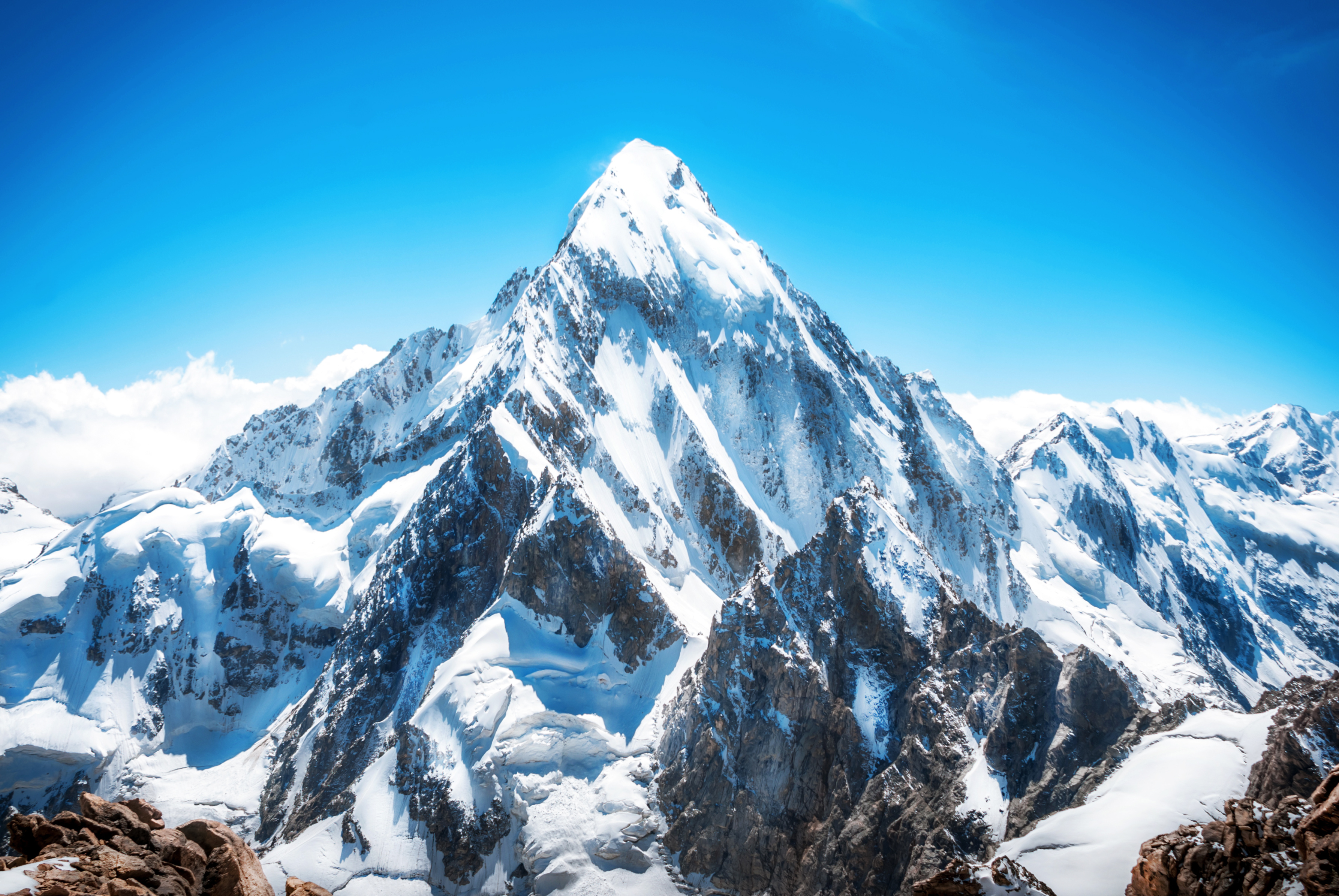
Many of us are drawn to the mountains. One reason could be that they have stood for aeons, and are probably as old as Earth itself. And it’s human nature to be drawn to that which is bigger and grander than us. So here’s a small poem which expresses what I think about mountains.
They stand tall, straight and majestic Like sentries, brooding and mystic, in a scenic land The sight of which makes one homesick Because the heart beats in a rhythm that is quick
The mountains seem alone as they stand And pierce the sky and the clouds with a tip of ice They dominate the landscape, farm, and land In a scene that brings to life an alpine paradise
The mountains have stood like this for millennia and see Wars, famines, droughts, and floods, they have endured it all As silent spectators, they are witness to all sufferings and prosperity They see all the comings and goings, and all of the human footfall
The mountains have stood here and will continue to stand A watchman for the ages, silent, but alert A huge and indelible part of our land The mountains are part of every landscape, be it the plains or the desert.
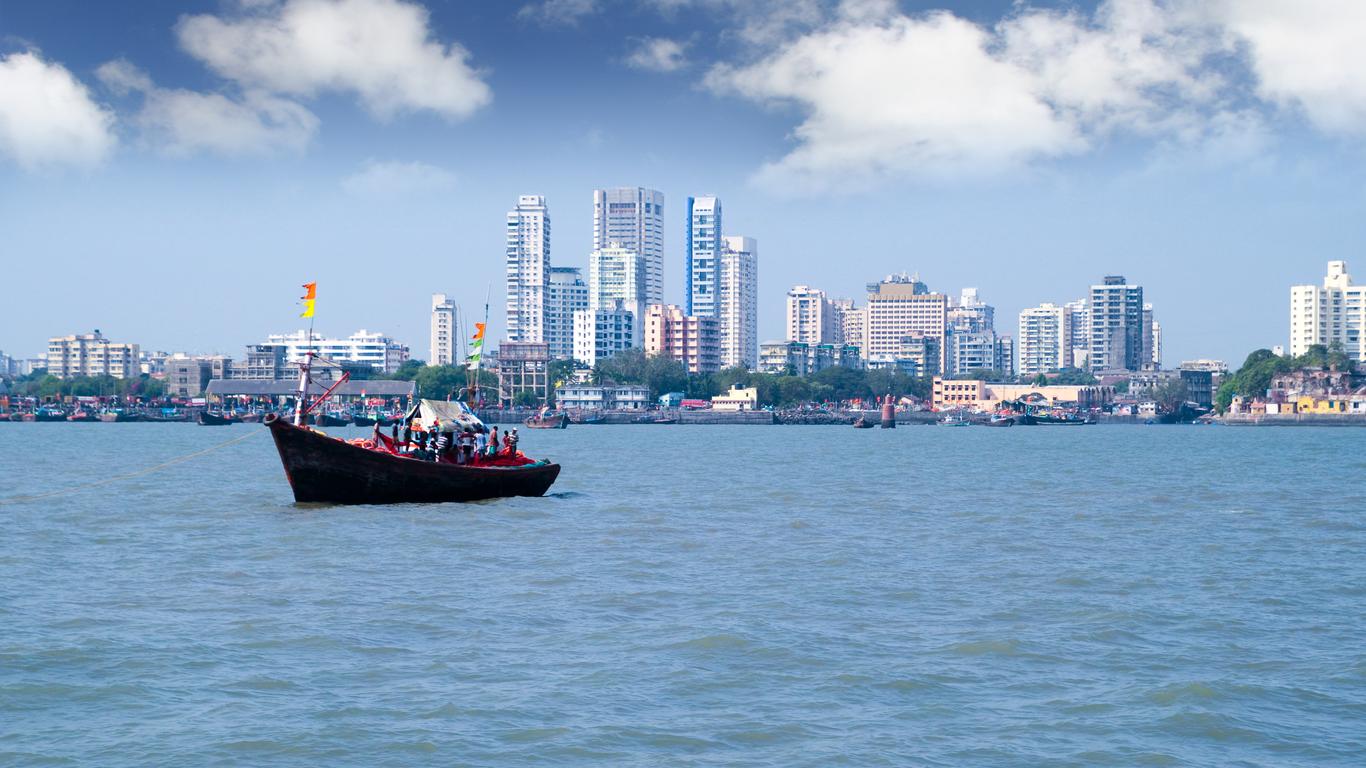
After doing a similar post for Singapore, on the occasion of India’s 75th Independence Day, I had to do one for the city of my birth, my beloved Mumbai.
A Mumbai resident is known as a Mumbaikar, though when it used to be Bombay, we called ourselves Bombayites. I guess the change from Bombay to Mumbai meant that the word also changed and became the Marathi Mumbaikar where kar is the Marathi word for a resident.
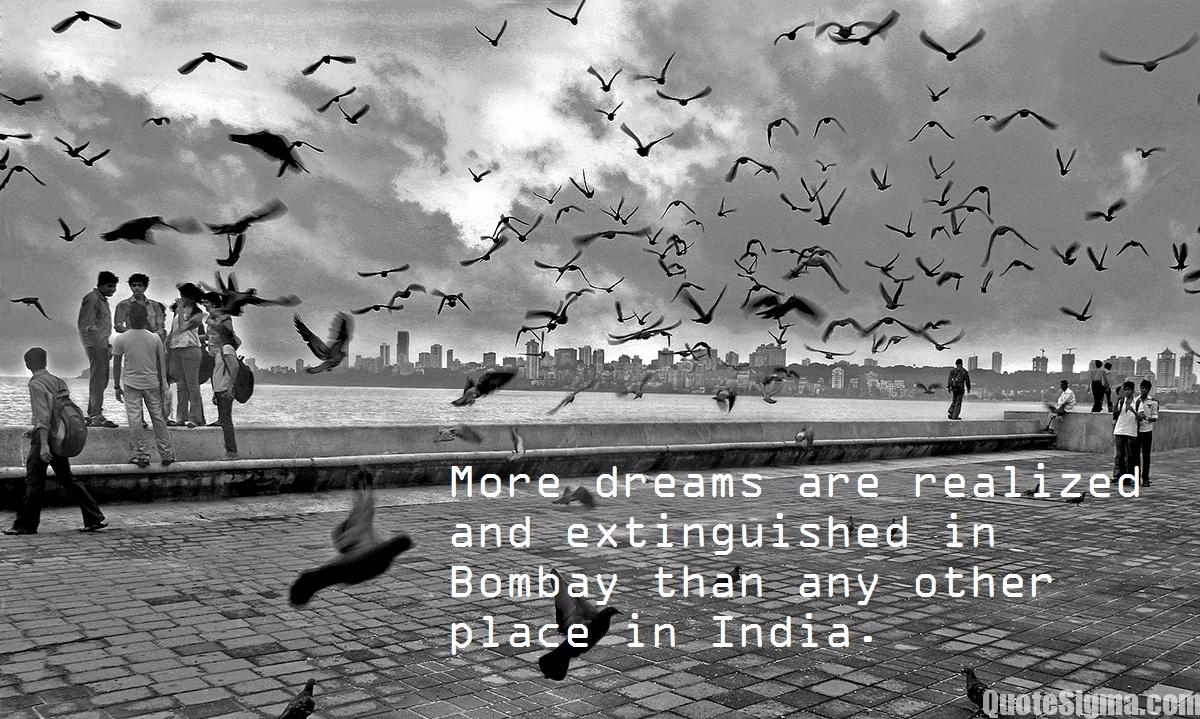
It is said, Mumbai is a city while Bombay is an emotion. Mumbai is full of dreamers and the place where people’s dreams are realised and extinguished. It is said that if one has lived in Bombay and has travelled in the local trains then one can survive in any other city. Officially Mumbai, Bombay is still used interchangeably by many locals.
Mumbaikars live a very fast-paced life and why not, given that the bulk of the population spends a few hours daily just on their commute, whether for school, college or work. I know of friends and colleagues who would spend a minimum of two hours each way on the trains to get to their destination. And speaking of trains, the Mumbai local is the lifeline of the city and if for some reason, trains shut down, the city comes to a standstill. The life of a Mumbaikar, especially one who needs the train to get to work or school revolves around train timings. So their conversations are peppered with train timings and what time to reach the station. And within the train is something that is uniquely Mumbai – the train friends. So what are these train friends? Train friends are those who invariably take the same train as you do daily. Over time, these people become friends. And this is a category of friends who may move outside the train or remain within the train itself.
A Mumbaikar is a perfect amalgamation of pan India. A blend of the North and South and to this is added the Eastern and the Western parts of India which it is already a part of. If you ask a Mumbaikar for directions, you will not be told of the direction in kilometres, but rather the time it will take you to get there. It’s very common to travel long distances to get from one place to the other because unlike other cities, Mumbai is set up in a north-south alignment so this means that long distances are inevitable and this does not faze a Mumbaikar.
Mumbai has one of the highest literacy rates in India, 94.7% which is significantly higher than the country’s average. Though the official state language is Marathi; 16 other major languages are spoken in the city including English. The city is the commercial and entertainment capital of India as well as its most populous city. With a high number of migrants and diverse religious groups, Mumbai is truly a melting pot of cultures. Mumbai can be called the true and first cosmopolitan city of India because this is a city that brings together people of different communities, religions and customs and the city is known for its diversity which can be hard to find elsewhere in India. In any building society, it’s quite easy to see people from many Indian states who live together and celebrate all festivals. The inhabitants of the city can be called a microcosm of India’s population.
The Bambaiya Hindi which is maligned in Bollywood films is a blend of Hindi, Marathi and English. While this brand of Hindi. While the Hindi may not be as pure as what is spoken in Delhi and the northern parts of India, it’s not too bad. What is shown in television and films is an exaggerated version spoken. Neither I nor my family, friends or acquaintances have spoken like this daily.
But at the end of the day, Mumbai has a heart of gold. I have written previously about how the city comes together to help during a calamity or crisis and that is what is important.
A Mumbaikar loves Mumbai, plain and simple and once they identify themselves as a Mumbaikar, they remain one till the end of their lives. I may not travel to Mumbai now as often as I want to, but you can take Mumbai out of my life, but you can’t take the Mumbaikar out of me.
To end this post, an old song which beautifully captures the spirit of Mumbai, though it was Bombay then. This song is from the old classic C.I.D which was released in 1956 and starred Dev Anand and Waheeda Rehman in the leading roles. And this shows you how Bombay was in the fifties, with trams running and wide, uncrowded roads.
I have always loved have been fascinated by elephants and when I heard there is a day dedicated to them, I knew this was a post I had to write since today is World Elephant Day.
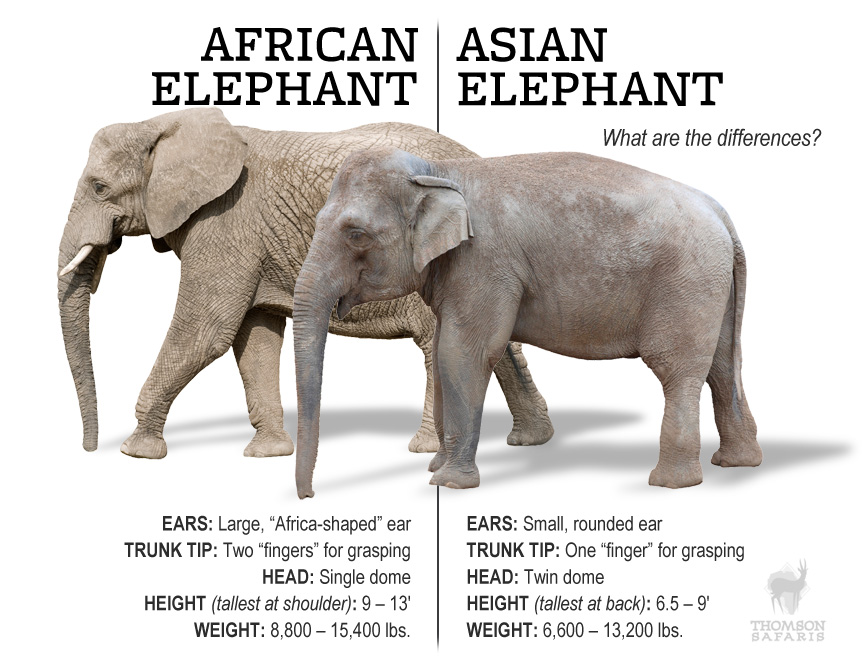
The largest existing land animal, three living species of elephants are currently recognised: the African bush elephant, the African forest elephant, and the Asian elephant. African elephants have larger ears and concave backs, whereas Asian elephants have smaller ears and convex or level backs. The distinctive features of all elephants include a long proboscis called a trunk, tusks, large ear flaps, massive legs, and tough but sensitive skin. The trunk is used for breathing, bringing food and water to the mouth, and grasping objects. Tusks, which are derived from the incisor teeth, serve both as weapons and as tools for moving objects and digging. The large ear flaps assist in maintaining a constant body temperature as well as in communication. The pillar-like legs carry their great weight.
Elephants are scattered throughout sub-Saharan Africa, South Asia, and Southeast Asia and are found in different habitats, including savannahs, forests, deserts, and marshes. They are herbivorous, and they stay near water when it is accessible. They are considered to be keystone species, due to their impact on their environments. Elephants have a fission-fusion society, in which multiple family groups come together to socialise. Females or cows tend to live in family groups, which can consist of one female with her calves or several related females with offspring. The groups, which do not include bulls, are usually led by the oldest cow, known as the matriarch. Males or bulls leave their family groups when they reach puberty and may live alone or with other males. Adult bulls mostly interact with family groups when looking for a mate. Calves are the centre of attention in their family groups and rely on their mothers for as long as three years. Elephants can live up to 70 years in the wild and communicate by touch, sight, smell, and sound, using infrasound and seismic communication over long distances. Elephant intelligence has been compared with that of primates and cetaceans and they appear to have self-awareness and appear to show empathy for dying and dead family members.
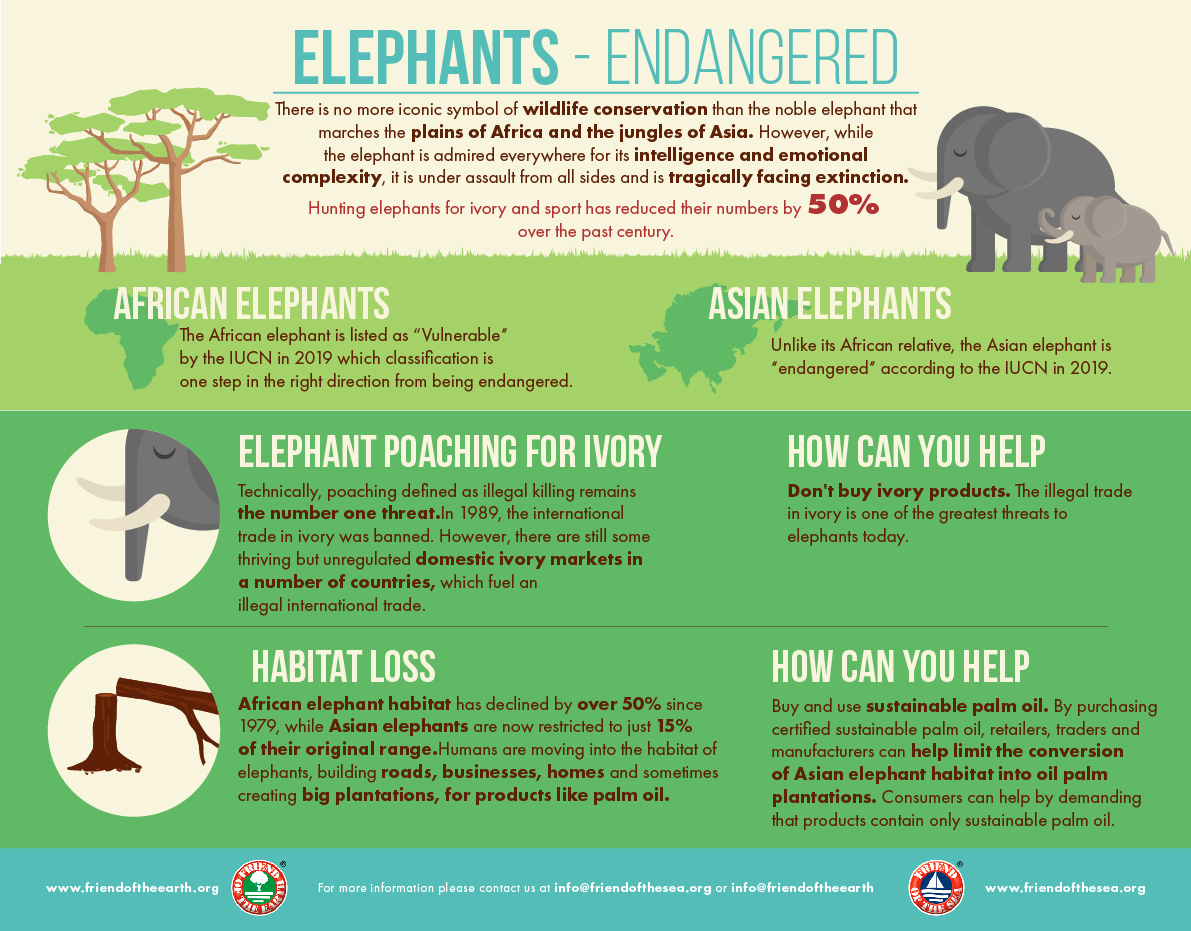
African bush elephants and Asian elephants are listed as endangered and African forest elephants as critically endangered by the International Union for Conservation of Nature or IUCN. One conservationist has stated that both African and Asian elephants face extinction within twelve years. The current population estimates are about 400,000 for African elephants and 40,000 for Asian elephants, although it has been argued that these numbers are much too high. The WWF reports that Asian elephant numbers have dropped by at least 50% over the past three generations. An estimated 35,000 African elephants are still killed every year for their tusks, according to the African Wildlife Foundation.
World Elephant Day is an annual event on August 12, dedicated to the preservation and protection of the world’s elephants. Conceived in 2011 by Canadian filmmakers Patricia Sims and Michael Clark of Canazwest Pictures, and Sivaporn Dardarananda, Secretary-General of the Elephant Reintroduction Foundation in Thailand, an initiative of HM Queen Siriki. Since then, World Elephant Day is recognised and celebrated by over 100 wildlife organizations and many individuals across the globe. This provides citizens, policy-makers, politicians, and governments a way to create and support conservation solutions that will make the world a safe place for elephants, wildlife, and habitat for future generations to cherish. The foundation uses a neutral approach that allows and facilitates everyone to conduct campaigns that demand cooperation across borders and political lines. The day is a rallying call for people to support organisations working to stop the illegal poaching and trade of elephant ivory and other wildlife products, protect wild elephant habitat, and provide sanctuaries and alternative habitats for domestic elephants to live freely.
The goal of World Elephant Day is to create awareness of the urgent plight of African and Asian elephants and to share knowledge and positive solutions for the better care and management of captive and wild elephants.
The demand for ivory, which is highest in China leads to the illegal poaching of both African and Asian elephants. With the street value for ivory now exceeding that of gold, African elephants face a poaching epidemic. Elephants are also poached for meat, leather, and body parts, with the illegal wildlife trade putting elephants increasingly in danger because it is perceived to be a low-risk and high-profit endeavour. The loss of habitat due to deforestation increases in mining, and agricultural activities has become problematic, especially for Asian elephants. The fragmentation of habitat also creates isolation which makes breeding more difficult and allows poachers to find the elephants and set traps more easily. Asian elephants have lost nearly 30-40% of their habitat, making it incredibly difficult to maintain their offspring and themselves. Human-elephant conflict is a significant concern, as human populations increase and forest cover decreases, forcing elephants into proximity to human settlements. Incidents include crop damage and economic losses, as well as both elephant and human casualties. A lack of legislation regarding the care and treatment of elephants in zoos, circuses, and tourism often leads to their mistreatment and captivity can be a serious threat with Asian elephants often illegally captured in the wild and trafficked into the lucrative tourism industry. A lack of legislation regarding the care and treatment of elephants in zoos, circuses, and tourism often leads to their mistreatment.
Elephants have a vital role to play in shaping ecosystems and are considered a keystone species for the role they play. They trample forests and dense grasslands, supporting the growth of smaller species. They also travel vast distances, dispersing seeds in their dung, and supporting vegetation growth. Some research suggests that elephants could disperse seeds up to 65km, which helps to maintain the genetic diversity of many tree species and prevent local inbreeding. Therefore, elephants are critical to the integrity of the African savanna ecosystems.
So on this day, use your voice to spread the word about these gentle giants and support organisations and solutions to better care for them so they can move away from the critical and endangered lists. And before I go, here are some videos of the cutest baby elepants. Watch and smile!