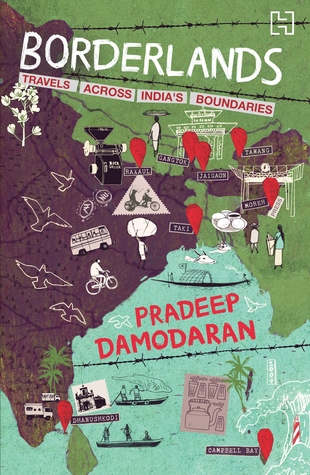
Borderlands: Travels Across India’s Boundaries – Pradeep Damodaran
For most residents of India’s bustling metros and big towns, nationality and citizenship are privileges that are often taken for granted. The country’s periphery, however, is dotted with sleepy towns and desolate villages whose people, simply by having more in common with citizens of neighbouring nations than with their own, have to prove their Indian identity every day.
It is these specks on the country’s map that Pradeep Damodaran rediscovers as he travels across India’s borders for a little more than a year, experiencing life in far-flung areas that rarely feature in mainstream conversations.
In Borderlands, he recounts his encounters with the war-weary fishermen of Dhanushkodi at the southernmost tip of Tamil Nadu, who live in fear both of the Indian Coast Guard and the Sri Lankan navy; farmers in Hussainiwala, a village on Punjab’s border with Pakistan, who are unwilling to build concrete houses for fear of them being destroyed in an ever looming war; Tamil traders of Moreh, a town straddling the Manipur–Myanmar border, who pay bribes to at least ten different militant organizations so they can safely conduct their business; and ex-servicemen in Campbell Bay who were resettled there three generations ago and have long been forgotten by the mainland.
From Minicoy in Lakshadweep to Taki in West Bengal, Tawang in Arunachal Pradesh to Raxaul in Bihar, Damodaran’s compelling narrative reinforces the idea that, in India, a land of contrasts and contradictions, beauty and diversity, conflict comes in many forms.
I am turning 50 very soon and am looking forward to hitting this milestone birthday. I know many people dread turning the half-century mark, but I was anticipating it. I feel I can become freer with my thoughts and live a life without a filter. This poem is my thoughts on turning 50.
Turning 50
The day is finally here One that I have for with suppressed cheer In the golden glow of the last fifty years, I stand, triumphant, unafraid, a canvas painted with joy and tears.
I look back and reflect on my life, on the years gone by The laughter, tears, and reasons why. I think back on the decades of my life, A good life, if I may say so, one without much pain and strife
As a young adult, I took flight, A world of wonder was awaiting me, new and shining bright, With dreams as vast as endless skies, I spread my wings, prepared to rise.
Through twists and turns, I found my way, To a path that led to each new day, I crossed the ocean to make a new life and faced challenges that came my way, Carved strength from within, come what may.
Now at the crossroads of life, fifty years, A chapter ends, and a new one appears, With the wisdom earned and a steady gaze, I welcome how and what the future brings and plays.
I am no longer bound by youth’s desire, Because I’ve found my purpose, my inner fire, Each wrinkle tells the world a story that is true, Of life’s rich journey, old and new.
The dreams of youth, I’ll not let fade, For these are seeds that life has laid, With the lessons learned, I now believe, There are still things I have to achieve.
As fifty candles flicker bright, I’ll embrace the day, the darkest night, For life’s an ever-changing dance, And I’ll keep twirling, taking the chance.
With gratitude for the last fifty years, I’ll face the future, free from fears, For all that’s passed and all that’s new, I celebrate my life, the pink and the blue.
So here’s to fifty, an age so fine, A sparkling toast to me, and to time, With open arms, I welcome in, The next adventures I’ll begin.
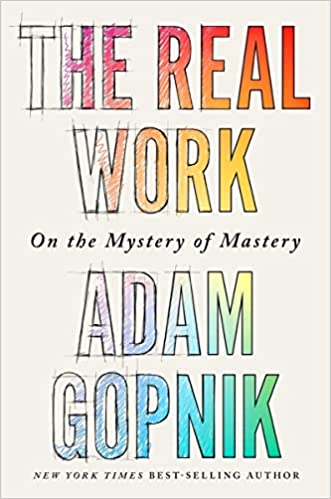
The Real Work: On the Mystery of Mastery – Adam Gopnik
Best-selling author and New Yorker writer Adam Gopnik investigates a foundational human How do we learn―and master―a new skill? For decades now, Adam Gopnik has been one of our most beloved writers, a brilliantly perceptive critic of art, food, France, and more. But recently, he became obsessed by a more fundamental matter, one he had often meditated on in The New Yorker : How do masters learn their miraculous skill, whether it was drawing a museum-ready nude or baking a perfect sourdough loaf? How could anyone become so good at anything? There seemed to be a fundamental mystery to mastery. Was it possible to unravel it?
In The Real Work ―the term magicians use for the accumulated craft that makes for a great trick―Gopnik becomes a dedicated student of several masters of their a classical painter, a boxer, a dancing instructor, a driving instructor, and others. Rejecting self-help bromides and bullet points, he nevertheless shows that the top people in any field share a set of common qualities and methods. For one, their mastery is always a process of breaking down and building up―of identifying and perfecting the small constituent parts of a skill and the combining them for an overall effect greater than the sum of those parts. For another, mastery almost always involves intentional imperfection―as in music, where vibrato, a way of not quite landing on the right note, carries maximum expressiveness. Gopnik’s simplest and most invigorating lesson, however, is that we are surrounded by mastery. Far from rare, mastery is commonplace, if we only know where to from the parent who can whip up a professional strudel to the social worker who―in one of the most personally revealing passages Gopnik has ever written―helps him master his own demons.
Spirited and profound, The Real Work will help you understand how mastery can happen in your own life―and, significantly, why each of us relentlessly seeks to better ourselves in the first place.
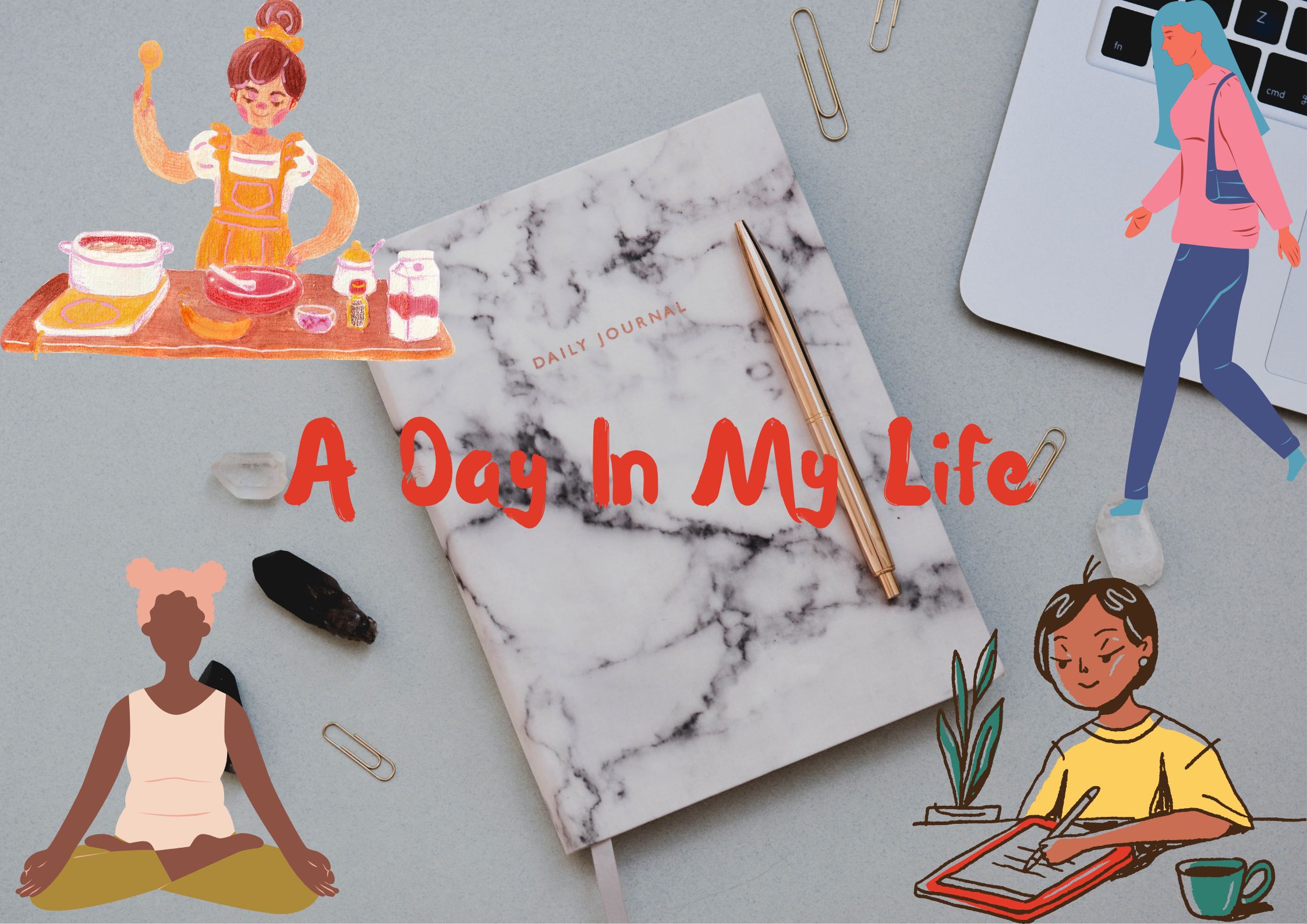
Sometimes, when I am bored, I watch DIML stories on social media. DMIL, which means Day in My Life, showcases the daily routine of the individual and sometimes is super interesting to watch. Inspired by these videos, I decided to do a DIML story; only instead of a video, it will be a blog post. Hopefully, my day is interesting enough to make readers want to continue reading the rest of this post.
I am and have always been, an early riser. These days I wake up at 4 am so that I can get an hour of peace before everyone else wakes up. I do not snooze my alarm, and once I am awake, I am awake. I usually go from sleep to wake state in seconds, and this is one of my superpowers. The first thing I do after waking up is to check my phone, and I know this is a very bad habit, and I am trying to get rid of it. I am taking baby steps, so fingers crossed I reach the stage where my hand does not automatically grab my phone as soon as my eyes open.
After freshening up, I head to the kitchen, where I prep for everyone’s coffees and also make mine. I also do a basic prep for the day’s lunch by soaking rice and washing the vegetables to make a sabzi. I also add low-fat Greek yoghurt to my prepped oats which is my usual breakfast. And just before I drink my coffee, I drink my pre-soaked fenugreek seeds and cinnamon powder before I drink my morning shot of bitter gourd and Indian blackberry juice. I drink this because I am diabetic, but I am not sure how effective it is. Then I sit back and drink my coffee. I drink black coffee with no sugar and have been drinking this for many years now, even before I was diagnosed with diabetes. I didn’t like the taste of the milk in Singapore, so I made the switch, and now, it’s hard for me to drink coffee with milk. Sometimes, as an indulgence, I do add sugar to my coffee.
After my coffee, it’s time to do one of two things – either go back into the kitchen and start cooking for the day or if there is not much to do, I start the rice in the rice cooker and then put on my earphones and start my meditation. I use an app to meditate and combine it with walking. It’s my take on walking meditation. I meditate on different tracks, depending on my mood, though my current track is a 35-minute rendering of the Maha Mrityunjaya mantra. My usual walk is a 3.5 km indoor walk which takes me about 45 to 50 minutes to complete. Once my walk is done, I finish up any pending cooking and pack any lunch boxes that need to be packed.
Then I have a bath, do my skincare, light the lamp in front of God and do my prayers. And after that, it’s time for breakfast which I eat watching YouTube videos. My work set-up is such that I use an old laptop which is on its last legs as a video monitor. I like watching videos either on YouTube or other OTT platforms while working as I like the background noise. After breakfast, I switch on my laptop and start working. Usually, around 8 am, I have a call with my parents and sister, which lasts between 45 minutes to an hour. We started this call last year after my parents moved to the retirement community, and it’s been wonderful to stay connected with all of them. By speaking daily, we know everything that goes on in each other’s lives intimately.
After the call, it’s time for my mid-morning cup of tea. I like drinking different kinds of tea, especially the non-caffeinated ones. My current favourite is the Kashmiri Kahwa, and I rotate between a few that I have on hand. I continue working until lunch, which I have around 11:30 am. After lunch, it is my time. I usually take a 60 to 90-minute nap post lunch because of food coma and also because I don’t get enough sleep at night. Some days, I don’t sleep, but spend that 90 minutes watching videos or reading.
I have my second cup of coffee around 2 pm and continue working. I try to stop working around 4 pm. I have an alarm on my laptop which tells me that the workday has ended, and most days, I stop within a few minutes of this alarm. But there are days when I am into something or want to complete something and let the alarm slide.
Depending on what I make for dinner, I will then either finish my daily steps and my final walking meditation or start prepping for dinner and the next day’s lunch. I will usually chop vegetables and prep for lunch and simultaneously make dinner. Once that is done, I start walking. My last walk is usually a 2 km indoor walk which I do while listening to more meditation tracks. This varies and is usually soothing tracks, allowing me to relax at the end of the day. I am done with meal prep and steps by 6 pm when I light the lamp and say my evening prayers. After lighting the lamp, I browse social media and read until it’s time for dinner.
We usually have dinner between 7 and 7:30 pm, and by the time we clean the kitchen, it is close to 8 pm. I would have already switched on the air conditioner in my bedroom, and when I get into my room, the room would be deliciously cool. I lay down in bed and scroll my phone and then start my bedtime routine, which includes brushing my teeth, washing my face, and doing my skincare. And then it’s back to bed, reading until it’s lights out, anytime between 9:30 and 10 pm.
So this was a day in my life. It may be mundane or boring to some, but it is my life and I am content with how it pans out.
The Argumentative Indian: Writings on Indian History, Culture and Identity – Amartya Sen
In sixteen linked essays, Nobel Prize–winning economist Amartya Sen discusses India’s intellectual and political heritage and how its argumentative tradition is vital for the success of its democracy and secular politics. The Argumentative Indian is “a bracing sweep through aspects of Indian history and culture, and a tempered analysis of the highly charged disputes surrounding these subjects–the nature of Hindu traditions, Indian identity, the country’s huge social and economic disparities, and its current place in the world






 Memories and Such