

Petaling Jaya
Fondly known as PJ, Petaling Jaya was originally developed as a satellite township for Kuala Lumpur. It is part of the Greater Kuala Lumpur area and covers an area of approximately 97 sq km. It was granted city status on June 20, 2006. The city is surrounded by Kuala Lumpur to the east, Sungai Buloh to the north, Shah Alam, the capital of Selangor, Subang Jaya to the west, and Bandar Kinrara or Puchong to the south.
The city was developed during post-war British Malaya on a piece of 1,200-acre rubber estate, the Effingham Estate, around Old Klang Road to address the overpopulation of Kuala Lumpur in the 1950s. Since 1952, PJ has witnessed dramatic growth in terms of population size and geographical importance. The development of Petaling Jaya commenced in 1952 with the construction of 800 houses centred on the area known as Old Town today.
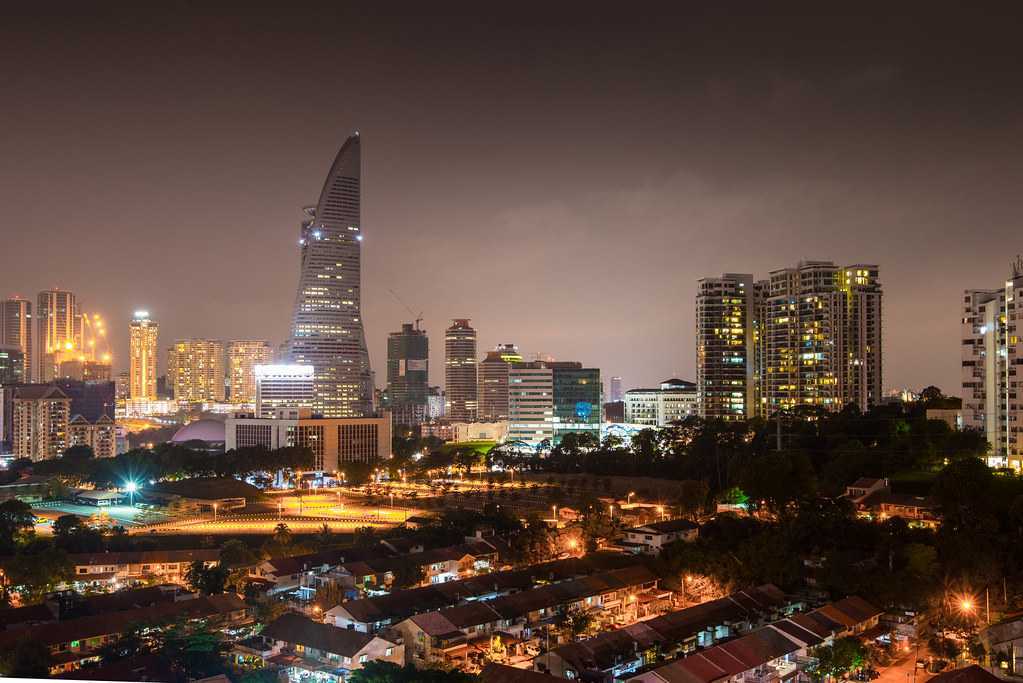
Petaling Jaya was planned to be a satellite town to prevent people from assisting the communists, hence, the earlier housing areas were fenced off from the surrounding area. The first two main roads built in Petaling Jaya were simply called Jalan 1 or Road 1 and Jalan 2 or Road 2. Road 1 was later named Jalan Templer while Road 2 was named Jalan Othman after Othman Mohamad, former Menteri Besar or Chief Minister of Selangor. Until the end of 1953, the town was administered by the Kuala Lumpur district officer. The Petaling Jaya Town Authority commenced administrating Petaling Jaya in 1954. Administratively and historically, it was considered part of Kuala Lumpur. However, Petaling Jaya ceased to be part of Kuala Lumpur when the latter became a Federal Territory, and at that point, it became a township in its own right within the state of Selangor.
Following a boundary realignment exercise in January 1997, parts of Petaling Jaya including Subang Jaya, USJ, Putra Heights, and Bandar Sunway were ceded to the newly formed Subang Jaya Municipal Council. In exchange, the MPPJ annexed Bandar Utama, Sungai Buloh, Bukit Lanjan, and Kota Damansara from the Petaling District Council, which disestablished itself after the cession. Due to the proximity of the city to the capital of Malaysia, Petaling Jaya has been the headquarters of many federal government departments.

A prominent landmark in PJ is the Kota Darul Ehsan arch, which symbolically marks the boundary between Kuala Lumpur and Petaling Jaya. This arch straddled the Federal Highway which was originally the only highway link between Petaling Jaya and Kuala Lumpur. However, many links now exist as alternatives to the congested Federal Highway. Close to the Kelana Jaya Line’s Taman Jaya station is the Petaling Jaya Museum, as well as the Thai Wat Chetawan temple, very popular amongst the Buddhist community. A short drive ahead is PJ State, the nickname for the Central Business District of Petaling Jaya with the landmark Menara MBPJ as a focal point. PJ State is more formally referred to as PJ New Town. Damansara is the main shopping hub of Petaling Jaya with many of the city’s shopping malls being located there.
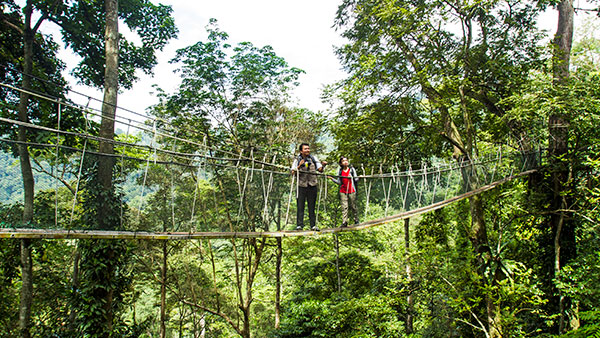
The Forest Research Institute Malaysia is one of the chief institutes in tropical forestry research in the world housing a multiplicity of flora and fauna. The institute provides an opportunity for camping at Perah Campsite, trekking at natural trails and picnics at Sungei Kroh. Kepong Botanical Garden, the Ethnobotanical Garden and the Colours of FRIM allow visitors to explore. Other places worth visiting include the Research Gallery, Malay traditional houses, the Wetland area, the Arboretum and the Silicified Wood.

Situated in 1 Utama Shopping Centre, the Secret Garden is regarded as one of the largest rooftop gardens in the world. This garden sprawls across an area of about 30,000 sq ft and houses about 600 species of plants. The garden is divided into several zones based on the various species of plants. Some of the most attractive zones of the Secret Garden include the Rainforest Zone and the Victoria Amazonica Zone. The meandering pathways that are constructed between beds of plants are quite attractive, and artificial ponds and waterfalls accentuate the beauty of the place. Guided tours are also available during the first weekend of the month. The garden is open only on weekends and public holidays between 10 am and 10 pm.

Wat Chetawan is a popular Buddhist temple. A Theravada Buddhist Thai temple, with the Buddha Thammeen shrine inside, is a sight to behold, with its sparkling gold seat. People believe that this complex is built in the only true and original Thai style. Also known as the Chetawan Buddhist Temple, the temple was built in 1957 and officiated by the late King Bhumibol Adulyadej, the King of Thailand at the time. The temple is also the only Malaysian Siamese temple that has been chosen as the custodian of the Buddha sacred relics for all Malaysian Buddhists that are parts of the ancient relics discovered in Piprahwa, a village in Uttar Pradesh near the border of the Kingdom of Nepal in 1898 which were presented to King Chulalongkorn of Siam by the then British Viceroy of India, Lord Curzon.
The main shrine is heavily gilded in gold leaves and intricately decorated with multi-coloured glass tiles. The main prayer hall houses several images of Buddha while the pavilion features the four-faced God, Phra Phrom and the Bodhisattva of Compassion, Guan Yin. Another prayer hall pays tribute to abbots with Malay titles that marked their northern Malay Peninsula and southern Thai origins.

Muzium Coklat is also known as the Chocolate Museum where visitors can learn all about the history of chocolate and can watch how chocolate is processed and prepared, taste samples and even buy some to take back home.

Also called the Muzium Petaling Jaya, the Petaling Jaya Museum showcases the history and development of Petaling Jaya. The museum building was originally established in 1980 as a children’s reading house. In 1992, the reading house ceased to function due to its location and the building was taken over by the environment and development department. It was then transformed into a nature education centre and in April 2007, the building was turned into a museum. Construction and renovation work were completed in October 2007 and the museum was officially opened on November 12, 2007. It was later closed for renovation and reopened again in April 2016. The museum showcases the historical development of Petaling Jaya and is housed in three sections: the origin of Petaling Jaya, the administration of Petaling Jaya, and the expansion of Petaling Jaya. The museum is open daily except Fridays and public holidays from 9 am to 5 pm and admission is free. The museum is within walking distance of the Taman Jaya LRT Station.

Batu Caves
Batu Caves, a Mogote type of karst landform, has a series of caves and cave temples in Gombak. It takes its name from the Malay word batu, meaning rock. The cave complex is one of the most popular Hindu shrines outside India, is dedicated to Lord Murugan, and is the focal point of the Tamil festival of Thaipusam in Malaysia. The caves are also referred to as the 10th cave or hill for Murugan, as there are six important holy shrines in India and four more in Malaysia. The three others in Malaysia are Kallumalai Temple in Ipoh, Tanneermalai Temple in Penang, and Sannasimalai Temple in Malacca.
The limestone forming Batu Caves is said to be around 400 million years old, with some of the cave entrances used as shelters by the indigenous Temuan people. As early as 1860, Chinese settlers began excavating guano to fertilise their vegetable patches. However, they became famous only after the limestone hills were recorded by colonial authorities in 1878.

The cave was promoted as a place of worship by K. Thamboosamy Pillai, an Indian Tamil trader. He was inspired by the vel-shaped entrance of the main cave and was inspired to dedicate a temple to Lord Murugan within the caves. In 1890, Pillai, who also founded the Sri Mahamariamman Temple in Kuala Lumpur, installed the consecrated statue of Sri Murugan Swami in what is today known as the Temple Cave. Since 1892, the Thaipusam festival in the Tamil month of Thai, which falls in late January/early February, has been celebrated there.
Wooden steps up to the Temple Cave were built in 1920. In the 1930s, the stairs began to show signs of wear and tear, and it was proposed to build two flights of concrete stairs to the upper caves. The proposal was forwarded in 1939, and work was completed in 1940. Currently, there are 272 concrete steps. Of the various cave temples that comprise the site, the largest and best known is the Temple Cave, so named because it houses several Hindu shrines beneath its high vaulted ceiling.
In August 2018, the 272 steps were painted, with each set of steps painted in a different range of colours. At the base of the hill are two more cave temples, the Art Gallery Cave and the Museum Cave, both of which are full of Hindu statues and paintings. This complex was renovated and opened as the Cave Villa in 2008. Many of the shrines relate the story of Lord Murugan’s victory over the demon Soorapadman. An audio tour is available to visitors.

The Ramayana Cave is situated to the extreme left as one faces the sheer wall of the hill. On the way to the Ramayana Cave, there is a 15-meter-tall statue of Lord Hanuman and a temple dedicated to him. The consecration ceremony for the temple was held in November 2001. The Ramayana Cave depicts the story of Rama in the manner of a chronicle along the irregular walls of the cave. A 43 m high statue of Lord Murugan was unveiled in January 2006, having taken three years to construct. It is the second-tallest Murugan statue in the world.
The Batu Cave hill and its numerous caverns contain a wealth of plants and animals, many of which are specialised for limestone environments. A total of 269 species of vascular plants have been recorded from the site, including 56 species which are found only on limestones. Various undeveloped caves contain a diverse range of cave fauna, including some unique species. The caves have some 21 species of bats, including several species of fruit bats and is also well known for its numerous long-tailed macaques, which visitors feed — sometimes involuntarily. These monkeys may also pose a biting hazard to tourists. especially small children as they can be quite territorial.
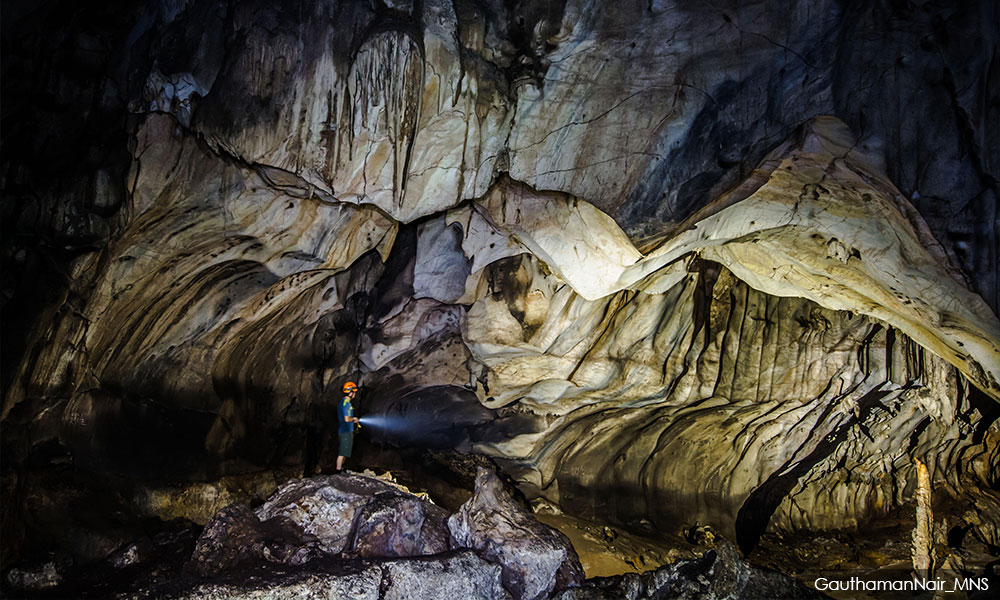
Below the Temple Cave is the Dark Cave, with speleothems and many animals found nowhere else. It is a two-km network of relatively untouched caverns. Stalactites jutting from the cave’s ceiling and stalagmites rising from the floor form intricate formations such as cave curtains, flowstones, cave pearls, and scallops which took thousands of years to form. To maintain the cave’s ecology, access is restricted. The Malaysian Nature Society organises regular educational and adventure trips to the Dark Wet Caves.
Batu Caves has also been the centre of rock climbing development in Malaysia for the past 10 years. The caves offer more than 160 climbing routes scattered all around and are easily accessed, as most crags start from ground level. These climbing routes often start from the Northeastern side of the cave complex whereas the staircase and temple entrance face the South. This Northeastern area is known as the Damai caves. Abseiling and spelunking trips can be organised with some local adventure companies.

Batu Caves serves as the focus of the Tamil community’s yearly Thaipusam festival. They have become a pilgrimage site not only for Malaysian Hindus, but Hindus worldwide. A procession begins in the wee hours of the morning on Thaipusam from the Sri Mahamariamman Temple in Kuala Lumpur leading up to Batu Caves as a religious undertaking to Lord Murugan lasting eight hours. Devotees carry containers containing milk as an offering to Lord Murugan either by hand or in huge decorated carriers on their shoulders called Kavadis. The kavadi may be simple wooden arched semi-circular supports holding a carrier foisted with brass or clay pots of milk or huge, heavy ones which may rise to two metres, built of bowed metal frames which hold long skewers, the sharpened end of which pierce the skin of the bearers torso. The kavadi is decorated with flowers and peacock feathers imported from India. Some kavadi may weigh as much as a hundred kilograms.
After bathing in the nearby Sungai Batu or Rocky River, the devotees make their way to the Temple Cave and climb the flights of stairs to the temple in the cave. Devotees use the wider centre staircase while worshippers and onlookers throng up and down those balustrades on either side. When the kavadi bearer arrives at the foot of the 272-step stairway leading up to the Temple Cave, the devotee has to make the arduous climb. Priests attend to the kavadi bearers. Consecrated ash is sprinkled over the hooks and skewers piercing the devotees’ flesh before they are removed. No blood is shed during the piercing and removal.
In the last decade, the surrounding area has changed from a small village to industrial estates, new housing, and retail. There is also an elevated flyover across the highway. A new 515-million-ringgit KTM Komuter rail extension from Sentul to Batu Caves began operations in July 2010, serving the rebuilt Batu Caves Komuter station.
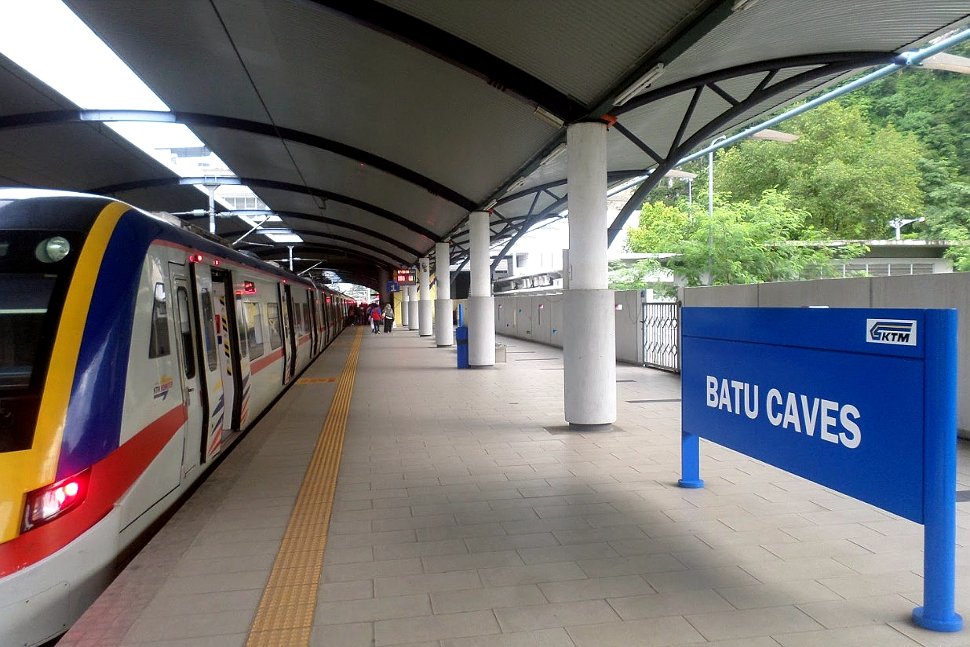
The cave is open from 6 am to 9 pm and the best and fastest way to reach the cave from Kuala Lumpur is via the commuter train which stops at the Batu Caves Komuter station opposite the cave complex. The fare from KL Sentral to Batu Caves is around RM 2.6 per person. One can also take a taxi which costs between RM 30 to RM 40, but depending on which part of KL one is coming from, take quite a bit of time, given the traffic.

Ampang Jaya
Commonly known as Ampang, Ampang Jaya is located just outside the eastern border of Kuala Lumpur Federal Territory. Ampang was one of the earliest areas in the Klang Valley to be opened for tin mining. The name Ampang is derived from the old spelling of the Malay word empangan or ampangan, which means a dam; the place referred to the miners’ dams. A road was built to connect Ampang to Kuala Lumpur which is today’s Jalan Ampang.
Between colonial rule and February 1974, Ampang was part of greater Kuala Lumpur in Selangor. Following the creation of the Federal Territory of Kuala Lumpur, Ampang was split into two; the western part, located within the Federal Territory, became Ampang Hilir, and the eastern part, which remained in Selangor, became part of Hulu Langat or Kajang.

During the height of the Malayan Emergency in the 1950s, the British established the Ampang New Village, which became one of the largest Chinese settlements in the Klang Valley. The Kau Ong Yah Lam Thian Kiong Temple in Ampang New Village is famous for the 9 Emperor Gods festival, which is celebrated annually on the 9th month of the Chinese lunar calendar, between late September and early October.
Ampang Jaya borders the remainder of Hulu Langat District in the east and south, the Federal Territory of Kuala Lumpur in the west, the Gombak District in the north, and a short border with Bentong in Pahang in the northeast.

The Zoo Negara or National Zoo is located on 110 acres of land in Ulu Klang in Gombak. It was officially opened on November 14, 1963, by the country’s first prime minister Tunku Abdul Rahman. The zoo is managed by the Malaysian Zoological Society and is home to 5,137 animals of 476 different species. When it was opened, it was known as the Zoo in the Jungle due to the lush vegetation that dominated the region. The zoo welcomed its millionth visitor on 14 November 1966, just three years after opening, and by 1986, the zoo was attracting over 1 million visitors per year. The zoo remained surrounded by dense tropical forests until the late 1970s when Kuala Lumpur experienced rapid population growth fueled by an economic boom. Nearby Ulu Klang was targeted for large-scale residential development to accommodate the expanding urban population, resulting in habitat loss in formerly wild areas surrounding the zoo. In the late 1990s and early 2000s, there were plans to move the zoo to other locations in Selangor. However, the plans were largely unpopular among the public and it was decided not to relocate the zoo.
The Reptile Park has both indoor and outdoor exhibits and includes saltwater crocodiles, false gharials, and dwarf crocodiles as well as tortoises and terrapins, including Aldabra giant tortoises which are the second largest tortoise species in the world and local Tutong or river terrapins. The Amphibian World center at the Reptile Park has a variety of frogs and toads that originate from various habitats in Malaysia. In 2014, a male and female giant panda pair named Xing Xing and Liang Liang went on public display at an air-conditioned, purpose-built Giant Panda Conservation Centre next to tram stop T5. The pandas are on a 10-year loan to Malaysia. On 26 May 2018, Yi Yi, a four-month-old female panda went on show for the first time. The cub is the second born in Malaysia. The cub’s sister, Nuan Nuan, was born in August 2015 and sent back to China in 2017 as part of Beijing’s agreement with Malaysia that cubs born in captivity must be sent back to China at the age of two. The third giant panda cub was born in June 2021.

The zoo is home to three Asian elephants: two females, Siti who was born in 1979 in Fraser’s Hill; Sibol, who was born in 1978 at Temerloh and a male, Teriang, who was born in 1980. The trio have been in the zoo since they were very young. This aviary holds over a hundred species of birds from all around the world. The Birds Photo Corner in the aviary lets visitors take souvenir photos with a variety of macaws and cockatoos on weekends. The Nocturnal Exhibits which are indoor, are home to fruit bats, the largest bat in the world, which are sometimes called flying foxes, as well as mousedeer. The Australian Plain is home to emus, agile wallabies, red kangaroos, and red-legged pademelons.
Children’s World houses a variety of mostly domestic animals including goats, rabbits, ducks, and chickens running around freely, as well as parrots and guinea pigs. It includes a mini-rainforest with a variety of plants and insects, as well as a small aviary, fish pond, miniature horse barn, and playground. The Bear Complex is home to several types of bears including Asian black bears, brown bears, and sun bears. The Savannah Walk is one of the largest open-concept exhibits in the zoo and is home to giraffes, plains zebras, ostriches, white rhinos, sable antelopes, and scimitar oryx. Zoo Negara’s Tunku Abdul Rahman Aquarium is the first ecological-based freshwater aquarium that highlights the Malaysian river and wetlands. The aquarium exhibits show the ecosystem or the habitats of Malaysian river systems in the upper, middle, and lower estuarine zones and finally, the sea. The aquarium features fish that are commonly seen in Malaysian rivers, as well as rare and endangered species including invertebrates such as crabs, prawns, corals, and aquatic insects.

Zoo Negara has also built an insect zoo where more than 200 species of insects from around the world are housed. Opened in 2010, the Hornbill Centre is a breeding centre houses 7 species of hornbills native to Malaysia, including great hornbills, Oriental pied hornbills, rhinoceros hornbills and wrinkled hornbills. Other attractions include sea lions, macaques and macaws that are part of a Multi-Animal Show that is shown twice daily. Train rides and guided tours are available on weekends.
The Mini Bee Museum is located at the heart of Zoo Negara and helps educate visitors about the many types of bees in the country. The Multi-Animal Photo Corner is located by the zoo’s main entrance and is opens on weekends. Visitors can have their pictures taken with snakes, miniature horses and birds.

The Ampang Recreational Forest or Taman Rimba Ampang in Malay is a lowland dipterocarp forest that takes its name from the Ampang River, which flows through the forest. The forest is one of the most popular nature sites in the Klang Valley with the stream and shady playgrounds popular for family outings on weekends. In 2005 the forest was included in the much-larger Selangor State Park. Numerous species of plants and animals can be seen in the forest with the forest frequented by birdwatchers. Several bridges, pedestrian walkways, toilets, playgrounds and other facilities have been built in the park over the years. A nominal fee is charged for the car park and entry to the forest. The park can be reached by taking a train to the Ampang LRT station and then taking a taxi to the park.
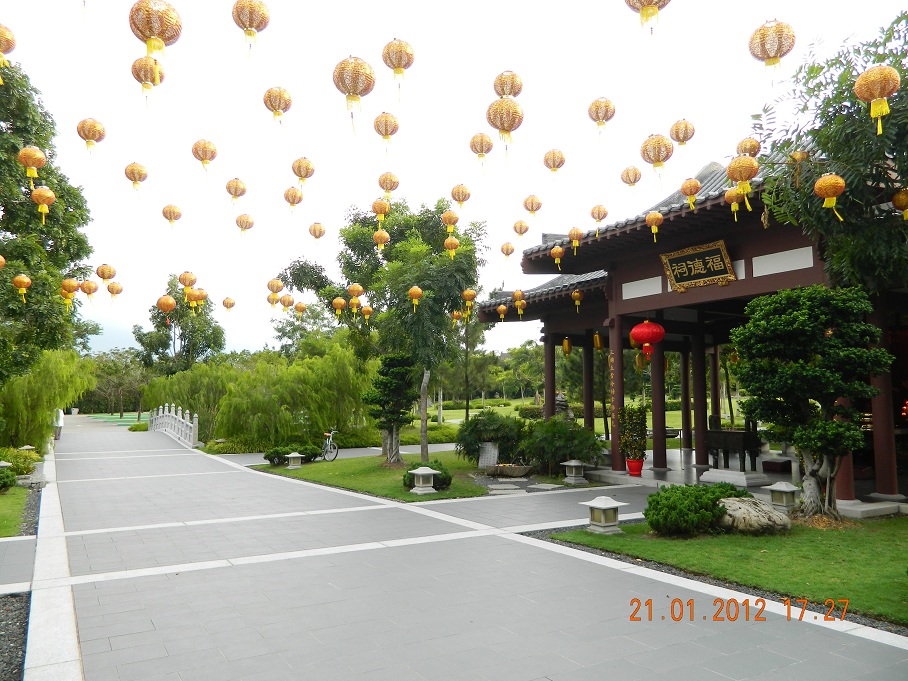
Nirvana Memorial Park is a private cemetery and mortuary with the longest dragon statue in Malaysia. It is 1,000 feet long and fully air-conditioned inside. It was established in 1985 by David Kong and is touted as the largest funeral service in Southeast Asia and also serves as a pet cemetery.





 Memories and Such