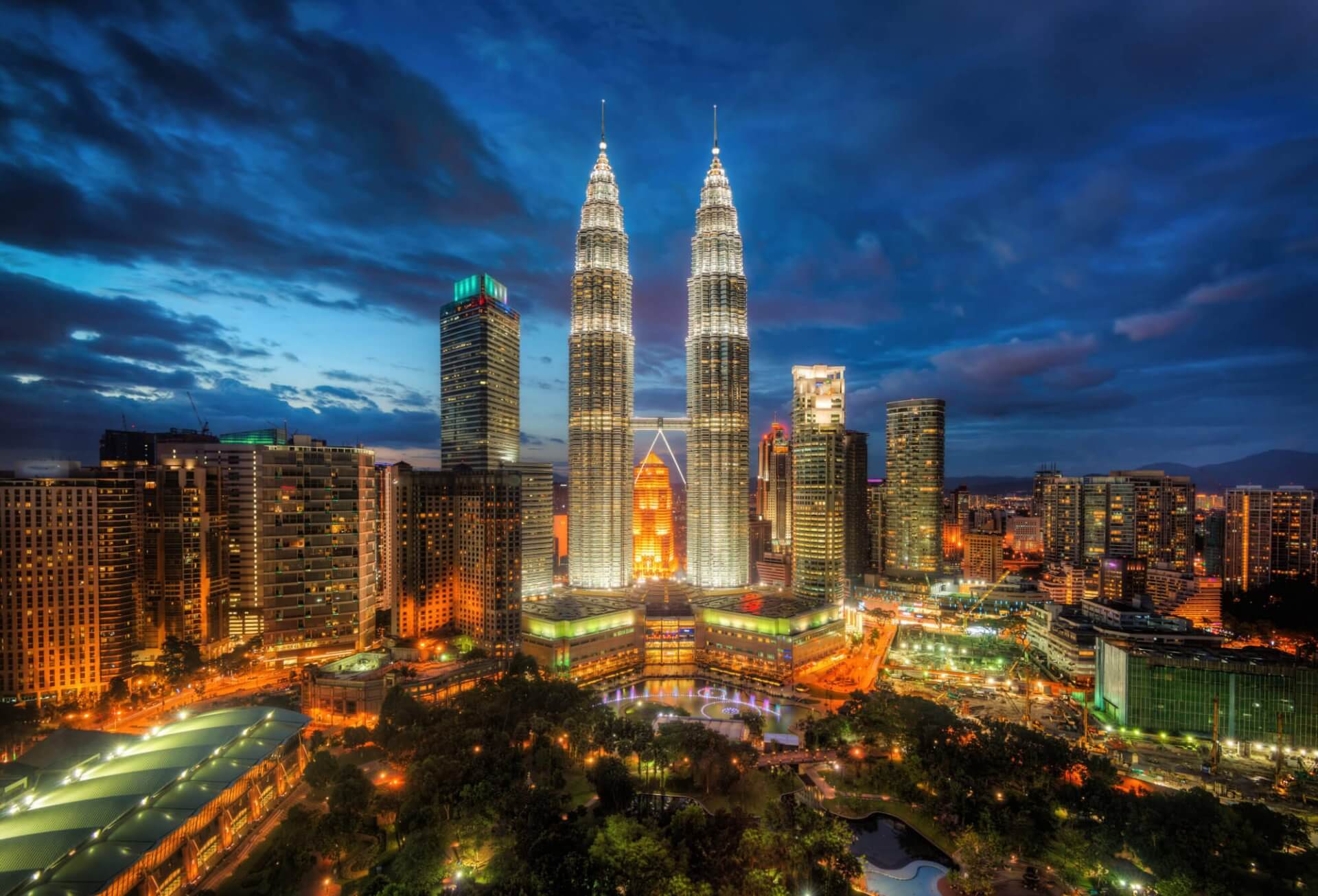
Petronas Twin Towers, the world’s tallest building until 2004, has a double-decker sky bridge that joins the 41st and 42nd floors of the two towers at about 170 meters above ground level, while the observation deck is located yet higher on the 86th level. The Twin Towers are also home to the Dewan Filharmonik Petronas concert hall, Southeast Asia’s leading venue for classical music.
The sky bridge at Petronas Twin Towers is the world’s highest two-storey bridge, joining the 41st and 42nd floors of the two towers. It not only acts as a podium where one can change elevators to reach higher levels but can also be used as a safe evacuation route in cases of emergency. Only the 41st level is open for visitors but is limited to only 1000 visitors per day. Located on the 86th level of Tower 2, the observation deck is at a height of 370 meters from the ground and offers a breathtaking 360-degree aerial view of the city. To visit the Petronas Towers, visitors must first purchase tickets. Tickets can be purchased online or at the counter. Discounted tickets for seniors are available for those 55 years of age and above. Queues for tickets can get quite long sometimes. The observatory also has miniature models of the Petronas Towers and the city of Kuala Lumpur. Each group is allowed 20 minutes to admire the view and to take photos. The tower sky bridge and observation are closed on Mondays and Tuesdays to Saturdays, it is open from 9 am to 9 pm with the last admissions at 8:30 pm. On Fridays, it is open from 9 am to 1 pm and then again between 2:30 to 9 pm. Entry fees for adults between 13 and 60 are RM 80 per person while children between 3 to 12 pay RM 33, senior citizens above the age of 60 need to pay RM 42 and infants below the age of 3 can enter for free.
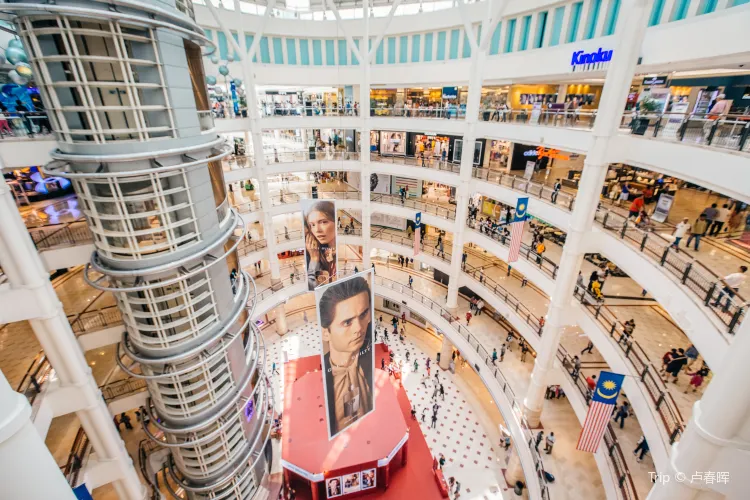
Suria KLCC is a 140,000-square-meter upscale retail centre at the foot of the Petronas Towers. It features mostly foreign luxury goods and high-street labels. Its attractions include an art gallery, an underwater aquarium and a science centre. Boasting approximately 300 stores, Suria KLCC is touted as one of the largest shopping malls in Malaysia. The Petronas Philharmonic Hall, also built at the base of the towers, is frequently associated with Suria KLCC’s floorspace. During holidays or celebration days, Suria KLCC is the top spot to see the decorations, especially at the main entrances and also in Centre Court. It also promotes the uniqueness and beauty of Malaysia’s cultural diversity to visitors.

Located at Suria KLCC Mall, Aquaria KLCC is one of the largest aquariums in Southeast Asia, housing more than 250 varied species of animals. Spread over 60,000 square feet over two levels, the main highlight is the 90-meter underwater tunnel. The oceanarium takes one on a journey from the highlands to the rivers, through the rainforest, into the coral reefs and then into the open ocean. The aquarium is divided into two levels and is essentially a journey across different water sources. Aquaria KLCC also hosts fish feeding sessions on Monday, Wednesday and Saturday. The aquarium is open from 10 am to 8 pm, Monday to Sunday, with the last admission at 7 pm. The entry fee is RM 69 for adults, RM 59 for children and RM 49 for senior citizens, while the disabled or handicapped need to pay RM 16.

Merdeka Square, also known as Dataran Merdeka, is an iconic landmark. Situated in front of the famous Sultan Abdul Samad Building, it is a popular sightseeing spot, with buildings like the National Textile Museum and City Gallery surrounding it. Earlier known as Selangor Club Padang, Merdeka Square is where, at midnight on August 31, 1957, the independence of the Federation of Malaya from the British Empire was officially announced. The most striking sight of Merdeka Square is the 95-meter-tall flagpole, where the Malay flag was raised after independence for the first time. It is also the venue of the Independence Day Parade each year. There is also a black marble plaque close to the flagpole, marking the exact location where the Malayan flag was raised for the first time after independence. The Hari Merdeka Parade or the Independence Day Parade is held at Merdeka Square annually. There is a light show that takes place daily at 9 pm.
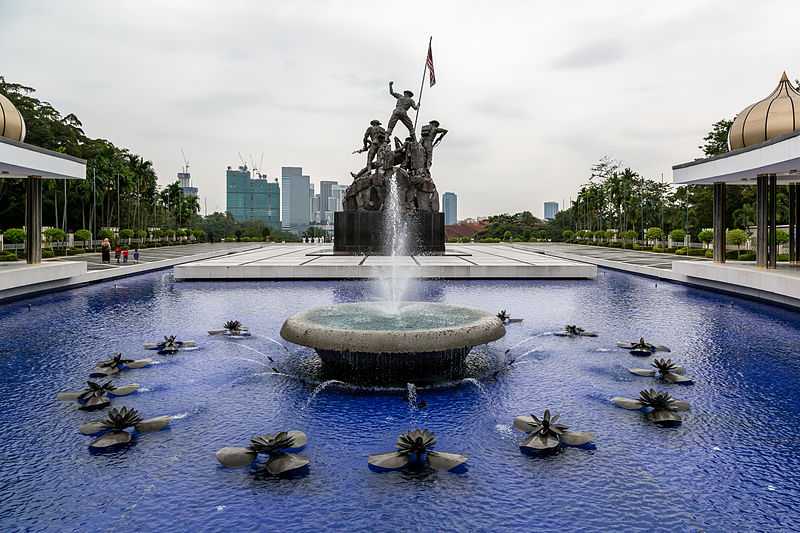
The National Monument of Malaysia, popularly known as Tugu Negara, is dedicated to the 11,000 people who were martyred during the First and Second World Wars and the subsequent emergency period of Malaysia’s independence. Located along Jalan Tamingsabi, at the northern end of the Lake Gardens, Tugu Negara has many details, each of which is symbolic of the various stages of struggle and achievements against both the British and Japanese forces. The National Monument was designed and sculpted more than 50 years ago by the Austrian-born designer and sculptor, Felix de Weldon. The bronze figurines symbolize extreme courage, strength, leadership, suffering and self-sacrifice. The sculpture depicts a group of seven soldiers, of whom one holds onto the national flag of Malaysia, another soldier is armed with a decorative rifle and bayonet; and a third soldier is armed with a machine gun. Two of the soldiers are tending to a wounded ally and this gesture is highly symbolic of their hard-earned victory, whereas the remaining two are slumped on the feet of the memorial, representing the defeated communist forces. Additionally, the strong granite base is carved with a prominent message: “Dedicated to the heroic fighters in the cause of peace and freedom, may the blessing of Allah be upon them”, in English, Latin and the Malay Jawi script. The crescent-shaped Central Pavilion has two special features: a microfilm vault where the names of all the fallen heroes are engraved, and a metal grille that not only houses the vault but also displays the different state emblems of Malaysia. The national monument is open daily from 7 am to 6 pm.
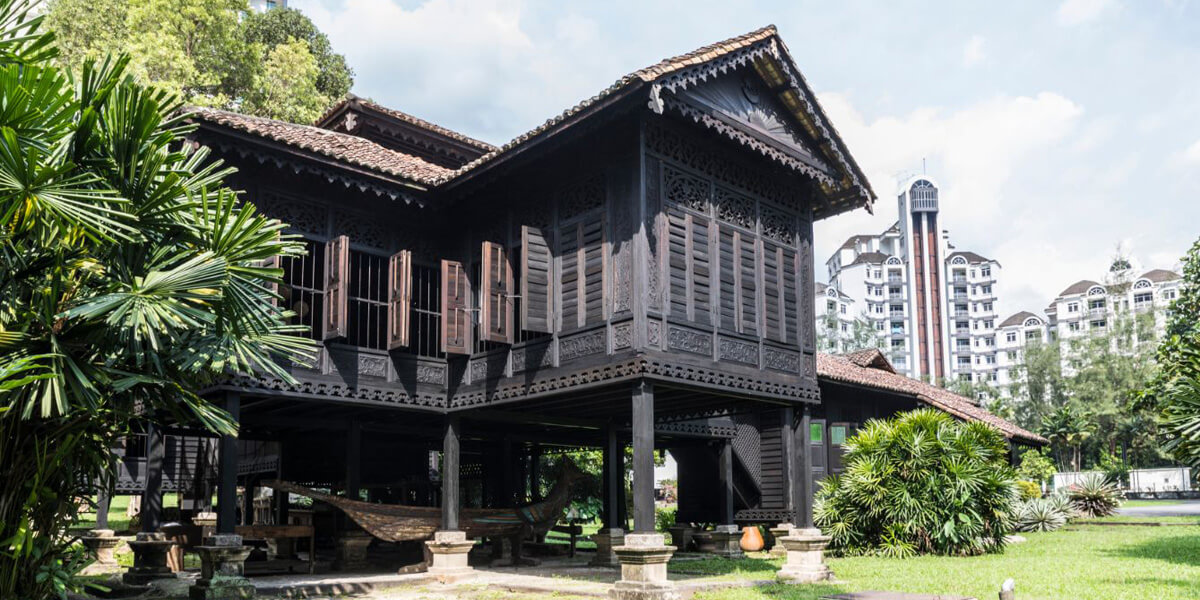
Located in Jalan Stonor, Rumah Penghulu Abu Seman is a wooden stilt house. One of the oldest wooden houses in Malaysia, it is known for its vernacular style of architecture. Adorned with antique furniture and artefacts, the heritage structure was constructed by some of the most skilled Malaysian artisans in the early 1900s. While the house was initially owned by Mukim Bagan Samak’s local headman, it was later restored by the leading national heritage NGO, Badan Warisan Malaysia. A guided tour of Rumah Penghulu Abu Seman is available which provides an insight into the traditional Malaysian lifestyle and culture.
Rumah Penghulu Abu Seman encompasses a combination of traditional as well as modern architectural elements. The house has a sloped roof, a beamed foundation and a pier that are specifically built for harsh monsoons. Louvre windows and walls further help to regulate the internal temperature by blocking the heat and capturing the breeze. The house is surrounded by a traditional heritage garden, which houses over 50 plant species. These plant species have historical and cultural significance for Malaysians. Rumah Penghulu Abu Saman is closed on Sundays and public holidays and from Monday to Saturday, it is open from 11 am to 3 pm. Entry fees are RM 10 per person and guided tours start from RM 10 per person and run during its opening hours.
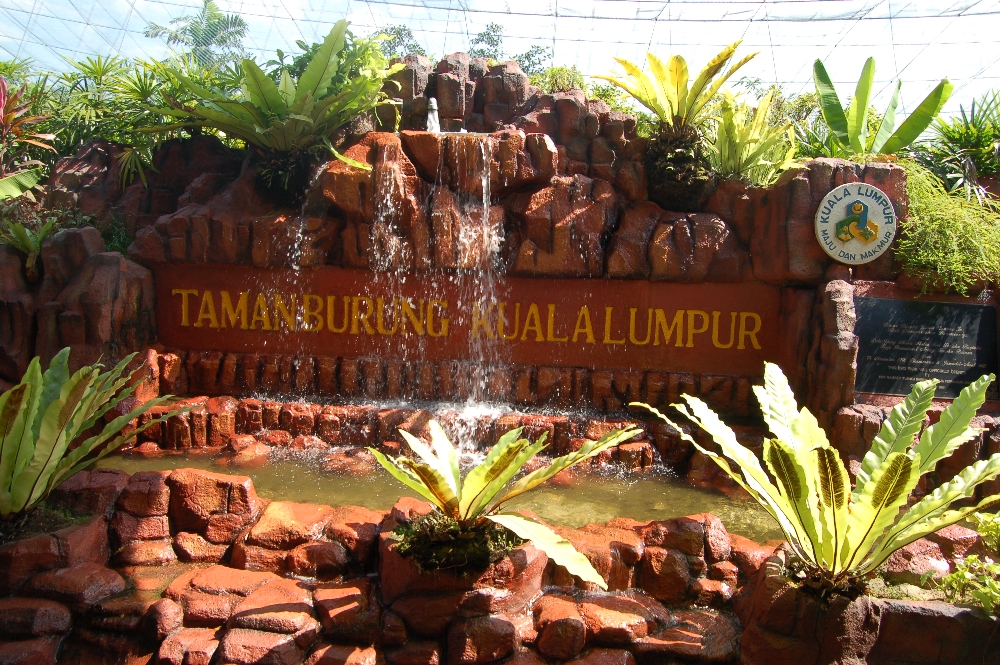
The Taman Burung Kuala Lumpur, also known as the Kuala Lumpur Bird Park, is a 20.9-acre public aviary adjacent to the Lake Gardens. This is the largest covered bird park in the world, housing more than 3,000 birds. There are feeding booths at various points in every zone where one can feed cut fruits and milk to the free-flying birds. The bird park is divided into 4 zones, with the main entrance leading directly to Zone 1 and Zone 2 having the ticket booth. The main entrance of the park directly leads to the first zone housing a netted walk-in aviary. Free-flying birds are fed at 10:30 am while eagles are fed at 2:30 pm. Zone 2 is home to the Baya weaver famous for its nest-building skills, the Nicobar pigeon, which is the closest living relative to the Dodo bird, the Ostriches and the Scarlet Ibis with its brilliant scarlet colouration. The third zone houses two members of the hornbill family –the Rhinoceros Hornbill and the Oriental Pied Hornbill. It is also home to the exotic Hill Mynas, the Formosan Blue Magpie originating from Taiwan, and the Purple Swamphen. The Hornbill Feeding time is 11:30 am while the Hornbill Restaurant and Gift Shop is located in this zone and is open from 9 am to 8 pm daily. The fourth zone, which is the biggest, houses the walk-in parrot enclosure and is home to 20 different species of parrots. The main attraction of this zone is the Waterfall Aviary where Milky Storks live in a netted enclosure that has a 30-foot high freshwater waterfall.
This leads to the Oriental Bird Aviary which has some 50 species of oriental birds. This zone also has an air-conditioned Bird Gallery, an Education Station and a Bird School. The Bird Park also has a 350-seat open-air Amphitheatre which conducts daily Bird Shows. The Daily Amphitheatre timings are between 12:30 to 3 pm. The bird park is open every day between 9 am to 6 pm and has entry fees of RM 63 for adults and RM 42 for children.

The Kuala Lumpur City Center Park, popularly known as KLCC Park, is a 50-acre garden located at the base of Petronas Towers and opposite Suria KLCC Shopping Centre. The major attractions include the Lake Symphony, the As Syakirin Mosque, and the children’s public pool. The water fountain show is held daily at 8, 9 and 10 pm.
The park has been designed to add a touch of greenery to the iconic Petronas Towers. The KLCC Park has a 1.3km long jogging track, bounded by ornate sculptures and terracotta pavements. The Lake Symphony which is situated right at the mouth of the Twin Towers lights up everyone’s hearts with their musical fountain shows. The park is decorated with ornate waterfalls at a few points along its tracks which make the surroundings appear magical. The park is open between 7 am to 10 pm every day.

The KL Forest Eco Park, formerly the Bukit Nanas Forest Reserve, is the only tropical rainforest in Kuala Lumpur. The 9-hectare forest reserve is also one of the oldest forest reserves in Malaysia. The main attractions are the well-maintained walking trails, diverse trees, and a kid’s playground. It is also home to a forest Canopy Walk – a 200-meter wood and steel aerial bridge. The bridge towers above the reserve offer a stunning view of the Kuala Lumpur skyline. The 200m canopy walk provides a great view of Kuala Lumpur and the rainforest to its visitors. It also makes for good photographs and offers peaceful surroundings. Visitors can learn about natural medicines and herbs in the Herbal Garden. There are footpaths for casual joggers and natural trails for adventure seekers in the park. The best time to visit the park is between 7 and 9 am as it becomes crowded after 10 am.
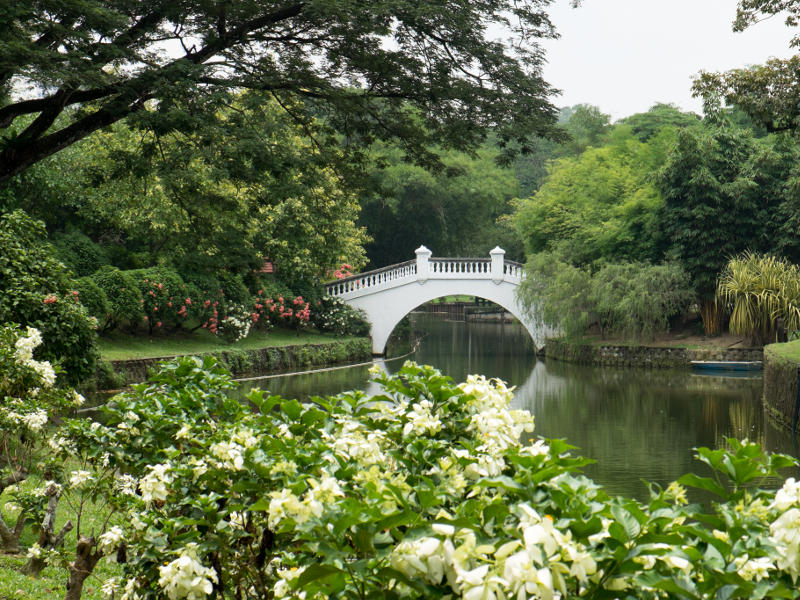
Spanning 92 hectares, the green and landscaped Perdana Botanical Gardens is in Kuala Lumpur’s Heritage Park. The park is a great jogging site and houses different species of orchids, a hibiscus park, and a 20-acre bird park. Inside the garden also lies a deer park, a sunken garden, a herb garden, and a collection of rare trees, cycads, bamboo, and grass.
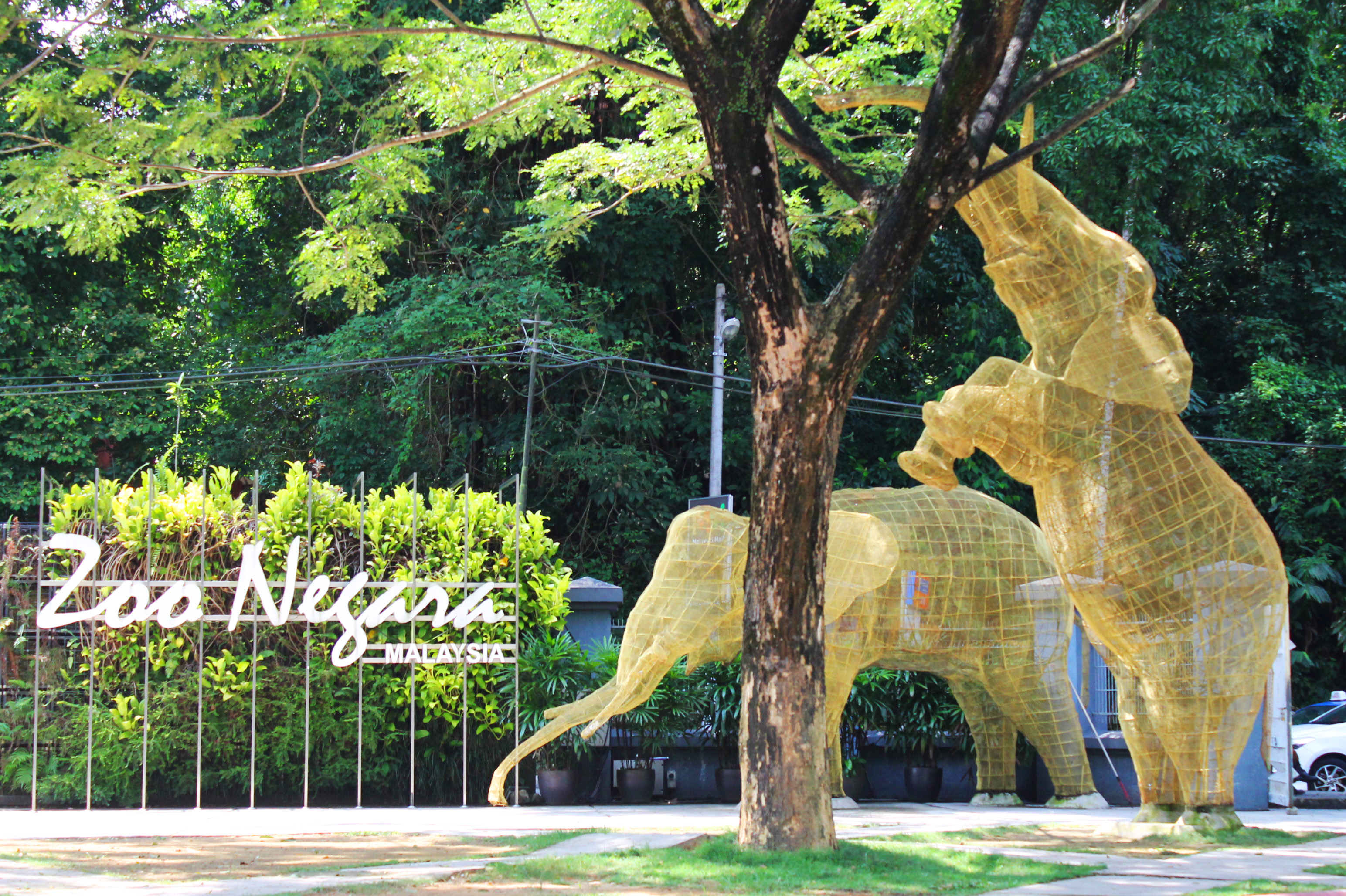
The National Zoo of Malaysia, commonly known as Zoo Negara, is spread over more than 100 acres and is home to more than 476 wildlife species. The main highlight of this zoo is Malaysia’s famous giant pandas, Xing Xing and Liang Liang. Visitors are free to stroll through the park and get a firsthand experience of the concept of an open zoo. There are several Banyan trees at Zoo Negara, with one gigantic Banyan tree that is supposedly the oldest in Malaysia.
The exhibits at the National Zoo are present in a replicate of their natural habitat; this allows visitors and animals to get a more natural experience. There is also a scenic lake present that houses several flamingos in the zoo. There are more than 16 exhibits at the zoo, and each one of them offers something new to its visitors. The zoo is open from 9 am to 5 pm daily and last admissions are at 4 pm. Entry fees are RM 85 for adults, and RM 43 for children.

The Kuala Lumpur Butterfly Park, located adjacent to the Lake Gardens and the KL Bird Park, is one of the largest butterfly parks in the world. Spread over 80,000 square feet of the landscaped garden, it houses over 5,000 butterflies, exotic plants, butterfly-host plants, and ferns. This park is also home to rhinoceros beetles and praying mantises and is dotted with cascading waterfalls and several ponds with Japanese Koi fish and freshwater turtles. The main attractions here are the landscape gardens which span over an area of 80,000 sq ft with over 5,000 live butterflies along with the butterfly-host plants where they are allowed to flutter about freely in their natural habitats. There is also a special glass shed with a highly temperature-regulated atmosphere where all the Himalayan butterfly species make themselves home. There are more than 120 different species of butterflies and at special ‘butterfly meeting’ booths one is allowed to hold the butterflies. A museum in the premises has a wide range of preserved insects like rhinoceros beetles and praying mantises. The park is open from 9 am to 6 pm daily and entrance fees are RM 22 for adults and RM 11 for children between 2 and 11.
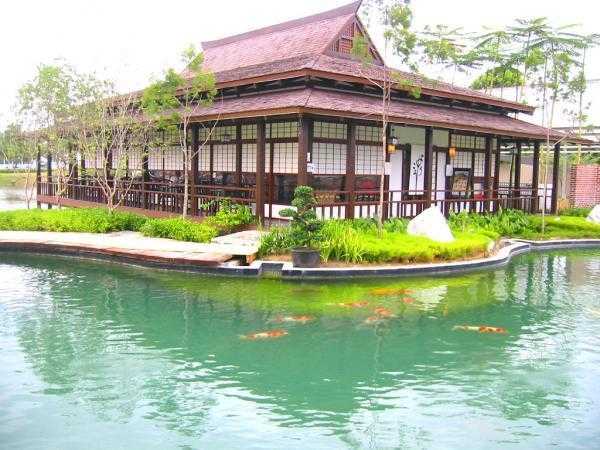
Sentul Park is a beautiful and contemporary lake park on 35-acre land which is a community park for condominium block residents, with only a part of it accessible to the public. The park is located near Jalan Ipoh and is well-linked by bus, train, and road. Sentul Park grabs public attention for its major attraction, the Kuala Lumpur Performing Arts Centre or KLPAC, a vibrant performing arts centre arranging many shows and performances around the year. Sentul Park holds a very rich history of how the Federated Malay States Railway Workshop was attacked and bombed during World War II. There are still some colonial buildings and hollow shells to explore in the historical lake park. Amidst romantic gardens and a mesmerizing pond are two restaurants that are well known for their continental food. Visitors can also buy koi food and accessories from the very famous Sentul Park Koi Centre. Set up in 2004, the Kuala Lumpur Performing Arts Centre is a 794-seater vibrant performing arts hub equipped with a theatre and an academy for music, dance, and drama. The centre is crafted magnificently with a perfect blend of contemporary railway workshops and modern steel and glass extensions. On show days, it is open from 10:30 am to 8:30 pm while on non-show days, it closes at 6:30 pm. The best time to visit the park is from 7 to 9 pm.

Landscaped on hilly terrain, Taman Tasik Permaisuri is a well-admired and spacious lake park in Cheras. This park stretches over an area of about 40 hectares and is managed by the Kuala Lumpur City Hall. The park has a vast lake where one will find elegant pink lotuses and lilies blooming. This gleaming lake is surrounded by some attractive picnic spots with concrete tables and stools that are provided by the garden officials. The park includes 3 outdoor gyms, scenic fountains, a reflexology walking track, a playground for kids, and a canopy walk. The 7-terraced flower garden has 1800 orchids planted in it. A huge football stadium and a common swimming pool are constructed in the eastern section of the park. The western edge of the park has horses that are kept in an enclosed area. Activities like fishing, tai chi class, jogging, and cycling are practised here daily. Taman Tasik Permaisuri was developed as a terraced flower garden in the 1980s. Open from 7 am to 8 pm, there is no entry fee and parking is free at the entrance.
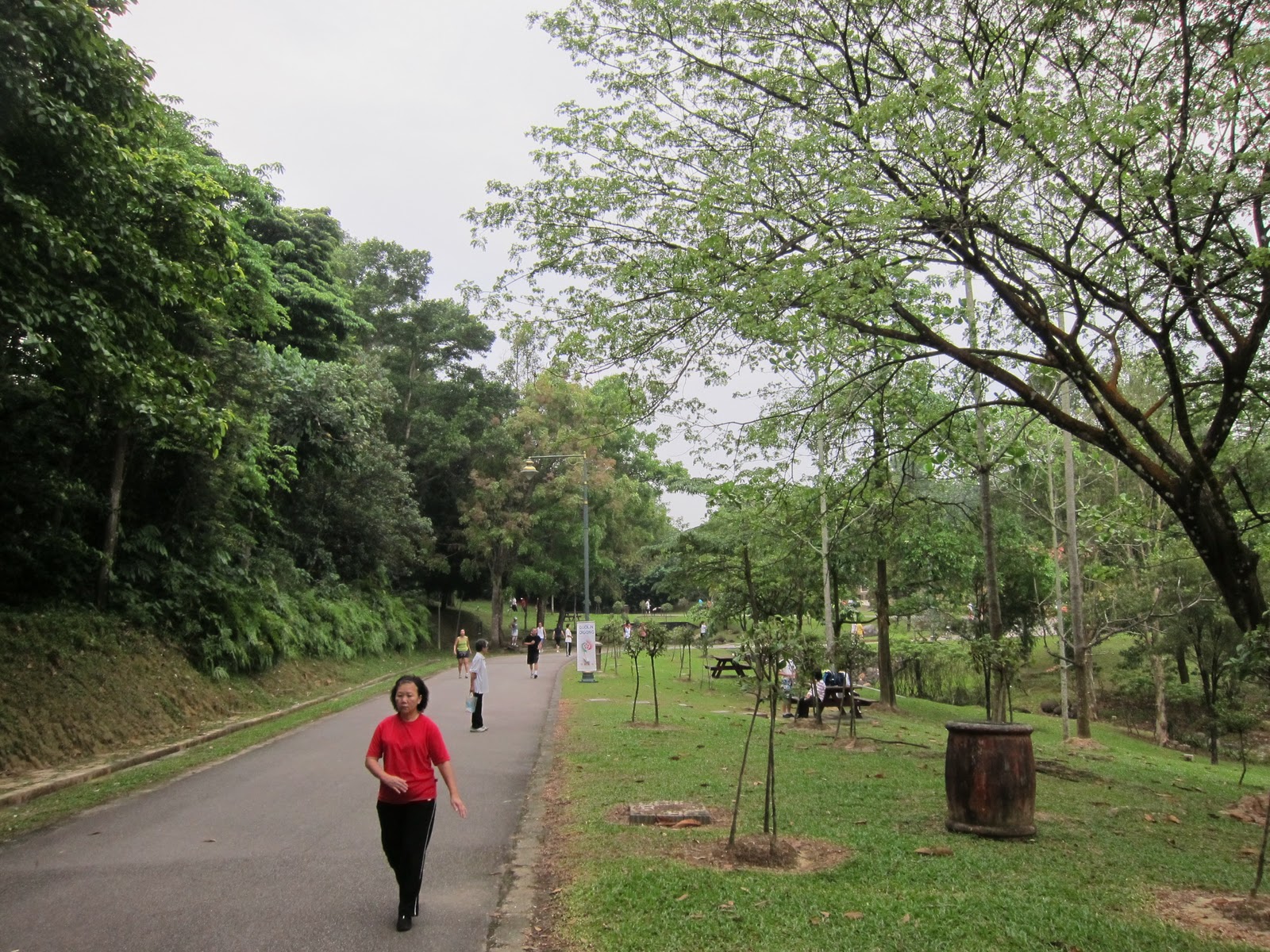
Occupying a sloppy terrain of 80 hectares, Bukit Jalil Park is a captivating recreational park in the Klang Valley. It houses a beautiful themed garden that features some garden displays depicting tea houses in Japan, an Iranian courtyard with tiles and fountains and traditional Malaysian culture. This well-maintained park has constructed walking and jogging tracks. The lush green foliage, fresh air, and crystal clear fountains make this a local favourite. The park is open from 7 am to 8 pm every day and has no entry fees with free parking at the entrance.
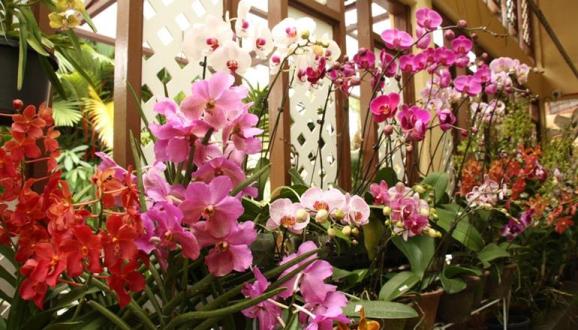
Situated opposite the KL Lake Gardens, the Kuala Lumpur Orchid Garden boasts about 800 species of orchids. While the orchid garden occupies an area of just one hectare, it houses about six thousand orchids as well as exotic species of flowers. The garden has two main varieties of orchids namely Terrestrial Orchids and Epiphytic Orchids, both native to Malaysia. The garden is open daily from 9 am to 6 pm.

Kuala Lumpur’s Chinatown is the hub of food, accessories, clothing, and everything a tourist could ask for with ample sightseeing opportunities. Also referred to as Chee Cheong Kai or Starch Factory Street it was opened by a Chinese man in the street to prevent his fellow countrymen from going back to their home country after the Civil War abandoned the mills they worked at. Spread on the entire street, there are rows of stalls making available fake branded items. Chinatown in Kuala Lumpur is still bright and glowing after sunset, it is a space which never sleeps. Shopping areas in Chinatown include Petaling Street, Central Market, Kota Raya Shopping Complex, and Peter Hoe Beyond. The Sri Mahamariamman Temple was built by Tamil migrants in 1873 and is the main Hindu temple in Kuala Lumpur. The temple displays the sculptures of Sri Mariamman, Lord Ganesha, Lord Muruga, Goddess Lakshmi and many other images. Built in 1880, the Kuan Yin Temple is also known as the Guanyin Temple and is dedicated to Kuan Yin or the Goddess of Mercy. The temple is a mix of European and Chinese architecture. The idol of Shakyamuni can be found in the main prayer hall, to the right of this idol is the idol of South Sea Guanyin and to the left is Kuan Yin’s compassionate side with a thousand hands and a thousand eyes. To the southern end of Petaling Street is the oldest Buddhist temple in Malaysia, the Chan See Shu Yuen Temple. It was built between 1897 and 1906 and is beautifully adorned with colourful paintings and carvings which put to light the Chinese mythology and warriors battling mythical creatures. The Temple also acts as a community centre for the locals. The 121-year-old Kuan Ti Temple, also known as the Guandi Temple is dedicated to Guandi, the Taoist God of literature and war and is situated along Jalan Tun H S Lee. Guan Dao and Guan Jie, sword and spear are placed in front of the Guandi idol which is believed to provide special powers to the devotees if lifted or even touched three times. Masjid Jamek Sultan Abdul Samad is the oldest mosque in Kuala Lumpur and is situated in the middle of the River of Life, fragmenting the River into two. The mosque is always open except for the days when the tiles get slippery due to wet weather. The mosque can be visited during one of the five prayer calls for the best experience.

Brickfields is Kuala Lumpur’s Little India. A melange of the old and the new – swanky high rise standing along colonial kampung or village-style houses, Brickfields is located near KL Sentral. The bustling neighbourhood offers Indian snacks and the neighbourhood is lined with shops. Brickfields is home to some of the most important religious attractions of Kuala Lumpur and the locality houses temples and churches.