2026 Week 08 Update

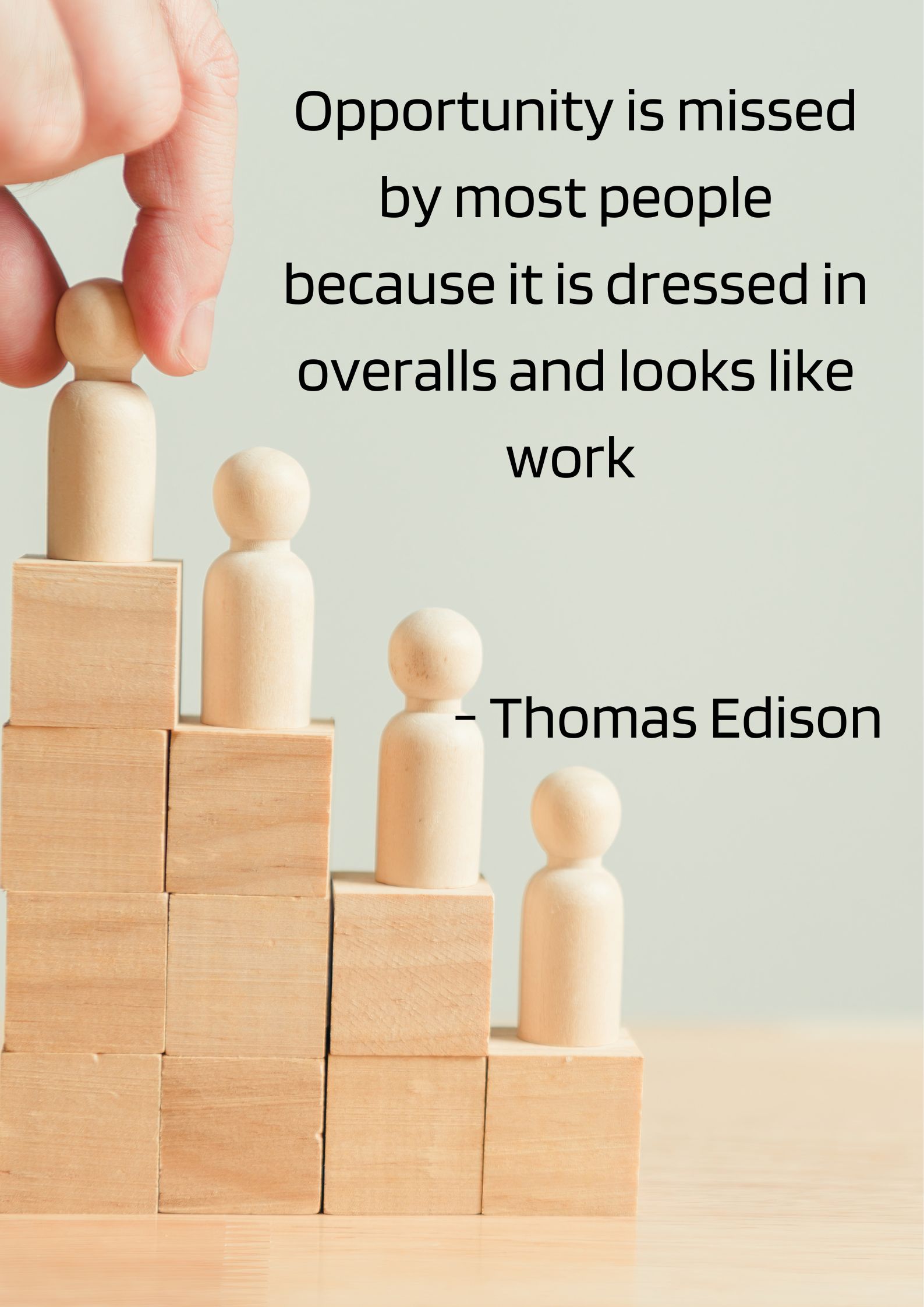
Today’s quote is by one of the most prolific inventors in history, Thomas Edison, who holds over 1,000 patents and is best known for developing the practical electric light bulb, the phonograph, and advancements in motion pictures. Edison famously believed that genius was “one percent inspiration and ninety-nine percent perspiration,” a philosophy clearly reflected in this quote that is a sharp reminder that real opportunity rarely arrives looking glamorous. We tend to imagine opportunity as a breakthrough moment: a sudden promotion, a lucky break, or a dramatic turning point. But more often, it shows up quietly, disguised as effort, repetition, and responsibility.

Edison is pointing to a simple truth: most worthwhile outcomes are built through labour. The “overalls” symbolise hard work, the unexciting, consistent, sometimes tedious actions that lay the foundation for success. Many people overlook these moments because they’re waiting for something easier or more obvious. They want the reward without the grind. This quote also challenges the idea of luck. While timing and circumstance matter, preparation and persistence matter more. What looks like a burden—an extra task, a difficult project, or a skill that takes time to learn—may actually be the doorway to growth. The people who recognise opportunity in effort are the ones willing to invest energy before results are guaranteed. There’s also a psychological insight here. We often resist work because it requires discipline and delayed gratification. But if we shift perspective and see effort itself as an opportunity, motivation changes. The work becomes the path, not the obstacle.

This week was very relaxed because of the Lunar New Year (Chinese New Year) holidays. We stayed home, cooked food that we would otherwise not make during the week, caught up on sleep and Netflix, and just enjoyed the week. The coming week is about hustle and bustle and the start of more work.
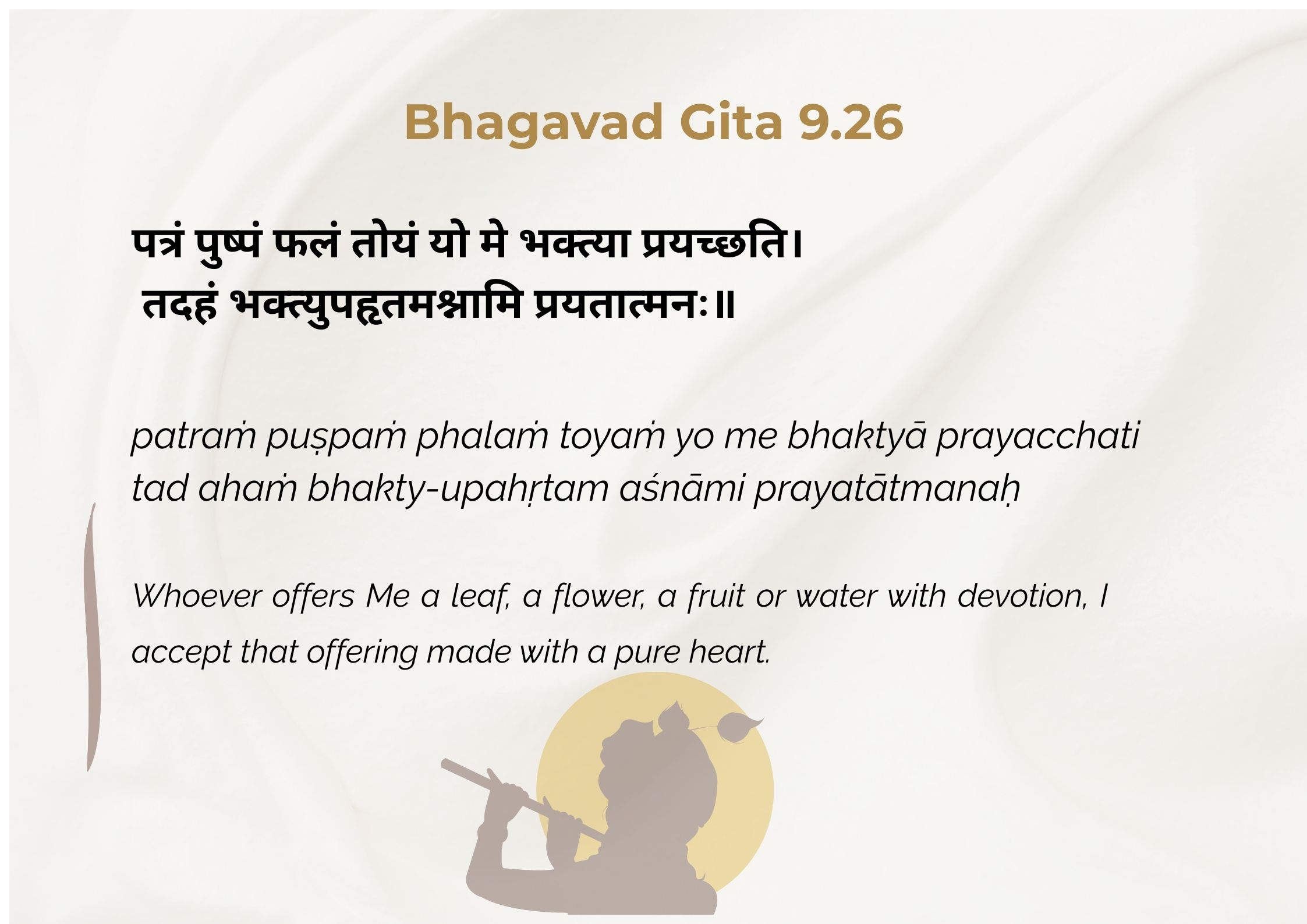
Today’s verse from the Bhagavad Gita is a gentle reminder that spirituality isn’t measured by the size of the offering but by the sincerity behind it. The Gita cuts through the idea that devotion must be grand, expensive, or elaborate. Instead, Krishna says even the simplest gift—a leaf, a flower, a fruit, or water—becomes meaningful when offered with intention and purity. Devotion is a quality of the heart, not of wealth or performance. What matters is the spirit behind the action. When your heart is present, even small gestures carry immense power. This verse also reflects the democratic nature of bhakti: anyone can participate. You don’t need status, money, or ritual knowledge. You just need sincerity. It’s also a lesson in relationships: people feel the truth of your intention, not the size of your gesture. Genuine connection thrives on authenticity, not showmanship. Ultimately, this verse reminds you that what you bring to life—your time, your attention, your kindness—is sacred when offered wholeheartedly.

This week’s motivation is about relaxation. Give yourself grace. You’re doing your best, and that’s enough. Do not let unhelpful thoughts take control of your experience. Take a few deep, intentional breaths to quiet the noise in your mind. In this moment, you are allowed to be at peace. There’s nothing to prove, nothing to overcome. Accept this present moment, rather than attaching a story to it. Allow yourself to rest in a space of pure awareness. This space is always naturally available to you. You can return to it anytime you choose.

That’s all I have for you this week. Stay safe, stay blessed, and remember that you are doing your best, and that’s enough!

2026 Week 07 Update

Wishing all my readers a very Happy Chinese New Year; may this new year bring renewal, abundance, good health, and meaningful moments with the people who matter most. As homes fill with reunion dinners, red packets, and the hopeful energy of fresh beginnings, may the year ahead unfold with steady progress and quiet joy. As we welcome the Year of the Fire Horse, may it bring courage to chase what excites you, momentum to move past what holds you back, and the confidence to trust your instincts. The Fire Horse is known for passion and drive, a reminder that growth sometimes requires both bravery and motion.

At the same time, this week also marks the beginning of the holy month of Ramadan, a sacred period of reflection, discipline, generosity, and spiritual renewal for Muslims around the world. May this month bring peace, clarity, and strength to those observing it, and may the spirit of compassion and community it nurtures ripple outward to all of us. The month of Ramadan is rooted in reflection, discipline, compassion, and spiritual renewal; it’s a month that asks us to slow down inwardly even as life continues outwardly.

In Singapore, where cultures and faiths stand side by side, it feels especially meaningful to honour both occasions together. May this season remind us of the beauty of shared spaces, mutual respect, and the richness that diversity brings to our lives. One festival calls us to gather, celebrate, and step boldly into a new year; the other calls us to turn inward, reset, and deepen our faith and empathy. May this season, shaped by both fire and reflection, bring renewal, resilience, and meaningful connection to us all.

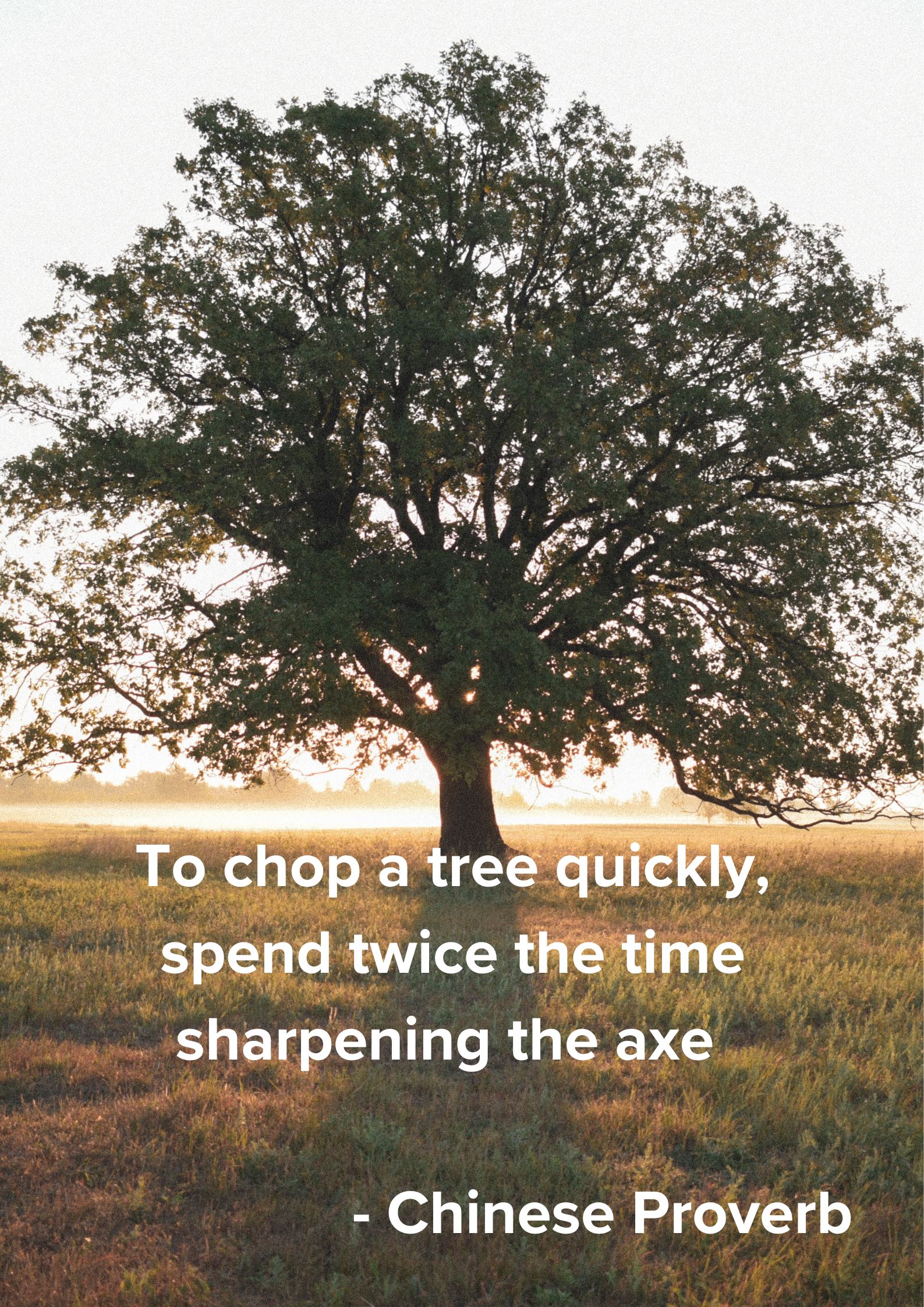
Today’s quote is a Chinese proverb that is a practical lesson about preparation, patience, and strategic effort. At first glance, it sounds counterintuitive. If your goal is speed, why would you spend extra time not chopping at all? But that’s precisely the point. Rushing into action without preparation often leads to wasted energy, frustration, and slower results in the long run. Sharpening the axe represents planning, learning, practising, and refining your tools, whether those tools are literal skills, knowledge, systems, or even your mindset. When you invest time in preparation, your work becomes more efficient and effective. Each strike counts. Without preparation, you may swing repeatedly with little impact, exhausting yourself while making minimal progress.

The proverb also challenges our obsession with constant activity. Busyness can feel productive, but activity without clarity or readiness can be ineffective. Taking time to think, strategise, or improve your approach isn’t laziness; it’s wisdom. The person who pauses to sharpen the axe understands that thoughtful preparation saves far more time than impulsive action ever could. Beyond work, the proverb applies to personal growth as well. Strengthening your discipline, emotional resilience, or communication skills is like sharpening your inner tools. When challenges arise, you are better equipped to handle them calmly and decisively. Ultimately, the message is simple: slow down to move faster. Invest in preparation so that when it’s time to act, you do so with precision and power. Effort matters, but prepared effort matters more.

This week, if I’m honest, I’ve felt a little like I’m underwater. Not drowning, not in crisis, just submerged. I can see everything I’m supposed to be doing. The tasks are clear, the plans are mapped out, but there’s a strange heaviness, as though every movement requires more effort than usual. It’s been a week since I got back from India, and my body seems to still be catching up. I’m tired in that lingering way that sleep doesn’t immediately fix. Sleepy at odd hours, and slower than I’d like to be. There’s also that quiet frustration of knowing what needs to be done and not quite having the spark to begin. It’s not confusion, it’s not avoidance; it’s simply low energy. Like trying to move through water, possible, but resistant. Maybe this is just a transition. Travel has a way of stretching you emotionally, physically, and socially, and perhaps I’m still recalibrating. Instead of fighting the fog, I’m trying to observe it. To give myself a little grace. To trust that the surface is there, and I will rise back into full momentum soon. For now, I’m allowing this slower rhythm. Even underwater, you’re still moving.

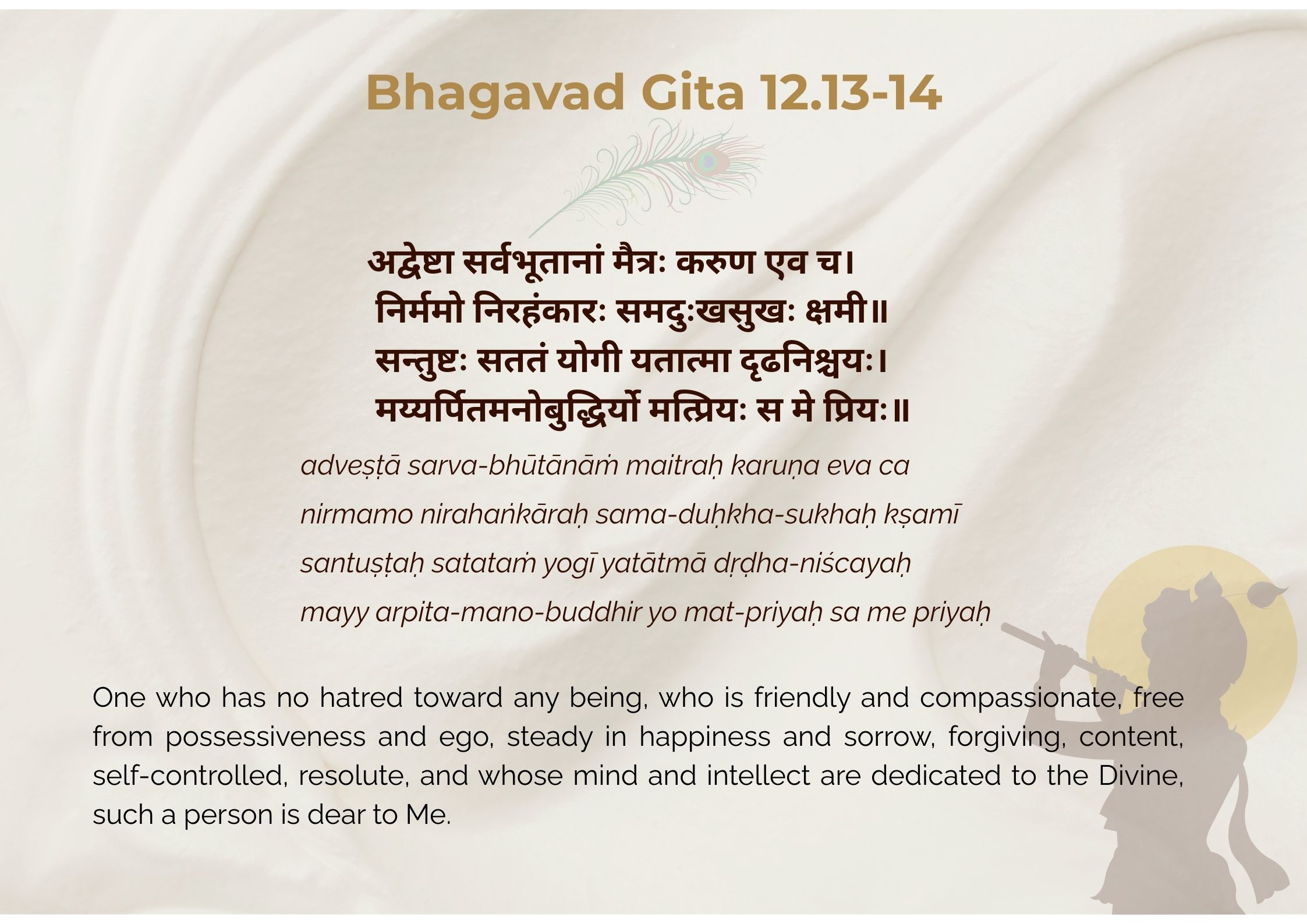
Today’s Bhagavad Gita quote gives one of the most beautiful and comprehensive portraits of a spiritually evolved person. Notice how the qualities Krishna lists are emotional and relational, not intellectual brilliance, ritualistic perfection, or strict asceticism. The emphasis is on how we show up in the world: without hostility, with kindness, with generosity of heart, and the ability to stay balanced when life swings between sorrow and joy. Compassion is not sentimental softness here; it’s the strength to stay open even when life gets messy. Forgiveness is not naïveté; it’s choosing not to poison your own heart. Being nirmama, or free from possessiveness, and nirahaṅkāra, or free from ego, means you don’t cling to people or outcomes. You appreciate, you love, and you care, but you don’t bind others or yourself with expectations. Krishna teaches that devotion is a way of being. When your mind is guided by inner clarity rather than ego, every interaction becomes gentler, wiser, and more peaceful.

Today’s weekly motivation is about the weight of unmet dreams. The longer you carry the weight of unmet dreams, the harder it becomes to tap into the new possibilities life is constantly offering you. Honour what those old dreams once meant to you, acknowledge their place in your journey, and then let them go. Make space for something even more aligned to take their place. No matter how difficult letting go may seem at first, trust that eventually a positive outcome will come out of it. Make the most of what you have now, and allow yourself to enjoy the natural flow of events. The unexpected turns will still lead you exactly where you need to be. Life has a funny way of surprising you in the best possible ways.

On that note, here’s to a wonderful Lunar New Year to all those who celebrate and to those fasting and praying during the holy month of Ramadan, wishing you a month filled with prayers, reflection, discipline, compassion, and spiritual renewal. and

2026 Week 06 Update

I’m back in Singapore, landed early this morning and after three weeks of being with my parents, I am happy to be back home. It’s times like these that I realise that yes, Singapore is now home. I have a deep, almost spiritual connection to India, but after being away for so long, I realise I can’t live in the country anymore. It’s noisy, chaotic, and rushed, and I can take it in small doses. But back in Singapore, I do miss the family connections, the food, and the shopping. 

Today’s quote is by one of the greatest English novelists of the Victorian era, known for works such as A Christmas Carol, Great Expectations, and Oliver Twist: Charles Dickens. His writing combined sharp social criticism with deep compassion for the poor, the vulnerable, and the overlooked. Dickens believed strongly in moral responsibility, human kindness, and the redemptive power of empathy, values that echo clearly in this quote. 

This quote gently challenges how we usually define intelligence and success. In a world that often prizes logic, achievement, and sharp thinking above all else, Dickens reminds us that wisdom is not just something we learn with the mind, but something we live through the heart. A loving heart reflects empathy, compassion, and the ability to see beyond one’s own concerns. It understands people not as problems to be solved, but as human beings shaped by circumstance, pain, and hope. This kind of wisdom allows us to respond with kindness rather than judgment, patience rather than anger. It doesn’t deny reason, but it balances it with humanity. Without love, intelligence can become cold or self-serving. With love, even a simple understanding becomes powerful.

Dickens suggests that love helps us grasp truths that logic alone cannot. A loving heart recognises suffering quickly and responds instinctively. It knows when to forgive, when to listen, and when to act with gentleness instead of force. This wisdom often shows itself quietly; in everyday choices, in generosity, and in moral courage. It is less about being right and more about being humane. The quote also implies that love deepens perspective. When we care, we learn. When we open ourselves to others, we gain insight into life’s complexity. True wisdom, then, is not detached cleverness but engaged understanding, the ability to live well with others, not just think well about things.

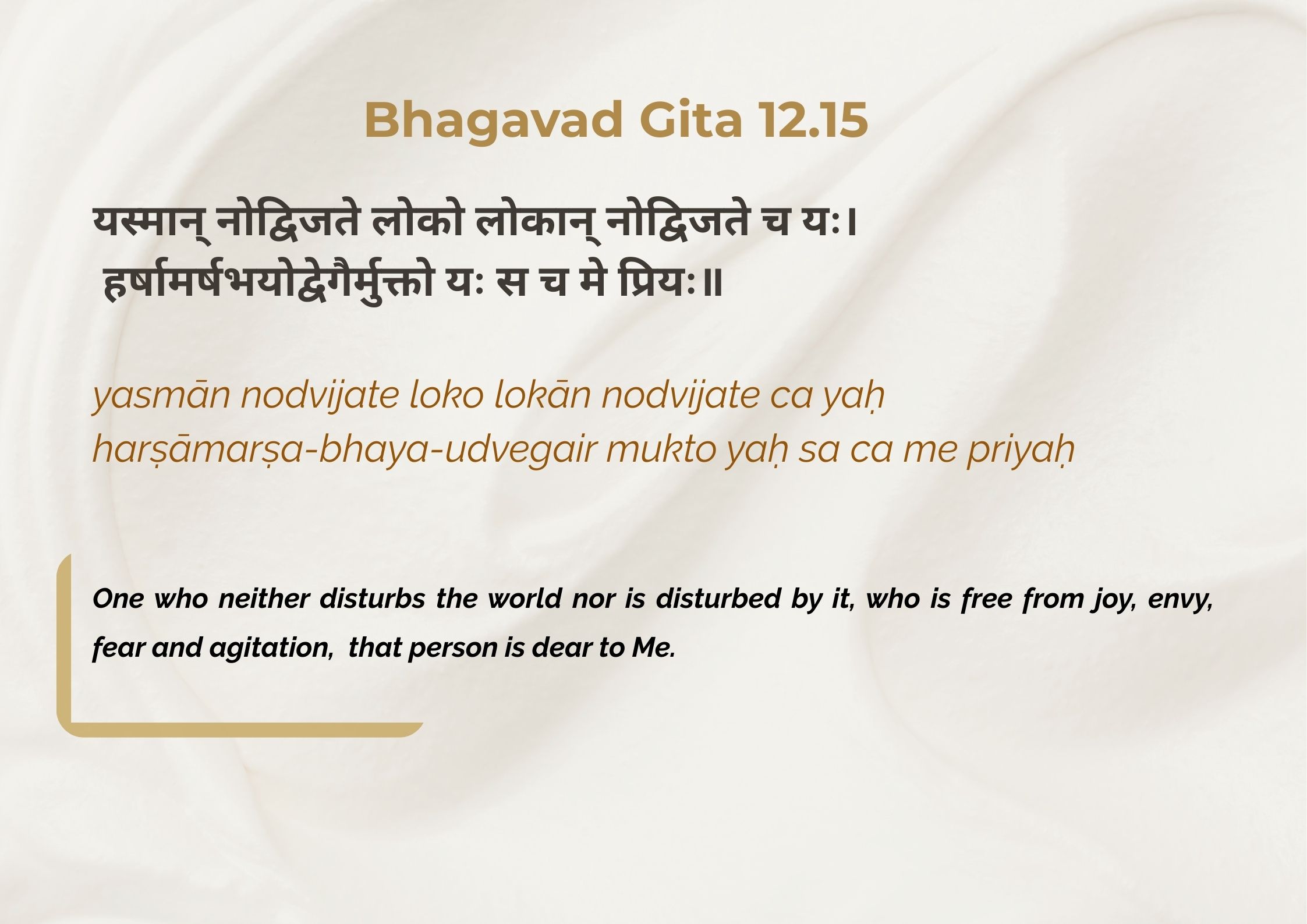
Today’s verse from the Bhagavad Gita describes a person who moves through the world with emotional steadiness. Not detached in a cold way, but centred, grounded, and balanced. Such a person doesn’t provoke unnecessary conflict, nor do they crumble when the world is chaotic. Krishna isn’t asking us to suppress emotions. He’s showing us a higher way to relate to them. Instead of being pushed around by praise, blame, fear, or envy, the wise person remains anchored in inner clarity. That anchor creates a calm presence that others instinctively trust. This verse also flips a common belief: spirituality isn’t about escaping the world. It’s about living fully in it without losing yourself. People who are internally stable uplift others simply by existing; they create safety. Their calm doesn’t shrink the world; it softens it. The goal isn’t perfection. It’s awareness and balance. When you know who you are and what matters, you don’t get pulled into every storm. You become the still point in your own life.

Today’s motivation is about loving oneself. Love yourself so deeply that you don’t need to rely on others to feel complete. You’re a beautiful soul. You have so much tenderness and compassion within you. You do everything with so much sincerity. Remember, you always have yourself. You deserve your own love more than anyone else. When you truly love yourself, you naturally attract people who are good for you. There’s mutual respect and genuine admiration, rather than a constant need for approval or reassurance. Those who can’t see your worth don’t deserve to hold any power over you.

And that’s all I have for you this week. Stay strong, stay positive, and remember to love yourself so much you don’t need anyone else to feel complete. As I wrote some time back, be your own best friend!

2026 Week 05 Update

The first month of 2026 is done and dusted, and I hope everyone is well. I am still in Bangalore and will return home soon. My mum’s both eye operations have been a success, and my aunt’s first eye was too. Next week, it will be her second eye, and what I came for will be fulfilled.

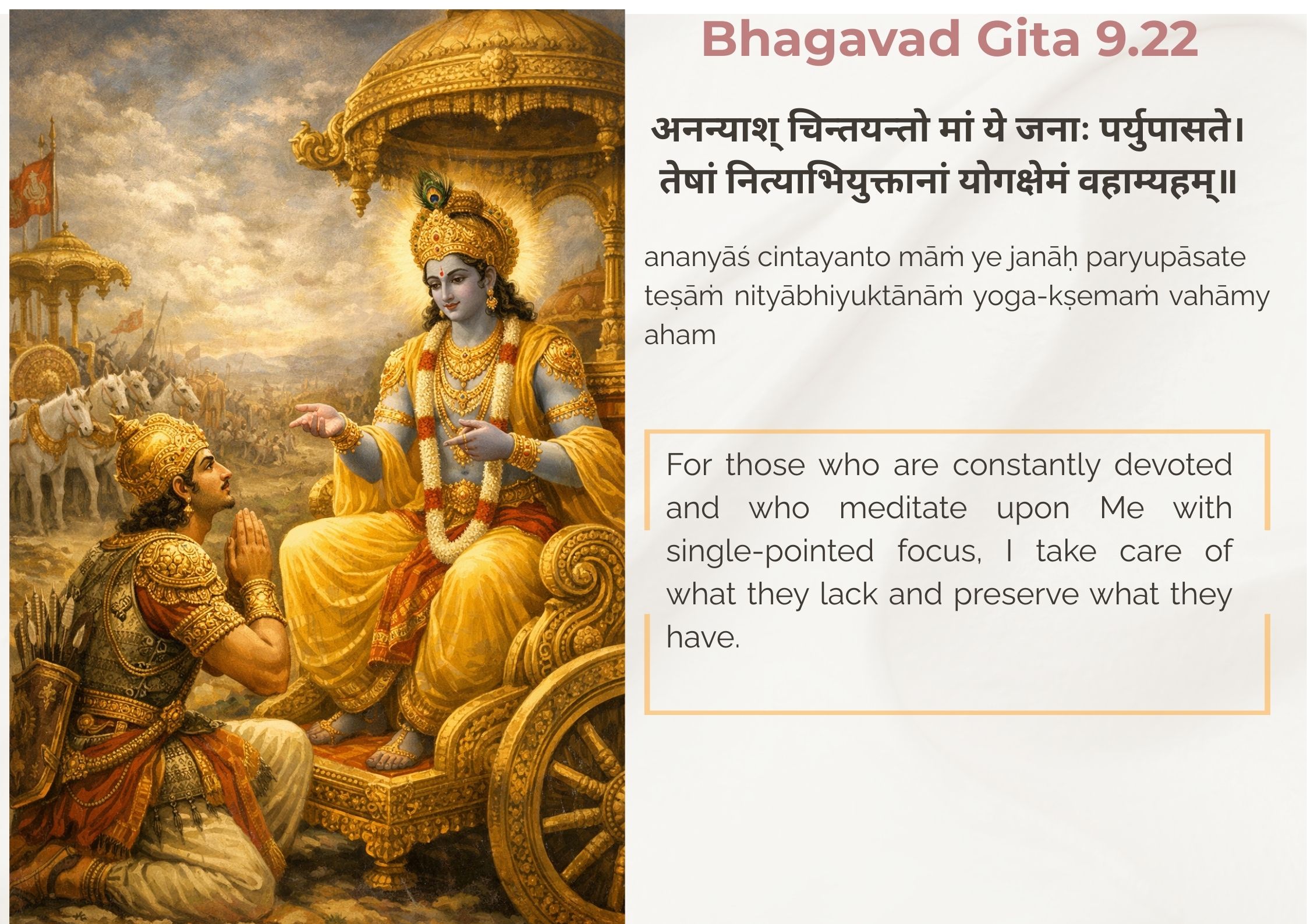
Today’s verse from the Bhagavad Gita is one of its most comforting verses. Krishna reassures Arjuna that sincere devotion, not ritual, not social norms, not perfection, is what draws support from the universe. Devotion here isn’t blind faith; it’s wholeheartedness. It’s the quality of committing to something deeply, honestly, without scattering yourself across a thousand fears. The verse teaches that when you show up fully for your path, life steps in to support you. The Sanskrit words yoga-kṣema are powerful: yoga is the gain of what you need, and kṣema is the protection of what you already have. In other words, you don’t walk alone. There’s a subtle reminder here: when your energy is fragmented, anxiety grows. But when your mind is anchored, you create inner spaciousness, and support naturally finds its way to you. This verse encourages trust, not passivity. It invites you to act with clarity while letting go of worry. Devotion becomes a way of moving through life with steadiness and grace rather than fear and grasping.

Today’s weekly motivation is about being patient. Whether it’s breaking free from old habits or adopting new ones, you have to be patient and embrace small steps. Habits and thinking patterns are built over many years. You’re training your mind to respond in a new way. You can’t go from 0 to 100 instantly! When you’re actively trying to undo old habits, you will face resistance, which can make you feel like your efforts are futile. That’s when you have to trust the passage of time. Small, consistent actions and little shifts in your perspective will lead to lasting transformation over time. The key is to remain consistent, despite the ups and downs.

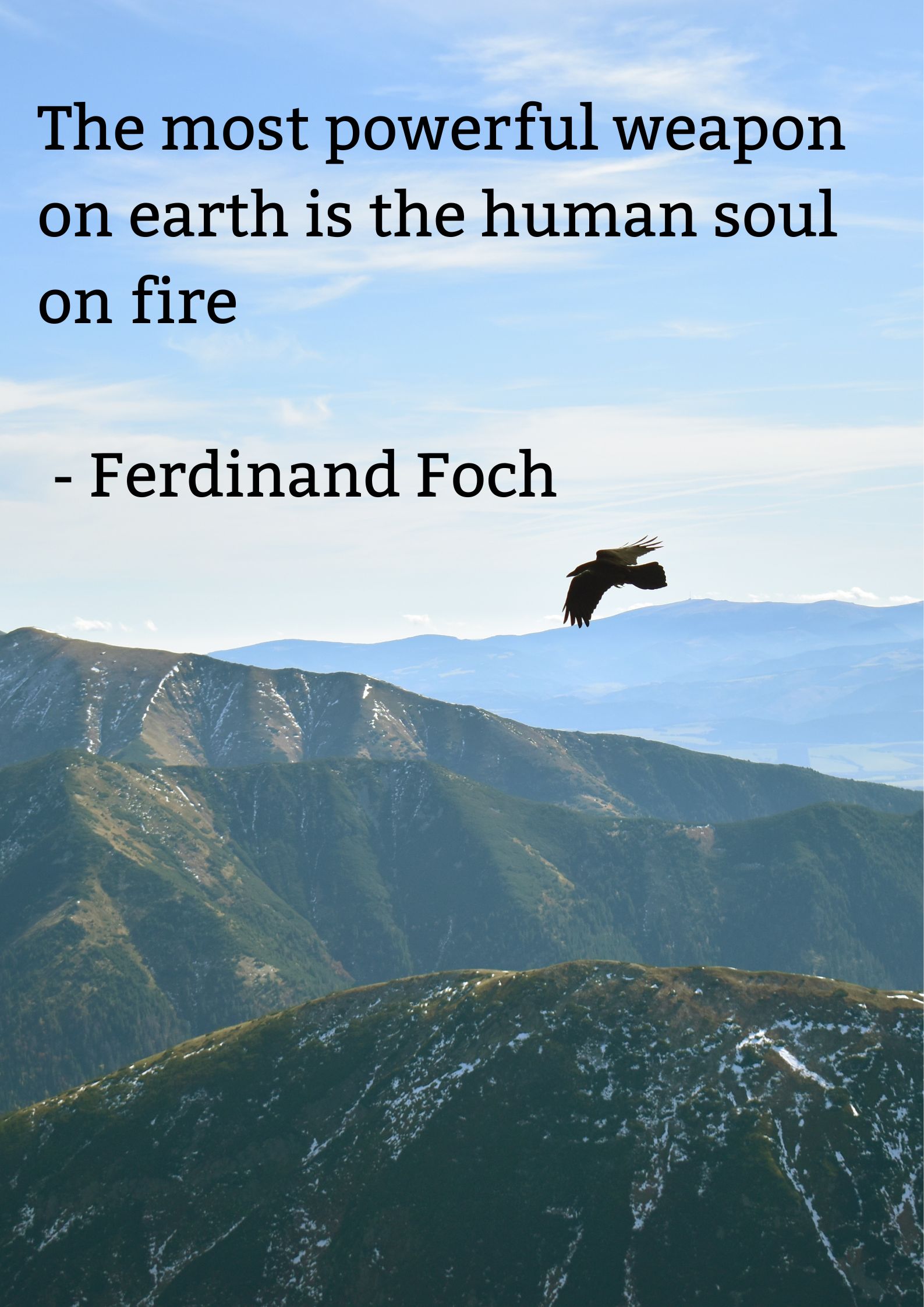
Today’s quote from Ferdinand Foch, a French general and military theorist who served as the Supreme Allied Commander during the final stages of World War I, speaks to the extraordinary force of inner conviction. Foch is not talking about physical weapons or military strength alone. He is pointing to something far more enduring: passion, belief, and an unshakable sense of purpose. When the human soul is “on fire,” it becomes capable of perseverance, courage, and transformation that no external force can easily extinguish. A soul on fire is driven by meaning. It is animated by faith in a cause, an idea, or a vision larger than the self. History repeatedly shows that people fueled by conviction can endure hardship, overcome fear, and push beyond what seems physically or emotionally possible. Skills can be taught and resources can be gathered, but without inner fire, action lacks momentum. Passion turns effort into persistence and struggle into resolve.

The quote also reminds us that real power does not come from domination, but from inner alignment. A person deeply committed to what they believe in becomes difficult to defeat, because their strength is not dependent on circumstance. Even setbacks can reinforce that inner flame, sharpening focus rather than diminishing it. This is why movements, revolutions, and personal transformations often begin with individuals who carry intense inner clarity rather than external authority. Beyond conflict or leadership, the quote applies to everyday life. Creativity, resilience, and meaningful change are all born from this inner fire. When people care deeply, they act differently. They take risks, stay the course, and inspire others simply by showing up with authenticity and intensity.

That’s all I have the time for this week. Stay positive and see you next week!

2026 Week 04 Update

It’s been a week since I’ve been in Bangalore. My mum finished both her cataract operations, and, by God’s grace, both her operations were completed. My sister also left yesterday, and it’s just my parents and me for a few weeks. I will stay here until she is more stable and then go home. 

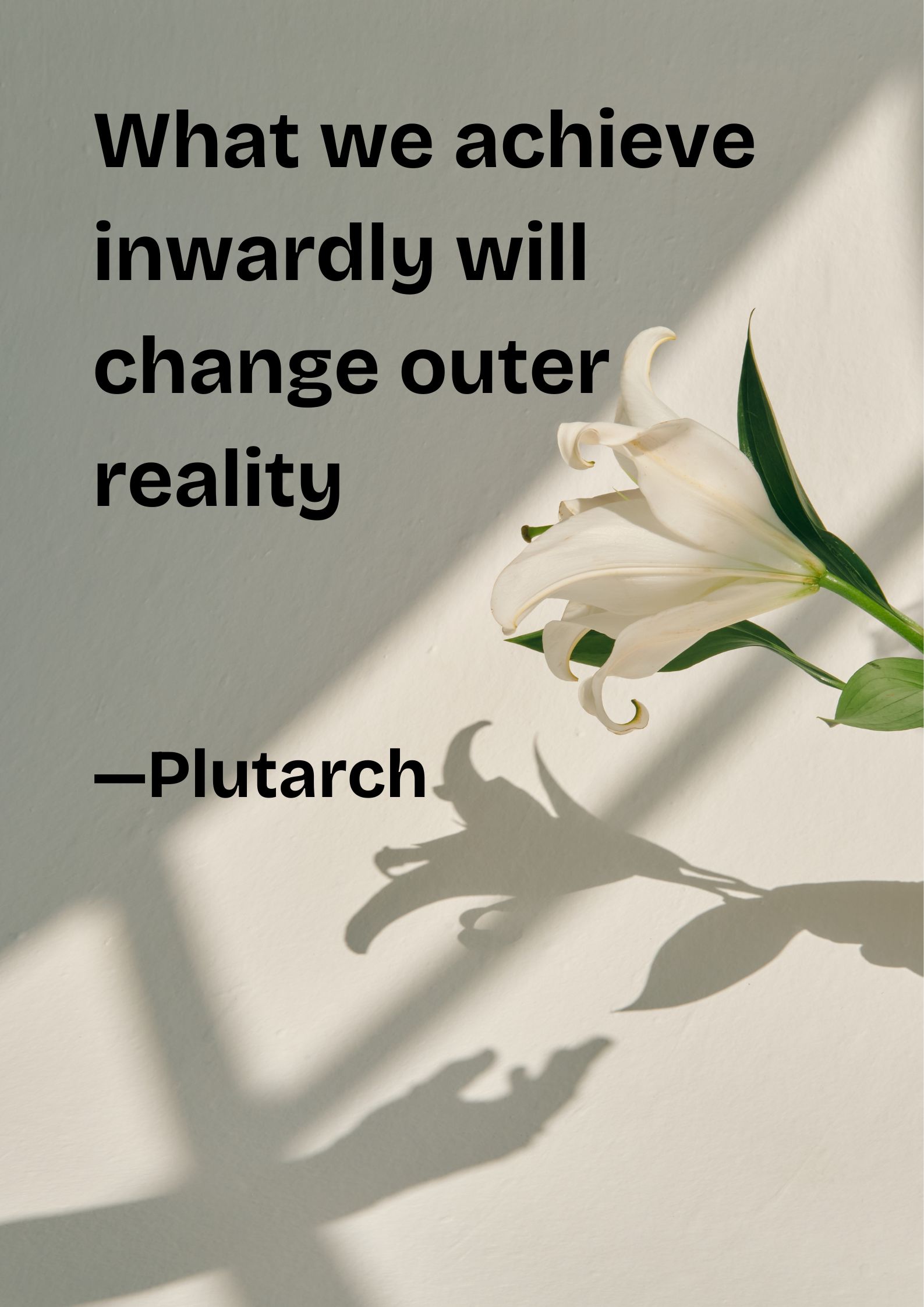
Today’s quote by Greek philosopher, historian, and biographer best known for *Parallel Lives*, a series of biographies comparing Greek and Roman figures, Plutarch speaks to the profound connection between our inner world and the life we experience around us. It suggests that real change does not begin with circumstances, possessions, or external success, but with what happens within us: our mindset, values, self-understanding, and emotional maturity. When we work on ourselves inwardly, cultivating clarity, resilience, compassion, discipline, or self-belief, our actions naturally begin to shift. We make different choices. We respond rather than react. We carry ourselves with more intention. Over time, these internal changes ripple outward, influencing our relationships, work, and the opportunities we attract or create. Outer reality responds not to wishful thinking but to the way we show up in the world.

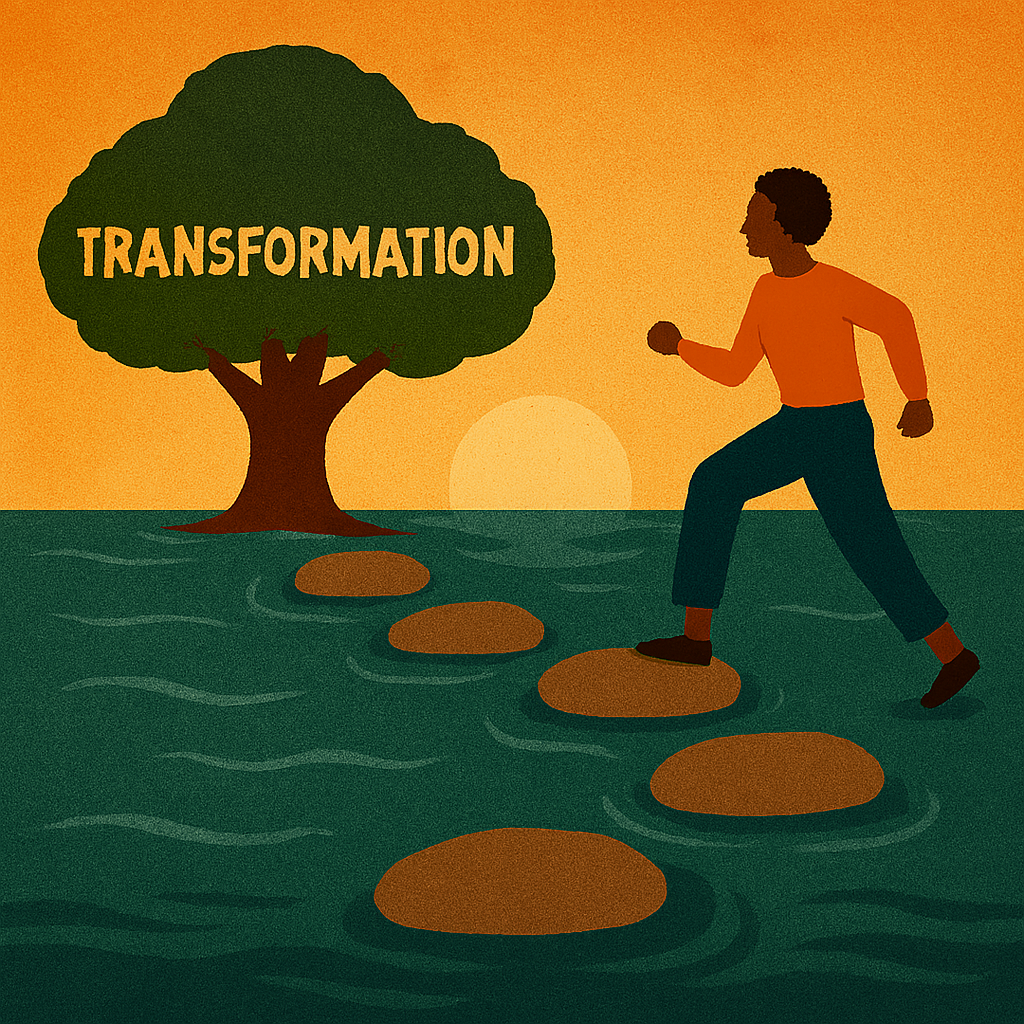
Plutarch’s insight also challenges the habit of waiting for external change before feeling different inside. Many people think they’ll feel confident once they succeed, peaceful once life calms down, or fulfilled once circumstances improve. This quote flips that logic. It argues that inner transformation comes first and that outer transformation follows as a consequence, not a cause. Importantly, this doesn’t mean we can control everything. Life remains unpredictable. But it does mean that our inner achievements—emotional growth, self-awareness, and integrity—shape how we experience whatever life brings. Two people can face the same situation and live entirely different realities, depending on what they’ve cultivated within.

Today’s motivation is something I reach out to because it is about bouncing back from setbacks. What seemed like a setback then has actually allowed something better to emerge. Life will continue to bring new experiences and changes into your life. As you move through each chapter of your life, you discover more about yourself and the ever-surprising journey of life.

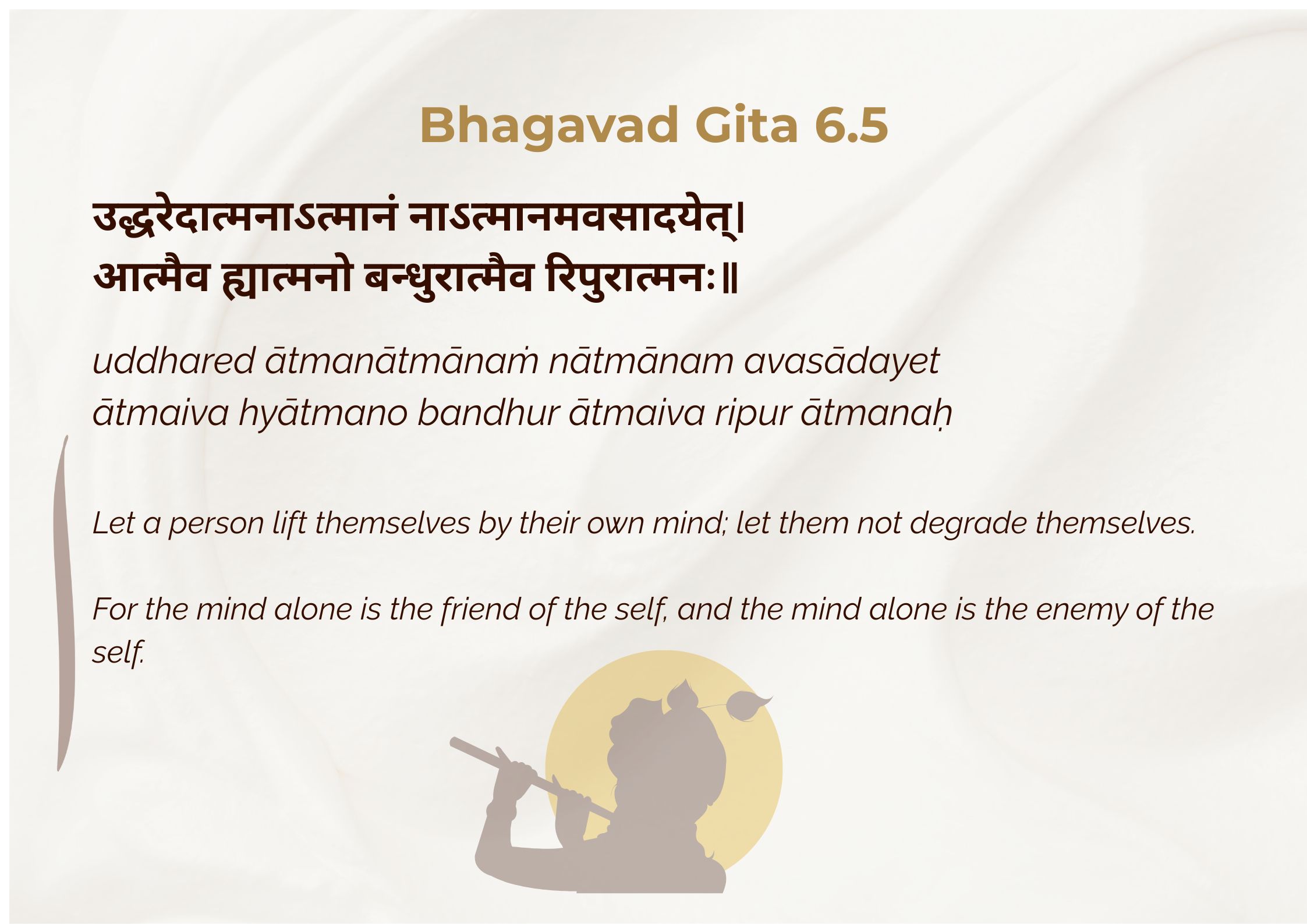
In today’s teaching from the Bhagavad Gita, Krishna teaches one of the most empowering (and confronting) truths of the Gita: your mind is the single biggest factor in your rise or your fall. Not circumstances. Not luck. Not other people’s opinions. When the mind is disciplined, clear, and anchored, it becomes your biggest ally, nudging you toward growth, supporting your intentions, and strengthening your inner resilience. But when your mind is unmanaged, it pulls you into doubt, fear, procrastination, and self-sabotage.

The verse isn’t scolding; it’s encouraging. It tells you that you already possess what you need to lift yourself. You don’t need permission. You don’t need perfect conditions. You don’t need constant external validation. You just need a mind that is taught to work with you, not against you. And how does that happen? Through awareness, reflection, discipline, and small, consistent practices that slowly turn chaos into clarity. The real battle is never outside. It’s always within. And the victory is entirely possible.

This week was very busy with my sister and parents; the next few weeks should be more gentle and peaceful. And on this note, stay safe, stay happy, stay positive, and keep smiling!