In My Hands Today…

The Bad-Ass Librarians of Timbuktu and Their Race to Save the World’s Most Precious Manuscripts – Joshua Hammer
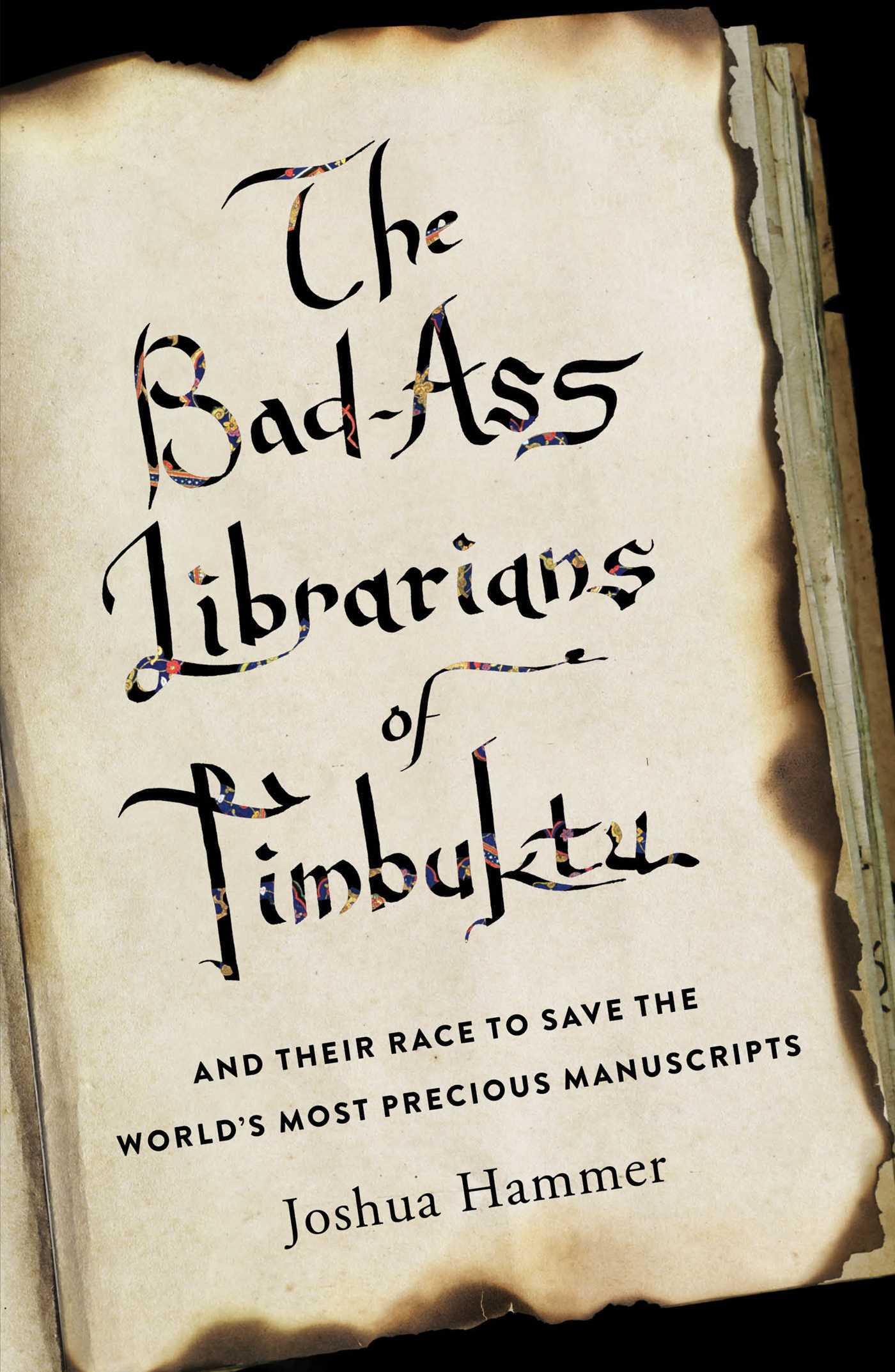
To save precious centuries-old Arabic texts from Al Qaeda, a band of librarians in Timbuktu pulls off a brazen heist worthy of Ocean’s Eleven.

In the 1980s, a young adventurer and collector for a government library, Abdel Kader Haidara, journeyed across the Sahara Desert and along the Niger River, tracking down and salvaging tens of thousands of ancient Islamic and secular manuscripts that had fallen into obscurity. The Bad-Ass Librarians of Timbuktu tells the incredible story of how Haidara, a mild-mannered archivist and historian from the legendary city of Timbuktu, later became one of the world’s greatest and most brazen smugglers.

In 2012, thousands of Al Qaeda militants from northwest Africa seized control of most of Mali, including Timbuktu. They imposed Sharia law, chopped off the hands of accused thieves, stoned to death unmarried couples, and threatened to destroy the great manuscripts. As the militants tightened their control over Timbuktu, Haidara organized a dangerous operation to sneak all 350,000 volumes out of the city to the safety of southern Mali.

Over the past twenty years, journalist Joshua Hammer visited Timbuktu numerous times and is uniquely qualified to tell the story of Haidara’s heroic and ultimately successful effort to outwit Al Qaeda and preserve Mali’s—and the world’s—literary patrimony. Hammer explores the city’s manuscript heritage and offers never-before-reported details about the militants’ march into northwest Africa. But above all, The Bad-Ass Librarians of Timbuktu is an inspiring account of the victory of art and literature over extremism.
Genres
Nonfiction
History
Africa
Books About Books

In My Hands Today…

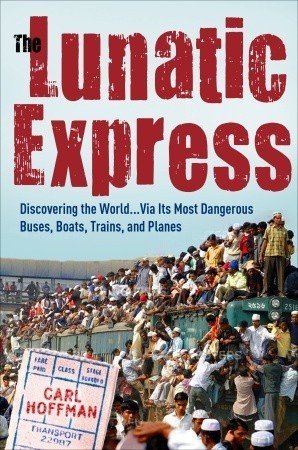
The Lunatic Express: Discovering the World… via Its Most Dangerous Buses, Boats, Trains, and Planes – Carl Hoffman

Indonesian Ferry Sinks. Peruvian Bus Plunges Off Cliff. African Train Attacked by Mobs. Whenever he picked up the newspaper, Carl Hoffman noticed those short news bulletins, which seemed about as far from the idea of tourism, travel as the pursuit of pleasure, as it was possible to get. So off he went, spending six months circumnavigating the globe on the world’s worst conveyances: the statistically most dangerous airlines, the most crowded and dangerous ferries, the slowest buses, and the most rickety trains. The Lunatic Express takes us into the heart of the world, to some its most teeming cities and remotest places: from Havana to Bogotá on the perilous Cuban Airways. Lima to the Amazon on crowded night buses where the road is a washed-out track. Across Indonesia and Bangladesh by overcrowded ferries that kill 1,000 passengers a year. On commuter trains in Mumbai so crowded that dozens perish daily, across Afghanistan as the Taliban closes in, and, scariest of all, Los Angeles to Washington, D.C., by Greyhound.

The Lunatic Express is the story of traveling with seatmates and deckmates who have left home without American Express cards on conveyances that don’t take Visa, and seldom take you anywhere you’d want to go. But it’s also the story of traveling as it used to be — a sometimes harrowing trial, of finding adventure in a modern, rapidly urbanizing world and the generosity of poor strangers, from ear cleaners to urban bus drivers to itinerant roughnecks, who make up most of the world’s population. More than just an adventure story, The Lunatic Express is a funny, harrowing and insightful look at the world as it is, a planet full of hundreds of millions of people, mostly poor, on the move and seeking their fortunes.

In My Hands Today…

Africa Is Not a Country: Notes on a Bright Continent – Dipo Faloyin

Africa Is Not A Country is a bright portrait of modern Africa that pushes back against harmful stereotypes to tell a more comprehensive story.

You already know these stereotypes. So often Africa is depicted simplistically as an arid red landscape of famines and safaris, uniquely plagued by poverty and strife.

In this funny and insightful book, Dipo Faloyin offers a much-needed corrective. He examines each country’s colonial heritage, and explores a wide range of subjects, from chronicling urban life in Lagos and the lively West African rivalry over who makes the best Jollof rice, to the story of democracy in seven dictatorships and the dangers of stereotypes in popular culture.

By turns intimate and political, Africa Is Not A Country brings the story of the continent towards reality, celebrating the energy and fabric of its different cultures and communities in a way that has never been done before.

In My Hands Today…

A Woman of Firsts: The Midwife Who Built a Hospital and Changed the World – Edna Adan Ismail and Wendy Holden

Edna saw first-hand how poor healthcare, lack of education and ancient superstitions had devastating effects on Somaliland’s people, especially its women. When she suffered the trauma of FGM herself as a young girl at the bidding of her mother, Edna’s determination was set.

The first midwife to practise in Somaliland, Edna became a formidable teacher and campaigner for women’s health. As her country was swept up in its bloody fight for independence, Edna rose to become its First Lady and first female cabinet minister.

She built her own hospital, brick by brick, training future generations in what has been hailed as one of the Horn of Africa’s finest university hospitals

This is Edna’s truly remarkable story.

In My Hands Today…

The Wife’s Tale: A Personal History – Aida Edemariam

A hundred years ago, a girl was born in the northern Ethiopian city of Gondar. Before she was ten years old, Yetemegnu was married to a man two decades her senior, an ambitious poet-priest. Over the next century, her world changed beyond recognition.

She witnessed Fascist invasion and occupation, Allied bombardment and exile from her city, the ascent and fall of Emperor Haile Selassie, revolution and civil war. She endured all these things alongside parenthood, widowhood and the death of children.

Aida Edemariam retells her grandmother’s stories of a childhood surrounded by proud priests and soldiers, of her husband’s imprisonment, of her fight for justice – all of it played out against an ancient cycle of festivals and the rhythms of the seasons.