In My Hands Today…

The Patient Assassin: A True Tale of Massacre, Revenge, and India’s Quest for Independence – Anita Anand

The dramatic true story of a celebrated young survivor of a 1919 British massacre in India, and his ferocious twenty-year campaign of revenge that made him a hero to hundreds of millions—and spawned a classic legend.

When Sir Michael O’Dwyer, the Lieutenant Governor of Punjab, ordered Brigadier General Reginald Dyer to Amritsar, he wanted Dyer to bring the troublesome city to heel. Sir Michael had become increasingly alarmed at the effect Gandhi was having on his province, as well as recent demonstrations, strikes, and shows of Hindu-Muslim unity. All these things, to Sir Michael, were a precursor to a second Indian revolt. What happened next shocked the world. An unauthorized gathering in the Jallianwallah Bagh in Amritsar in April 1919 became the focal point for Sir Michael’s law enforcers. Dyer marched his soldiers into the walled garden, blocking the only exit. Then, without issuing any order to disperse, he instructed his men to open fire, turning their guns on the thickest parts of the crowd, filled with over a thousand unarmed men, women, and children. For ten minutes, the soldiers continued firing, stopping only when they ran out of ammunition.

According to legend, eighteen-year-old Sikh orphan Udham Singh was injured in the attack, and remained surrounded by the dead and dying until he was able to move the next morning. Then, he supposedly picked up a handful of blood-soaked earth, smeared it across his forehead, and vowed to kill the men responsible.

The truth, as the author has discovered, is more complex—but no less dramatic. Award-winning journalist Anita Anand traced Singh’s journey through Africa, the United States, and across Europe until, in March 1940, he finally arrived in front of O’Dwyer himself in a London hall ready to shoot him down. The Patient Assassin shines a devastating light on one of history’s most horrific events, but it reads like a taut thriller and reveals the incredible but true story behind a legend that still endures today.
In My Hands Today…

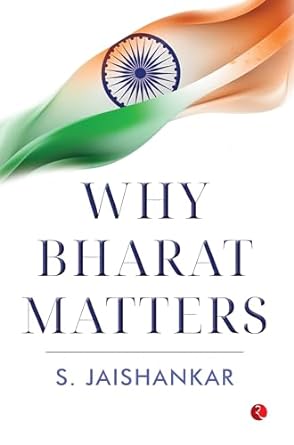
Why Bharat Matters – S. Jaishankar

Whether drawing strength from its heritage and culture or approaching challenges with the optimism of democracy and technology, this is certainly a New India—an India that is more Bharat.

This is not just a tough world but also a turbulent and unpredictable one. It is marked by the impact of Covid, conflicts in Ukraine and West Asia, climate events, radicalization and terrorism. There is complex geopolitics at work, such as the rise of China, the changed posture of the United States, the strategy of Russia, the impact of globalization and the power of new technologies.

India seeks to navigate these stormy seas without diluting its focus on becoming a leading power. As a vishwa mitra, it seeks the well-being of the Global South and to contribute to global good. India is more salient in global calculations and stands ready to embrace coming responsibilities and opportunities. Entering the Amrit Kaal, it visualizes an era of growth and development while staying true to its traditions and heritage.

In Why Bharat Matters, S. Jaishankar argues that while rising powers seek stability most of all, India must plan to rise amidst serious unpredictability. This process is also exceptional as it represents the rejuvenation of a civilizational state. Simultaneously, he also explains why foreign policy in a globalized world matters increasingly to all citizens in their daily lives. This book is a must-read for every Indian to understand and seriously reflect on the reality of our times that is becoming clearer with each passing day—that India matters because it is Bharat.

In My Hands Today…

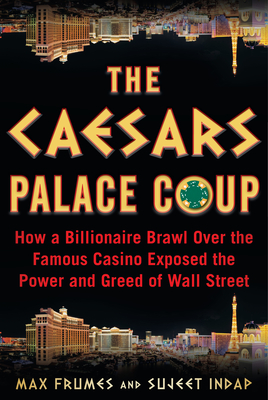
The Caesars Palace Coup: How a Billionaire Brawl Over the Famous Casino Exposed the Power and Greed of Wall Street – Sujeet Indap, Max Frumes

It was the most brutal corporate restructuring in Wall Street history. The 2015 bankruptcy brawl for the storied casino giant, Caesars Entertainment, pitted brilliant and ruthless private equity legends against the world’s most relentless hedge fund wizards.

In the tradition of Barbarians at the Gate and The Big Short comes the riveting, multi-dimensional poker game between private equity firms and distressed debt hedge funds that played out from the Vegas Strip to Manhattan boardrooms to Chicago courthouses and even, for a moment, the halls of the United States Congress. On one side: relentless financial engineers Marc Rowan, David Sambur, and David Bonderman with their teams at Apollo Global Management and TPG Capital. On the other: superstar distressed debt investors Dave Miller and Ryan Mollett with their cohorts at the likes of Elliott Management, Oaktree Capital, and Appaloosa Management.

The Caesars bankruptcy put a twist on the old-fashioned casino heist. Through a $27 billion leveraged buyout and a dizzying string of financial engineering transactions, Apollo and TPG―in the midst of the post-Great Recession slump―had seemingly snatched every prime asset of the company from creditors, with the notable exception of Caesars Palace. But Caesars’ hedge fund lenders and bondholders had scooped up the company’s paper for nickels and dimes. And with their own armies of lawyers and bankers, they were ready to do everything necessary to take back what they believed was theirs―if they could just stop their own infighting.

These modern financiers now dominate the scene in Corporate America as their fight-to-the-death mentality continues to shock workers, politicians, and broader society―and even each other.

In The Caesars Palace Coup, financial journalists Max Frumes and Sujeet Indap illuminate the brutal tactics of distressed debt mavens―vultures, as they are condemned―in the sale and purchase of even the biggest companies in the world with billions of dollars hanging in the balance.

In My Hands Today…

The Song of the Cell: An Exploration of Medicine and the New Human – Siddhartha Mukherjee

Mukherjee begins this magnificent story in the late 1600s, when a distinguished English polymath, Robert Hooke, and an eccentric Dutch cloth-merchant, Antonie van Leeuwenhoek looked down their handmade microscopes. What they saw introduced a radical concept that swept through biology and medicine, touching virtually every aspect of the two sciences, and altering both forever. It was the fact that complex living organisms are assemblages of tiny, self-contained, self-regulating units. Our organs, our physiology, our selves—hearts, blood, brains—are built from these compartments. Hooke christened them “ cells. ”

The discovery of cells—and the reframing of the human body as a cellular ecosystem—announced the birth of a new kind of medicine based on the therapeutic manipulations of cells. A hip fracture, a cardiac arrest, Alzheimer’s dementia, AIDS, pneumonia, lung cancer, kidney failure, arthritis, COVID pneumonia—all could be reconceived as the results of cells, or systems of cells, functioning abnormally. And all could be perceived as loci of cellular therapies.

Filled with writing so vivid, lucid, and suspenseful that complex science becomes thrilling, The Song of the Cell tells the story of how scientists discovered cells, began to understand them, and are now using that knowledge to create new humans. Told in six parts, and laced with Mukherjee’s own experience as a researcher, a doctor, and a prolific reader, The Song of the Cell is both panoramic and intimate—a masterpiece on what it means to be human.

In My Hands Today…

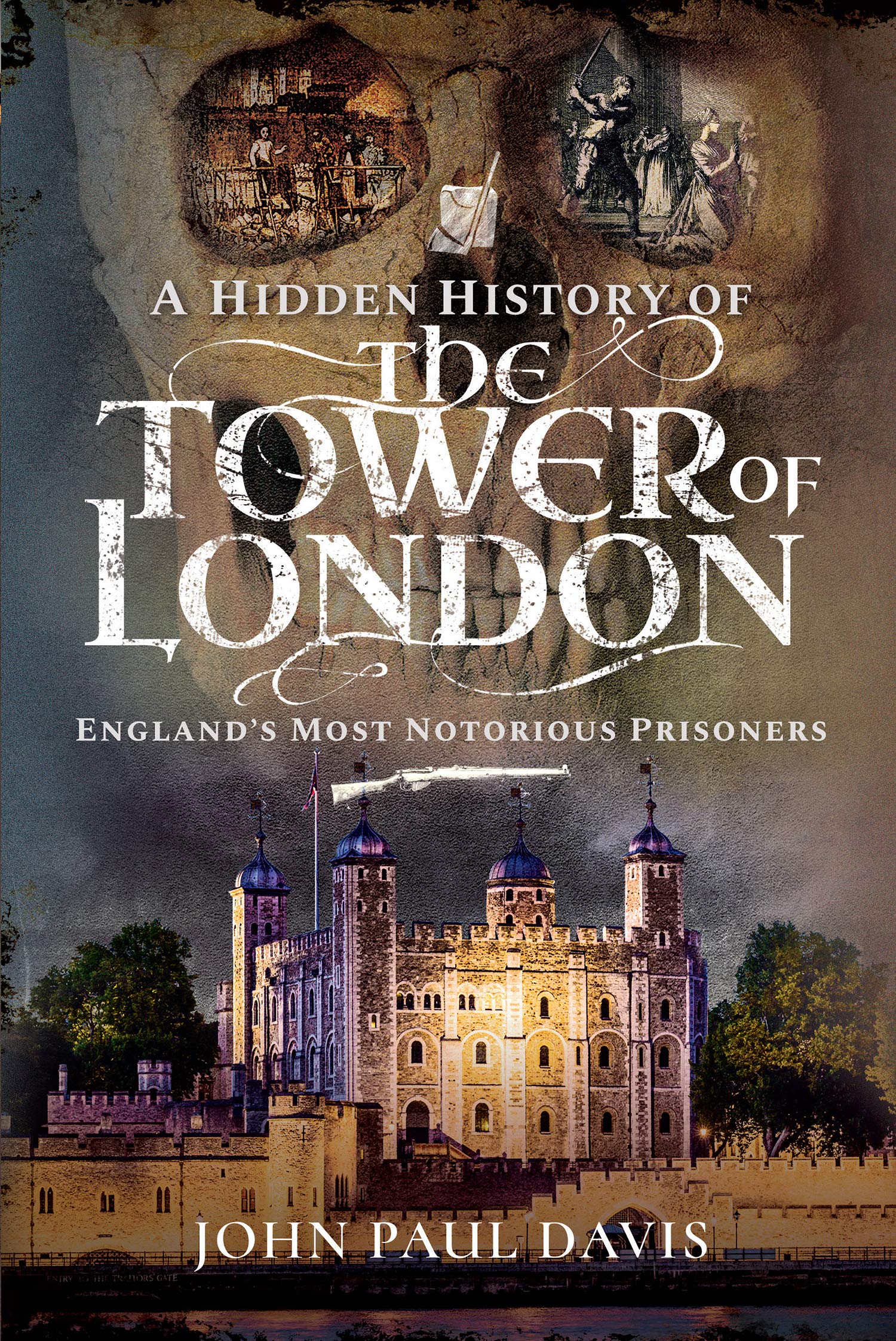
A Hidden History of the Tower of London: England’s Most Notorious Prisoners – John Paul Davis

Famed as the ultimate penalty for traitors, heretics and royalty alike, being sent to the Tower is known to have been experienced by no less than 8,000 unfortunate souls. Many of those who were imprisoned in the Tower never returned to civilization and those who did, often did so without their head!

It is hardly surprising that the Tower has earned itself a reputation among the most infamous buildings on the planet.

Beginning with the early tales surrounding its creation, this book investigates the private life of an English icon. Concentrating on the Tower’s developing role throughout the centuries, not in terms of its physical expansion into a site of unique architectural majesty or many purposes but through the eyes of those who experienced its darker side, it pieces together the, often seldom-told, human story and how the fates of many of those who stayed within its walls contributed to its lasting effect on England’s—and later the UK’s—destiny.

From ruthless traitors to unjustly killed Jesuits, vanished treasures to disappeared princes and jaded wives to star-crossed lovers, this book provides a raw and at times unsettling insight into its unsolved mysteries and the lot of its unfortunate victims, thus explaining how this once typical castle came to be the place we will always remember as THE TOWER.