In My Hands Today…

The Girl Who Fell From the Sky – Emma Carey

From a terrible accident that left her paraplegic, Emma Carey has become an inspiration for hundreds of thousands online to live life to the fullest and remind us that if we can, we must.

There on that helicopter, somewhere over Switzerland on a Sunday in June, came the first tiny whisper. A voice that that would carry me for years to come. ‘I’m going to be okay. There’s still joy here.’

When Emma Carey was twenty, she fell from 14,000 feet and survived. In The Girl Who Fell From the Sky, Emma tells us the inspirational story of how, through what could be considered one of her greatest tragedies, she found her truest self.

From waking in hospital to the news that she was a paraplegic to learning how to use her legs again, through the six-year long court case and now being finally free to make the most of her life, Emma teaches us the importance of courage and resilience and how to appreciate the extraordinary beauty found even in the most ordinary moments of our lives.

This heartfelt book is more than a memoir, it’s a call to action that reminds us not to take our lives and abilities for granted but to live every day like it could be our last.

In My Hands Today…

Invention: A Life – James Dyson

Famously, over a four-year period, James Dyson made 5,127 prototypes of the cyclonic vacuum cleaner that would transform the way houses are cleaned around the world. In devoting all his resources to iteratively setbacks came hard-fought success. His products—including vacuum cleaners, hair dryer and hair stylers, and fans and purifiers—are not only revolutionary technologies, but design classics. This was a legacy of his time studying at the Royal College of Art in the 1960s, when he was inspired by some of the most famous artists, designers, and inventors of the era, as well as his engineering heroes such as Frank Whittle and Alex Issigonis.

In A Life, Dyson reveals how he came to set up his own company and led it to become one of the most inventive technology companies in the world. It is a compelling and dramatic tale, with many obstacles overcome. Dyson has always looked to the future, even setting up his own university to help provide the next generation of engineers and designers. For, as he says, “everything changes all the time, so experience is of little use.”

In My Hands Today…

Ageless Brain: Think Faster, Remember More, and Stay Sharper by Lowering Your Brain Age – Julia VanTine

Break through research has revealed that through living a brain-healthy lifestyle, we can reduce our “brain age” to improve memory, hone sharpness, and reduce health risks as we age.

It’s normal for the brain to short-circuit every now and again—you put your keys in the fridge, or can’t find the pair of glasses on top of your head. But what if there was away to eat, exercise, and live that could eliminate these “senior moments?” Ageless Brain offers a plan to sharpen your memories and minds so that at 40, you have the quick, agile brain you had at 30. Based Off of groundbreaking scientific research, this plan is filled with brain-healthy foods, exercises, and little ways that you can positively impact your most vital organ every day by de-stressing, adjusting your attitude, and constantly interacting with the world through play.

Scientists have discovered that the human brain continually generates new neurons—forging new pathways and connections in our minds—well into old age as long as we pursue brain-healthy lifestyles from what we eat and how much we sleep, to how we exercise and how we handle stress. Exercising and nourishing our brains just like we do any other ailing organ encourages this growth—improving not only our mental fitness, but also our physical fitness as a side effect.

With Ageless Brain , you will discover the 10 Commandments of an ageless brain, reduce key risk-factors for Alzheimer’s, identify and avoid brain poisons lurking in their food, medicines, and home, learn to play and engage your brain more in everyday life, drop unsafe levels of blood pressure, cholesterol and sugar—as well as belly fat, and keep your brain nourished with 45 recipes.

In My Hands Today…

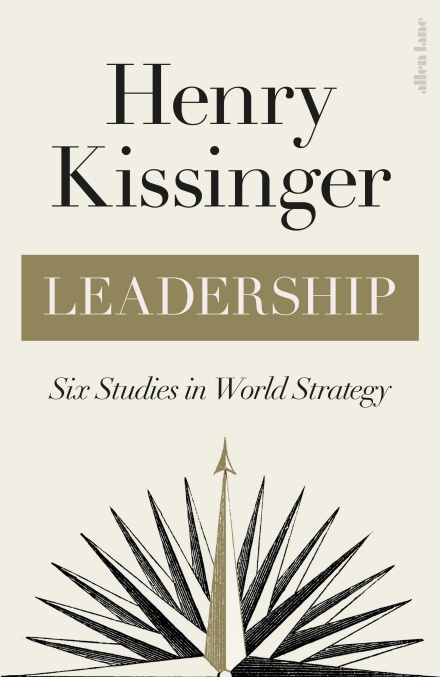
Leadership: Six Studies in World Strategy – Henry Kissinger

Henry Kissinger analyses how six extraordinary leaders he has known have shaped their countries and the world. ‘Leaders,’ writes Henry Kissinger in this compelling book, ‘think and act at the intersection of two the first, between the past and the future; the second between the abiding values and aspirations of those they lead.

They must balance what they know, which is necessarily drawn from the past, with what they intuit about the future, which is inherently conjectural and uncertain. It is this intuitive grasp of direction that enables leaders to set objectives and lay down a strategy. ‘In Leadership, Kissinger analyses the lives of six extraordinary leaders through the distinctive strategies of statecraft which he believes they embodied.

After the Second World War, Konrad Adenauer brought defeated and morally bankrupt Germany back into the community of nations by what Kissinger calls ‘the strategy of humility’. Charles de Gaulle set France beside the victorious Allies and renewed its historic grandeur by ‘the strategy of will’. During the Cold War, Richard Nixon gave geostrategic advantage to the United States by ‘the strategy of equilibrium’.

After twenty-five years of conflict, Anwar Sadat brought a vision of peace to the Middle East by a ‘strategy of transcendence’. Against the odds, Lee Kwan Yew created a powerhouse city-state, Singapore, by ‘the strategy of excellence’. Although when she came to power Britain was known as ‘the sick man of Europe’, Margaret Thatcher renewed her country’s morale and international position by ‘the strategy of conviction’.

To each of these studies, Kissinger brings historical perception, public experience and – because he knew each of their subjects, and participated in many of the events he describes – personal knowledge. The book is enriched by insights and judgements such as only he could make, and concludes with his reflections on world order and the indispensability of leadership today.

In My Hands Today…

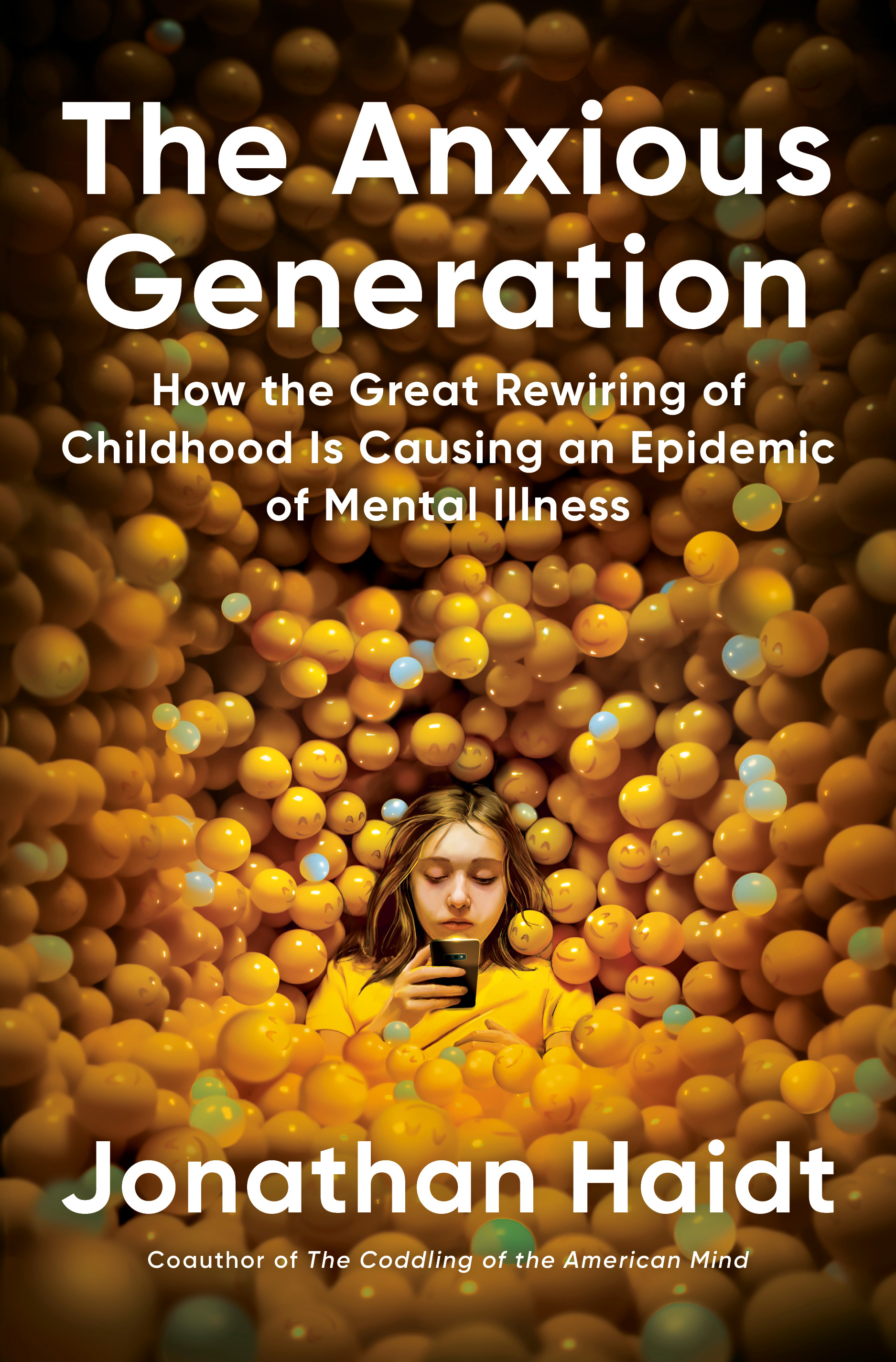
The Anxious Generation: How the Great Rewiring of Childhood Caused an Epidemic of Mental Illness – Jonathan Haidt

A must-read for all parents: the generation-defining investigation into the collapse of youth mental health in the era of smartphones, social media, and big tech—and a plan for a healthier, freer childhood.

After more than a decade of stability or improvement, the mental health of adolescents plunged in the early 2010s. Rates of depression, anxiety, self-harm, and suicide rose sharply, more than doubling on many measures. Why?

In The Anxious Generation, social psychologist Jonathan Haidt lays out the facts about the epidemic of teen mental illness that hit many countries at the same time. He then investigates the nature of childhood, including why children need play and independent exploration to mature into competent, thriving adults. Haidt shows how the “play-based childhood” began to decline in the 1980s, and how it was finally wiped out by the arrival of the “phone-based childhood” in the early 2010s. He presents more than a dozen mechanisms by which this “great rewiring of childhood” has interfered with children’s social and neurological development, covering everything from sleep deprivation to attention fragmentation, addiction, loneliness, social contagion, social comparison, and perfectionism. He explains why social media damages girls more than boys and why boys have been withdrawing from the real world into the virtual world, with disastrous consequences for themselves, their families, and their societies.

Most important, Haidt issues a clear call to action. He diagnoses the “collective action problems” that trap us, and then proposes four simple rules that might set us free. He describes steps that parents, teachers, schools, tech companies, and governments can take to end the epidemic of mental illness and restore a more humane childhood.

Haidt has spent his career speaking truth backed by data in the most difficult landscapes—communities polarized by politics and religion, campuses battling culture wars, and now the public health emergency faced by Gen Z. We cannot afford to ignore his findings about protecting our children—and ourselves—from the psychological damage of a phone-based life.