In My Hands Today…

Wanted: Toddler’s Personal Assistant – Stephanie Kiser
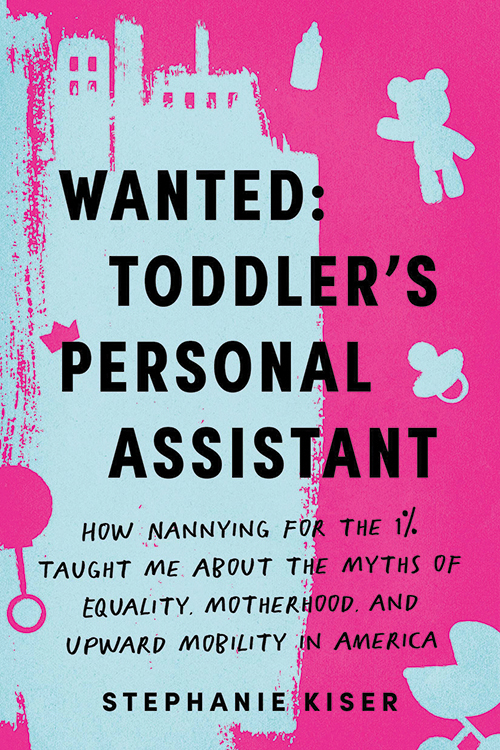
What are the lives of America’s richest families really like? Their nannies see it all…

When Stephanie Kiser moves to New York City after college to pursue a career in writing, she quickly learns that her entry-level salary won’t cover the high cost of living―never mind her crushing student loan debt. But there is one in-demand job that pays more than enough to allow Stephanie to stay in the city: nannying for the 1%. Desperate to escape the poverty of her own childhood, Stephanie falls into a job that hijacks her life for the next seven years: a glorified personal assistant to toddlers on Manhattan’s Upper East Side.

At first, nannying seems like the perfect solution―the high pay covers Stephanie’s bills, and she’s surprised by how attached she becomes to the kids she cares for, even as she gasps over Prada baby onesies and preschools that cost more than her college tuition. But the grueling twelve-hour days leave her little time to see her friends, date, or pursue any creative projects that might lead to a more prestigious career. The allure of the seemingly-glamorous job begins to dull as Stephanie comes to understand more about what really happens behind the closed doors of million-dollar Park Avenue apartments―and that money doesn’t guarantee happiness. Soon she will have to decide whether to stay with the children she’s grown to love, or if there’s something better out there just beyond her reach.

Wanted: Toddler’s Personal Assistant is alternately poignant and funny, a portrait of a generation of Americans struggling to find work they love balanced against the headwinds of global uncertainty and an economy stacked against anyone trying to work their way up from the bottom. It’s a provocative story of class, caregiving, friendship, and family―and a juicy, voyeuristic peek behind the curtain of obscene wealth and the privilege and opportunity that comes with it. In this unputdownable memoir, Stephanie chronicles her journey from newbie nanny to beloved caregiver—and the painful decision to eventually say goodbye to the children she has grown to love.

In My Hands Today…

Right Kind of Wrong: The Science of Failing Well – Amy C. Edmondson

We used to think of failure as the opposite of success. Now, we’re often torn between two “failure cultures”: one that says to avoid failure at all costs, the other that says fail fast, fail often. The trouble is that both approaches lack the crucial distinctions to help us separate good failure from bad. As a result, we miss the opportunity to fail well.

After decades of award-winning research, Amy Edmondson is here to upend our understanding of failure and make it work for us. In Right Kind of Wrong, Edmondson provides the framework to think, discuss, and practice failure wisely. Outlining the three archetypes of failure—simple, complex, and intelligent—Amy showcases how to minimize unproductive failure while maximizing what we gain from flubs of all stripes. She illustrates how we and our organizations can embrace our human fallibility, learn exactly when failure is our friend, and prevent most of it when it is not. This is the key to pursuing smart risks and preventing avoidable harm.

With vivid, real-life stories from business, pop culture, history, and more, Edmondson gives us specifically tailored practices, skills, and mindsets to help us replace shame and blame with curiosity, vulnerability, and personal growth. You’ll never look at failure the same way again.

In My Hands Today…

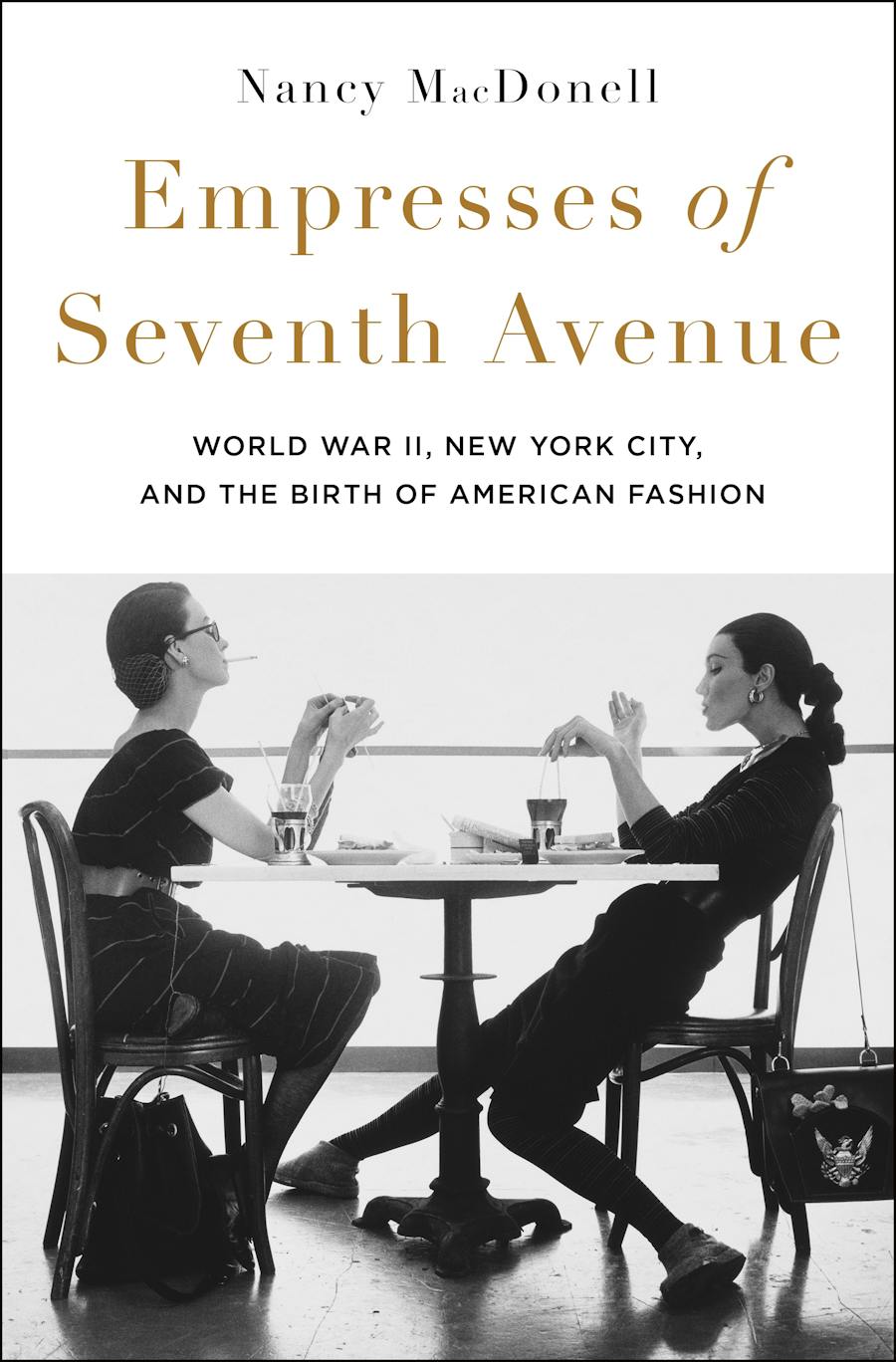
Empresses of Seventh Avenue: World War II, New York City, and the Birth of American Fashion – Nancy MacDonell

Calvin Klein. Ralph Lauren. Donna Karan. Halston. Marc Jacobs. Tom Ford. Michael Kors. Tory Burch. Today, American designers are some of the biggest names in fashion, yet before World War II, they almost always worked anonymously. The industry, then centered on Seventh Avenue in Manhattan, had always looked overseas for “inspiration”—a polite phrase for what was often blatant copying—because style, as all the world knew, came from Paris.

But when the Nazis invaded France in 1940, the capital of fashion was cut off from the rest of the world. The story of the chaos and tragedy that followed has been told many times—but how it directly affected American fashion is largely unknown.

Defying the naysayers, New York-based designers, retailers, editors, and photographers met the moment, turning out clothes that were perfectly suited to the American way of life: sophisticated, modern, comfortable, and affordable. By the end of the war, “the American Look” had been firmly established as a fresh, easy elegance that combined function with style. But none of it would have happened without the influence and ingenuity of a small group of women who have largely been lost to history.

Empresses of Seventh Avenue will tell the story of how these extraordinary women put American fashion on the world stage and created the template for modern style—and how the nearly $500 billion American fashion industry, the largest in the world, could not have accrued its power and wealth without their farsightedness and determination.

In My Hands Today…

The Bookshop: A History of the American Bookstore – Evan Friss

Bookstores have always been unlike any other kind of store, shaping readers and writers, and influencing our tastes, thoughts, and politics. They nurture local communities while creating new ones of their own. Bookshops are powerful spaces, but they are also endangered ones. In The Bookshop, we see those stakes: what has been, and what might be lost.

Evan Friss’s history of the bookshop draws on oral histories, archival collections, municipal records, diaries, letters, and interviews with leading booksellers to offer a fascinating look at this institution beloved by so many. The story begins with Benjamin Franklin’s first bookstore in Philadelphia and takes us to a range of booksellers including The Strand, Chicago’s Marshall Field & Company, Gotham Book Mart, specialty stores like Oscar Wilde and Drum and Spear, sidewalk sellers of used books, Barnes & Noble, Amazon Books, and Parnassus. The Bookshop is also a history of the leading figures in American bookselling, often impassioned eccentrics, and a history of how books have been marketed and sold over more than two centuries—including, for example, a 3,000-pound elephant who appeared to sign books at Marshall Field’s in 1944.

The Bookshop is a love letter to bookstores, a charming chronicle for anyone who cherishes these sanctuaries of literature, and essential reading to understand how these vital institutions have shaped American life—and why we still need them.

In My Hands Today…

How Not to Die: Discover the Foods Scientifically Proven to Prevent and Reverse Disease – Michael Greger, Gene Stone

The vast majority of premature deaths can be prevented through simple changes in diet and lifestyle. In How Not to Die, Dr. Michael Greger, the internationally-renowned nutrition expert, physician, and founder of NutritionFacts.org, examines the fifteen top causes of premature death in America — heart disease, various cancers, diabetes, Parkinson’s, high blood pressure, and more — and explains how nutritional and lifestyle interventions can sometimes trump prescription pills and other pharmaceutical and surgical approaches, freeing us to live healthier lives.

The simple truth is that most doctors are good at treating acute illnesses but bad at preventing chronic disease. The fifteen leading causes of death claim the lives of 1.6 million Americans annually. This doesn’t have to be the case. By following Dr. Greger’s advice, all of it backed up by strong scientific evidence, you will learn which foods to eat and which lifestyle changes to make to live longer.

History of prostate cancer in your family? Put down that glass of milk and add flaxseed to your diet whenever you can. Have high blood pressure? Hibiscus tea can work better than a leading hypertensive drug-and without the side effects. Fighting off liver disease? Drinking coffee can reduce liver inflammation. Battling breast cancer? Consuming soy is associated with prolonged survival. Worried about heart disease (the number 1 killer in the United States)? Switch to a whole-food, plant-based diet, which has been repeatedly shown not just to prevent the disease but often stop it in its tracks.

In addition to showing what to eat to help treat the top fifteen causes of death, How Not to Die includes Dr. Greger’s Daily Dozen — a checklist of the twelve foods we should consume every day. Full of practical, actionable advice and surprising, cutting edge nutritional science, these doctor’s orders are just what we need to live longer, healthier lives.