In My Hands Today…

Originals: How Non-Conformists Move the World – Adam M. Grant
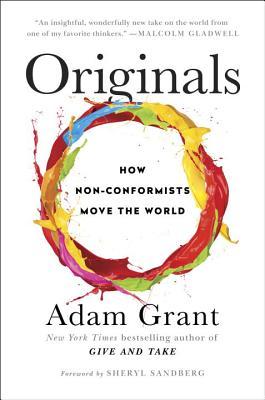
In Originals the author addresses the challenge of improving the world from the perspective of becoming original: choosing to champion novel ideas and values that go against the grain, battle conformity, and buck outdated traditions. How can we originate new ideas, policies, and practices without risking it all?

Using surprising studies and stories spanning business, politics, sports, and entertainment, Grant explores how to recognize a good idea, speak up without getting silenced, build a coalition of allies, choose the right time to act, and manage fear and doubt; how parents and teachers can nurture originality in children; and how leaders can build cultures that welcome dissent. Learn from an entrepreneur who pitches his start-ups by highlighting the reasons not to invest, a woman at Apple who challenged Steve Jobs from three levels below, an analyst who overturned the rule of secrecy at the CIA, a billionaire financial wizard who fires employees for failing to criticize him, and a TV executive who didn’t even work in comedy but saved Seinfeld from the cutting-room floor. The payoff is a set of groundbreaking insights about rejecting conformity and improving the status quo.
In My Hands Today…

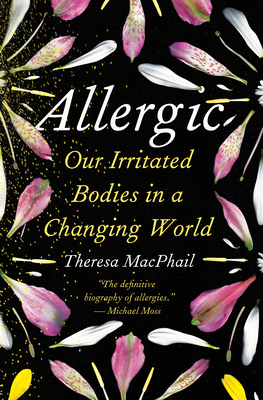
Allergic: Our Irritated Bodies in a Changing World – Theresa MacPhail

An eye-opening exploration of allergies, from their first medical description in 1819 to the cutting-edge science that is illuminating the changes in our environment and lifestyles that are making so many of us sick

Hay fever. Peanut allergies. Eczema. Either you have an allergy or you know someone who does. Billions of people worldwide—an estimated 30 to 40 percent of the global population—have some form of allergy. Even more concerning, over the last decade the number of people diagnosed with an allergy has been steadily increasing, placing an ever-growing medical burden on individuals, families, communities, and healthcare systems.

Medical anthropologist Theresa MacPhail, herself an allergy sufferer whose father died of a beesting, set out to understand why. In pursuit of answers, MacPhail studied the dangerous experiments of early immunologists as well as the mind-bending recent development of biologics and immunotherapies that are giving the most severely impacted patients hope. She scaled a roof with an air-quality controller who diligently counts pollen by hand for hours every day; met a mother who struggled to use WIC benefits for her daughter with severe food allergies; spoke with doctors at some of the finest allergy clinics in the world; and discussed the intersecting problems of climate change, pollution, and pollen with biologists who study seasonal respiratory allergies.

This is the story of what they are, why we have them, and what that might mean about the fate of humanity in a rapidly changing world.

In My Hands Today…

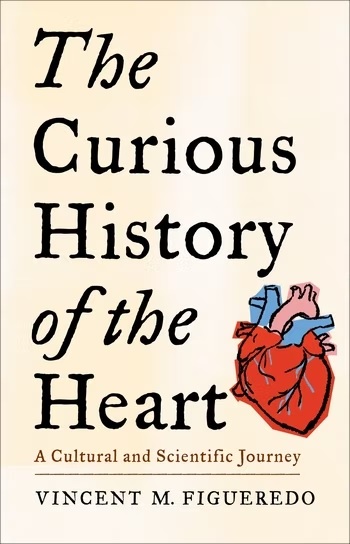
The Curious History of the Heart: A Cultural and Scientific Journey – Vincent M. Figueredo

For much of recorded history, people considered the heart to be the most important organ in the body. In cultures around the world, the heart–not the brain–was believed to be the location of intelligence, memory, emotion, and the soul. Over time, views on the purpose of the heart have transformed as people sought to understand the life forces it contains. Modern medicine and science dismissed what was once the king of the organs as a mere blood pump subservient to the brain, yet the heart remains a potent symbol of love and health and an important part of our cultural iconography.

This book traces the evolution of our understanding of the heart from the dawn of civilization to the present. Vincent M. Figueredo–an accomplished cardiologist and expert on the history of the human heart–explores the role and significance of the heart in art, culture, religion, philosophy, and science across time and place. He examines how the heart really works, its many meanings in our emotional and daily lives, and what cutting-edge science is teaching us about this remarkable organ. Figueredo considers the science of heart disease, recent advancements in heart therapies, and what the future may hold. He highlights the emerging field of neurocardiology, which has found evidence of a “heart-brain connection” in mental and physical health, suggesting that ancient views hold more truth than moderns suspect.

Ranging widely and deeply throughout human history, this book sheds new light on why the heart remains so central to our sense of self.

In My Hands Today…

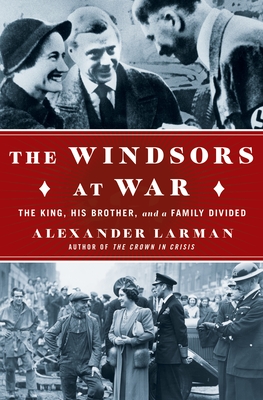
The Windsors at War: The King, His Brother, and a Family Divided – Alexander Larman

At the beginning of 1937, the British monarchy was in a state of turmoil. The previous king, Edward VIII, had abdicated the throne, leaving his unprepared and terrified brother Bertie to become George VI, surrounded by a gaggle of courtiers and politicians who barely thought him up to the job.

Meanwhile, as the now-Duke of Windsor awaited the decree that would allow him to marry his mistress Wallis Simpson, he took an increased interest in the expansionist plans of Adolf Hitler. He may even have gone so far as to betray his country in the process. And as double agents and Nazi spies thronged the corridors of Buckingham Palace, the only man the King could trust was his Prime Minister, Winston Churchill. But they faced a formidable, even unbeatable, adversary: his own brother.

The Windsors at War tells the never-before-told story of World War Two in Britain and America with a fresh focus on the royal family, their conflicted relationships, and the events that rocked the international press. How did this squabbling, dysfunctional family manage to put their differences aside and unite to help win the greatest conflict of their lifetimes? Alexander Larman, author of The Crown in Crisis, now chronicles the Windsor family at war with Germany―and each other.

In My Hands Today…

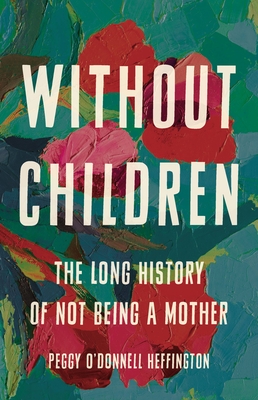
Without Children: The Long History of Not Being a Mother – Peggy O’Donnell Heffington

A historian of gender explores the complicated relationship between womanhood and motherhood In an era of falling births, it’s often said that millennials invented the idea of not having kids. But history is full of women without some who chose childless lives, others who wanted children but never had them, and still others—the vast majority, then and now—who fell somewhere in between. Modern women considering how and if children fit into their lives are products of their political, ecological, and cultural moment. But history also tells them that they are not alone.

Drawing on deep research and her own experience as a woman without children, historian Peggy O’Donnell Heffington shows that many of the reasons women are not having children today are ones they share with women in the a lack of support, their jobs or finances, environmental concerns, infertility, and the desire to live different kinds of lives. Understanding this history—how normal it has always been to not have children, and how hard society has worked to make it seem abnormal—is key, she writes, to rebuilding kinship between mothers and non-mothers, and to building a better world for us all.