In My Hands Today…

Coromandel: A Personal History of South India – Charles Allen
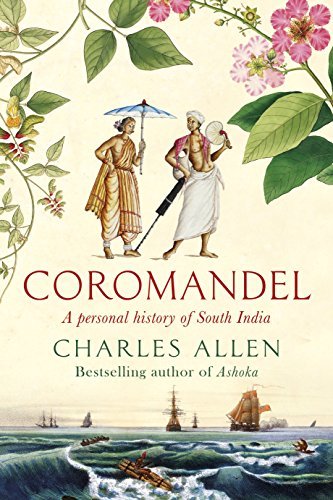
COROMANDEL . A name that has been long applied by Europeans to the Northern Tamil Country, or (more comprehensively) to the eastern coast of the Peninsula of India.

This is the India that highly acclaimed historian Charles Allen visits in this fascinating book. Coromandel journeys south, exploring the less well-known, often neglected, and very different history and identity of the pre-Aryan Dravidian south.

During Allen’s exploration of the Indian South, he meets local historians, gurus, and politicians and, with their help, uncovers some extraordinary stories about the past. His sweeping narrative takes in the archaeology, religion, linguistics, and anthropology of the region—and how these have influenced contemporary politics.

Known for his vivid storytelling, for decades Allen has traveled the length and breadth of India, revealing the spirit of the subcontinent through its history and people. In Coromandel, he moves through modern-day India, discovering as much about the present as he does about the past.

In My Hands Today…

Filterworld: How Algorithms Flattened Culture – Kyle Chayka

A history and investigation of a world ruled by algorithms, which determine the shape of culture itself.

From trendy restaurants to city grids, to TikTok and Netflix feeds the world round, algorithmic recommendations dictate our experiences and choices. The algorithm is present in the familiar neon signs and exposed brick of Internet cafes, be it in Nairobi or Portland, and the skeletal, modern furniture of Airbnbs in cities big and small. Over the last decade, this network of mathematically determined decisions has taken over, almost unnoticed—informing the songs we listen to, the friends with whom we stay in touch—as we’ve grown increasingly accustomed to our insipid new normal.

This ever-tightening web woven by algorithms is called “Filterworld.” Kyle Chayka shows us how online and offline spaces alike have been engineered for seamless consumption, becoming a source of pervasive anxiety in the process. Users of technology have been forced to contend with data-driven equations that try to anticipate their desires—and often get them wrong. What results is a state of docility that allows tech companies to curtail human experiences—human lives—for profit. But to have our tastes, behaviors, and emotions governed by computers, while convenient, does nothing short of call the very notion of free will into question.

In Filterworld, Chayka traces this creeping, machine-guided curation as it infiltrates the furthest reaches of our digital, physical, and psychological spaces. With algorithms increasingly influencing not just what culture we consume, but what culture is produced, urgent questions What happens when shareability supersedes messiness, innovation, and creativity—the qualities that make us human? What does it mean to make a choice when the options have been so carefully arranged for us? Is personal freedom possible on the Internet?

To the last question, Filterworld argues yes—but to escape Filterworld, and even transcend it, we must first understand it.

In My Hands Today…

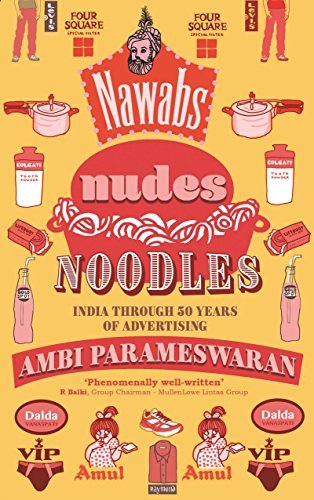
Nawabs, Nudes, Noodles: India through 50 Years of Advertising — Ambi Parameswaran

This is as much the story of Indian advertising as it is about India. Ad veteran Ambi Parameswaran looks at how advertising has evolved, reflecting the country’s culture, politics, and economy in the last fifty years.

From sartorial taste and food habits to marriage and old age, music and language to celebrities and censorship, Ambi examines over a hundred ads to study how the Indian consumer has changed in the past five decades and how advertising and society have shaped each other.

Combining anecdotes and analyses to give us a slice of modern history, Ambi evaluates the relationship between affluence, aspiration, and desire in India. Exploring trends and impacts, he covers the ads that captured the imagination of the entire country. From ‘Only Vimal’ and ‘Jai Jawan Jai Kisan’ to ‘Jo biwi se kare pyaar’ and the controversial Tuffs Shoes campaign, the book is a memorable journey through brands, consumers, and the world of advertising.

In My Hands Today…

Knowing What We Know: The Transmission of Knowledge: From Ancient Wisdom to Modern Magic – Simon Winchester

From the creation of the first encyclopedia to Wikipedia, from ancient museums to modern kindergarten classes–this is a look at how humans acquire, retain, and pass on information and data, and how technology continues to change our lives and our minds.

With the advent of the internet, any topic we want to know about is instantly available with the touch of a smartphone button. With so much knowledge at our fingertips, what is there left for our brains to do? At a time when we seem to be stripping all value from the idea of knowing things–no need for math, no need for map-reading, no need for memorization–are we risking our ability to think? As we empty our minds, will we one day be incapable of thoughtfulness?

Addressing these questions, Simon Winchester explores how humans have attained, stored, and disseminated knowledge. Examining such disciplines as education, journalism, encyclopedia creation, museum curation, photography, and broadcasting, he looks at a whole range of knowledge diffusion–from the cuneiform writings of Babylon to the machine-made genius of artificial intelligence, by way of Gutenberg, Google, and Wikipedia to the huge Victorian assemblage of the Mundanaeum, the collection of everything ever known, currently stored in a damp basement in northern Belgium.

Throughout this tour, Winchester forces us to ponder what rational humans are becoming. What good is all this knowledge if it leads to lack of thought? What is information without wisdom? Does Rene Descartes’s Cogito, ergo sum–“I think therefore I am,” the foundation for human knowledge widely accepted since the Enlightenment–still hold? And what will the world be like if no one in it is wise?

In My Hands Today…

The Ugly History of Beautiful Things: Essays on Desire and Consumption – Katy Kelleher

Katy Kelleher has spent much of her life chasing beauty. As a child, she uprooted handfuls of purple, fragrant little flowers from the earth, plucked iridescent seashells from the beach, and dug for turquoise stones in her backyard. As a teenager she applied glittery shimmer to her eyelids after religiously dabbing on her signature scent of orange blossoms and jasmine. And as an adult, she coveted gleaming marble countertops and delicate porcelain to beautify her home. This obsession with beauty led her to become a home, garden, and design writer, where she studied how beautiful things are mined, grown, made, and enhanced. In researching these objects, Kelleher concluded that most of us are blind to the true cost of our desires. Because whenever you find something unbearably beautiful, look closer, and you’ll inevitably find a shadow of decay lurking underneath.

In these dazzling and deeply researched essays, Katy Kelleher blends science, history, and memoir to uncover the dark underbellies of our favorite goods. She reveals the crushed beetle shells in our lipstick, the musk of rodents in our perfume, and the burnt cow bones baked into our dishware. She untangles the secret history of silk and muses on her problematic prom dress. She tells the story of countless workers dying in their efforts to bring us shiny rocks from unsafe mines that shatter and wound the earth, all because a diamond company created a compelling ad. She examines the enduring appeal of the beautiful dead girl and the sad fate of the ugly mollusk. With prose as stunning as the objects she describes, Kelleher invites readers to examine their own relationships with the beautiful objects that adorn their body and grace their homes.

And yet, Kelleher argues that while we have a moral imperative to understand our relationship to desire, we are not evil or weak for desiring beauty. The Ugly History of Beautiful Things opens our eyes to beauty that surrounds us, helps us understand how that beauty came to be, what price was paid and by whom, and how we can most ethically partake in the beauty of the world.