My Home State: Maharashtra


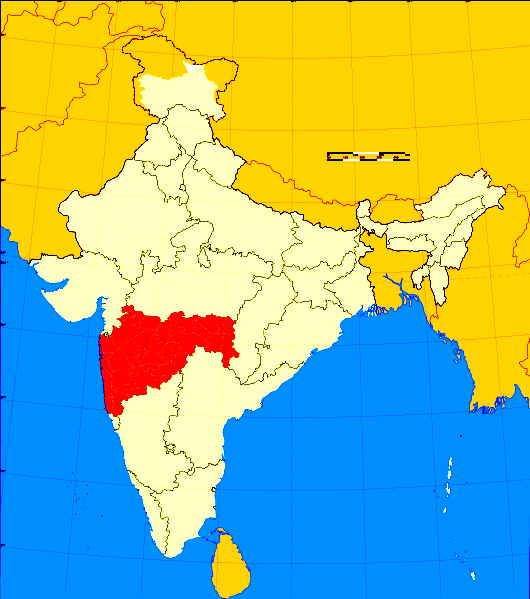
Growing up, in Mumbai, May 1st was always celebrated as Maharashtra Day, the day my home state of Maharashtra, of which Mumbai is the capital came into existence. So I thought it is only appropriate that today’s post be all about Maharashtra.

Maharashtra, which means ‘Great State‘ lies in the western part of India with the states of Gujarat and Madhya Pradesh to the north, Chattisgarh to the east, Andhra Pradesh, Karnataka and Goa to the south and the Arabian Sea to the west. Mumbai, the capital city is the country’s financial capital, though some may debate this claim in recent years and the state is also home to Bollywood!

Maharashtra is one of the wealthiest and the most developed states in India, contributing around a quarter of the country’s industrial output and GDP. This is also the second most populous state in India with almost 10% of India’s population in the state. His probably does not take the migrant population into account, so the actual numbers may be a bit higher. This is also the state with the longest road network in the country and the first train service in India and in fact continental Asia ran between Mumbai and Thane (a Mumbai suburb of sorts) on 16 April 1853. The headquarters of Central Railways, Chatrapti Shivaji Terminus aka CST is the busiest railway station in India, serving as a terminal for both long-distance trains and commuter trains of the Mumbai Suburban Railway.

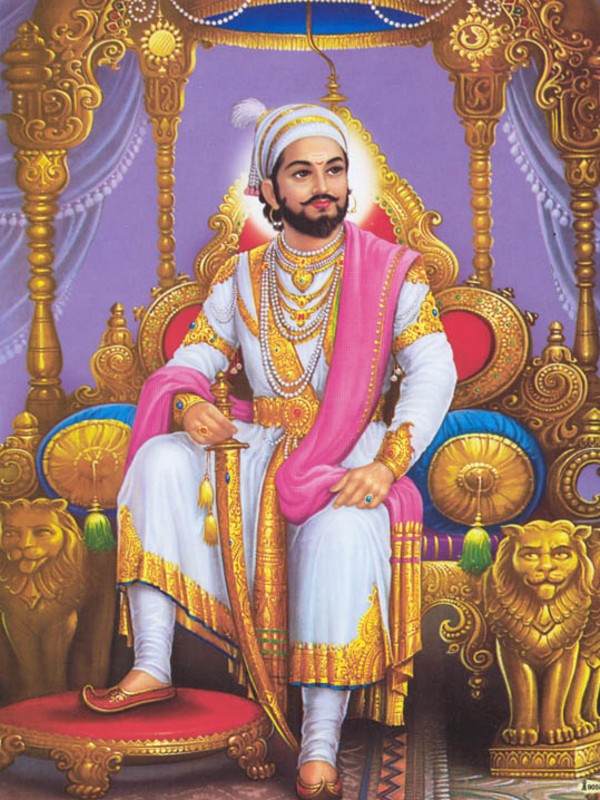
One of the greatest Maratha warriors is Chatrapati Shivaji Maharaj who, along with his father Shahaji Bhosle is credited with the establishment of the independent Maratha Empire which defeated the Mughals conquered large territories in northern and central parts of the Indian subcontinent. The Third Anglo-Maratha war (1817–1818) led to the end of the Maratha Empire and East India Company ruled the country in 1819.

The British governed western Maharashtra as part of the Bombay Presidency, which spanned an area from Karachi in Pakistan to northern Deccan. A number of the Maratha states persisted as princely states, retaining autonomy in return for acknowledging British suzerainty. At the beginning of the 20th century, the struggle for independence took shape, led by nationalist extremists like Bal Gangadhar Tilak and Vinayak Damodar Savarkar and the moderates like Justice Mahadev Govind Ranade, Gopal Krishna Gokhale, Pherozeshah Mehta and Dadabhai Naoroji who were all born in this region.

The ultimatum to the British during the Quit India Movement was given in Mumbai, and culminated in the transfer of power and independence in 1947. After India’s independence, the Deccan States, including Kolhapur were integrated into Bombay State, which was created from the former Bombay Presidency in 1950.

In 1956, the States Reorganisation Act reorganised the Indian states along linguistic lines, and Bombay Presidency State was enlarged by the addition of the predominantly Marathi-speaking regions of Marathwada (Aurangabad Division) from erstwhile Hyderabad state and Vidarbha region from the Central Provinces and Berar. The southernmost part of Bombay State was ceded to Mysore. From 1954–1955 the people of Maharashtra strongly protested against bilingual Bombay state and the Mahagujarat Movement was started, seeking a separate Gujarat state.

Due to the mass protests and 105 deaths, by both linguistic groups, the Union government enacted the Bombay Reorganisation Act on 25 April 1960 which came into effect on 01 May 1960 leading to the formation of the states of Maharashtra and Gujrat by dividing the erstwhile Bombay state.

I can go on and on I guess, but this should be a good starting point for someone who is interested in the state of Maharashtra. One of these days, I’ll do a similar post on Mumbai…

Raja Ravi Varma: India’s First Modern Artist

I want to preface this post with a disclaimer: I am not an artist or even someone with any knowledge of art. What I have written here is based on my research and knowledge. If there is any error in my post, please reach out to me and I will correct it and at the same time, learn something new.

In the past few weeks of posting, whenever I did a post on Indian culture, somehow, most of the pictures I got from Google (the ones I liked that is) turned out to be from Raja Ravi Varma’s collection. His paintings are super familiar to most Indians – his images of the different Gods and Goddesses are the ones we are used to seeing in our Pooja Rooms (family prayer rooms or altars) and so this inspired me to do find out more about the man whose work, about 2-3 generations of Indians have gazed at every single day and then do a post on him today, which is his 167th birth anniversary.

Raja Ravi Varma is considered among one of the finest painters in the history of Indian art and his paintings among the best examples of the fusion of Indian traditions with the techniques of European academic art. Raja Ravi Varma achieved recognition for his paintings from Indian literature and mythology including the epics of Ramayana and the Mahabharata.

Raja Ravi Varma was born in the erstwhile princely state of Travancore in today’s Kerala state today in the year 1948 in a royal family which was very accomplished in the arts. He was patronized by the Maharajah of Travancore and then began formal training with the learning of the basics of painting in Madurai, Tamil Nadu and then trained in water painting by Rama Swami Naidu and then in oil paintings by the Dutch portraitist Theodor Jenson.

His exposure in the west came when he won the first prize in the Vienna Art Exhibition in 1873. In the World Columbian Exposition in Chicago in 1893, he received three gold medals and then teavelled all over India in search of subjects for his paintings.

He also started a lithographic printing press, initially in Mumbai and then near Lonavala (near Mumbai) and the oleographs printed were very popular and continue to be printed even today.

Among the various honours he received, the Kaiser-i-Hind, bestowed by the then Vicerory, Lord Curzon in 1904 on behalf of the British King was the highest. Considering his vast contribution to Indian art, the Government of Kerala has instituted an award called “Raja Ravi Varma Puraskaram”, which is awarded every year to people who show excellence in the field of art and culture.

Raja Ravi Varma died on 02 October 1906 at the age of 58, but his art still lives and delights peoples even today.

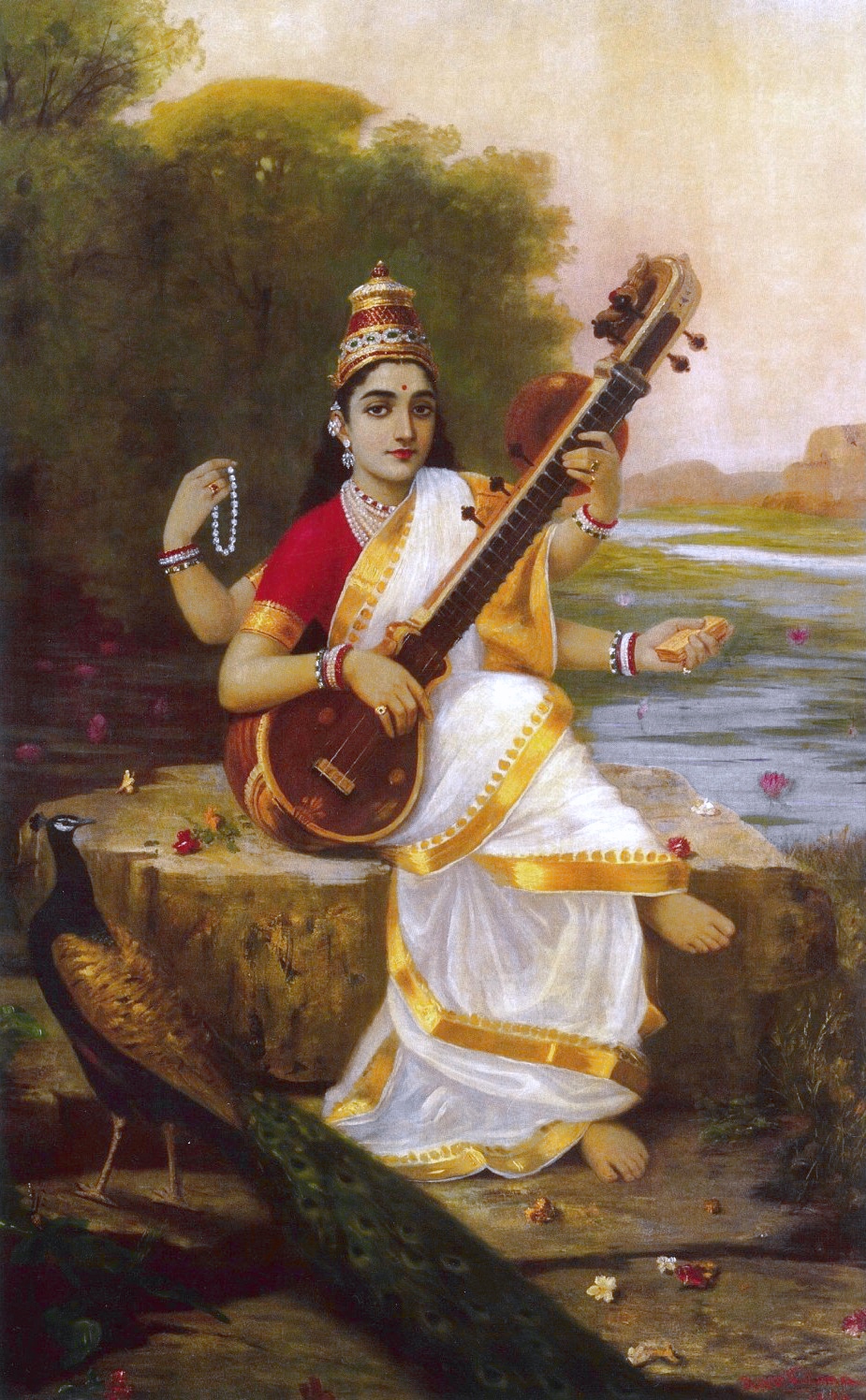
Below are some of the prints we generally see in Indian homes – mostly the Gods and Goddesses of the Indian pantheon….

Goddess Saraswati

Goddess Lakshmi

Some other famous paintings:

Lady with Fruit

Lady in the Moonlight

Playing Tourists…

We played tourists yesterday when the loong Chinese New Year break was on.

BB & GG wanted to go out somewhere and somehow every suggestion was shot down by  one of us. Finally we decided on the museums (although BB was not very sure about this). We decided to take advantage of the free entrance that the Singapore museums were offering the public in the view of the Chinese New Year holidays. So off we went to the Asian Civilisations Museum at Empress Place. We had a bit of problem finding the place, but the journey was totally worth it!

We caught two very interesting exhibits there, both very different and oh so fantastic – The Tang Shipwreck: Gold and Ceramics from 9th-century China and the Patterns of Trade: Indian Textiles For Export, 1400–1900.

Here are some pictures of the exhibitions plus some more from the other gallerys…Enjoy and drool…..

Tang Shipwreck Pictures

Patterns of Trade 

Photos from Other Gallaries

Renewal of Foreign Domestic Worker (FDW) Work Permit

Warning, long and possibly irrelevant post ahead!!

This post is going to be of no relevance to anyone except for someone from Singapore and who employs a foreign domestic worker. I am writing this one so that it serves as a guide for me for the future and if, in the process, it helps anyone else, it’s even better!

Backstory

In November, I got a letter from the Ministry of Manpower letting me know that her two year contract with me was coming to an end around the end of the year. I had to renew her contract or send her back home. Both my V and me were keen to renew the contract, but I did not want to involve the agent who had initially placed her with me as I was not happy with the after sales service that was given to me when V and me had differences over the last two years. Ironically at this same time the agent did get in touch with me to check if I was going to renew the contract. Then she went behind my back and spoke to V directly asking her to renew the contract using her services. When V checked with me, I was ambivalent about it but let V know that if she did use the agent, she will have to bear any extra costs herself as I was not interested in paying her any commission. Later V also realized that using the agent would probably mean that she may have to hand over one or more months salary as commission. So we decided to do it on our own.

I checked an online forum I visit and found out the process. It’s fairly simple actually.

Insurance

You need to get the insurance and bond first before you do anything else. I used NTUC Income, package MI3E which cost me S$ 256.80 for a 26 months insurance. The insurance cannot be done online, so give them a call with the MOM letter in hand. They take your credit card number and process the payment immediately. You can then do the renewal the next day at the MOM website.

Actual Renewal Process

At the MOM website, the renewal process is very simple. Using your SingPass, you log in and do the renewal. A form letter is generated which you have to print to bring with you to the Work Pass Services Office to process the new work permit. This letter will give you the date when you need to be there. Along with the form letter, you also need to print out and fill up a kind of guarantee letter, which basically tells MOM that you, as the employer are guaranteeing the cost of the stay of the FDW.

Work Pass Services Centre

On the date mentioned in your form letter, make your way to the Work Pass Service Centre at Tajong Pagar. This was very close to my office and so took me less than 10 minutes to reach by taxi. The WPSC is located very close to the Keppel Shipyard. There, make your way to the room indicated in the letter and take a queue number. When I went there, it was very quiet, maybe because it was around 3 on a Friday afternoon, but the queue number that I got was called within five minutes. They check the FDW’s passport, old work permit, documents and your identity card. Then you can asked to take the form and go to another room where you can pick up the new work permit. There, the wait was around 10 minutes and I got the new work permit for my helper and that was it! I was in and out of the place in less than 20 minutes.

Wonder why I was so scared of the process. But this bodes well for any future renewals.

You know you are Singaporean when….

I am not a local. S was born in Singapore and due to this fact; BB & GG also are locals. I am the only non-local. Sometimes it’s quite tiring straddling two countries, but the fact is that over the last decade plus, I consider Singapore to be home. I feel a huge relief when I land at Changi airport after a trip and understanding local lingo is a piece of cake for me. Contrast this to the first time I landed here, I desperately wanted to go back home to Mumbai!

I love Mumbai, but each time I go back, it’s changed a little bit more and a time will come, in the not too distant future, when I will be unable to recognize it at all.

So in recognition of the fact that I am half Singaporean, I came across this old entry from Talking Cock. Below are my favourites, so please click the link above to see the whole list. I also have taken some more from this list and some are my own!

You know you are a Singaporean when:

  1. When speaking to foreigners, you somehow feel a need to adopt an accent. (If you’re a DJ, this happens even when you’re not speaking to foreigners.)
  2. You won’t raise your voice to protest policies, but you’ll raise your fists to whack someone over Hello Kitty.
  3. You’re forever talking about businesses you want to set up but will probably never get around to starting.
  4. You’re never completely sure how many times you’ve sung the second verse of the National Anthem.
  5. You’ve sung the Majulah Singapura every single day since the day you’ve been in Primary 1, but you still don’t know the meanings of the lyrics.
  6. You move to where you want your child to go to school.
  7. You feel you can’t walk around naked in your own flat.
  8. You force your children to take Speech & Drama classes, but pray they won’t wind up in Arts later on.
  9. If you’re a guy, whenever you get together with your guy friends, you invariably trade army stories.
  10. If you’re a girl, whenever you get together with your girl friends, you invariably trade stories about how your stupid guy friends are forever trading army stories.
  11. You think the most important sporting event in Singapore this year was David Beckham switching from Manchester United to Real Madrid.
  12. It actually makes a difference to you being called an ‘NSMan’ rather than a ‘Reservist’.
  13. You’ve eaten more times at the Esplanade than you’ve actually seen shows there.
  14. You need campaigns to tell you how to be courteous, to flush toilets, have sex, etc.
  15. You feel the urge to add the suffix ‘-polis’ to everything, viz. Biopolis, Airtropolis, Fusionopolis, Entrepolis, etc.
  16. You’ll gladly spend $50,000 on a car, but will go to great lengths to save a few bucks on ERP charges or even a few cents on a parking coupon.
  17. If you’re pregnant, you have the strange ability to make people on the MRT fall asleep instantly.
  18. You copy down licence plate numbers of cars involved in accidents.
  19. No matter how old you are, you keep associating people with their secondary schools. (alternative: No matter how old you are, you secretly need to know what other people got for their PSLE, O levels and A levels.)
  20. You ‘chope’ a seat by placing a packet of tissues on the chair.
  21. You’re very forthright with your criticisms of the Gahmen, unless there’s a chance they might actually hear you.
  22. You think we’re living in a modern, sophisticated country even when our leaders still insist on wearing their school uniforms.
  23. You can never quite remember what “the core values” of Singaporeans are.
  24. You know all these acronyms and have no issues using them altogether in a sentence –NUS; NTU; ERP; SDU; PAP; MRT; LKY; GCT; PRC; TIBS; SBS; SMS; JB; JBJ; AMK; AYE; PIE; ECP; ISD; ISA; 5 C’s; CPF; CHIJMES; SPG; CWO.
  25. You think there’s nothing wrong with putting chili sauce on everything you eat.
  26. “Crossing the country” means taking the MRT tothe end of the line.
  27. You join queues without knowing or caring what the queue is for.
  28. You see nothing unusual about an organization of trade unions spending more time owning and operating supermarkets, parks, drugstores, amusement nightclubs, and financial services than planning the next strike.
  29. You get irritated if you don’t see a sign telling you how long your wait’s going to be for a bus, a train, or the expressway to take you where you want to go
  30. When you cross the border into Malaysia, you automatically and deeply fear for your life and your wallet. Especially your wallet!!
  31. You buy loads of chewing gum when you go overseas and try to smuggle it in.
So does this apply to me? Some of them does, but I’ll leave it to you to figure out which ones….