Festivals of India: Sri Krishna Jayanthi

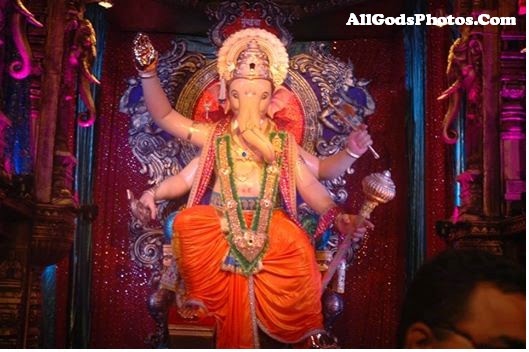
The festival season in India continues with Sri Krishna Jayanthi or Janmashtami tomorrow. This is the day Lord Krishna, the eight avatar of Lord Vishnu, was supposed to have been born. Also known as Gokulashtami or Sree Jayanthi, this festival is celebrated across the country, but more so in what is known as Braj Bhoomi or the regions where Lord Krishna grew up and became a young man, mostly in Northern India (present day Uttar Pradesh) and where Lord Krishna established his kingdom of Dwarka (in present day Gujarat).

Krishna was the eighth son of Devaki and Vasudeva. Based on scriptural details and astrological calculations, the date of Krishna’s birth, known as Janmashtami, is 18 July 3228 BCE and he lived until 18 February 3102 BCE. Krishna belonged to the Vrishni clan of Yadavas from Mathura, and was the eighth son born to the princess Devaki and her husband Vasudeva.

Mathura (in present day Mathura district, Uttar Pradesh) was the capital of the Yadavas, to which Krishna’s parents Vasudeva and Devaki belonged. King Kansa, Devaki’s brother, had ascended the throne by imprisoning his father, King Ugrasena. Afraid of a prophecy that predicted his death at the hands of Devaki’s eighth son, Kansa had the couple locked in a prison cell. After Kansa killed the first six children, and Devaki’s apparent miscarriage of the seventh (which was actually a secret transfer of the infant to Rohini as Balarama), Krishna was born.

Following the birth, Vishnu ordered Vasudeva to take Krishna to Gokul to Nanda and Yashoda, where he could live safely, away from his Uncle Kansa. Vasudeva took Krishna with him and crossed the Yamuna to reach Gokul. There, everyone was asleep; so he quietly kept him there and returned with Yashoda’s daughter. Kansa, thinking her to be Devki’s eight child, threw her on a stone. But she rose into the air and transformed into Yogmaya (who is Vishnu’s helper) and warned Kansa about his death. Then, she disappeared. Krishna grew up in Gokul with his brother, Balram. He then returned to Mathura and killed Kansa with the help of Balram.

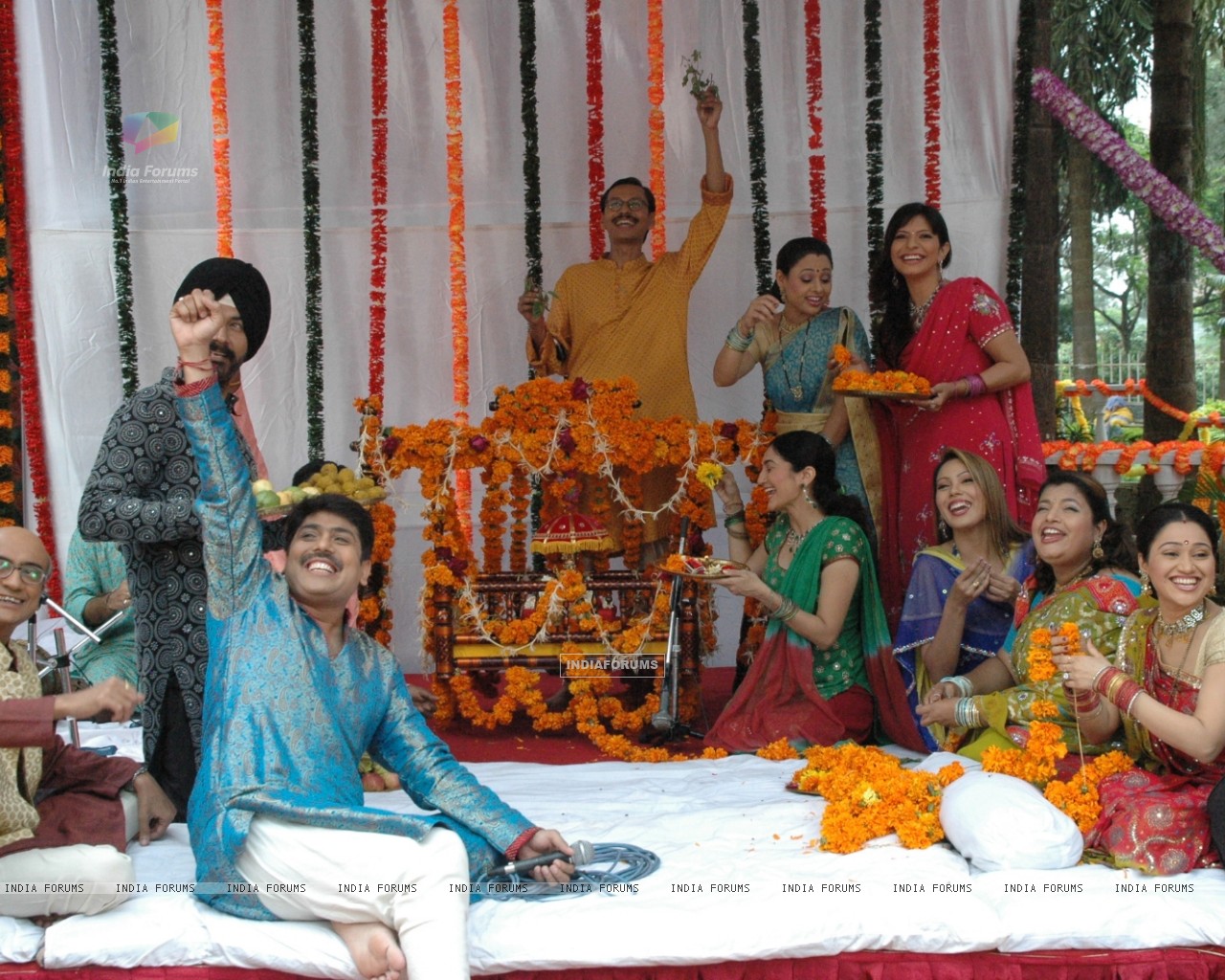
Most people fast the night before Krishna’s birth and also place small cradles in the room to signify his birth, breaking their fast after midnight, the time when Lord Krishna was supposed to have been born.

In most of Maharastra, the festival is celebrated with the breaking of dahi handis which are pots of yoghurt tied high above the ground. Groups of young men (mostly) and women called Govindas go around the city and when they spy on the dahi handis, they form human pyramids and the person at the top of the pyramid attempts to break the handi. If successful, they win the prize money which would be inside the handi (or be given the prize by the organisers of the handi).

In South India, especially in the community I belong to, Sree Jayanthi is usually celebrated in the evening of the day Lord Krishna was supposed to be born. Kolams or decorative patterns made of rice flour are drawn outside the house and little footprints depicting Lord Krishna as a baby entering the house from the doorstep to the Puja room are made. In homes where there are little kids or toddlers, the feet of these toddlers are dipped in the kolam paste and they are made to walk across the house from the door to the pooja room. We did this for a couple of years when BB & GG were young. Since the young Krishna loved butter, this would be a major part of the offering. Other offerings include sweet and salty seedai (round balls made of flour).

Festivals of India: Raksha Bandhan

Tomorrow is Raksha Bandhan, a beautiful festival which celebrates the beautiful bond between a brother and his sister. Tomorrow  is also Avani Avittam, the only Hindu festival which is a men’s festival, as opposed to others where it’s women all the way. I’ve blogged about Avani Avittam before, so this post is mainly about Raksha Bandhan.

Known simply as Rakhi in India, not only is this festival celebrated between blood siblings, but also between people who consider each other as brother and sister. This festival is mainly celebrated in Northern and Western India, but these days, it is celebrated all over the country as well as in places where the Indian diaspora have settled down.

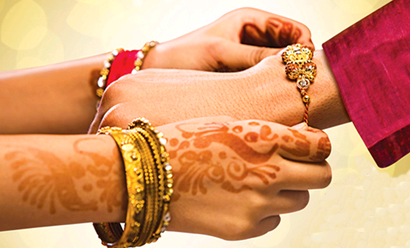
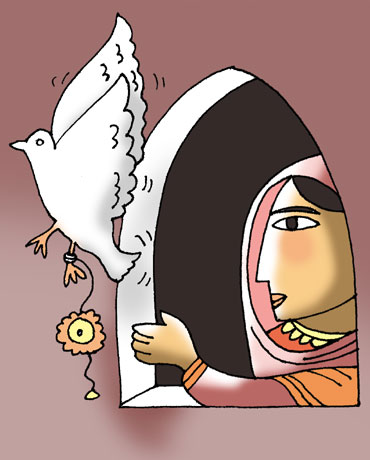
The literal meaning of Raksha Bandhan in Sanskrit is “the knot of protection”. A sister performs the Rakhi ceremony to her brother which incorporates her love for her brother and her wishes for his continued well-being and happiness. In return, the brother pledges to love and protect her under any and all circumstances. When brothers and sisters are far away from each other, sisters generally send their brothers their rakhi by post or courier. In return for the rakhi tied to his wrist, a brother generally gives his sister money or gifts as tokens of his love to his sister.

The festival has many myths surrounding it along with historical references. You can read them here, but some of the historical references are as ancient as the wife of Alexander the Great, Roxana, sending a Rakhi to King Puru asking him not to harm her husband in battle and Rani Karnavati of Chittor in present day Rajasthan sending a Rakhi to Emperor Humayun when Shah Bahadur, the sultan of Gujarat invaded her kingdom. Humayun rushed to help his sister, but arrived too late.

Avani Avittam and Raksha Bandhan are usually the start of the festive season for Hindus which goes on till almost the end of the year.

GG has been tying Rakhi to BB since she was less than a year old and I hope they continue doing this their whole life, irrespective of where in the world both may be. BB does not like to keep the Rakhi on, especially if it’s a school day, but this year, he has said he’ll keep it on the whole weekend!

Navroze Mubarak

Saal Mubarak! With these words, Parsis across the world would have greeted each other tomorrow as they heralded the arrival of their new year. Another greeting heard across the agiaries (Fire Temples) would have been Navroze Mubarak!

I studied for 12 years in a Parsi school and so this community holds a special place in my heart. This small, minority community comprises of the followers of Zarathustra. The Parsis in India are those who fled Persia (modern day Iran) due to religious persecution and arrived in western India (modern day Gujarat, Kutch in India and Sindh in Pakistan).

There’s a very sweet story that was told to me in school about the Parsis’ arrival in India. When they arrived in Gujarat, the leader of the Parsis, the head priest or Dastoorji, sent a messanger to the local king asking for his permission to stay in his land as refugees. The king sent back a bowl full of milk. The Dastoorji looked at the bowl of milk his messenger brought back, added a spoon of sugar to it and sent it back to the king. The King understood the message and gave them permission. Soon one of the people in the Parsi group asked the Dastoorji what just happened and he replied that the bowl of milk the king sent over indicated that the land was currently occupied and full and he didn’t want to do anything to disrupt the lives of his people. By mixing sugar in the milk, the Priest sent a message that the Parsis will do nothing to disrupt the land and it’s people and instead, like how sugar adds sweetness to the milk, they will assimilate into the land and only add to the sweetness of this land and not take away anything. And this is how the Parsis adapted the Gujarati way of life – in their language or dialect as well as the dress. Parsis speak a dialect of Gujarati, which we call Parsi Gujarati and women also adopted the saree as their main form of dress.

The more recent arrivals of Parsis, those who arrived in late 19th and early 20th centuries, fleeing from the repressions of the Qajar dynasty in Iran are differentiated from the original Parsi settlers and are called Iranis. This Irani community is smaller than the Parsi community, though both profess the same religion, but religious customs may be slightly different.

In the centuries that they have lived in India, the Parsis, have integrated themselves into the Indian society, while at the same time, maintaining their ethnic individuality.

This community has been faced with dwindling numbers for a while now, the most significant being childlessness or having less than two numbers (which is basically the total fertility rate) or migration. Demographic trends project that by the year 2020 the Parsis will number only 23,000 (less than 0.002% of the 2001 population of India). The Parsis will then cease to be called a community and will be labeled a ‘tribe’.

During the British rule of India, because this community was highly literate and extremely fluent in English, they occupied many important places in the East India Company.

One interesting aspect of the Parsis is that instead of burying or cremating their dead, they place their dead in a Tower of Death where vultures peck the body and pick it clean. Once the bones are bleached by the sun, they are pushed into the circular opening in the tower. They believe, this way is the most ecological way, where even the dead are used as food by vultures and no part of the polluted human body is pushed back into the earth (by burying it) or into the atmosphere (by cremating it).

The Parsi place pf worship is called an Agiary in the Parsi dialect or a Fire Temple in English. The most holy place for Parsis in India is a place called Udwada in Gujarat. Legend says that one of the groups of refugees brought with them the ash of one of sacred fires from Iran and this ash serves, even today, as the bed for the fire in the Udwada Agiary. I remember friends from school going to the Agiary which used to be opposite our school before important exams. Unfortunately, as a non-Parsi I can’t enter the Agiary.

The Parsis have made considerable contributions to the history and development of India, all the more remarkable considering their small numbers. As the maxim “Parsi, thy name is charity” reveals, their greatest contribution, literally and figuratively, is their philanthropy.

Massages and reflexology: Painful, but oh, so worth it!

Wearing heels almost the whole day means that at the end of the day, you have aching feet!

I started doing foot reflexology on a whim some time last year when I used to take GG to ballet. I used to have an hour to kill and in the mall next to her class, I chanced upon this chain which did foot reflexology and massages. I did foot reflexology a couple of times and was hooked – I paid up for a package and since then have been enjoying it on and off!

After GG stopped ballet, I also stopped going to the shop, till one day a couple of months back, my foot was paining so badly, I decided to see if there was a store nearby which does this – I lucked out and found the same chain close to my workplace and since then almost once a week (sometimes twice a week), either after work or during my lunch hour, I go and get either a foot massage or a shoulder massage.

So what is foot reflexology? I am not sure if this form of alternative medicine is popular out of Southeast Asia, but here, you see them everywhere! Foot Reflexology involves application of pressure to the feet with specific thumb, finger and hand techniques with the oil of a lotion. This technique claim that various areas of the feet correspond to the different organs in the body and by pressing and kneading these points in the feet, remove blockages in the different parts of the body.

The massages for the back and neck do not involve lotions, but only kneading, pressing and massaging on your neck/back using a towel as a shield. These also tend to be quite painful, but given that pretty much everyone is on a computer at work, muscles become rather stiff. I try to do a neck massage once a week to remove the kincks in my shoulder

The masseuse, even the old aunty-type masseuses have such strong hands, that at times it’s even painful, but oh, so good once it’s done…

While having my massages, I have the most random thoughts. Here are some of them….

Yesterday while having a shoulder massage, I was wondering if I should write a book set in Southeast Asia, where the murderer is this old auntyish lady who is a masseuse and who murders people who have wronged her by giving them massages so strong that it triggers some parts of their body to malfunctions and so some hours later they die and the police and detectives are baffled at these murders and no one comes close to finding it out until this old sinseh (a traditional Chinese medicine practitioner) figures it all out! Now that the plot is here, if anyone writes the book, you know where to find me to send me the share of the royalty 🙂

Another time, I felt I was having an out-of-body experience, something akin to floating around till I came crashing down when the massage ended 😦

Superstition: An Emotional Crutch or something more?

Do you avoid ladders when you are out? Does a thought of a black cat crossing your path make you retrace your steps? Welcome to the world of superstitions!

Superstition is the belief in supernatural causality—that one event causes another without any natural process linking the two events—such as astrology, religion, omens, witchcraft, prophecies, etc., that contradicts natural science.

As many countries are there in the world, there are as many different types of superstitions. The most common ones are the ones relating to black cats, crossing your fingers, walking under ladders and the good ol’ Friday the 13th! Here’s a list of the common by silly superstitions that all of us are probably guilty of at some point in time or the other.

I guess, like most people I am too superstitious. I don’t start any new activity or wear new clothes or use anything new on a Saturday. This belief is shared by many in India as Saturday in itself is considered inauspicious – which is why you will almost never see weddings happening on a Saturday!

Other than this, I wear a favourite colour when I am doing something important like an exam, an interview etc. This is completely random and started when I was in college I guess. I can’t remember why, but my best guess would be I did spectacularly well that day when I wore clothes of that colour and so my mind started associating success with the colour. Since then, if I have something important, that colour will feature in my clothes that day. I understand it’s an emotional crutch and this probably makes me more confident, but I am going to take what I can to succeed!

Here’s a complete alphabetical list of superstitions and some superstitions around the world. Do you recognize any that you follow?

Are you superstitious? Why? I’d love to hear from you….