Navroze Mubarak

Saal Mubarak! With these words, Parsis across the world would have greeted each other tomorrow as they heralded the arrival of their new year. Another greeting heard across the agiaries (Fire Temples) would have been Navroze Mubarak!

I studied for 12 years in a Parsi school and so this community holds a special place in my heart. This small, minority community comprises of the followers of Zarathustra. The Parsis in India are those who fled Persia (modern day Iran) due to religious persecution and arrived in western India (modern day Gujarat, Kutch in India and Sindh in Pakistan).

There’s a very sweet story that was told to me in school about the Parsis’ arrival in India. When they arrived in Gujarat, the leader of the Parsis, the head priest or Dastoorji, sent a messanger to the local king asking for his permission to stay in his land as refugees. The king sent back a bowl full of milk. The Dastoorji looked at the bowl of milk his messenger brought back, added a spoon of sugar to it and sent it back to the king. The King understood the message and gave them permission. Soon one of the people in the Parsi group asked the Dastoorji what just happened and he replied that the bowl of milk the king sent over indicated that the land was currently occupied and full and he didn’t want to do anything to disrupt the lives of his people. By mixing sugar in the milk, the Priest sent a message that the Parsis will do nothing to disrupt the land and it’s people and instead, like how sugar adds sweetness to the milk, they will assimilate into the land and only add to the sweetness of this land and not take away anything. And this is how the Parsis adapted the Gujarati way of life – in their language or dialect as well as the dress. Parsis speak a dialect of Gujarati, which we call Parsi Gujarati and women also adopted the saree as their main form of dress.

The more recent arrivals of Parsis, those who arrived in late 19th and early 20th centuries, fleeing from the repressions of the Qajar dynasty in Iran are differentiated from the original Parsi settlers and are called Iranis. This Irani community is smaller than the Parsi community, though both profess the same religion, but religious customs may be slightly different.

In the centuries that they have lived in India, the Parsis, have integrated themselves into the Indian society, while at the same time, maintaining their ethnic individuality.

This community has been faced with dwindling numbers for a while now, the most significant being childlessness or having less than two numbers (which is basically the total fertility rate) or migration. Demographic trends project that by the year 2020 the Parsis will number only 23,000 (less than 0.002% of the 2001 population of India). The Parsis will then cease to be called a community and will be labeled a ‘tribe’.

During the British rule of India, because this community was highly literate and extremely fluent in English, they occupied many important places in the East India Company.

One interesting aspect of the Parsis is that instead of burying or cremating their dead, they place their dead in a Tower of Death where vultures peck the body and pick it clean. Once the bones are bleached by the sun, they are pushed into the circular opening in the tower. They believe, this way is the most ecological way, where even the dead are used as food by vultures and no part of the polluted human body is pushed back into the earth (by burying it) or into the atmosphere (by cremating it).

The Parsi place pf worship is called an Agiary in the Parsi dialect or a Fire Temple in English. The most holy place for Parsis in India is a place called Udwada in Gujarat. Legend says that one of the groups of refugees brought with them the ash of one of sacred fires from Iran and this ash serves, even today, as the bed for the fire in the Udwada Agiary. I remember friends from school going to the Agiary which used to be opposite our school before important exams. Unfortunately, as a non-Parsi I can’t enter the Agiary.

The Parsis have made considerable contributions to the history and development of India, all the more remarkable considering their small numbers. As the maxim “Parsi, thy name is charity” reveals, their greatest contribution, literally and figuratively, is their philanthropy.

Massages and reflexology: Painful, but oh, so worth it!

Wearing heels almost the whole day means that at the end of the day, you have aching feet!

I started doing foot reflexology on a whim some time last year when I used to take GG to ballet. I used to have an hour to kill and in the mall next to her class, I chanced upon this chain which did foot reflexology and massages. I did foot reflexology a couple of times and was hooked – I paid up for a package and since then have been enjoying it on and off!

After GG stopped ballet, I also stopped going to the shop, till one day a couple of months back, my foot was paining so badly, I decided to see if there was a store nearby which does this – I lucked out and found the same chain close to my workplace and since then almost once a week (sometimes twice a week), either after work or during my lunch hour, I go and get either a foot massage or a shoulder massage.

So what is foot reflexology? I am not sure if this form of alternative medicine is popular out of Southeast Asia, but here, you see them everywhere! Foot Reflexology involves application of pressure to the feet with specific thumb, finger and hand techniques with the oil of a lotion. This technique claim that various areas of the feet correspond to the different organs in the body and by pressing and kneading these points in the feet, remove blockages in the different parts of the body.

The massages for the back and neck do not involve lotions, but only kneading, pressing and massaging on your neck/back using a towel as a shield. These also tend to be quite painful, but given that pretty much everyone is on a computer at work, muscles become rather stiff. I try to do a neck massage once a week to remove the kincks in my shoulder

The masseuse, even the old aunty-type masseuses have such strong hands, that at times it’s even painful, but oh, so good once it’s done…

While having my massages, I have the most random thoughts. Here are some of them….

Yesterday while having a shoulder massage, I was wondering if I should write a book set in Southeast Asia, where the murderer is this old auntyish lady who is a masseuse and who murders people who have wronged her by giving them massages so strong that it triggers some parts of their body to malfunctions and so some hours later they die and the police and detectives are baffled at these murders and no one comes close to finding it out until this old sinseh (a traditional Chinese medicine practitioner) figures it all out! Now that the plot is here, if anyone writes the book, you know where to find me to send me the share of the royalty 🙂

Another time, I felt I was having an out-of-body experience, something akin to floating around till I came crashing down when the massage ended 😦

Superstition: An Emotional Crutch or something more?

Do you avoid ladders when you are out? Does a thought of a black cat crossing your path make you retrace your steps? Welcome to the world of superstitions!

Superstition is the belief in supernatural causality—that one event causes another without any natural process linking the two events—such as astrology, religion, omens, witchcraft, prophecies, etc., that contradicts natural science.

As many countries are there in the world, there are as many different types of superstitions. The most common ones are the ones relating to black cats, crossing your fingers, walking under ladders and the good ol’ Friday the 13th! Here’s a list of the common by silly superstitions that all of us are probably guilty of at some point in time or the other.

I guess, like most people I am too superstitious. I don’t start any new activity or wear new clothes or use anything new on a Saturday. This belief is shared by many in India as Saturday in itself is considered inauspicious – which is why you will almost never see weddings happening on a Saturday!

Other than this, I wear a favourite colour when I am doing something important like an exam, an interview etc. This is completely random and started when I was in college I guess. I can’t remember why, but my best guess would be I did spectacularly well that day when I wore clothes of that colour and so my mind started associating success with the colour. Since then, if I have something important, that colour will feature in my clothes that day. I understand it’s an emotional crutch and this probably makes me more confident, but I am going to take what I can to succeed!

Here’s a complete alphabetical list of superstitions and some superstitions around the world. Do you recognize any that you follow?

Are you superstitious? Why? I’d love to hear from you….

My Home State: Maharashtra


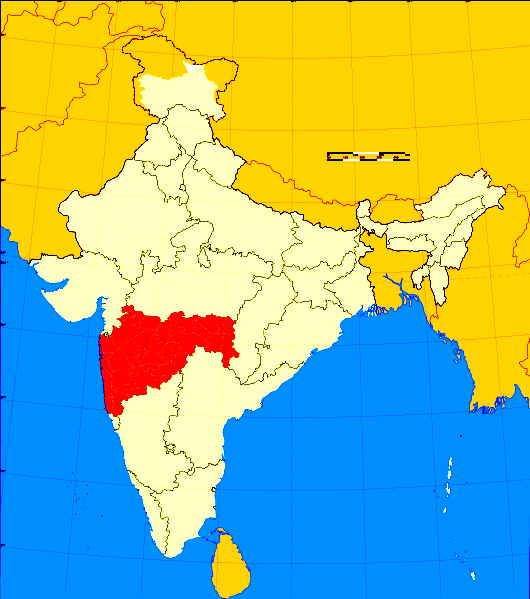
Growing up, in Mumbai, May 1st was always celebrated as Maharashtra Day, the day my home state of Maharashtra, of which Mumbai is the capital came into existence. So I thought it is only appropriate that today’s post be all about Maharashtra.

Maharashtra, which means ‘Great State‘ lies in the western part of India with the states of Gujarat and Madhya Pradesh to the north, Chattisgarh to the east, Andhra Pradesh, Karnataka and Goa to the south and the Arabian Sea to the west. Mumbai, the capital city is the country’s financial capital, though some may debate this claim in recent years and the state is also home to Bollywood!

Maharashtra is one of the wealthiest and the most developed states in India, contributing around a quarter of the country’s industrial output and GDP. This is also the second most populous state in India with almost 10% of India’s population in the state. His probably does not take the migrant population into account, so the actual numbers may be a bit higher. This is also the state with the longest road network in the country and the first train service in India and in fact continental Asia ran between Mumbai and Thane (a Mumbai suburb of sorts) on 16 April 1853. The headquarters of Central Railways, Chatrapti Shivaji Terminus aka CST is the busiest railway station in India, serving as a terminal for both long-distance trains and commuter trains of the Mumbai Suburban Railway.

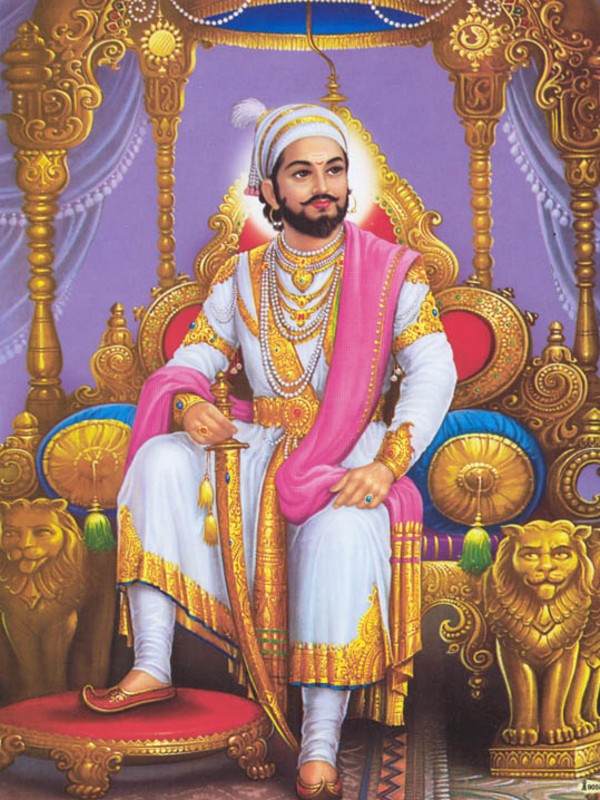
One of the greatest Maratha warriors is Chatrapati Shivaji Maharaj who, along with his father Shahaji Bhosle is credited with the establishment of the independent Maratha Empire which defeated the Mughals conquered large territories in northern and central parts of the Indian subcontinent. The Third Anglo-Maratha war (1817–1818) led to the end of the Maratha Empire and East India Company ruled the country in 1819.

The British governed western Maharashtra as part of the Bombay Presidency, which spanned an area from Karachi in Pakistan to northern Deccan. A number of the Maratha states persisted as princely states, retaining autonomy in return for acknowledging British suzerainty. At the beginning of the 20th century, the struggle for independence took shape, led by nationalist extremists like Bal Gangadhar Tilak and Vinayak Damodar Savarkar and the moderates like Justice Mahadev Govind Ranade, Gopal Krishna Gokhale, Pherozeshah Mehta and Dadabhai Naoroji who were all born in this region.

The ultimatum to the British during the Quit India Movement was given in Mumbai, and culminated in the transfer of power and independence in 1947. After India’s independence, the Deccan States, including Kolhapur were integrated into Bombay State, which was created from the former Bombay Presidency in 1950.

In 1956, the States Reorganisation Act reorganised the Indian states along linguistic lines, and Bombay Presidency State was enlarged by the addition of the predominantly Marathi-speaking regions of Marathwada (Aurangabad Division) from erstwhile Hyderabad state and Vidarbha region from the Central Provinces and Berar. The southernmost part of Bombay State was ceded to Mysore. From 1954–1955 the people of Maharashtra strongly protested against bilingual Bombay state and the Mahagujarat Movement was started, seeking a separate Gujarat state.

Due to the mass protests and 105 deaths, by both linguistic groups, the Union government enacted the Bombay Reorganisation Act on 25 April 1960 which came into effect on 01 May 1960 leading to the formation of the states of Maharashtra and Gujrat by dividing the erstwhile Bombay state.

I can go on and on I guess, but this should be a good starting point for someone who is interested in the state of Maharashtra. One of these days, I’ll do a similar post on Mumbai…

Raja Ravi Varma: India’s First Modern Artist

I want to preface this post with a disclaimer: I am not an artist or even someone with any knowledge of art. What I have written here is based on my research and knowledge. If there is any error in my post, please reach out to me and I will correct it and at the same time, learn something new.

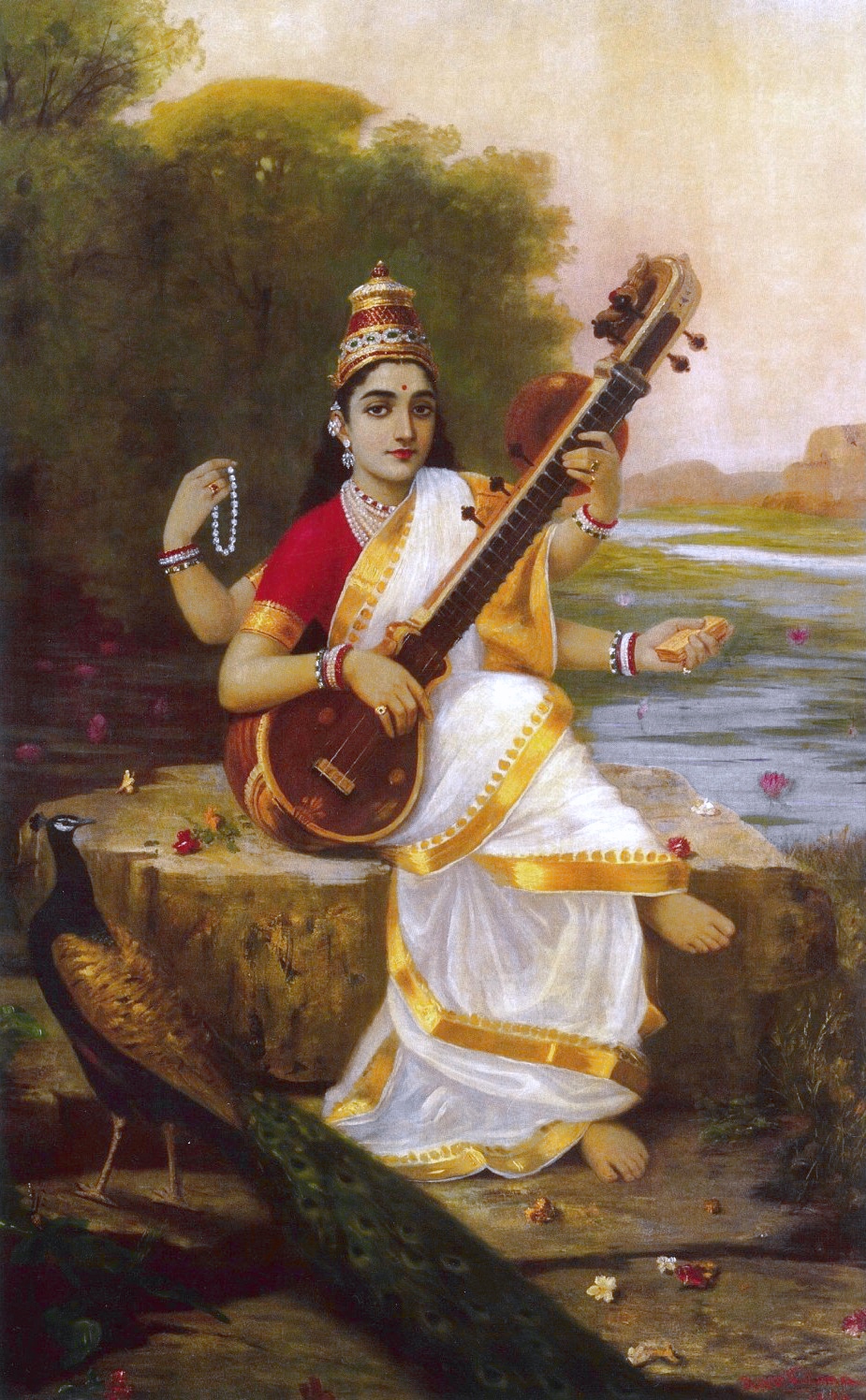
In the past few weeks of posting, whenever I did a post on Indian culture, somehow, most of the pictures I got from Google (the ones I liked that is) turned out to be from Raja Ravi Varma’s collection. His paintings are super familiar to most Indians – his images of the different Gods and Goddesses are the ones we are used to seeing in our Pooja Rooms (family prayer rooms or altars) and so this inspired me to do find out more about the man whose work, about 2-3 generations of Indians have gazed at every single day and then do a post on him today, which is his 167th birth anniversary.

Raja Ravi Varma is considered among one of the finest painters in the history of Indian art and his paintings among the best examples of the fusion of Indian traditions with the techniques of European academic art. Raja Ravi Varma achieved recognition for his paintings from Indian literature and mythology including the epics of Ramayana and the Mahabharata.

Raja Ravi Varma was born in the erstwhile princely state of Travancore in today’s Kerala state today in the year 1948 in a royal family which was very accomplished in the arts. He was patronized by the Maharajah of Travancore and then began formal training with the learning of the basics of painting in Madurai, Tamil Nadu and then trained in water painting by Rama Swami Naidu and then in oil paintings by the Dutch portraitist Theodor Jenson.

His exposure in the west came when he won the first prize in the Vienna Art Exhibition in 1873. In the World Columbian Exposition in Chicago in 1893, he received three gold medals and then teavelled all over India in search of subjects for his paintings.

He also started a lithographic printing press, initially in Mumbai and then near Lonavala (near Mumbai) and the oleographs printed were very popular and continue to be printed even today.

Among the various honours he received, the Kaiser-i-Hind, bestowed by the then Vicerory, Lord Curzon in 1904 on behalf of the British King was the highest. Considering his vast contribution to Indian art, the Government of Kerala has instituted an award called “Raja Ravi Varma Puraskaram”, which is awarded every year to people who show excellence in the field of art and culture.

Raja Ravi Varma died on 02 October 1906 at the age of 58, but his art still lives and delights peoples even today.

Below are some of the prints we generally see in Indian homes – mostly the Gods and Goddesses of the Indian pantheon….

Goddess Saraswati

Goddess Lakshmi

Some other famous paintings:

Lady with Fruit

Lady in the Moonlight