
Noise: A Flaw in Human Judgment – Daniel Kahneman, Olivier Sibony, Cass R. Sunstein
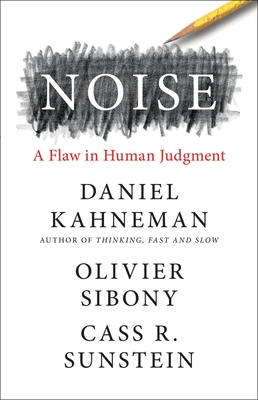
Imagine that two doctors in the same city give different diagnoses to identical patients — or that two judges in the same courthouse give different sentences to people who have committed the same crime. Suppose that different food inspectors give different ratings to indistinguishable restaurants — or that when a company is handling customer complaints, the resolution depends on who happens to be handling the particular complaint. Now imagine that the same doctor, the same judge, the same inspector, or the same company official makes different decisions, depending on whether it is morning or afternoon, or Monday rather than Wednesday. These are examples of noise: variability in judgments that should be identical.
In Noise, Daniel Kahneman, Cass R. Sunstein, and Olivier Sibony show how noise contributes significantly to errors in all fields, including medicine, law, economic forecasting, police behavior, food safety, bail, security checks at airports, strategy, and personnel selection. And although noise can be found wherever people make judgments and decisions, individuals and organizations alike are commonly oblivious to the role of chance in their judgments and in their actions.
Drawing on the latest findings in psychology and behavioral economics, and the same kind of diligent, insightful research that made Thinking, Fast and Slow and Nudge groundbreaking New York Times bestsellers, Noise explains how and why humans are so susceptible to noise in judgment — and what we can do about it.


