2016 Sec 1 Week 3 Update

School has started in earnest now. The children have exercised their Co-Curricular Activity options. BB’s school had three choices and so he chose the Youth Flying Club (one of the main reasons he chose this school), Robotics Club and NCC (Air) as his three choices. He had to go for an interview cum audition for the Flying Club which was run by the seniors. According to BB, there were almost 80-100 students, mostly boys who came for the audition. Hopefully on Monday when the CCA postings are done, he will have gotten the Flying Club as his CCA.

GG’s school had trials and selections for the sec 1 children so that they could have an idea on what the CCA entailed before they exercised their selection. They had to choose 6. She went for Choir trials/auditions this week and as I expected she was selected for it. The choir conductor apparently said she has a nice voice and coupled with her choir experience in Primary school, this was a done deal! She retains her Soprano 1 position, which is the highest singing voice. During this audition, the conductor also called for people to audition to sing solo during the school’s Chinese New Year celebrations and GG was selected for that too! We also received this week a letter from BB’s school, signed by the principal, inviting selected students to be part of their Broadcasting Club. From the letter, it seems that they have selected some students based on their English and overall PSLE results. The club sounds very interesting and will teach students scriptwriting, interviewing techniques as well as pronunciation. Their duties will include hosting duties during school events and also some daily PA system broadcast duties. I think this will be a 1-2 year programme and hopefully this does not clash with his CCA.

 BB will be carrying a full load this year. We also heard news that he has to compulsorily take part in his school’s Maths Olympiad team. Apparently all A* students have no choice in the matter, so that’s one more day that he has to stay back for practice….

 The first full week of school also meant that studies have started and both are starting to see the pressure that is secondary school. We cannot take this year off as the number of subjects increase from four to eight or nine! This on top of CCAs which can up quite a bit of time! CCAs are important in secondary school as you get some points depending on your involvement in it and leadership positions which you can use to shave off points from your O level results. The end of next year (secondary 2) is also streaming year, when students have to choose their subject combinations for their O levels. This pretty much determines what you will do in life as wrong subject choices will impact junior college and/or Polytechnic course applications. Doing well in secondary 1 and 2 will allow you a much broader base from which to choose subjects.
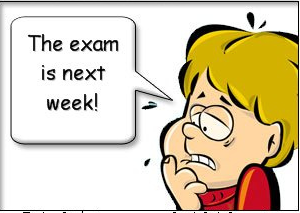
PSLE Reflections

I’ve been mulling about this post for a while now, contemplating whether or not to write what was in my mind. I’m not sure if I have any readers from Singapore and so whether this post will be of use to anyone. But then I decided to pen it down after all, who knows who will gain from this. Also this may make me self-reflect as GG & BB go through Secondary school.

For anyone who wants their child to shine in the PSLE exam, the first thing, I would suggest is know what kind of a learner he/she is. You should know their learning style by the time they get to Primary 3 and then from then on, you need to cater to them using their learning style. Also another thing every parent should know that hot-housing a child to do well in national exams so that they get into a reputed secondary school is good and well if the child continues to excel. I feel that if you place a child in a secondary school which is far too advanced for them, then they will be running just to keep up and at some point they may get frustrated by how they are in comparison to their peers and just give up. Last, please take into account your child’s interests when choosing a secondary school. If you child is passionate about music, but the school you have chosen does not have a decent music programme, the child will not be happy there.

As a parent, you should start in earnest for the PSLE exams when your child enters Primary 4. At this point, as a parent who knows their child best, you should be aware of his/her potential, interests and passions. Also this is the point when you should build strong foundations in all the four subjects. Primary 4 is slightly more difficult than Primary 3, but is much less stressful than Primary 5 when the jump is much higher. So use the time in Primary 4 to thoroughly drill the child in the basics in all the four subjects.

For the languages, get them to read regularly. Most schools have a silent reading programme daily for both English and Mother Tongue, but please take them to the library regularly and supplement this programme with good books. I would also advise to parents to be the final arbitrator of the books their children read, and get them to read different genres, so they are exposed to different writing styles. This will improve vocabulary immensely and will help them with composition and comprehension writing as well as for the oral exams at the PSLE exams. If possible, try and get the child to read a one or two levels beyond where he is so that he is exposed to a higher standard of vocabulary early on.

For maths, make sure they have their foundation clear and understand concepts well. Expose them to the different types of questions they will have to answer and also get them to do timed question papers as this is something I see children having difficulty in – in completing their paper. Also questions about real life estimations may help – remember the infamous $1 coin question in this year’s Maths paper?

For science, I notice that there is a slight but sure shift to application based questions. So when learning science, try to get the child the real-life application for that concept. In Singapore, the science text books only teach a fraction of what they are expected to know and buying science guides is inevitable. It may help to start doing this earlier, even in Primary 3 as that is when they start science.  

Direct School Admission

I wish I’d known what I am writing now earlier, it would have saved us so much heartache and who knows; maybe GG & BB would have gotten into their dream schools under this scheme. I realise many people, especially parents who are first time PSLE parents do not really know about this. The DSA scheme was started in 2004 for Primary 6 or Secondary 4 students to be guaranteed a place in Secondary school or Junior College. This is so that students who are particularly good in a subject or have niche talent can get into a school/junior college which wants them before they sit for their exams.

If you have identified a school/niche area where you want to apply for DSA for your child, the right time to start the process is in Primary 4. Every school offering DSA will have an Open House sometime in May and it may be a good idea to go to the school and see it. You will get the general idea of what the school will offer your child and you then have a good feel of whether this is the best choice for your child. Once you’ve zoomed into your choice schools, you need to start researching what they are looking for in a successful DSA applicant. Some schools have multiple entrance tests, while others give more importance to the school marks from P4 onwards. So it is important to make sure your child does well from Primary 4 onwards, especially in the subject that they will be applying DSA in. If you are applying in sports and/or aesthetics categories, you will need to go for trials and auditions, so it’s a good idea to start preparing from this point on. Of course, all this preparations does not guarantee a spot as the number of places varies by year (exceptions are NUS High, SST and SOTA who take almost 100% through DSA), but this preparation gives you an added edge over the others who only start in Primary 6.

Please join online forums like kiasuparents and facebook groups which really help. There are so many parents out there who know so much and are willing to share information which really helps.

Hope this post will be useful to people. I’m no expert by any stretch of imagination, and all this has been gleaned through personal experiences and online forums. If you have any questions, please leave it as a comment below and I’ll try and answer it to the best of my ability.

PSLE Week 32 Update

Another week has gone and now we are staring the PSLE in it’s face. This week, on Thursday and Friday, we have the PSLE Oral exams, English on Thursday and Hindi on Friday. They are in the first session, so reporting time is 7 am!! S will drop them in school early and then go to work….

They got their Hindi Prelim results today. GG really surprised me. She moved from a C to a B, increasing 11 marks from her SA1 results. I was so happy to see this, probably the first time I was happy to see Hindi results! As for BB, he was where he was – a D, he just managed to increase 1 mark from his SA1 results….

Languages

Language: The ability to acquire and use a complex system of communication, particularly the human ability to do so, and a language is any specific example of such a system.

Human beings, unless living in a completely isolated environment use language innately – when a parent coos to their baby, they are laying the foundation for the language they are native speakers of in the baby.

Most people (around 40% of the world’s population) are very fluent in a single language, usually called their mother tongue, many are bi-lingual (around 43% of the world’s population) which means they are fluent in two languages, usually English and their mother tongue, few are tri-lingual (around 13% of the world’s population), very few people are multi-lingual (around 3% of the world’s population) meaning they can speak four languages fluently and miniscule percent of the world population (less than 1%) can be called polygots or someone who can speak several languages fluently.

Most people in Singapore are bi lingual, speaking two languages with ease, English and their mother tongue, depending on what that is. Growing up, I guess most people around me were tri or multi-lingual – knowing English, Hindi, their mother tongues and to some extent the state language of Marathi. Although notionally my mother tongue is Tamil, the languages I think and dream are English and Hindi as these two were the languages we used all the time – in school, outside and even at home. My paternal grandfather, a product of the British education system, insisted I and my sister speak English to him and the English had to be grammatically correct. For a very long time, I could not speak to him in any other language other than English and it was only a few years before his death, we started speaking to him in other languages, specifically Tamil. My paternal grandmother, on the other hand, used to speak to us in Tamil, which to this date is not too fluent for both me and my sister. My parents, used to speak to us in a mixture of languages – both English and Tamil.

When we started school, it was frowned upon to speak any other language other than English in school and so this started a life-long love for the language. Like I mentioned earlier, I think, feel and even dream in English, so can this be called my native language?
Living in culturally diverse city like Bombay meant that you had to speak another language to engage with others – this usually was Hindi and with neighbours belonging to the Northern part of India, it meant my Hindi also achieved that level of fluency. Friends also cemented this level of fluency and thus I can comfortably claim to be bi-lingual, maybe tri-lingual (can I be that if I can’t read or write Tamil?).

Other languages I have a passing level of fluency to are Marathi (my home state language), French (this was my third language in school and college), Malayalam (from neighbours) and Kannada (my grandparents moved to Bangalore when I was in elementary school and yearly holidays to the city ensured I learnt a bit of the language).

Yesterday morning while S was driving me to work, the local Tamil radio channel was on. During the morning show, one of the DJs was, using the wrong way to pronounce a certain alphabet. Now this is going to be difficult to show here – there’s a letter which is a very guttural Y, but many people can’t speak it as it should be spoken and instead pronounce it as an L, which is wrong. This DJ, on national radio was continuously pronouncing words with this letter wrong. I am surprised that for a country which prides itself on it’s national bi-lingual policy allows someone to get away to speaking wrong on air like this. Also surprising is that till date, no one has come forward to correct this person as I am sure many eminent speakers of the language are probably tuning into the station!

OK, here’s a bit of language trivia – Do you know which the most widely spoken languages in the world are? By the number of speakers in descending order you have:

  1. Mandarin Chinese
  2. Spanish
  3. English
  4. Hindi
  5. Arabic
  6. Portuguese
  7. Bengali
  8. Russian
  9. Japanese
  10. Punjabi

No big surprises there to see Chinese at the top and 60% of the top 10 languages are from Asia!

SA1 and PSLE

The first semester exams have just ended and the results are in. BB & GG have fallen a full band down in raw scores. I asked around and was told this happens. Apparently Primary 1 & 2 are supposed to be the easy years and then Primary 3 takes that up a big notch! But the results have resulted in both BB & GG (and a very angry mama) being very disappointed with their marks. So we’ve decided to come up with strategies to make sure this does not happen for the next exam. Even though their school is not one of the branded schools, but just a neighbourhood school which is not a neighbourhood school, the papers were set at a level just slightly above what was taught in school. In BB’s class, apparently 40% of the class failed in the Maths paper! But the school also has alternative assessment so those marks may increase scores for the children and that 40% may drop.

The past few days I have been reading about about what is possibly the most dreaded exams every Singaporean child will undergo – the PSLE (Primary School Leaving Exam). Children here take it at the end of their primary school education when they are about 12 years old and in Primary 6. Although BB & GG have another 3.5 years before they sit for the PSLE, what I read has made me really scared. This exam pretty much determines your future and to get admission in a good secondary school means you need a very good/decent score. Also the exams are apparently set at about a year to two years more advanced than what the children are taught in school and all this higher order thinking skills means that they need to start now! So operation PSLE will start from the school holidays this year. I need to get BB & GG to start reading books meant for teens now so that they will be reading adult literature when they reach P5/P6. This will help them in English. Now to source for resources for Maths, Science and Hindi.