Recipe: Gulkand Dry Fruit Barfi

img_6184

Around six months back, I brought a tub of Gulkand which is a kind of rose jam. To be honest, I was intrigued by its smell and texture and so decided to buy it. It was lying in my fridge all this time and I was wondering if I could do something with it for Diwali when I chanced upon this recipe from Archana’s Kitchen.

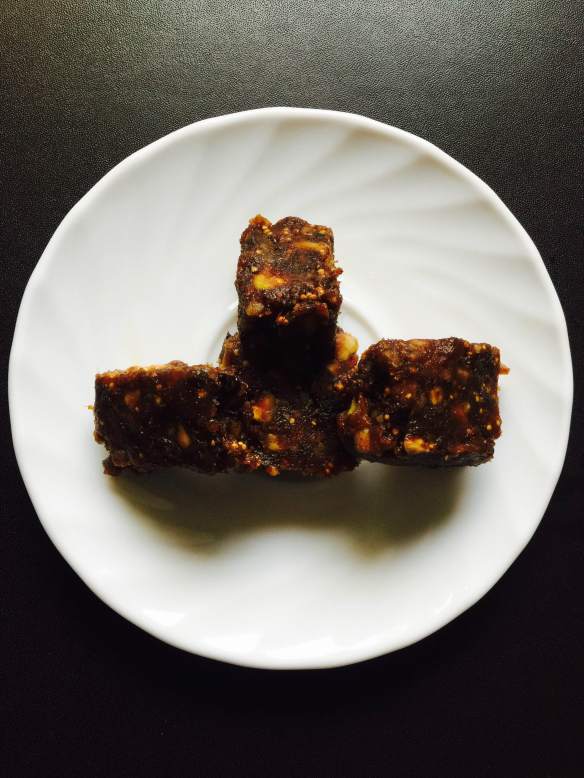
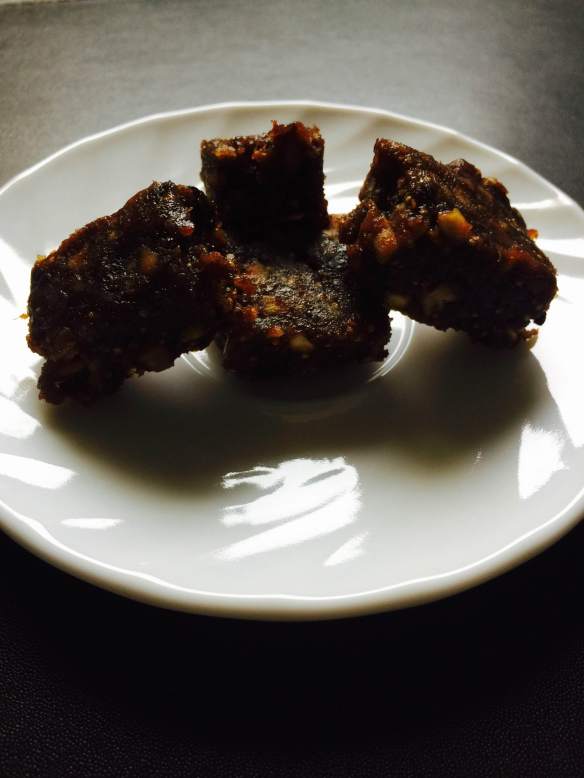
I made this recipe almost as it is mentioned on the page and it turned out more like a fudge rather than a barfi.It does not have any added sugars to it, with all the sugars coming from the dry fruit and the gulkand.

img_6188

Gulkand Dry Fruit Barfi

Ingredients:

  • 2 cups dry figs (anjeer), chopped
  • 2 cups dates, chopped
  • 1/2 cup almonds
  • 1/2 cups cashew nuts
  • 1/2 cups walnuts
  • 1/4 cup pistachios
  • 1/2 cup raisins
  • 2-3 tbsps gulkand
  • 1/4 tsp nutmeg powder
  • 1 tbsp ghee

Method:

  • Soak the chopped figs, dates and raisins separately in bowls of water and let them soak for around 30 minutes.
  • Strain the water from the dates, figs and raisins and grind them to a smooth paste. I added some water as my mixer was not a very strong one, but if you can do this without adding water, that is better.
  • In a food chopper, chop the cashew nuts, almonds, walnuts and pistachios into small pieces and keep aside.
  • Grease a tray with some ghee or butter and keep aside.
  • In a non-stick pan, heat the ghee and when the ghee gets warm, add the fig, dates and raisins paste and mix well and saute it for a while.
  • Now add the chopped nuts, gulkand and nutmeg powder and combine well.
  • Stir well for a couple of minutes until the mixture starts to leave the sides of the pan.
  • Once this happens, pour the mixture into the greased tray and level it well.
  • Cover the tray and when the mixture is cool, keep it in the fridge for around 30-45 minutes to firm up.
  • Cut it into smaller pieces and serve.

img_6182

img_6185

img_6183


Sumangali Pooja Part 2

Please read Part 1 before continuing to read Part 2

Before the sumangalis come, the house is decorated with rice flour rangolis and the lamps are lit in the home altar. Two separate big silver lamps called kuthu villaku are also kept ready to be lit just before the function starts.

When the sumangalies come, we welcome them and give them haldi and kumkum as well flowers to keep in their hair. Then the lady of the family (aka me) lights the big kuthu villakkus. We kept each lamp next to an altar, one each for a sumangali and the young girl. The altar was made using a small low stool (called palagai in Tamil) which has some rangoli done on it. On this is kept the nine-yard saree (which has been made madi in the morning) and the pavadai (for the sumangali and the kanya) and then a mirror is kept behind it in such a way your reflection is seen. This is so that any sumangalis or kanyas of the family who are dead, but who are present in the house at the time of the function can see themselves. We also decorate the mirror with a comb, haldi kumkum, flowers and some gold ornaments like chains, bangles etc. A small pooja is then performed and the entire family (including men if present) offer prayers to the ancestral women of the family and seek their blessings.

We then invite the sumangalis and the kanyas to sit down to eat on plantain leaves. Two leaves, one on top of the other lightly apart, is also kept for the God (called Swami Elai) which in some families, one member of the family would then eat. Before the women sit down (they have to first stand in front of their leaves), the lady organising this function will call the names of all sumangalis in the family. If no names can be found (like in our case), we just call for all known and unknown sumangalis of the family to come and partake the meal. The invited sumangalis and kanyas are actually eating on behalf of the departed souls.

While serving, the food served has to be served to the swami elai first and then to the others in a clockwise direction. In my place, what we did was everyone helped in serving the dishes and then just before the rice was served, the sumangalis sat down to eat. After the rice is served, all the women and girls will have to be given a drop of water from a silver cup called Panchpatram which is a small silver cup with a spoon which men usually use for their gayatri mantram and sandhyavandhanam after they have their sacred thread on.

The menu is fairly traditional and so I prepared Paruppu payasam, sweet mango pachadi, grated cucumber pachadi, raw banana curry, beans curry, ash gourd kootu, snake gourd kootu, bitter gourd pitla, mor kozambu, Mysore rasam, plain white rice, urad dal vadai, boli, panagam, neer mor (like a thin buttermilk) and a chutney made with curry leaves. My mother-in-law made the pitla at her home and also the dough for the vadai and boli which we then made in my home. A mix of sukku podi (dry ginger) and jaggery also will be kept, which is given to all after eating to enhance digestion.

Once the food is served, the lady organising the function willl do neivedhyam and show karpooram to the pudavai ilai and all the people from the host’s family will put flowers on the pudavai ilai and do namaskarams to that. Generally while putting flowers elders will tell us to pray for a wish to happen and then do it. It is strongly believed that the wishes made during this time will be fulfilled.

Once the lunch is over, the lady of the house has to clean the leaves used for eating. Then the women are given pan to eat and also asked to apply the specially prepared turmeric and mehendi and also given flowera again. We also offer them haldi kumkum again and give them the saree/blouse/pavadai. This is actually optional, but since this was the first time I was doing this, we decided to buy sarees for all plus pavadais for the little girls. I also gave them some money to make up for the lack of providing them with the oil, soap, shampoo that morning.

After this, the four of us (BB, GG, S & me) bowed down to the women and did namaskar to them and they blessed us with akshadai (rice made yellow with some turmeric which is very auspicious). They also blessed BB for his poonal and then left. We then sat down to eat.

By the time everyone went home and I was able to put my feet up, I was up on my feet for almost 12 straight hours! I was super exhausted that day.

I hope with this post, I’ve been able to shed some light on the customs of our community. This post is also a reminder for me if I have to do this another time on this function and also for BB & GG in the future. If you have any questions or comments, please feel free to comment below….

Sumangali Pooja Part 1

So last weekend, I did the Sumangali Prarthanai which is usually done by a married woman in each family or clan when there is a major ceremony happening in a family like weddings or thread ceremonies. Some families (like my mum) also do this on an annual basis.

The Sumangali Pooja is a typical brahmin function, I can’t say I have seen other communities doing this. In our community, this pooja is done to invoke to seeking the blessings of the ancestral women of the family who enjoyed a long and prosperous family life and left this world as sumangalis (those who died before their husbands) and any young unmarried girls in the family. Every family will differ slightly in the way they do this function, but by and large, the procedure should be more or less similar. Unlike most other functions or religious poojas, this function is a 100% ladies function. The men in the family are only for decorative or helpful purposes and have no real role to play. Usually, the oldest woman present will take the mantle of the master of ceremonies and lead the function as she will be the most knowledgeable of all present.

Usually, these days people have around 5 Sumangalis and 2 young girls, though you can have any odd number like 3, 5, 7, 9 or even 11 and 13! You can invite both married women from within your family or outside for the function. The day before the function, all the invited sumangalis are given sesame oil, shikhakai, and turmeric and henna in advance or in the early hours of the day of pooja. The tradition is they have to apply mehendi and take oil bath and also apply turmeric while taking a bath which is considered very auspicious. They will come home the next day by taking oil bath and wear a 9 yards saree which has been made madi (means they have to wash and dry it separately without touching other clothes or even with their hands). These days, especially in places like Singapore, where a saree is getting rarer, people may not be comfortable wearing a nine-yard saree, so sometimes, they wear a normal six-yard saree or even other clothes, come to the host’s house and then change into the nine-yard saree.

Generally, if a daughter is getting married on the girl’s side they will do it compulsorily before the wedding and keep the daughter who is going to get married as one of the pondugal. But in the boy’s house also they do the sumangali prarthanai but they can either do it before the wedding with their family members or they can either do it once the daughter in law comes into the house. This function should also be done only once a year by a family. So in our case, since I just did the function, if S’ cousin gets married anytime in the next one year, his mum (S’ aunt) can’t do it before the wedding, as it’s usually done. The ideal day of the week for this function is a Friday, but these days with people working and children in school during the week, Fridays are not practical so most people do it on a Sunday. The inauspicious time of Rahu Kaal is also to be taken into account when choosing the time. On Sundays the Rahu kaal is in the afternoon, so this function which ends at lunch is perfect to be done on a Sunday.


Happy Diwali

Print

The house is clean and sparkling
The lamps are ready to be lit and company charming
The doorway is adorned with beautiful patterns
The house is all lit up with flickering lanterns

Wake up early to throng the temples
Give thanks to the Lord with plates of offerings
It’s time to visit family and friends
Time to treat them to yummy goodies and presents

It’s time to break out the new clothes
Pretty as a picture, you preen and pose
The dazzling array of colours all around you
Portends happiness anew

But in all these moments of happiness and joy
Give a thought to those who are in sadness and misery
Make time for them, give them a reason to smile
Because that’s what makes life good and worthwhile

Diwali is the festival of light and happiness
That’s what makes it so auspicious
Celebrating with friends, relatives and family
Here’s wishing you all a very HAPPY DIWALI!

Recipe: Semiya/Vermicelli Payasam (Dessert)

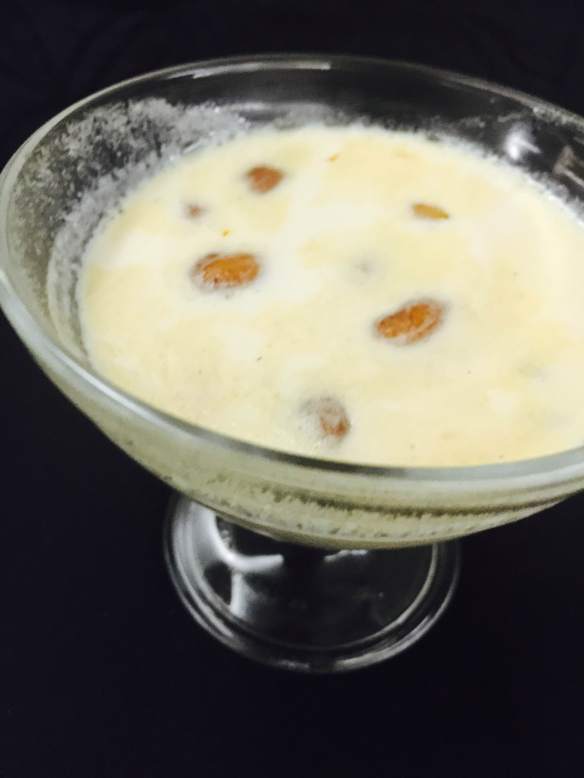
IMG_6073This sweet is the favourite of everyone at home, especially the children and is my go-to recipe when I need to whip up a sweet for any festival. GG & BB love it so much that I have to hide some for S, otherwise, he won’t get any when he comes home from work! This is a very easy recipe but takes a little bit of time stirring if you want to get the rich taste.

IMG_6072Semiya/Vermicelli Payasam

Ingredients:

  • 1 cup vermicelli
  • 1 cup sugar
  • 1-litre milk (full cream is the best for taste)
  • 10-12 pieces cashew nuts (chopped into half)
  • 2 tbsp raisins
  • ½ tsp cardamom powder
  • 2 tbsp ghee

Method:

  • In a deep bottom pan, heat the ghee and when it warms, fry the raisins till they plump up and keep aside in a kitchen towel.
  • In the same pan, fry the cashew nuts until they turn brown and crisp and remove into the same kitchen towel.
  • With the remaining ghee, fry the vermicelli till it becomes brown and starts to develop an aroma.
  • At this point, pour 1/3 to half a litre of milk and let it come to a rolling boil. Reduce the flame and let the milk and vermicelli boil until the vermicelli is completely cooked. This will take between 15-20 minutes. If at any point, the milk reduces, add some more milk to cover the vermicelli.
  • When the vermicelli is completely cooked, add the remaining milk and let it come to a nice rolling boil.
  • Now add the sugar and let it boil for a while until the sweet has thickened.
  • Add the sugar, cardamom, saffron and the nuts and let it boil for another 5 minutes.
  • Remove from the flame and let it cool before serving.
  • This sweet is very tasty both hot or cold, but we prefer to drink it cold. A few hours in the fridge really improves the taste dramatically.

Tips:

  • If you want to increase the proportions, just remember to put the sugar and vermicelli in a ratio of 1:1.
  • I prefer to use a pestle and mortar to grind my cardamom on an ‘as I need it‘ basis. I feel that grinding a whole bunch of cinnamon at the same time makes the smell of the spice go away after a while. You will need the pods from 5-6 cardamoms to make up ¼ tsp of the powder.